Native Grasses and Wildflowers for Sustainable Garden Landscapes
By Housey · Last reviewed 1st of June 2026
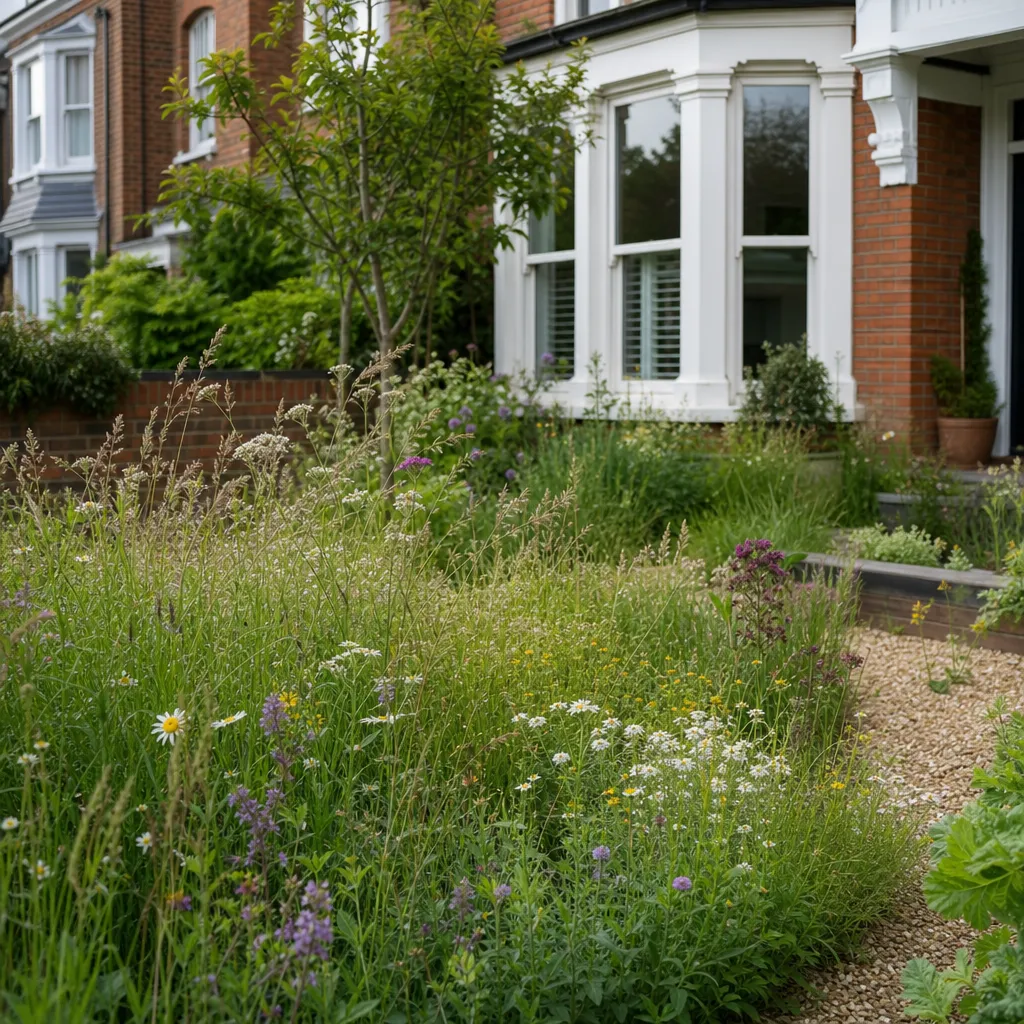
Native Grasses and Wildflowers for Sustainable Garden Landscapes
Growing interest in ecological gardening has moved prairie-style and naturalistic planting — mixing native grasses with flowering perennials and true wildflowers — from specialist horticulture into mainstream UK garden design. Whether you are rewilding the back garden of a Sheffield terrace or creating a wildflower margin on a rural plot in Shropshire, choosing species suited to your specific soil type, drainage, and aspect is what separates a thriving naturalistic planting from a recurring disappointment.
Key points
- In UK horticultural and conservation contexts, "native" refers to species that colonised Britain naturally after the last glaciation — roughly 1,400 vascular plant species — not simply plants that grow in European gardens.
- Wildflower meadow establishment from seed typically requires two to three growing seasons to reach full naturalisation; plug planting gives faster results for smaller areas.
- Native grass species suit different UK soil types: Festuca ovina (sheep's fescue) suits chalk and sand; Deschampsia cespitosa (tufted hair-grass) suits heavy clay; species selection must match soil pH, drainage, and fertility.
- Low-fertility soil is a prerequisite for most wildflower-rich swards — highly fertile or heavily amended garden soil suppresses wildflowers and favours coarse grasses and invasive weeds.
- Some local authority conditions, Section 106 agreements, or leasehold deed restrictions include clauses affecting front garden appearance; check before converting a front lawn to naturalistic planting.
Why native grasses and wildflowers, and what does "native" mean in practice?
A plant is considered native to the UK if it colonised Britain naturally — without human introduction — after the last glaciation. This includes roughly 1,400 vascular plant species recorded by organisations such as Plantlife and the Botanical Society of Britain and Ireland (BSBI). Many seed mixes marketed as "wildflower" contain non-native European or North American species that, while attractive and useful for pollinators, are not native in the conservation-biology sense.
This distinction matters because:
- Strict native planting is often specified in planning conditions, biodiversity net gain (BNG) schemes under the Environment Act 2021, or Local Wildlife Site management plans.
- Native species are generally better adapted to regional soil and climate, though some non-native ornamentals are valuable for pollinators.
- Certain grant and agri-environment schemes within DEFRA's Environmental Land Management (ELM) framework specify native-species planting for eligibility.
For most homeowners, a naturalistic mix that includes UK native wildflowers alongside compatible ornamental grasses provides genuine ecological value, even if not strictly all-native.
Matching species to your site conditions
Species selection is the single most important decision. Planting chalk-downland species on heavy clay, or moisture-loving species on free-draining sandy soil, consistently produces poor results regardless of the care taken during establishment.
Soil type | Suitable native grasses | Suitable wildflowers |
|---|---|---|
Free-draining, low fertility (chalk or sandy) | Festuca ovina (sheep's fescue), Briza media (quaking grass) | Scabiosa columbaria (small scabious), Centaurea scabiosa (greater knapweed), Sanguisorba minor (salad burnet) |
Heavy clay, moisture-retentive | Deschampsia cespitosa (tufted hair-grass), Molinia caerulea (purple moor-grass) | Lychnis flos-cuculi (ragged robin), Filipendula ulmaria (meadowsweet), Caltha palustris (marsh marigold) |
Neutral, loamy (moderately fertile) | Festuca rubra (red fescue), Agrostis capillaris (common bent) | Leucanthemum vulgare (oxeye daisy), Knautia arvensis (field scabious), Rhinanthus minor (yellow rattle) |
Partial shade (beneath trees, north-facing) | Deschampsia flexuosa (wavy hair-grass), Carex sylvatica (wood sedge) | Hyacinthoides non-scripta (bluebell), Digitalis purpurea (foxglove), Geranium sylvaticum (wood crane's-bill) |
Note: Digitalis purpurea (foxglove) is toxic if ingested. Consider this where children or pets have regular access to the garden.
Establishment: seed versus plug planting
The two main routes to establishing native grasses and wildflowers have different cost profiles, timescales, and suitability for different garden sizes.
From seed (lower cost, longer timescale)
Direct seeding is the traditional method and remains the most cost-effective approach for areas larger than approximately 25 sq m.
- Reduce soil fertility. For existing lawns, sow yellow rattle (Rhinanthus minor) as a hemi-parasitic species to weaken existing grasses and open the sward in the season before your main planting. For cultivated borders, strip and remove topsoil or carry out repeated stale-seedbed cultivation to exhaust the weed seed bank.
- Prepare a fine seedbed. Rake to a 5–10 mm crumb tilth. Remove debris and persistent weed roots.
- Sow at the right time. Autumn sowing (September–October) mimics natural seed dispersal and suits most UK native species. Spring sowing (March–April) works for some species including oxeye daisy and red campion.
- Apply seed at the recommended rate — typically 3–5 g per sq m for a wildflower-and-grass mix; adjust based on species composition.
- Withhold fertiliser at all stages to maintain low soil fertility.
- Manage in year one by cutting the sward to 70–100 mm two or three times to reduce weed competition; always remove the arisings.
From plug plants (faster, higher cost)
Plug planting bypasses the slow establishment phase. Plugs planted in autumn or spring establish within a single season and give visible results in year one. This is the practical approach for small areas (under approximately 25 sq m), feature borders, or projects where visible results are needed quickly.
Which approach suits your garden?
- Choose seed if the area is 25 sq m or larger, budget is limited, and you can manage through a two-to-three-year establishment period.
- Choose plug planting if the area is under 25 sq m, a visible result is needed within the first growing season, or you are introducing specific species into an existing border.
- Combine both for medium-sized areas: seed the main body of the planting and use plugs for focal species such as yellow rattle, English bluebell, or ragged robin.
- Ask a garden designer or suitably qualified ecologist if the site has complex soil conditions, contains existing notable species, or if the planting forms part of a planning condition, Section 106 agreement, or biodiversity net gain scheme.
What to ask before buying seed or plug plants
Seed and plant quality varies significantly between suppliers. Before purchasing:
- Is the seed certified as UK-provenance (sometimes labelled "TF" — true-from-species — or "British provenance")?
- Does the species mix match your soil type, pH, and light conditions?
- What proportion of the mix is grass seed versus flower seed? A mix with more than 70% grass will look predominantly green in all seasons.
- Are any species in the mix listed as non-native or invasive in UK conservation guidance?
- For plug plants: are they grown in peat-free compost?
The RHS Plant Finder and Plantlife's species records are useful references for confirming UK-native status.
Ongoing maintenance: what naturalistic planting actually requires
A common misunderstanding is that native planting is maintenance-free. It requires different management, not zero management.
Annual tasks for a wildflower meadow or naturalistic grass planting:
- Cut once or twice a year — in late summer after seed has set (typically August–September), and optionally again in early spring. Always remove arisings to prevent fertility from accumulating in the sward.
- Hand-weed competitive non-natives (dock, stinging nettle, couch grass, creeping thistle) through the first two to three years while the planting establishes.
- Leave seedheads standing through winter to provide habitat structure, foraging material for birds, and overwintering sites for invertebrates.
- Do not mulch with bark or garden compost — this raises soil fertility and suppresses wildflowers in favour of coarser, more competitive species.
- Divide or replace overcrowded grass clumps every three to five years to maintain vigour and prevent dominant species from taking over.
When to get professional help
Consider working with a qualified garden designer or suitably qualified ecologist if:
- Your site includes a watercourse, ancient hedgerow, or existing unimproved grassland with unknown species composition.
- The planting forms part of a planning condition, Section 106 agreement, or biodiversity net gain requirement — these typically require ecological specification and ongoing monitoring.
- Soil has been heavily amended and you are unsure whether topsoil stripping or other soil preparation interventions are needed.
- You want to support specific protected or notable species with narrow host-plant requirements.
How Housey can help
Getting the soil preparation right and matching species to your site is much easier with professional input from the start. Housey connects you with experienced landscapers who can carry out turf removal, soil preparation, and initial establishment work, and with garden designers specialising in naturalistic planting who can produce a plant palette suited to your soil, aspect, and ecological ambitions.
Frequently asked questions
Does a wildflower garden count as a formal habitat for planning purposes?
Not automatically. For biodiversity net gain or ecological mitigation to count formally under planning conditions, native-species planting must be designed, specified, and often monitored by a suitably qualified ecologist. A garden planted with native wildflowers has genuine ecological value but requires ecological assessment and reporting to be recognised formally in planning contexts.
Will native grasses and wildflowers attract bees and butterflies?
Yes, if species are well matched to your site and management allows flowering and seed-set. Native wildflowers that co-evolved alongside UK insects are generally more valuable for native bee species than ornamental non-natives. Yellow rattle, oxeye daisy, field scabious, and ragged robin are among the most consistently pollinator-rich native species for UK garden conditions.
Can I establish a wildflower planting in a shaded garden?
Full meadow establishment is difficult in dense shade. However, a woodland-edge planting using shade-tolerant native grasses such as Deschampsia flexuosa and Carex sylvatica alongside English bluebell, wood anemone, and foxglove can produce a naturalistic and ecologically valuable result in partially shaded or dappled-light conditions.
How do I clear couch grass before establishing a wildflower area?
Couch grass (Elymus repens) is the most persistent weed for wildflower establishment because of its extensive rhizome network. Effective options include stripping the top 100–150 mm of turf and rhizomes; repeated stale-seedbed cultivation over a full season; or a single systemic herbicide application followed by the manufacturer's waiting period before seeding. Discuss the right approach with a landscaper or agronomist.
Sources and further reading
- Plantlife — UK native wildflower species — Plantlife
- RHS — Meadow and prairie planting — Royal Horticultural Society
- Biodiversity net gain — Natural England / GOV.UK
- Growing native plants from seed — Royal Botanic Gardens, Kew
- Plants for butterflies and moths — Butterfly Conservation
Useful next reads
 Improvement & Build
Installing a Fire Pit: Garden Features and Outdoor Space Design
Installing a garden fire pit in the UK is generally permitted, but Smoke Control Area rules prohibit open wood-burning in most towns and cities.
 Improvement & Build
Seasonal Garden Transformations and Outdoor Design Ideas
A successful garden transformation in the UK works with the seasons rather than against them — establishing structure and hard landscaping in autumn or winter, planting in spring, and enjoying the results through summer.
 Improvement & Build
Designing an outdoor kitchen for entertaining and garden living
An outdoor kitchen in a UK garden needs a stable, level base — typically a concrete slab or quality paving — with weather-rated materials such as stainless steel grade 316 or frost-rated porcelain.
 Improvement & Build
Designing Garden Irrigation Around Trees and Landscaping Elements
Design irrigation around trees by respecting the root protection area defined under BS 5837:2012, using drip or leaky pipe delivery rather than spray heads, and putting the tree zone on its own circuit.
 Improvement & Build
Benefits of Hiring Established Landscaping Services in Coastal Areas
Established landscaping contractors in coastal areas understand salt spray exposure, prevailing wind patterns, and local planning restrictions that inland firms often overlook.