New Build Properties: Snagging and Quality Assurance for New Homes
By Housey · Last reviewed 31st of May 2026

New Build Properties: Snagging and Quality Assurance for New Homes
Moving into a brand-new home can feel like the safest choice in the property market — everything is untouched, under warranty, and built to current Building Regulations. In practice, new builds routinely contain defects ranging from hairline plaster cracks and misaligned doors to more significant issues such as poorly fitted windows, inadequate drainage, or missing insulation. Understanding what snagging involves, when to arrange it, and how to use the results effectively can make a material difference to the home you actually move into.
Key points
- The NHBC Buildmark warranty — the most widely used new-build warranty in England and Wales — covers builder defects for two years and structural and weatherproofing defects for 10 years from legal completion.
- The Consumer Code for Home Builders requires developers to provide a pre-completion inspection opportunity to buyers; this is separate from, and not a substitute for, an independent snagging survey.
- The Building Safety Act 2022 extended the limitation period for claims under the Defective Premises Act 1972 to 15 years in England, giving buyers greater protection against latent defects discovered after the warranty period.
- New build homes in England must comply with Building Regulations Part L 2021 (energy efficiency), Part F (ventilation), and Part O (overheating) — deficiencies in these areas can be difficult to identify without specialist testing.
- Independent snagging inspectors are not regulated by a single statutory body; look for inspectors affiliated with the Residential Property Surveyors Association (RPSA) or chartered surveyors registered with RICS for recognised professional standards.
What is a snagging survey?
A snagging survey is an inspection of a newly built property to identify defects, unfinished items, and non-compliances with the developer's specification and current building standards. It is most effective when carried out:
- Before legal completion — the ideal window, giving you a documented list to present to the developer before you hand over the balance of the purchase price
- Shortly after legal completion — within the first two years while the NHBC Buildmark or equivalent builder's defect period is still active
Most snagging surveys are visual and non-invasive. A thorough inspector checks everything from window alignment and door operation to pipe insulation, electrical socket positions, and the finish quality of render or brickwork. Some inspectors also carry out basic air pressure tests or ventilation flow checks.
Types of snagging inspection: a comparison
Inspection type | Who carries it out | Best for | Key limitations |
|---|---|---|---|
Developer's pre-completion walkthrough | Developer's site manager | Identifying obvious unfinished items | Not independent; scope is limited and subjective |
Independent snagging survey | Specialist snagging inspector (RPSA or similar) | Comprehensive defect list before or shortly after completion | Typically visual and non-invasive |
RICS Level 1 or Level 2 Home Survey | RICS-registered surveyor | New build with mortgage lender requirement | Not specifically designed for new-build defect identification |
RICS Level 3 Home Survey | RICS-registered surveyor | Suspected significant structural or hidden defects | Usually unnecessary at completion; used when serious concerns arise |
Building control sign-off | Local authority or Registered Building Inspector | Legal compliance with Building Regulations | Does not cover cosmetic finish or specification defects |
Snagging checklist: what to look for
Use this checklist alongside your independent inspector's report. It is not exhaustive but covers the most commonly reported items.
Exterior
Interior — general
Kitchen and bathrooms
Services
Red flags: when a snag becomes a serious defect
Most snagging items are cosmetic and quickly remedied by the developer. The following warrant closer investigation and may require a specialist report before you accept completion or make a warranty claim:
- Cracks in structural blockwork or concrete elements — not superficial plaster cracking as the building dries, but cracks extending through the masonry or frame
- Ponding water in roof voids or around the external envelope — a potential sign of waterproofing failure or inadequate drainage falls
- Condensation on window frames or between double-glazed panes — may indicate a failed sealed unit or insufficient whole-house ventilation
- Cold spots on external walls in winter — possible evidence of missing, displaced, or incorrectly specified insulation
- No functioning mechanical ventilation in an airtight new build — Building Regulations Part F and Part O require compliant ventilation; inadequate systems can lead to condensation, mould, and summer overheating
- Significant deviation in floor levels — particularly in ground-floor concrete slabs, which should be level within tight tolerances
- Incomplete or blocked drainage connections at inspection chambers or at the point of connection to the public sewer
If your inspector flags any of the above, consider engaging a RICS-registered home survey professional or a building control consultant before accepting completion or signing off the defects as resolved.
Understanding your warranty rights
The NHBC Buildmark warranty (and similar products from LABC Warranty, Premier Guarantee, and Build-Zone) operates in two distinct phases:
- Years 1–2: The builder is responsible for resolving defects reported in writing. Always report defects to the developer formally in writing and retain copies of all correspondence and responses.
- Years 3–10: The warranty provider covers structural and weatherproofing defects only. Cosmetic and minor defects are no longer covered once the builder's period ends.
In addition to warranty rights, buyers have statutory protections under the Defective Premises Act 1972, which requires dwellings to be built in a workmanlike manner with proper materials and to be fit for habitation. The Building Safety Act 2022 extended the limitation period for such claims to 15 years in England, significantly strengthening buyers' long-term position.
When to get professional help
Consider engaging an independent professional if:
- The developer is pressing you to complete without a pre-completion inspection opportunity
- Your own walkthrough identifies more than minor cosmetic issues
- You suspect problems with insulation, ventilation, drainage, or structural elements
- The developer disputes items on your snagging list or fails to respond within a reasonable time
- You are approaching the end of the two-year builder's defect period with outstanding issues still unresolved
Engage a RICS-registered surveyor or structural engineer if the snagging survey identifies potential structural defects, significant floor level deviation, concerns about fire stopping, party wall construction, or load-bearing elements.
How Housey can help
Housey connects new build buyers with qualified inspectors across the UK for a new-build snagging inspection. If your inspection raises questions about structural integrity or Building Regulations compliance, you can also find experienced building control consultants and RICS-registered surveyors through the platform.
Frequently asked questions
When is the best time to commission a snagging survey?
Ideally before legal completion, so you can present the list to your developer and negotiate remedies before handing over the balance of the purchase price. If completion has already happened, commission a survey as soon as possible — certainly within the first two years while the NHBC Buildmark or equivalent builder's defect period remains active and the developer is contractually obliged to remedy defects.
How many defects does a typical new build have?
The number varies significantly with property size, developer, and how close to completion the survey is carried out. Industry professionals routinely report finding between 50 and 200 items on a new build at completion stage, ranging from minor paint and plaster finishing issues to more significant defects. The New Homes Quality Board publishes complaint data that gives useful context on the scale of quality issues across the sector.
Can the developer refuse to let me bring an independent snagging inspector?
Developers cannot unreasonably prevent you from commissioning an independent survey. Under the Consumer Code for Home Builders, developers must allow buyers to carry out a pre-completion inspection. If access is refused or unreasonably restricted, seek written clarification from the developer, document the refusal, and seek advice from your solicitor.
Is a snagging survey the same as a structural survey?
No. A snagging survey is designed specifically to identify defects and unfinished items in a new build. A RICS Level 3 Home Survey is a comprehensive inspection of an existing property's structure and condition. For new builds, a snagging survey is the appropriate first step; a RICS Level 3 or a structural engineer's report may be needed only if significant structural defects are suspected.
Sources and further reading
- NHBC Buildmark warranty explained — NHBC
- Consumer Code for Home Builders — Consumer Code for Home Builders
- Defective Premises Act 1972 — legislation.gov.uk
- Building Safety Act 2022 — legislation.gov.uk
- Approved Document L 2021 — Conservation of Fuel and Power — GOV.UK
- New Homes Quality Board — New Homes Quality Board
Useful next reads
 Surveys & Inspections
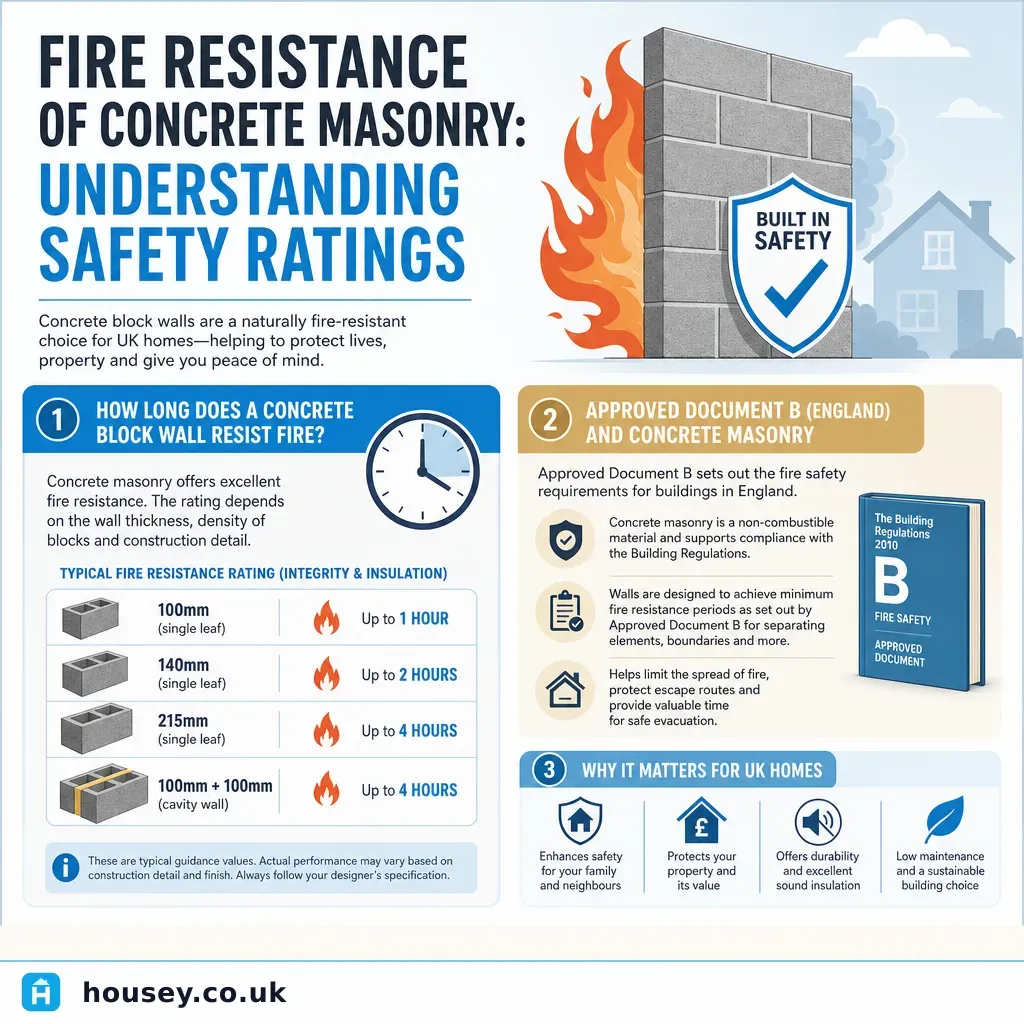
Fire Resistance of Concrete Masonry: Understanding Safety Ratings
Concrete masonry walls typically achieve 60 to 240 minutes of fire resistance depending on thickness, aggregate type, and construction method.
 Surveys & Inspections
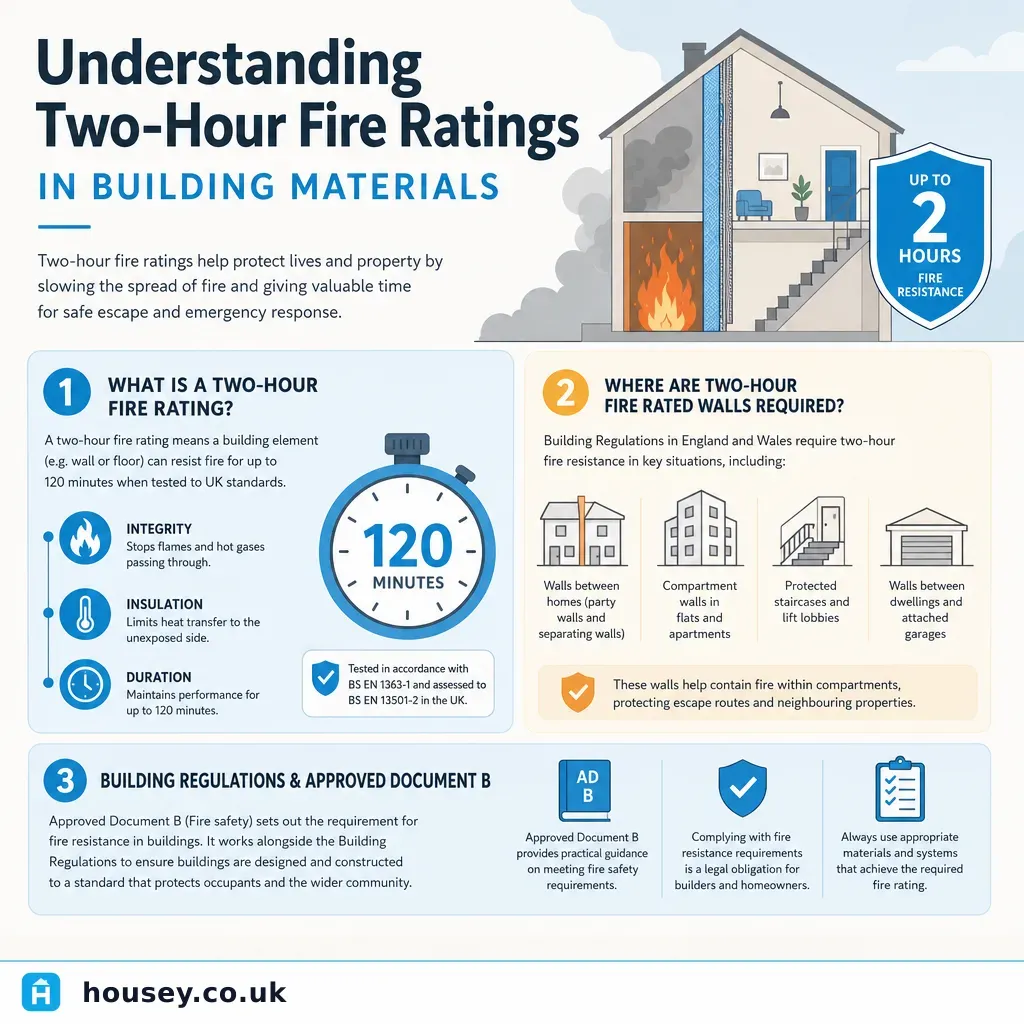
Understanding Two-Hour Fire Ratings in Building Materials
A two-hour fire rating — FR 120 or REI 120 — means a building element maintains loadbearing capacity, resists flame penetration, and limits heat transfer for 120 minutes under standardised test conditions to BS EN 13501-2.
 Surveys & Inspections
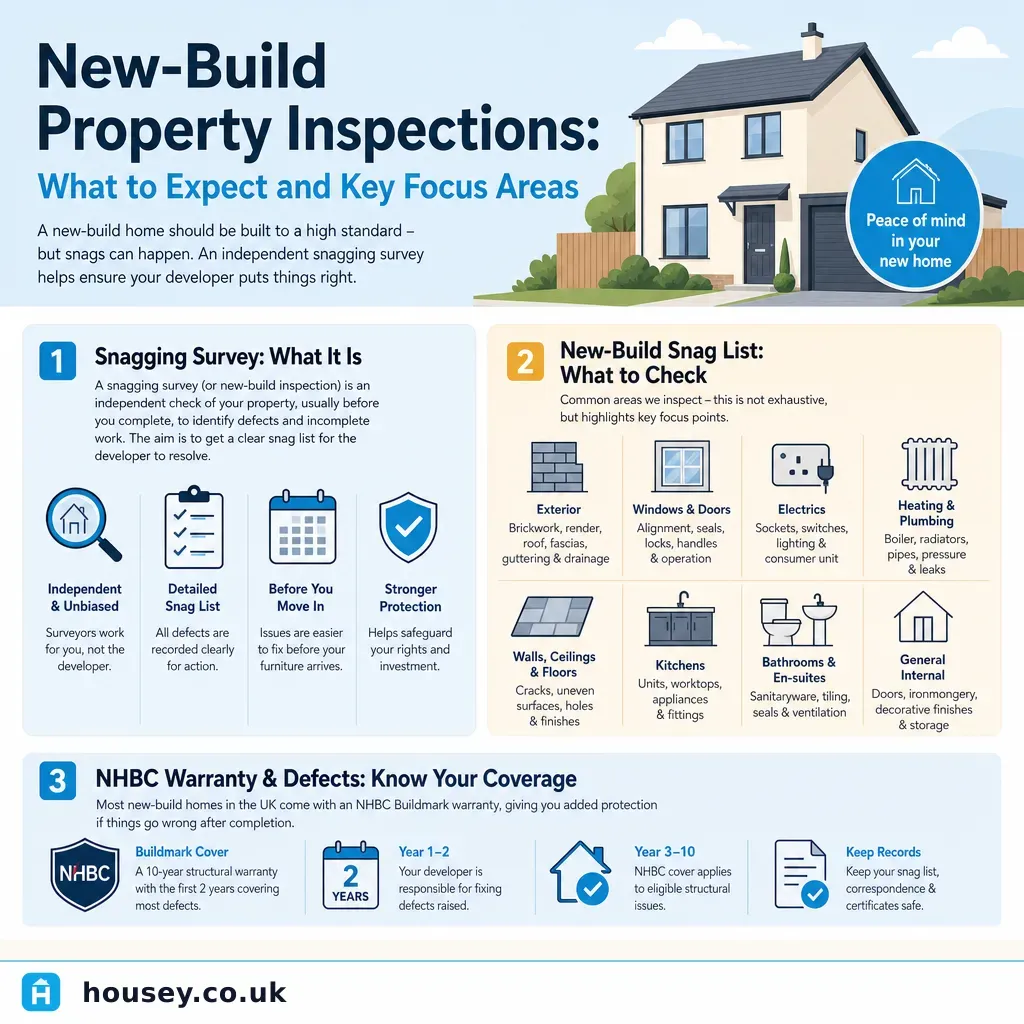
New-Build Property Inspections: What to Expect and Key Focus Areas
A new-build property inspection, or snagging survey, identifies construction defects before or after you take ownership.
 Surveys & Inspections
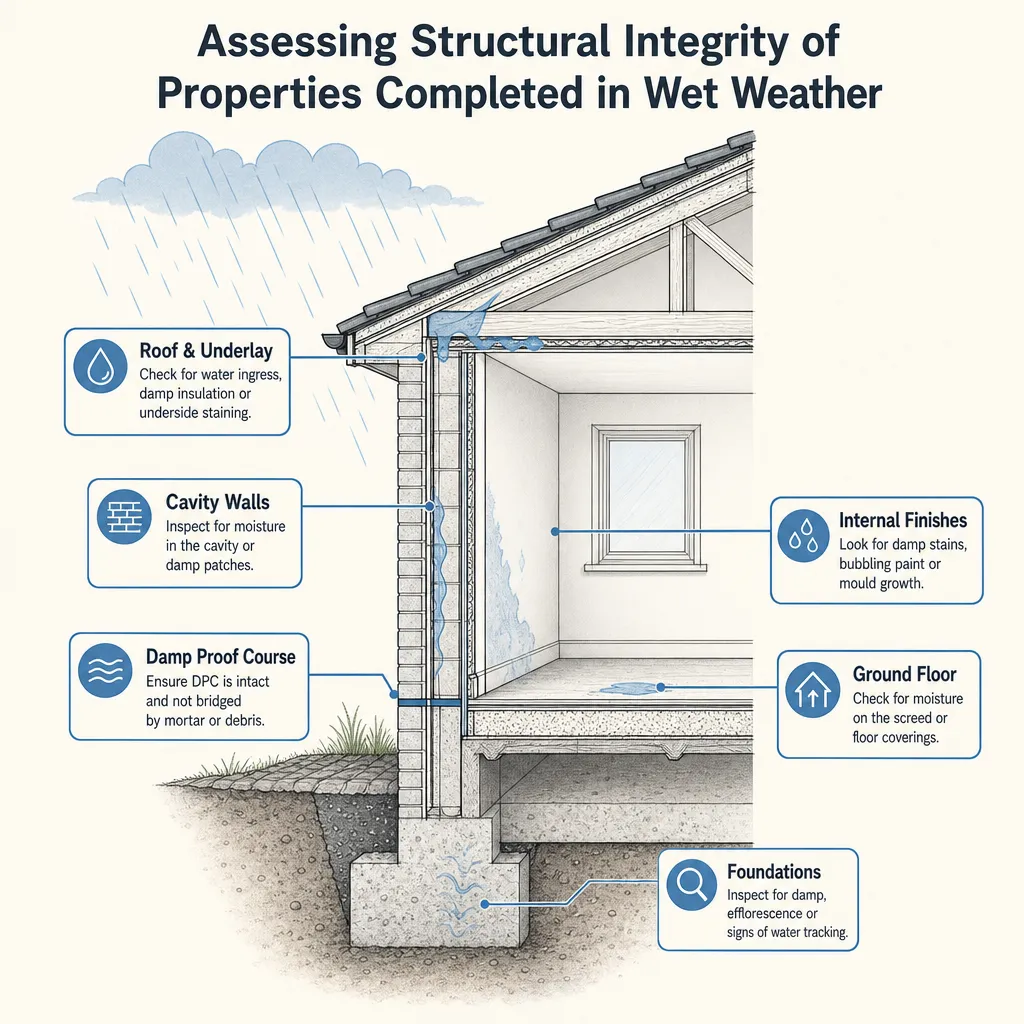
Assessing Structural Integrity of Properties Completed in Wet Weather
Construction carried out during prolonged wet weather can introduce defects including shrinkage cracking in mortar, compromised concrete strength, damp ingress through inadequately protected cavities, and movement in timber frames.
 Surveys & Inspections
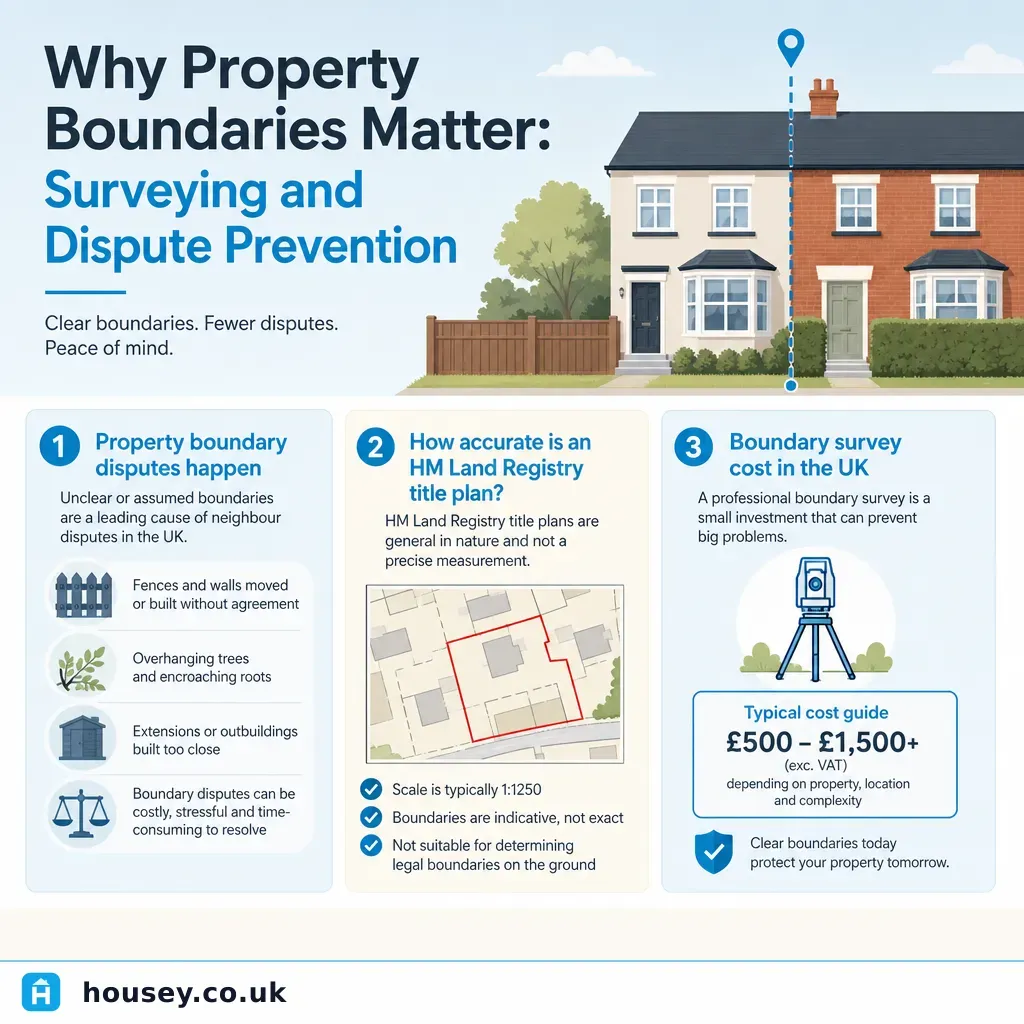
Why Property Boundaries Matter: Surveying and Dispute Prevention
Property boundaries in England and Wales are recorded as general boundaries by HM Land Registry — not precise measurements.