New Homeowner's Guide to Property Maintenance and Care
By Housey · Last reviewed 19th of May 2026

New Homeowner's Guide to Property Maintenance and Care
Taking ownership of a UK property brings a set of ongoing responsibilities that aren't always covered in the conveyancing process. Whether you've bought a Victorian terrace in need of attention or a relatively modern semi-detached, understanding what to check, when to check it, and who to call can prevent minor issues from becoming expensive repairs. For many first-time buyers, the first year of ownership is when deferred or undetected problems first become visible.
Key points
- Annual boiler servicing is required by most manufacturers to maintain the warranty and is strongly recommended regardless — it must be carried out by a Gas Safe registered engineer.
- An Electrical Installation Condition Report (EICR) is recommended every 10 years for owner-occupied homes; if your property lacks a recent one, commission one early.
- Gutters and downpipes should be cleared at least once a year, typically after leaf-fall in autumn, to prevent damp penetration through soffits and walls.
- Rising damp typically shows as tide marks on internal walls below 1 m; penetrating damp usually appears higher, often around windows or on chimney breasts.
- FENSA certificates confirm replacement glazing was installed to Building Regulations; their absence can complicate future property sales — check your conveyancing documents.
Documents to locate and organise when you first move in
Your solicitor will have provided a bundle of documents at completion, but some are easily mislaid. Spend time shortly after moving in tracking down and filing:
- Gas Safety Certificate (CP12) — confirms gas appliances were checked by a Gas Safe registered engineer. Should be no more than 12 months old if the property was recently rented.
- Electrical Installation Condition Report (EICR) — confirms the electrical installation has been inspected. Recommended every 10 years for owner-occupiers; legally required every 5 years in rented properties.
- Energy Performance Certificate (EPC) — valid for 10 years; required for marketing. Contains useful baseline information on insulation and heating systems.
- Building Regulations completion certificates — cover any notifiable work carried out: extensions, loft conversions, new boiler installation, re-wiring, and structural alterations.
- FENSA or CERTASS certificates — cover replacement windows and doors installed under a competent person scheme.
- Planning permissions and conditions — confirm any planning-permitted alterations and set out any ongoing conditions such as materials specifications or tree protection orders.
- Boiler and appliance manuals and warranties — needed for servicing and any warranty claims.
Store originals safely and keep scanned copies elsewhere. These documents are typically requested by conveyancers and buyers when you sell.
Seasonal maintenance: a quarterly checklist
Regular checks reduce the risk of expensive emergency repairs.
Spring (March–May)
Summer (June–August)
Autumn (September–November)
Winter (December–February)
Which tasks can you do yourself, and which need a professional?
Decision guide
- Do it yourself if: the task involves visual inspection, cleaning, minor decoration, garden maintenance, or replacing standard items (light fittings, tap washers, appliances) to manufacturer instructions where no notifiable electrical work is involved.
- Call a Gas Safe registered engineer if: any work involves gas appliances, gas pipework, or flues. If you smell gas, call the National Gas Emergency Service on 0800 111 999 immediately and leave the property.
- Call a qualified electrician (NICEIC or NAPIT registered) if: work is at consumer unit level, involves adding circuits or outdoor electrics, or there are signs of electrical problems such as burning smells, frequently tripping MCBs, or flickering lights.
- Call a structural engineer or chartered surveyor if: you notice cracks wider than a couple of millimetres (particularly stepped diagonal cracks in brickwork), doors or windows sticking suddenly across one area of the house, or floors that bounce or deflect noticeably.
- Commission an asbestos survey if: you are planning renovation work that might disturb older materials in a property built before 2000 — particularly textured coatings (Artex), insulating board, pipe lagging, or vinyl floor tiles. Do not drill, sand, or remove suspected asbestos-containing materials. Commission a survey from a UKAS-accredited asbestos surveyor before any such work begins.
Red flags: signs your property needs prompt attention
These warning signs merit prompt investigation rather than continued monitoring:
- Tide marks on internal walls at low level (below 1 m) with paint bubbling or white salt deposits (efflorescence) — possible rising damp.
- Unexplained increase in energy bills without a change in usage — may indicate insulation failure, draughts, or boiler inefficiency.
- Sticking doors or windows that develop suddenly in one part of the house — can indicate ground movement or structural shift.
- Black mould on cold external walls, particularly in corners, bedrooms, or bathrooms — indicates insufficient insulation, inadequate ventilation, or both.
- Boiler pressure that regularly drops without obvious cause — may indicate a system leak requiring investigation.
- Ceiling staining below a bathroom — even without a visible active leak, check waste traps and seals before staining spreads.
When to get professional help
While routine maintenance is largely manageable independently, the following signs warrant professional inspection without delay:
- Cracks that appear to be widening or are accompanied by structural symptoms such as sloping floors or gaps opening in walls.
- Any gas smell or suspected carbon monoxide exposure.
- Evidence of active water ingress into the building structure.
- Suspected asbestos-containing materials before any renovation work begins.
- Electrical faults beyond standard appliance level.
A RICS-registered surveyor can carry out a targeted defect investigation if you have a specific concern but do not need a full home survey.
How Housey can help
Housey connects UK homeowners with trusted local professionals across a wide range of property services — from annual boiler servicing and electrical inspections to structural defect investigations and energy assessments. Describing your requirement on the platform lets qualified local tradespeople review the job and submit quotes for comparison.
Frequently asked questions
How often should I service my boiler?
Once a year, by a Gas Safe registered engineer. Most boiler manufacturers require annual servicing to keep the warranty valid. An annual service identifies efficiency losses and potential safety issues early. Summer is often the better time to book, when engineers are less busy and pricing may be more competitive.
What documents should I keep for my property?
Keep the gas safety certificate, EICR, EPC, building regulations completion certificates, FENSA or CERTASS glazing certificates, planning permissions, and appliance warranties. These are typically requested by conveyancers when you sell. Missing certificates can delay transactions. Store originals safely and keep scanned copies in a separate location.
How do I distinguish rising damp from condensation?
Rising damp typically shows as a tide mark at low level on internal walls, often with paint bubbling or white salt deposits (efflorescence). Condensation tends to appear on cold surfaces — windows and external wall corners — particularly in bathrooms and kitchens, and is usually associated with black mould at higher levels. Both warrant investigation, but the remedies are quite different.
What is a FENSA certificate and why does it matter?
FENSA is the Fenestration Self-Assessment Scheme, a government-authorised competent person scheme covering replacement window and door installation. A FENSA certificate confirms glazing was installed to Building Regulations without a separate local authority building control application. Missing certificates can cause delays during conveyancing; a solicitor can advise on whether retrospective confirmation or indemnity insurance is available.
Sources and further reading
- Gas Safe Register — find a registered engineer — Gas Safe Register
- Electrical Safety First — homeowner electrical safety — Electrical Safety First
- Building Regulations approved documents — GOV.UK
- Asbestos in the home — Health and Safety Executive
- Energy Saving Trust — quick tips to save energy — Energy Saving Trust
Useful next reads
 Improvement & Build
Gutter Cleaning and Maintenance: Regular Care and Costs
Gutters should be cleaned at least twice a year — in late autumn after leaf fall and again in spring.
 Improvement & Build
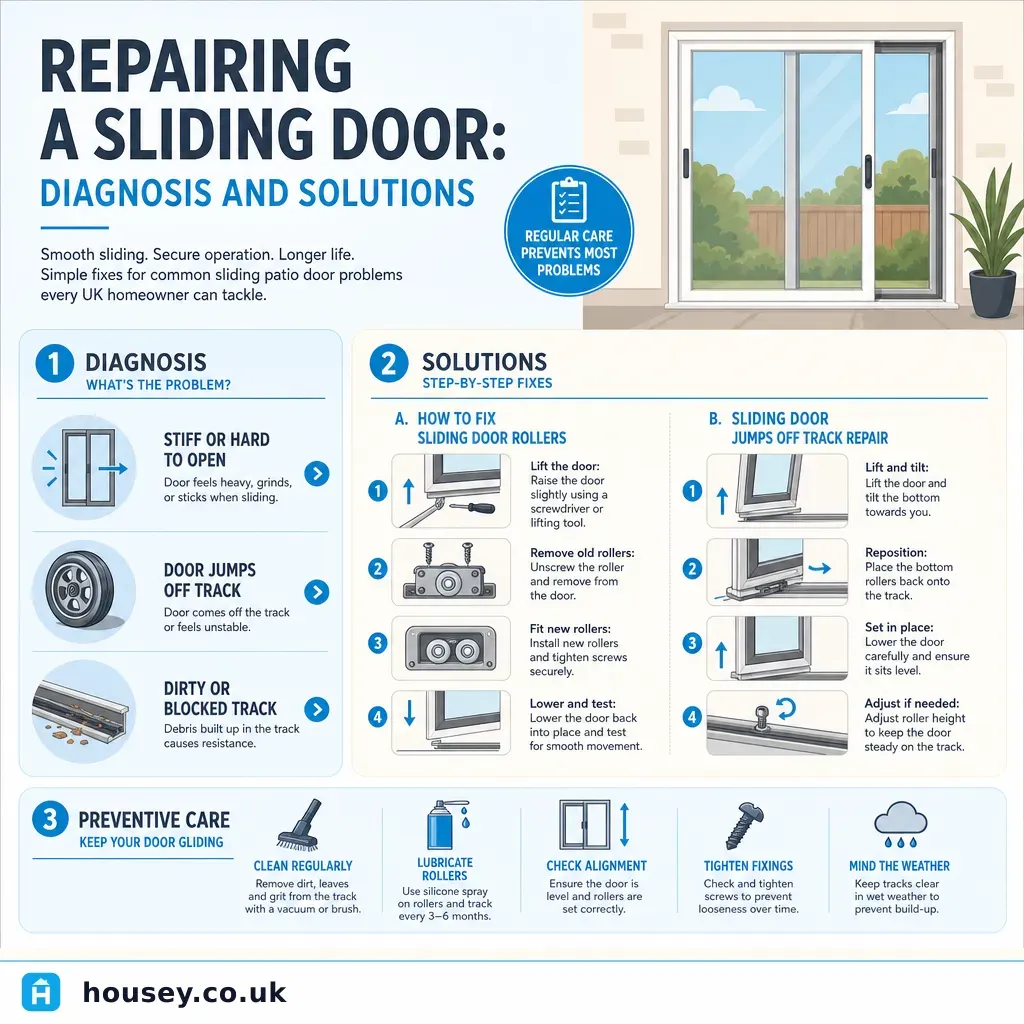
Repairing a Sliding Door: Diagnosis and Solutions
Most sliding door problems — stiffness, jumping off track, or draughts — are caused by dirty tracks, worn rollers, or misaligned guides.
 Improvement & Build
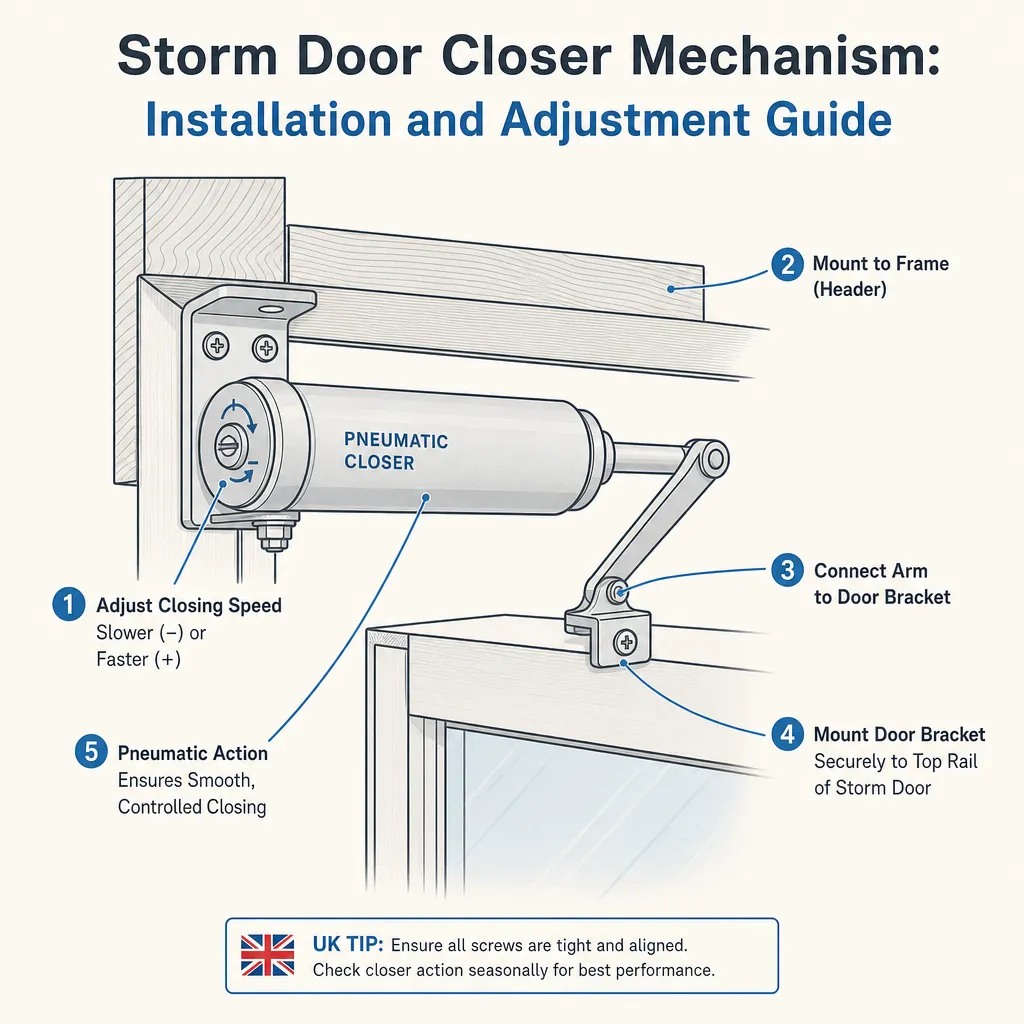
Storm Door Closer Mechanism: Installation and Adjustment Guide
Storm door closers are adjusted via a small screw at the end of the cylinder — clockwise slows the door, anticlockwise speeds it up.
 Improvement & Build
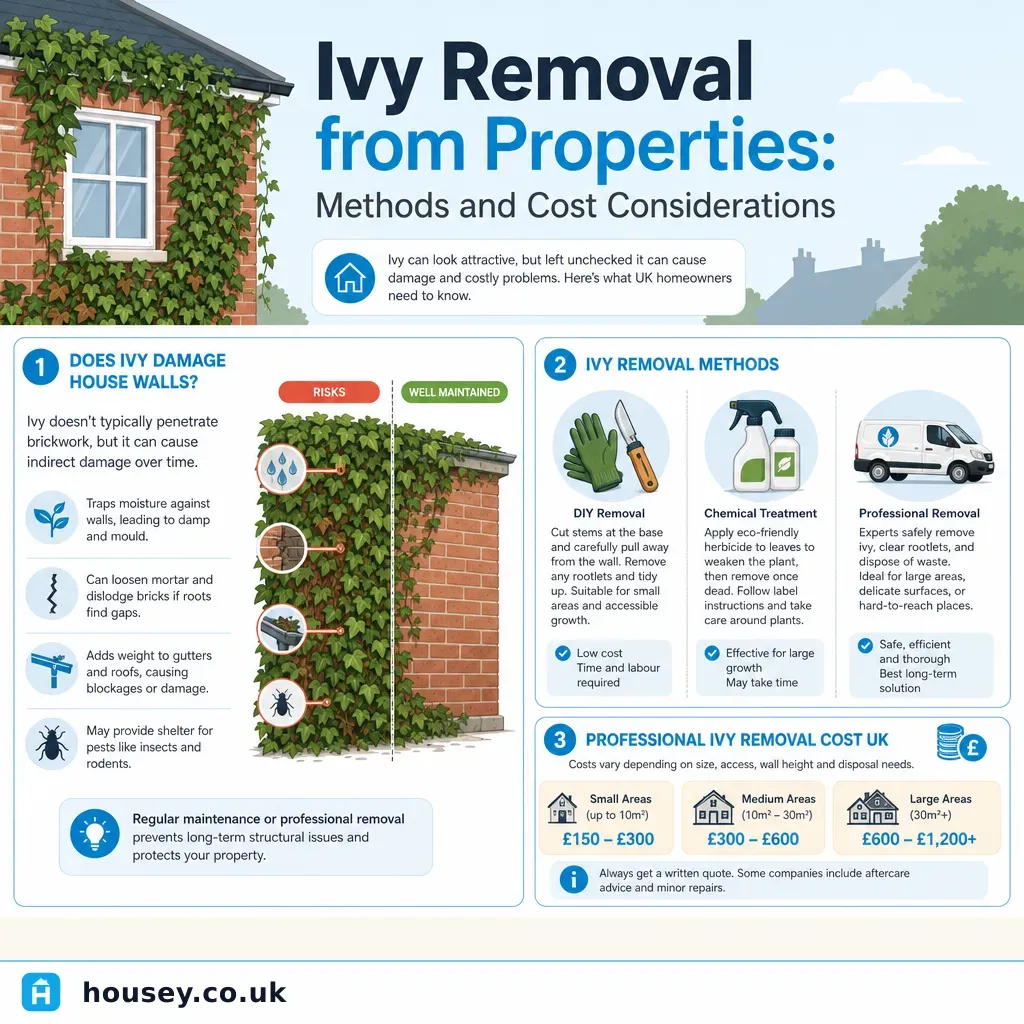
Ivy Removal from Properties: Methods and Cost Considerations
Remove ivy by cutting the main stems at the base and waiting two to four weeks before pulling the dead growth from the wall — this reduces damage to mortar.
 Improvement & Build
Understanding Annual Property Maintenance Budgets and Running Costs
UK homeowners typically budget 1–3% of their property's purchase price each year for maintenance and repairs, with older properties at the higher end.