New Lawn Installation: Costs and Professional Landscaping Services
By Housey · Last reviewed 30th of May 2026
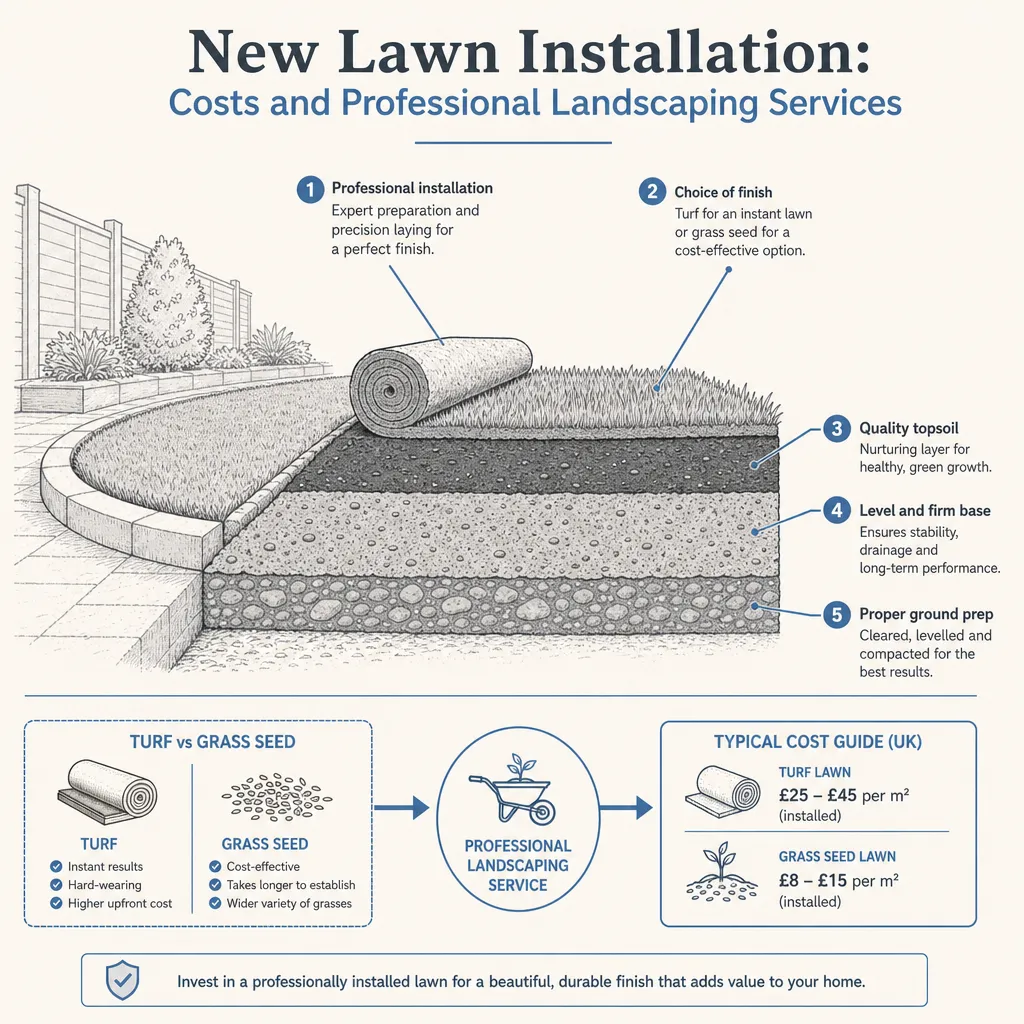
New Lawn Installation: Costs and Professional Landscaping Services
A new lawn is one of the most transformative improvements to an outdoor space, and the decision about how to go about it — turf or seed, DIY or professional — has a direct bearing on both cost and outcome. This question comes up after a new-build completion where the plot has been left as bare soil, after renovation works that have damaged an existing lawn, or simply when a tired or compacted lawn needs replacing. Getting the ground preparation right is more important than the product you choose.
Key points
- Ground preparation — clearing, rotavating, levelling, and firming — accounts for the majority of professional labour time and is the single biggest factor in whether a lawn establishes successfully.
- Turf can be laid from spring through to autumn but must be watered twice daily for the first two weeks to ensure good root contact with the soil beneath.
- Grass seed is most effective when sown in April to May or in September, when soil temperatures support germination without excessive drying.
- The RHS and the Turfgrass Growers Association both recommend sourcing fresh turf laid within 24 to 48 hours of cutting for the best establishment rates.
- For a typical 50 m² back garden lawn, professional supply and installation of turf (including ground preparation) typically costs between £700 and £1,500, though site conditions, region, and specification vary considerably.
Turf versus seed: which should you choose?
The choice between turf and grass seed depends on your timeline, budget, the intended use of the lawn, and your tolerance for managing an establishment period.
| Turf | Grass seed |
|---|---|---|
Establishment time | 6–8 weeks before light use | 3–6 months before regular use |
Best timing | Spring to autumn | April–May or September |
Upfront cost | Higher | Lower |
Weed risk | Lower — dense coverage suppresses weeds quickly | Higher — bare soil is vulnerable during germination |
Repair | Easy to patch with matching turf | Harder to match species precisely |
Species choice | More limited to supplier mixes | Wide range including fine-leaved, shade, hard-wearing, and wildflower |
Best for | Quick results, family lawns, post-build | Large areas, wildflower schemes, tighter budgets |
For most UK homeowners wanting a usable lawn within a single growing season, turf is the more reliable option. Seed works well on larger areas where cost is a significant factor and timescales allow for the full establishment period.
Ground preparation: the most important step
Poor ground preparation is the primary reason new lawns fail within their first year. Whether you choose turf or seed, the soil must be properly prepared before any product is applied.
Standard preparation process:
- Remove existing vegetation — old turf, weeds, and debris. Turf can be cut and removed or treated with a systemic weedkiller several weeks in advance.
- Rotavate or dig to a minimum depth of 100 to 150 mm to break up compaction.
- Remove stones larger than approximately 25 mm across.
- Level the surface — rake smooth and remove any humps or hollows that will retain water or cause scalping when mowing.
- Apply a pre-seeding fertiliser and rake it into the top 50 mm.
- Allow the prepared surface to settle for one to two weeks, then firm by treading or light rolling and re-level any low spots.
- Apply turf or seed to the firmed, level seedbed.
If the ground is heavily compacted, contains building rubble, or has persistent drainage issues, additional groundworks — including the installation of a sub-surface drainage layer — may be required before this standard process.
Installation costs
Indicative UK costs, last reviewed 2026-05-30. Costs vary significantly by region, site conditions, specification, and contractor. Always obtain at least three written, itemised quotes.
Component | Approximate cost |
|---|---|
Turf supply only (per m²) | £3–£6 |
Turf supply and professional installation (per m²) | £8–£18 |
Lawn seed supply only (per m²) | £0.50–£2 |
Professional seeding service (per m²) | £4–£10 |
Ground preparation, basic (per m²) | £3–£8 |
Skip hire for turf or spoil removal | £150–£300 depending on size and location |
For a typical 50 m² back garden, fully prepared and professionally turfed, expect total costs in the region of £700 to £1,500 — though this varies considerably by location and ground conditions. Always ask for itemised quotes that clearly state what ground preparation is included.
New lawn installation checklist
Use this checklist when preparing for a professional installation or reviewing contractor quotes:
Aftercare in the first season
The first six to eight weeks after laying turf are critical to long-term success:
- Water twice daily in dry weather for the first two weeks — morning and evening. A sprinkler or hose with a spray head works well for this.
- Do not walk on new turf for at least three to four weeks to avoid disrupting root-to-soil contact.
- First cut: once turf has rooted and grows to around 5 to 6 cm, cut to no lower than 4 cm. Never remove more than one-third of the blade length at one time.
- Feed: a light application of lawn fertiliser at six to eight weeks encourages strong root development and improves colour.
For seeded lawns, germination typically takes one to three weeks depending on species and soil temperature. Keeping birds off the seed bed with fleece or netting, and ensuring the surface does not dry out in the first fortnight, significantly improves the strike rate.
When to get professional help
Reseeding a small patch can often be managed as a DIY project. A professional landscaper adds the most value when:
- The area is large or requires significant groundworks before preparation can begin
- Drainage is a known problem that may need sub-surface drainage installed
- The site is on a slope requiring levelling or terracing first
- The project is on a new-build plot where topsoil may be shallow, compacted, or contaminated with construction debris
- A tight timeline means failure is not an option and professional establishment rates are essential
How Housey can help
For new lawn installation as part of a wider landscaping project, a professional landscaper can handle ground preparation, specify an appropriate turf or seed mix for your site conditions, and ensure the result establishes correctly first time. Housey connects you with local landscaping specialists so you can compare quotes and choose the right contractor for your garden.
Frequently asked questions
What is the best time of year to lay turf in the UK?
Turf can be laid in most months of the year, but spring (March to May) and autumn (September to October) are generally best. Avoid laying turf in very hot or dry summer conditions, or when the ground is frozen or waterlogged. Autumn is popular because the soil remains warm and reduced evaporation means less intensive daily watering is needed during establishment.
How long does a new lawn take to establish?
New turf typically takes six to eight weeks to root fully enough for regular use. Grass seed takes three to six months before the lawn can withstand normal foot traffic. Both figures assume good ground preparation and adequate watering during the establishment period. Light use of turfed areas can usually begin from around week four if edges are rooting well.
Can I lay turf on clay soil?
Yes, but clay soil requires more thorough preparation. Working horticultural grit and organic matter into the top 100 to 150 mm improves drainage and encourages root penetration. In areas with persistently waterlogged clay, a sub-surface drainage layer or drainage channel may be needed before turfing. A landscaper can assess whether your ground requires drainage work prior to installation.
Is professional lawn installation worth the cost?
For most homeowners, professional installation — particularly thorough ground preparation — significantly increases the chance of a lawn that establishes well and lasts. Poorly prepared ground is the leading cause of new lawn failure within the first year. For small, straightforward areas DIY is achievable; for larger projects or new-build sites where topsoil may be thin or compacted, professional installation typically pays for itself by avoiding remedial work.
Sources and further reading
- RHS: Making a New Lawn — Royal Horticultural Society
- RHS: Soil Preparation and Improvement — Royal Horticultural Society
- Turfgrass Growers Association — Turfgrass Growers Association
- Planning Portal: Garden Buildings — Planning Portal
Useful next reads
 Improvement & Build
Installing a Fire Pit: Garden Features and Outdoor Space Design
Installing a garden fire pit in the UK is generally permitted, but Smoke Control Area rules prohibit open wood-burning in most towns and cities.
 Improvement & Build
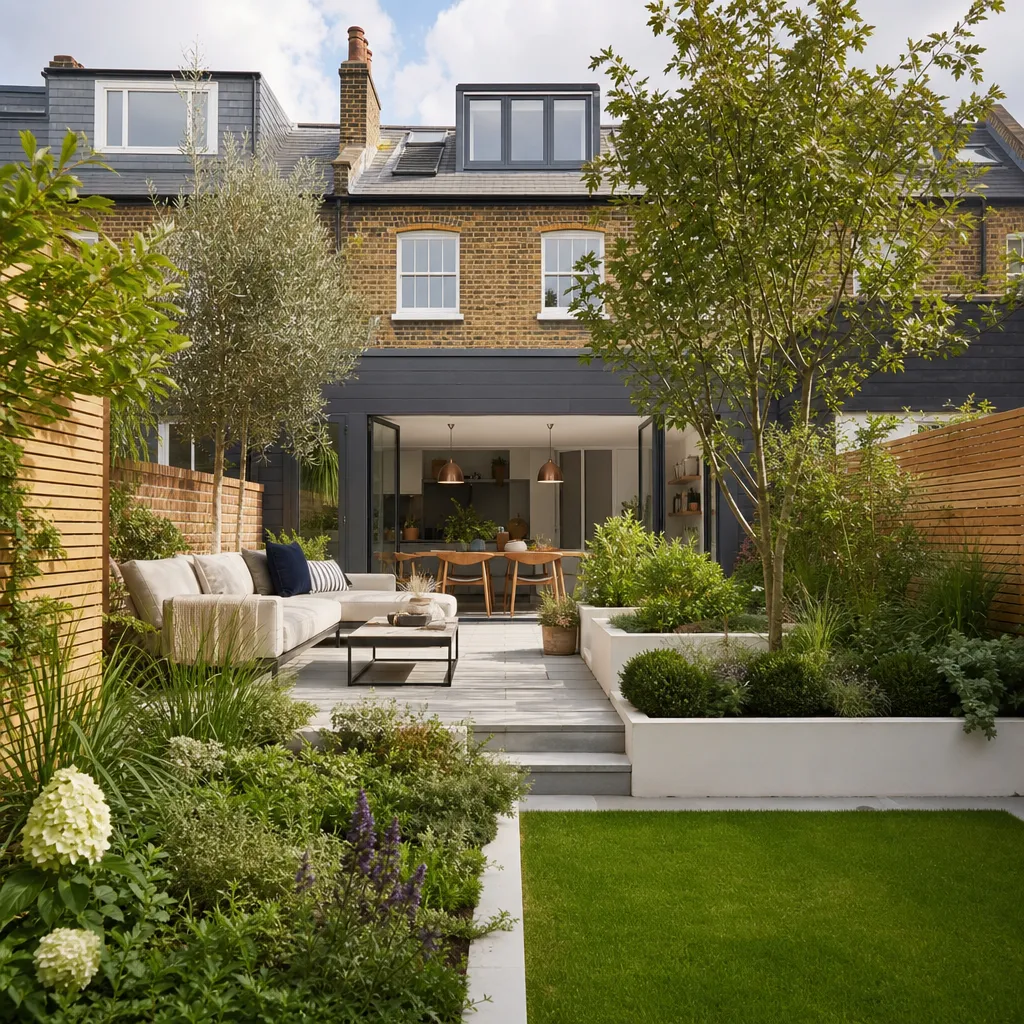
Seasonal Garden Transformations and Outdoor Design Ideas
A successful garden transformation in the UK works with the seasons rather than against them — establishing structure and hard landscaping in autumn or winter, planting in spring, and enjoying the results through summer.
 Improvement & Build
Designing an outdoor kitchen for entertaining and garden living
An outdoor kitchen in a UK garden needs a stable, level base — typically a concrete slab or quality paving — with weather-rated materials such as stainless steel grade 316 or frost-rated porcelain.
 Improvement & Build
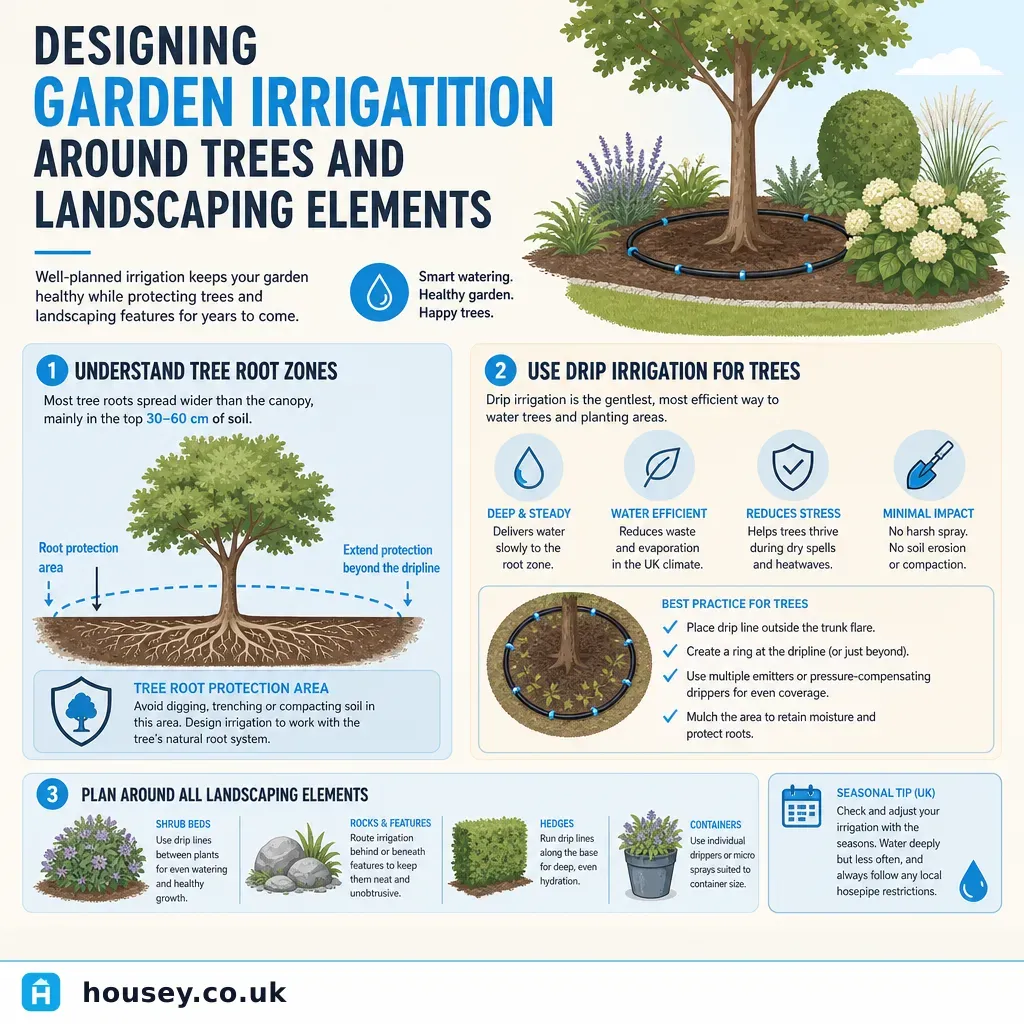
Designing Garden Irrigation Around Trees and Landscaping Elements
Design irrigation around trees by respecting the root protection area defined under BS 5837:2012, using drip or leaky pipe delivery rather than spray heads, and putting the tree zone on its own circuit.
 Improvement & Build
Benefits of Hiring Established Landscaping Services in Coastal Areas
Established landscaping contractors in coastal areas understand salt spray exposure, prevailing wind patterns, and local planning restrictions that inland firms often overlook.