Oak Frame Extension Build Costs and Design Specifications
By Housey · Last reviewed 7th of May 2026
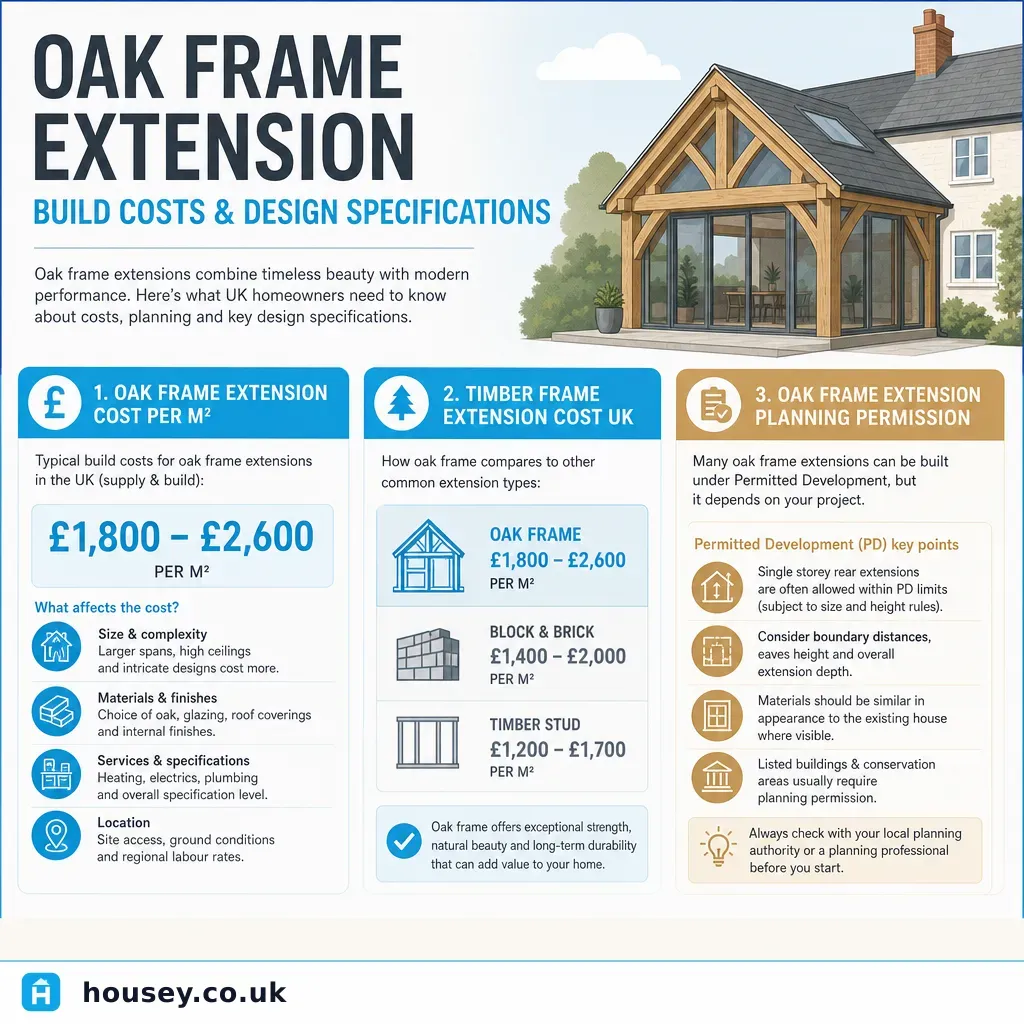
Oak Frame Extension Build Costs and Design Specifications
Oak frame extensions sit at the premium end of the UK residential extension market, combining structural timber craftsmanship with contemporary or traditional design. They suit homeowners extending period properties, rural buildings, or any home where visible timber character is central to the brief — but the build process, cost structure, and professional team required differ significantly from conventional masonry construction.
Key points
- Completed oak frame extensions typically cost £2,500–£4,500+ per m² all-in (groundworks, envelope, glazing, internal fit-out); indicative UK costs, last reviewed 2026-05-07.
- The structural oak frame package (supply-and-erect by a specialist company) is usually £800–£1,500 per m², separate from the wider build contract.
- Green (unseasoned) oak is standard for most UK frame packages; it shrinks and develops surface cracks (shakes) as it seasons in situ — this is a normal characteristic, not a defect.
- Building Regulations Part A (structure), Part L 2021 (thermal), Part F (ventilation), and Part B (fire) all apply to oak frame extensions.
- Permitted Development rights may cover single-storey rear extensions below relevant thresholds, but listed buildings, conservation areas, and Article 4 Direction areas are excluded — confirm with your local planning authority before starting.
How much does an oak frame extension cost?
Costs vary with size, roof form, glazing specification, ground conditions, and internal fit-out level. The frame package typically represents 20–35% of the total build cost; the remainder covers groundworks, insulated panels, roofing, glazing, services, finishes, and professional fees.
Extension type | Approx. size | Indicative all-in cost | Notes |
|---|---|---|---|
Single-storey rear kitchen | 20–30 m² | £55,000–£120,000 | Lean-to or mono-pitch frame |
Large single-storey living pavilion | 40–60 m² | £120,000–£240,000+ | Glazed gable or lantern roof typical |
Two-storey oak frame | 40–80 m² | £160,000–£350,000+ | Greater structural complexity |
Oak frame garden room | 10–20 m² | £30,000–£80,000 | Still needs Building Regs if habitable |
Indicative UK costs, last reviewed 2026-05-07. Obtain at least three detailed quotes before committing.
Green oak vs kiln-dried (seasoned) oak
The oak type affects cost, structural behaviour, and long-term appearance.
Feature | Green (unseasoned) oak | Kiln-dried (seasoned) oak |
|---|---|---|
Typical cost | Lower — less processing | Higher — energy-intensive drying |
Post-erection movement | Moderate — shrinkage and checking expected | Minimal — most movement already occurred |
Appearance | Silver-grey patina; shakes develop naturally | More stable colour; fewer visible shakes |
Structural joints | Tighten as wood dries | Consistent from day one |
Best for | Most UK oak frame extensions | High-precision joinery; tight tolerances |
Shakes in green oak do not indicate a structural defect. Discuss the expected movement range with your frame supplier before signing a contract.
Design, planning, and Building Regulations
An oak frame extension is a structural system requiring early, coordinated design input. You will typically need an architect or architectural technologist for planning and Building Regulations drawings; the oak frame manufacturer for structural frame drawings; and a structural engineer for foundation design and structural calculations required by building control.
Single-storey rear extensions may fall within Permitted Development under Schedule 2, Part 1, Class A of the Town and Country Planning (General Permitted Development) (England) Order 2015. However, listed buildings, conservation areas, AONBs, and Article 4 Direction areas are excluded. Side extensions and two-storey extensions generally require a full planning application. Always apply for a Lawful Development Certificate if relying on Permitted Development.
Building Regulations require the thermal envelope to meet Part L 2021 U-value targets: typically 0.18 W/m²K for walls and 0.15 W/m²K for roofs. Structural Insulated Panels (SIPs) or high-performance insulated infill panels are commonly used with oak frames to meet these targets. Thermal bridging at frame-to-panel junctions requires careful detailing.
Which professionals do you need?
- Need planning drawings? → Appoint an architect or architectural technologist early to coordinate the design team.
- Choosing a frame company? → Request a detailed frame specification, structural drawings, and written confirmation of professional indemnity insurance before signing.
- Need foundations designed? → A structural engineer's calculations are required for the Building Regulations submission.
- Unsure about Permitted Development? → Apply for a Lawful Development Certificate or seek pre-application advice from your local planning authority.
- Managing a large or complex project? → Consider a project manager or a design-and-build oak frame contractor with a single point of contractual responsibility.
What to ask before accepting a quote
- What is included in the frame package — design, fabrication, delivery, erection, and temporary works?
- Who produces the structural calculations, and who holds professional indemnity insurance for them?
- What insulated infill or panel system is specified, and what U-values will it achieve?
- Is planning permission or a Lawful Development Certificate included, or is it a separate appointment?
- What is the fabrication lead time, and how does it fit the overall programme?
- What movement or cracking is expected in the oak, and what does the defects liability period cover?
- Is VAT included in the quoted price?
- What guarantees or warranties are provided on the frame and the completed building?
When to get professional help
Seek qualified professional input before committing to any contract if you are unsure whether planning permission is needed; the extension connects to a listed building or sits in a conservation area; ground conditions or tree proximity are unknown; or you are comparing quotes without a common specification — an architect's brief makes quotes genuinely comparable.
How Housey can help
Housey can connect you with qualified extension builders experienced in oak frame and specialist timber construction, as well as architects and architectural technologists who can produce planning and Building Regulations drawings and coordinate your design team from brief through to completion.
Frequently asked questions
Does an oak frame extension need planning permission?
Most oak frame extensions require planning permission. Single-storey rear extensions may fall within Permitted Development rights, but this depends on size, height, location, and whether the property is listed, in a conservation area, or subject to an Article 4 Direction. Always confirm with your local planning authority before starting work, or apply for a Lawful Development Certificate.
How long does an oak frame extension take to build?
A typical single-storey oak frame extension takes six to twelve months from architect appointment to completion, covering design, planning, fabrication, and build. The frame is usually fabricated over eight to sixteen weeks once structural design is agreed. On-site erection takes two to five days for a standard single-storey extension, with the wider build continuing over several months.
Will the oak crack after the extension is built?
Green oak will shrink and develop surface cracks, known as shakes or checks, as it dries in situ. This is a normal characteristic and does not indicate a structural defect — joints often tighten as the wood seasons. Your frame company should explain the expected range of movement and any maintenance requirements before you sign a contract.
Can an oak frame extension be added to a Victorian terrace?
Yes, though the structural connection between a new oak frame and existing masonry requires careful engineering. A structural engineer should design the connection and specify foundations appropriate to the building and ground conditions. Planning permission is almost certainly required in most urban locations. Check whether Party Wall Act notice is also needed if the extension is close to a shared boundary.
Sources and further reading
- Permitted Development for householders: technical guidance — Planning Portal
- Approved Document A: Structure — GOV.UK
- Approved Document L: Conservation of fuel and power — GOV.UK
- Town and Country Planning (General Permitted Development) (England) Order 2015 — legislation.gov.uk
- Roof and ceiling insulation — Energy Saving Trust
Useful next reads
 Improvement & Build
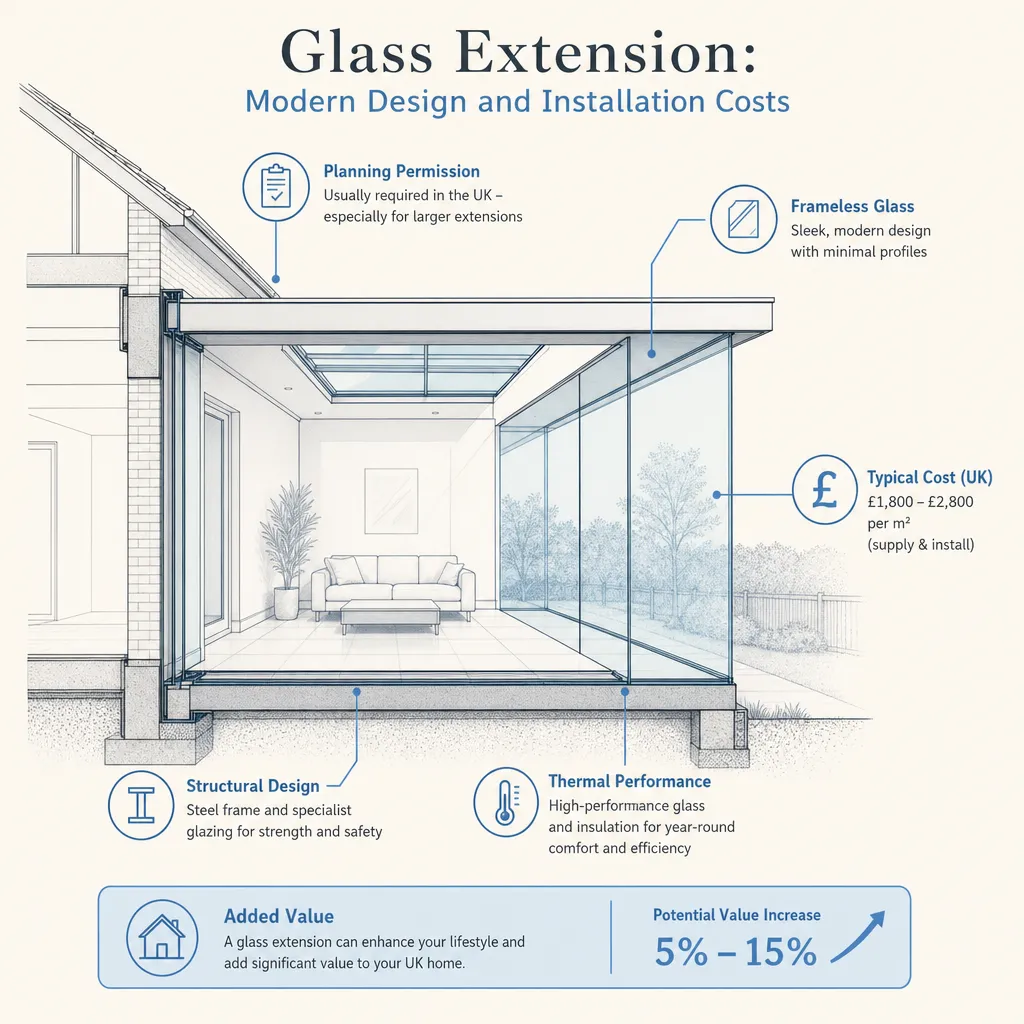
Glass Extension: Modern Design and Installation Costs
A glass extension in the UK typically costs £3,500–£6,500 per square metre fully installed for a bespoke structural glass system.
 Improvement & Build
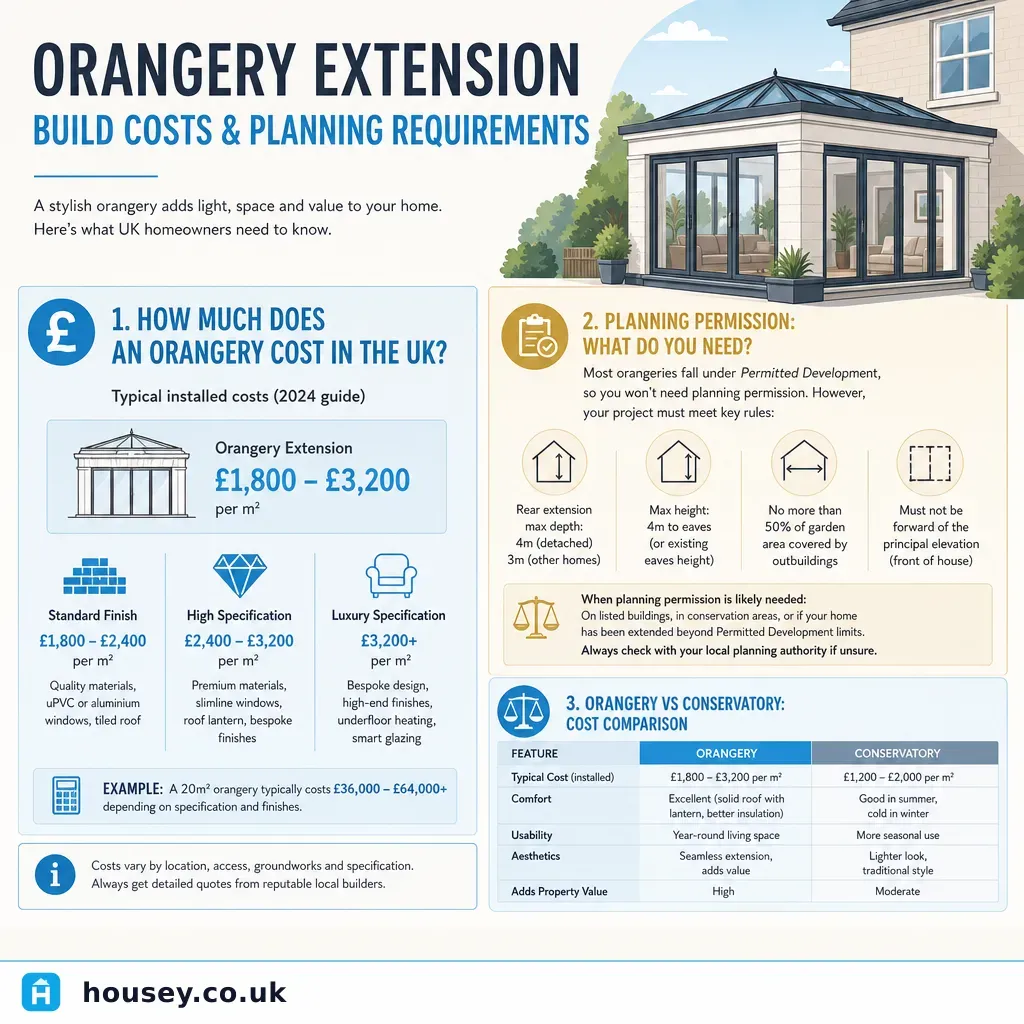
Orangery Extension Build Costs and Planning Requirements
An orangery extension in the UK typically costs £25,000–£100,000 depending on size, glazing specification, and finish.
 Improvement & Build
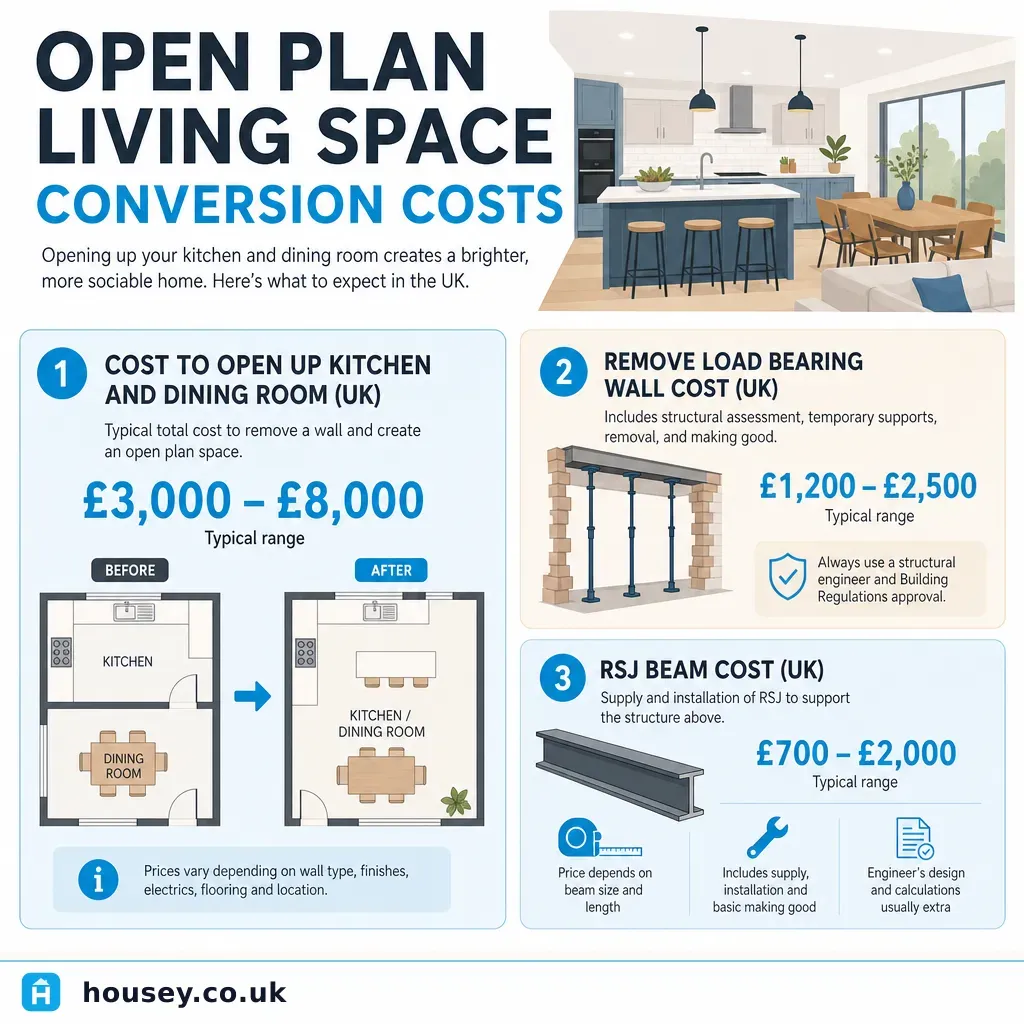
Open Plan Living Space Conversion Costs
Opening up a living space in the UK typically costs £3,000–£15,000+ depending on whether walls are load-bearing, the beam specification required, and the extent of remodelling.
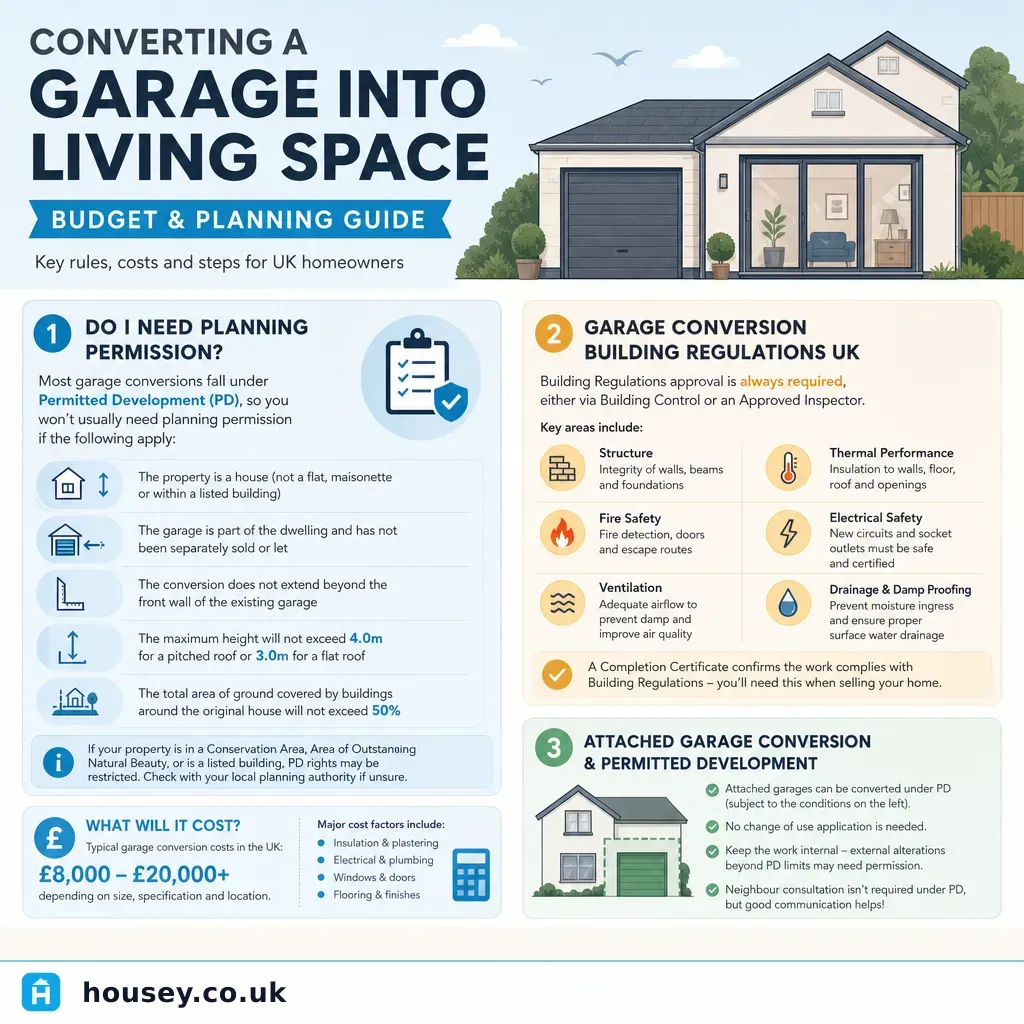 Improvement & Build
Converting a Garage into Living Space: Budget and Planning Guide
A single-garage conversion typically costs £8,000–£20,000 in the UK.
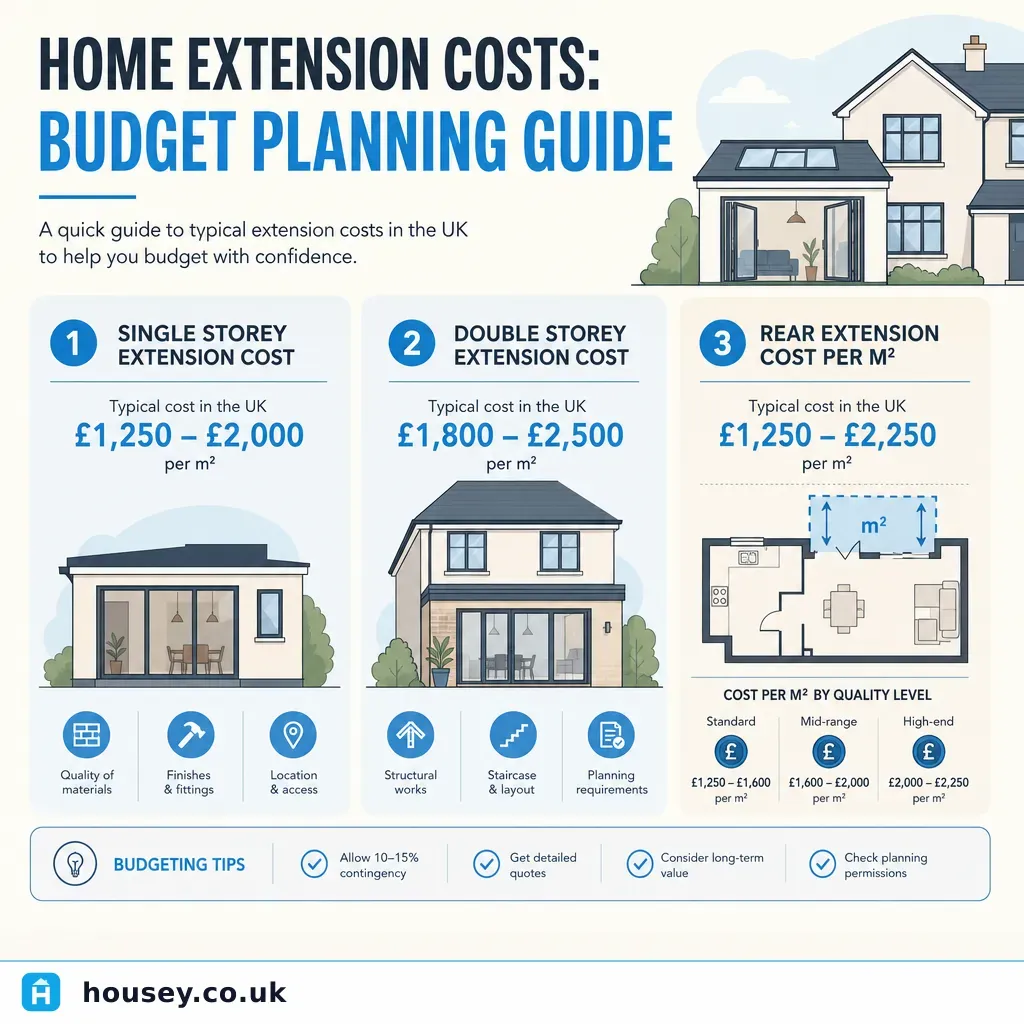 Improvement & Build
Home Extension Costs: Budget Planning Guide
A single-storey rear extension in the UK typically costs £1,500–£2,500 per square metre to build.