Oil Tank Removal: Environmental and Safety Considerations
By Housey · Last reviewed 30th of May 2026
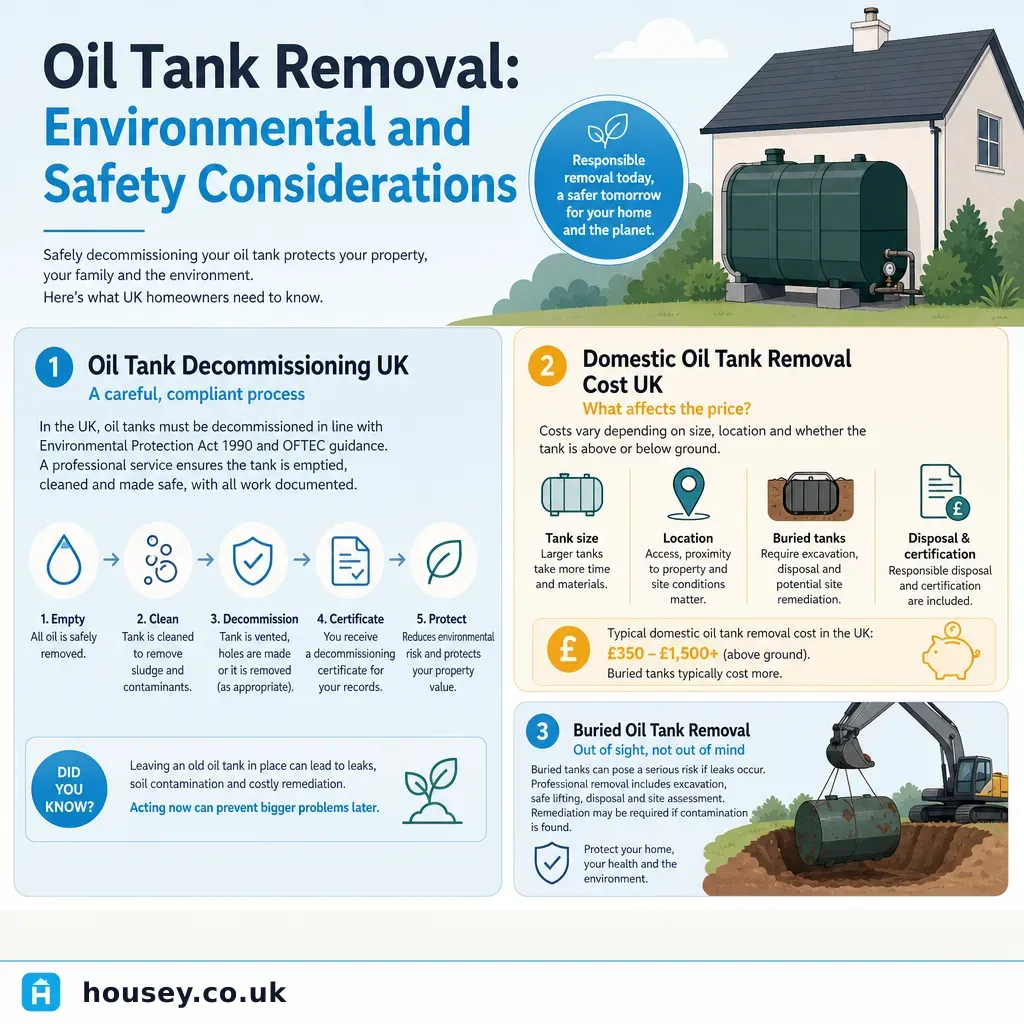
Oil Tank Removal: Environmental and Safety Considerations
Removing a domestic heating oil tank arises most often when converting a property to gas, heat pump, or electric heating, during significant renovations, or following a concern raised by a buyer's surveyor or solicitor. In England, Scotland, and Wales, oil storage and decommissioning is governed by specific environmental regulations that make unplanned or incompetent removal a legal liability — not just a practical task. Whether the tank is an above-ground plastic bunded unit or an older buried steel vessel, the regulatory and environmental stakes are meaningfully different from removing ordinary plant or equipment.
Key points
- Above-ground oil tanks must comply with The Control of Pollution (Oil Storage) (England) Regulations 2001 and equivalent devolved legislation in Scotland and Wales; tanks of 3,500 litres or more trigger additional Environment Agency notification requirements.
- OFTEC (Oil Firing Technical Association) registration is the recognised UK standard for competent persons carrying out oil tank decommissioning.
- Residual heating oil must be disposed of as hazardous waste under the Hazardous Waste Regulations 2005 — a licensed waste carrier must be used and a waste transfer note retained.
- Any suspected soil or groundwater contamination discovered during removal must be reported to the Environment Agency (England), Natural Resources Wales, or SEPA (Scotland).
- Documentation — including the OFTEC decommissioning certificate, waste transfer note, and any site investigation results — is routinely requested by solicitors and mortgage lenders on property sale.
Why oil tank removal is regulated in the UK
Domestic heating oil — typically kerosene — is a controlled substance under UK environmental law. A single tank failure or careless removal can release hundreds of litres into subsoil, reaching groundwater and neighbouring land within days. The Environment Agency and its devolved equivalents can pursue landowners for remediation costs, even where the pollution originated from a previous owner's tank. Contamination can cost tens of thousands of pounds to remediate, and the presence of an unresolved oil plume in the ground must be disclosed to buyers under the standard TA6 Property Information Form, potentially halting a sale.
Tank types and what they mean for removal
Tank type | Where typically found | Main concern | Specialist needed |
|---|---|---|---|
Above-ground plastic (bunded) | Post-2000 homes, 1,000–2,500 L | Residual fuel disposal; safe lifting and reinstatement | OFTEC-registered contractor |
Above-ground steel (single-skin) | Pre-1990s rural and suburban homes | Corrosion, possible seepage beneath tank footprint | OFTEC contractor; visual soil check |
Buried or underground steel | Pre-1970s properties, converted farm buildings | Soil and groundwater contamination risk | Specialist tank removal contractor plus Phase II environmental assessment |
Large agricultural or commercial | Rural properties; capacity often above 3,500 L | Additional EA or SEPA notification thresholds may apply | Environmental consultant; check regulator notification duty |
OFTEC publishes current technical guidance (Technical Book 3) covering tank installation, decommissioning, and testing standards. Always check the current edition for thresholds that apply to your specific tank.
How professional decommissioning works
A competent OFTEC-registered contractor will typically follow this sequence:
- Pre-removal assessment — inspect the tank type, capacity, physical condition, and ground around the base for staining, odour, or soft ground that may indicate previous seepage.
- Safe fuel removal — residual oil is pumped out by a licensed waste carrier; you receive a waste transfer note confirming hazardous waste disposal.
- Vapour purging or inert gas treatment — eliminates flammable vapour from the tank interior before cutting, lifting, or transporting.
- Physical removal — above-ground tanks are lifted; buried tanks require careful mechanical excavation, often with hand-digging near the tank walls to avoid puncture.
- Ground inspection — excavated soil is visually assessed for staining, hydrocarbon sheen, or odour. If contamination indicators are found, work pauses pending specialist advice.
- Site reinstatement and documentation — the area is made good; the contractor issues an OFTEC decommissioning certificate and confirms waste disposal paperwork is in order.
What happens if contamination is discovered?
If contamination indicators are found, the project escalates beyond standard decommissioning into environmental remediation. This typically involves:
- A Phase II Environmental Site Assessment (ESA) — boreholes or trial pits to characterise the extent of contamination in soil and groundwater.
- Hazardous soil excavation — contaminated material removed and disposed of at a licensed facility.
- Groundwater monitoring — periodic sampling over weeks or months to confirm contamination is not migrating.
- Verification report — a signed-off document confirming the site meets the agreed remediation standard; required by many mortgage lenders.
Indicative UK costs, last reviewed 2026-05-30: minor localised soil excavation may cost £2,000–£8,000; larger plume remediation involving groundwater monitoring can reach £30,000–£100,000 or more. Costs vary significantly with soil type, tank size, and proximity to sensitive receptors. Always obtain at least three specialist quotes.
Red flags: when to stop and call a specialist
- Staining, oily sheen, or strong hydrocarbon smell on soil around or beneath the tank — pause works immediately; do not continue excavation until an environmental consultant has assessed the site.
- Known or suspected historical spill from the tank — disclose to your contractor before works begin; do not understate the history.
- Crack, split, or major corrosion visible in the tank body — do not attempt to move the tank before securing or removing remaining contents.
- Buried tank encountered unexpectedly during building or garden works — treat as a potential contamination site; halt excavation and seek specialist advice.
- Property is within an Environment Agency Source Protection Zone (SPZ) or above a chalk aquifer — stricter standards apply; contact the EA or SEPA before any works begin.
- Buyer's solicitor or surveyor has raised the tank in formal enquiries — a Phase I desk study or Phase II ESA may be required to satisfy lenders and proceed with sale.
Important limitations
This article provides general guidance on the oil tank removal process in the UK. Regulatory requirements differ between England, Scotland, Wales, and Northern Ireland, and are affected by tank capacity, property type, site geology, and proximity to watercourses and groundwater abstractions. Only a qualified OFTEC-registered contractor or accredited environmental consultant who has assessed your specific property can advise on the correct procedure, required notifications, and remediation scope. Nothing in this article constitutes legal, regulatory, or environmental advice.
What to ask a qualified professional
Before instructing an OFTEC contractor or environmental consultant, ask:
- Are you OFTEC-registered and will you provide an OFTEC decommissioning certificate on completion?
- How will residual fuel be disposed of, and will I receive a waste transfer note showing a licensed waste carrier was used?
- What is your process if you find signs of soil contamination during removal?
- Do you carry professional indemnity insurance for environmental work, and what are the policy limits?
- Will you provide written confirmation of whether contamination was or was not found?
- If a Phase II Environmental Site Assessment is needed, can you manage or refer that work?
- Are there any notification obligations to the Environment Agency or SEPA before works begin on my property?
When to get professional help
Instruct a qualified contractor before starting any work if:
- The tank is underground or partially buried, or its installation history is unknown.
- The property is being sold and the tank has been raised in the buyer's solicitors' enquiries.
- Any leak or overflow from the tank is known or suspected, even if historic.
- The tank is within 10 metres of a watercourse, soakaway, or private water supply borehole.
- You are switching heating systems and want clean documentation for a future property sale.
How Housey can help
Housey connects you with specialists in environmental surveys — including Phase I desk studies and Phase II site assessments — and demolition contractors experienced in tank removal and site clearance. Submit your project details, receive quotes from vetted local professionals, and review credentials before committing to any work.
Frequently asked questions
Do I need planning permission to remove a domestic oil tank?
Removing a standard domestic oil tank does not normally require planning permission as a standalone operation. However, if the removal is part of a wider project — such as a basement conversion, change of use, or works to a listed building or in a conservation area — the wider project may require consent. Check with your local planning authority if removal is part of more extensive works.
Can I remove an oil tank myself?
Residual heating oil is classified as hazardous waste under the Hazardous Waste Regulations 2005 and cannot be disposed of through ordinary waste channels. Safely emptying, purging, and removing a tank requires specialist equipment and competency. OFTEC strongly advises using a registered contractor. DIY removal risks fire, environmental pollution, and enforcement action by the Environment Agency.
What happens to the residual oil left in the tank?
A licensed contractor will pump out remaining fuel. Usable kerosene may sometimes be transferred to another property, subject to assessment. All waste fuel and contaminated sludge must be consigned under a hazardous waste consignment note and taken to a licensed disposal facility. You should receive a waste transfer note as proof of compliant disposal.
Will finding soil contamination affect my property sale?
Yes. Confirmed contamination must be disclosed to buyers under the standard TA6 Property Information Form. Mortgage lenders may decline to offer against the property until a remediation completion report is produced. Addressing contamination proactively and retaining the verification report is usually preferable to leaving the issue unresolved for a future buyer to discover.
Is there funding for oil tank removal when switching to a heat pump?
The Boiler Upgrade Scheme (BUS), administered by Ofgem, provides grants for eligible low-carbon heating systems including heat pumps. The BUS does not directly fund tank removal, but the overall fuel-switching project may qualify. Check current GOV.UK Boiler Upgrade Scheme guidance for eligibility criteria, as these are subject to change.
Sources and further reading
- Control of Pollution (Oil Storage) (England) Regulations 2001 — legislation.gov.uk
- Storing oil at your home or business — GOV.UK
- OFTEC technical guidance and contractor register — OFTEC
- Land contamination: how to deal with it — GOV.UK / Environment Agency
- Hazardous Waste Regulations 2005 — legislation.gov.uk
- Boiler Upgrade Scheme guidance — GOV.UK
Useful next reads
 Planning & Pre-Build
Designing a Sustainable Home from the Ground Up
Designing a sustainable home requires decisions made early — at sketch design stage, not after planning.
 Planning & Pre-Build
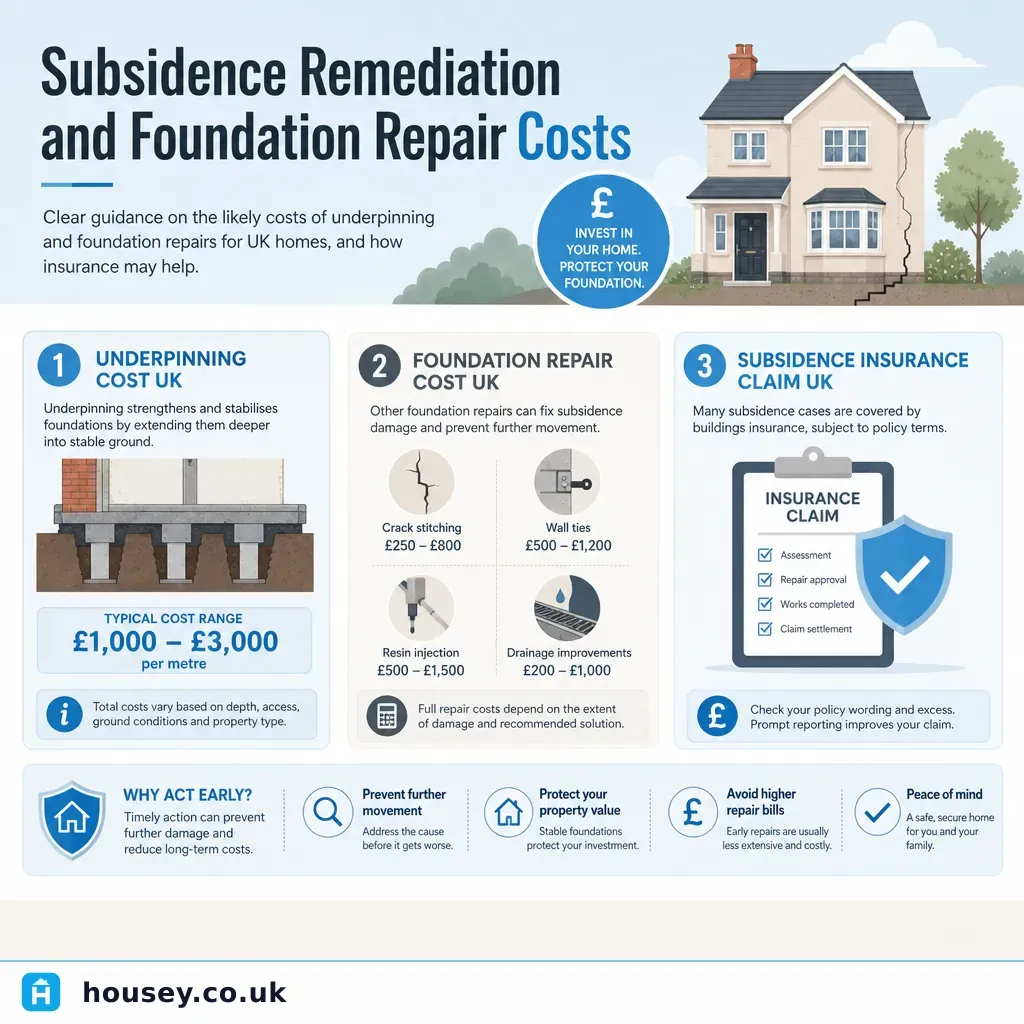
Subsidence Remediation and Foundation Repair Costs
Subsidence remediation in the UK typically costs £5,000–£50,000+ depending on cause and method.
 Planning & Pre-Build
Airey House Structural Repair and Remediation
Unremediated Airey houses are generally unmortgageable.
 Planning & Pre-Build
Changes to Loft Conversion Rules: Permitted Development and Planning Updates
In England, most loft conversions on standard houses qualify as Permitted Development under Class B of the GPDO 2015, allowing up to 40 cubic metres (terraced) or 50 cubic metres (detached or semi-detached) without a planning application — if conditions are met.
 Planning & Pre-Build
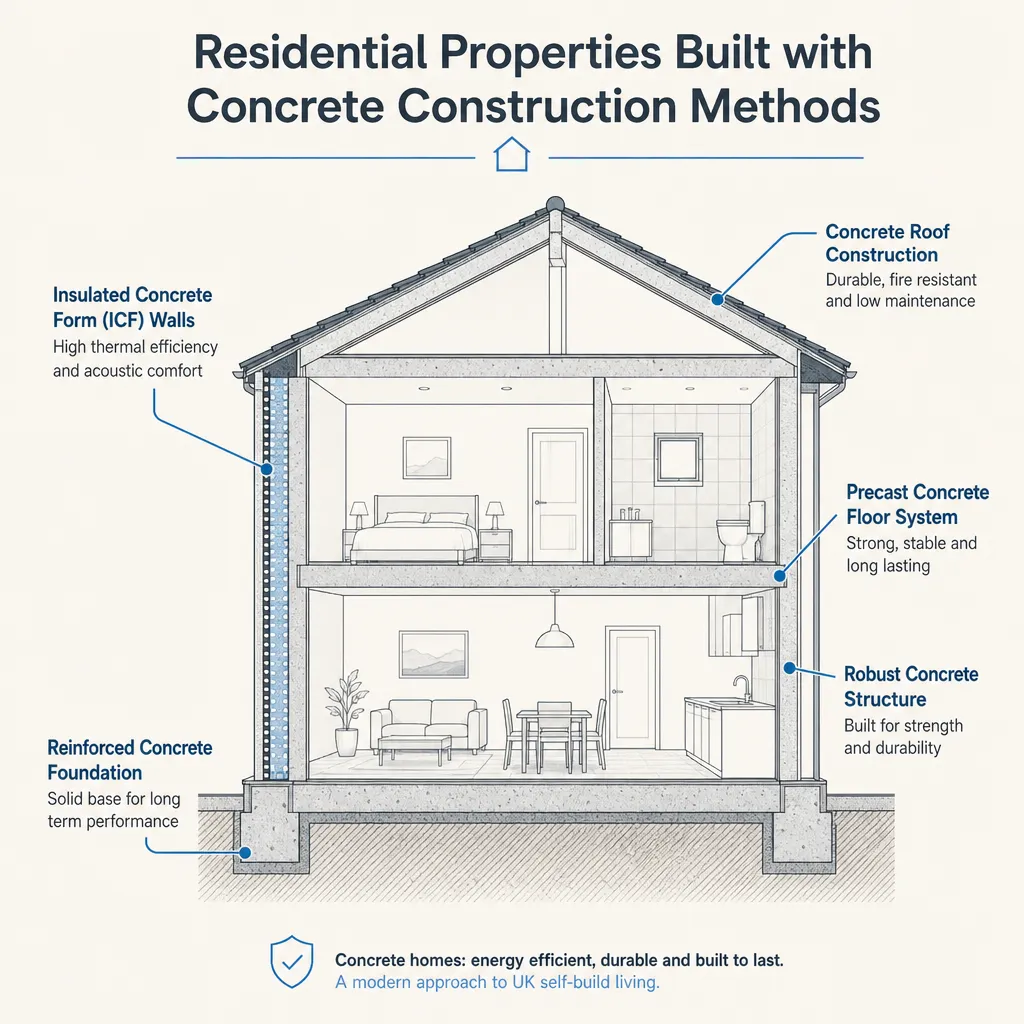
Residential Properties Built with Concrete Construction Methods
UK homes are built using several concrete methods: in-situ cast concrete, precast panel systems, insulating concrete formwork (ICF), and older non-traditional types such as Wimpey No-Fines and Laing Easiform.