What to Budget for Adding an Outdoor Electrical Socket
By Housey · Last reviewed 6th of May 2026
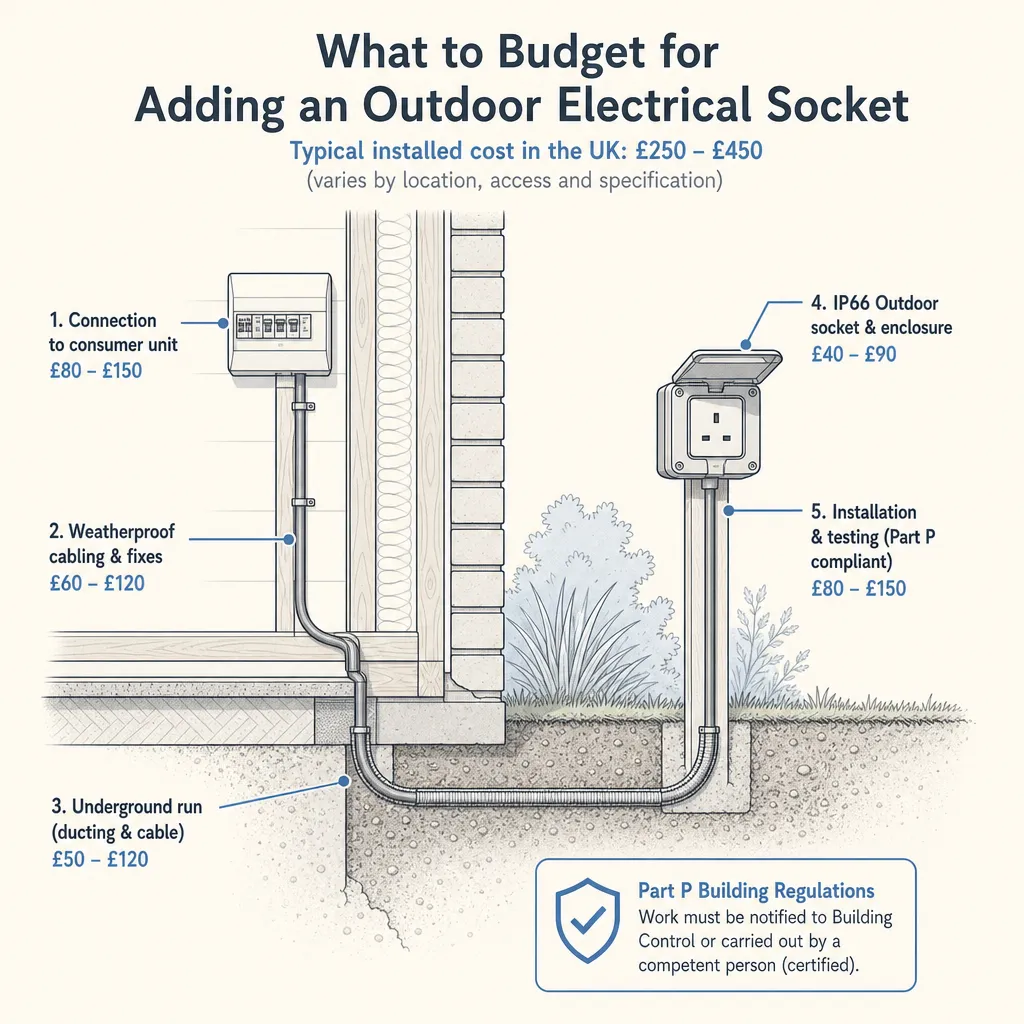
What to Budget for Adding an Outdoor Electrical Socket
Adding an outdoor power point is one of the more common domestic electrical jobs in the UK, arising when homeowners want to power garden lighting, run a shed workshop, charge an electric vehicle on a driveway, or supply equipment in a greenhouse. Because outdoor sockets must withstand rain, frost, and UV exposure, they require weatherproof fittings and protective devices not needed for standard indoor wiring — and the work carries clear regulatory obligations under Building Regulations Part P.
Key points
- Outdoor socket installations in England and Wales are notifiable under Part P of the Building Regulations; a registered competent person (NICEIC, NAPIT, or ELECSA member) can self-certify, avoiding a local authority notification fee of typically £150–£200.
- A single weatherproof socket added to an existing circuit costs approximately £150–£350; a new dedicated circuit from the consumer unit typically adds £100–£200 to that figure. Indicative UK costs, last reviewed 2026-05-06.
- All outdoor sockets must be protected by a 30mA Residual Current Device (RCD) under BS 7671 (IET Wiring Regulations, 18th Edition).
- Outdoor sockets require a minimum IP44 ingress-protection rating; exposed or wet locations may need IP55 or higher.
- An Electrical Installation Certificate (EIC) must be issued on completion of all notifiable electrical work; keep it with your property records.
What the installation involves
Adding an outdoor socket is not simply extending an indoor circuit through a wall. The installation must comply with BS 7671 and Approved Document P (Electrical Safety — Dwellings). In practice this means:
- Fitting weatherproof (IP-rated) socket outlets — typically IP44 minimum for wall-mounted positions.
- Protecting the circuit with a 30mA RCD, either at the consumer unit or within the socket itself.
- Routing cable via surface conduit (faster and cheaper), buried steel-wire-armoured (SWA) cable at the correct depth (500mm under cultivated ground; 600mm under paths or patios), or an overhead route where permitted.
- Confirming the existing circuit has spare capacity, or installing a new circuit from the consumer unit.
- Issuing an Electrical Installation Certificate on completion.
The cable route has the biggest impact on cost, so discuss options with each electrician before accepting a quote.
How much does an outdoor socket cost?
Indicative UK costs, last reviewed 2026-05-06. Figures vary by region, cable route, and existing consumer unit type.
Scenario | Typical indicative cost (inc. VAT) |
|---|---|
Single weatherproof socket, short run from existing circuit | £150–£300 |
Double weatherproof socket, medium cable run | £250–£400 |
New dedicated circuit from consumer unit | £350–£600 |
Buried SWA cable, 5–10m trench | Add £100–£250 |
Local authority Part P notification (unregistered electrician) | £150–£200 |
Obtain at least three quotes from registered electricians. Rates in London and the South East typically run 20–30% higher than other UK regions.
What drives the cost up or down
Cable route and distance. Surface conduit is significantly cheaper than buried armoured cable. The longer and more complex the run, the more labour and materials are needed.
Consumer unit condition. If the existing unit lacks RCD protection or is near capacity, an upgrade may be required before a socket can be safely added — confirm this during the quoting stage.
Number of sockets. Fitting two or three points in the same visit is more cost-effective per socket than separate call-outs.
Access difficulty. Solid-wall properties and thick stone walls add time to core drilling and making good.
VAT. Residential electrical work is subject to 20% VAT. Always confirm whether quotes are inclusive or exclusive before comparing.
Part P: two compliant routes
- Use a registered competent person (NICEIC, NAPIT, ELECSA, or similar). They self-certify the work with no local authority involvement — the most common and cost-effective route.
- Notify local authority building control. Required if using an unregistered electrician. Involves an additional fee and a subsequent inspection.
Verify registration on the NICEIC find-a-contractor register or the NAPIT online directory before instructing anyone.
Checklist: preparing for your installation
- Choose the socket location considering the cable route and intended use.
- Check whether the consumer unit has RCD-protected circuits; raise any concerns when getting quotes.
- Clarify the intended load: EV trickle charge, workshop, and garden lighting each have different circuit requirements.
- Clear access along the planned cable route before the electrician arrives.
- Ask each contractor for their competent person scheme registration number.
- Confirm whether making good and VAT are included in the quoted price.
Important limitations
This article provides general cost guidance for informational purposes only. Outdoor electrical installation requirements vary by property age, consumer unit type, cable routing conditions, and intended use. Outdoor electrical work carried out incorrectly presents serious risks of electric shock and fire. Only a qualified, registered electrician should design, install, test, and certify this work. This article is not a substitute for professional assessment.
What to ask a qualified professional
- Are you registered with NICEIC, NAPIT, ELECSA, or another government-authorised competent person scheme? Can you provide your registration number?
- Will you issue an Electrical Installation Certificate on completion?
- Will the circuit be protected by a 30mA RCD?
- What IP rating will the socket carry, and is it appropriate for the location?
- Does my consumer unit need any work before you can safely add this circuit?
- Is the quote inclusive of VAT, making good, and all materials?
- What assumptions is the quote based on, and what could change the price?
When to get professional help
Outdoor electrical work should always be carried out by a registered electrician. Contact a professional promptly if an existing outdoor socket shows scorch marks, water ingress, or discolouration; if the RCD trips repeatedly on outdoor circuits; or if any previous outdoor electrical work lacks certification.
How Housey can help
Housey helps UK homeowners find and compare quotes from qualified local tradespeople. Use the Housey platform to connect with registered electricians in your area and compare credentials and prices before committing to a contractor.
Frequently asked questions
Do I need planning permission to install an outdoor electrical socket?
Planning permission is not required in most cases — this is a Building Regulations matter rather than a planning one. However, if your property is listed or in a conservation area, check with your local planning authority before drilling through external walls or adding visible conduit, as additional consent requirements may apply.
Can I fit an outdoor socket myself?
Most outdoor socket installations are notifiable work under Part P and must be carried out by a registered competent person or formally notified to building control. DIY electrical work that does not comply with BS 7671 can void home insurance and creates serious safety risks. Always use a registered electrician.
What IP rating does an outdoor socket need in the UK?
Outdoor wall-mounted sockets should carry at least an IP44 rating, meaning they are splash-proof from any direction. Sockets in more exposed locations, near water features, or in very wet environments may require IP55 or higher. Your electrician will advise on the correct specification under BS 7671.
What is an Electrical Installation Certificate and do I need one?
An Electrical Installation Certificate (EIC) confirms the installation was designed, constructed, and tested to BS 7671. It is legally required for all notifiable electrical work under Part P. Retain it with your property records — you will need it when selling the property or making an insurance claim involving the installation.
How long does it take to install an outdoor socket?
A single socket added to an existing circuit typically takes half a day. A new dedicated circuit or buried armoured cable run may take a full day. Allow additional time if there is significant wall chasing, making good, or consumer unit work required.
Sources and further reading
- Approved Document P: Electrical Safety — Dwellings — GOV.UK / MHCLG
- IET Wiring Regulations (BS 7671) — Institution of Engineering and Technology
- NICEIC: Find a Contractor — NICEIC
- NAPIT: Find a Member — NAPIT
- Electrical Safety First: Guidance for Homeowners — Electrical Safety First
Useful next reads
 General property advice
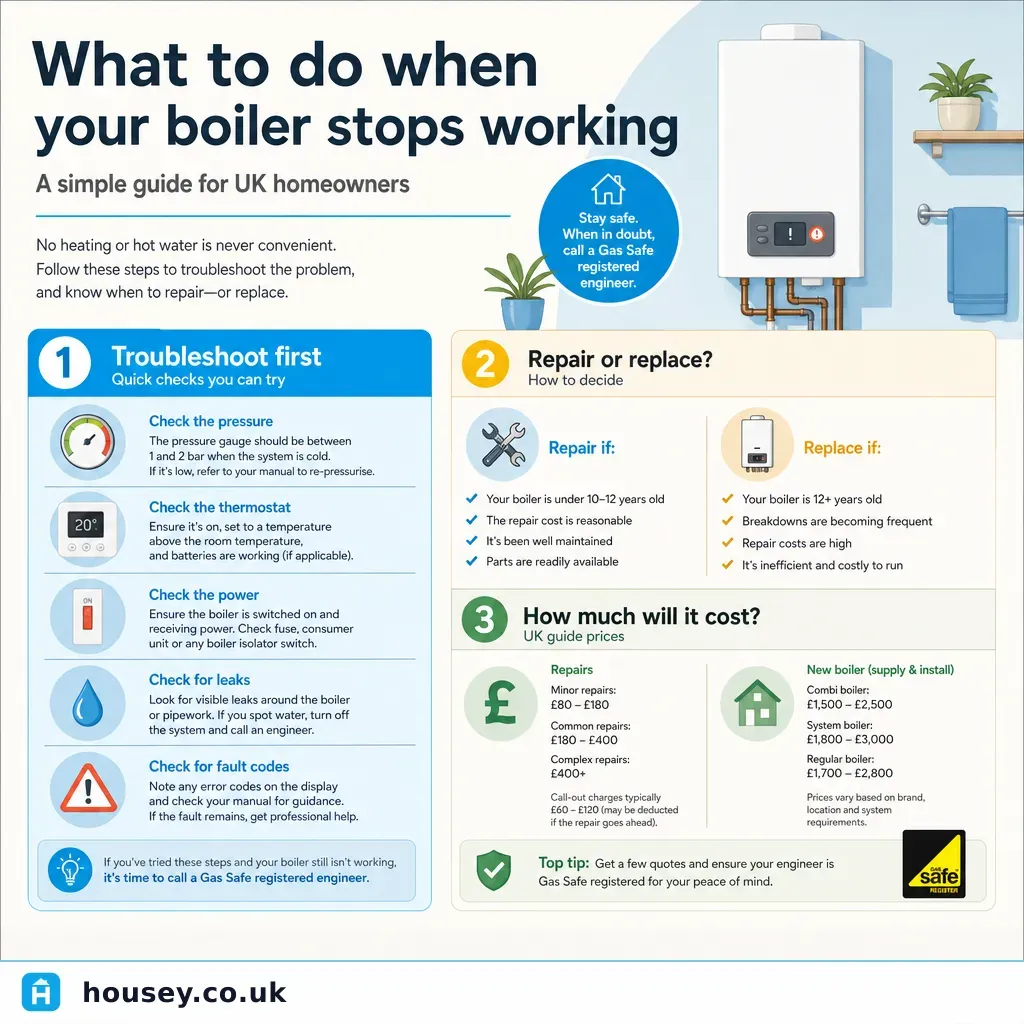
What to do when your boiler stops working
When your boiler stops working, check the pressure gauge (should read 1–1.
 General property advice
Property Market Trends: Activity Growth and Price Movements
UK property market activity is measured through completed sale registrations (HM Land Registry), lender mortgage data, and transaction volumes from HMRC.
 General property advice
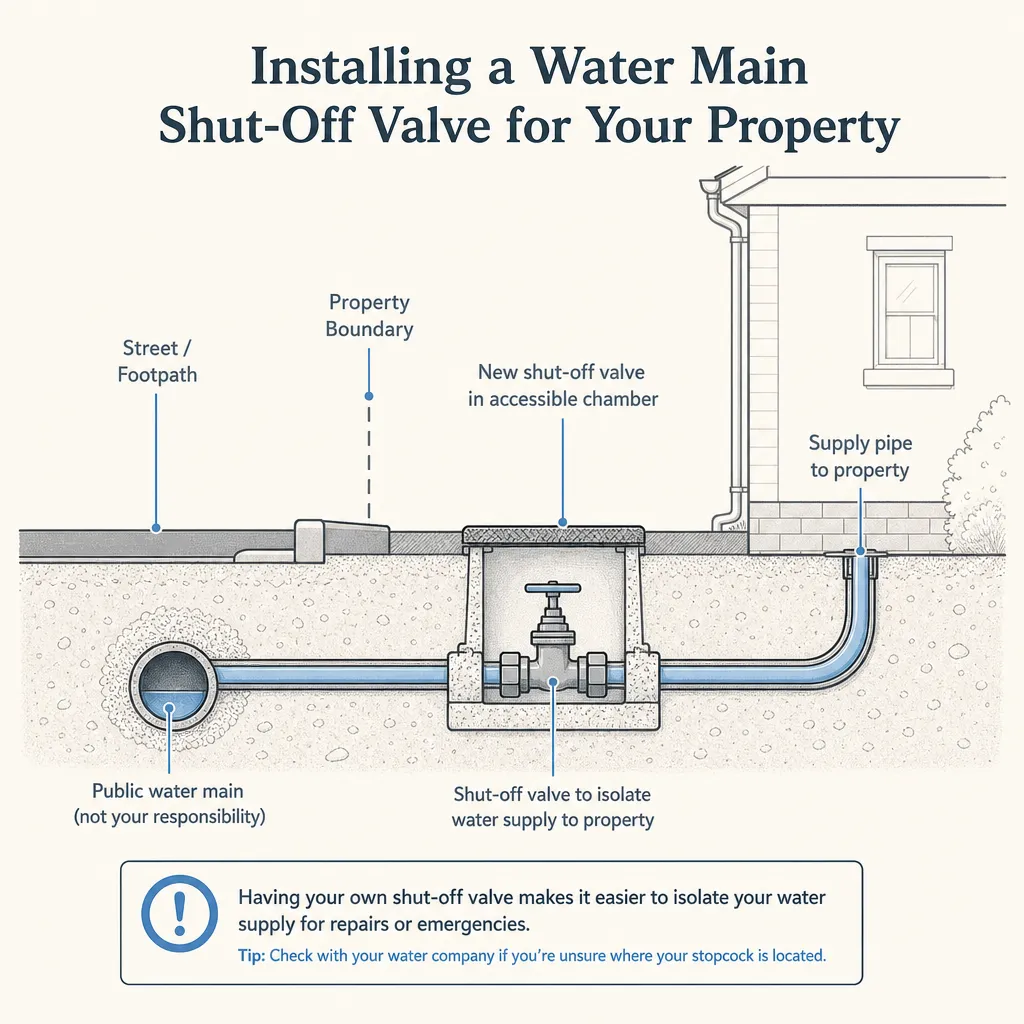
Installing a water main shut-off valve for your property
A water main shut-off valve — commonly called a stopcock — controls all water entering your home from the mains.
 General property advice
Monthly House Price Index: August Market Report and Analysis
The UK House Price Index is published monthly using completed Land Registry transaction data, meaning August figures typically reflect sales agreed months earlier.
 General property advice
Scottish Property Market: Activity and Regional Trends
Scotland's property market operates under distinct legal rules: sellers must provide a Home Report before marketing, transactions become legally binding at conclusion of missives rather than exchange of contracts, and Land and Buildings Transaction Tax replaces Stamp Duty.