Installing Outdoor Handrails: Safety Requirements and Installation Costs
By Housey · Last reviewed 1st of June 2026
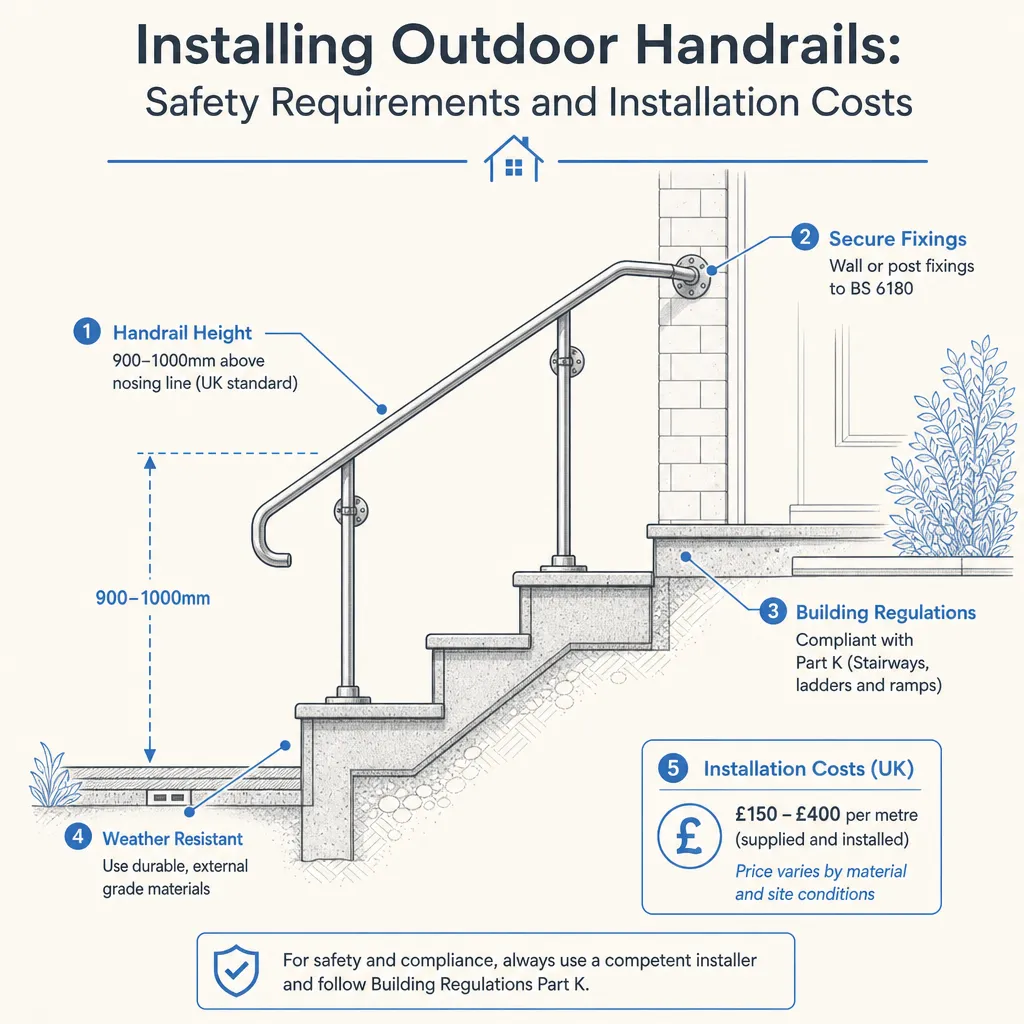
Installing Outdoor Handrails: Safety Requirements and Installation Costs
External steps and ramps are a leading cause of slips and falls around UK homes, and the decision to add or upgrade a handrail often arises during extension work, access improvements, or after a surveyor flags a trip hazard. The question is rarely whether a handrail would help — it almost always would — but whether one is legally required, what standard it must meet, and what a professional installation should cost.
Key points
- Building Regulations Approved Document K requires a handrail on any domestic stair with two or more risers and on ramps where the total rise exceeds 600mm.
- Handrails must be positioned between 900mm and 1,000mm above the pitch line, measured vertically from the line connecting the stair nosings.
- Stairs wider than 1,000mm require handrails on both sides; narrower stairs need at least one.
- Simply adding a handrail to existing steps generally does not require a Building Regulations application, but the installation should still comply with Part K specifications.
- Listed buildings and properties in conservation areas may require Listed Building Consent before any handrail is fitted.
When are outdoor handrails required by Building Regulations?
Building Regulations Approved Document K (Protection from Falling, Collision and Impact) sets out the rules for handrails on new and altered stairs, ramps, and walkways. For private dwellings, the key requirements are:
- Stairs with two or more risers: at least one handrail is required. If the stair is wider than 1,000mm, handrails are required on both sides.
- Ramps with a rise exceeding 600mm: handrails must be provided on both sides.
- Single steps: Part K does not mandate a handrail for a single riser in a private dwelling, though one is strongly advisable for accessibility.
Part K applies to new building work, extensions, and material alterations. Retrofitting a handrail to existing external steps — rather than constructing new steps — does not usually require a formal Building Regulations application. That said, any installation should still aim to meet Part K specifications, and the fixing method must be structurally sound.
If your property falls under Part M (Accessible and Adaptable Dwellings — Category 2 or 3), more detailed guidance applies, including graspable handrails on all external steps regardless of riser count.
Handrail height and specification under Approved Document K
The correct height for an outdoor handrail is 900mm to 1,000mm, measured vertically from the pitch line — the imaginary line connecting the nosings (leading edges) of the treads. This applies along the full run, including at landings.
Further specification points from Approved Document K include:
- The handrail profile should be graspable — a round or oval section 40–50mm in diameter is typical, or a flat section no wider than 50mm.
- There should be a clearance of at least 50mm between the handrail and any wall bracket to allow a full handgrip.
- At the top and bottom of the flight, handrails should extend horizontally at least 300mm beyond the stair run to guide users safely on and off.
- Handrails should be continuous along the full run wherever possible.
Comparing outdoor handrail materials
Material | Best for | Maintenance | Approximate lifespan | Main limitation |
|---|---|---|---|---|
Stainless steel (grade 316) | Modern homes; coastal or exposed settings | Very low — occasional clean | 25–40+ years | Higher upfront cost |
Powder-coated mild steel | Period and traditional properties | Low — check coating annually | 15–25 years | Chips or scratches can lead to rust |
Pressure-treated timber | Cottage gardens; informal settings | Medium — oil or treat every 1–3 years | 10–20 years | Can become slippery if untreated |
Aluminium | Lightweight modern applications | Very low | 20–30 years | Less traditional appearance |
Wrought iron | Period townhouses; heritage settings | Medium — repaint every 3–5 years | 30–50 years | Heavy; requires specialist fitting |
For exposed settings — north-facing elevations, coastal postcodes, or high-rainfall areas — grade 316 stainless steel or hot-dip galvanised steel offers the best long-term corrosion resistance. Timber handrails, while attractive, need consistent treatment to prevent rot and slippage.
What does outdoor handrail installation cost in the UK?
Costs vary depending on material, run length, number of posts, fixing method, and whether masonry preparation is needed. The following are indicative UK costs, last reviewed 2026-06-01, and should be treated as a starting point for budgeting only.
- Timber handrail, wall-mounted, short run (3–5 treads): £150–£350 supply and fit.
- Powder-coated steel rail with posts, short run: £300–£600 supply and fit.
- Stainless steel handrail with core-drilled posts: £500–£1,200+ depending on run length and detail.
- Wrought iron or bespoke fabricated rail: £600–£2,000+.
These figures exclude repair work to the steps themselves, repointing, or drainage improvements a contractor may recommend. Obtain at least three itemised quotes and ask whether drilling, masonry anchoring, and end returns are included. Marine-grade stainless or hot-dip galvanised fixings are worth specifying in exposed outdoor settings.
Worked example: Victorian terrace with front-door steps
Consider a Victorian mid-terrace in Leeds with three brick steps leading to the front door. The steps are 900mm wide, in good condition, but have no handrail — a hazard flagged in a RICS Level 2 Home Survey. The homeowner wants a period-appropriate solution.
Options assessed:
- Timber newel post and handrail, wall-fixed: Suits the aesthetic but requires treatment every two to three years. Approximate supply and fit: £200–£350.
- Powder-coated black steel rail with two posts, core-drilled into step cheeks: More durable and low-maintenance; visually suits the period terrace. Approximate supply and fit: £400–£550.
- Wrought iron forged rail: Best heritage match, but more expensive and requires periodic repainting. Approximate supply and fit: £700–£1,000+.
The homeowner chose option 2 — the powder-coated steel — as the best balance of durability, appearance, and cost. The installer confirmed the step cheeks were solid enough for post fixings and provided a brief written installation record.
All figures indicative, last reviewed 2026-06-01. Quotes vary by contractor and location.
Outdoor handrail installation checklist
When to get professional help
Adding a handrail to existing steps is within the scope of most competent joiners, metalworkers, or general builders. Seek professional advice if:
- The steps themselves show cracking, subsidence, or movement — address the structural issue before fitting a handrail.
- The property is listed or in a conservation area and you are unsure whether consent is required.
- The handrail forms part of a new extension or new-build project where Building Regulations inspections apply.
- The wall receiving fixings shows signs of damp, spalling, or poor masonry — a structural check may be advisable before drilling.
How Housey can help
Housey connects UK homeowners with vetted tradespeople for external improvement work, including access upgrades, step repairs, and handrail installation. If a survey has flagged a handrail as a recommendation, or you are planning access improvements ahead of a sale or let, Housey can help you find and compare quotes from local professionals who understand Part K requirements.
Frequently asked questions
Do I need planning permission to install an outdoor handrail?
In most cases, no. Adding a handrail to existing external steps is generally considered a minor alteration within permitted development. However, if your property is listed, any works — however minor — may require Listed Building Consent. If you are in a conservation area, check with your local planning authority before fitting a prominent front-elevation handrail, as controls can vary by area.
What height should an outdoor handrail be in the UK?
Building Regulations Approved Document K requires a handrail height of 900mm to 1,000mm, measured vertically from the pitch line — the line connecting the nosings of the stair treads. For level paths or landings, the measurement is taken from the finished floor level. This height must be maintained along the full run, including at intermediate landings.
Can I install an outdoor handrail myself?
There is no legal restriction on a homeowner fitting a handrail to existing external steps, provided no notifiable structural or electrical work is involved. However, the fixing method is critical — poorly anchored handrails can fail under load and cause serious injury. If you are not confident drilling into masonry with appropriate outdoor-rated anchors, engage a competent tradesperson.
What is the best material for an outdoor handrail in a wet climate?
For consistently wet or exposed locations — north-facing elevations or coastal properties — grade 316 stainless steel or hot-dip galvanised steel offers the best corrosion resistance. Aluminium is also low-maintenance and does not rust. Timber handrails work well aesthetically but need oiling or treatment every one to three years to prevent decay and to maintain a non-slip surface.
Sources and further reading
Useful next reads
 Improvement & Build
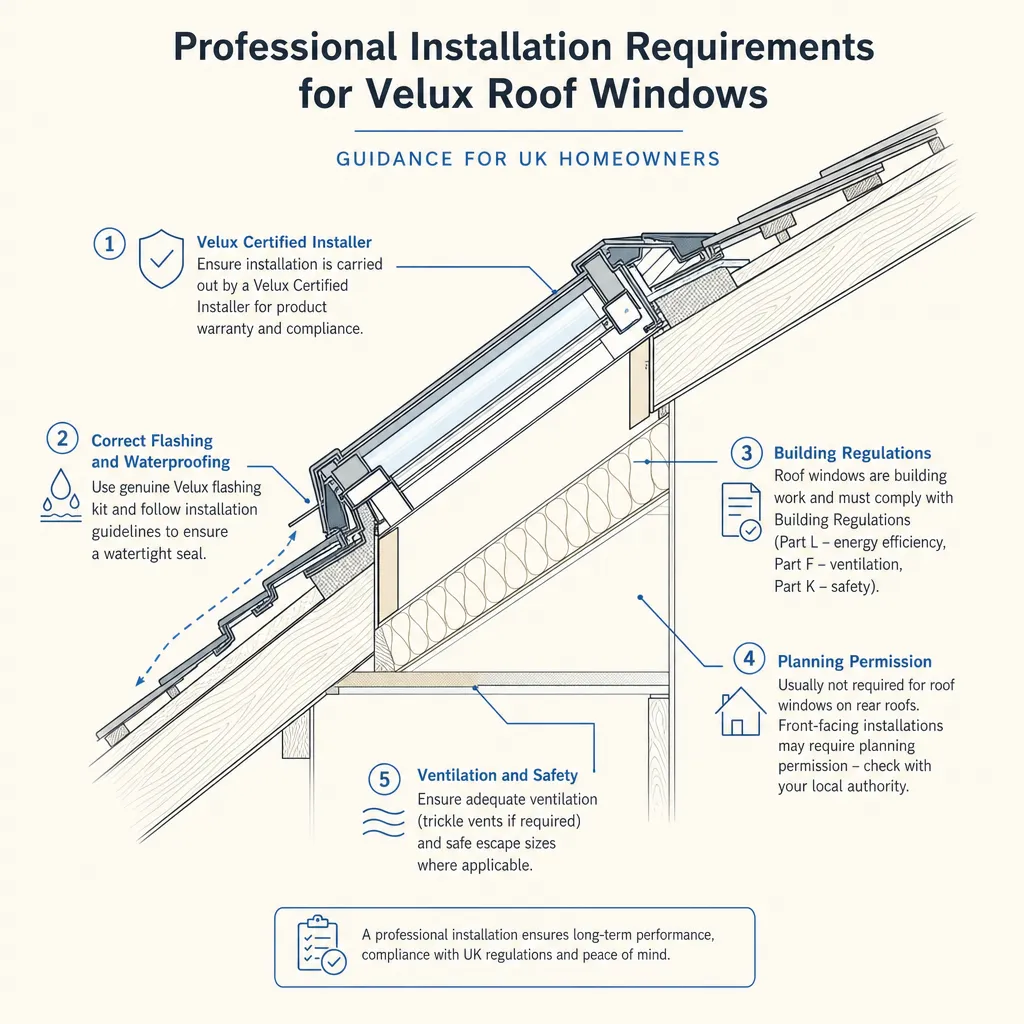
Professional Installation Requirements for Velux Roof Windows
Velux roof windows installed as replacements in the same opening usually fall under permitted development, but new openings or changes on listed buildings or in conservation areas require planning permission.
 Improvement & Build
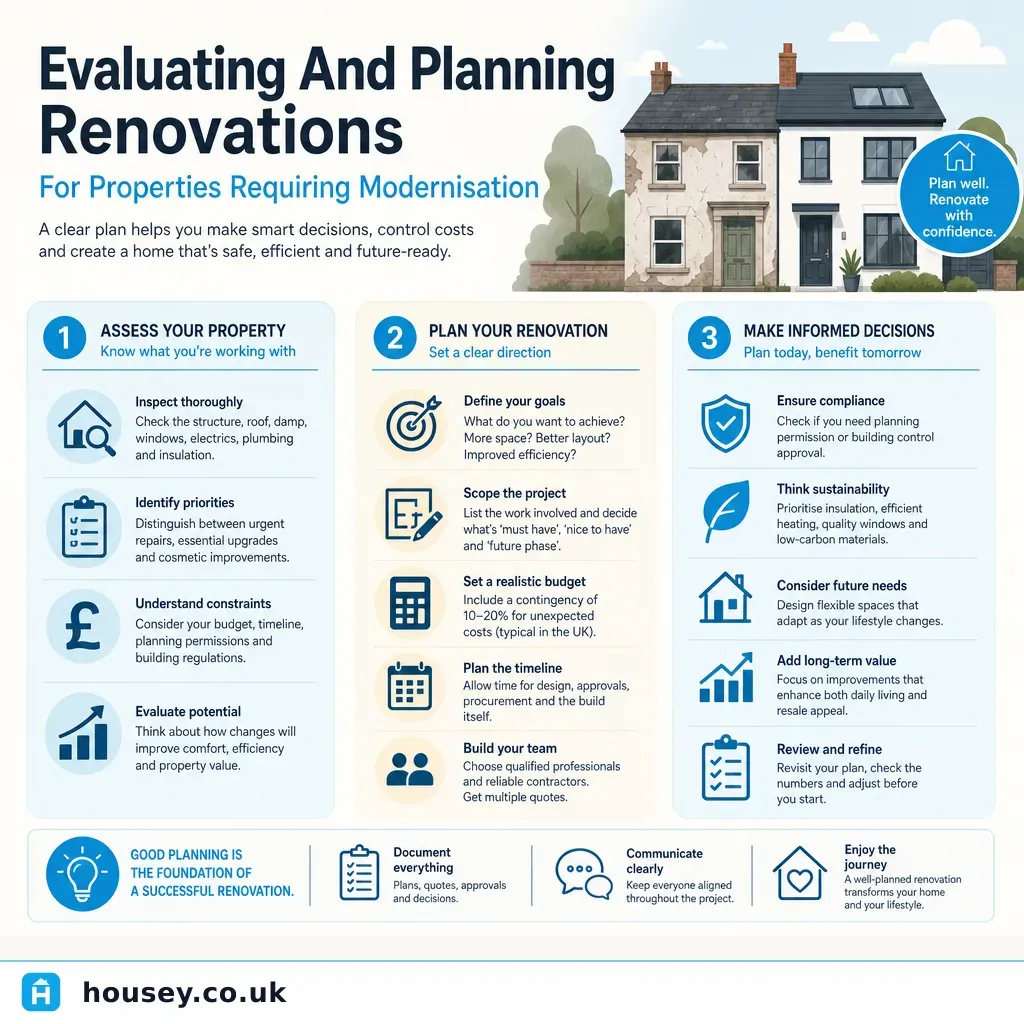
Evaluating And Planning Renovations For Properties Requiring Modernisation
Start by commissioning a condition survey — RICS Level 3 for pre-1919 properties — to identify structural defects, damp, and services issues before finalising a budget.
 Improvement & Build
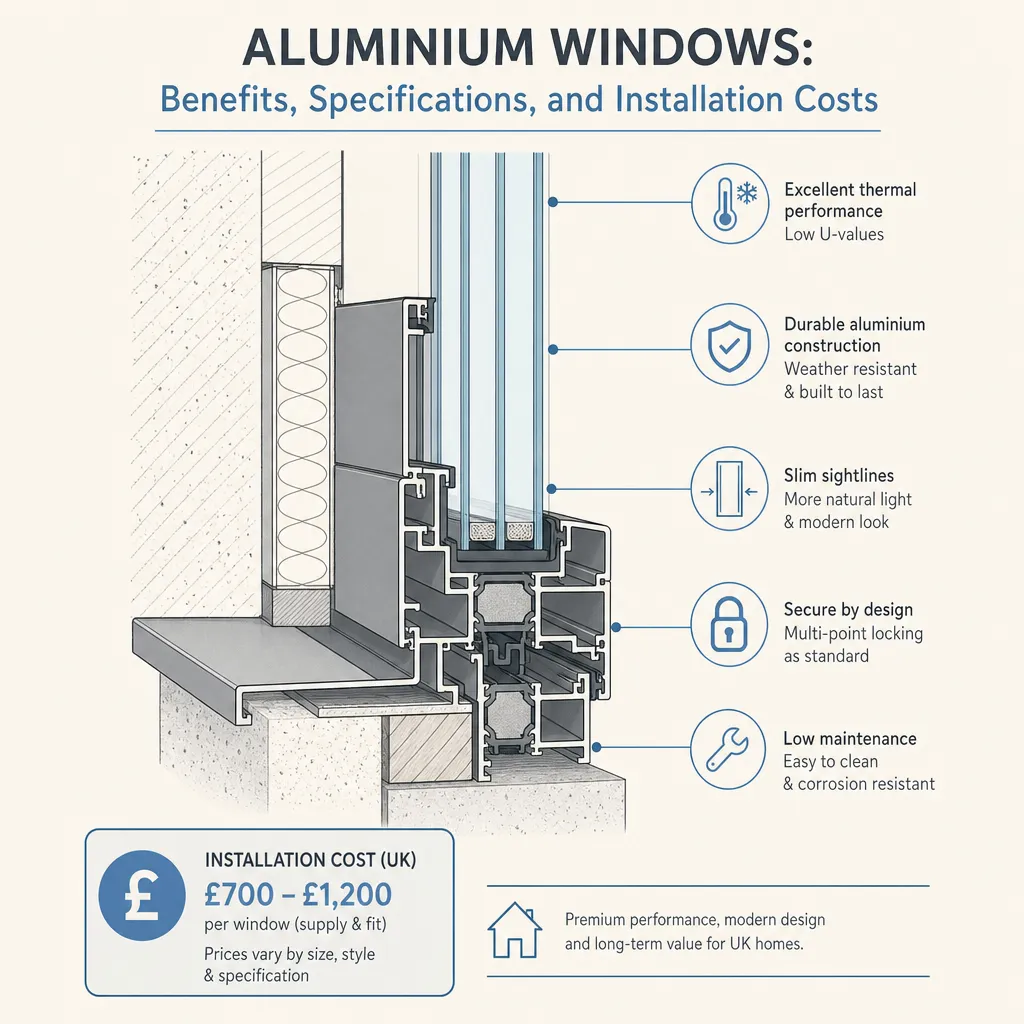
Aluminium Windows: Benefits, Specifications, and Installation Costs
Aluminium windows typically cost £600–£1,800 per window installed in the UK, depending on size and specification.
 Improvement & Build
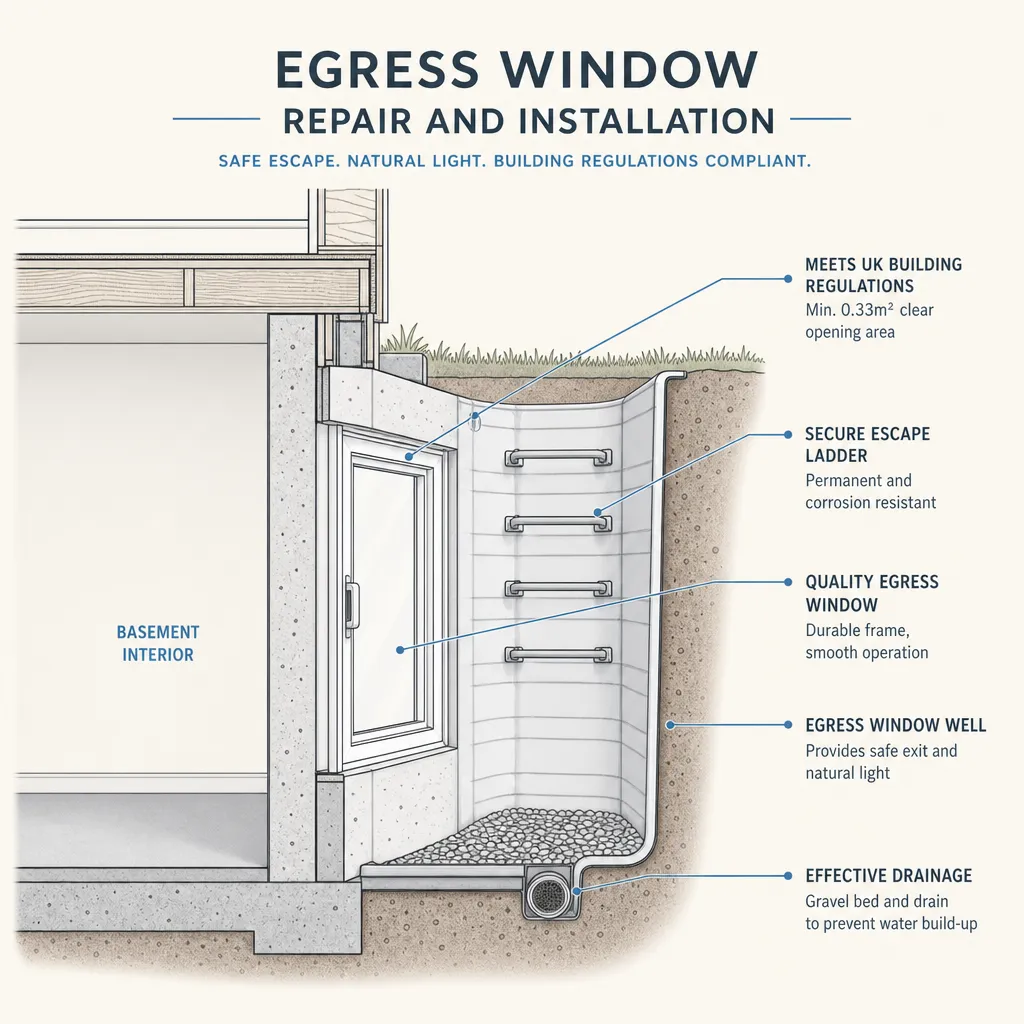
Egress Window Repair and Installation
An egress window is a window large enough to serve as an emergency escape route from a habitable room.
 Improvement & Build
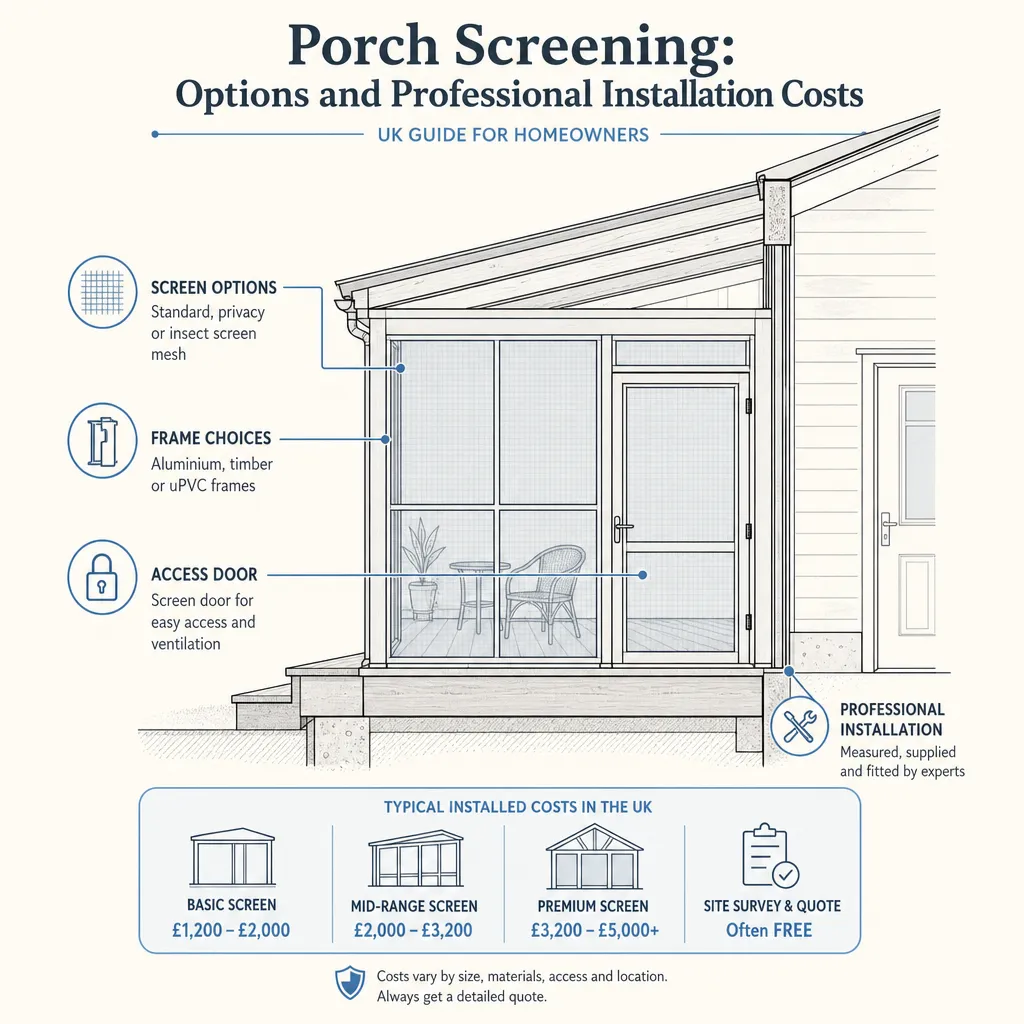
Porch Screening: Options and Professional Installation Costs
Porch screening ranges from simple insect mesh on a timber frame to bespoke aluminium-framed glazed enclosures.