Outdoor Living Features Most Valued by Older Homeowners in the UK
By Housey · Last reviewed 24th of May 2026
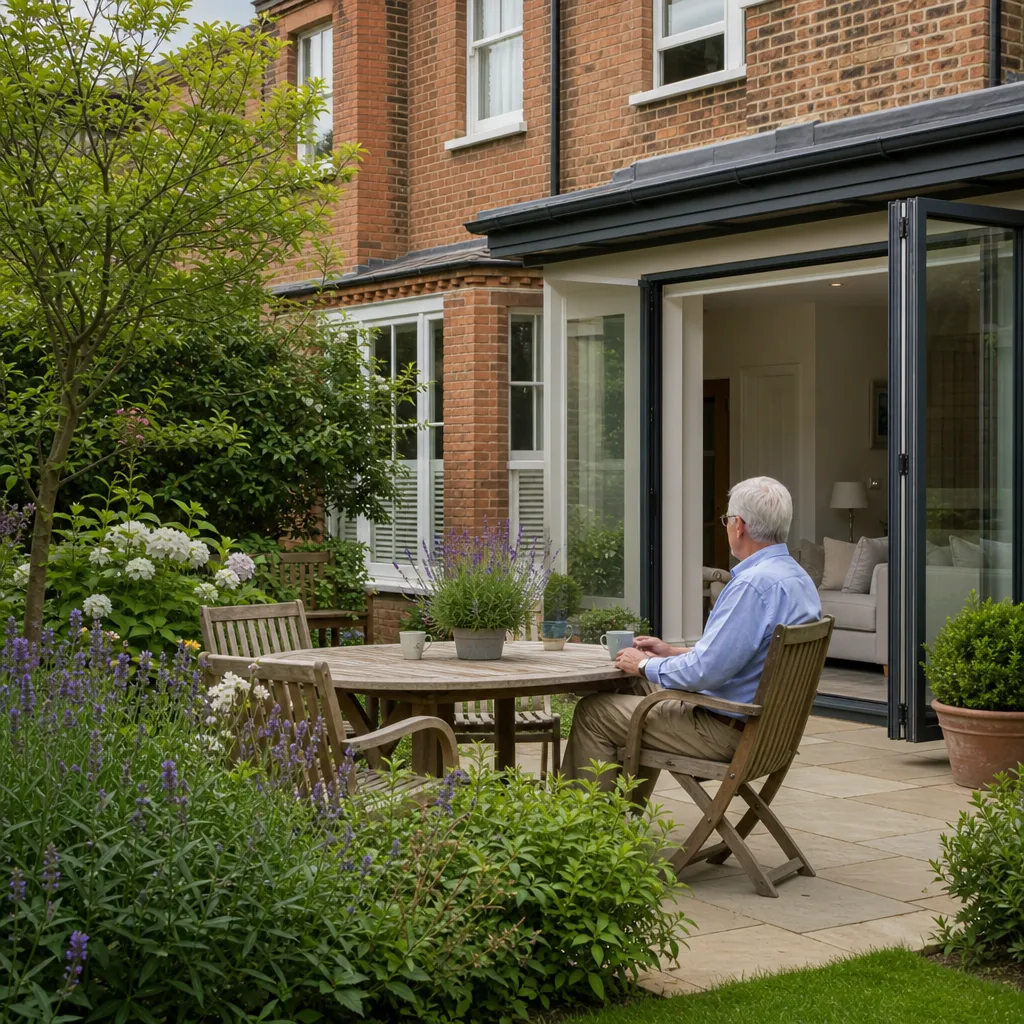
Outdoor Living Features Most Valued by Older Homeowners in the UK
The garden and outdoor space take on fresh significance for homeowners in their 60s, 70s, and beyond. Whether retirement brings more time to use and enjoy an outdoor space, or changing mobility means that ease of access and lower maintenance become priorities, the features older homeowners value most often differ substantially from those of younger buyers. Understanding this shift helps homeowners plan upgrades that genuinely serve them — and helps designers working with older clients deliver what actually matters.
Key points
- Level or ramped external access — removing or replacing steps — is consistently cited as the single most important outdoor accessibility feature for older homeowners, particularly for those with reduced mobility or joint pain.
- The Royal Horticultural Society (RHS) recommends raised beds at 60–80 cm in height for gardeners who benefit from seated or standing planting without sustained bending or kneeling.
- Sheltered, covered seating areas — pergolas, verandas, or garden rooms with polycarbonate or glass roofing — extend the usable outdoor season significantly in the UK climate, making outdoor space practical from early spring through to late autumn.
- Sensor-activated or low-level path lighting reduces fall risk at dusk and after dark; falls in the home and garden are the leading cause of injury-related hospital admission for over-65s in England, according to NHS data.
- Research from the Centre for Ageing Better links regular outdoor engagement with positive mental health and wellbeing outcomes for older adults, making garden usability a health consideration as well as a lifestyle one.
What outdoor features do older UK homeowners prioritise?
Research from the Centre for Ageing Better, the RHS, and homeowner surveys consistently identifies a shift in priorities as homeowners age. Younger homeowners often prioritise visual impact and entertaining space; older homeowners tend to prioritise usability, ease of maintenance, and year-round comfort.
Feature | Why valued by older homeowners | Design considerations |
|---|---|---|
Level or ramped access | Reduces fall risk; accessible with mobility aids | Gradient no steeper than 1:20 for comfortable unassisted use; drainage is critical |
Raised beds | Enables continued growing without bending or kneeling | 60–80 cm height; minimum 60 cm wide for one-sided access, 90 cm for two-sided |
Sheltered seating area | Year-round outdoor use; protected from wind and rain | Solid foundation; well-lit; easily accessible directly from the house |
Low-maintenance planting | Reduces physical demand of upkeep | Perennials, ground cover, slow-growing shrubs; avoids annual bedding plants |
Path and step lighting | Reduces fall risk; extends usable evening hours | PIR sensor lights; low-level bollard lights; solar or mains-wired options |
Hard landscaping (patios, paths) | Firm, even surface for walking and wheelchair access | Non-slip textures; avoid loose gravel; avoid steep surface cambers |
Wildlife and nature planting | Mental wellbeing; sensory engagement | Native plants, bird feeders, bee-friendly planting; low intervention once established |
Garden office or summerhouse | Purpose, social connection, year-round activity | Requires insulation, power, and heating for year-round use; may need planning permission |
How do access and mobility considerations shape outdoor design?
The most cited outdoor modification for older homeowners is improved access from the house to the garden. A typical rear garden in a UK semi-detached or terraced house involves steps down from a back door — often one to three risers — which can become a significant barrier as mobility changes.
Common solutions include:
- Replacing steps with a sloped ramp at a gradient of no steeper than 1:12, and ideally 1:20 for comfortable unassisted use.
- Installing a handrail on steps that cannot be replaced.
- Widening access gates to allow mobility scooter or wheelchair access — a minimum clear width of 900 mm is commonly recommended.
- Relaying paving to eliminate uneven surfaces and reduce tripping hazards.
Work of this nature is generally covered by permitted development and does not require planning permission in most cases. However, work to a listed building or within a Conservation Area may require consent before it starts. Check with your local planning authority if you are unsure.
Low-maintenance garden design: what works in practice?
For older homeowners who want to remain actively involved with their garden, reducing peak-season maintenance demand is usually more effective than eliminating planting altogether. A heavily paved garden with no planting may be low in maintenance but often lacks the sensory and wellbeing value that many older homeowners particularly value.
Practical low-maintenance approaches include:
- Ground cover planting: Hardy perennials such as hardy geraniums, epimediums, and hostas (for shaded areas) suppress weeds and require minimal intervention after establishment.
- Mulching: A 5–8 cm layer of organic mulch applied to planted beds once a year significantly reduces weeding and retains moisture during dry spells.
- Irrigation: A drip or seep irrigation system on a timer removes the physical demand of regular watering in summer months.
- Raised beds with irrigation: A small kitchen garden with a simple drip system allows continued food growing without bending and kneeling.
- Robot mowers: Increasingly popular for lawns, removing the regular physical and time demand of mowing across larger areas.
What to ask a garden designer when planning outdoor space for older homeowners
Before commissioning a garden designer or landscaper, having clear answers to the following helps you get an accurate and relevant brief:
- What are the current access barriers from the house to the garden? Are there steps, uneven surfaces, or narrow gates?
- What activities do you want the garden to support — eating outside, growing food, wildlife watching, exercise, grandchildren visiting?
- How much time and physical effort do you want to spend on maintenance each week? Be specific — five minutes or two hours is a meaningful difference in design terms.
- What is the soil type and garden orientation? North-facing gardens and heavy clay soils significantly affect what will grow reliably without intensive management.
- What is your budget, and does it include project management as well as design and build?
- What existing elements — a mature tree, a favourite rose, a particular view — do you want to retain?
- Are there any medical or mobility considerations the designer should factor into access routes and surface choices?
When to get professional help
Most garden improvements do not require planning permission, but there are exceptions:
- Garden buildings such as offices, studios, and summerhouses over certain size or height thresholds may require planning permission, particularly near boundaries or in conservation areas. Check GOV.UK's permitted development guidance before ordering a building.
- If access modifications involve a listed building curtilage or a Conservation Area, listed building consent or conservation area consent may be required before work starts.
- For significant hard landscaping, drainage, or level changes, a landscape contractor or garden designer with experience of accessible design will identify drainage and structural risks that a general builder may miss.
- If the homeowner has a specific medical condition or disability, an occupational therapist assessment — which can include the outdoor space — can identify needs that a designer can then incorporate into a costed brief.
How Housey can help
Housey connects UK homeowners with experienced garden designers and landscapers who can translate your priorities — whether that is improved access, a lower-maintenance planting scheme, or a comfortable year-round outdoor room — into a costed design brief. Comparing quotes through Housey gives you a clear picture of what different professionals offer and at what investment level.
Frequently asked questions
Does a garden ramp need planning permission?
In most cases, a ramp providing access to a dwelling does not require planning permission and is covered by permitted development rights. However, if the property is listed or in a Conservation Area, or if the ramp involves significant ground-level changes, listed building consent or conservation area consent may be required. Always check with your local planning authority if in doubt.
How much does a raised bed cost to install in a UK garden?
Indicative UK costs, last reviewed 2026-05-24. Timber raised beds range from approximately £100–£400 each for DIY installation; professionally installed raised beds with brick or steel surrounds can range from £300 to over £1,000 per bed depending on material, size, and finish. A garden designer or landscaper can advise on the most cost-effective approach for your layout and soil conditions.
What makes a garden low-maintenance for older homeowners?
The most effective low-maintenance gardens combine hard landscaping (minimising lawn area), perennial planting with organic mulch (reducing weed growth), automated irrigation (reducing watering), and a manageable planted area. A garden that is entirely paved is low in maintenance but can feel sterile; a well-designed balance of hard and soft landscaping is usually more satisfying over the long term.
Can I get financial support for outdoor accessibility improvements?
The Disabled Facilities Grant (DFG) is the main government-funded route for accessibility improvements in England, Wales, and Northern Ireland. It can cover adaptations inside and outside the home, including ramps and improved access. Eligibility is means-tested and assessed by an occupational therapist. Check your local council's website or contact your housing authority for current grant amounts and eligibility criteria.
Sources and further reading
- Disabled Facilities Grant — GOV.UK
- Planning Permission: when you do not need it — GOV.UK
- Accessible Gardening — Royal Horticultural Society
- Centre for Ageing Better — Centre for Ageing Better
- Falls: prevention — NHS
- Permitted development and listed buildings — Historic England
Useful next reads
 Improvement & Build
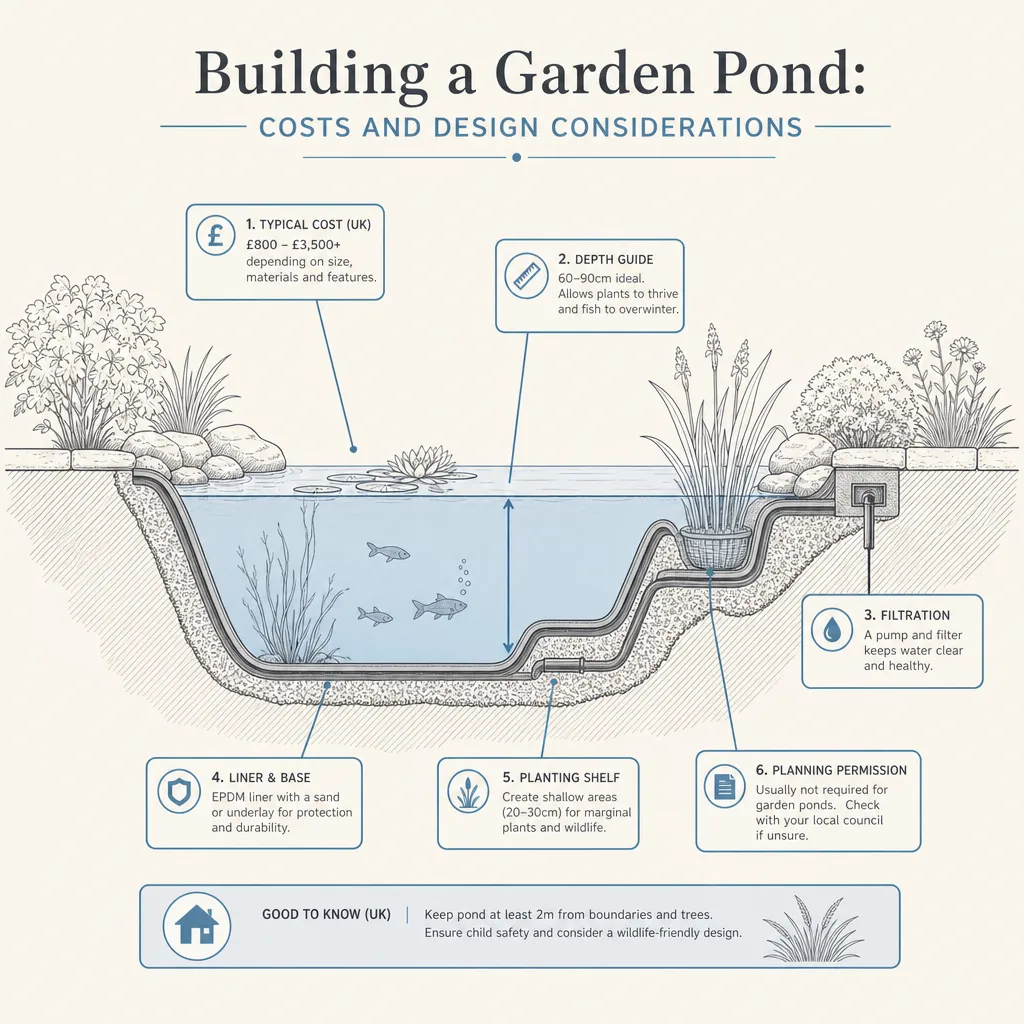
Building a Garden Pond: Costs and Design Considerations
A small garden pond costs from £500–£2,000 installed in the UK; a medium wildlife or ornamental pond typically ranges from £2,000–£7,000.
 Improvement & Build
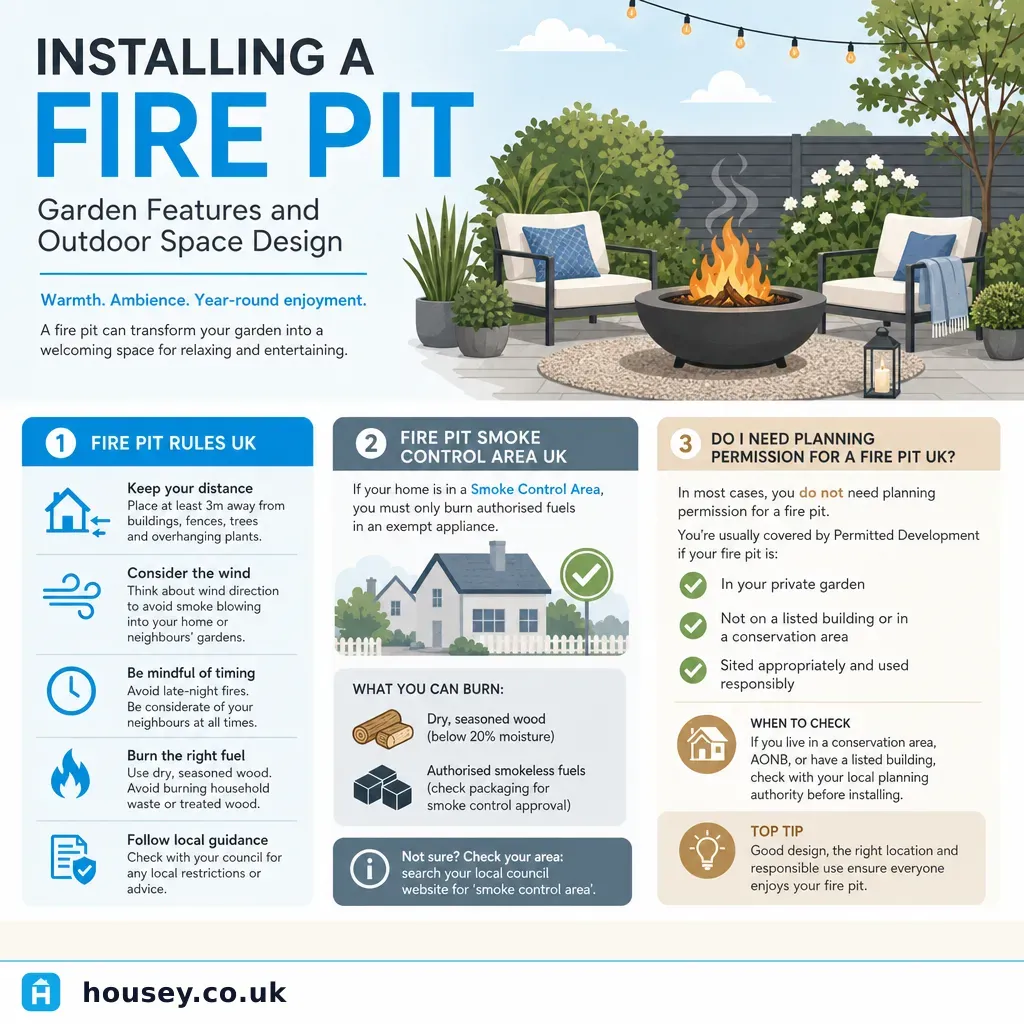
Installing a Fire Pit: Garden Features and Outdoor Space Design
Installing a garden fire pit in the UK is generally permitted, but Smoke Control Area rules prohibit open wood-burning in most towns and cities.
 Improvement & Build
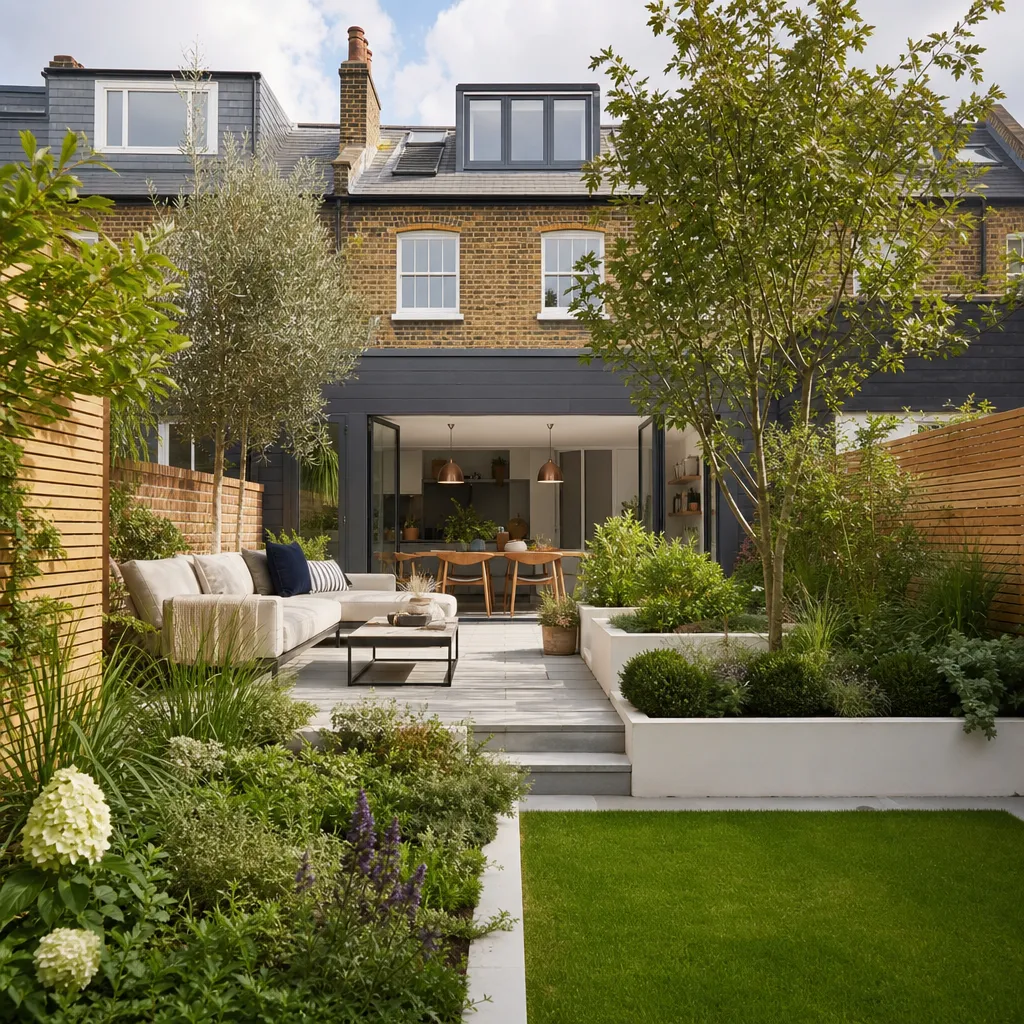
Seasonal Garden Transformations and Outdoor Design Ideas
A successful garden transformation in the UK works with the seasons rather than against them — establishing structure and hard landscaping in autumn or winter, planting in spring, and enjoying the results through summer.
 Improvement & Build
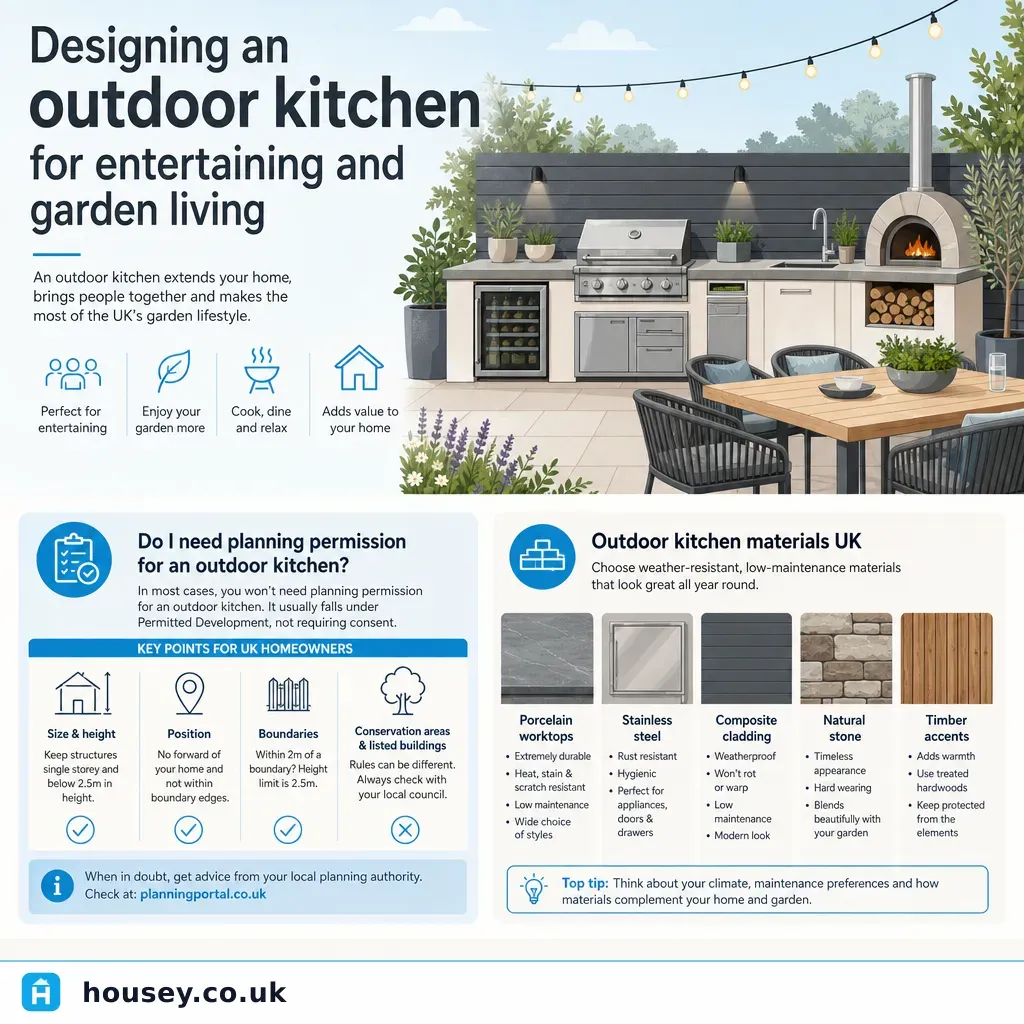
Designing an outdoor kitchen for entertaining and garden living
An outdoor kitchen in a UK garden needs a stable, level base — typically a concrete slab or quality paving — with weather-rated materials such as stainless steel grade 316 or frost-rated porcelain.
 Improvement & Build
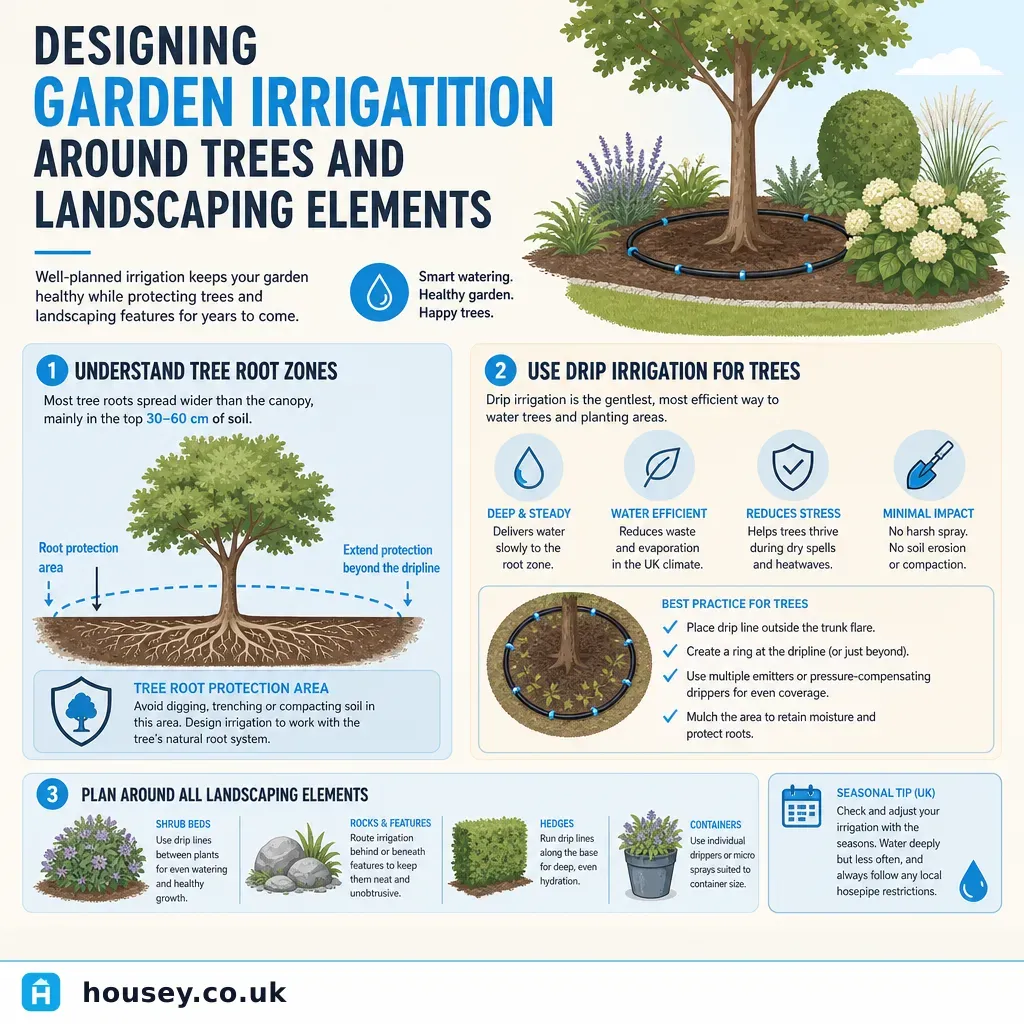
Designing Garden Irrigation Around Trees and Landscaping Elements
Design irrigation around trees by respecting the root protection area defined under BS 5837:2012, using drip or leaky pipe delivery rather than spray heads, and putting the tree zone on its own circuit.