Outdoor Porcelain Tile: Properties and Installation Considerations
By Housey · Last reviewed 30th of May 2026
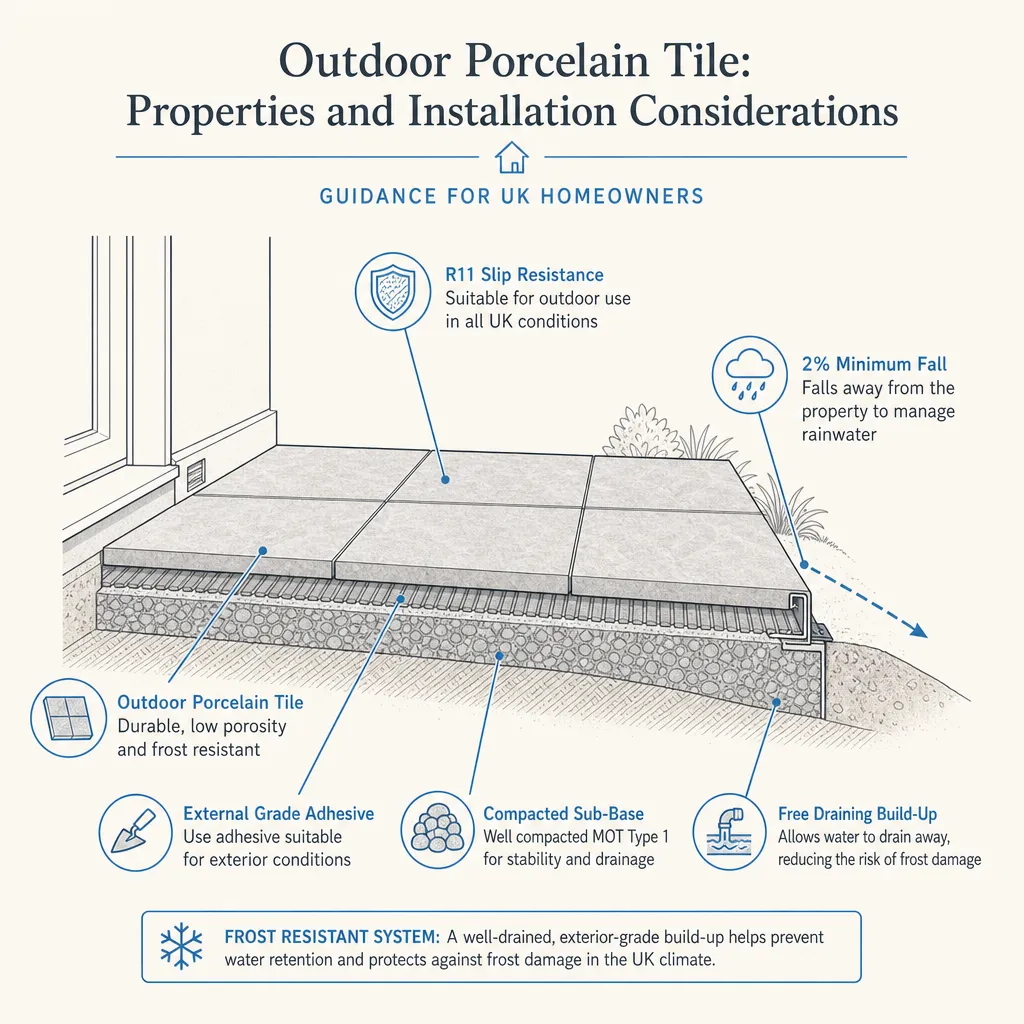
Outdoor Porcelain Tile: Properties and Installation Considerations
Porcelain tiles have become one of the most widely specified external surface materials for UK patios, paths, and driveways over the past decade, driven by their low maintenance and contemporary appearance. Their performance in the UK's wet and freeze-thaw climate, however, depends entirely on correct specification and installation — technical choices that go well beyond browsing a tile showroom.
Key points
- Outdoor porcelain tiles must carry a slip-resistance rating of at least R10 for level surfaces; R11 is recommended for slopes, steps, and surfaces regularly exposed to water.
- Pedestrian areas require a minimum tile thickness of 20mm; vehicle-bearing surfaces should use 30mm porcelain pavers specifically rated for vehicle loading.
- UK freeze-thaw conditions require tiles with water absorption ≤0.5% (tested to ISO 10545-3) — most porcelain meets this, but always verify the manufacturer's technical data sheet.
- Installation on a rigid concrete base requires a flexible C2-rated tile adhesive (BS EN 12004) or a full mortar bed to accommodate thermal movement — standard internal adhesive will fail outdoors.
- A drainage fall of at least 1:80 (approximately 12mm per metre) must be achieved across the finished surface to prevent ponding, which requires careful setting-out before laying begins.
Is porcelain tile suitable for outdoor use in the UK?
Yes, when correctly specified. Porcelain is sintered at very high temperatures, producing a tile with very low porosity — water absorption typically below 0.1% — which makes it inherently resistant to frost damage in most UK conditions. Unlike natural stone such as sandstone or slate, porcelain does not need sealing and resists staining from moss, algae, and iron-rich water.
However, outdoor porcelain is not universally straightforward. Its hardness makes cutting and drilling more demanding than ceramic or natural stone, and its smooth factory-finished surface can become dangerously slippery when wet if the wrong slip-resistance rating is selected.
Understanding slip resistance ratings
The R-rating system (DIN 51130) classifies the slip resistance of tile surfaces tested under shod conditions. For outdoor use in the UK, the relevant ratings are:
R-rating | Slip resistance level | Recommended outdoor use |
|---|---|---|
R9 | Low | Indoor dry areas only — not suitable outdoors |
R10 | Medium | Flat outdoor surfaces with moderate water exposure |
R11 | High | Slopes, steps, poolside, areas with frequent water exposure |
R12 | Very high | Commercial ramps and wet industrial areas — uncommon in residential |
For most UK residential patios and paths, R10 is the minimum acceptable specification. For garden steps, north-facing surfaces prone to algae build-up, or areas adjacent to water features, R11 is the safer specification. Always check that the slip rating is stated in the manufacturer's technical data sheet, not estimated from surface appearance alone.
Choosing the right thickness and format
Outdoor porcelain tiles are typically sold in two thickness categories:
- 20mm pavers: suited to pedestrian areas — patios, paths, and garden rooms. Can be laid on a mortar bed or on adjustable pedestals over a drained sub-base.
- 30mm pavers: vehicle-rated and suitable for driveways subject to car traffic. Not all porcelain is rated for vehicle loading — always check the manufacturer's load specification and confirm with your installer before purchasing.
Large-format tiles (600×600mm, 600×900mm, or larger) are popular for contemporary patios but require a flatter, more precisely prepared sub-base to avoid lippage — the edge-to-edge height difference between adjacent tiles that creates a trip hazard. Achieving consistent lippage below 2mm across large formats requires professional setting-out and mechanical cutting equipment.
Sub-base and bedding: the critical installation factors
The most common cause of outdoor porcelain tile failure in the UK is inadequate sub-base preparation or inappropriate bedding, not the tile itself. Porcelain's dimensional stability means it does not flex — any sub-base movement transfers directly to tile joints and adhesive, causing cracking, de-bonding, or hollow spots.
Acceptable installation methods:
- Full mortar bed (traditional wet lay): 50–75mm of semi-dry sharp sand and cement (typically 4:1), compacted and screeded to falls, with tiles laid into fresh mortar and beaten level. Joints pointed separately with polymer-modified grout. Solid and durable, but less forgiving of differential settlement.
- Flexible adhesive over concrete slab: A C2-rated flexible tile adhesive (BS EN 12004) applied to a sound, primed concrete slab. Accommodates minor thermal movement and offers a good bond where the slab is stable.
- Pedestal system over drained sub-base: Tiles laid on adjustable plastic pedestals over a compacted aggregate sub-base. Useful for terraces over waterproofing membranes. Requires precise levelling but allows tiles to be lifted for maintenance access.
Not acceptable for outdoor porcelain:
- Standard internal tile adhesive — insufficient flexibility for outdoor thermal cycling.
- Sharp sand alone — insufficient load-bearing capacity and prone to wash-out in wet conditions.
- Loose-lay without bedding on domestic applications, unless specifically designed as a click pedestal system.
What to ask before hiring a tile installer
Before accepting a quote for outdoor porcelain tile installation, ask:
- What sub-base preparation is included, and will the existing surface need breaking out?
- What adhesive or bedding system will you use, and is it classified for external use under BS EN 12004?
- What drainage falls will you achieve across the finished surface, and how will you verify them?
- What slip-resistance rating does the tile I am specifying carry, and can you show the technical data sheet?
- Is the tile thickness appropriate for the expected loading — pedestrian or vehicle?
- How will you handle the junction between the tiled area and the house damp-proof course (DPC)?
- Will you install movement joints around the perimeter and at fixed intervals, and what sealant will you use?
- What guarantee on materials and workmanship will you provide, and is it in writing?
When to get professional help
Outdoor porcelain tile installation is not recommended as a DIY project for large areas. Seek a professional if:
- The area exceeds approximately 10 m² — larger areas require precise drainage falls and mechanical cutting equipment to achieve a safe, even result.
- The surface will adjoin the house wall — incorrect DPC junctions can allow water ingress into the structure.
- The surface will carry vehicle loads — incorrect bedding can lead to tile cracking and costly reinstatement.
- The existing sub-base condition is unknown — cracked concrete, made-up ground, or tree roots nearby all require professional assessment.
- The area includes a slope or steps, where drainage falls and slip-resistance specification are most critical.
A professional landscaper or driveway installer can assess your sub-base, specify the correct tile thickness and bedding system, and ensure drainage falls are achieved correctly.
How Housey can help
Housey connects homeowners with experienced landscapers and driveway installers who specialise in outdoor porcelain tile installation across the UK. Compare quotes from professionals who understand UK sub-base conditions, freeze-thaw requirements, and drainage standards for hard-standing areas.
Frequently asked questions
Do I need planning permission for a porcelain tile patio or path?
Usually not for a patio or back garden path, which are generally permitted development. However, front garden hard-standing over 5 m² requires planning permission unless a permeable surface or adequate drainage to a lawn or border is provided. Porcelain is impermeable, so a front garden installation typically needs either a planning application or a drainage solution. Always check with your local planning authority first.
Can porcelain tiles be laid directly on grass or soil?
No. Porcelain requires a stable, load-bearing sub-base — either a concrete slab or a compacted aggregate base. Laying directly on soil or grass will result in settlement, cracking, and frost heave. The appropriate sub-base specification depends on the expected loading — pedestrian or vehicle — and local ground conditions.
How long do outdoor porcelain tiles last?
When correctly installed, porcelain tiles are extremely durable — typically 20 years or more in residential use. The limiting factors are usually the quality of bedding and jointing rather than the tile itself. Poorly specified adhesive, pointing mortar, or sub-base preparation will fail before a quality porcelain tile does.
Are outdoor porcelain tiles slippery when wet?
They can be, if the wrong slip-resistance rating is specified. Always check the R-rating of your chosen tile before purchase. R10 is the minimum for level outdoor surfaces; R11 is recommended for areas with frequent water exposure, steps, or any gradient. Rough-textured and grip-finish porcelains offer better traction than polished or lappato finishes.
Sources and further reading
- BS EN 12004: adhesives for tiles — requirements and classification — BSI
- ISO 10545-3: ceramic tiles — determination of water absorption — ISO
- DIN 51130: testing of floor coverings — slip resistance classification — DIN
- GOV.UK: paving your front garden — GOV.UK
- The Tile Association: external tiling guidance — The Tile Association
Useful next reads
 Improvement & Build
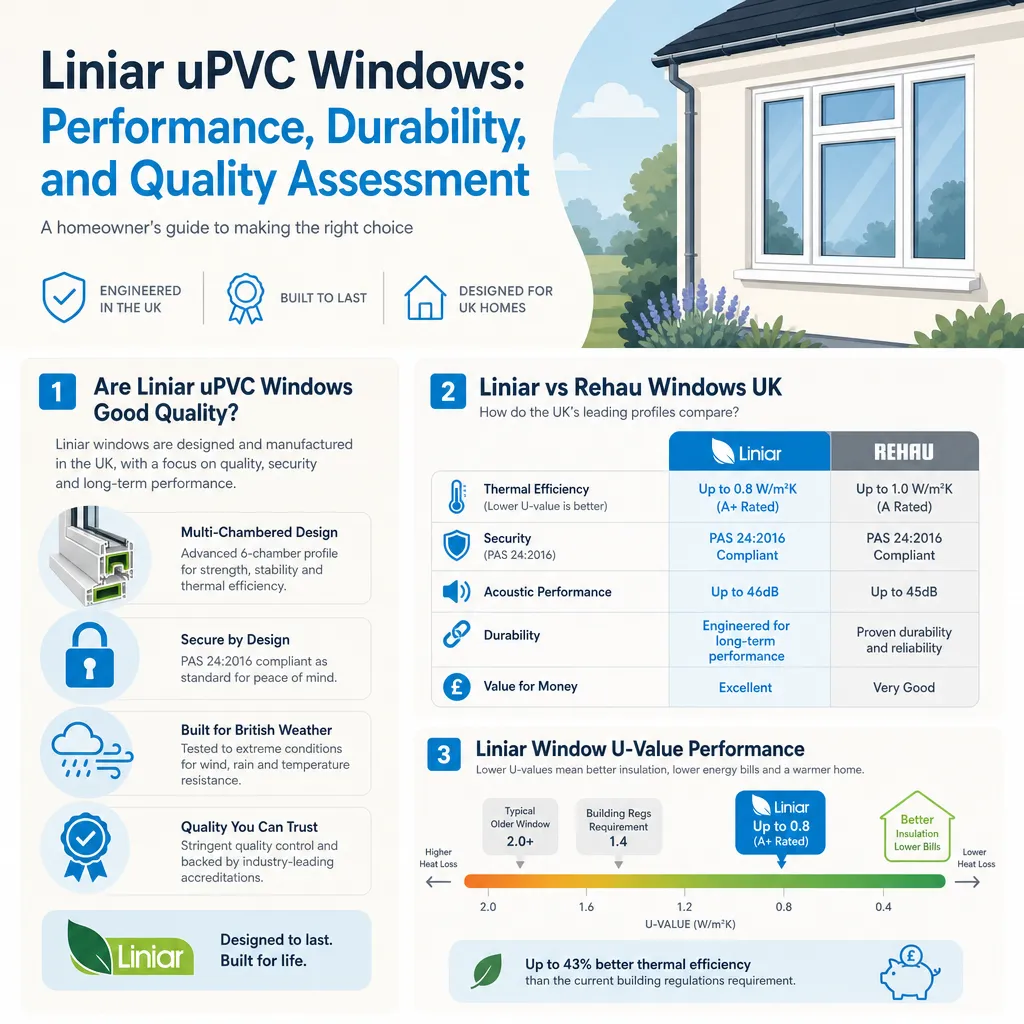
Liniar uPVC Windows: Performance, Durability, and Quality Assessment
Liniar uPVC window profiles are manufactured in the UK using multi-chambered, foamed frames.
 Improvement & Build
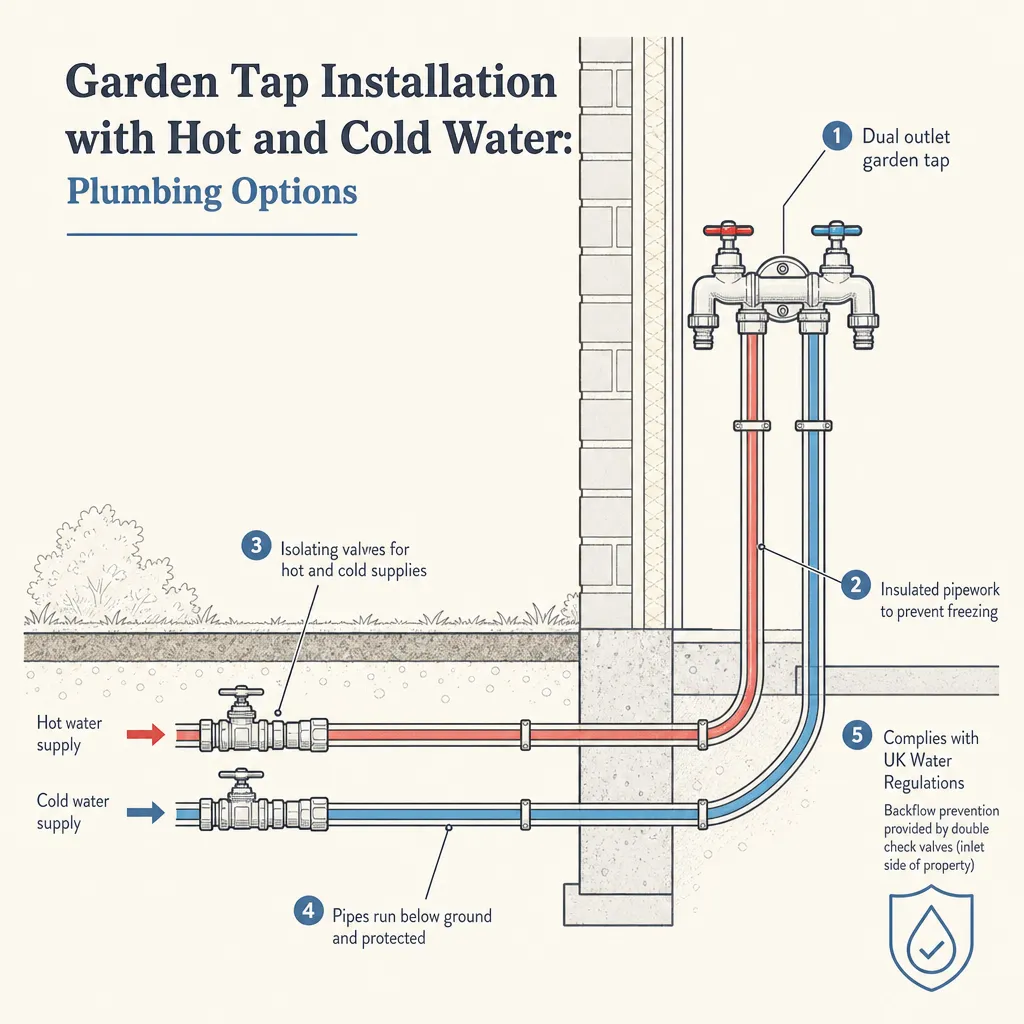
Garden Tap Installation with Hot and Cold Water: Plumbing Options
Adding a cold garden tap is a common DIY project, but routing hot water outdoors requires a plumber to connect to your domestic hot water system and comply with the Water Supply (Water Fittings) Regulations 1999.
 Improvement & Build
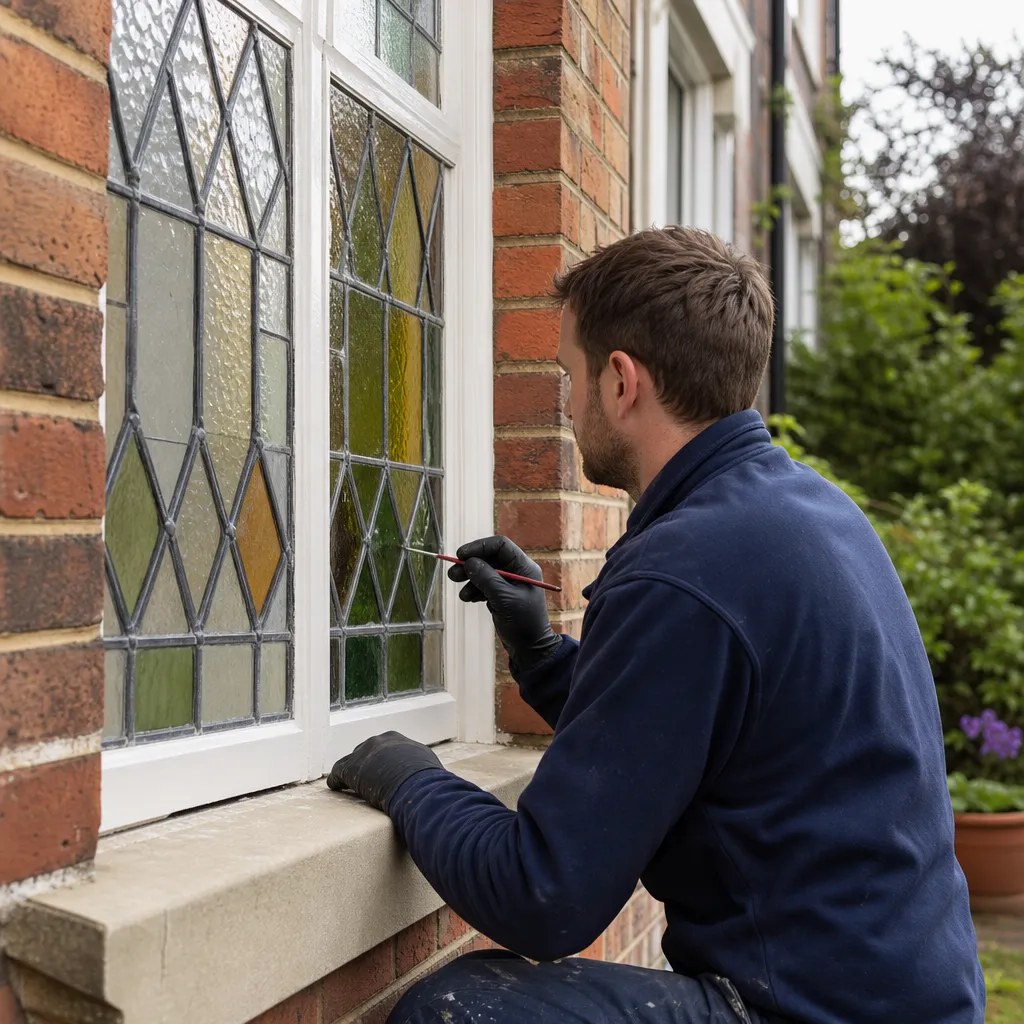
Sealing and Maintaining Historic Leaded Glass Windows: Preservation and Performance
Leaded glass windows are maintained using traditional linseed oil cement — not silicone or modern sealants, which prevent natural movement in the lead came.
 Improvement & Build
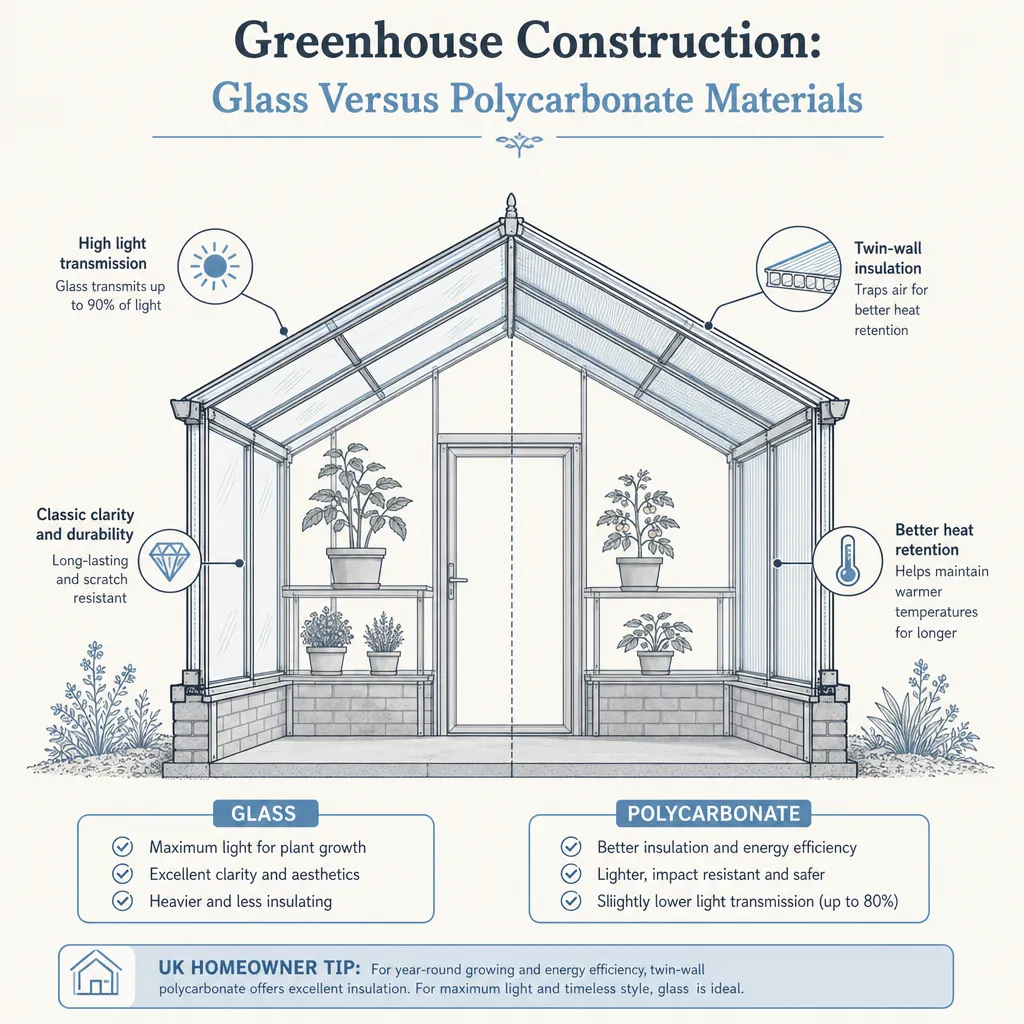
Greenhouse Construction: Glass Versus Polycarbonate Materials
Glass transmits around 90% of available light and lasts indefinitely if unbroken, but insulates poorly and shatters into sharp fragments.
 Improvement & Build
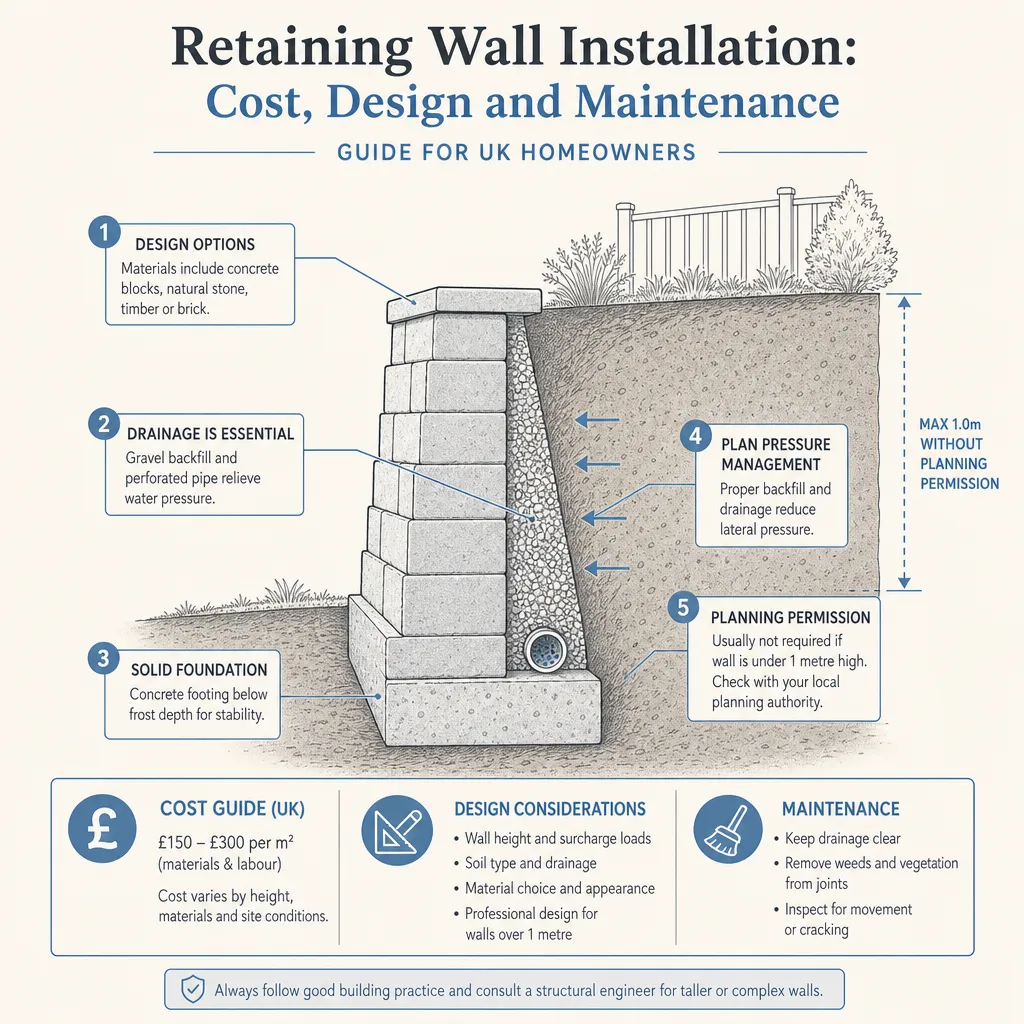
Retaining Wall Installation: Cost, Design and Maintenance
A retaining wall holds back soil on a sloped or banked site.