Over-Improving Your Home: When Investment Returns Diminish
By Housey · Last reviewed 30th of May 2026
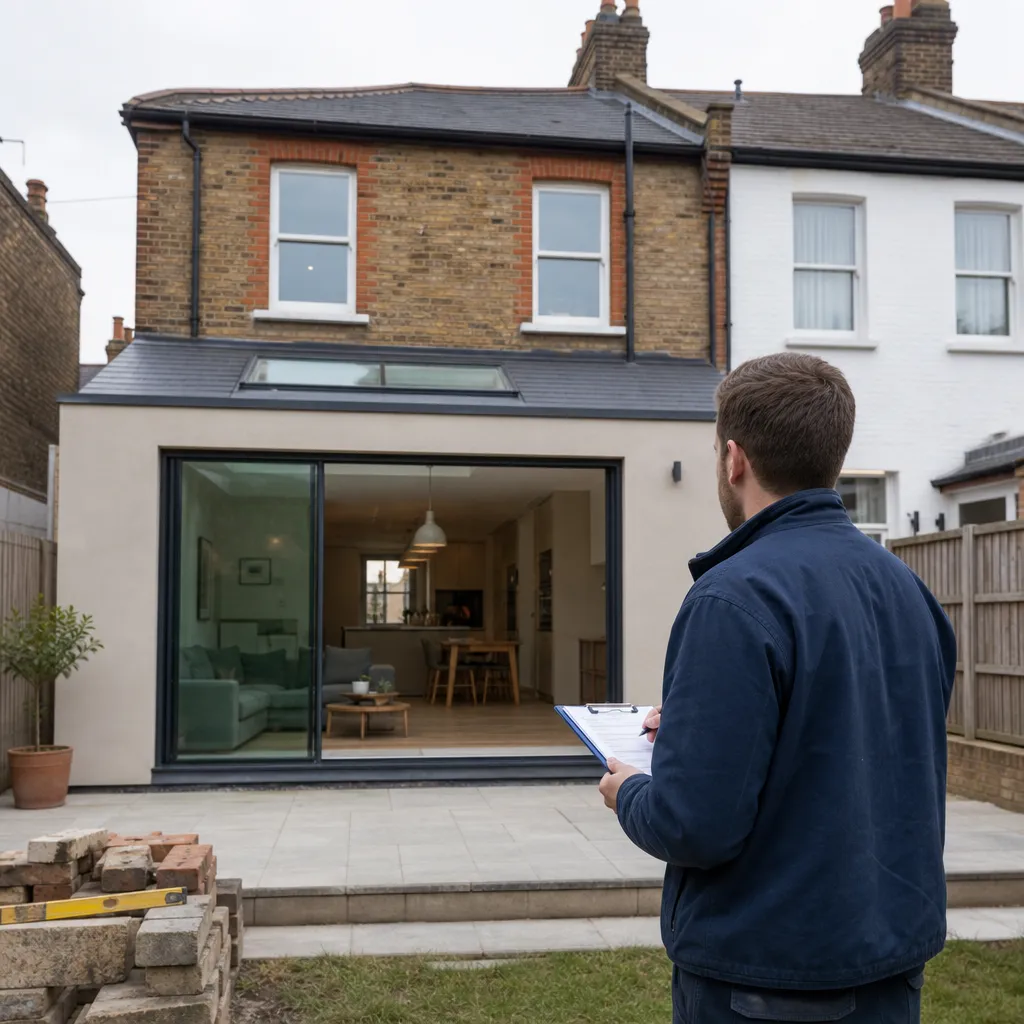
Over-Improving Your Home: When Investment Returns Diminish
Property improvements feel productive — visible progress, modern finishes, a more comfortable home. But not every pound spent on renovation comes back when the property is sold. The relationship between improvement spend and sale price is governed by local comparable sales, buyer expectations for a given street, and the concept of ceiling value: a financial reality that many homeowners only encounter when they receive a surveyor's valuation or an offer that falls materially short of expectations.
Key points
- RICS-registered valuers use comparable recent sales on the same street to determine a property's ceiling value — the most a buyer will realistically pay regardless of specification or finish quality.
- HM Land Registry records all registered residential sales in England and Wales; checking recent sold prices by postcode provides a reliable baseline for your property's local ceiling.
- Space-adding works such as loft conversions and single-storey extensions add value only to the extent that local comparable prices support the resulting property type and size.
- Kerb appeal, EPC rating, and functional condition typically offer stronger return on investment in mid-market areas than high-specification or bespoke finishes.
- A RICS-registered valuer provides an independent, professionally accountable opinion of value under the RICS Red Book; estate agents have commercial interests in winning listing instructions that may influence informal guidance.
What "ceiling value" means in practice
Every street has an effective ceiling: the price a reasonable buyer in normal market conditions will pay for the best example of a given property type in that location. A fully refurbished 1930s semi in a given postcode will not achieve the same price as a fully refurbished Victorian terrace in a more sought-after road nearby, regardless of the quality of finishes.
Ceiling value is determined primarily by:
- Location — street, school catchment area, proximity to transport and amenities
- Property type and size — bedroom count, floor area, garden size, parking provision
- Comparable recent sales — what similar properties actually achieved in the past 6–18 months
Improvements can move a property from the lower to the upper end of the local value range. They rarely push past it — and in many streets the gap between the lower and upper ends of that range is narrow enough that improvement costs exceed recoverable uplift.
Which improvements tend to add value — and which do not
The table below reflects general UK market patterns drawn from commonly cited estate agent data and valuation practice. Individual outcomes vary significantly by location, property type, buyer demographic, and market conditions. These are indicative observations, not investment projections.
Improvement | Typical value impact | Key consideration |
|---|---|---|
Loft conversion (dormer or Velux) | Often adds value where 4-bed properties command a clear premium | Build cost vs likely uplift must be checked against local ceiling before committing |
Single-storey kitchen-diner extension | Often positive in family-home markets | Requires building regulations sign-off; value depends on local demand for larger footprint |
Kitchen replacement (mid-spec, like-for-like) | Limited uplift in most markets | Replaces a depreciating item; high-spec kitchens rarely return full cost in mid-market areas |
Bathroom replacement (like-for-like) | Limited in most markets | Functional condition matters more than specification to most buyers |
Garden landscaping (basic and usable) | Generally positive — kerb appeal and usable space | Excessive formalising or hard landscaping can deter certain buyer groups |
Swimming pool | Often negative in UK residential market | High maintenance cost, liability concerns, and a reduced buyer pool at resale |
Home office outbuilding | Moderate and growing; demand increased post-2020 | Planning and building regulations compliance essential; may affect mortgage and insurance |
EPC improvement (insulation, heat pump, solar) | Increasingly positive — affects mortgage product access and running costs | EPC C or above increasingly important for rental compliance under MEES and for buyer perception |
Bespoke or luxury finishes in mid-market areas | High cost, rarely fully recovered | Specification mismatch reduces buyer appeal; buyers compare to comps, not absolute quality |
Worked UK property scenario
Consider a three-bedroom 1960s semi-detached house in a commuter town. Comparable sold prices on the same street range from £275,000 (dated condition) to £330,000 (well-presented, with a modern kitchen and bathrooms). The effective ceiling for this property type and location is approximately £330,000.
The owners decide to sell in two to three years and commission:
- Bespoke kitchen to a high specification: £22,000
- Two bathrooms replaced to a premium specification: £18,000
- New gas central heating and controls: £7,000
- Full redecoration throughout: £5,000
Total spend: £52,000
The result is a beautifully presented home. However, comparable properties on the same street with functional — not luxury — kitchens and bathrooms are selling at £325,000–£330,000. The ceiling does not move because the street cannot support a higher price point, regardless of specification. The owners may achieve £330,000 — but recover only the equivalent of the ceiling uplift in nominal terms, not their full £52,000 spend.
Had they spent £18,000 on central heating, a functional kitchen refresh, and redecoration to achieve a well-presented finish, the return on that smaller spend would have been proportionally stronger.
This scenario is illustrative. Actual outcomes depend on local market conditions, sale timing, and buyer competition. Always seek advice from a RICS-registered valuer or knowledgeable local estate agent before committing to major pre-sale works.
What not to assume
- "I'll get my money back — property is a safe investment." Renovation spend is not automatically recovered at sale. Whether you recover it depends entirely on where your property sits relative to its ceiling value before and after works.
- "Buyers will pay more for quality." Buyers pay what comparable properties on the street achieve. High-specification finishes add value only if the local comparable price range supports them.
- "An extension always adds value." Extensions add floor space. Floor space adds value only if the local market supports that additional size at a price that exceeds the build cost.
- "I can rely on an estate agent's view of uplift." Estate agents have commercial incentives around winning listing instructions. A RICS-registered valuer has professional accountability under the RICS Red Book and provides an independent assessment.
- "My home is unique and comparables do not apply to me." All residential valuations are anchored to comparable evidence. Every property — however distinctive — is ultimately benchmarked against what buyers have paid for similar properties in the same local market.
Homeowner checklist before committing to major improvement spend
Important limitations
This article provides general information about property improvement decisions and value dynamics in the UK residential market. It is not financial advice, investment advice, or a formal valuation. Property values vary significantly by location, property type, market conditions, and timing. The scenario and figures used are illustrative only and must not be relied upon as predictions of value or return on investment. Always obtain professional advice from a RICS-registered valuer before making significant financial decisions based on anticipated property value uplift.
When this becomes urgent
Seek professional advice promptly if:
- You have already committed to significant renovation spend based on an assumed value uplift that has not been independently verified by a qualified valuer.
- A surveyor's or lender's valuation at sale comes in materially below your expectations and you believe improvements have not been properly reflected.
- You are planning to remortgage against anticipated post-renovation equity and have not yet obtained a formal independent valuation.
- You are in a dispute with a buyer, lender, or co-owner about property value following renovation works.
What to ask a qualified professional
Before instructing a RICS-registered valuer for a pre-works assessment, consider asking:
- What are the current comparable sales for this property type on this street in the last 6–18 months?
- What is your current opinion of value for my property in its present condition?
- What do you estimate the property would achieve following the proposed works?
- Which specific improvements are most likely to close the gap to ceiling value in this location?
- Are there proposed works that, in your view, are unlikely to return their cost in this market?
- Is there a risk of over-improving relative to the local comparable price range?
When to get professional help
Seek a RICS-registered valuation if:
- You are planning pre-sale renovation spending above £10,000.
- You are considering an extension or loft conversion and want to assess likely uplift before committing to build costs.
- You are remortgaging after improvements and need a formal opinion of value for the lender.
- You are in disagreement with an estate agent's valuation and want an independent professional view.
- You are a landlord considering works to meet MEES EPC requirements and want to understand the rental and capital value impact.
How Housey can help
Before committing to significant pre-sale works, a valuation survey from a RICS-registered valuer gives you an independent, professionally accountable baseline — and a post-works estimate — so you can make an informed decision about where improvement spend will and will not return its cost in your local market.
Frequently asked questions
How do I find the ceiling value for my property?
Check HM Land Registry sold prices — search by postcode to find recent sales of comparable properties on your street. Zoopla and Rightmove also publish sold price data. For a professional opinion, a RICS-registered valuer can provide a formal assessment that accounts for condition, specification, and current market conditions, giving you a pre-works baseline against which to measure proposed spend.
Does an extension always add more value than it costs?
Not always. Extensions add floor space, which only adds value if local demand supports the resulting property size at a price that justifies the build cost. In areas where three-bedroom family homes are in strong demand but four-bedroom properties achieve little premium, adding a fourth bedroom may not recover its full cost. Always check comparable sold prices before commissioning drawings.
Is a new kitchen worth fitting before selling?
A new kitchen most likely recovers its cost when the existing one is genuinely deterring buyers — visibly aged or poorly functional. A mid-spec functional replacement in a mid-market area typically performs better on return than a bespoke high-specification fit if the street's comparable prices do not support the premium. Obtain a valuation and agent opinion before committing to significant kitchen spend.
Should I get a valuation before renovation works?
If planned spend exceeds approximately £10,000, a pre-works opinion of value from a RICS-registered valuer is a worthwhile investment. It establishes your property's current value, identifies the ceiling for your property type and road, and helps you prioritise which works are most likely to return their cost. Estate agents can offer informal guidance but have commercial interests in winning listing instructions.
Sources and further reading
- House price data — HM Land Registry
- RICS Valuation — Global Standards (Red Book) — RICS
- Permitted development rights for householders: technical guidance — GOV.UK
- Home improvements and adding value — Citizens Advice
Useful next reads
 Buying & Moving
How to Get Your Property Professionally Valued
To get a professional property valuation in the UK, instruct a RICS Registered Valuer for any formal purpose — mortgage, probate, Help to Buy, or legal proceedings.
 Buying & Moving
Which Home Improvements Add Real Value to Your Property?
In the UK, loft conversions, single and double-storey extensions, and energy-efficiency upgrades are most reliably linked to added property value.
 Buying & Moving
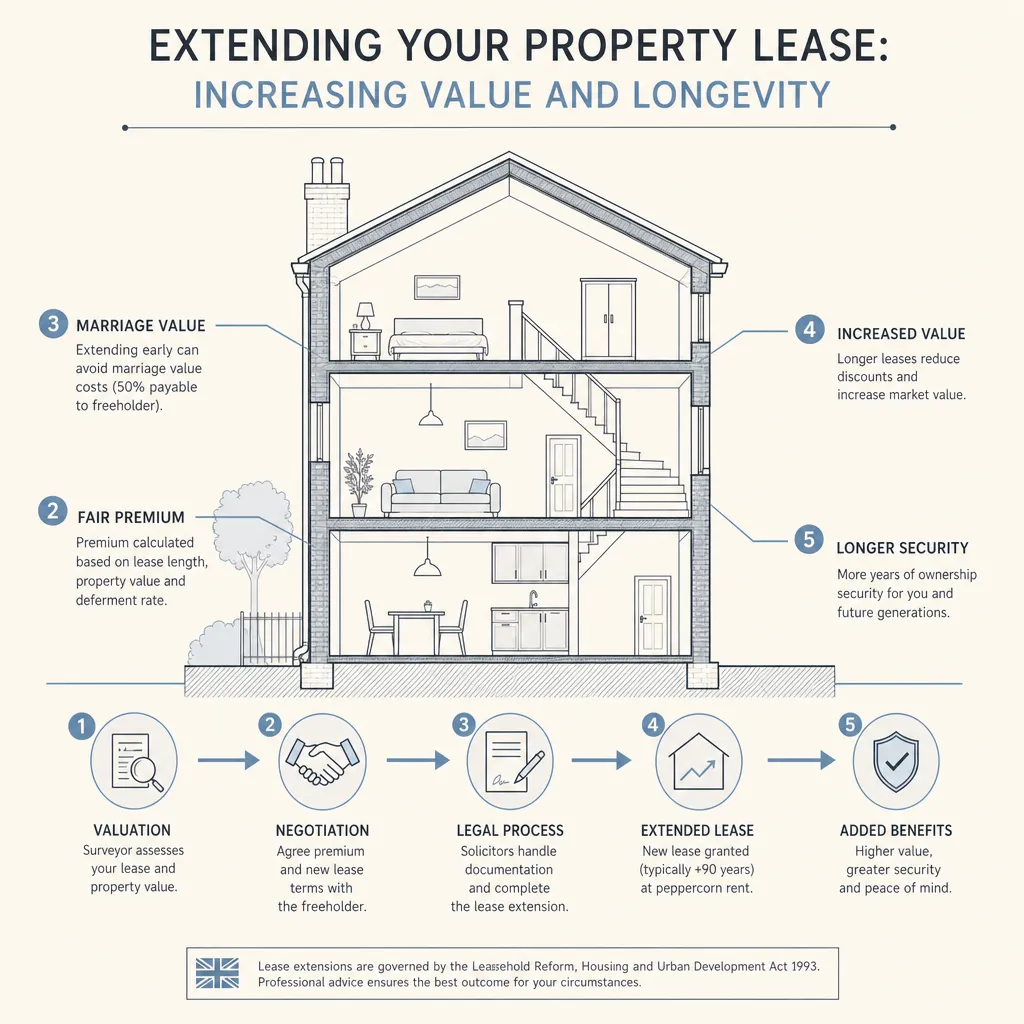
Extending Your Property Lease: Increasing Value and Longevity
Qualifying leaseholders in England and Wales can extend their lease by 90 years at a peppercorn ground rent under the Leasehold Reform, Housing and Urban Development Act 1993.
 Buying & Moving
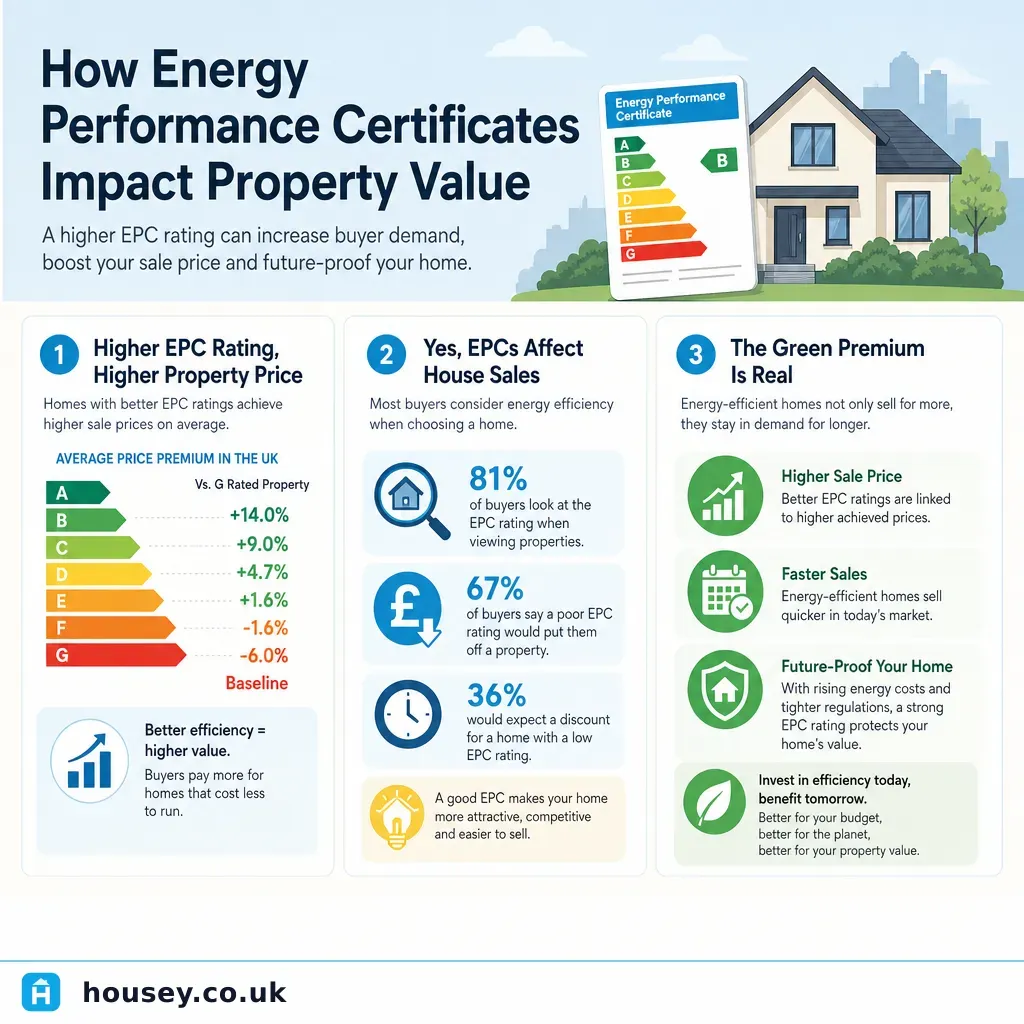
How Energy Performance Certificates Impact Property Value
A higher EPC rating can add measurable value to a UK property through a 'green premium' on open market sales, preferential green mortgage rates, and stronger buyer confidence.
 Buying & Moving
Understanding Local Property Values: What Homes Sold For in Your Area
Sold prices for UK properties are publicly recorded by HM Land Registry for England and Wales, Registers of Scotland, and Land and Property Services in Northern Ireland.