Interior Design Ideas: Painting Doors in Dark Finishes
By Housey · Last reviewed 11th of May 2026
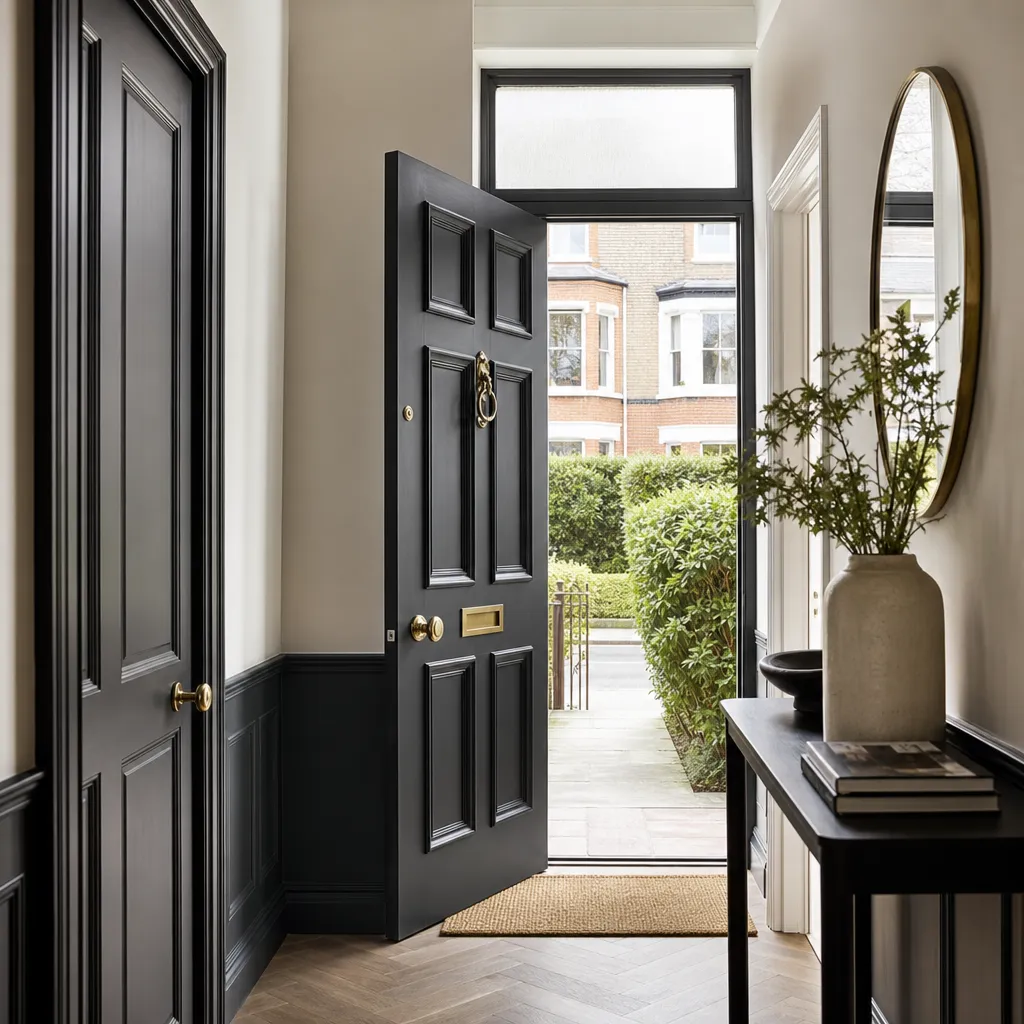
Interior Design Ideas: Painting Doors in Dark Finishes
Choosing a dark paint finish for interior doors is one of the most affordable and impactful joinery decisions a UK homeowner can make. The question often arises mid-redecoration — once walls and floors are settled, it is the woodwork that either anchors the room or leaves it looking unresolved. Understanding sheen levels, surface preparation, and how dark shades behave in typical UK lighting conditions will help you avoid the most common pitfalls.
Key points
- Satin and eggshell finishes are the most practical choice for dark interior doors, offering good durability and easy cleaning without the sharp reflectivity of full gloss.
- Dark colours demand thorough surface preparation: filling, sanding, and applying a grey-tinted primer reduce the number of topcoats needed and improve depth of colour.
- Painting only the door leaf in a dark shade whilst keeping the frame and architrave pale is widely used to maintain a sense of space in narrower UK hallways and corridors.
- Water-based acrylic paints have largely replaced oil-based solvent paints for interior woodwork in the UK, and resist yellowing better over time in low-light areas.
- In listed buildings or conservation areas, external doors and certain prominent internal features may require consent before alteration — always check with your local planning authority.
Which dark shades work best in UK homes?
Deep tones — near-blacks, inky blues, forest greens, and warm charcoals — read very differently depending on the room's natural light and the property's age and character. North-facing Victorian hallways absorb dark shades more than south-facing rooms in 1990s new builds. Before committing to a full door, apply a large test patch (at least A3 in size) and observe it at different times of day and under artificial light.
Colour families and room context
Colour family | Best room context | Pairs well with | Watch out for |
|---|---|---|---|
Near-black (e.g. off-black, pitch black) | Hallways, studies, period homes | White or off-white walls, brass or antique bronze hardware | Can appear flat and absorb light in poorly lit rooms |
Inky blue (e.g. navy, midnight blue) | Living rooms, master bedrooms | Warm neutrals, aged-oak or parquet floors | May make a north-facing room feel cooler |
Forest or sage green | Kitchen doors, garden rooms, utility rooms | Natural materials, terracotta or stone tiles | Undertone varies widely between brands — test carefully |
Warm charcoal | Contemporary open-plan spaces | Pale greige walls, chrome or matte-black ironmongery | Can read as dirty grey if the undertone is not warm enough |
Preparing interior doors for dark paint
Preparation matters more than the paint brand or exact shade. A poorly prepared surface will show every imperfection through a dark finish far more clearly than through a pale one.
Follow these steps for the best result:
- Remove or protect ironmongery — take off hinges and handles where practical, or mask them thoroughly with painter's tape.
- Clean the surface — wash down with a sugar soap solution and allow to dry fully (usually 2–4 hours).
- Fill and sand — use a fine surface filler for dents, nail holes, and open grain; sand back flush with 120–180 grit once dry.
- Apply a tinted primer — choose a grey or dark-tinted primer compatible with your topcoat; saturated dark colours can require four or more coats over a white primer without one.
- Sand between coats — lightly key the surface with 220–240 grit between each coat to remove dust nibs and maintain smoothness.
- Allow adequate drying time — most water-based paints need 4–6 hours between coats; follow the manufacturer's guidance before applying the next coat.
Sheen levels: satin, eggshell, or gloss?
Sheen level | Appearance | Durability | Best suited to |
|---|---|---|---|
Full gloss | High reflectivity, traditional | Very durable, easy to wipe | Period properties, front doors, high-traffic hallways |
Satin | Medium sheen, slight warmth | Durable, easy to clean | Most modern UK interiors, living rooms, bedrooms |
Eggshell | Low sheen, soft finish | Good durability, less washable than satin | Lower-traffic rooms, contemporary interiors |
Dead flat or matt | Virtually no sheen | Least durable, hardest to clean | Feature walls — not recommended for door surfaces |
For most UK homes, satin offers the best balance: it shows brush marks less than gloss, wipes clean with a damp cloth, and holds a dark colour well without looking clinical.
Door leaf only, or the full frame and architrave?
A widely used approach is to paint only the door leaf in the dark shade and keep the surrounding architrave and frame in an off-white or neutral. This creates a defined visual rectangle without the corridor feeling enclosed. Extending the dark finish to the architrave and frame produces a more considered, interior-design-led result — particularly effective in period properties where the joinery has decorative mouldings worth highlighting.
Which approach should you choose?
- Choose door leaf only (dark door, light frame) if the hallway is narrower than 2 m, the ceiling is below 2.4 m, or you want a simpler project that is easier to reverse.
- Choose door and full surround (leaf, architrave, and frame) if the corridor is wide and well-lit, or if the joinery has period detail worth emphasising.
- Ask a professional decorator if you are working on a listed building, if the woodwork has complex mouldings requiring careful cutting-in, or if you want a spray-applied finish.
- Check with your local planning authority if any external doors are involved and the property is listed or in a conservation area.
Homeowner checklist: painting a door in a dark finish
When to get professional help
Dark door painting is a manageable project for a careful DIYer. Consider a professional painter and decorator if:
- The door has significant damage — deep splits, swollen timber from damp, or loose joints — that needs repair before painting.
- You want a spray-applied finish, which requires professional equipment and appropriate masking of surrounding surfaces.
- The property is a listed building or in a conservation area, where consent may be required before altering external doors or original internal joinery.
- The woodwork has highly detailed mouldings where clean cut-in lines require considerable skill and patience.
How Housey can help
Housey connects UK homeowners with vetted local tradespeople for painting and decorating work. Whether you are planning a full room redecoration or need a professional to paint and finish the woodwork to a high standard, comparing quotes through Housey helps you understand the scope and cost before you commit.
Frequently asked questions
How many coats of dark paint does a door need?
Most dark, saturated colours require two to three topcoats over a tinted primer for full, even coverage. Applying thin, even coats is more effective than a single heavy coat, which is prone to runs and slow drying. Using a dark-tinted primer in a complementary shade can reduce the number of topcoats needed and improve the depth of the finished colour.
Can I paint a door without removing it from its hinges?
Yes — painting in situ is common and practical. Wedge the door open to access both faces, use a slim cutting-in brush for the edges, and mask the hinges, door furniture, and floor carefully. Removing the door makes painting the edges easier and reduces the risk of marking the wet surface, but it is not essential for a good result.
Will dark doors make my hallway feel smaller?
Dark doors can create a sense of depth and drama rather than enclosure, particularly when walls are kept pale. Keeping the architrave and frame in an off-white shade helps maintain visual separation. Good artificial lighting — wall lights or a pendant fitting in the hallway — makes a significant difference to how a dark colour reads in the space.
Does dark paint yellow over time?
Oil-based gloss formulations are known to yellow with age, particularly in low-light areas. Water-based acrylic paints resist yellowing considerably better and are now the standard choice for interior woodwork in the UK. If maintaining a true, deep shade over time is a priority, choose a quality water-based satin or eggshell from a reputable paint brand.
Sources and further reading
- Listed buildings and conservation areas — Planning Portal — guidance on consent requirements for listed buildings and conservation areas in England
- British Coatings Federation — industry body for paint and coatings manufacturers in the UK
- Citizens Advice — housing and alterations — guidance on homeowner and tenant rights when making property alterations
Useful next reads
 Improvement & Build
Professional Advice on Home Interior Design and Decoration
In the UK, interior designers typically handle space planning, material specification, and contractor coordination, while decorators focus on surface finishes and styling.
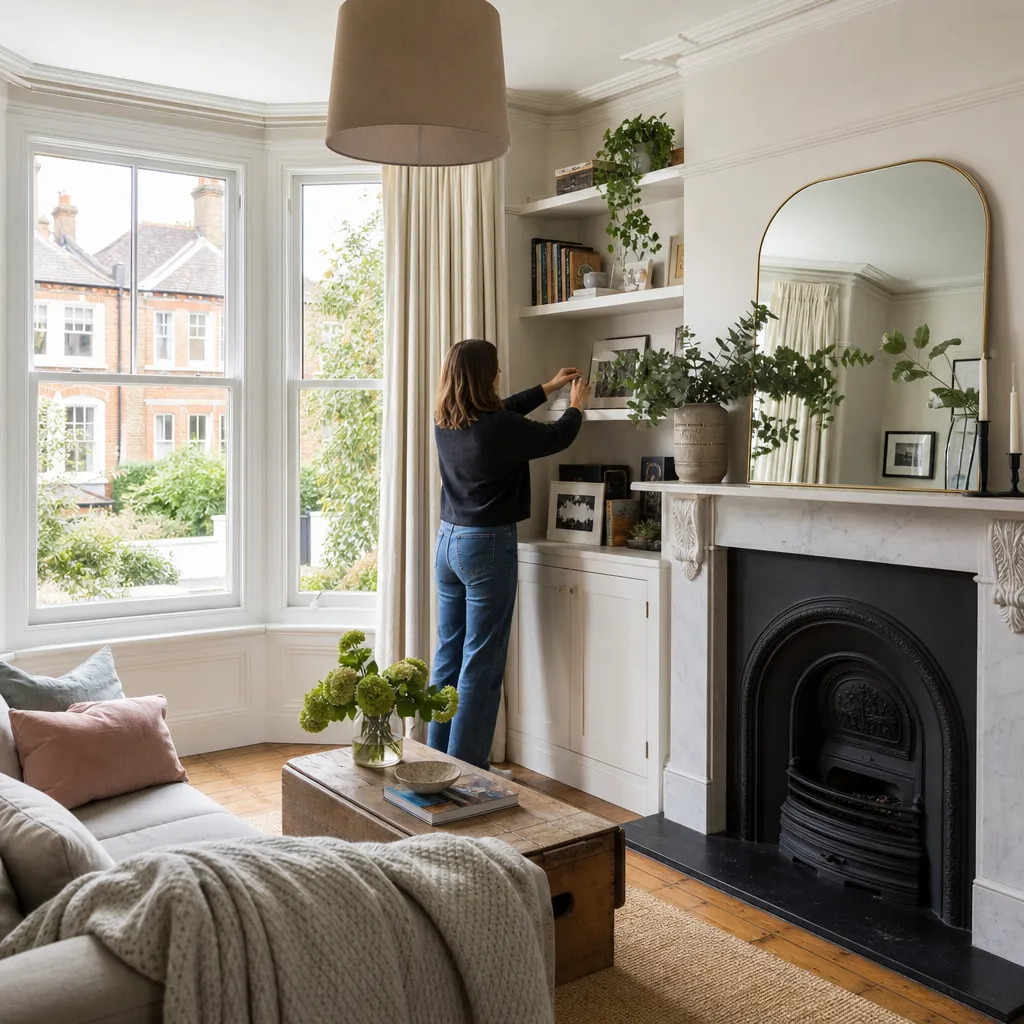 Improvement & Build
Ways to Personalise Your Home's Character and Style
Personalising your home works best when you build on what's already there — restoring original features, choosing paint colours that suit the architecture, layering lighting beyond the central pendant, and editing objects before adding new ones.
 Improvement & Build
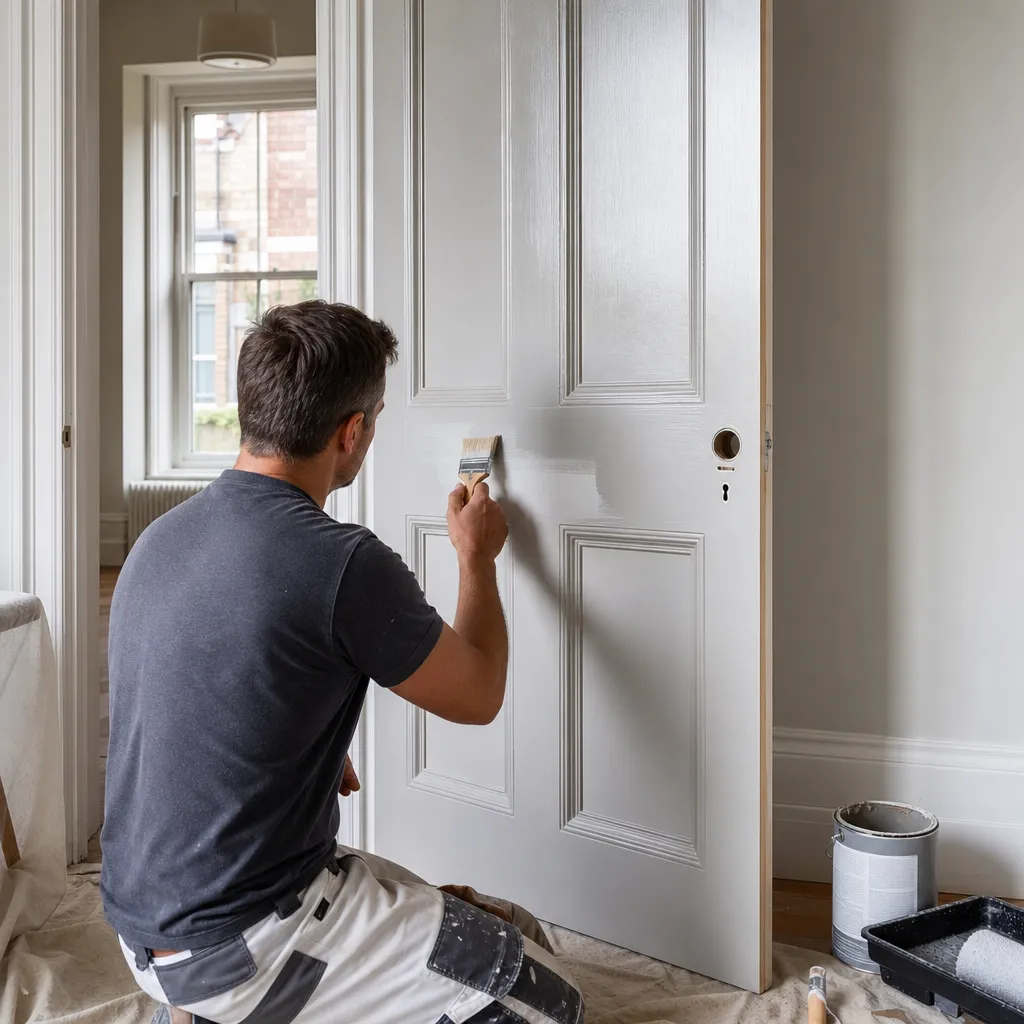
Painting Interior Doors: Preparation and Technique
Painting interior doors well depends on preparation rather than paint choice.
 Improvement & Build
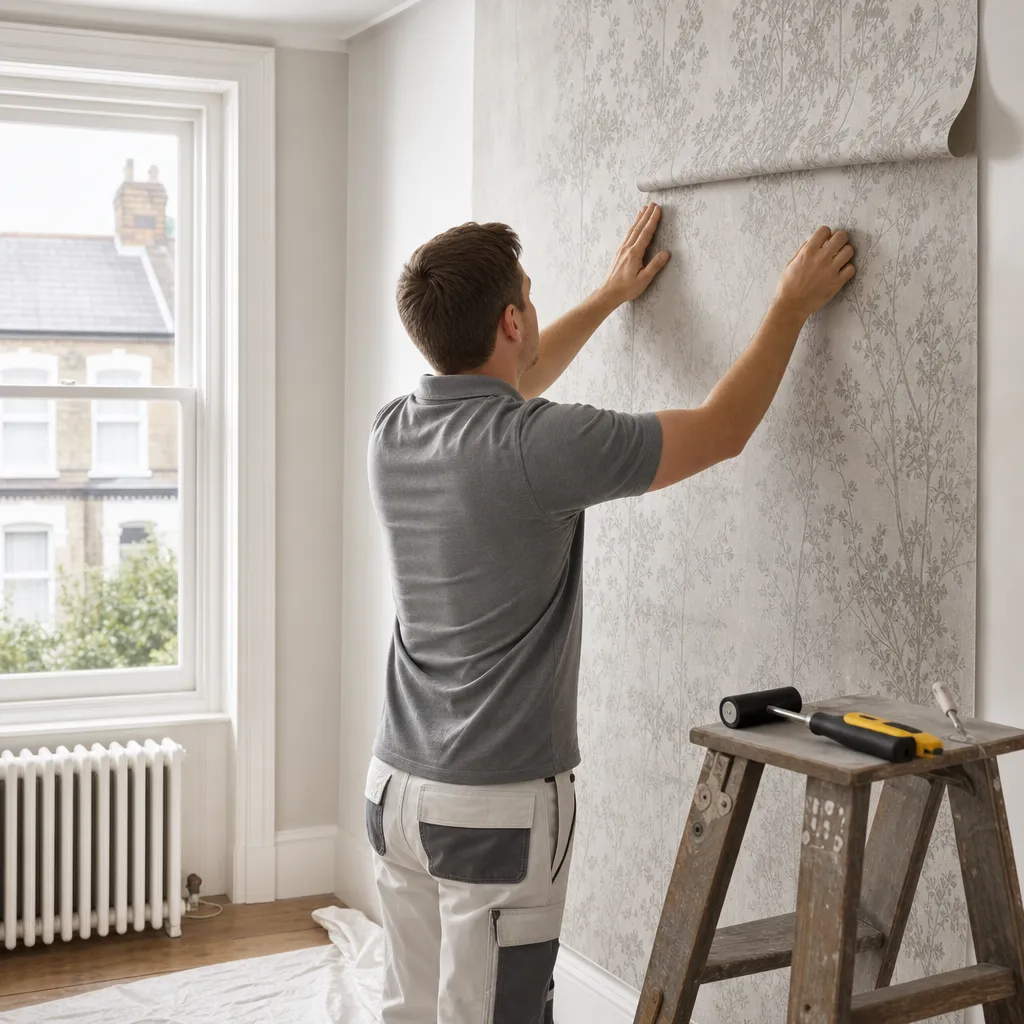
Installing Peel-And-Stick Wallpaper: Application Techniques
Peel-and-stick wallpaper works best on smooth, emulsion-painted walls cured for at least 30 days, in rooms between 13°C and 30°C.
 Improvement & Build
Planning kitchen design and renovation projects
Planning a kitchen renovation in the UK typically involves choosing a layout, setting a budget, deciding which contractors you need, and understanding which regulations apply.