Park Home Refurbishment and Modernisation Costs
By Housey · Last reviewed 7th of May 2026
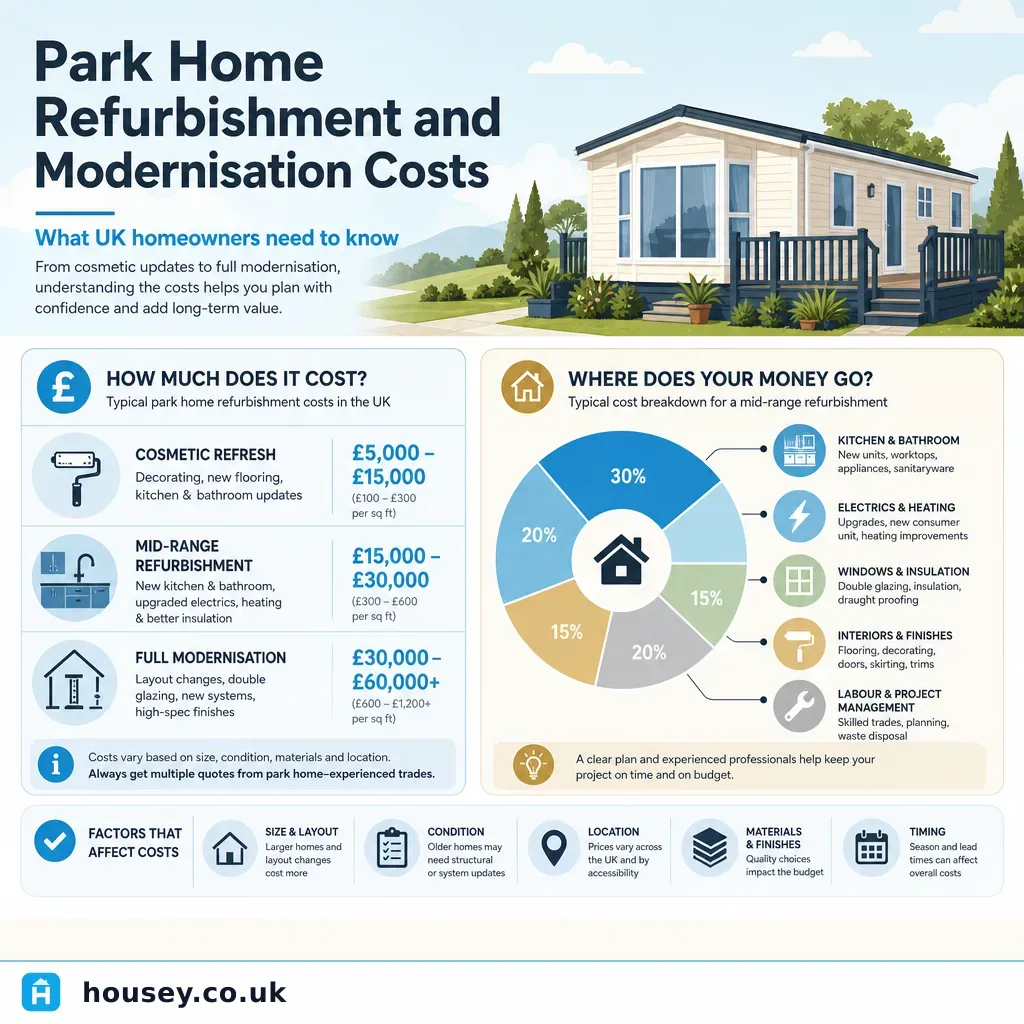
Park Home Refurbishment and Modernisation Costs
Park homes are manufactured dwellings permanently sited on licensed residential parks, governed principally by the Mobile Homes Act 1983. Refurbishing one differs considerably from renovating a conventional house — the steel chassis, timber frame, and composite cladding demand specialist knowledge, and site rules written into your pitch agreement add a legal dimension most homeowners encounter for the first time when commissioning work.
Key points
- Cosmetic refurbishment (redecorating, flooring, fixtures) typically costs £2,000–£8,000; full structural modernisation can reach £40,000–£60,000 or more — indicative UK costs, last reviewed 2026-05-07.
- Park homes must comply with BS 3632:2015, the British Standard governing residential park home thermal performance, structure, and services; refurbishment work should maintain compliance.
- Your pitch agreement under the Mobile Homes Act 1983 is a legal document that may require written consent from the site operator before any exterior or structural work begins.
- Permitted development rights apply differently to park homes — check with your local planning authority and site operator before adding any external structure or significantly altering appearance.
- Specialist park home contractors are strongly preferred over general builders; steel chassis, composite panels, and underfloor void construction require specific expertise not typically held by residential renovation firms.
What park home refurbishment typically covers
Cosmetic and interior updates
The most accessible scope: redecorating, replacing flooring, fitting a new kitchen or bathroom suite, and updating lighting. Access inside a park home differs from a conventional house — rooms are compact, service runs are configured differently, and moisture management is more critical given the construction type.
Roof and exterior work
Most park homes have a pitched roof with felt or profiled tiles on a lightweight timber frame, with a typical lifespan of 20–30 years before the covering or membrane needs replacing. Re-roofing is specialist work because the structure is timber frame rather than masonry. Common exterior updates also include replacing cladding panels, skirting (the perimeter cover concealing the chassis void), and windows or doors.
Insulation and energy efficiency
Older homes predating BS 3632:2015 can be cold and costly to run. Blown or spray insulation injected into the underfloor void, roof space, and accessible wall cavities significantly improves thermal performance with minimal disruption. Heat pump installation is possible in some park homes but requires assessment of insulation standard, outdoor space, and site operator permission before commissioning.
Structural and chassis work
The steel chassis is the structural foundation of every park home. Corrosion inspection and protective coating may be needed on older homes and should be assessed before any major renovation is committed to — a deteriorating chassis affects the integrity of everything above it.
Indicative UK park home refurbishment costs
Indicative UK costs, last reviewed 2026-05-07. Costs vary by region, home size, age, and condition. Always obtain at least three quotes from park home specialists.
Scope of work | Typical cost range | Notes |
|---|---|---|
Cosmetic (redecorating, flooring) | £2,000–£8,000 | Partial DIY possible for decoration |
Kitchen replacement | £3,000–£10,000 | Supply and fit; bespoke finishes cost more |
Bathroom replacement | £2,500–£7,000 | Suite, tiling, and plumbing |
Roof replacement | £4,000–£12,000 | Size, specification, and access dependent |
Windows and doors (full set) | £3,000–£9,000 | Double-glazed UPVC typical |
Exterior cladding and skirting | £3,500–£10,000 | Panels, skirting, and finish |
Full insulation upgrade | £3,000–£8,000 | Underfloor, roof, and wall cavities |
Full modernisation | £30,000–£60,000+ | Comprehensive refurbishment of an older home |
Sources: British Holiday and Home Parks Association guidance; specialist park home contractor market data, 2025–2026. Prices are estimates — actual quotes will vary.
Planning, site rules, and permissions
Under the Mobile Homes Act 1983 (as amended by the Mobile Homes Act 2013), residents hold a written pitch agreement with the site operator. This document commonly sets out rules on external alterations, permitted structure types, and the home's appearance. Breaching these rules can lead to enforcement action, so always obtain written consent before beginning exterior or structural work.
Park homes on licensed parks generally benefit from permitted development rights for like-for-like repairs and minor internal changes. Adding a porch, outbuilding, or new external structure may require planning consent from the local planning authority as well as site operator consent. Standard masonry or timber frame extensions are not permitted under site licence conditions — any modular addition must comply with site rules.
Your local council's mobile homes licensing team can confirm what the site licence permits for your specific park.
Preparation checklist for homeowners
Before commissioning any park home refurbishment:
- Read your pitch agreement and identify any clauses covering external alterations or restricted work types.
- Obtain written consent from the site operator for any exterior or structural changes.
- Confirm that the planned works maintain compliance with BS 3632:2015.
- Check whether ECO4 or local authority grant funding applies to any element before finalising scope.
- Obtain at least three quotes from contractors with specific park home experience.
- Verify Gas Safe registration for any gas work and NICEIC or NAPIT registration for electrical installation or testing.
- Ask each contractor for references from comparable park home projects completed within the past two years.
A worked UK scenario
Situation: A couple in their early 60s own a 2003 park home (approximately 45m²) on a licensed residential park in Devon. The felt tile roof is lifting at the eaves, the flooring is worn throughout, and the original bathroom suite needs replacing. They want to modernise before retiring to the home full-time.
Scope agreed: roof re-covering (felt tile replacement), new bathroom suite with tiling, LVT flooring throughout, full redecoration, and external skirting repair.
Indicative cost range: £18,000–£28,000 depending on roof specification and bathroom fittings chosen.
Key steps taken:
- Reviewed pitch agreement — written consent was required for roof replacement and obtained from the site operator before work was commissioned.
- Confirmed BS 3632:2015 compliance requirements with the specialist contractor before agreeing scope.
- Obtained three quotes from park home specialists rather than general renovation builders.
- Checked whether any insulation element of the project qualified for ECO4 funding before finalising specification.
What to ask before accepting a quote for park home work
- Do you have specific experience working on park homes built to BS 3632:2015?
- Can you provide references from comparable park home projects?
- Have you reviewed the pitch agreement and confirmed site operator consent is in place?
- How will you manage moisture and ventilation during and after the work?
- What guarantees or warranties apply to materials and workmanship?
- What qualifications do your gas and electrical operatives hold?
- Is VAT included, and at what rate?
- What happens if chassis corrosion or hidden damage is found during the work?
When to get professional help
Park home refurbishment is not suited to general builders unfamiliar with this construction type. Seek specialist assessment before proceeding if:
- Visible rust, sagging, or deformation is present at the chassis or underfloor void.
- Walls or the roof show signs of structural movement: gaps at panel joints, sticking doors, or visible deflection.
- Damp or condensation is present within wall panels or the flooring structure.
- Any gas work is involved — Gas Safe registered engineers are required by law.
- Any electrical installation or testing is needed — NICEIC or NAPIT registered electricians are required.
- Any major exterior alteration may affect compliance with BS 3632:2015 or the site licence conditions.
How Housey can help
Housey can connect you with design-and-build firms experienced in residential refurbishment and extension builders who take on park home modernisation projects. Submit your requirements once and receive comparable quotes from qualified local contractors.
Frequently asked questions
Do building regulations apply to park home refurbishment?
Park homes generally fall outside the standard Building Regulations framework as manufactured dwellings, but must comply with BS 3632:2015, which governs thermal and structural performance for residential park homes. Any gas work requires a Gas Safe registered engineer; any electrical installation or testing requires an NICEIC or NAPIT registered electrician, regardless of property type.
Can I get a grant to improve my park home's energy efficiency?
Some park home residents may qualify under the ECO4 scheme for insulation or heating improvements. Eligibility depends on income, benefit status, and property criteria. Scheme rules change regularly — check the latest GOV.UK guidance and contact your energy supplier directly. The British Holiday and Home Parks Association also publishes updates specifically relevant to park home residents.
How long does a full park home refurbishment take?
A full modernisation covering roofing, cladding, windows, kitchen, bathroom, insulation, and flooring typically takes four to eight weeks depending on contractor availability and material lead times. Cosmetic-only projects may complete in one to two weeks. Exterior and roofing work should be sequenced before interior fit-out to avoid water ingress risk during the programme.
Is it worth refurbishing an older park home or buying a new one?
This depends on chassis condition, pitch agreement terms, park quality, and your budget. A home with a sound chassis but dated fittings is often worth refurbishing. One with significant chassis corrosion, poor insulation, and ageing services may cost more to restore than it gains in value. A specialist park home surveyor or assessor can provide an honest view.
Do I need the site owner's permission to refurbish my park home?
For most internal cosmetic work, written permission is not typically needed. For exterior changes — re-cladding, window replacement, roofing, or structural alteration — check your pitch agreement. Most agreements under the Mobile Homes Act 1983 require written consent from the site operator for work affecting the external appearance or structure. Proceeding without consent can lead to enforcement action.
Sources and further reading
- Mobile Homes Act 1983 — legislation.gov.uk
- Park homes: rights and responsibilities — GOV.UK
- ECO4 scheme — GOV.UK
- British Holiday and Home Parks Association — BH&HPA
Useful next reads
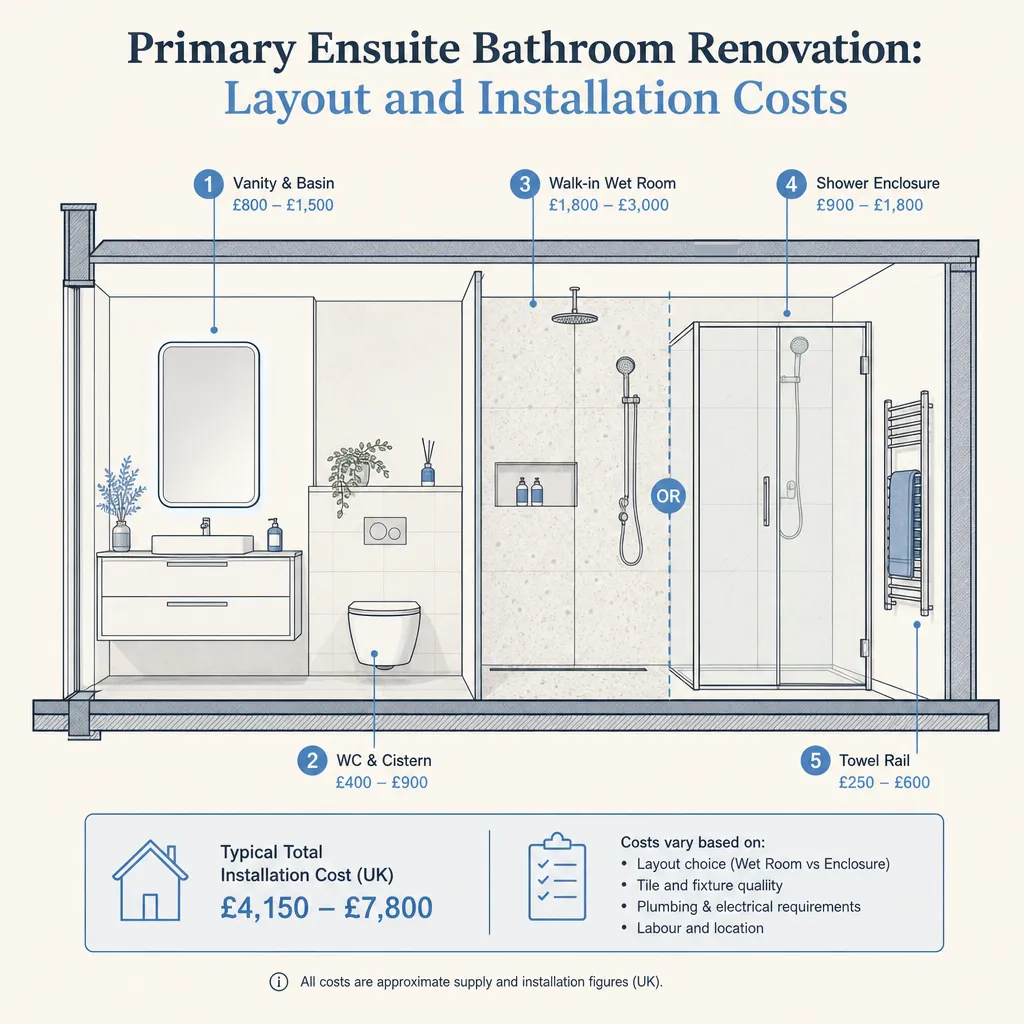 Improvement & Build
Primary Ensuite Bathroom Renovation: Layout and Installation Costs
A primary ensuite renovation in the UK typically costs between £3,000 and £12,000, depending on size, layout, and specification.
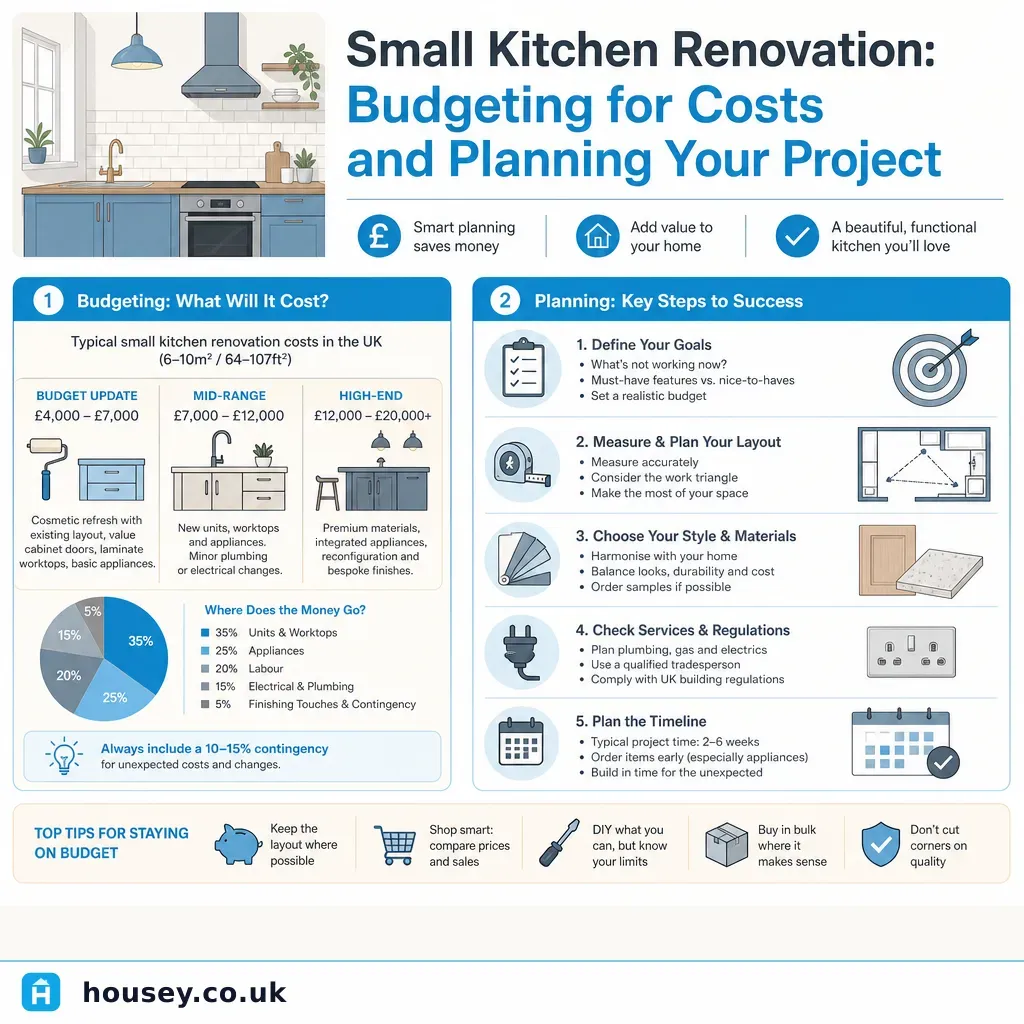 Improvement & Build
Small kitchen renovation: budgeting for costs and planning your project
A small kitchen renovation in the UK typically costs £5,000–£15,000 for a full refresh including new units, worktops, tiling, and appliances, though costs vary widely by specification, region, and whether structural changes or rewiring are involved.
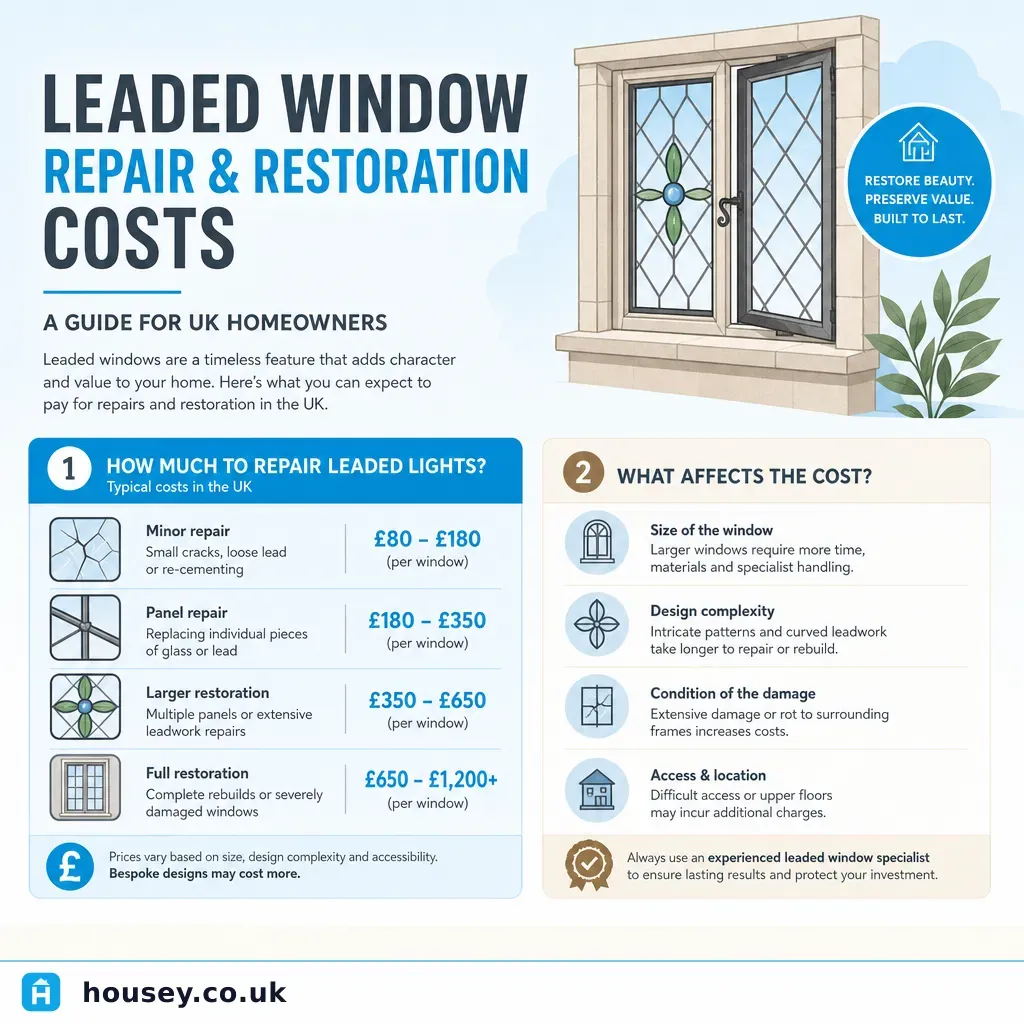 Improvement & Build
Leaded Window Repair and Restoration Costs
Leaded window repair in the UK typically costs £150–£600 for minor re-soldering or resealing, rising to £800–£2,500+ for full panel removal and restoration.
 Improvement & Build
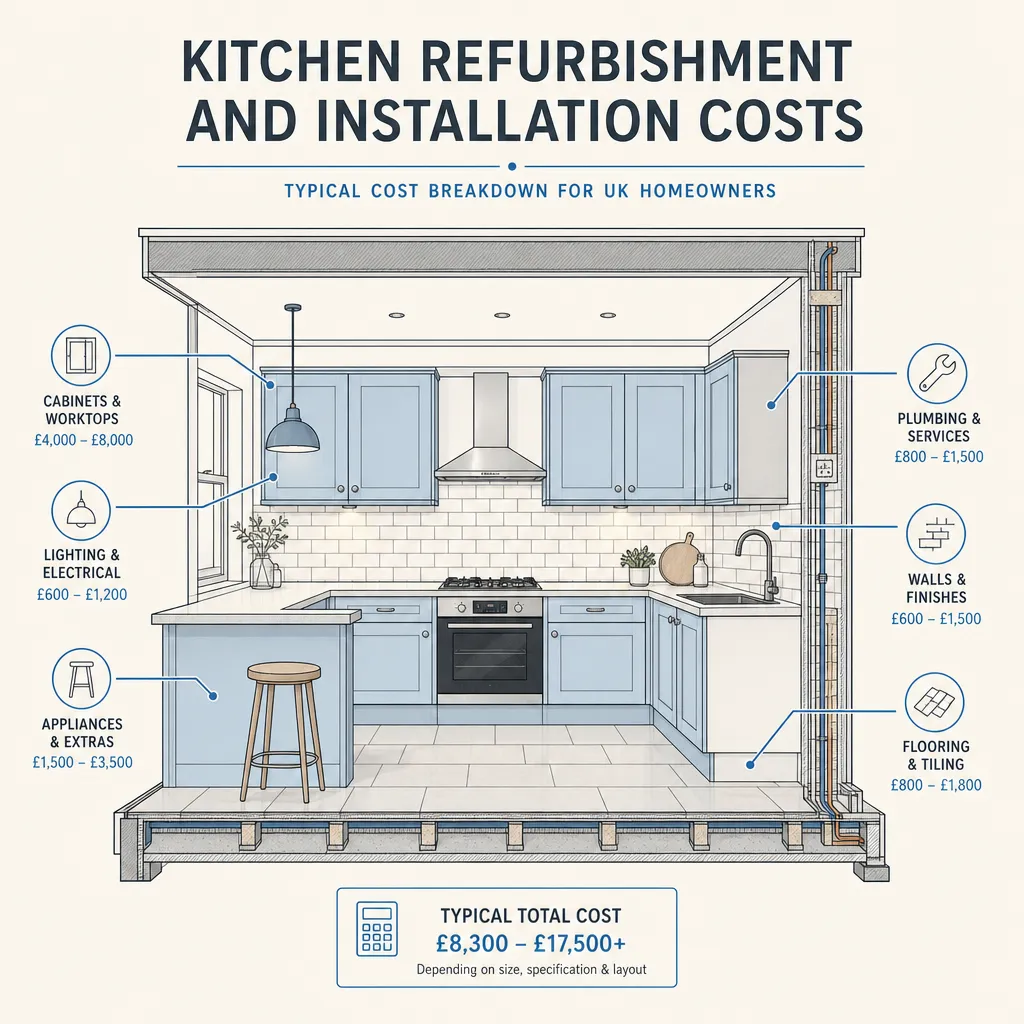
Kitchen Refurbishment and Installation Costs
A kitchen refurbishment in the UK typically costs between £3,000 and £40,000 or more, depending on whether you are replacing units only or carrying out a full design-and-build project.
 Improvement & Build
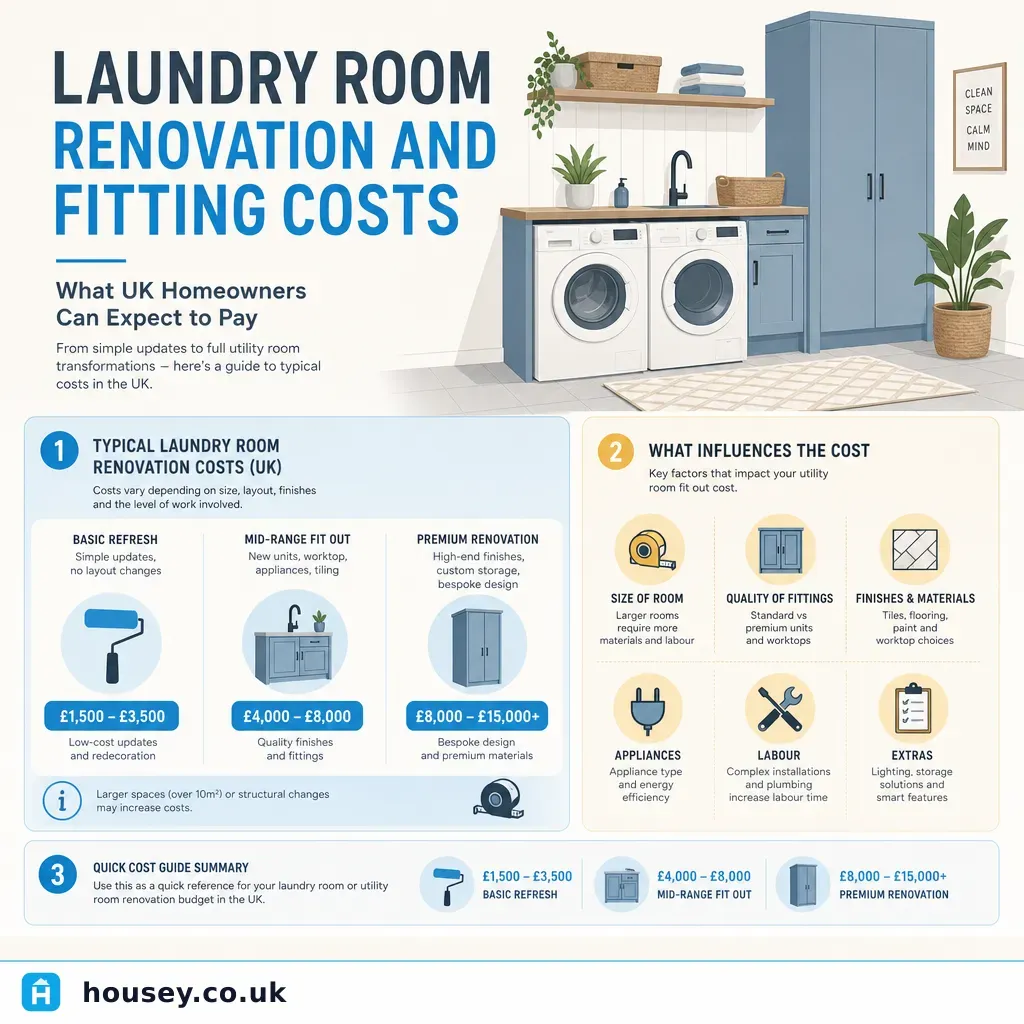
Laundry Room Renovation and Fitting Costs
A basic UK laundry room fit-out typically costs £2,000–£6,000 where plumbing and electrics are already in place, rising to £8,000–£15,000 or more when structural work, new drainage connections, or new electrical circuits are needed.