Patching and Repairing Holes in Plasterboard (Drywall)
By Housey · Last reviewed 8th of May 2026
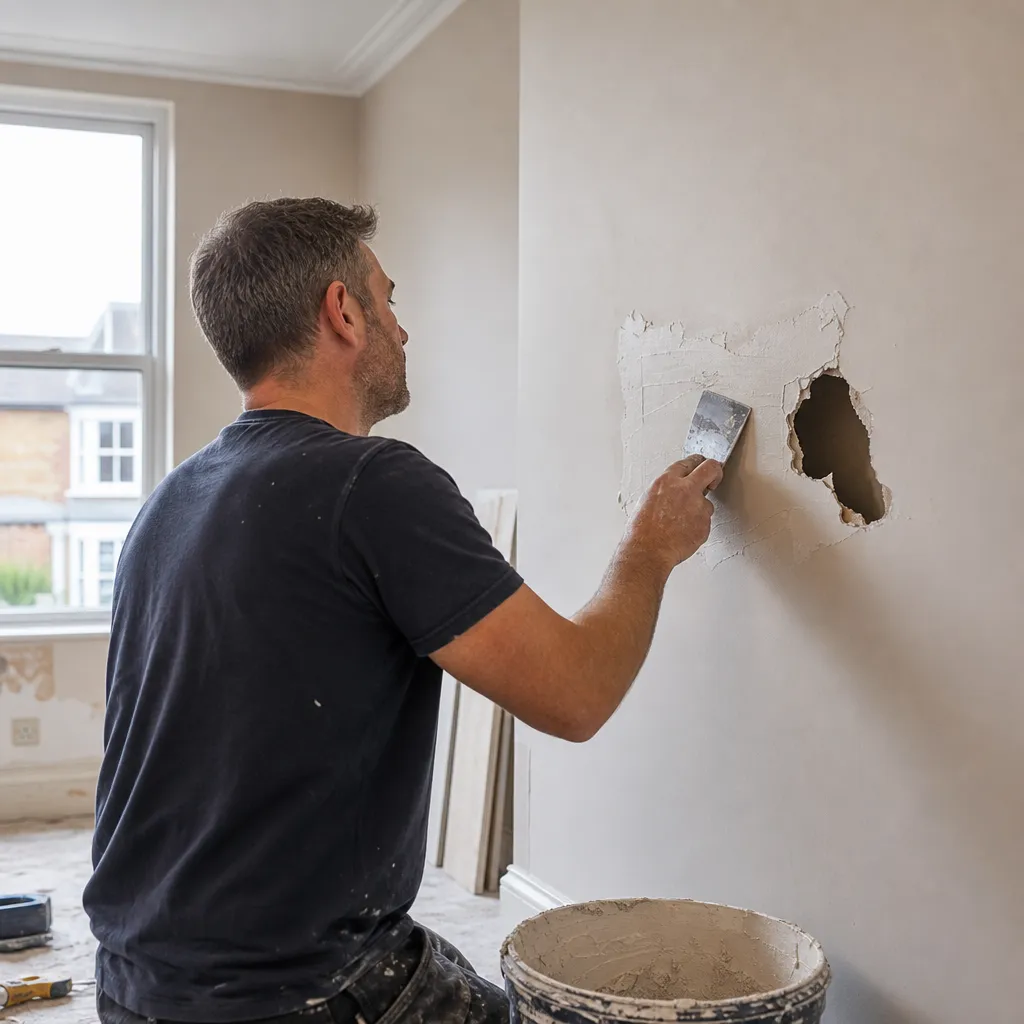
Patching and Repairing Holes in Plasterboard (Drywall)
Walls take a surprising amount of punishment — from picture hooks and doorknob impacts to accidental damage during renovation work. Matching the repair method to the hole size is the difference between a patch that holds and one that cracks or looks patchy within weeks. This comes up regularly for UK homeowners making good after trades work, preparing a property for sale, or maintaining older stock where plasterboard lines almost every room.
Key points
- Small holes under 50mm can be filled with ready-mixed filler; no specialist tools or backing support are needed.
- Holes 50mm–150mm require a self-adhesive mesh patch or backing board to prevent filler bridging the void and cracking as it dries.
- Holes over 150mm need a cut-back-and-patch repair: the damaged section is removed, timber noggings fixed inside, and a new plasterboard panel is fitted, taped, and filled.
- Always use a cable and pipe detector before cutting into any wall — supply cables frequently run vertically from sockets and horizontally at dado height.
- Fire-rated plasterboard (typically pink-faced Gyproc FireLine) must be used like-for-like in party walls, stairwell enclosures, garage-to-house walls, and compartment ceilings — standard board is not a compliant substitute.
Which repair method do you need?
The right approach depends on hole size. Work through this decision tree before buying materials.
- Under 10mm (nail hole, small rawlplug): Ready-mixed filler, no backing needed.
- 10mm–50mm (impact damage, hook hole): Filler or self-adhesive mesh patch, one to two thin coats.
- 50mm–150mm (doorknob, bracket hole): Cut square if irregular; backing board or mesh patch; jointing compound in 2–3 coats.
- Over 150mm (major damage, access panel): Cut back to studs or fix noggings; new plasterboard panel; tape all joins; 2–3 coats of jointing compound.
- Uncertain about construction or services: Detect cables and pipes before cutting. If the surface crumbles rather than cuts cleanly, check for lath-and-plaster — a different technique is needed.
Repairing small holes (under 50mm)
Ready-mixed filler (Polyfilla, Toupret Fibacryl, or equivalent) is appropriate for holes up to about 50mm across. Press firmly into the hole with a filling knife, slightly overfilling. Once dry — typically 2–4 hours at room temperature — sand smooth with 120–180 grit paper. Always prime before repainting; bare filler is absorbent and will show as a dull patch if painted directly.
Repairing medium holes (50mm–150mm)
A filler bridging an unsupported void will crack as it shrinks. Use one of these methods:
Method | How it works | Best for |
|---|---|---|
Self-adhesive mesh patch | Peel-and-stick fibreglass mesh; jointing compound in 2–3 thin coats | Circular or irregular holes |
Backing board — butterfly method | Timber or board offcut threaded behind hole, screwed through the wall face | Any shape; solid, durable result |
Proprietary plug kit | Pre-cut plug and backing clip supplied together | Fast repairs needing a flush finish |
Apply jointing compound in thin coats, feathering the final coat at least 150mm beyond the hole. Allow each coat to dry fully before applying the next, then sand, prime, and redecorate.
Repairing large holes (over 150mm)
- Mark a clean rectangle around the damage, aligned with studs where possible.
- Detect services across the full cut area before sawing.
- Cut out the damaged section using a plasterboard saw or multi-tool.
- Fix backing: cut to stud centre lines so the new panel can share the stud, or install horizontal noggings (50×50mm timber) top and bottom of the opening.
- Cut a replacement panel to match the original thickness — 9.5mm or 12.5mm for most UK partitions, 15mm for ceilings.
- Screw in at 150–200mm centres, apply jointing tape over all joins, finish with 2–3 coats of compound.
- Sand, prime, and redecorate.
Matching an existing fine plaster skim is often the hardest step. A plasterer can skim the whole bay for a seamless result.
Fire-rated and moisture-resistant repairs
Standard plasterboard must not replace fire-rated board in party walls, stairwell enclosures, garage-to-house walls, or compartment ceilings. These locations typically require 12.5mm or 15mm Gyproc FireLine or equivalent, maintaining the fire resistance the original construction was designed to provide. Approved Document B of the Building Regulations covers requirements for England and Wales.
In kitchens and bathrooms, use MR-grade plasterboard for cut-back repairs. In areas to be tiled, a tile backer board such as Hardiebacker or Aquapanel is more appropriate.
What not to assume
- "Hollow wall means plasterboard": Pre-1940s UK homes often have lath-and-plaster, which needs a bonding coat and different technique to repair.
- "Lightweight filler works for large holes": Ready-mixed filler shrinks and cracks without backing for holes over about 15mm across.
- "No cables near the hole": Supply cables run in unexpected positions. Always detect before cutting.
- "The finish will be invisible": Large repairs rarely disappear without a professional skim over the whole section.
When to get professional help
Most small-to-medium repairs are manageable DIY work. Call a plasterer or drylining contractor when:
- The wall is a party wall, fire-compartment, or stairwell and you are unsure of the fire-resistance specification.
- The damage covers multiple stud bays or involves a ceiling.
- A fine skim finish is needed to match the existing surface.
- Moisture, mould, or staining is visible behind the plasterboard — investigate before repairing.
- You are in a leasehold flat and the damage involves a structural or party wall element.
How Housey can help
If your repair is part of a wider renovation, or you have found damp or structural issues behind the plasterboard, Housey can help you find and compare quotes from local plasterers and specialists. Browse the Housey service directory to request quotes from vetted contractors in your area.
Frequently asked questions
Can I use regular Polyfilla for a large hole in plasterboard?
Ready-mixed filler is designed for small surface repairs up to about 15mm depth. For larger holes it cracks as it dries and does not bond without solid backing. Use a backed repair or jointing compound applied in thin coats for anything over 50mm, and always fit a backing board for holes over 150mm.
Do I need to prime before repainting a plasterboard repair?
Yes. Bare filler and jointing compound are highly absorbent — painting directly produces a dull, patchy finish. Apply a diluted mist coat (50:50 emulsion and water) or a dedicated plasterboard primer, allow to dry fully, then apply your finish coat.
Is it safe to cut into a wall without checking for cables first?
No. Cables run vertically from sockets and switches and horizontally at dado height. Always use a cable and pipe detector before cutting into any wall. Cutting through a live cable is dangerous, and repair constitutes notifiable electrical work under Part P of the Building Regulations in England and Wales.
How do I match the finish after patching plasterboard?
Sand the repair flush, apply fine-coat filler, sand again with 120-grit paper, then prime before repainting. For skimmed surfaces, feather the compound well beyond the hole. A plasterer can skim the entire panel so joins are not visible.
When does a plasterboard repair need building regulations approval?
Most patch repairs are routine maintenance requiring no approval. Replacing plasterboard in a fire-compartment wall — between a garage and living space, a party wall, or a stairwell — should use fire-rated board to specification. Significant fire-compartmentation work may need building control sign-off.
Sources and further reading
- Approved Document B: Fire Safety — GOV.UK
- Electrical safety guidance — Health and Safety Executive
- Home electrical safety — Electrical Safety First
- Gyproc product datasheets — Saint-Gobain / Gyproc
Useful next reads
 General property advice
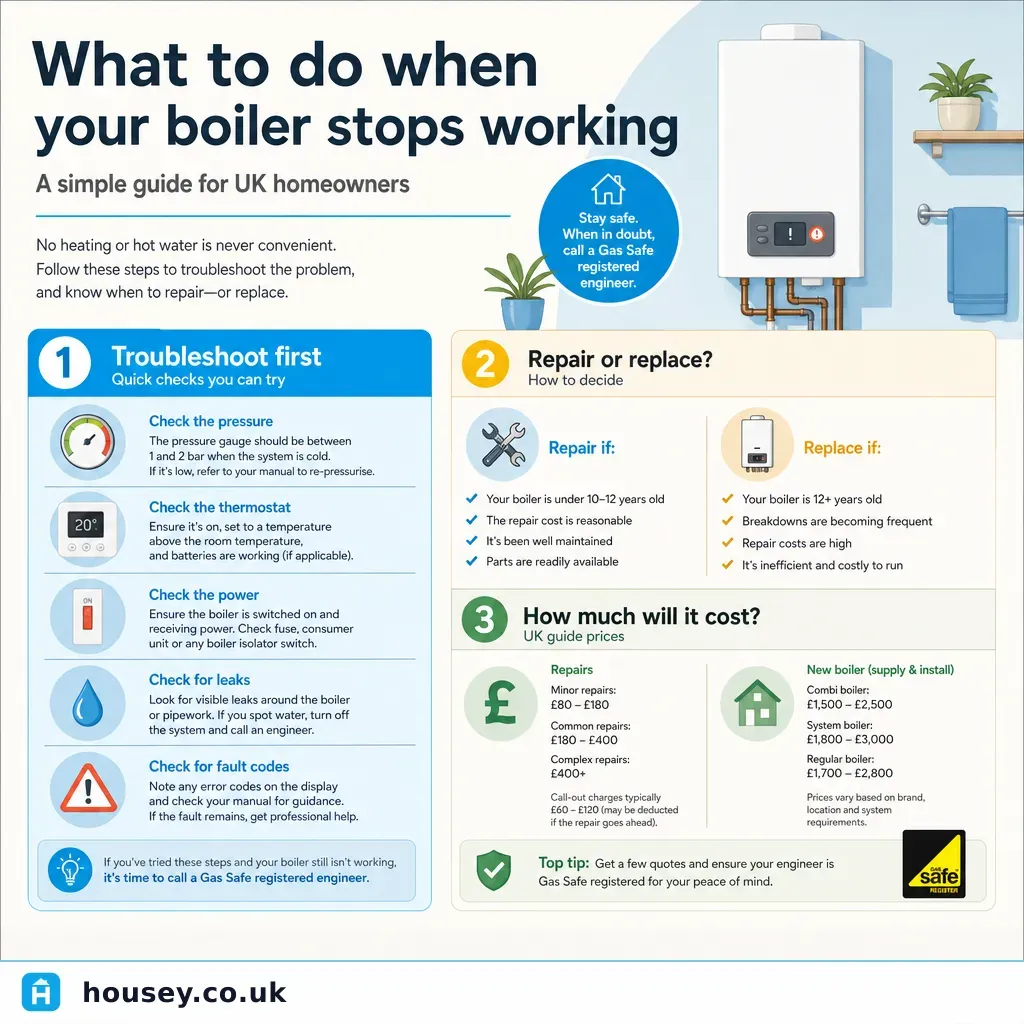
What to do when your boiler stops working
When your boiler stops working, check the pressure gauge (should read 1–1.
 General property advice
Property Market Trends: Activity Growth and Price Movements
UK property market activity is measured through completed sale registrations (HM Land Registry), lender mortgage data, and transaction volumes from HMRC.
 General property advice
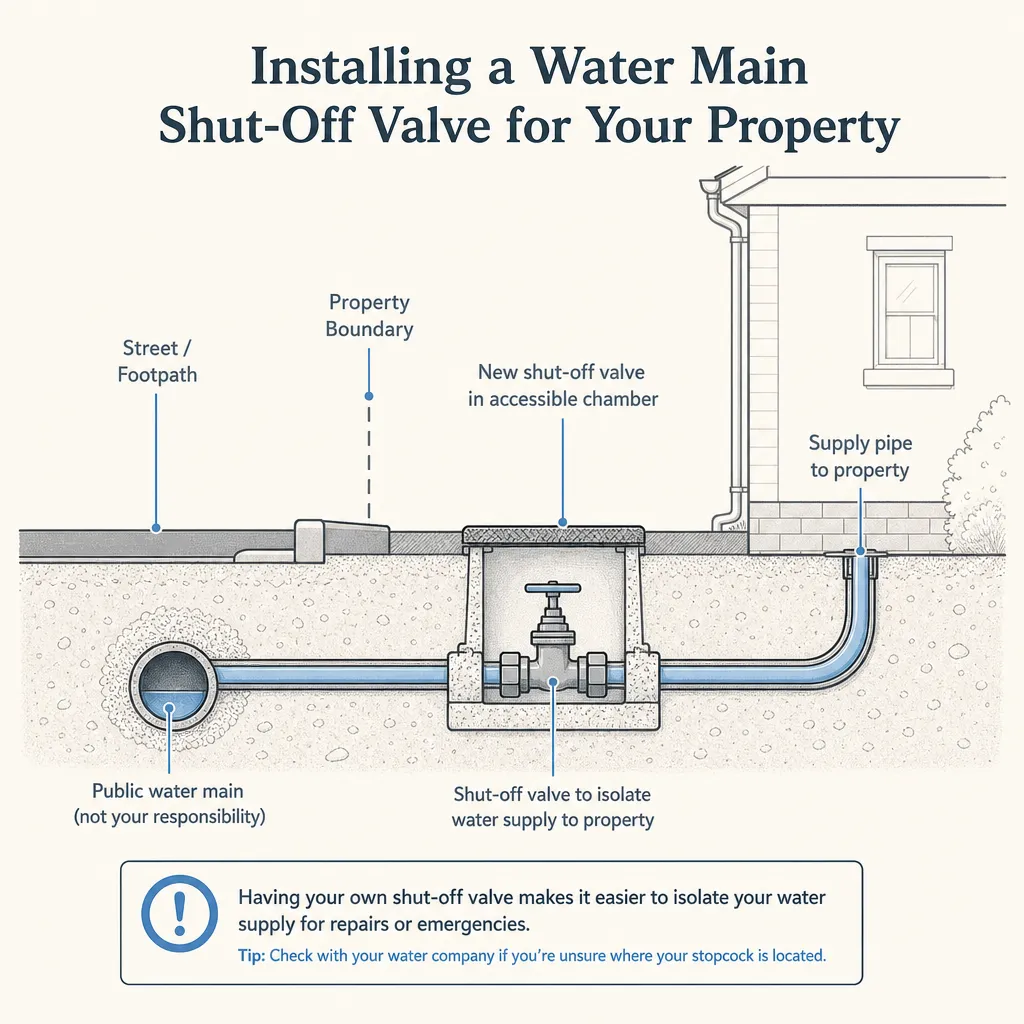
Installing a water main shut-off valve for your property
A water main shut-off valve — commonly called a stopcock — controls all water entering your home from the mains.
 General property advice
Monthly House Price Index: August Market Report and Analysis
The UK House Price Index is published monthly using completed Land Registry transaction data, meaning August figures typically reflect sales agreed months earlier.
 General property advice
Scottish Property Market: Activity and Regional Trends
Scotland's property market operates under distinct legal rules: sellers must provide a Home Report before marketing, transactions become legally binding at conclusion of missives rather than exchange of contracts, and Land and Buildings Transaction Tax replaces Stamp Duty.