Creating outdoor living: pergolas and garden structures for residential spaces
By Housey · Last reviewed 7th of May 2026
Creating outdoor living: pergolas and garden structures for residential spaces
Pergolas, gazebos, garden rooms, and covered terraces have become increasingly popular additions to UK gardens as homeowners seek to extend their living space outdoors. Whether you want a shaded seating area for summer evenings, a structure to support climbing plants, or a covered outdoor kitchen, the choice of structure and how it is built has practical and regulatory consequences. Getting those decisions right from the start avoids costly alterations or enforcement action later.
Key points
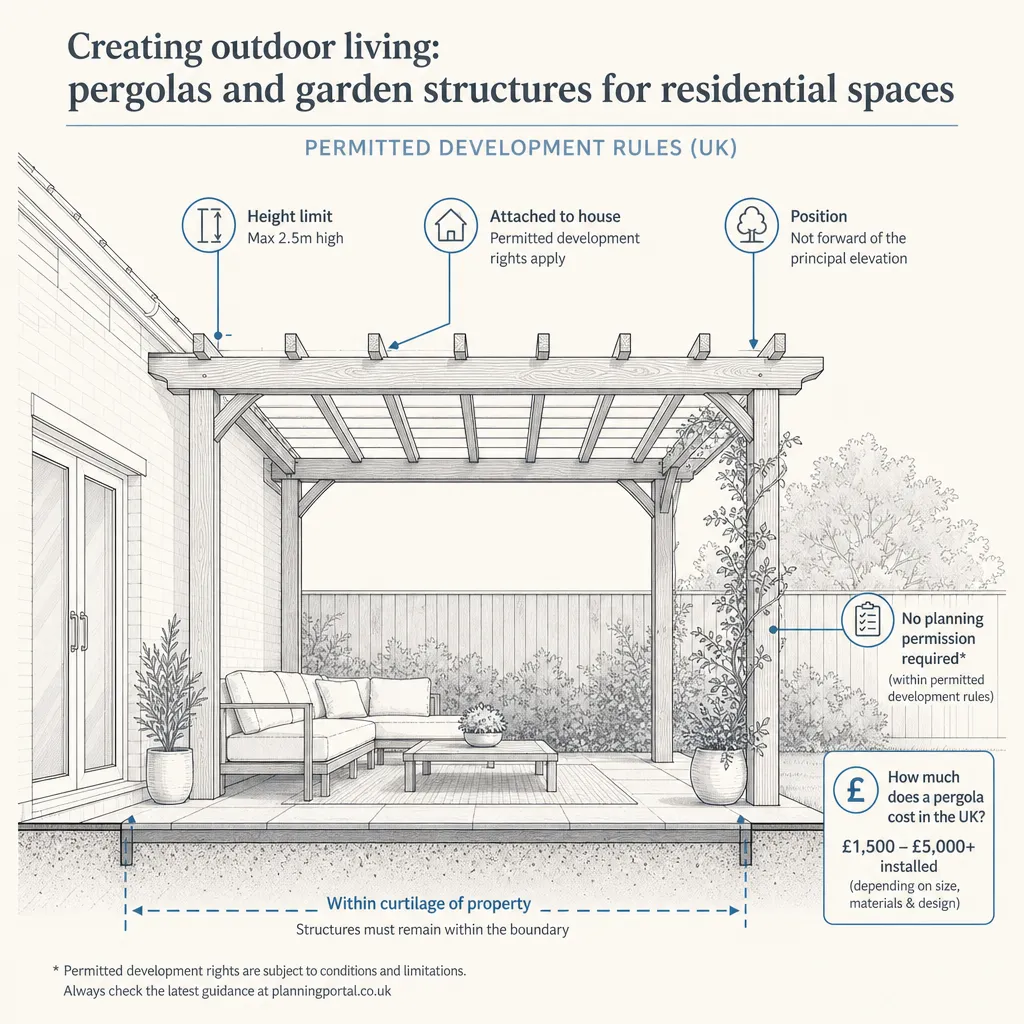
- Most freestanding pergolas are permitted development under the Town and Country Planning (General Permitted Development) (England) Order 2015, but specific height, size, and location thresholds apply and must be met in full.
- An outbuilding within 2 metres of a property boundary must be no more than 2.5 metres in height to remain permitted development; structures further from the boundary may be up to 4 metres (dual-pitched roof) or 3 metres (any other roof type).
- All outbuildings and extensions combined must not cover more than 50% of the original garden area — exceeding this removes permitted development eligibility entirely.
- Permitted development rights do not apply to flats, maisonettes, or properties in National Parks, Areas of Outstanding Natural Beauty, or some conservation areas.
- Electrical connections to garden structures must be carried out by a qualified electrician; any gas connections require a Gas Safe registered engineer.
What types of garden structure are available?
Garden structures range from simple freestanding pergolas to complex garden rooms with insulation, electricity, and plumbing. Understanding the main categories helps clarify which professional to involve and what planning rules apply.
Structure type | Typical use | Planning note | Suitable professional |
|---|---|---|---|
Freestanding pergola | Climbing plants; outdoor seating canopy | Usually permitted development within height limits | Landscaper, garden designer |
Attached pergola or veranda | Covered patio adjacent to house | More complex PD rules; may need permission if large | Landscaper, extension builder |
Gazebo (open-sided) | Focal point seating area | Usually permitted development within limits | Landscaper |
Garden room or summerhouse | Home office, studio, gym | Outbuilding PD rules; floor area and height thresholds apply | Extension builder, specialist installer |
Covered outdoor kitchen | Year-round outdoor cooking | Gas and electrical connections need qualified trades | Landscaper plus specialist trades |
Louvred or bioclimatic pergola | Year-round outdoor use; adjustable weather protection | Depends on size, attachment, and proximity to boundary | Specialist supplier, landscaper |
Planning permission and permitted development for pergolas
The question of whether a pergola or garden structure needs planning permission depends on several factors specific to your property. Most straightforward freestanding structures in rear gardens are permitted development in England under the Town and Country Planning (General Permitted Development) (England) Order 2015, but this is not universal.
Key thresholds for permitted development in England:
- The structure must be within the curtilage of a dwellinghouse — permitted development does not apply to flats or maisonettes.
- It must not be forward of the principal elevation (not in front of the main front wall of the house).
- Within 2 metres of a property boundary: maximum height of 2.5 metres.
- More than 2 metres from a boundary: maximum height of 4 metres (dual-pitched roof) or 3 metres (any other roof type).
- All outbuildings and extensions combined must not cover more than 50% of the original garden area.
Where permitted development is unlikely to apply:
- Conservation areas: Outbuildings and structures on land to the side of the property require planning permission. Rear garden structures may also be restricted depending on the local authority's approach.
- Listed buildings: All alterations, including garden structures, require listed building consent and usually full planning permission.
- National Parks and Areas of Outstanding Natural Beauty: Additional restrictions apply.
- Flats and maisonettes: Full planning permission is required for any structure.
- Article 4 Directions: Some local authorities have removed permitted development rights in specific areas. Check with your local planning authority.
Rules in Wales, Scotland, and Northern Ireland differ from those in England. Always verify the current rules with your local planning authority or a qualified planning consultant before beginning work.
Which garden structure should I choose?
Use this decision tree to identify the most suitable structure for your garden and circumstances.
- Choose a freestanding pergola if you want a defined outdoor seating area with overhead coverage for climbing plants, and your garden has clear open space at least 2 metres from boundaries.
- Choose an attached pergola or veranda if you want a seamless covered transition from indoors to outdoors, and your rear or side door position suits a lean-to structure fixed to the building.
- Choose a garden room or summerhouse if you need a fully enclosed, weatherproof structure usable year-round — for a home office, gym, or studio.
- Choose a louvred or bioclimatic pergola if you want year-round outdoor use with adjustable ventilation and rain protection, and your budget allows for a premium product.
- Consult your local planning authority first if your property is in a conservation area, is listed, is a flat, or if the structure would push your total outbuilding coverage close to or above 50% of the garden area.
- Instruct a planning consultant if your circumstances are complex — for example, a large structure on a listed property, or a project in an area with an Article 4 Direction removing standard permitted development rights.
Materials: timber, steel, and aluminium compared
The material you choose affects maintenance requirements, lifespan, cost, and the finished aesthetic.
Material | Typical lifespan | Maintenance requirement | Indicative supply cost | Aesthetic |
|---|---|---|---|---|
Softwood timber (pressure-treated) | 10–20 years | Staining or painting every 2–3 years | £400–£1,500 for a basic kit | Traditional; suits most garden styles |
Hardwood timber (oak, iroko) | 25–40 years | Oiling every 1–2 years | £1,500–£5,000+ for quality structure | Premium; weathers naturally to silver-grey |
Powder-coated aluminium | 20–30 years | Minimal; wipe down as needed | £2,000–£8,000+ | Contemporary; wide colour range |
Galvanised or powder-coated steel | 20–40 years | Periodic inspection for rust at joints | £1,500–£6,000+ | Industrial or contemporary |
Indicative UK costs, last reviewed 2026-05-07. Installation costs are additional and vary significantly by location, site conditions, and contractor. Always request itemised quotes from at least three qualified professionals.
Red flags when commissioning a garden structure
Before agreeing to any contract, be alert to the following warning signs:
- A contractor who does not mention planning permission or advise you to verify eligibility yourself.
- No written specification of materials, dimensions, and fixing method provided before work begins.
- No clarity on who is responsible for foundations, drainage, and connecting services such as electricity.
- Quotes that do not state clearly whether VAT is included.
- No evidence of public liability insurance provided when requested.
- Pressure to start work before you have a written contract confirming the agreed scope and price.
- A structure designed to abut or overhang a boundary without any discussion of party wall implications.
Important limitations
This article provides general information about permitted development rules and garden structure options for UK residential properties. Planning rules are set in primary and secondary legislation and are interpreted by individual local planning authorities. They can change, vary between the devolved nations of England, Wales, Scotland, and Northern Ireland, and be affected by local restrictions, title deed conditions, lease obligations, or adopted local plan policies that are specific to your property.
Nothing in this article constitutes planning advice. For any project where permitted development eligibility is uncertain — particularly in conservation areas, for listed buildings, for flats, or for structures of significant size or attached to the house — consult your local planning authority directly or instruct a qualified planning consultant before beginning any work.
What to ask a qualified professional
Before instructing a landscaper, garden designer, or builder to install a garden structure, ask the following:
- Do I need planning permission or listed building consent for this structure, and will you confirm your view in writing?
- Does the structure fall within permitted development limits, and have you checked the original garden area against the 50% outbuilding coverage threshold?
- What type of foundations will you use, and could they affect underground services, drains, or tree root zones?
- If electrical connections or lighting are involved, will these be carried out by a qualified electrician in line with Part P of the Building Regulations?
- Are there any gas connections, and if so, will a Gas Safe registered engineer be engaged?
- What guarantees do you offer on workmanship and materials, and for how long?
- Are you insured for public liability, and can you provide evidence before work begins?
When to get professional help
Engaging a qualified professional is advisable for any garden structure beyond a small flat-pack gazebo. Consider it essential when:
- The structure is attached to the house, as it may affect weatherproofing, structural integrity, and the thermal performance of the building
- The project involves electrical wiring or outdoor lighting circuits
- Gas connections of any kind are required — these must always be completed by a Gas Safe registered engineer
- The structure is near or on a boundary, where party wall considerations may apply under the Party Wall etc. Act 1996
- You are in a conservation area, own a listed building, or your garden has significant changes in level that affect foundation design
How Housey can help
Housey can connect you with qualified garden designers and experienced landscapers who regularly design and install pergolas and garden structures across the UK. If your project involves structural work connected to the main house, you can also request quotes from extension builders experienced in covered outdoor structures, verandas, and garden rooms.
Frequently asked questions
Do I need planning permission for a pergola in my back garden?
Most freestanding pergolas in rear gardens are permitted development and do not need planning permission, provided they stay within height limits — 2.5 metres within 2 metres of a boundary, or up to 4 metres with a dual-pitched roof further away — and do not push outbuilding coverage above 50% of the original garden area. Exceptions apply in conservation areas, for listed buildings, and for flats. Check with your local planning authority if uncertain.
How much does it cost to have a pergola built in the UK?
Indicative UK costs, last reviewed 2026-05-07: a basic timber pergola installed typically costs £1,500–£4,000 depending on size and materials. Premium hardwood or aluminium structures with louvred roofs can cost £5,000–£15,000 or more. Labour typically adds 50–100% to supply costs. Always obtain at least three quotes from qualified landscapers or specialist installers and confirm whether VAT is included.
Can I attach a pergola to the side of my house?
An attached pergola or veranda is subject to more complex permitted development rules than a freestanding structure. Depending on size and how it is fixed to the building, it may be treated as an extension rather than an outbuilding, which changes which permitted development class applies and whether building regulations sign-off is also needed. Check with your local planning authority before proceeding.
Do garden structures need building regulations approval?
Most freestanding garden structures — pergolas, summerhouses, gazebos — do not require building regulations approval if they comply with permitted development limits and are not intended as sleeping accommodation. However, if the structure is connected to mains electricity, involves a new drainage connection, or is large and attached to the house, building regulations may apply. Check with your local building control body.
What is the difference between a pergola and a gazebo?
A pergola is typically open-sided with a slatted or open roof, used for climbing plants or partial shade. A gazebo is usually a freestanding, roofed structure providing more shelter from rain and wind. In planning terms, both are treated as outbuildings and subject to the same permitted development thresholds under the Town and Country Planning (General Permitted Development) (England) Order 2015.
Sources and further reading
- Permitted development rights for householders: technical guidance — GOV.UK
- Town and Country Planning (General Permitted Development) (England) Order 2015 — legislation.gov.uk
- Planning permission: outbuildings — Planning Portal
- Conservation areas — GOV.UK Planning Practice Guidance
- Gas Safe Register: find a registered engineer — Gas Safe Register
Useful next reads
 Improvement & Build
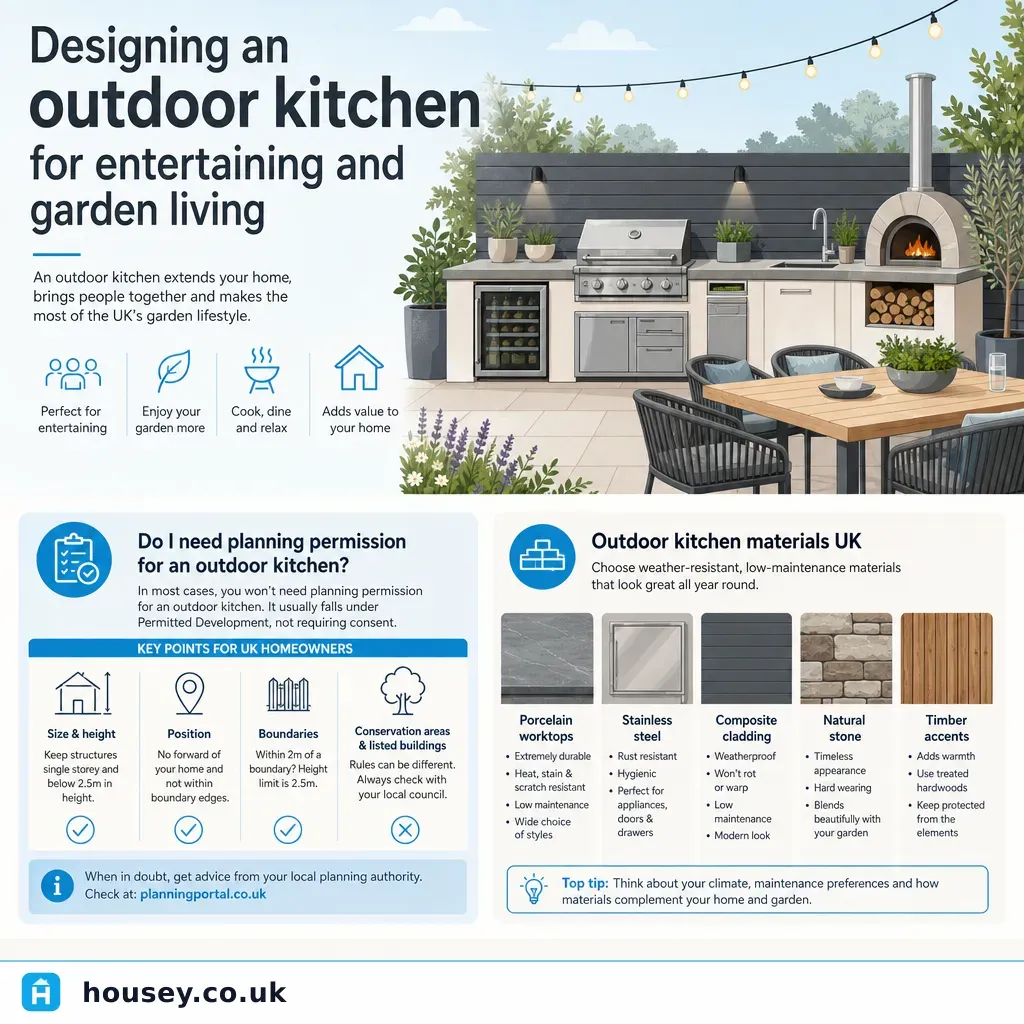
Designing an outdoor kitchen for entertaining and garden living
An outdoor kitchen in a UK garden needs a stable, level base — typically a concrete slab or quality paving — with weather-rated materials such as stainless steel grade 316 or frost-rated porcelain.
 Improvement & Build
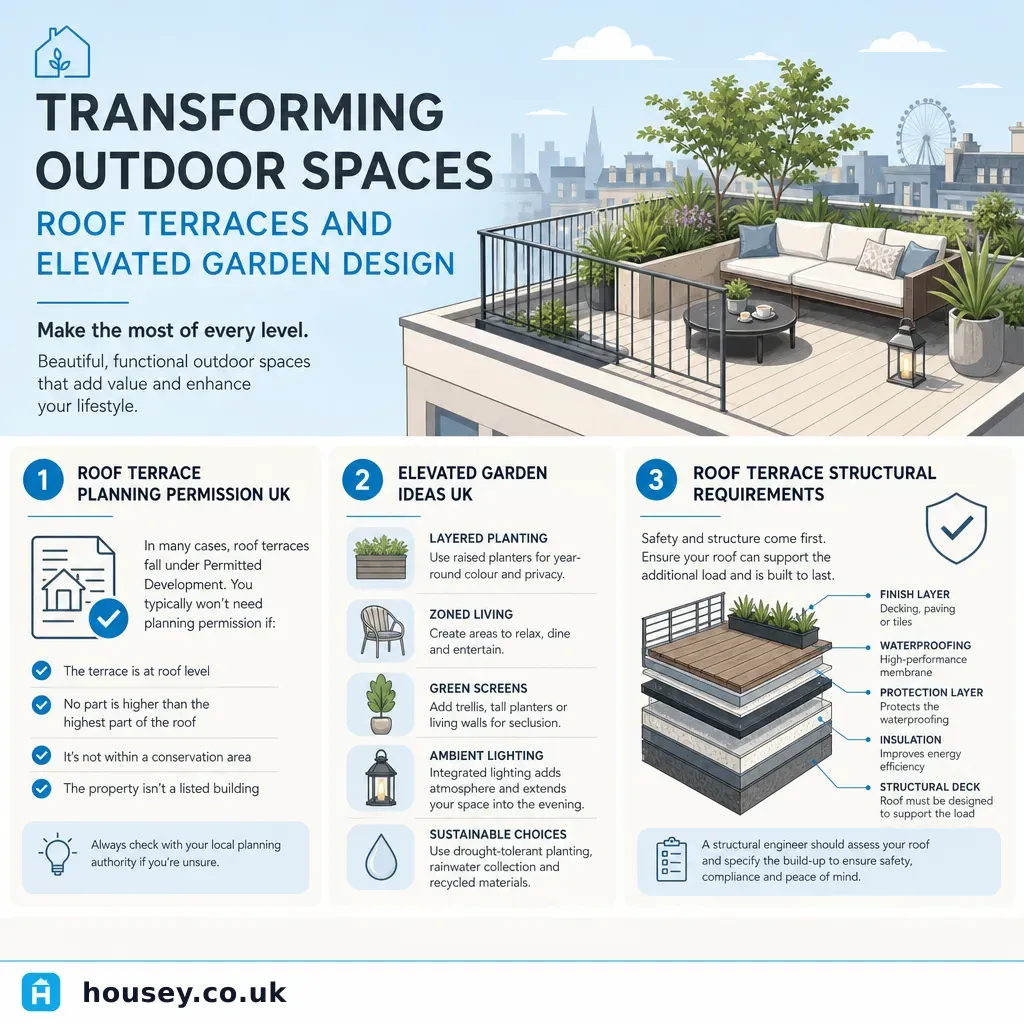
Transforming Outdoor Spaces: Roof Terraces and Elevated Garden Design
Roof terraces in the UK almost always need planning permission and a structural engineer's load capacity assessment before design work begins.
 Improvement & Build
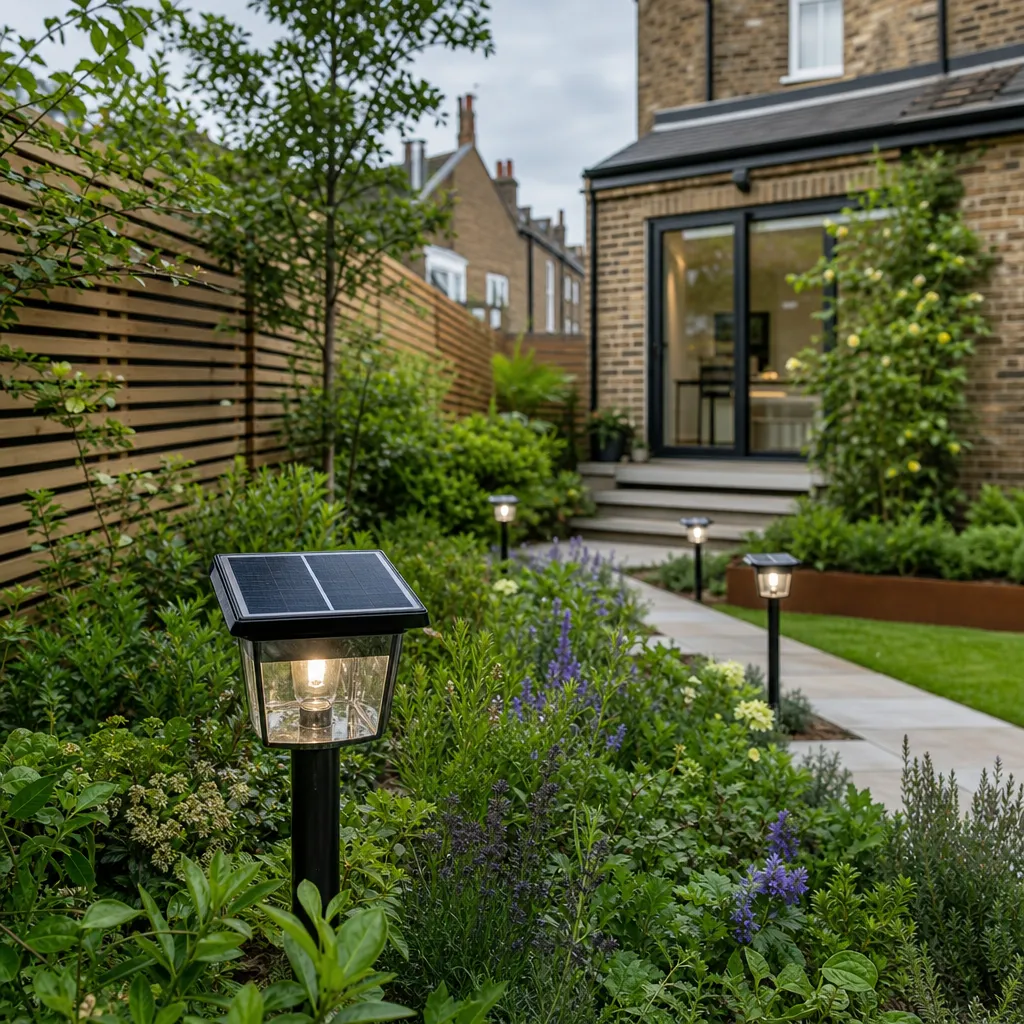
Solar-powered outdoor lighting: designing efficient garden illumination
Solar-powered outdoor lighting suits most UK gardens and requires no mains wiring, making it a practical, low-disruption option for paths, borders, and security.
 Improvement & Build
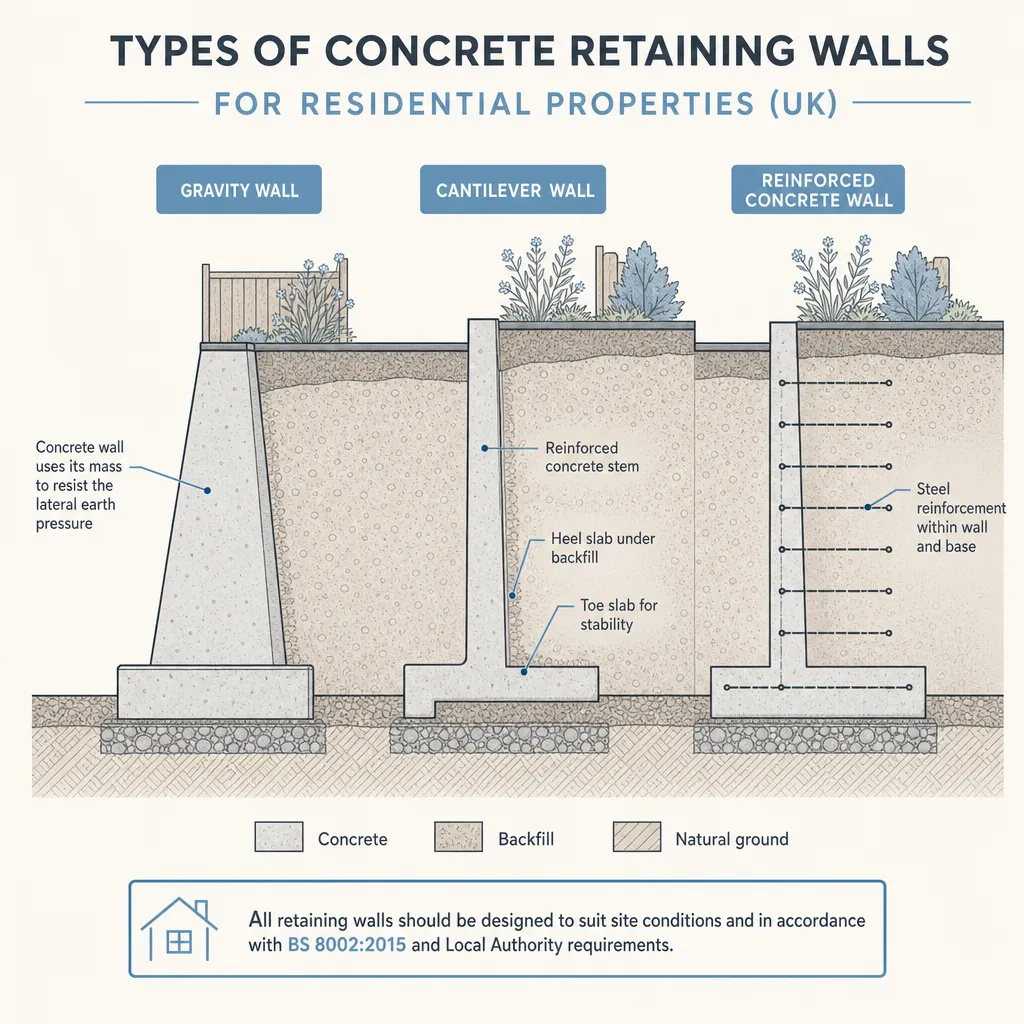
Types of Concrete Retaining Walls for Residential Properties
The four main concrete retaining wall types for UK residential use are gravity walls, cantilever walls, segmental block (SRW) systems, and sheet-pile walls.
 Improvement & Build
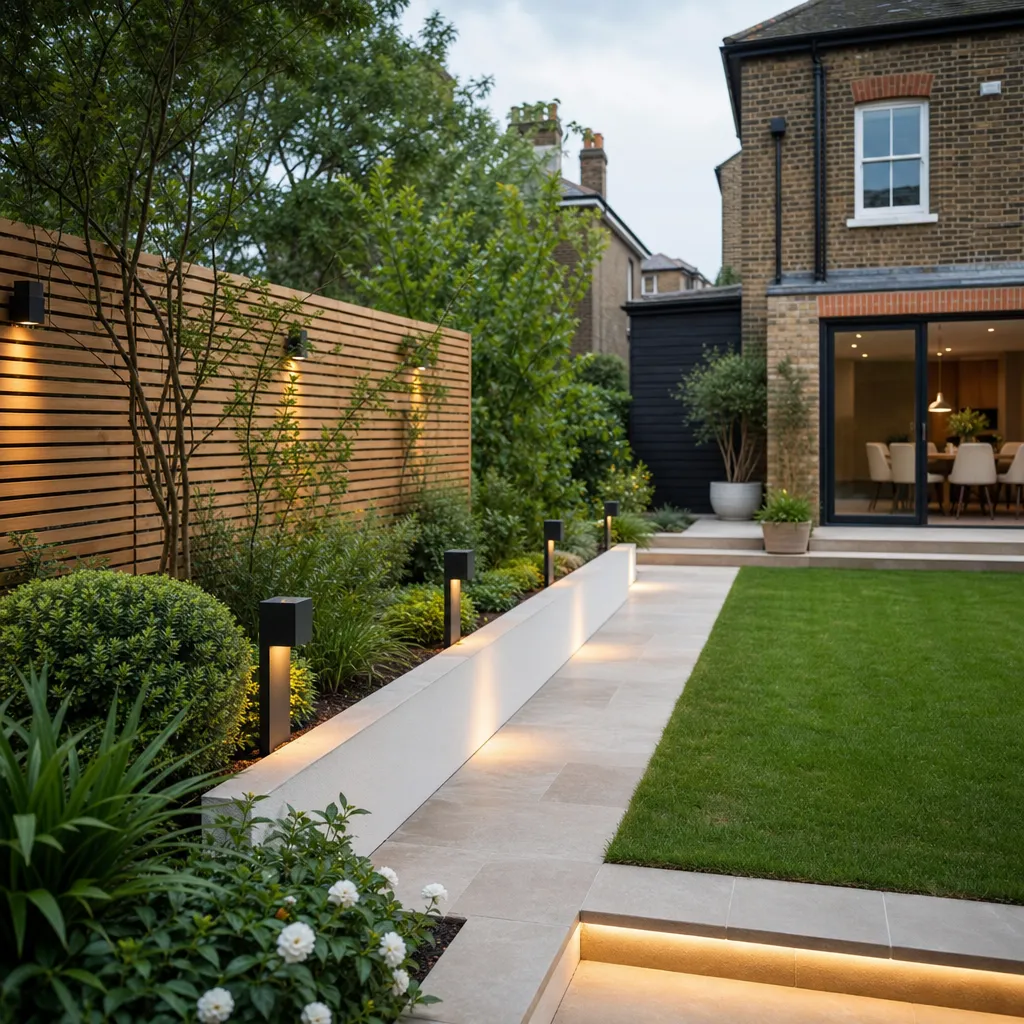
Landscape Lighting Design Ideas for Gardens
Effective garden lighting combines task lighting for paths and entrances, accent lighting to highlight trees and borders, and ambient lighting for entertaining areas.