Types of Concrete Retaining Walls for Residential Properties
By Housey · Last reviewed 25th of May 2026
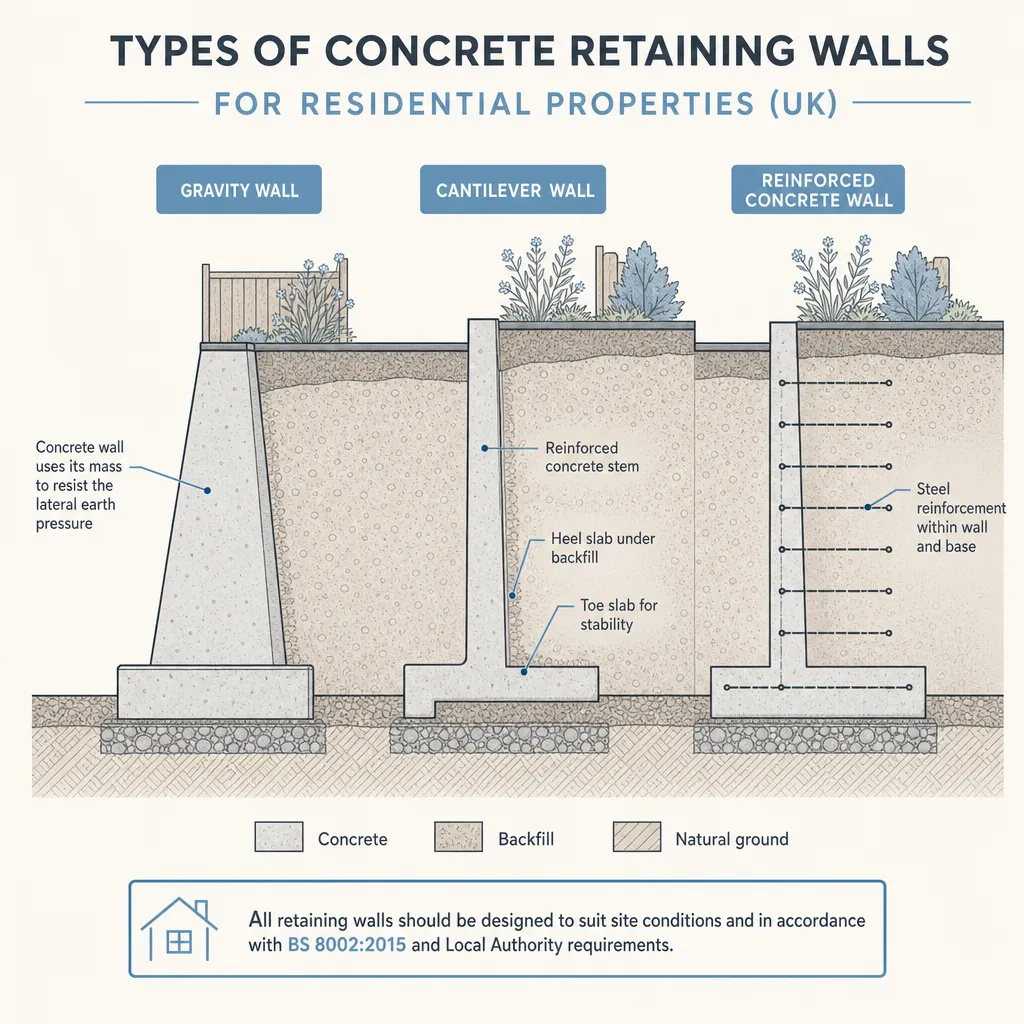
Types of Concrete Retaining Walls for Residential Properties
Retaining walls become necessary whenever you are creating level ground on a sloping plot, terracing a garden, or managing the change in level between a driveway and a lawn. For UK homeowners, the choice of wall type affects long-term stability, drainage performance, overall cost, and whether building regulations or planning consent apply — decisions worth getting right before any digging begins.
Key points
- Retaining walls over 1 metre high adjacent to a highway, or over 2 metres elsewhere, generally require building regulations consent under Approved Document A (Structure).
- Four main concrete retaining wall types are used in UK residential construction: gravity walls, cantilever walls, segmental block (SRW) systems, and sheet-pile walls.
- Drainage is as important as the wall structure itself — inadequate drainage causes hydrostatic pressure that can topple or crack even well-built walls.
- Permitted development rights do not cover engineering structures such as retaining walls; check with your local planning authority before starting.
- A structural engineer's input is advisable for any wall retaining more than 1 metre of soil, particularly on clay ground or near existing buildings.
What is a retaining wall and when do you need one?
A retaining wall holds back earth or other material on one side, creating a level difference between two areas. In residential gardens, they appear along sloped boundaries, beneath raised terraces, alongside sunken driveways, and wherever ground has been cut or filled to form a flat, usable area.
Concrete is one of the most widely used materials because it is strong in compression, durable, and adaptable to different design approaches. The appropriate type depends on the height of retained earth, soil conditions, proximity to structures, and applied loads. A low garden terrace wall differs structurally from one positioned beside a driveway carrying vehicle loads, and the two may require entirely different approaches.
Types of concrete retaining wall
Gravity walls
A gravity wall relies on its own mass to resist lateral soil pressure. It is typically a thick, unreinforced or lightly reinforced concrete structure. Gravity walls work well for modest heights — generally up to around 1 metre — where the soil is stable and loads are low.
They are relatively straightforward to construct and do not require the same depth of engineering as cantilever designs, but they do need a competent concrete base and proper drainage provision behind the wall face.
Cantilever walls
A cantilever wall uses an L-shaped or T-shaped reinforced concrete design. The horizontal base slab — the footing or heel — extends beneath the retained earth; the weight of the soil above the heel helps to stabilise the wall against overturning. Cantilever walls are efficient for medium heights (roughly 1 to 3 metres) because reinforced concrete resists bending forces rather than relying solely on mass.
They require careful structural design and properly compacted ground conditions. For residential projects, a structural engineer's design drawing is usually required before building control will grant approval.
Segmental retaining wall systems (SRW)
Segmental walls are built from precast or dry-cast concrete blocks that interlock or stack with a slight backward lean known as batter. These are common in UK gardens because they are widely available, can be installed by competent groundworkers or landscapers, and come in a range of finishes and colours.
Most segmental block walls over about 1 metre use a geogrid — a polymer mesh laid in horizontal layers behind the wall — to reinforce the retained soil. The combined system is known as a mechanically stabilised earth (MSE) wall. Manufacturer guidelines specify geogrid spacing, embedment depth, and maximum permissible wall height; these must be followed for the wall to perform as designed.
Sheet-pile walls
Sheet-pile walls — most often steel, but concrete versions exist — are driven or vibrated into the ground before excavation takes place. They are more common in commercial and civil engineering but may be used in residential projects where deep excavation is needed in a restricted space, for example when lowering a garden level adjacent to an existing boundary structure.
These require specialist plant and structural engineering input, and are unlikely to be the first choice for a standard garden terracing project.
Comparison of concrete retaining wall types
Type | Typical height range | Best for | Structural engineer needed? | Common residential use |
|---|---|---|---|---|
Gravity wall | Up to ~1 m | Low-level changes, stable soil | Not usually | Low garden terracing, raised planters |
Cantilever | 1–3 m | Medium heights, vehicle loads | Yes | Sloped driveway retention, raised patios |
Segmental block (SRW) | Up to ~3 m with geogrid | Gardens, landscaping | Often for heights above 1 m | Tiered gardens, boundary walls |
Sheet pile | Variable | Restricted space, deep excavation | Yes | Basement excavation, tight boundaries |
Drainage: the factor most homeowners underestimate
Regardless of wall type, inadequate drainage is the most common cause of retaining wall failure in UK gardens. Water accumulates behind the wall and creates hydrostatic pressure against the structure. Good practice includes:
- A layer of free-draining granular material (Type 1 sub-base or clean gravel) directly behind the wall face.
- Weep holes at the base of the wall to allow water to escape — typically 75–100 mm diameter pipes at 1–2 metre centres.
- A geotextile membrane to prevent fine soil particles from migrating into the drainage layer over time.
- Surface water management to reduce run-off entering the retained zone during heavy rainfall.
Neglecting drainage is particularly costly to remedy because the fix often involves dismantling and rebuilding the wall from scratch.
Planning permission and building regulations
Most retaining walls in residential gardens do not require planning permission unless the property is listed, in a conservation area or area of outstanding natural beauty, or the wall sits on a boundary visible from a public highway. However, Building Regulations Approved Document A (Structure) applies to walls over 1 metre adjacent to a highway or over 2 metres elsewhere.
If a wall is on or near a shared boundary, the Party Wall etc. Act 1996 may apply if excavation is within 3 metres of an adjoining owner's foundations. Always check with your local planning authority before starting work, particularly in designated areas.
Decision tree: which retaining wall type is right for you?
- Choose a gravity wall if the retained height is under 1 metre, the soil is stable, and no vehicle loads are involved.
- Choose a segmental block wall if you want a landscape-friendly finish, the height is up to 2–3 metres, and you are prepared to include geogrid reinforcement to manufacturer specifications.
- Choose a cantilever wall if the retained height is above 1 metre, vehicle loads are present, or proximity to structures demands a professionally designed solution.
- Consult a structural engineer if any wall retains more than 1 metre of soil on clay or made-up ground, is near existing foundations, or is adjacent to a highway.
- Check with your local planning authority if the property is listed, in a conservation area, or the wall will be visible from a public road.
When to get professional help
Retaining wall failures can cause significant damage to gardens, driveways, and neighbouring properties. Seek professional input if:
- The retained height is over 1 metre.
- The ground is clay, waterlogged, or made-up fill.
- The wall is close to a building's foundations, a boundary, or a public highway.
- You notice leaning, cracking, or bulging in an existing wall.
- The project involves excavation near a neighbouring property's foundations.
How Housey can help
Housey connects you with experienced groundworkers and landscapers who regularly design and build retaining walls for UK residential projects. If you would like help shaping the overall layout of a sloped garden before construction begins, a garden designer can advise on wall placement, drainage strategy, and planting to complement the structure.
Frequently asked questions
Do I need planning permission for a retaining wall in my garden?
Most garden retaining walls do not require planning permission unless the property is listed, in a conservation area, or the wall sits on a boundary visible from a public highway. Building regulations under Approved Document A apply at certain heights. Always check with your local planning authority before starting work.
Do retaining walls need drainage?
Yes. Drainage is essential for any retaining wall. Without it, water pressure builds behind the structure and can cause cracking, leaning, or collapse. Weep holes, free-draining granular fill, and a geotextile membrane are standard practice and should be included in every retaining wall design, regardless of type.
Can I build a retaining wall myself?
Low-level walls under about 600 mm using segmental blocks may be within reach of a competent DIY homeowner following manufacturer guidance. Walls over one metre should be designed and built by qualified professionals — building regulations apply, and failures can have serious consequences for your property and neighbouring land.
How much does a concrete retaining wall cost in the UK?
Costs vary significantly with wall height, type, drainage requirements, access, and location. Segmental block walls tend to be more economical for straightforward garden terracing; engineered cantilever walls carry additional structural design fees. Indicative UK costs, last reviewed 2026-05-25 — always obtain at least three quotes from local contractors.
Sources and further reading
- Planning permission guidance — GOV.UK
- Building Regulations Approved Document A (Structure) — MHCLG / GOV.UK
- Party Wall etc. Act 1996 guidance for homeowners — GOV.UK
- RICS guidance on structural matters — Royal Institution of Chartered Surveyors
Useful next reads
 Improvement & Build
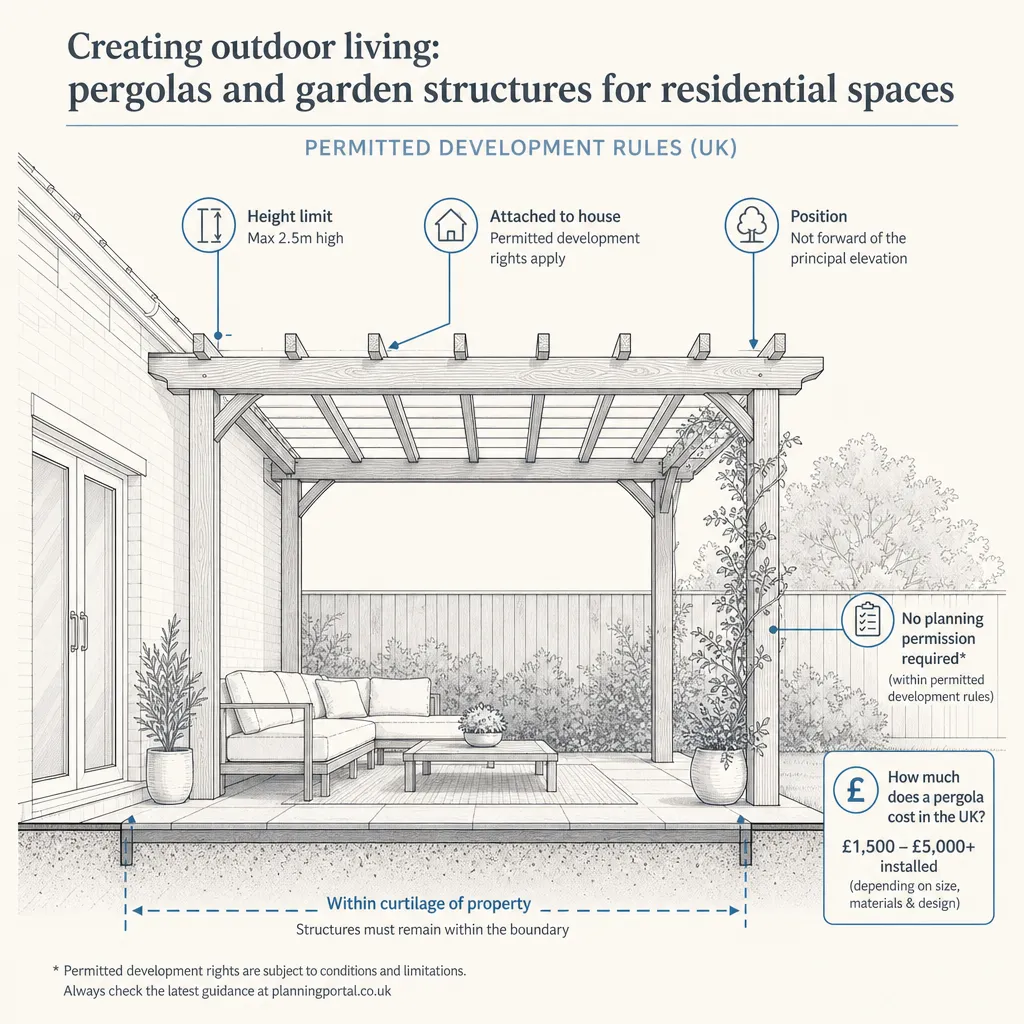
Creating outdoor living: pergolas and garden structures for residential spaces
Most freestanding pergolas in UK rear gardens are permitted development and don't need planning permission, provided they stay within height limits and outbuilding coverage stays below 50% of the original garden.
 Improvement & Build
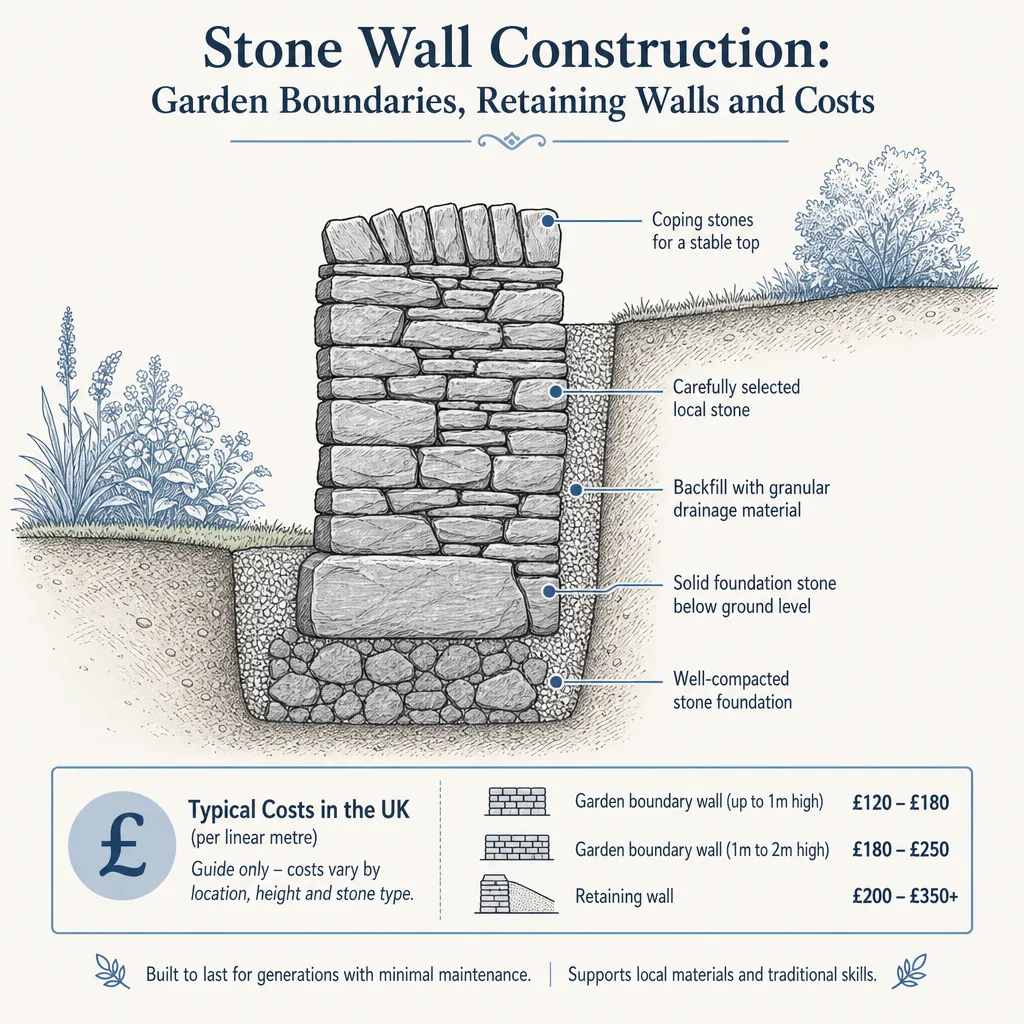
Stone Wall Construction: Garden Boundaries, Retaining Walls and Costs
Stone walls in UK gardens serve as boundary markers, retaining structures, or decorative features.
 Improvement & Build
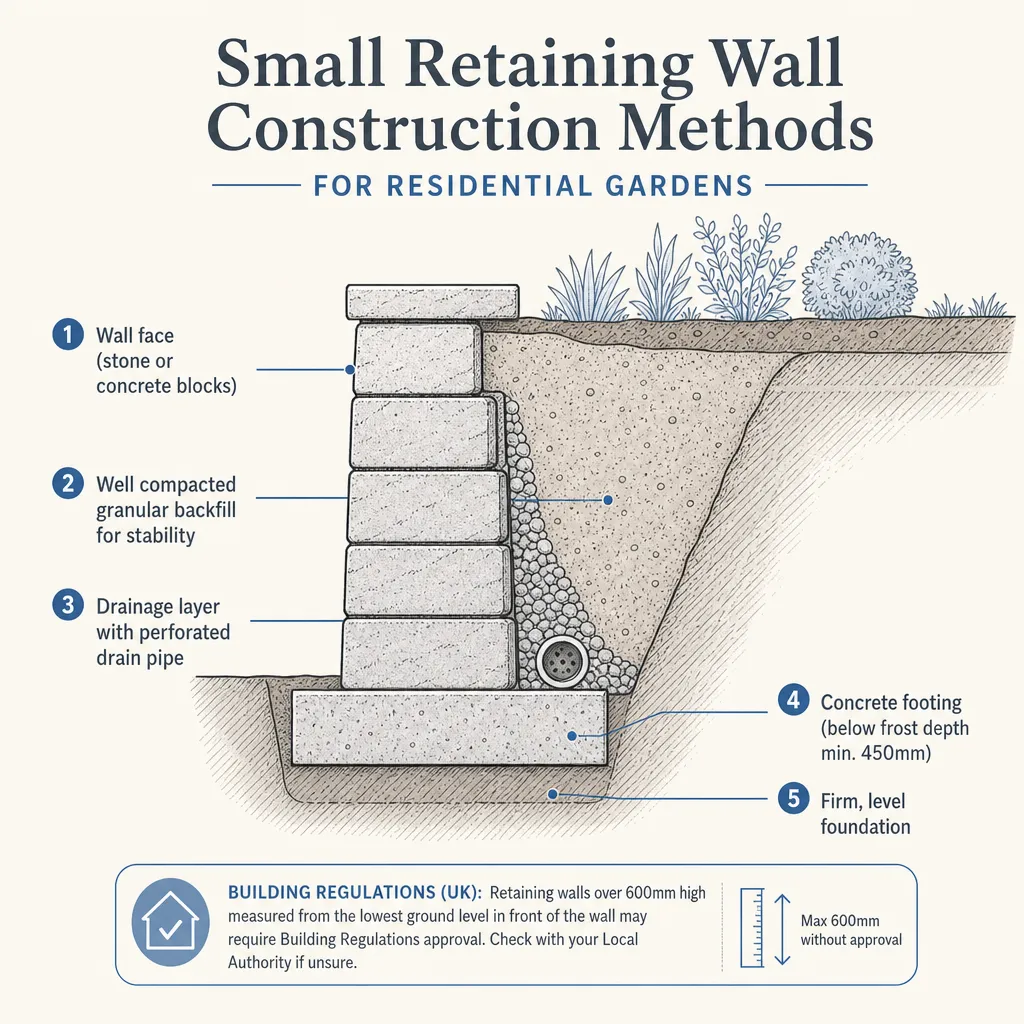
Small Retaining Wall Construction Methods for Residential Gardens
Small garden retaining walls up to 1 m are typically built using gravity methods, relying on mass to hold back soil.
 Improvement & Build
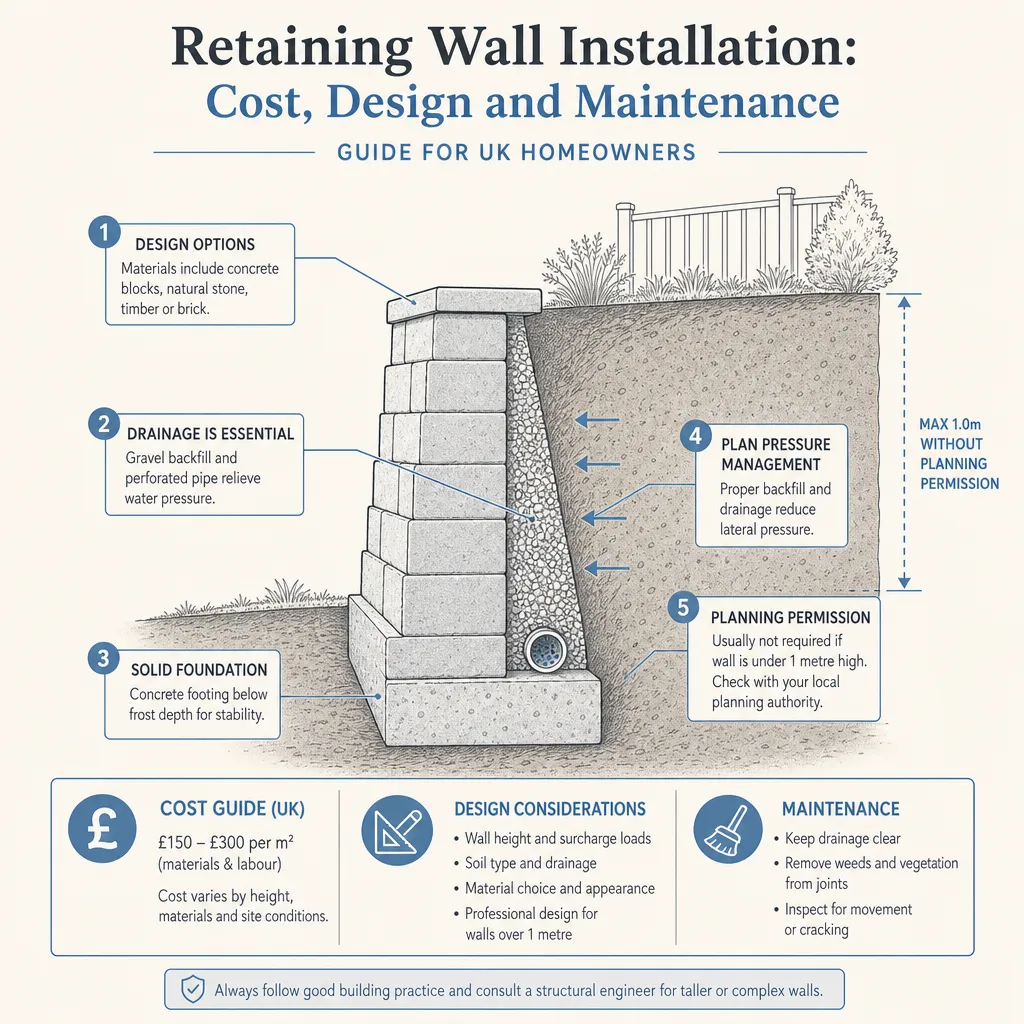
Retaining Wall Installation: Cost, Design and Maintenance
A retaining wall holds back soil on a sloped or banked site.
 Improvement & Build
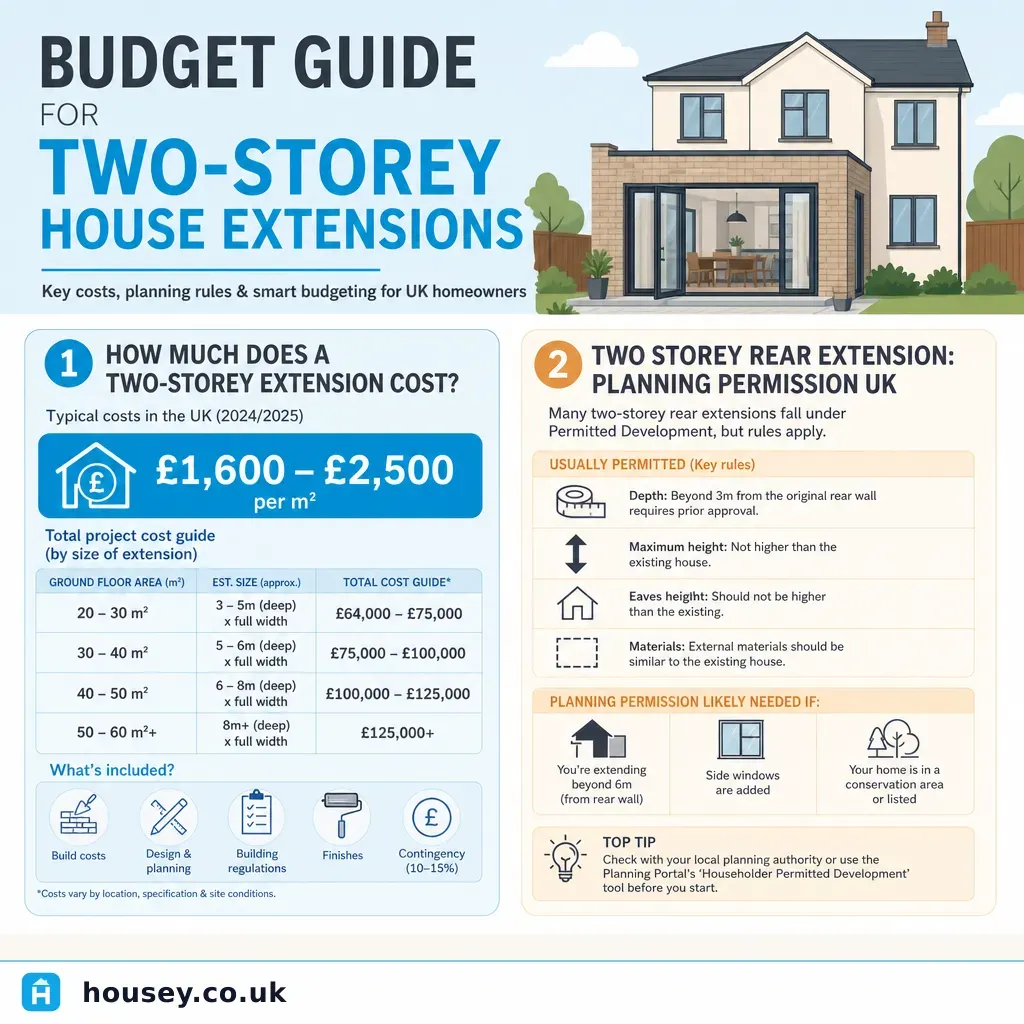
Budget Guide for Two-Storey House Extensions
A two-storey house extension in the UK typically costs £1,800–£3,000+ per square metre for the build alone.