Pet-Resistant Fencing Options and Installation
By Housey · Last reviewed 11th of May 2026
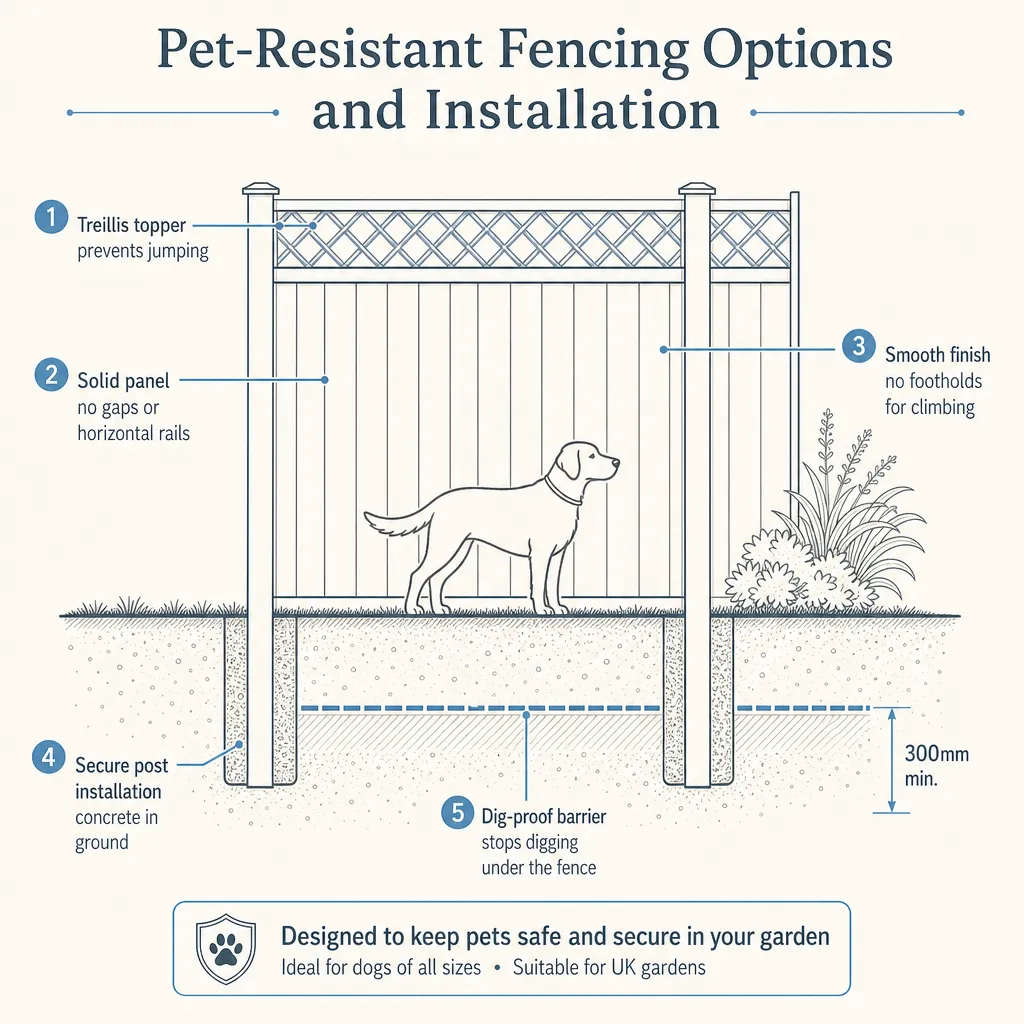
Pet-Resistant Fencing Options and Installation
Pet escapes are a common frustration for UK homeowners, and the consequences — road accidents, neighbourhood disputes, or damage to neighbouring gardens — can be serious. Whether you have recently moved to a property with inadequate boundaries, acquired a new dog, or noticed gaps appearing in ageing fence panels, choosing the right fencing involves balancing containment, appearance, durability, and cost.
Key points
- Most dogs can be contained by a fence at least 1.8 m tall, but some breeds — including Huskies and working-line German Shepherds — can jump or climb higher than this.
- Horizontal rails on the inside of a fence act as a ladder; closeboard panels with the smooth face outward are harder for dogs to climb.
- A buried apron — galvanised weld-mesh extending 300–450 mm underground and outward from the fence base — is the most effective method to prevent digging.
- Under the Town and Country Planning (General Permitted Development) (England) Order 2015, front-garden fences facing a highway are limited to 1 m; rear and side garden fences can be up to 2 m without planning permission in most cases.
- Gaps at the base wider than 100 mm are usually sufficient for a small dog or cat to squeeze through; aim for 50 mm or less.
Which fencing type suits your pet?
Fencing type | Best for | Not ideal for | Typical installed cost (indicative, 2026) | Main risk if wrong choice |
|---|---|---|---|---|
Closeboard (featheredge) | Medium–large dogs; privacy | Cats; diggers without a gravel board | £120–£200 per metre | Dog digs beneath panel |
Weld-mesh panels | All dog sizes; diggers with buried apron | Aesthetics-sensitive gardens | £80–£150 per metre | Rust if not hot-dip galvanised |
Chain-link with concrete gravel board | Large dogs; high-traffic areas | Period gardens; aesthetics | £50–£100 per metre | Climbers; snagging on mesh |
Timber palisade | Cats; small breeds | Large-breed jumpers | £60–£120 per metre | Gaps between palings |
Anti-climb roller or overhang (add-on) | Cats; cat enclosures | Dogs — insufficient as standalone | £20–£50 per metre (add-on) | Requires secure anchoring to existing fence |
Indicative UK costs, last reviewed 2026-05-11. Prices vary by region, access conditions, ground type, and specification. Obtain at least three quotes on the same scope.
How to stop dogs jumping over
Height is the first consideration. A standard 1.8 m closeboard fence will contain most medium breeds. For athletic or large breeds, consider:
- Coyote rollers or spinning-top extensions: horizontal rollers fitted to the top of a fence that collapse under a dog's weight, preventing them from gaining purchase to vault over.
- Inward-angled mesh extensions: mesh or welded panels angled inward at 45° from the fence top, adding effective height without requiring planning permission if the total fence height remains within permitted development limits.
- L-foot overhangs: a short bracket projecting outward and inward at the top discourages jumping without adding significantly to the fence's overall height.
Keep large shrubs, logs, raised planters, and garden furniture away from the fence line — these can serve as a launch platform for athletic breeds.
How to stop dogs digging under
Digging beneath fences is the most common escape method for terriers and other earth-working breeds. Options include:
- Buried weld-mesh apron: lay galvanised weld-mesh horizontally underground, extending 300–450 mm outward from the fence base. Most dogs will not dig horizontally once they hit resistance.
- Concrete gravel board: a concrete plinth set flush along the base of the fence panel, resistant to rot and burrowing.
- Paving strip: a flush row of paving slabs at the fence base extending at least 300 mm outward prevents digging without subsurface excavation, though it requires reasonably level ground.
A combination of a concrete gravel board and a buried weld-mesh apron is the most reliable approach for determined diggers.
Containment for cats
Cats are considerably harder to contain than dogs. An ordinary garden fence of any height rarely stops a determined cat. Options include:
- Spinning roller systems: cylinders fitted to the top of an existing fence rotate when a cat attempts to gain purchase, preventing them from climbing over.
- Inward-angled mesh overhangs: mesh panels angled inward at 45° from the fence top, typically extending 400–600 mm inward.
- Full cat-proof enclosure kits: mesh systems covering the full boundary and an overhead section; often the only reliable solution for cats that can access adjacent structures such as sheds, walls, or neighbouring roofs.
Check the cumulative fence height against your local council's permitted development limits before installing any extension.
Permitted development and planning permission
In England, under the Town and Country Planning (General Permitted Development) (England) Order 2015, you can erect a fence:
- Up to 2 m in a rear or side garden without planning permission in most cases.
- Up to 1 m adjacent to a highway — including roads, pavements, and public footpaths — for a front boundary.
These permitted development rights may not apply if your property is in a conservation area, is a listed building, or if rights have been withdrawn by a planning condition or an Article 4 Direction. Always check with your local planning authority before exceeding 1 m at the front or 2 m elsewhere.
Homeowner checklist before installation
When to get professional help
Most residential fencing can be installed by a competent landscaper or groundworker. Professional input is particularly worthwhile when:
- Ground slopes significantly — stepped or raked fencing requires careful detailing to prevent gaps that pets can exploit.
- The boundary is shared — where a fence sits on a party boundary, your neighbour's agreement is advisable; disputes can escalate.
- Tree roots are present along the fence line — roots can prevent post driving and damage concrete footings over time.
- Fencing must act as a retaining structure for a slope — structural advice may be needed.
- Your property is listed or in a conservation area — boundary work may require listed building consent or planning permission, and materials may be restricted.
How Housey can help
Housey connects you with vetted landscapers and groundworkers experienced in residential fencing across the UK. If you want to integrate pet-resistant fencing into a wider garden redesign, a garden designer can advise on materials, planting, and boundary treatments that work both practically and aesthetically.
Frequently asked questions
How tall does a garden fence need to be to contain a dog?
For most medium breeds, 1.8 m is considered the practical minimum. Large or athletic breeds — such as Huskies, Belgian Malinois, or Vizslas — may need 2 m or taller, combined with anti-climb extensions. Height alone is rarely enough; the absence of horizontal climbing rails and the prevention of digging are equally important factors.
Do I need planning permission for a tall pet-proof fence?
In most cases in England, you can install a fence up to 2 m in a rear or side garden without planning permission. Front boundaries adjacent to a highway are restricted to 1 m. Rules differ in conservation areas, for listed buildings, and where Article 4 Directions apply. Check with your local planning authority before work begins.
What is the best fencing to stop a dog digging under?
A concrete gravel board set flush to the ground along the fence base, combined with a buried galvanised weld-mesh apron extending at least 300 mm underground and outward, is the most reliable combination. Either alone will deter most dogs; both together are advisable for determined diggers.
Can cats be reliably contained with garden fencing?
Ordinary fencing alone rarely contains cats. Specialist systems — such as rotating roller tops, inward-angled mesh overhangs, or full overhead enclosures — are needed. These can be retro-fitted to most fence types and are widely available from UK suppliers.
Sources and further reading
- Planning Portal — Fences, gates and garden walls — Planning Portal (GOV.UK)
- Town and Country Planning (General Permitted Development) (England) Order 2015 — legislation.gov.uk
- RSPCA — Keeping your dog safe in the garden — RSPCA
- Line Search Before U Dig (LSBUD) — identifying underground services — LSBUD
Useful next reads
 Improvement & Build
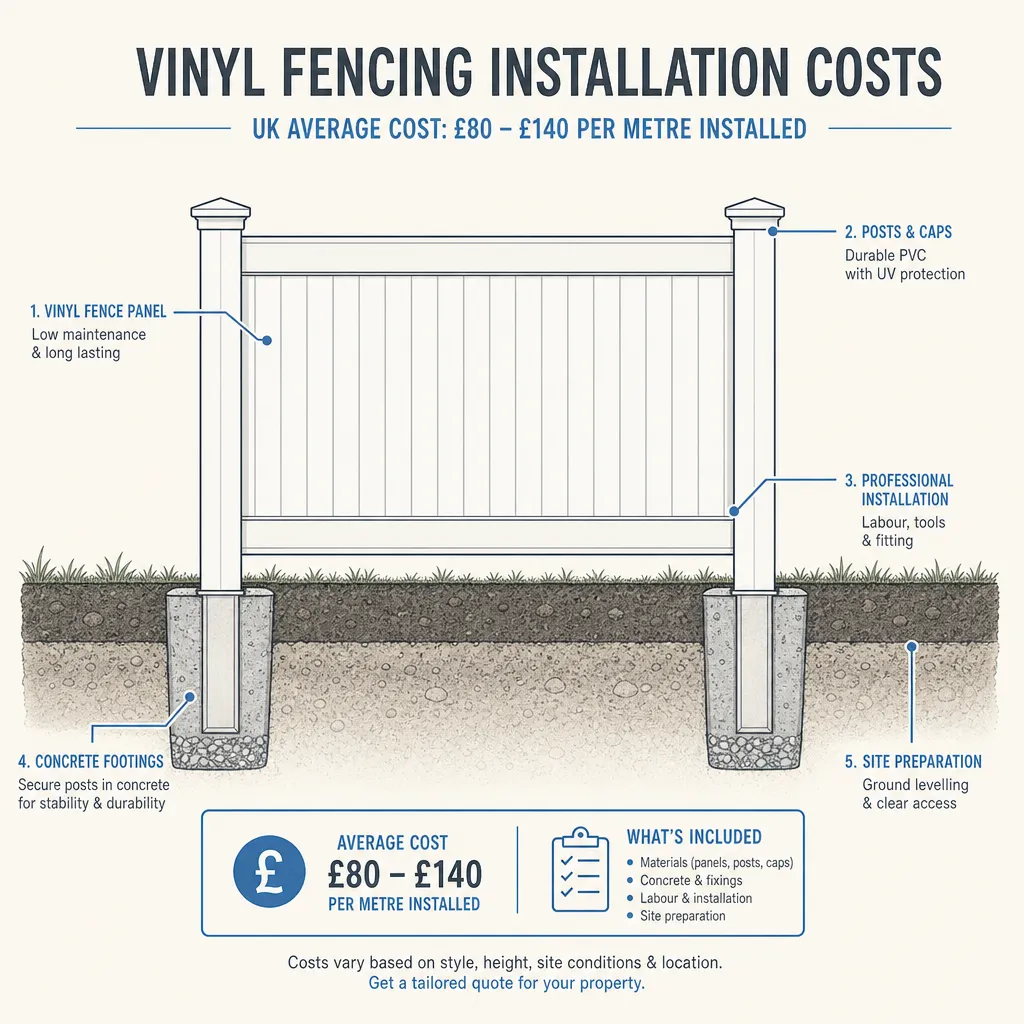
Vinyl Fencing Installation Costs
Vinyl fencing in the UK costs roughly £60–£200 per metre for supply and installation, depending on fence style, height, and ground conditions.
 Improvement & Build
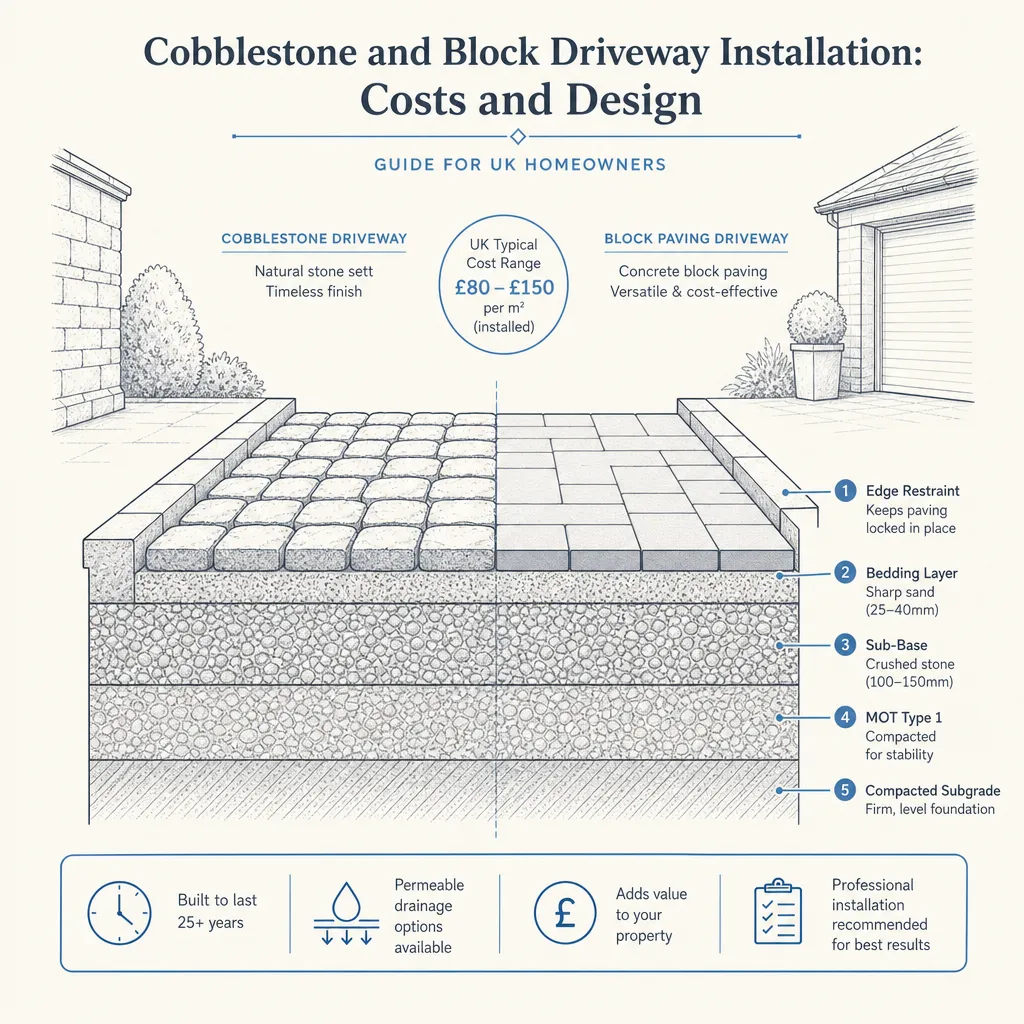
Cobblestone and Block Driveway Installation: Costs and Design
Cobblestone and block paving driveways cost roughly £50–£200 per m² installed in the UK, depending on material and site conditions.
 Improvement & Build
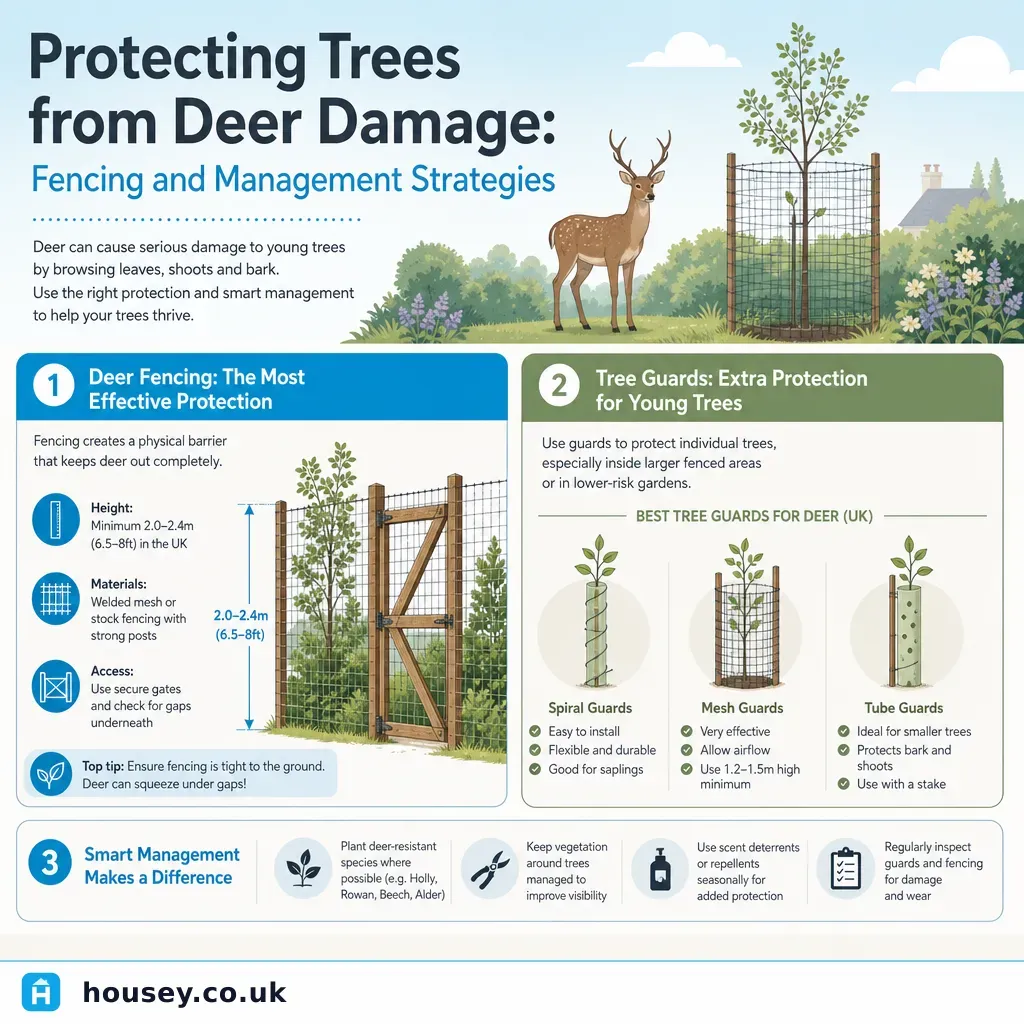
Protecting Trees from Deer Damage: Fencing and Management Strategies
Protect individual trees with mesh tubes or weld mesh cages of at least 1.
 Improvement & Build
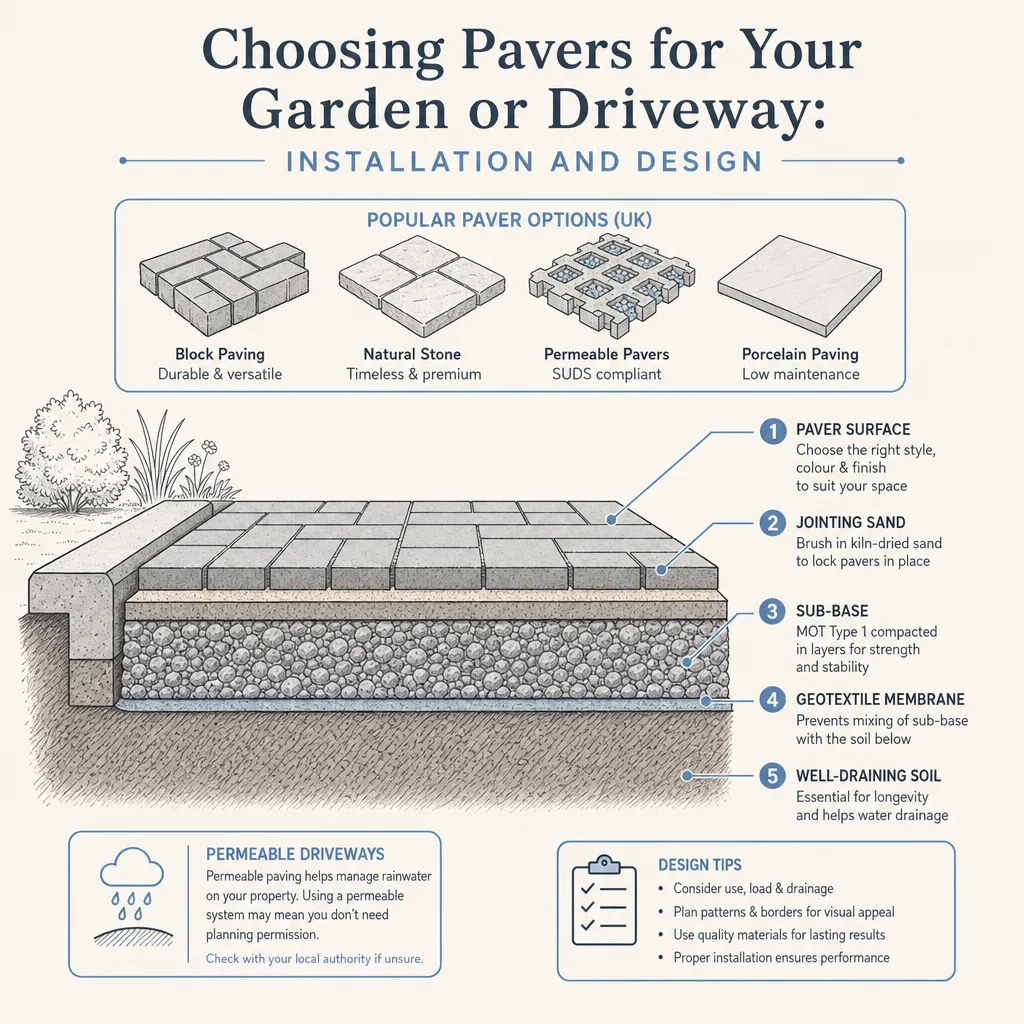
Choosing Pavers for Your Garden or Driveway: Installation and Design
For UK driveways and garden surfaces, block pavers, natural stone, concrete flags, and porcelain are the main options.
 Improvement & Build
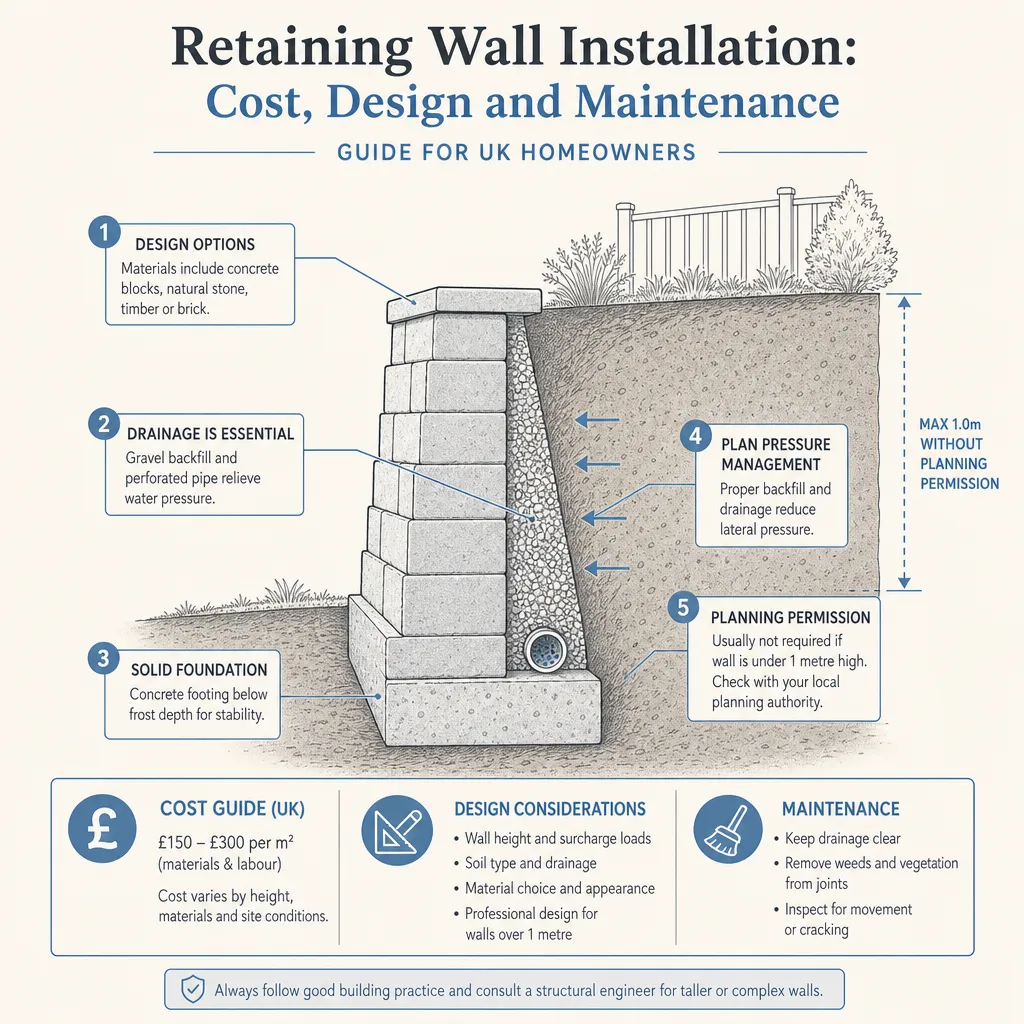
Retaining Wall Installation: Cost, Design and Maintenance
A retaining wall holds back soil on a sloped or banked site.