Pine Species and Conifer Options for Garden Landscaping
By Housey · Last reviewed 26th of May 2026
Pine Species and Conifer Options for Garden Landscaping
Conifers occupy a wide spectrum in UK gardens — from fast-growing hedging plants that can cause neighbour disputes to elegant dwarf specimens suited to small terraces, and stately pines that anchor a large rural plot for generations. Getting species selection right at the planting stage is one of the most consequential decisions in garden design: these are long-lived plants whose mature size and character are rarely obvious from a 40 cm nursery pot, and mistakes are slow and expensive to correct.
Key points
- Leyland cypress (× Cuprocyparis leylandii) can grow up to 90 cm per year and is subject to the Anti-social Behaviour Act 2003 Part 8, which allows councils to require homeowners to reduce high hedges that block light to neighbours.
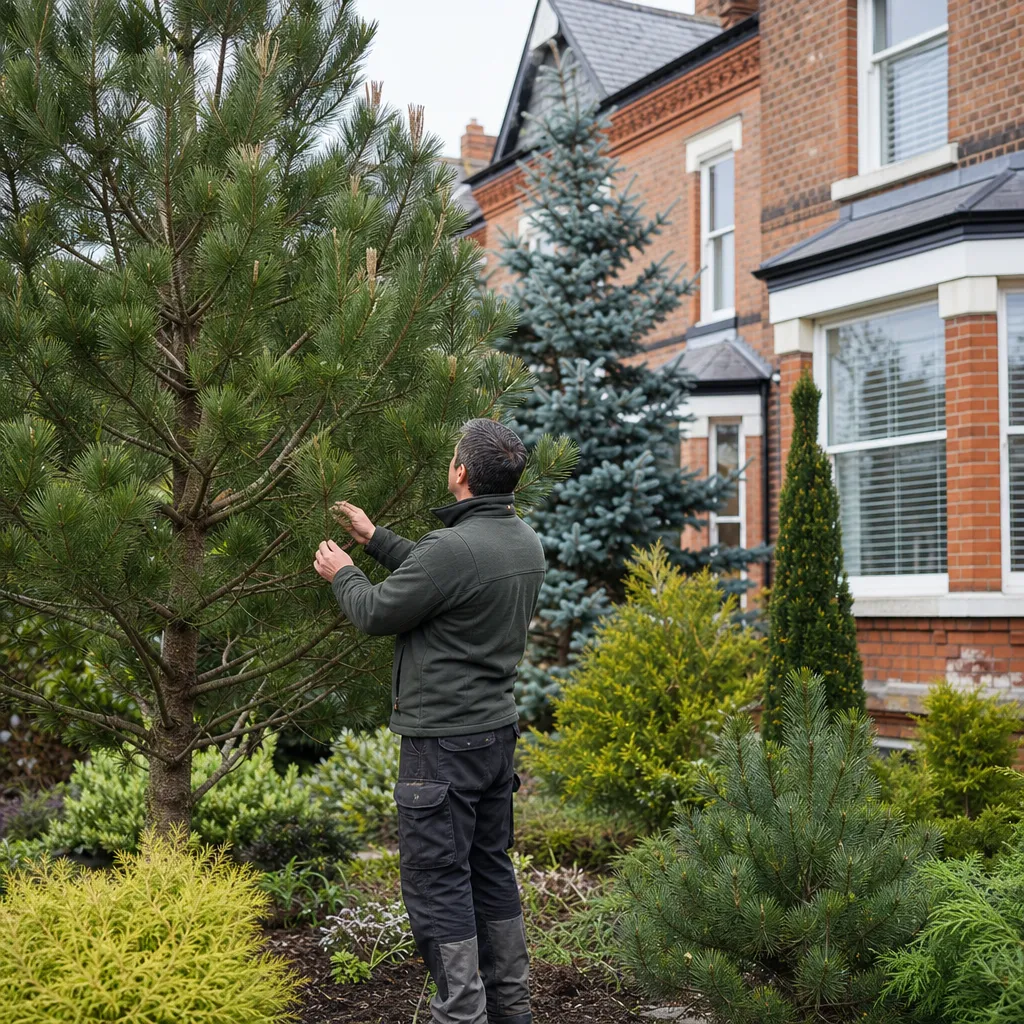
- Scots pine (Pinus sylvestris) is one of only three native UK conifers (alongside yew and juniper) and provides high ecological value for moths, beetles, red squirrels, and crossbills in suitable habitats.
- Tree Preservation Orders (TPOs) can apply to garden conifers, including established pine, yew, and cedar specimens; felling or significant pruning without local planning authority consent is a criminal offence.
- Columnar (fastigiate) conifers such as Irish yew (Taxus baccata 'Fastigiata') and Juniperus scopulorum 'Skyrocket' typically reach 4–8 m in height but spread no wider than 0.5–1 m, making them useful vertical accents in narrow spaces.
- Most garden conifers prefer free-draining, slightly acidic to neutral soil (pH 5.5–6.5); prolonged waterlogging — common in clay-heavy UK gardens — causes root rot and progressive needle browning.
Popular pine and conifer species compared
Species or cultivar | Mature height | Annual growth | Best use | Soil preference | Notable drawback |
|---|---|---|---|---|---|
Leyland cypress (× Cuprocyparis leylandii) | 20–35 m+ if unchecked | Up to 90 cm | Hedging — requires rigorous clipping | Tolerant of most soils | High hedge disputes; cannot regenerate from old brown wood |
Scots pine (Pinus sylvestris) | 15–25 m | 30–60 cm | Specimen tree; wildlife garden; large plots | Free-draining, sandy, acidic | Large ultimate size; lower branches shed with age |
Blue spruce (Picea pungens) | 10–20 m | 15–30 cm | Specimen; architectural feature | Moist, well-drained | Blue-grey colour can fade; susceptible to aphid damage |
Dwarf mountain pine (Pinus mugo) | 1–2 m | 5–10 cm | Rockery; container; small garden | Well-drained; alkaline tolerant | Slow establishment; looks best in open sunny positions |
Irish yew (Taxus baccata 'Fastigiata') | 4–8 m | 15–25 cm | Formal columnar accent; narrow screen | Most soils; shade tolerant | All parts toxic; red berries attractive to children and pets |
Western red cedar (Thuja plicata) | 15–20 m | 30–60 cm | Hedging; windbreak; more manageable than Leyland | Moist but well-drained | Allergy risk for some; large if left untrimmed |
Lawson cypress (Chamaecyparis lawsoniana) | 10–20 m | 30–45 cm | Hedging; light windbreak | Moist; some shade tolerance | Susceptible to Phytophthora root rot in wet conditions |
Serbian spruce (Picea omorika) | 15–20 m | 20–35 cm | Slender specimen; urban or suburban garden | Most soils; pollution tolerant | Narrow pendulous form limits underplanting flexibility |
Which conifer should you choose?
- Choose a dwarf conifer (Pinus mugo, dwarf Alberta spruce, dwarf Hinoki cypress) if your garden is below 100 m² or if the planting position is within 3 m of structures, boundaries, or drain runs.
- Choose Irish yew or a columnar juniper if you want a strong vertical accent or a slender evergreen screen that will not spread — and note that all parts of yew are toxic to people, pets, and livestock.
- Choose Western red cedar or Thuja for a more manageable hedging alternative to Leyland cypress; it responds better to annual clipping and can be kept at around 2 m with twice-yearly trimming.
- Choose Scots pine if you have a large, free-draining, or sandy plot and want a tree with genuine long-term wildlife value and structural presence.
- Ask a tree surgeon or garden designer if the intended position is within a conservation area, near a TPO tree, or within falling distance of a building — professional assessment before planting a long-lived specimen is worthwhile.
- Check with your local planning authority before felling or significantly pruning any established conifer that may be subject to a TPO or located in a conservation area.
Soil preparation, planting, and aftercare
Most conifers establish best when planted in late autumn or early spring, avoiding waterlogged winter soils. For UK clay-heavy gardens:
- Dig a planting hole at least twice the width of the rootball and at the same depth — do not plant deeper than the nursery soil mark on the stem.
- Break up subsoil compaction in the base of the hole with a fork to encourage downward rather than surface-circling roots.
- Incorporate horticultural grit (not building sand) around the rootball in heavy soils to improve local drainage.
- Water thoroughly at planting and continue weekly in dry spells for the first two growing seasons.
- Apply a 5–7 cm mulch of composted bark around the base, keeping it clear of the trunk collar, to retain moisture and suppress competing weeds.
- Stake taller specimens with a low stake and rubber tree tie for the first growing season; remove once roots are established.
Most conifers resent hard pruning into old brown wood — unlike broadleaf hedging, they will not regenerate from leafless stems. Trim lightly and regularly to maintain shape, but never cut beyond the live green growth.
Red flags to watch for
These warning signs in an established conifer indicate a problem requiring investigation:
- Progressive browning from the inside or base outward: often indicates Phytophthora root rot, which is fatal and has no reliable cure. Affected plants should be removed and the soil treated or replaced before replanting.
- Yellowing across the whole plant: may indicate waterlogging, drought stress, or nutrient deficiency. Check drainage before applying fertiliser; improving drainage is usually more effective.
- Die-back on one side only: can indicate physical root damage from nearby groundworks or drain laying, or salt damage from an adjacent treated path or drive.
- Resin beads or pitch tubes on the bark: a potential sign of pine bark beetle or related infestation; seek diagnosis from a tree surgeon or arboricultural consultant promptly.
- Sudden lean or partial collapse after wet weather: indicates root failure — keep people and pets away from the tree and contact a tree surgeon urgently.
- Unexpectedly rapid growth in a previously slow cultivar: worth investigating whether the labelled dwarf variety was a misnamed seedling; some nursery stock is not true to name.
When to get professional help
Contact a qualified arborist — ideally one accredited by the Arboricultural Association — if:
- A conifer is within falling distance of a building, boundary wall, or public highway and shows any signs of poor health or structural weakness.
- You suspect root disease — a professional can take soil samples and recommend treatment or safe removal.
- A specimen may be subject to a TPO and you are unsure whether proposed pruning or felling requires consent.
- A Leyland hedge has become the subject of a neighbour dispute — professional advice may be needed before the local council issues a formal remediation notice.
How Housey can help
Housey can connect you with experienced garden designers who can recommend species suited to your soil type, plot size, and design intent, as well as landscapers for planting, soil preparation, and aftercare programmes. For established trees requiring assessment, pruning, or removal, Housey's vetted tree surgeons can provide a professional survey and quotation.
Frequently asked questions
How fast does Leyland cypress grow and is it a problem?
Leyland cypress can grow up to 90 cm per year when young, and unchecked specimens can exceed 20 m. Where a hedge blocks light to a neighbour's property and the owner refuses to cut it, the affected neighbour can apply to the local council under the Anti-social Behaviour Act 2003, Part 8 (high hedges). Regular clipping at least twice a year keeps it manageable, but once cut back to leafless brown wood it will not regenerate.
Which conifers are best for a small garden?
Dwarf and slow-growing cultivars are the safest choice for small gardens. Pinus mugo 'Mops' reaches around 1 m in 10 years; Picea glauca 'Conica' (dwarf Alberta spruce) reaches 2–3 m. Columnar forms such as Juniperus scopulorum 'Skyrocket' or Irish yew add height without significant spread. Always check the mature size on the plant label — not just the cultivar name — before buying.
Do I need permission to fell or heavily prune a conifer in my garden?
Not usually for smaller garden trees, but if the tree is subject to a Tree Preservation Order or is in a conservation area, you will need LPA consent before felling or significant pruning. Conservation area trees over 75 mm in diameter at 1.5 m height require six weeks' prior written notice to the LPA even without a TPO. Always check with your local planning authority before carrying out works.
Can conifers damage house foundations or drains?
Most conifers have shallower, spreading root systems compared to large broadleaf trees such as oak or willow, but roots can block or damage drains if planted close by. As a general rule, avoid planting a conifer expected to exceed 5 m at maturity within 5 m of a building or drain run. Dwarf conifers pose negligible risk. A tree surgeon or arboricultural consultant can advise on specific species and positions.
When is the best time to plant a conifer in the UK?
Container-grown conifers can be planted year-round, but the best windows are autumn (October–November), when soil is still warm but moisture levels are rising, or early spring (February–April), before summer dryness begins. Avoid frozen ground and summer drought periods. Water regularly for at least the first two growing seasons, and apply a bark mulch around the base to retain soil moisture.
Sources and further reading
- Anti-social Behaviour Act 2003, Part 8: High Hedges — legislation.gov.uk
- Tree Preservation Orders and Trees in Conservation Areas — GOV.UK
- Conifers: cultivation and care — Royal Horticultural Society
- Find a professional arborist — Arboricultural Association
- Scots pine (Pinus sylvestris) — Woodland Trust
Useful next reads
 Improvement & Build
Installing a Fire Pit: Garden Features and Outdoor Space Design
Installing a garden fire pit in the UK is generally permitted, but Smoke Control Area rules prohibit open wood-burning in most towns and cities.
 Improvement & Build
Seasonal Garden Transformations and Outdoor Design Ideas
A successful garden transformation in the UK works with the seasons rather than against them — establishing structure and hard landscaping in autumn or winter, planting in spring, and enjoying the results through summer.
 Improvement & Build
Designing an outdoor kitchen for entertaining and garden living
An outdoor kitchen in a UK garden needs a stable, level base — typically a concrete slab or quality paving — with weather-rated materials such as stainless steel grade 316 or frost-rated porcelain.
 Improvement & Build
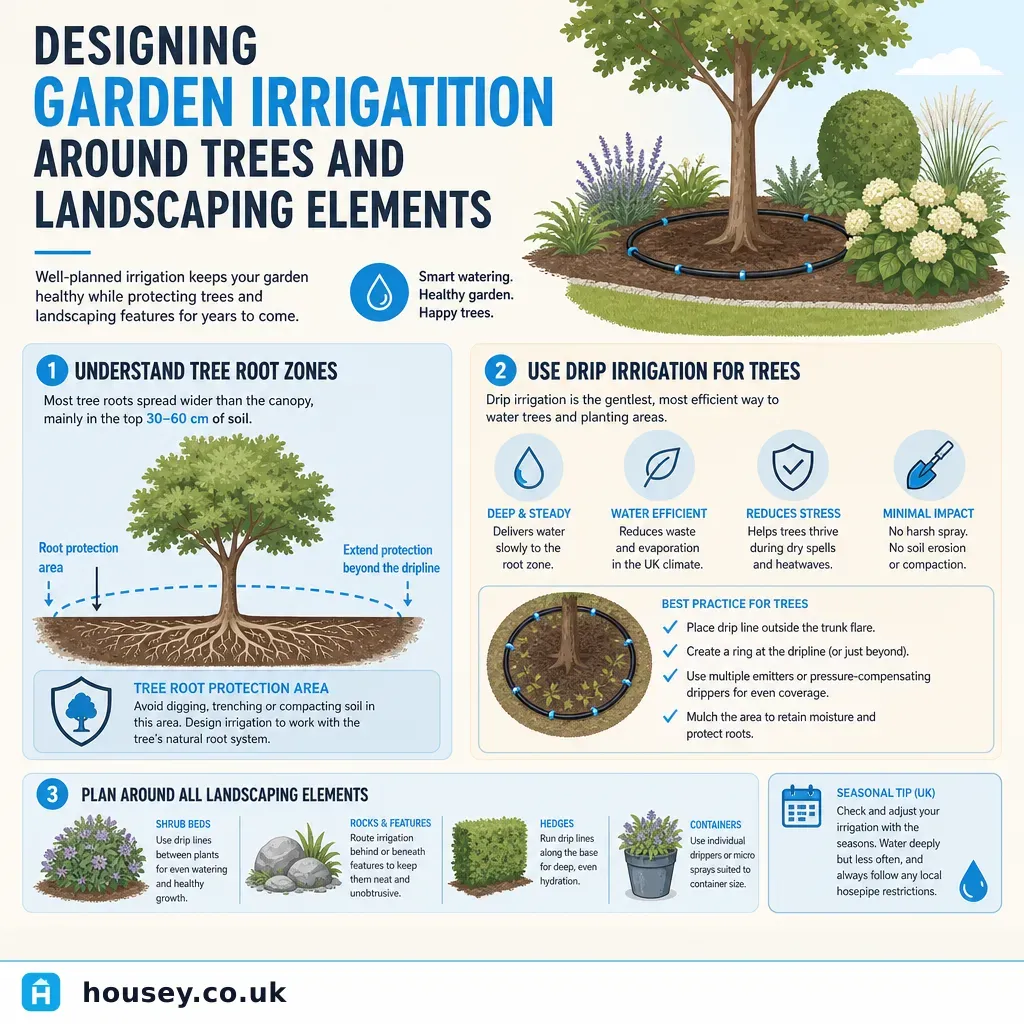
Designing Garden Irrigation Around Trees and Landscaping Elements
Design irrigation around trees by respecting the root protection area defined under BS 5837:2012, using drip or leaky pipe delivery rather than spray heads, and putting the tree zone on its own circuit.
 Improvement & Build
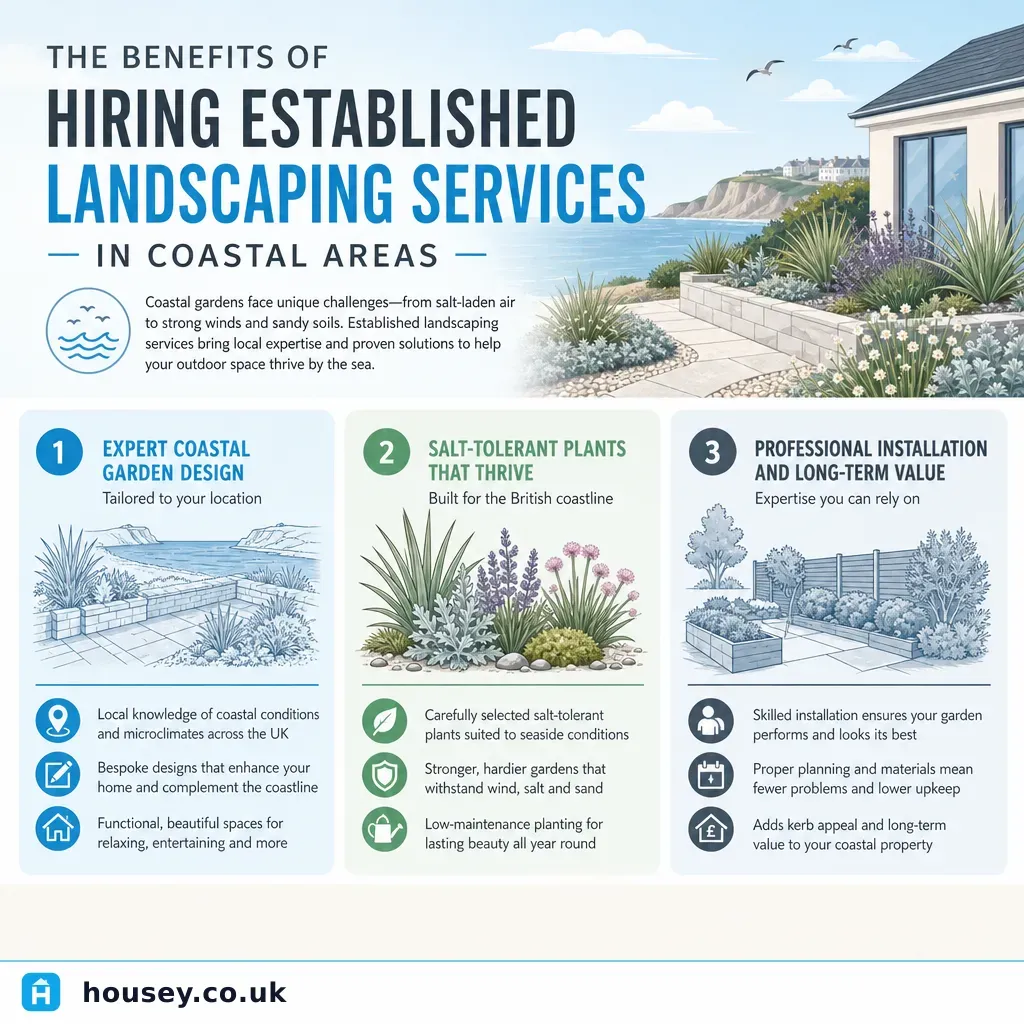
Benefits of Hiring Established Landscaping Services in Coastal Areas
Established landscaping contractors in coastal areas understand salt spray exposure, prevailing wind patterns, and local planning restrictions that inland firms often overlook.