Planning an open-plan kitchen and living space
By Housey · Last reviewed 19th of May 2026

Planning an open-plan kitchen and living space
Creating an open-plan kitchen and living area is one of the most transformative changes a homeowner can make — it alters how a house feels, how daylight moves through it, and how a family uses the space day to day. But it almost always involves removing at least one internal wall, and in most UK properties built before the 1970s that wall is likely to be load-bearing. Getting the structural, regulatory, and design elements right before work starts is what separates a successful open-plan project from an expensive problem.
Key points
- Removing a load-bearing wall requires structural engineer calculations and Building Regulations approval under Part A (Structure) in England and Wales; a completion certificate from building control is essential before the project closes.
- Building Regulations Part B (Fire safety) becomes relevant when opening up between kitchen and living areas: fire compartmentation and the protected escape route from sleeping areas above may be affected.
- A steel universal beam (UB), commonly called an RSJ, is typically needed to span the new opening; its size and bearing requirements must be specified by a structural engineer — never estimated.
- Building Regulations Part F (Ventilation) requires mechanical extract ventilation in kitchens; when a kitchen is merged with a living space, adequate supply air and extract rates for the combined area must be designed in.
- Internal structural alterations generally fall within permitted development rights in England, but planning permission is required if the works alter the external elevation, affect a listed building, or if permitted development has been removed by an Article 4 Direction.
What structural work is typically involved
Most UK homes built before the mid-1980s use load-bearing masonry walls to support upper floors and roof structure. An open-plan kitchen-living project typically involves the following sequence:
- Structural assessment — a structural engineer inspects the wall, confirms the load path, and determines beam size and bearing pad requirements.
- Temporary propping — adjustable steel props (Acrow props) are installed to support the structure above before the wall is removed.
- Beam installation — a steel universal beam is inserted and made to bear on padstones or structural members at each end of the new opening.
- Building control inspection — an inspector from the local authority or an approved inspector visits during the works and at completion to verify compliance with the approved drawings.
- Completion certificate — issued once the inspector is satisfied; required by conveyancers and surveyors on any future sale or remortgage.
Which Building Regulations apply?
Regulation | Why it applies | What it requires |
|---|---|---|
Part A — Structure | Removal of load-bearing wall | Structural calculations; approved beam and bearing; building control sign-off |
Part B — Fire safety | Opening up between kitchen and habitable rooms | Check escape routes; mains-wired interlinked smoke alarms may be required |
Part F — Ventilation | Kitchen merged with living area | Mechanical extract ventilation; adequate air supply to the combined space |
Part L — Conservation of fuel and power | New structural opening in external wall | Thermal performance of any new lintel or reveal must meet current U-value standards |
Part P — Electrical safety | Relocation of sockets, lighting circuits | Electrical work in kitchens must be notified to building control or carried out by a registered electrician |
Pre-project planning checklist
Before instructing anyone, work through the following:
Do you need an architect or architectural technologist?
An architect or architectural technologist is not always legally required for a straightforward wall removal, but they add significant value when the design involves multiple interconnected changes, when planning permission is needed, or when you want to develop the spatial design rather than simply satisfy building regulations.
Professional | Best for | Typical output |
|---|---|---|
Structural engineer | Load path confirmation, beam specification, building control calculations | Structural drawings and calculations |
Architectural technologist | Technical drawings for building regulations, coordinating trades | Building regulation drawings, specification |
Architect | Full design development, planning applications, project management | Design proposals, planning and building regulation drawings |
Building control consultant | Navigating approval routes, checking compliance | Advice on application type, liaison with LABC or approved inspector |
When planning permission is required
Internal structural alterations generally fall within permitted development rights for dwellings in England, provided the external appearance is unchanged. However, planning permission may be required if:
- You are enlarging or relocating windows or external doors as part of the project.
- The property is a listed building (listed building consent is required for all changes, including internal).
- The property is in a conservation area and the works affect the external appearance.
- Permitted development rights have been removed by an Article 4 Direction in your area.
If you are uncertain, a lawful development certificate (LDC) application to your local planning authority provides legal confirmation that the works are permitted development — useful evidence on a future sale.
Important limitations
This article provides general guidance on planning an open-plan kitchen and living space in UK domestic properties. Every property is different — the structural approach, regulatory requirements, and design solutions vary with age, construction, condition, tenure, and local restrictions. Nothing in this article constitutes structural, planning, or building regulations advice. Instruct qualified professionals before committing to any structural alteration.
When to get professional help
Seek professional advice before starting any work if:
- You cannot confirm whether the wall between kitchen and living room is load-bearing.
- There is a chimney, chimney breast, or substantial masonry feature on or adjacent to the wall.
- The property is pre-1900 or system-built and you are unsure of the construction method.
- A contractor proposes removing the wall without structural calculations or building control sign-off.
- There are visible cracks, previous underpinning, or signs of prior structural movement anywhere in the property.
- The property is a listed building, in a conservation area, or subject to a leasehold alteration clause.
What to ask a qualified professional
Before instructing an architect, architectural technologist, structural engineer, or building control consultant, ask:
- Can you confirm whether this wall is load-bearing and specify what beam size is required?
- What Building Regulations applications will I need to submit, and can you prepare the drawings?
- Will I need planning permission or a lawful development certificate for these works?
- How will ventilation and fire safety requirements be addressed in the design?
- What will the professional fees be, and at what stage are they payable?
- Who will coordinate the structural engineer, building control, and the principal contractor?
- How long will the structural phase take, and what access will trades need?
How Housey can help
Housey can connect you with architects and architectural technologists who regularly work on open-plan conversion projects, as well as building control consultants who can advise on the right approval route and help you avoid compliance problems from the outset.
Frequently asked questions
Does knocking through a kitchen and living room always require building regulations?
If the wall between the kitchen and living room is load-bearing, Building Regulations Part A applies and building control approval is required. Even if the wall is non-load-bearing, Part B (fire safety) may be relevant if the wall formed part of a protected escape route. Always check with building control before starting work.
How much does it cost to knock through a kitchen and living room in the UK?
Indicative UK costs, last reviewed 2026-05-19: structural and building work alone (beam, propping, installation, making good) typically costs £2,000–£8,000 depending on span, property type, and region. Professional fees, decoration, kitchen relocation, and electrical or plumbing works are additional. Obtain itemised quotes from at least two contractors.
How long does an open-plan kitchen conversion take?
The structural works for a straightforward opening typically take 3–10 days. Allowing for structural engineer appointments, building control applications, materials, decoration, and kitchen installation, the full project often takes 4–12 weeks from planning to completion. Listed building status or multiple trades can extend this considerably.
Can I remove a chimney breast as part of an open-plan conversion?
Removing a chimney breast is more complex than a simple wall removal. The chimney stack above must be supported — typically using a steel gallows bracket. Building control approval and structural calculations are required, and specialist masonry contractors are often needed. Partial removal, keeping the stack, is one approach but still requires careful structural engineering.
Sources and further reading
- Building Regulations Approved Document A (Structure) — GOV.UK
- Building Regulations Approved Document B (Fire safety) — GOV.UK
- Building Regulations Approved Document F (Ventilation) — GOV.UK
- Planning permission: when you need it — GOV.UK
- Listed building consent — Historic England
Useful next reads
 Planning & Pre-Build
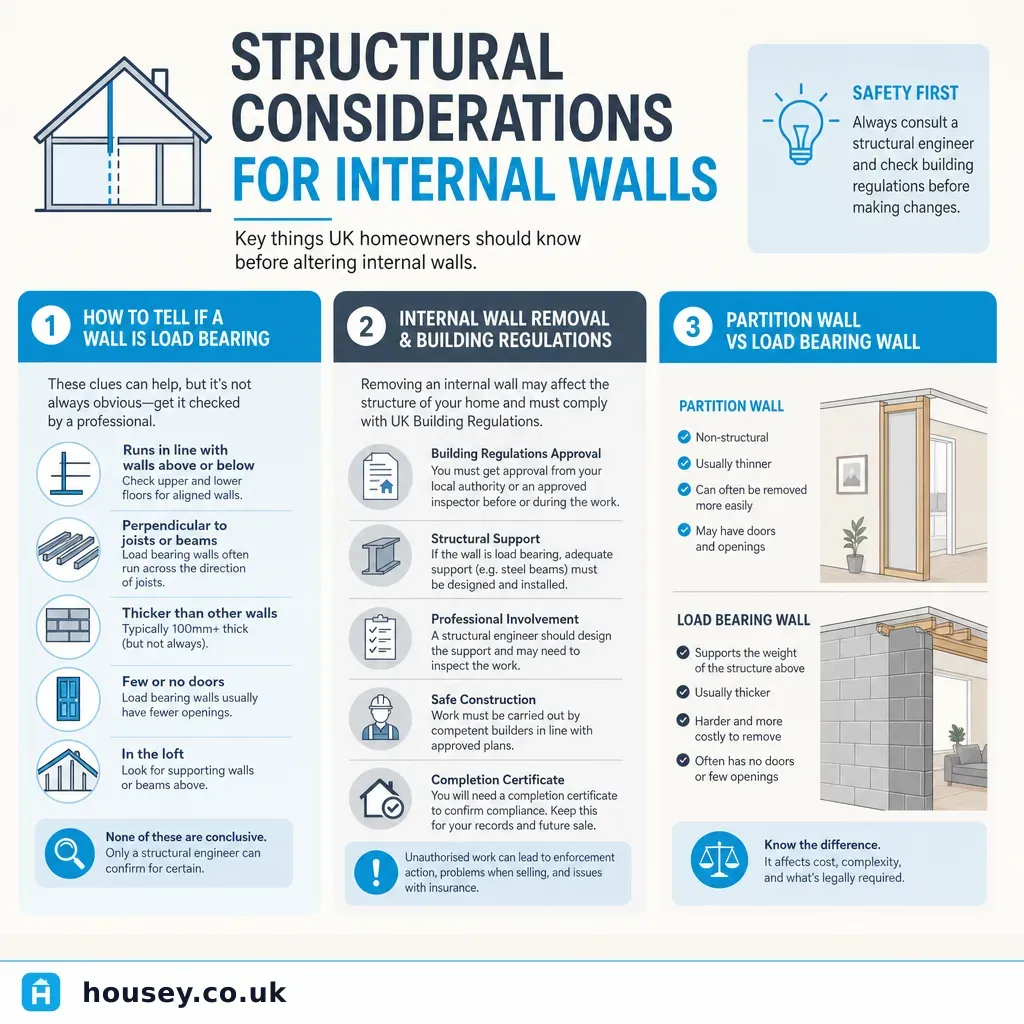
Structural considerations for internal walls
Whether a wall is load-bearing depends on its position, orientation relative to floor joists, and the property's construction.
 Planning & Pre-Build
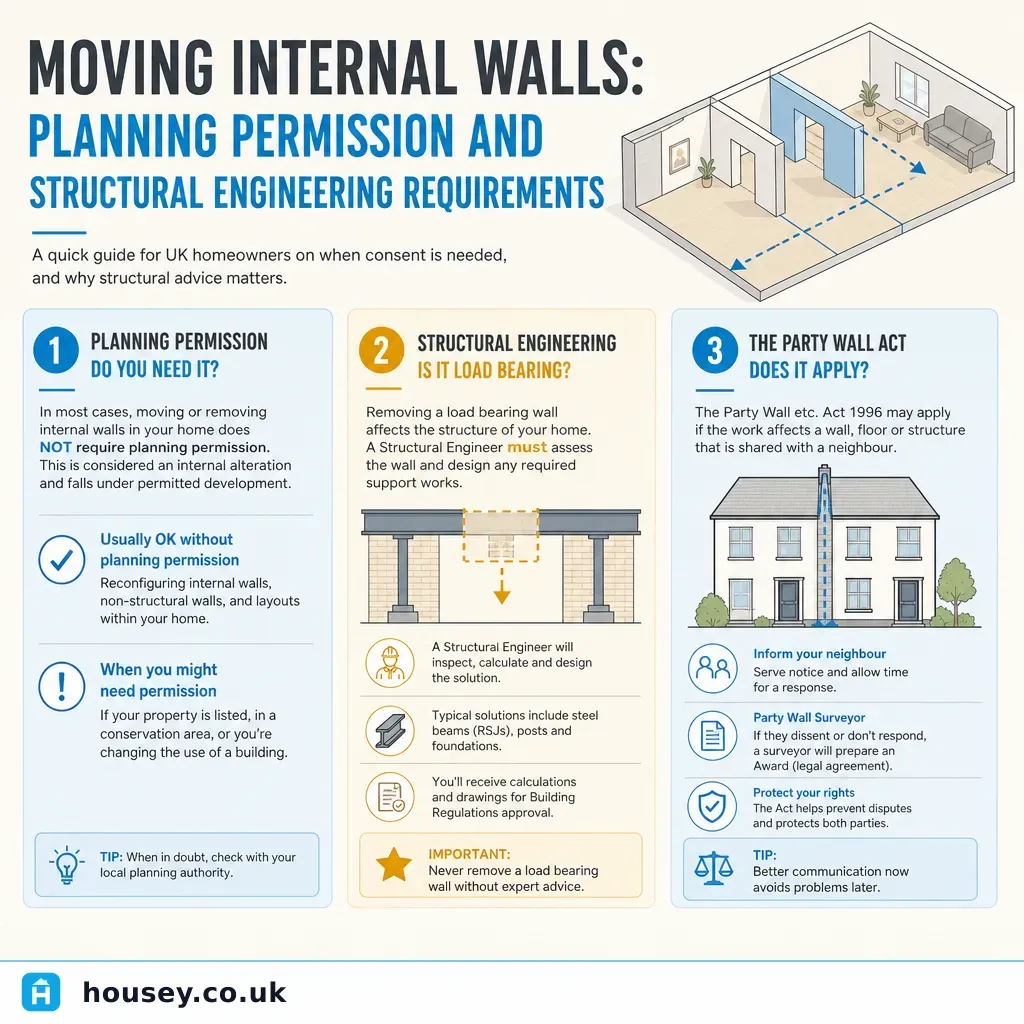
Moving Internal Walls: Planning Permission and Structural Engineering Requirements
Removing an internal wall rarely needs planning permission in England, but Building Regulations approval under Part A is almost always required if the wall is load-bearing.
 Planning & Pre-Build
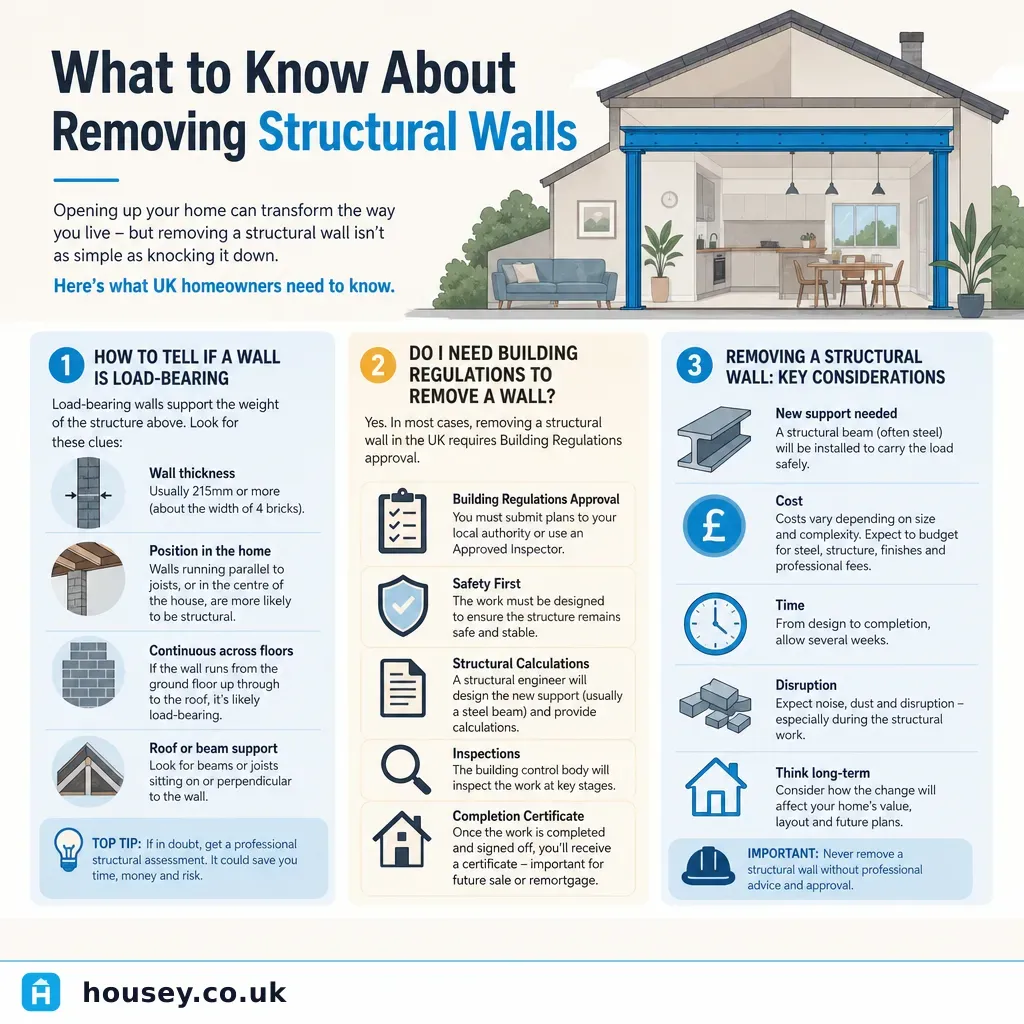
What to Know About Removing Structural Walls
Removing a structural or load-bearing wall in a UK home requires a structural engineer's assessment, a correctly specified steel beam (RSJ), and Building Regulations approval.
 Planning & Pre-Build
Designing and Building Your Dream Home: Architecture and Custom Construction
Building a custom home in the UK involves a RIBA eight-stage design process, full planning permission — permitted development does not apply to new dwellings — and a team that typically includes an architect, architectural technologist, structural engineer, and project manager.
 Planning & Pre-Build
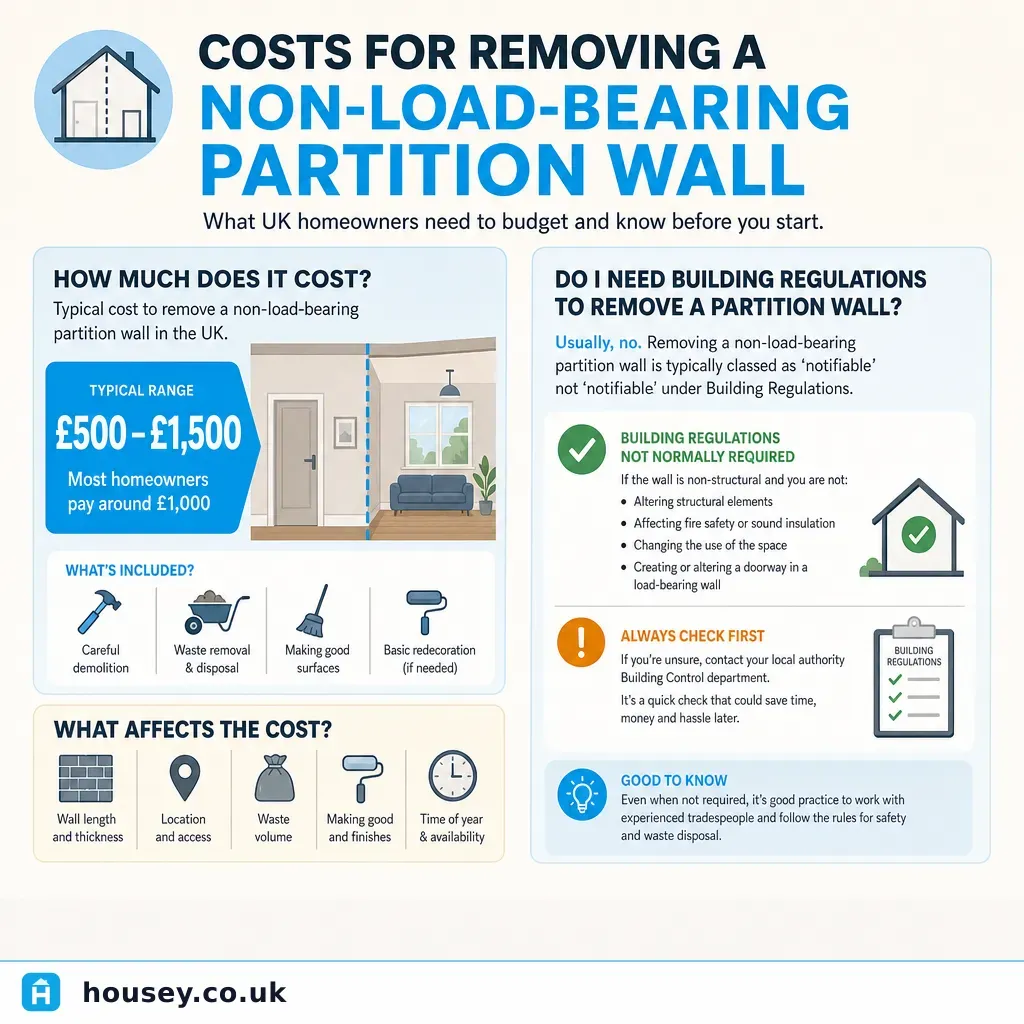
Costs for removing a non-load-bearing partition wall
Removing a non-load-bearing partition wall in a UK home typically costs £300–£1,500 in labour, plus £200–£600 or more for replastering and making good.