Planning and Building Your Garden Patio: Design Considerations and Process
By Housey · Last reviewed 1st of June 2026
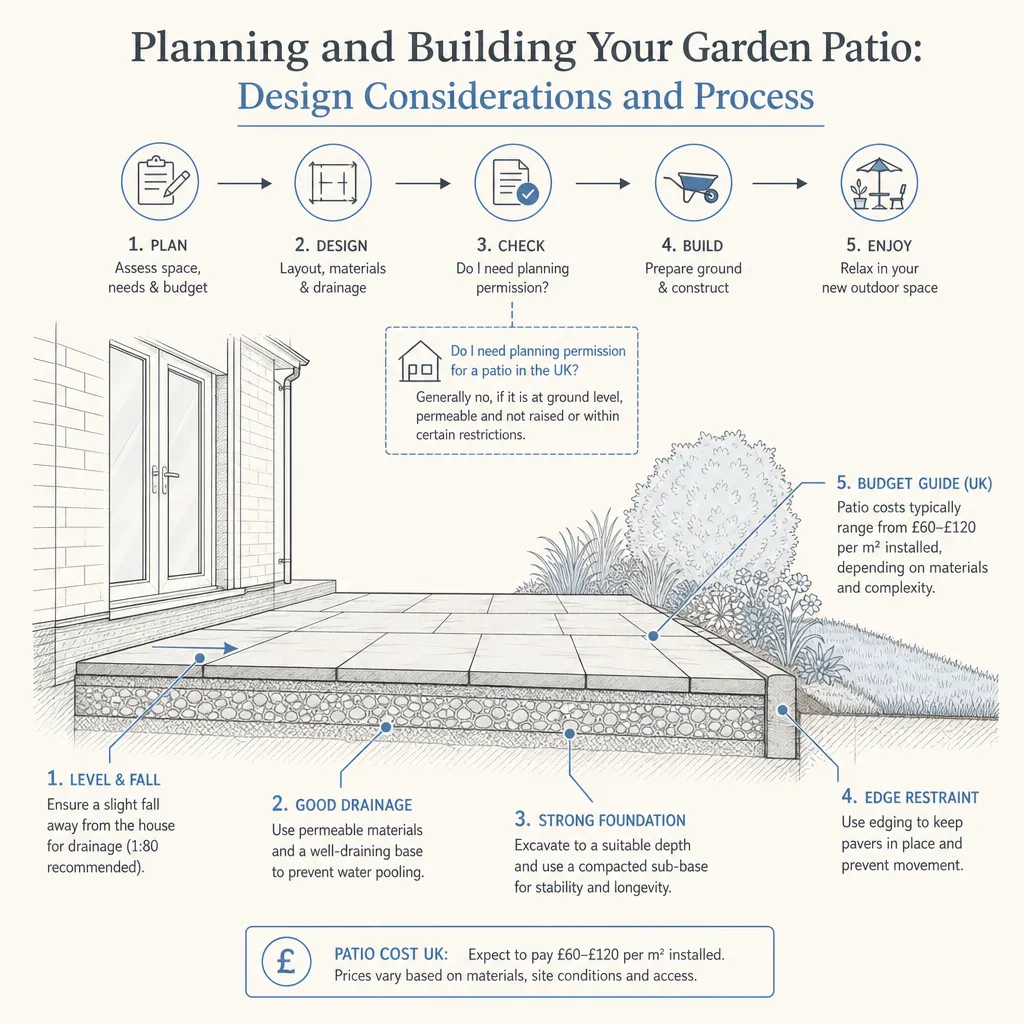
Planning and Building Your Garden Patio: Design Considerations and Process
A patio project can transform how outdoor space is used — creating a surface for al fresco dining, a children's play area, or a quiet sitting space — but poorly planned hardstanding often leads to drainage problems, planning complications, or surfaces that need relaying within a few years. Whether you are working with an established garden or a new-build plot, understanding the regulatory, design, and construction decisions before any spade goes in the ground saves significant cost and frustration.
Key points
- In England, laying impermeable paving over 5 m² in a front garden (between the house and the highway) requires planning permission unless permeable materials are used or surface water drains to a lawn, border, or soakaway — a rule introduced by the Town and Country Planning (General Permitted Development) (Amendment) (England) Order 2008.
- No equivalent area restriction applies to rear or side garden patios under Permitted Development rights; however, listed buildings, conservation areas, and Article 4 direction areas may still require consent regardless of location.
- A minimum sub-base of 100 mm compacted MOT Type 1 hardcore is standard for pedestrian patio use; vehicle overrun areas typically require 150–200 mm to prevent slab settlement.
- Surface falls of at least 1:80 (approximately 1.25%) must direct water away from the house foundations and must not drain onto neighbouring land without agreement.
- Indicative UK surface material supply costs (last reviewed 2026-06-01): concrete slabs £15–£35/m²; natural sandstone £40–£80/m²; porcelain £35–£80/m²; block paving £25–£60/m² — installation adds approximately £25–£60/m² depending on complexity and region.
Do you need planning permission?
Most rear garden patios in England and Wales do not require planning permission under Permitted Development (Schedule 2, Part 1 of the General Permitted Development Order 2015). Planning consent is required in the following situations:
- Front garden paving over 5 m² with impermeable material: Planning permission is needed unless the surface is permeable (such as resin-bound gravel or permeable block paving) or water is directed to a lawn, border, or soakaway.
- Listed buildings: Any hard landscaping that could affect the setting of a listed building typically requires Listed Building Consent, regardless of patio size or location.
- Conservation areas: Some conservation area conditions restrict new hard surfaces visible from the street. Check with your local planning authority before committing to a contractor.
- Article 4 directions: In certain areas, Article 4 directions remove standard Permitted Development rights for specified works. Confirm with your local planning authority whether one applies to your address.
If you are unsure of your position, a Lawful Development Certificate application will confirm in writing whether your proposed patio is lawful — removing uncertainty before works begin.
Choosing your patio material
Material | Approx. supply cost | Typical durability | Permeable? | Maintenance level | Best suited to |
|---|---|---|---|---|---|
Concrete slabs | £15–£35/m² | 20–30 years | No | Low | Budget projects, utility areas |
Natural sandstone | £40–£80/m² | 25–40 years | Partial (jointing-dependent) | Medium — annual sealing advised | Traditional or period gardens |
Porcelain | £35–£80/m² | 30–50 years | No | Low | Contemporary and modern gardens |
Block paving | £25–£60/m² | 20–30 years | Partial (jointing-dependent) | Low to medium | Formal gardens, driveways |
Resin-bound gravel | £30–£60/m² | 10–20 years | Yes — excellent | Low | Front gardens requiring permeability |
Timber decking | £20–£50/m² | 10–20 years (treated) | Partial | Medium to high | Raised areas, contemporary schemes |
Indicative supply-only costs, last reviewed 2026-06-01. Installation adds approximately £25–£60/m² for laying, depending on complexity and region. Always obtain at least three quotes.
Designing your patio: key considerations
Size and scale: A minimum of 3 m × 3 m is often quoted for a basic seating area; 4 m × 5 m or more for a six-person dining table with comfortable circulation. A common error is under-scaling — patios almost always appear larger on a plan than they feel once furniture is placed. Mark out the outline with canes and hosepipe before committing to any specification.
Orientation and sunlight: A south or south-west facing patio receives the most afternoon and evening sun in the UK. North-facing patios may suit a shaded seating area or a sheltered dining spot but will receive less direct sun across most of the year.
Drainage: Surface falls of at least 1:80 (1.25%) should direct water away from the house and clear of all boundaries. In practice, 1:60 is often specified to ensure adequate drainage without a perceptible slope. Water must not discharge onto neighbouring land without agreement, and must not be directed towards house foundations.
Sub-base: The sub-base is the single most important factor in patio longevity. Insufficient depth or compaction causes slab settlement, rocking, and jointing failure within a few years. For pedestrian use: 100 mm compacted MOT Type 1 hardcore. For occasional vehicle overrun: 150–200 mm.
Edge restraints: Without a defined edge — haunching, kerb, or block edging — gravel migrates and slabs can creep over time. Edge restraints should be haunched with concrete on the outer face before any surface material is laid.
Homeowner checklist before and during construction
Before work starts:
During work:
After completion:
Which professional do you need?
Project type | Typical professional | What they provide |
|---|---|---|
Design only, complex or large patio | Layout plan, material specification, planting recommendations, drawing for contractor | |
Full design and installation | End-to-end: design, material supply, groundwork, surface laying, and planting | |
Groundwork only (excavation, sub-base, drainage) | Excavation, compacted sub-base, drainage connections, and edge restraints | |
Slab or block laying on an already-prepared base | Paving contractor | Surface laying and jointing only, on a pre-formed sub-base |
For most standard rear garden patios, a single experienced landscaper can manage the whole project. Separating groundwork from surface laying can offer cost savings on larger jobs, but coordination between contractors then falls to you as the client.
When to get professional help
Seek professional advice before starting if:
- Ground levels change significantly across the patio area (more than 200 mm), suggesting terracing, retaining walls, or step construction is needed.
- The patio is adjacent to the house foundations and any excavation could undermine them.
- You need to connect to an existing drain or create a new soakaway — Building Regulations Part H applies to new drainage connections.
- The property is listed, in a conservation area, or subject to an Article 4 direction.
- Previous areas of the garden have subsided or drainage has been a recurring problem.
How Housey can help
Housey connects you with experienced garden designers, landscapers, and groundworkers who can take your patio from an initial concept to a finished, well-drained surface. Submit your project details to receive and compare quotes from vetted professionals in your area.
Frequently asked questions
Do I need planning permission for a patio in my back garden?
In most cases, no. Rear garden patios in England and Wales do not require planning permission under Permitted Development rights. The main exceptions are listed buildings, conservation areas with specific conditions, and properties subject to Article 4 directions. Front garden paving over 5 m² in impermeable material does require planning permission unless drainage conditions are met.
How long does a garden patio last?
Longevity depends on material and the quality of the sub-base and installation. Porcelain and natural stone on a well-prepared 100 mm compacted sub-base can last 30–50 years. Concrete slabs on an inadequate sub-base may rock and crack within 5–10 years. The sub-base specification is usually a more significant factor in patio lifespan than the surface material choice.
What is the best patio material for a UK garden?
There is no single best material. Porcelain suits contemporary gardens and is very low maintenance. Natural sandstone fits traditional or period properties. Block paving offers flexibility and partial permeability. Resin-bound gravel is the most consistently permeable option for front gardens. The right choice depends on budget, aesthetics, maintenance preference, and drainage requirements.
How much does a patio cost in the UK?
A typical 25 m² patio in mid-range natural stone or porcelain, fully installed including sub-base preparation, costs approximately £3,000–£6,000 in many parts of England, varying by region, access, and specification. Front garden patios and those requiring drainage connections tend to cost more. Indicative UK costs, last reviewed 2026-06-01. Always obtain at least three quotes.
Sources and further reading
- Paving your front garden — Planning Portal — rules on front garden paving and permeability requirements
- Town and Country Planning (General Permitted Development) Order 2015, Schedule 2 — legislation.gov.uk — Permitted Development rights for householders
- Building Regulations Approved Document H (2015) — GOV.UK — drainage requirements for new connections
- Gardens and Designed Landscapes — Historic England — guidance for listed buildings and heritage settings
- Planning permission — Citizens Advice — overview of when planning consent is needed
Useful next reads
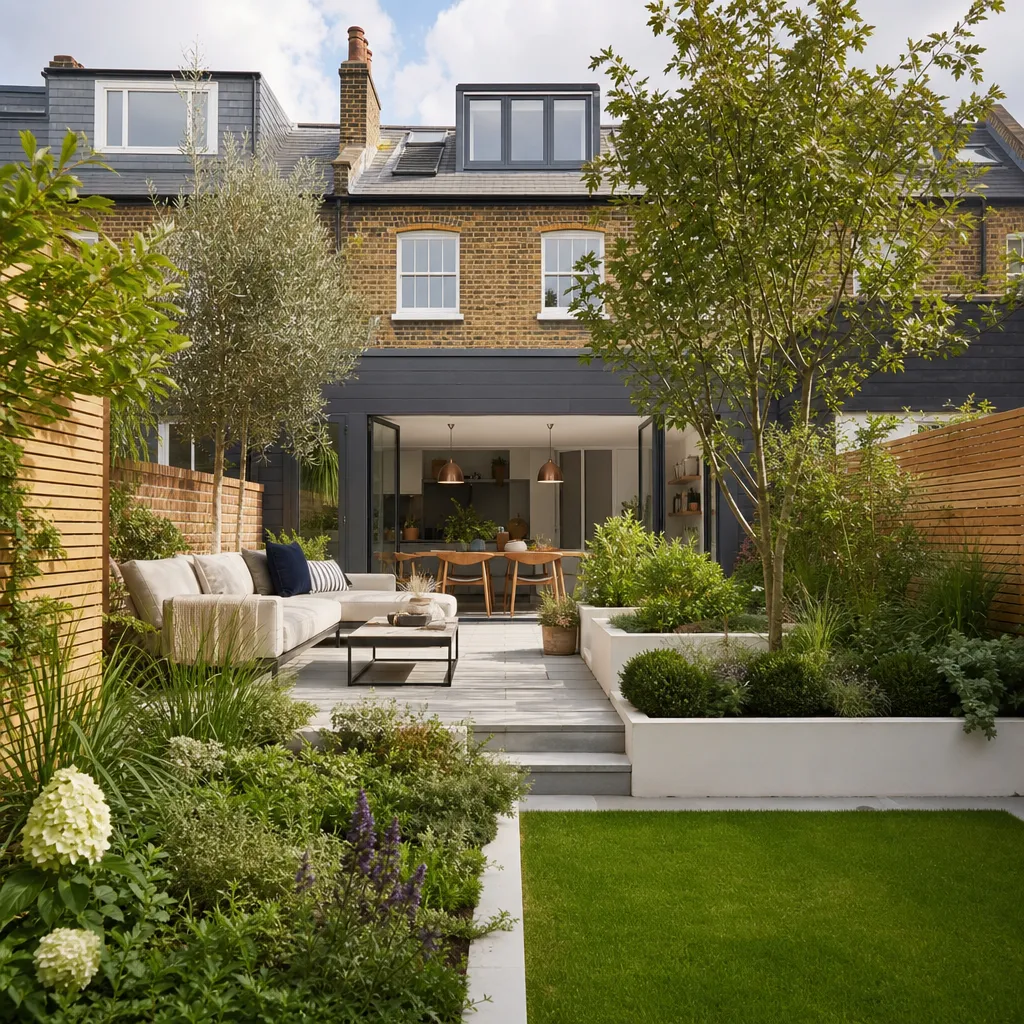 Improvement & Build
Seasonal Garden Transformations and Outdoor Design Ideas
A successful garden transformation in the UK works with the seasons rather than against them — establishing structure and hard landscaping in autumn or winter, planting in spring, and enjoying the results through summer.
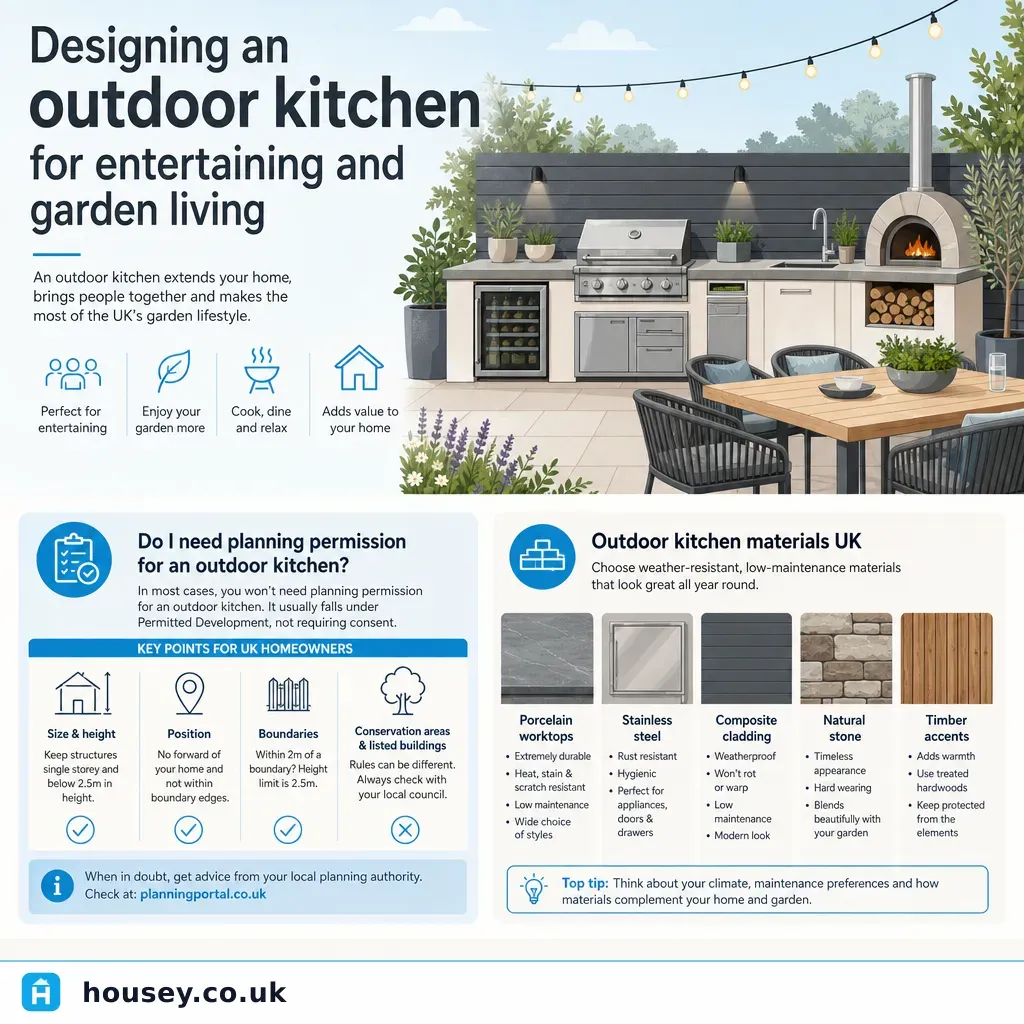 Improvement & Build
Designing an outdoor kitchen for entertaining and garden living
An outdoor kitchen in a UK garden needs a stable, level base — typically a concrete slab or quality paving — with weather-rated materials such as stainless steel grade 316 or frost-rated porcelain.
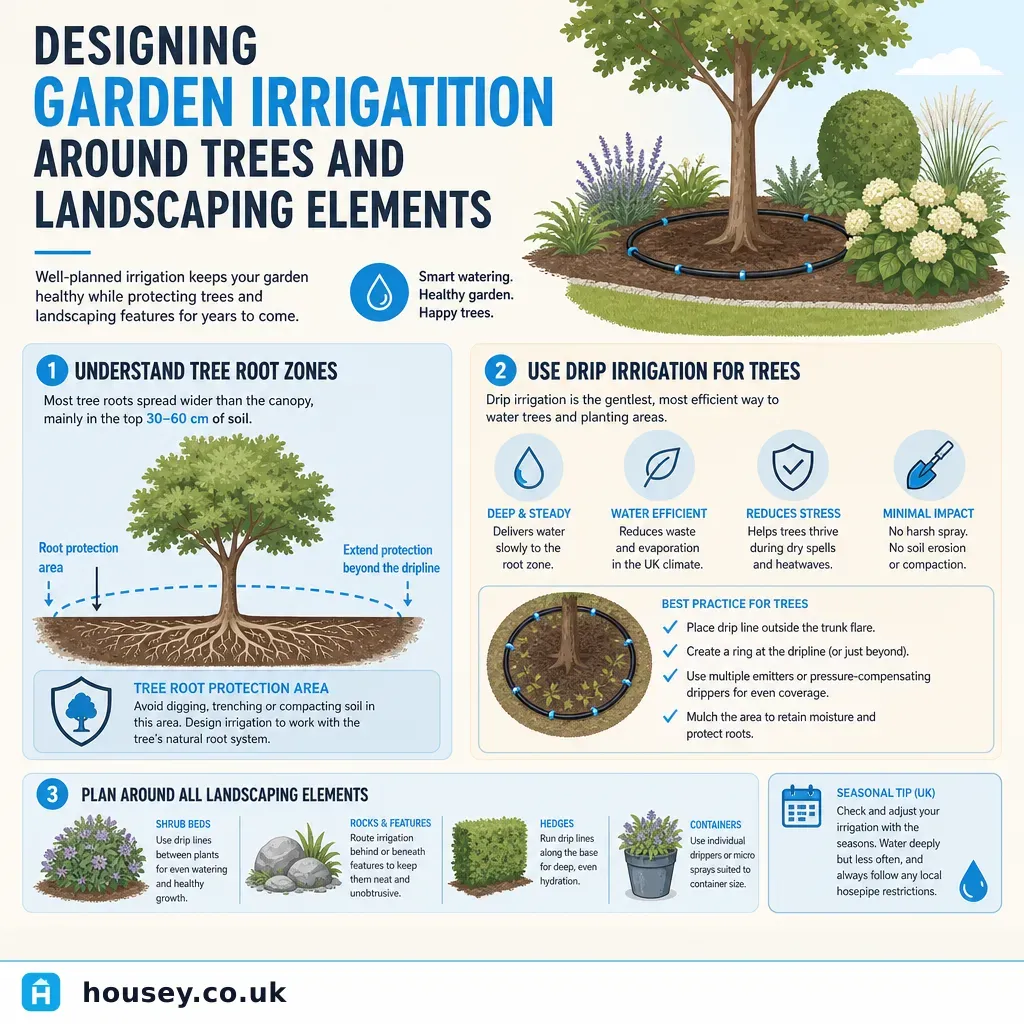 Improvement & Build
Designing Garden Irrigation Around Trees and Landscaping Elements
Design irrigation around trees by respecting the root protection area defined under BS 5837:2012, using drip or leaky pipe delivery rather than spray heads, and putting the tree zone on its own circuit.
 Improvement & Build
Garden Design Trends and Contemporary Landscaping Ideas
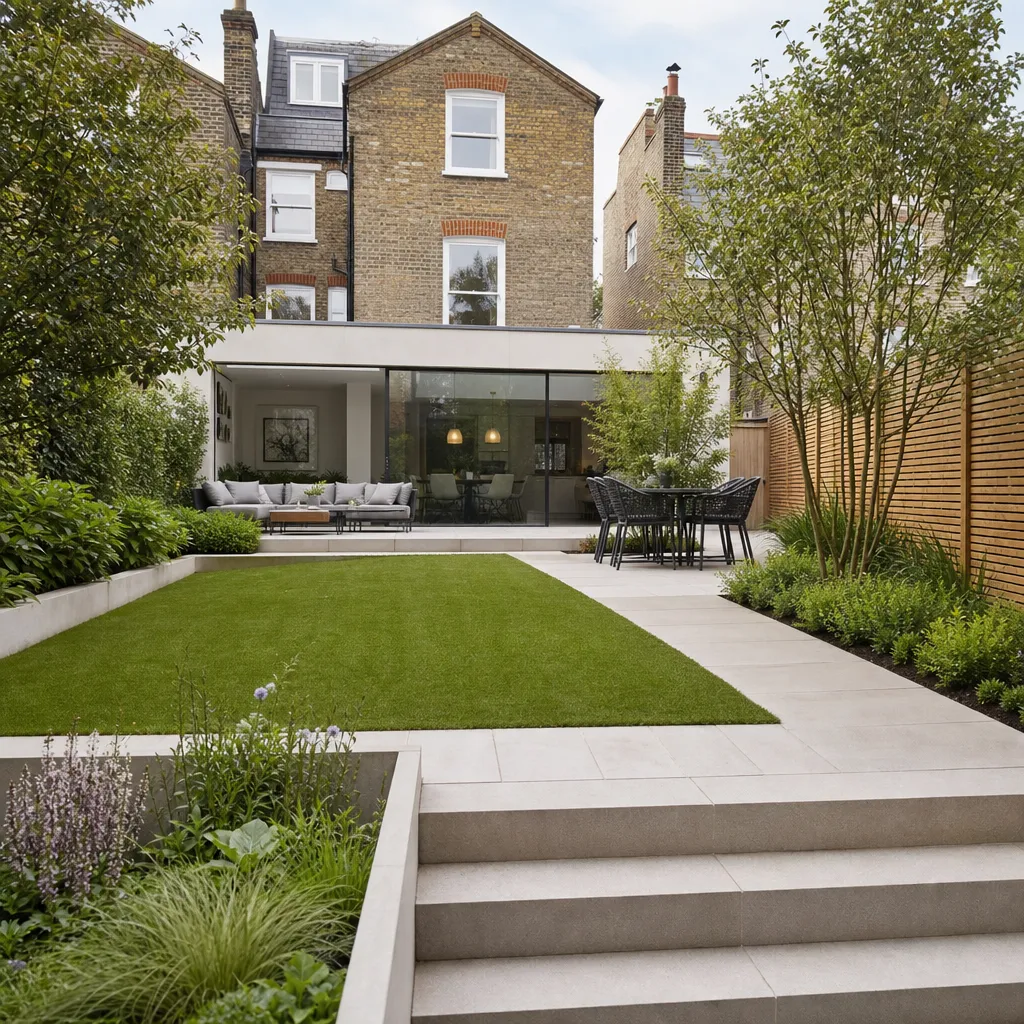
Contemporary UK garden design centres on low-maintenance naturalistic planting, multi-functional outdoor spaces, sustainable hard landscaping materials, and wildlife-friendly rewilded areas.
 Improvement & Build
Retaining Wall Design and Installation for Landscape Features
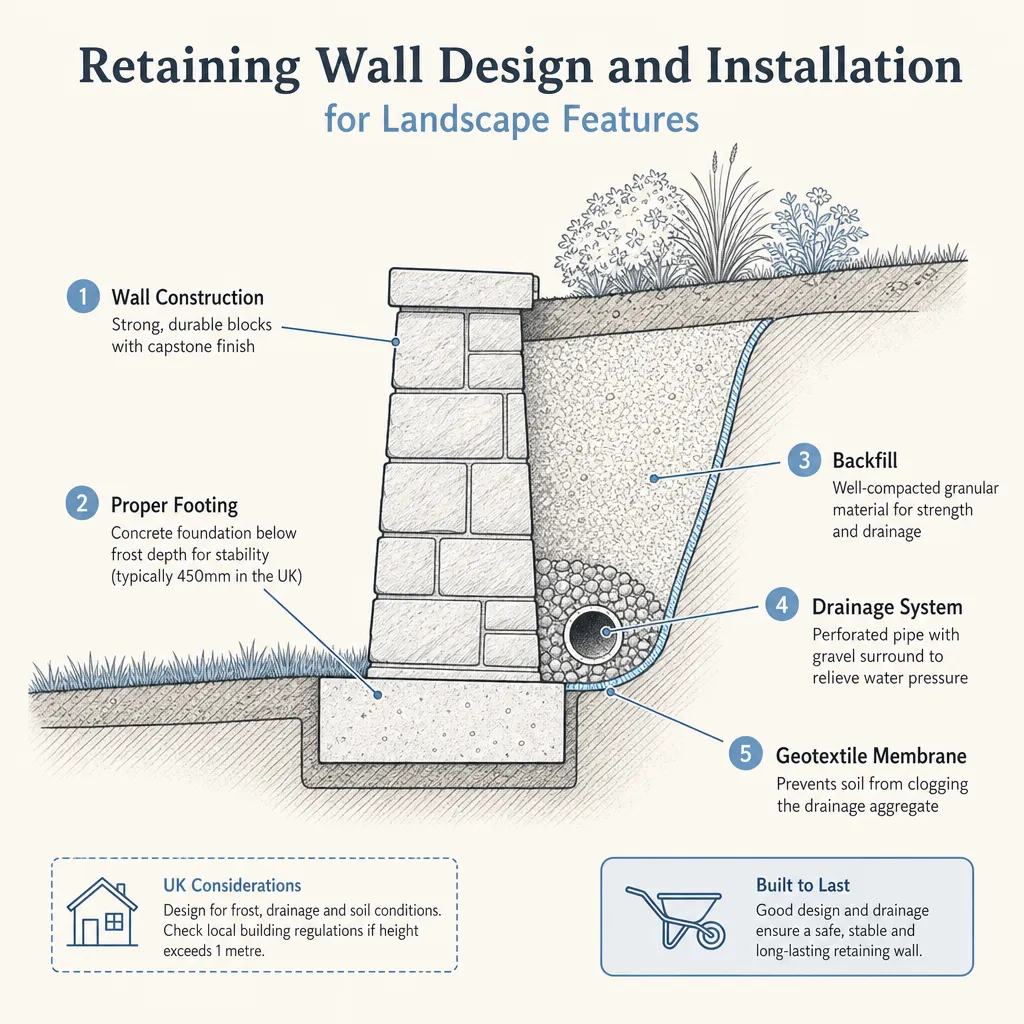
A garden retaining wall holds back soil on a sloped plot using concrete blocks, stone, or timber.