Planning Application Discoveries: What Searches Should Reveal
By Housey · Last reviewed 30th of May 2026

Planning Application Discoveries: What Searches Should Reveal
When buying property in England or Wales, the local authority search sits at the heart of the conveyancer's due diligence — it is the document most likely to reveal whether a property has been subject to planning decisions, enforcement action, or constraints that could limit what you can do once you own it. Understanding what these searches cover, and where their limits lie, helps buyers ask the right questions before exchange.
Key points
- The local authority search consists of two forms: LLC1 (Local Land Charges Register) and CON29 (Enquiries of Local Authority), both governed by the Local Land Charges Act 1975 and the Local Land Charges Rules 2018.
- LLC1 reveals financial charges, planning conditions attached to the land, listed building designations, conservation area boundaries, tree preservation orders (TPOs), and registered enforcement notices.
- CON29 covers planning applications and decisions, road proposals, compulsory purchase orders, contaminated land notices, smoke control zones, and radon-affected area status.
- Searches are point-in-time documents — they reflect the register at the date of search and may not capture unregistered enforcement activity or very old planning records that predate digital systems.
- A CON29O (Optional Enquiries form) can be added for additional matters such as public rights of way, pipelines, and nearby road or rail schemes — ask your conveyancer whether this is appropriate for the property.
What LLC1 and CON29 actually cover
The two forms together make up what most people mean when they say "local authority search" or "planning search."
LLC1 is a search of the Local Land Charges Register, which is being migrated to HM Land Registry's central digital register under the Infrastructure Act 2015. It confirms:
- Whether the property is in a conservation area or subject to an article 4 direction (which removes certain permitted development rights)
- Listed building status (Grade I, Grade II*, or Grade II in England; administered by Cadw in Wales)
- Tree preservation orders affecting trees on or near the land
- Financial charges such as improvement grants that may be repayable on sale
- Planning conditions attached to the property's land
- Enforcement notices that have been formally registered
CON29 is a set of formal enquiries submitted to the local planning authority (LPA). It includes answers on:
- Planning applications made and decided, typically covering the past five years (older records vary by council)
- Whether any enforcement action is pending or has been taken in relation to the property
- Compulsory purchase orders or road-widening proposals affecting the land
- Smoke control zone status and hazardous substance authority designation
- Radon-affected area status, with reference to UK Health Security Agency mapping
LLC1 vs CON29: what each search reveals
Search | What it covers | Who holds the register | Typical turnaround |
|---|---|---|---|
LLC1 | Listed building status, conservation area, TPOs, enforcement notices, financial charges | Local authority (migrating to HM Land Registry) | 1–5 working days for digital councils; longer for manual |
CON29 | Planning applications, pending enforcement, road proposals, CPOs, smoke control, radon | Local planning authority | 1–3 weeks (varies significantly by council) |
CON29O (optional) | Public paths, pipelines, environmental notices, nearby road or rail schemes | Local authority and statutory bodies | Same as CON29, submitted together |
What searches do not automatically reveal
A common misunderstanding is that the local authority search tells you everything about a property's planning history. It does not:
- Unregistered enforcement notices: An LPA may have issued informal planning warning letters or pre-enforcement correspondence that is not on the register.
- Neighbouring planning applications: The search covers the subject property only, not nearby land. Future development nearby will not appear unless a formal notice affecting your land has been registered.
- The full planning file: Detailed plans, design and access statements, and officer reports are public documents but are not included — your conveyancer or a planning consultant can request them from the LPA's public planning portal.
- Building regulations records: These are held separately by the local authority building control department and require a distinct enquiry.
- Pre-application discussions: Conversations between an owner or developer and the LPA before a formal application are not registerable and will not appear in any search.
What to do when a search raises concerns
If the LLC1 or CON29 returns results that concern you, do not panic — but take each matter seriously before exchange.
Conservation area or article 4 direction: Permitted development rights may be restricted or removed. This affects extensions, changes to windows and doors, and external cladding materials. Check with the LPA or a planning consultant before committing.
Listed building: Works to a listed building require listed building consent in addition to — or instead of — planning permission. This significantly affects renovation budgets and timescales.
Enforcement notice: Establish whether the notice relates to the property itself, whether it has been complied with, and whether a certificate of compliance exists. Your conveyancer should raise enquiries with the seller.
Tree preservation order: You cannot fell, top, or prune a TPO-protected tree without LPA consent. This may affect garden works, extension footprints, and subsidence risk management.
Radon-affected area: High radon potential does not prevent purchase, but consider commissioning a radon measurement and factoring any required reduction measures into your renovation plans.
Red flags that need professional attention
- An enforcement notice that is still live and relates to unauthorised works, an extension, or a change of use on the property itself.
- Planning permission that has lapsed on works that appear to have been built — the works may have been completed without valid consent.
- A conservation area or listed building designation that conflicts with alterations the seller describes as permitted development.
- No planning record for an extension, outbuilding, or change of use that is clearly present at the property.
- A compulsory purchase order or road scheme that could materially affect the property's value or use.
Important limitations
Local authority searches reflect the position at the date of search only. Planning law and local authority practices vary across England and Wales. This article provides general guidance and does not constitute legal or planning advice. Rules on permitted development, enforcement, and listed buildings are complex and fact-specific. Always instruct a regulated conveyancer and, where planning concerns arise, seek advice from a qualified planning consultant or specialist solicitor.
What to ask a qualified professional
Before or after receiving search results, ask your conveyancer or planning consultant:
- Does the search cover the full extent of the land I am buying, including any garden, outbuilding, or access road?
- Are there any planning applications or enforcement matters the seller has disclosed that do not appear in the search?
- If an enforcement notice is shown, has it been complied with, and is there a certificate of compliance?
- Should I commission a CON29O for this property, and if so, which optional enquiries apply?
- If the property is in a conservation area, what works will require LPA consent rather than relying on permitted development?
- Is there any outstanding section 106 obligation or community infrastructure levy (CIL) liability that could bind me as the incoming owner?
When to get professional help
A local authority search is a starting point, not a complete picture. Seek specialist advice if:
- Any enforcement notice appears relating to the subject property.
- The property is listed or in a conservation area and you plan to carry out alterations.
- Planning permission was granted for works that appear incomplete or not built in accordance with the consent.
- You want to understand the development potential of land or outbuildings included in the purchase.
- A TPO affects trees whose removal or management would be central to your intended use of the property.
How Housey can help
Housey connects buyers and homeowners with regulated conveyancing services that can order and interpret local authority searches, and with experienced planning consultants who can advise on planning history, permitted development rights, and conservation area implications before you commit to a purchase.
Frequently asked questions
How long does a local authority search take?
Turnaround times vary significantly by council. LLC1 searches via HM Land Registry's central digital register can return results within one to two working days for councils that have migrated. CON29 enquiries depend on the local planning authority — some return results within a week; others take three to four weeks or longer. Your conveyancer can advise on typical turnaround for the specific LPA.
Can I do my own local authority search?
Personal searches, carried out by a search agent rather than the council, are available and may be faster and cheaper. However, many mortgage lenders require an official local authority search rather than a personal search. If you are buying without a mortgage, discuss the options with your conveyancer before deciding which route to take.
Does the local authority search show planning history for neighbouring properties?
No. The search covers only the property you are buying. To research nearby planning applications, use the local planning authority's public planning portal, which is accessible to anyone. A planning consultant can carry out a wider development risk assessment if nearby development is a concern for your purchase decision.
What is a CON29O and do I need one?
CON29O covers optional additional enquiries including public rights of way, pipelines, environmental notices, and nearby road or rail schemes. Your conveyancer should recommend it if the property is rural, near infrastructure, or where these risks are plausible. It adds a small additional cost to the overall search fee and is submitted at the same time as CON29.
What happens if the search reveals an enforcement notice?
An enforcement notice means the local planning authority has taken formal action about an alleged breach of planning control. You and your conveyancer will need to establish whether the notice relates to the subject property, whether the breach was remedied, and whether a certificate of compliance exists. A live, unresolved enforcement notice on the property is a serious concern that warrants specialist legal and planning advice.
Sources and further reading
- Local Land Charges Register — HM Land Registry
- Property searches when buying a home — GOV.UK
- Planning enforcement guidance — GOV.UK Planning Practice Guidance
- Listed buildings and conservation areas — Historic England
- Radon: guidance for householders — GOV.UK / UK Health Security Agency
Useful next reads
 Planning & Pre-Build
Designing and Building a House: Architectural and Engineering Guidance
Building a new house in the UK requires separate planning permission and Building Regulations approval, a professional team typically including an ARB-registered architect, a structural engineer, and often a civil or geotechnical engineer.
 Planning & Pre-Build
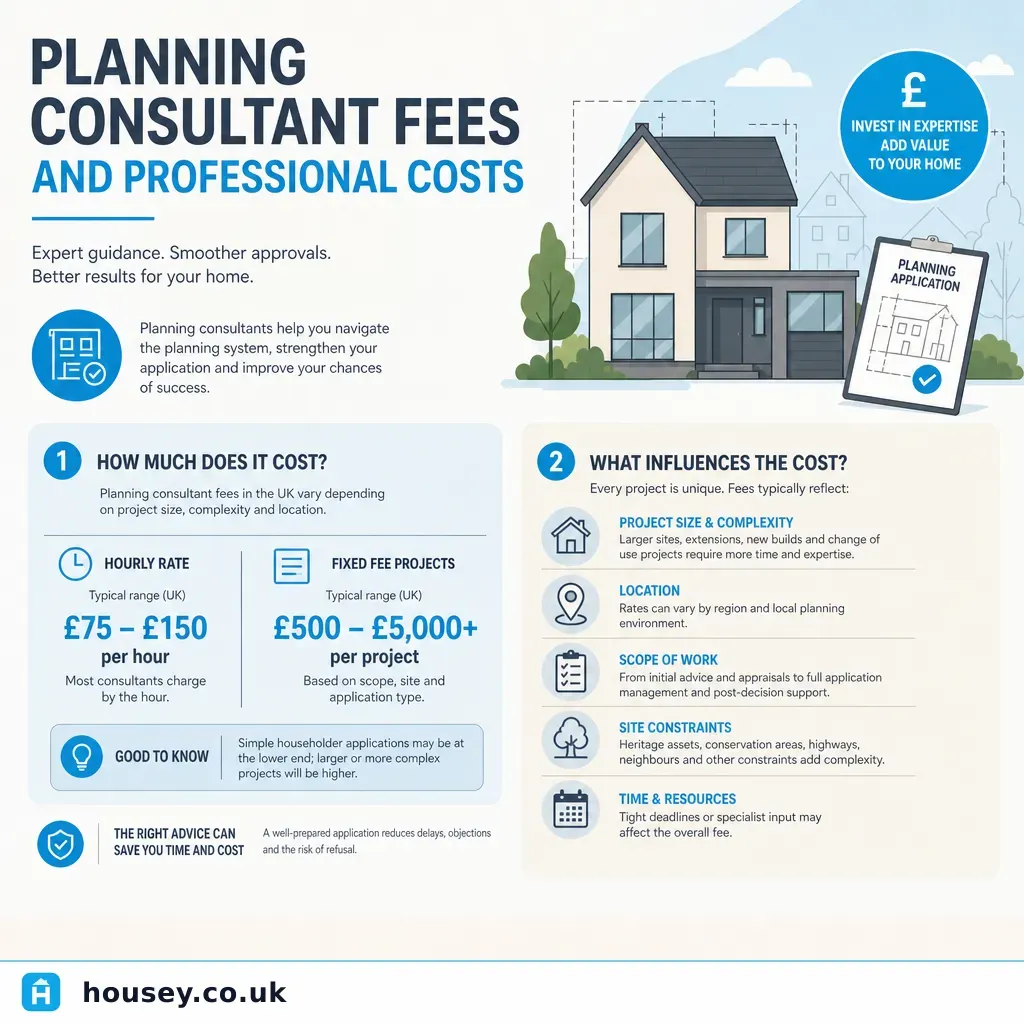
Planning Consultant Fees and Professional Costs
Planning consultant fees in the UK typically range from £75–£200 per hour, or around £500–£2,500 as a fixed fee for a householder application.
 Planning & Pre-Build
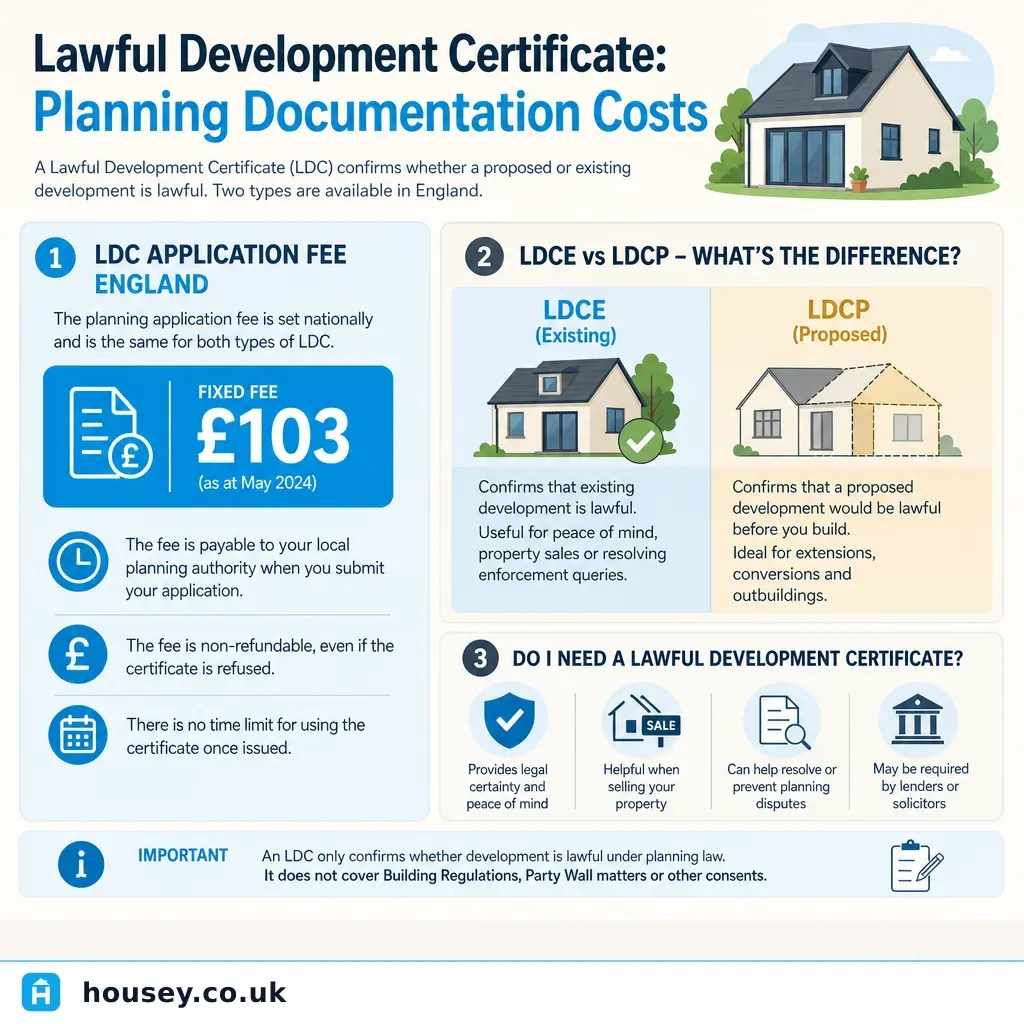
Lawful Development Certificate: Planning Documentation Costs
A Lawful Development Certificate in England costs £258 in application fees for householder proposed works, plus £500–£2,000 in professional preparation fees depending on complexity.
 Planning & Pre-Build
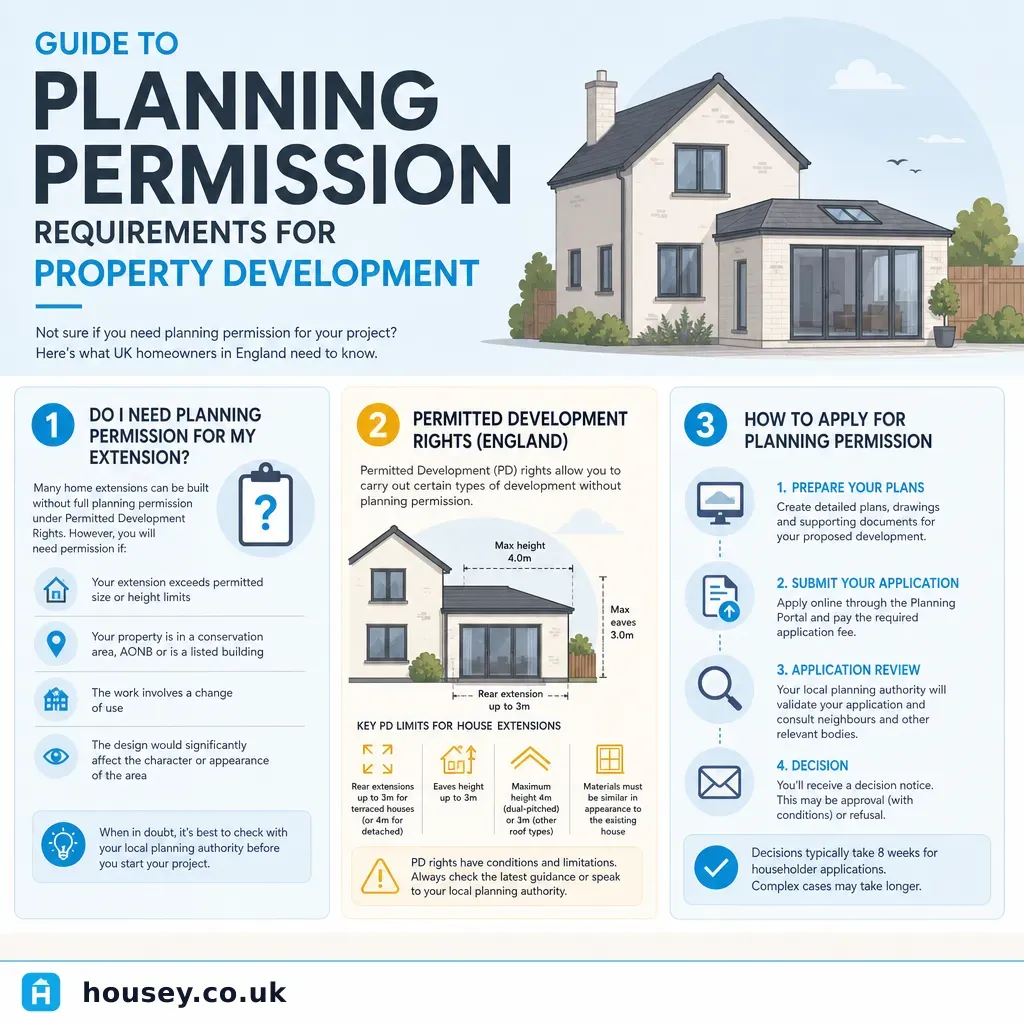
Guide to Planning Permission Requirements for Property Development
Most home improvements in England fall within permitted development rights and do not need a planning application.
 Planning & Pre-Build
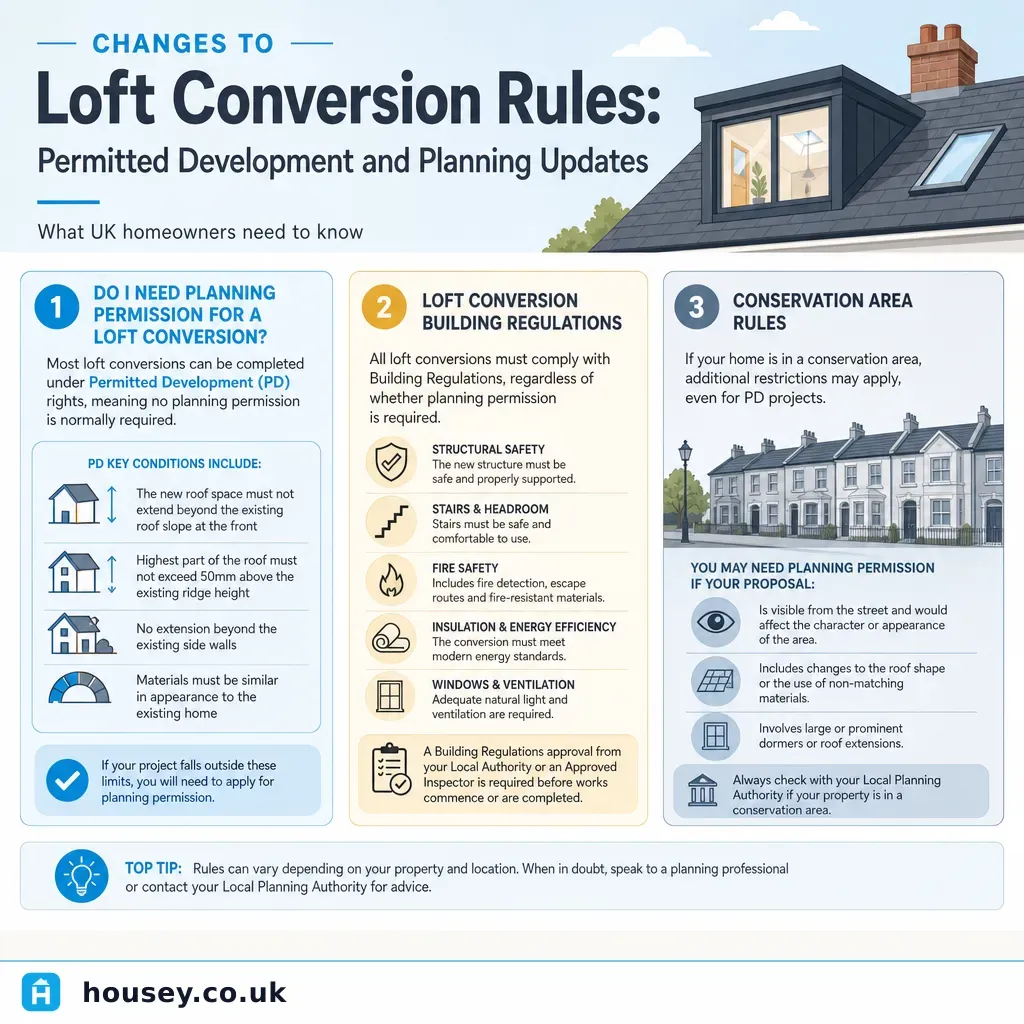
Changes to Loft Conversion Rules: Permitted Development and Planning Updates
In England, most loft conversions on standard houses qualify as Permitted Development under Class B of the GPDO 2015, allowing up to 40 cubic metres (terraced) or 50 cubic metres (detached or semi-detached) without a planning application — if conditions are met.