Planning Your Home Extension: Cost Estimation and Design
By Housey · Last reviewed 18th of May 2026
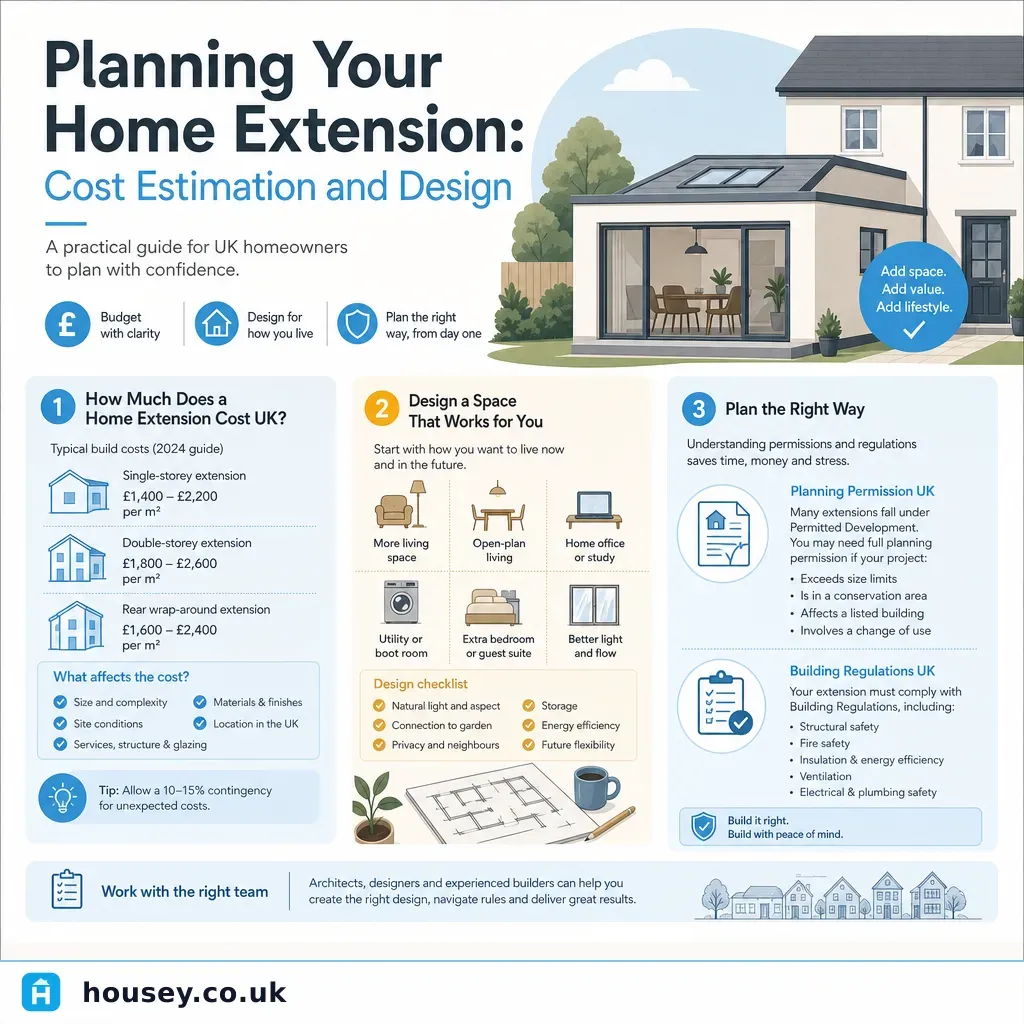
Planning Your Home Extension: Cost Estimation and Design
Home extensions are among the most significant improvement projects a UK homeowner can undertake. The decision to extend typically arises when a growing family needs more space, a work-from-home arrangement demands a dedicated room, or moving is judged too costly compared with improving in place. Getting the planning, structural, and budget decisions right from the outset matters: planning enforcement, structural failures, and cost overruns are real risks that careful preparation can substantially reduce.
Key points
- In England, single-storey rear extensions up to 3 m deep on semi-detached and terraced houses, or 4 m on detached houses, may be built under permitted development rights without a full planning application — but always verify current thresholds with your local planning authority before starting.
- All extensions require Building Regulations approval regardless of permitted development status; this covers structure, fire safety, thermal performance, drainage, and electrical installations.
- Indicative build costs for a single-storey rear extension range from £1,500 to £2,500 per m² for shell construction, with fit-out and finishes adding significantly to the total. (Indicative UK costs, last reviewed 2026-05-18.)
- If an extension is within 3 m of a neighbouring property's foundations (or 6 m for a party structure), the Party Wall etc. Act 1996 may require notices to be served on adjoining owners before work begins.
- A completion certificate issued by building control is routinely requested by buyers' solicitors when a property is sold — its absence can delay or prevent a sale.
Do you need planning permission for your extension?
Planning permission requirements depend on property type, location, size, and design. Use this decision tree as a starting point — always confirm the position with your local planning authority before starting any work.
- Is the property a flat, maisonette, or listed building? If yes → planning permission and/or listed building consent is almost certainly required; the permitted development route is not available for these property types.
- Is it a house with PD rights intact? Rear single-storey extensions within 3 m depth (semi-detached and terraced) or 4 m (detached) may proceed without a full application in England. Extensions beyond those depths — up to 6 m or 8 m — require prior approval under the Neighbour Consultation Scheme.
- Is the property in a conservation area, AONB, or National Park? If yes → side extensions and some rear extensions are not permitted development; check with the local planning authority.
- Does the extension exceed other PD conditions? Side extensions must not exceed half the original house width; two-storey rear extensions must be at least 7 m from the rear boundary; maximum eaves and ridge heights apply. If any condition is breached → a full planning application (typically 8 weeks for determination) is required.
- Are you in Scotland, Wales, or Northern Ireland? Separate planning rules apply in each devolved nation — do not rely on England's thresholds.
How much does a home extension cost?
Costs vary widely depending on extension type, size, specification, location, and ground conditions. London and the South East typically run 20–30% above UK-wide indicative averages.
Extension type | Typical size | Indicative build cost | Notes on additional costs |
|---|---|---|---|
Single-storey rear | 15–25 m² | £22,500–£62,500 | Design, building control, fit-out, VAT |
Double-storey rear | 20–35 m² | £40,000–£87,500 | As above; party wall fees if applicable |
Side return (infill) | 10–20 m² | £20,000–£50,000 | As above; structural steelwork often needed |
Wrap-around (L-shape) | 25–45 m² | £50,000–£112,500 | As above; more complex drainage connections |
Basement conversion | 30–60 m² | £90,000–£200,000+ | Specialist waterproofing and structural design |
Indicative UK costs, last reviewed 2026-05-18. Costs exclude VAT at 20%, architect or technologist fees (typically 8–15% of build cost), structural engineering, party wall surveyor fees, building control fees, and internal fit-out unless stated. Figures are indicative; obtain at least three quotes from contractors.
Key cost drivers:
- Ground conditions and foundation depth — clay soils, proximity to mature trees, or older homes may require deeper or wider foundations
- Structural steelwork — required when load-bearing walls are removed or large openings are created
- Roof form — flat roofs with high-performance insulation are common and cost less than pitched; glazed roofs and rooflights add to the budget
- Glazing specification — large bi-fold or sliding doors significantly improve daylight but increase cost
- Internal fit-out and kitchen or bathroom specification
Designing your extension: what to consider
Worked UK property scenario: A 1930s semi-detached in Manchester has a cramped kitchen at the rear. The owners want an open-plan kitchen-diner with large rear glazing. A single-storey extension of 4 m depth falls at the PD limit for a detached house but requires prior approval for a semi. An architectural technologist draws up plans with a flat roof, rooflight for supplementary daylight, and large sliding glass doors. The structural engineer specifies a steel beam and padstones across the rear wall opening. Building Regulations approval covers the new thermal envelope, drainage connection for the extended kitchen, and steelwork. The project takes four months to build and finishes with a completion certificate.
Key design considerations before finalising drawings:
- Orientation — south-facing rear glazing provides passive solar gain in winter; north-facing loses heat without the same benefit.
- Roof form — flat roofs with a 10-year-minimum guarantee and high-performance insulation are common for rear extensions; pitched roofs cost more but can be more durable long term.
- Thermal performance — new walls, roofs, and windows in extensions must meet Building Regulations Part L U-value requirements. Current minimum standards are set out in Approved Document L.
- Connection to the existing house — removing a load-bearing wall requires a structural engineer to design the beam, padstones, and load path before any work begins.
- Neighbours and light — overshadowing and overlooking affect both planning decisions and neighbourly relations; consider the position of windows and roof height carefully.
Building Regulations and structural requirements
All home extensions must comply with Building Regulations regardless of planning status. Relevant Approved Documents for most extension projects include:
- Part A (Structure): foundations, load-bearing walls, beam design, and load paths
- Part B (Fire safety): means of escape, particularly for two-storey extensions introducing habitable rooms
- Part C (Resistance to moisture): damp-proof courses and protection from ground moisture
- Part L (Conservation of fuel and power): minimum U-values for new walls, roofs, floors, and windows
- Part P (Electrical safety): any new electrical circuits or consumer unit alterations
Building control — from the local authority or an approved inspector — inspects work at key stages and issues a completion certificate on satisfactory sign-off. This document is important when you come to sell.
Important limitations
This guide provides general information about extension planning and costs in England. Planning rules, permitted development thresholds, and Building Regulations are subject to change and differ between England, Scotland, Wales, and Northern Ireland. Cost figures are indicative and should not be used as a project budget without current quotes from contractors. A qualified architect, architectural technologist, or planning consultant should assess your specific property and proposal before you proceed. For properties in conservation areas, AONBs, or with listed building status, specialist professional advice is essential before any design work begins.
What to ask a qualified professional
Before appointing an architect, architectural technologist, or design-and-build firm:
- Are you a member of a recognised professional body — RIBA, CIAT, or RICS — and do you hold professional indemnity insurance?
- Is my proposed extension within permitted development limits, or will I need a full planning application?
- Does the Party Wall etc. Act 1996 apply to my project, and if so, will you manage the notice process or recommend a party wall surveyor?
- What surveys or ground investigations do you recommend before design work begins?
- Will you manage the Building Regulations application and liaise directly with building control?
- Is a structural engineer included in your scope, or is that a separate appointment I need to make?
- What are the main risks to programme and budget for this specific project and site?
When to get professional help
Instruct a qualified professional before starting any extension project. Seek urgent advice if:
- Work has already been carried out without planning permission or Building Regulations approval — a regularisation application may be possible but needs professional guidance quickly.
- A structural wall has been removed or altered without a structural engineer's specification — seek an assessment before proceeding with any further works.
- A neighbour has raised a formal objection or a party wall dispute has arisen — a party wall surveyor should be instructed promptly.
- There are signs of existing structural movement, subsidence, or significant damp — address these before extending.
How Housey can help
Housey connects homeowners with local professionals for every stage of an extension project. A build cost estimate gives you a realistic budget before committing to detailed design. An architectural technologist can prepare planning drawings and manage the Building Regulations application. Experienced extension builders carry out the construction work, and structural engineering specialists design beams, padstones, and foundation solutions.
Frequently asked questions
Do I always need an architect for a home extension?
No — architectural technologists and experienced design-and-build firms can prepare planning drawings and manage Building Regulations applications for most residential extensions. Chartered architects (RIBA) are more commonly engaged for complex, large, or listed building projects, or where a higher degree of design input is required. Whoever you appoint should hold appropriate professional indemnity insurance and membership of a recognised professional body such as RIBA or CIAT.
Will a home extension add value to my property?
It depends on the local market, the quality of the build, and whether the extension addresses a genuine layout weakness. Extensions that add a functional bedroom or significantly improve kitchen and living space tend to perform well. Spending more on construction than the likely value uplift in your local market is a real risk. Consult a local estate agent with specific knowledge of your area before committing to a project primarily for investment reasons.
How long does a planning application for an extension take?
Most householder planning applications in England are decided within eight weeks of a valid submission. Applications in conservation areas, for listed buildings, or those attracting significant neighbour objections can take longer. Prior approval applications under the Neighbour Consultation Scheme for larger rear extensions (up to 6 m or 8 m) have a 42-day determination period. Processing times vary; check with your local planning authority for current performance.
What is a completion certificate and why does it matter?
A completion certificate is issued by building control when works have been satisfactorily inspected and comply with Building Regulations. It confirms the extension was checked at key stages. Buyers' solicitors routinely request completion certificates for extension works when a property is sold — their absence can delay or prevent a sale, or require indemnity insurance to be purchased. Always ensure building control formally signs off before finishing internal decoration.
Sources and further reading
- Planning Portal: extensions and additions — Planning Portal / GOV.UK
- Approved Document A: Structure — GOV.UK
- Approved Document L: Conservation of Fuel and Power — GOV.UK
- Party Wall etc. Act 1996: explanatory booklet — GOV.UK
- RIBA homeowner resources — RIBA
Useful next reads
 Improvement & Build
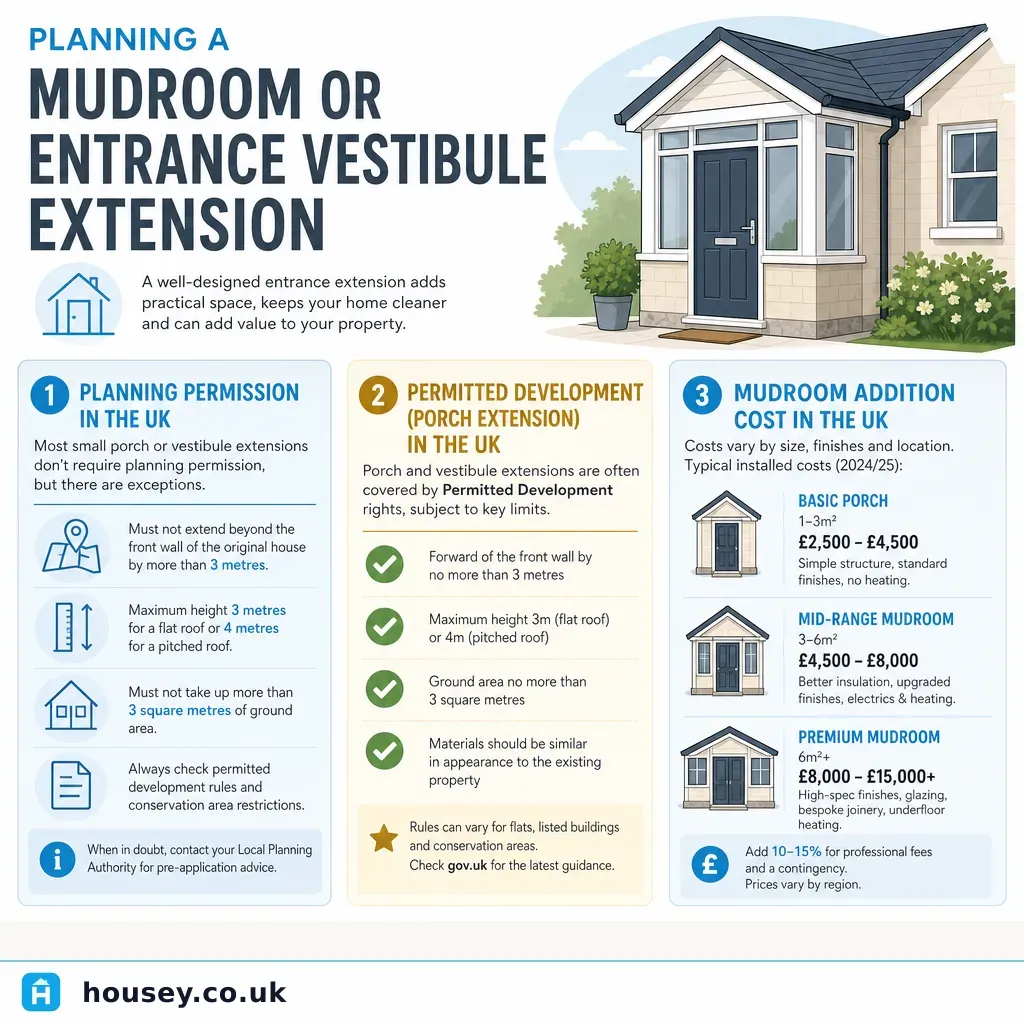
Planning a Mudroom or Entrance Vestibule Extension
A mudroom or entrance vestibule extension often qualifies as permitted development in England if it is no more than 3 m², no taller than 3 m, and more than 2 m from a highway boundary.
 Improvement & Build
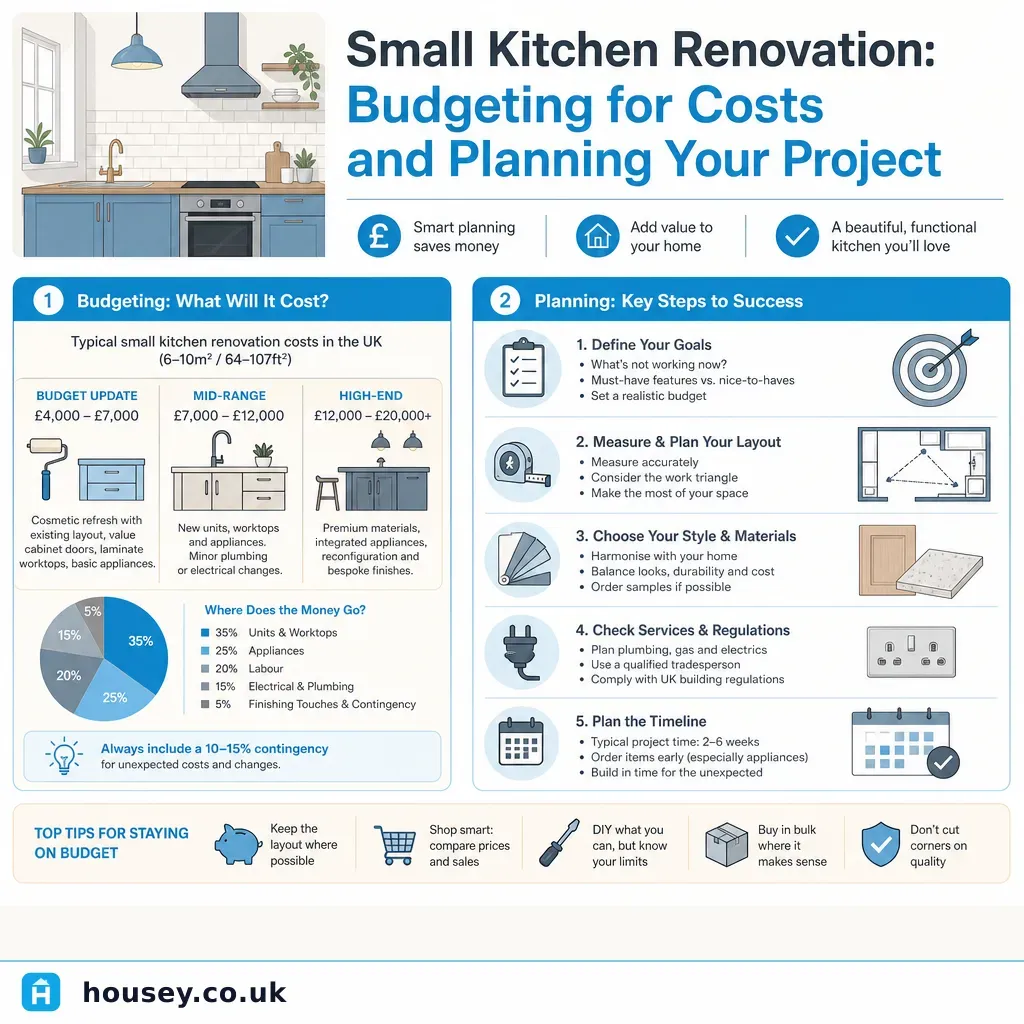
Small kitchen renovation: budgeting for costs and planning your project
A small kitchen renovation in the UK typically costs £5,000–£15,000 for a full refresh including new units, worktops, tiling, and appliances, though costs vary widely by specification, region, and whether structural changes or rewiring are involved.
 Improvement & Build
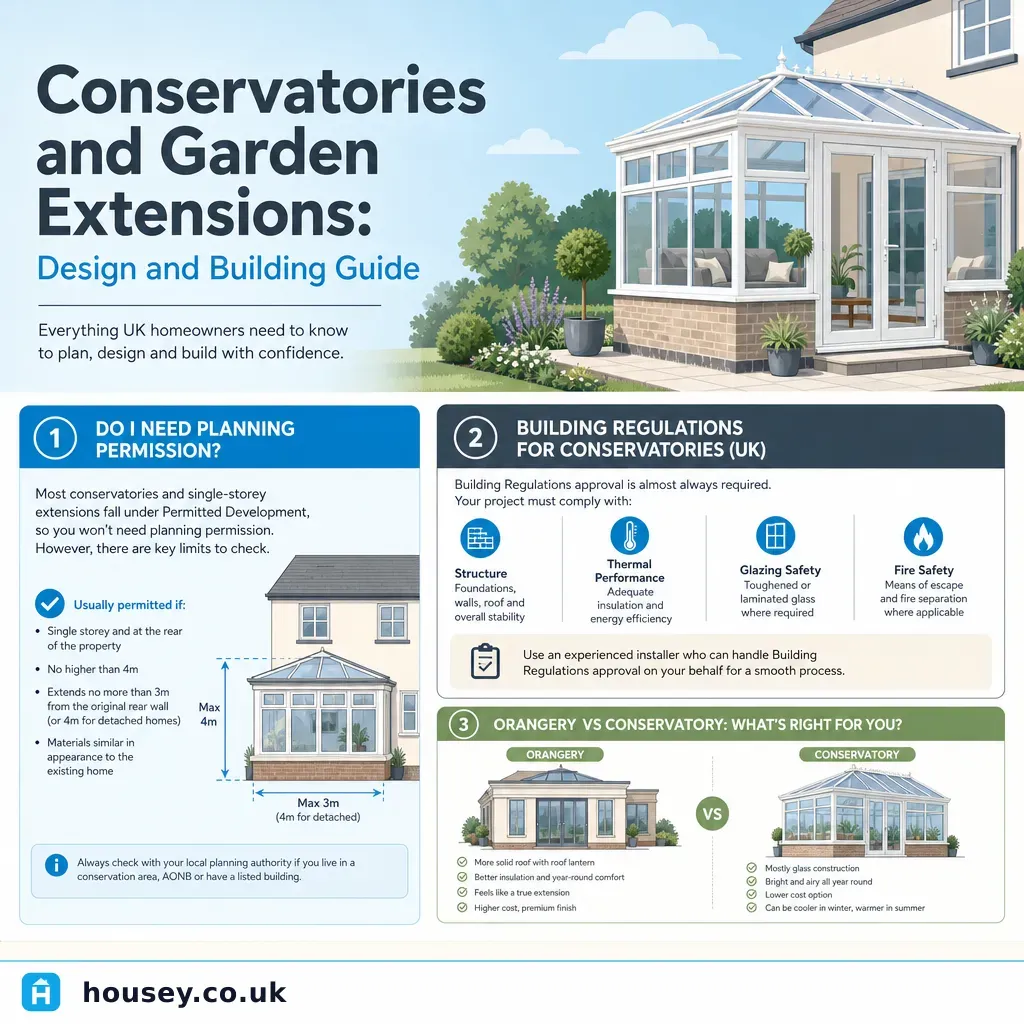
Conservatories and Garden Extensions: Design and Building Guide
Most conservatories qualify as permitted development in England if they are single-storey, within 50% of original curtilage, and meet dimensional limits.
 Improvement & Build
Painting Interior Doors: Preparation and Technique
Painting interior doors well depends on preparation rather than paint choice.
 Improvement & Build
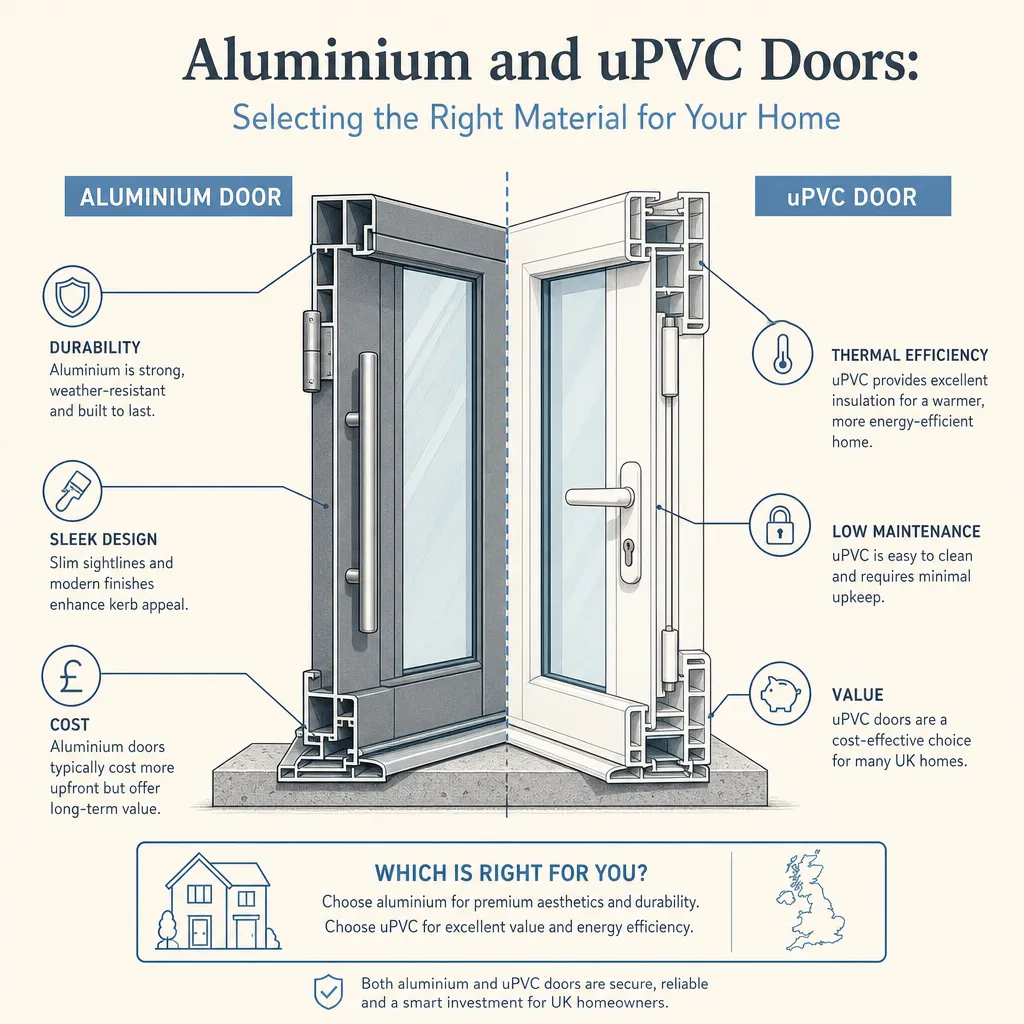
Aluminium and uPVC Doors: Selecting the Right Material for Your Home
uPVC doors are lower-cost and low-maintenance, making them a practical choice for most UK homes.