Plaster Skimming Costs for Wall and Ceiling Finishes
By Housey · Last reviewed 6th of May 2026
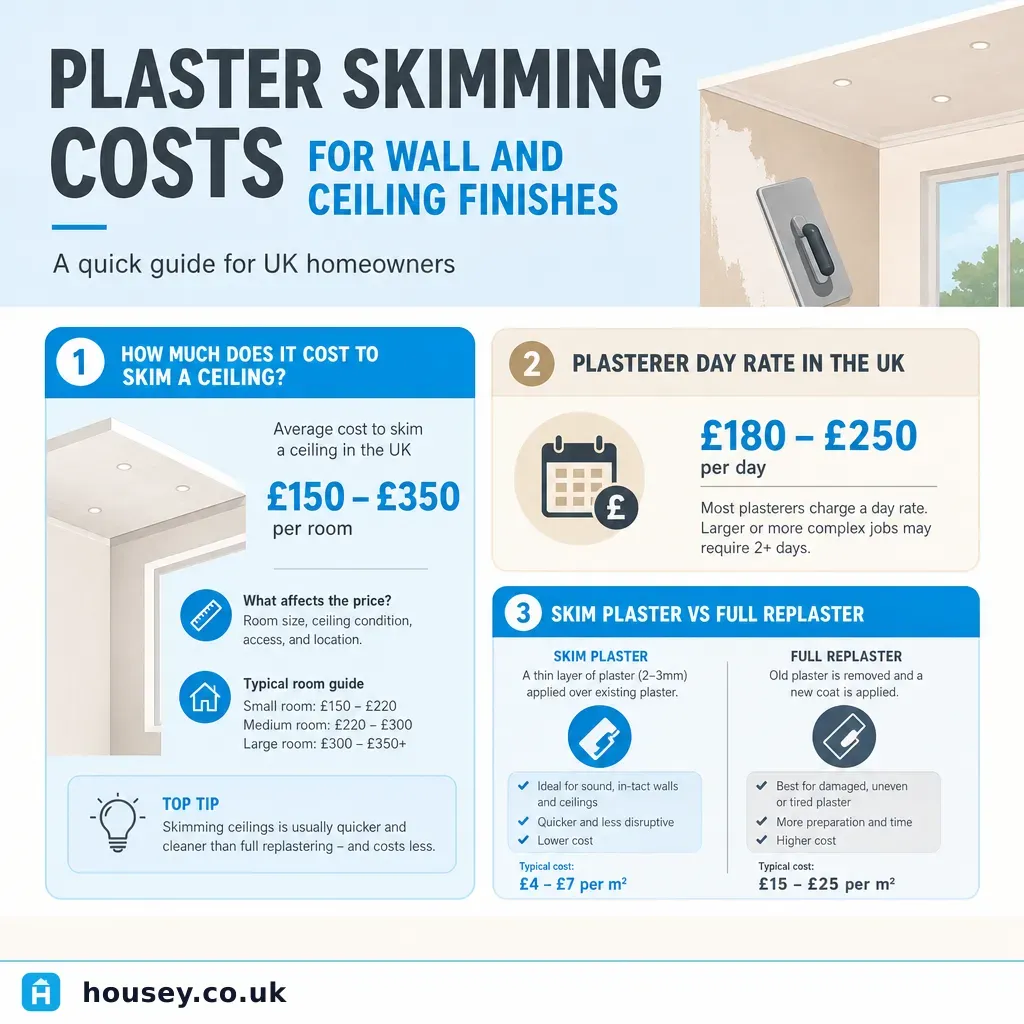
Plaster Skimming Costs for Wall and Ceiling Finishes
Skimming comes up during decorating projects, after damp repairs, following a loft conversion or extension, or whenever walls and ceilings are too rough or damaged for direct painting. Understanding the likely cost before inviting plasterers to quote helps you budget realistically and spot an unusually high or low price when it arrives.
Key points
- Indicative skim plastering costs range from £150–£350 for a standard ceiling and £80–£180 per wall, though London and the South East typically sit at the higher end (Indicative UK costs, last reviewed 2026-05-06).
- Skimming applies a 2–3 mm finish coat of gypsum plaster over plasterboard, existing browning plaster, or a sand-and-cement render base — it is not a structural repair.
- PVA bonding agent must be applied to porous or high-suction surfaces before skimming; omitting this step causes the finish coat to dry unevenly and crack.
- Most UK plasterers charge a day rate of £150–£250 in England and Wales, rising to £200–£300 in London and the Home Counties.
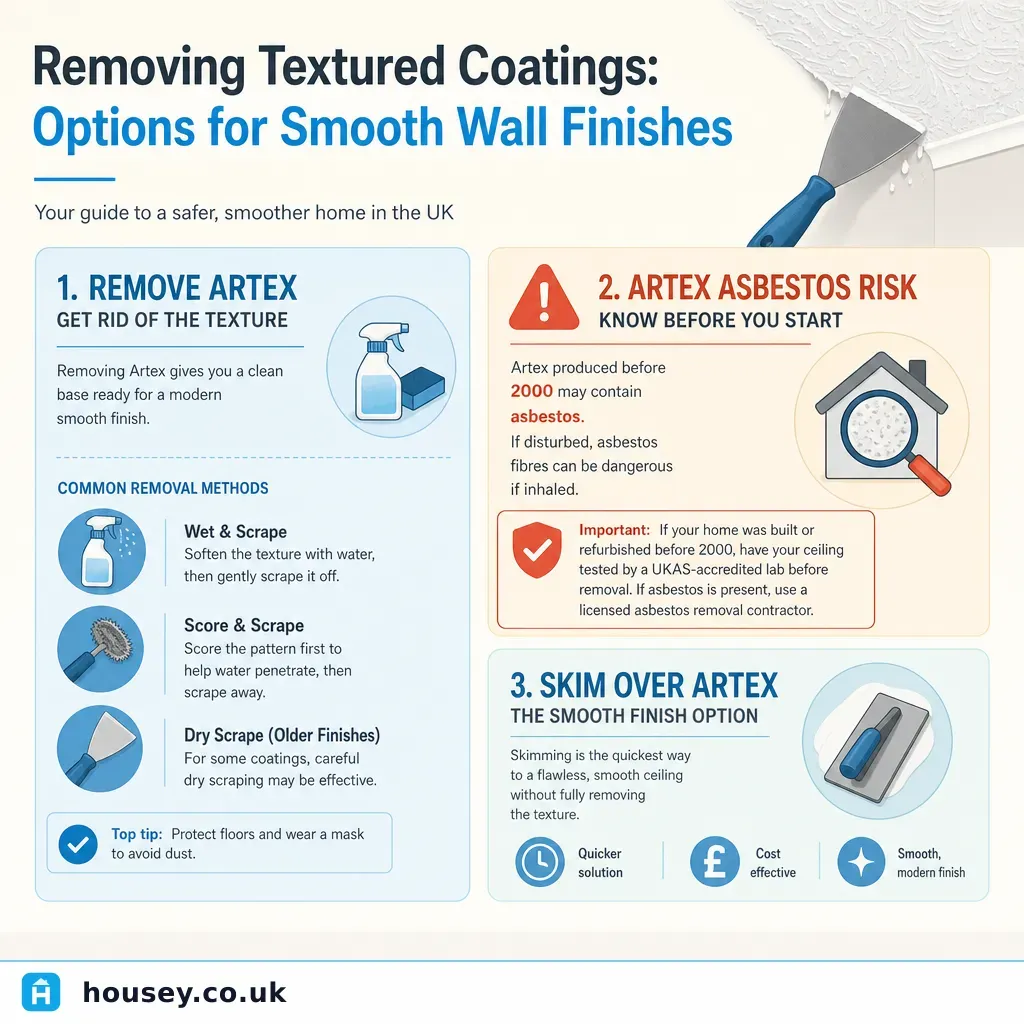
- Artex or textured coatings in homes built before 2000 should be tested for asbestos before any scraping or disturbance — the HSE advises assuming asbestos is present until proven otherwise.
What is skim plastering?
Skimming is the application of a thin final coat of finishing plaster — usually 2–3 mm — over an existing prepared background. The background can be plasterboard (the most common substrate in UK new-build and renovation work), existing browning or bonding plaster, or a sand-and-cement render that has been allowed to cure. The purpose is to produce a smooth, flat surface ready for decoration.
Skimming is distinct from a full replaster, which involves hacking off all existing plaster back to the masonry and applying two or three base coats before the finish layer. A full replaster costs significantly more and takes longer to dry. Skimming is appropriate where the background is sound and well adhered.
How much does skim plastering cost in the UK?
Costs depend on surface area, ceiling height, access, surface condition, and location. The figures below are indicative UK costs, last reviewed 2026-05-06, based on typical reported quotes from trade platforms. Obtain at least three quotes for your specific property.
Area or room type | Typical indicative cost range | Notes |
|---|---|---|
Single standard ceiling (~12–15 m²) | £150–£350 | Higher if artex removal is needed first |
Single wall (~8–12 m²) | £80–£180 | Depends on preparation required |
Average bedroom (walls + ceiling) | £400–£750 | One to two days' labour |
Living room or large room | £500–£1,000 | Two to three days |
Full house (4–5 rooms, walls + ceilings) | £2,000–£4,500 | Multi-day project; may attract a discounted day rate |
Artex ceiling — scrape and skim | Add £100–£250 per ceiling | Pre-2000 homes require asbestos testing before scraping |
Sources: Checkatrade cost guide 2025; Rated People trade data; Homebuilding & Renovating.
What drives the price up or down?
The main cost variables are:
- Surface condition: walls with holes, damp staining, old stipple finishes, or bonded wallpaper take longer to prepare and may need patching before skimming.
- Access: high ceilings, stairwells, and bay windows require additional setup time and sometimes scaffold boards.
- Artex or textured coatings: must be scraped or rendered over before skimming; some artex in pre-2000 homes may contain chrysotile asbestos — test before any disturbance.
- Region: London and South East rates are typically 20–40% above the national average.
- Scale: larger projects spanning several rooms may attract a lower day rate or a discounted package price.
Plastering day rates and how labour is priced
Most UK plasterers price by the job or by the day. Day rates typically range from £150–£250 in most of England and Wales, rising to £200–£300 in London and the Home Counties. Some plasterers quote per square metre — typically £6–£12/m² for skim only, excluding preparation work.
For small jobs such as a single wall or patching, a plasterer may charge a minimum call-out fee rather than a full day rate, often £100–£180.
Materials — finishing plaster, PVA, and plasterboard if needed — are usually quoted separately or itemised. Finishing plaster costs around £8–£12 per 25 kg bag, and a typical room may use two to four bags.
Surfaces that need special preparation
Not all walls can be skimmed directly. Common preparation issues include:
- High-suction surfaces: bare brick, old lime plaster, or bare plasterboard must be sealed with a diluted PVA solution (typically one part PVA to four or five parts water) to slow suction and prevent the finish coat drying too fast.
- Low-suction or glossy surfaces: old vinyl emulsion, gloss paint, or sealed backgrounds need mechanical keying — sanding or scoring — or a bonding agent applied before skimming.
- Damp walls: active damp must be investigated and treated before skimming. Plastering over a damp wall causes the finish coat to fail and may mask a worsening problem. Arrange a damp survey if the source is unclear.
- Artex and textured coatings: heavily textured artex cannot be skimmed in a single thin coat; it requires rendering over or careful scraping back. Homes built before 2000 should have textured coatings tested for asbestos before any scraping or grinding.
Comparison: skim plaster vs full replaster vs dry-lining
Option | Best for | Relative cost vs skimming | Typical timescale | Key limitation |
|---|---|---|---|---|
Skim plaster | Sound background, minor repairs, post-renovation prep | Baseline | 1–2 days per room | Will not fix damp or failing backgrounds |
Full replaster (back to masonry) | Failing plaster, significant damp repair, solid walls | 3–5× higher | 3–5 days plus 4–6 weeks drying | Extended drying period before decoration |
Dry-lining (dot-and-dab plasterboard) | Solid walls, insulation upgrades, faster finish | Similar or slightly higher | 1–2 days per room | Reduces room width by 25–40 mm |
Sand-and-cement render + skim | New blockwork, heavily uneven walls | 1.5–2.5× higher | 2–3 days plus render cure time | Render must cure before skimming |
What to ask before accepting a plastering quote
Use this checklist when comparing quotes:
- What preparation work is included — PVA priming, patching, artex treatment?
- Is the quote for labour only, or does it include materials?
- Which finishing plaster product will be used, and is it itemised separately?
- What is the payment schedule — never pay 100% upfront.
- How long will the completed plaster need to dry before decoration begins?
- Are there any surfaces you consider unsuitable for direct skimming?
- Is VAT included in the price quoted?
- Do you carry public liability insurance?
Red flags when getting plastering quotes
Watch out for the following warning signs:
- A quote significantly lower than all others — often a sign of inexperience, poor-quality materials, or cutting corners on preparation.
- Payment demanded entirely upfront before any work starts.
- No mention of PVA or surface preparation in the scope of work.
- A plasterer unwilling to visit and inspect the walls before quoting — remote quotes are unreliable for preparation-heavy jobs.
- Artex present in a pre-2000 home with no mention of asbestos testing. The HSE advises that textured coatings applied before 2000 should be treated as potentially containing asbestos until professionally tested; disturbing them without testing can release harmful fibres.
When to get professional help
Plastering is skilled trade work; poor skimming is difficult and expensive to correct once dry. Use a competent plasterer rather than attempting a first-time DIY task on walls that will be prominently visible.
In addition:
- If you notice recurring cracking, bulging, or hollow-sounding areas behind the plaster, this may indicate structural movement or damp — have a surveyor assess before replastering.
- Any artex or textured coating in a pre-2000 home must be tested for asbestos before scraping, sanding, or grinding. Do not disturb untested textured coatings.
- Persistent damp staining on walls should be investigated and the underlying cause resolved before any plastering work starts.
How Housey can help
Housey connects homeowners with vetted tradespeople across the UK, including experienced plasterers who can inspect your walls and provide itemised, competitive quotes. Describe your project on Housey to compare quotes from local professionals.
Frequently asked questions
How long does skim plaster take to dry before I can paint?
Newly skimmed plaster typically needs 4–6 weeks to dry fully before oil-based paints are applied. A mist coat of heavily diluted emulsion can go on once the surface turns uniformly pale — usually after 4–6 weeks. Drying time varies with ventilation, wall thickness, and season; rushing decoration can trap moisture and cause paint to peel.
Can I skim over old wallpaper?
No. Plastering over wallpaper is not recommended. The paper absorbs moisture from the plaster unevenly, causing bubbling and detachment. Wallpaper must be stripped fully and the surface cleaned, patched, and PVA primed before skimming begins.
What is the difference between skimming and full plastering?
Skimming applies a thin 2–3 mm finish coat over a sound existing background. Full plastering involves removing existing material back to the masonry and applying base coats before the finish layer. Full plastering costs significantly more and requires weeks of additional drying time; skimming is only appropriate where the background is structurally sound.
Do I need to do anything before the plasterer arrives?
Clear the room and cover floors with dustsheets — plastering is messy. Ensure access to water and electricity. Flag any damp patches, loose plaster sections, or previous repairs. If artex is present in a pre-2000 home, mention it so the plasterer can assess whether asbestos testing is required before any disturbance.
Why does plastering cost more in London?
Labour costs across all trades in London and the South East are higher due to greater demand, higher living costs, and larger overheads. Expect plastering rates roughly 20–40% above the national average in London, rising further in central zones. Always obtain quotes from local plasterers rather than relying on national averages alone.
Sources and further reading
- Plastering Cost Guide — Checkatrade
- Plastering Costs — Rated People
- Asbestos and Textured Coatings for Plasterers — Health and Safety Executive
- Plastering Costs Guide — Homebuilding & Renovating
Useful next reads
 Improvement & Build
Removing Textured Coatings: Options for Smooth Wall Finishes
Textured coatings in UK homes built before 2000 may contain asbestos and must be tested before disturbance.
 Improvement & Build
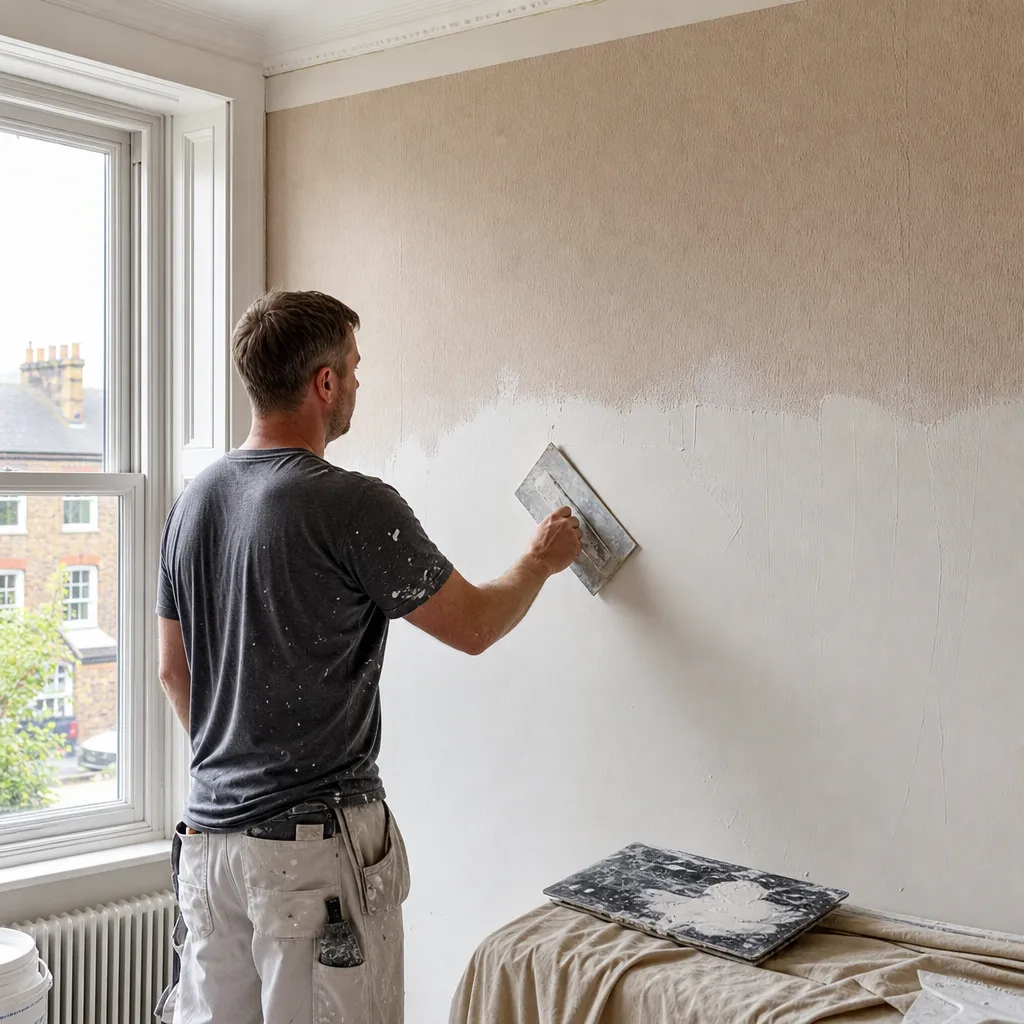
Skimming Over Wallpaper Lining: Surface Preparation and Results
You can skim plaster over wallpaper lining paper, provided the paper is fully adhered, the correct weight (usually 1,200g) is used, and the surface is primed with diluted PVA before applying a 2–3mm skim coat.
 Improvement & Build
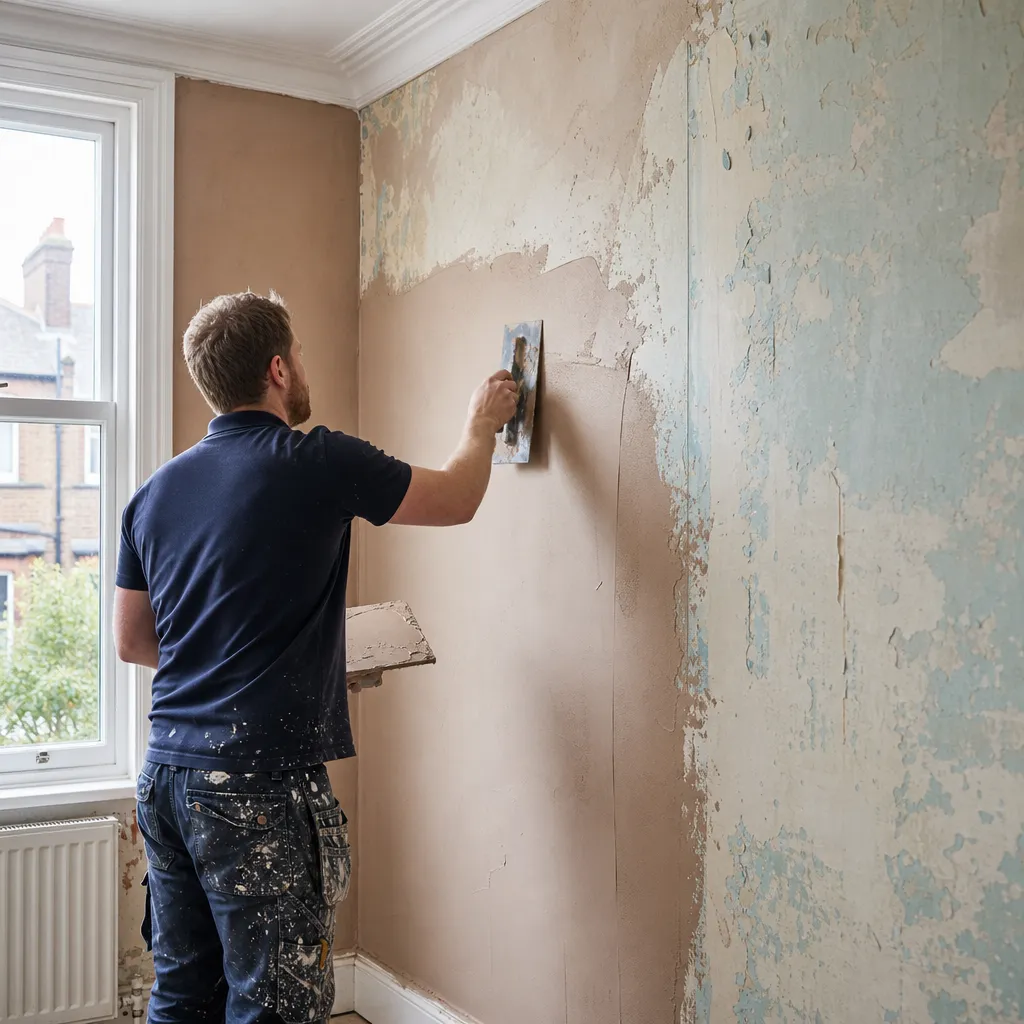
Plastering Over Existing Paint and Wallpaper: Surface Prep and Technique
Whether you can plaster over existing paint or wallpaper depends on surface condition and adhesion.
 Improvement & Build
Painting Interior Doors: Preparation and Technique
Painting interior doors well depends on preparation rather than paint choice.
 Improvement & Build
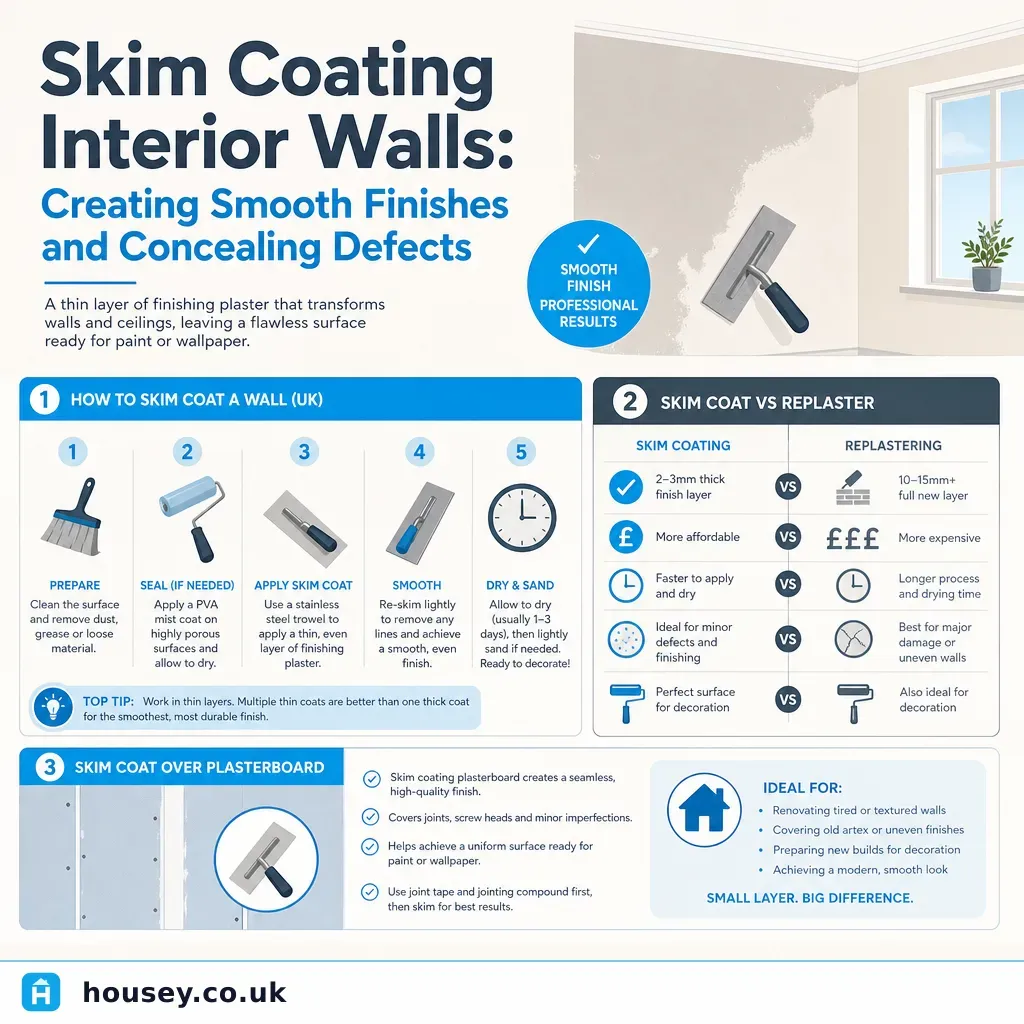
Skim Coating Interior Walls: Creating Smooth Finishes and Concealing Defects
Skim coating applies a 2–3 mm layer of finish plaster over prepared plasterboard or existing plaster, creating a smooth, paint-ready surface.