Property Plumbing Checklist for Homebuyers: What to Inspect
By Housey · Last reviewed 26th of May 2026
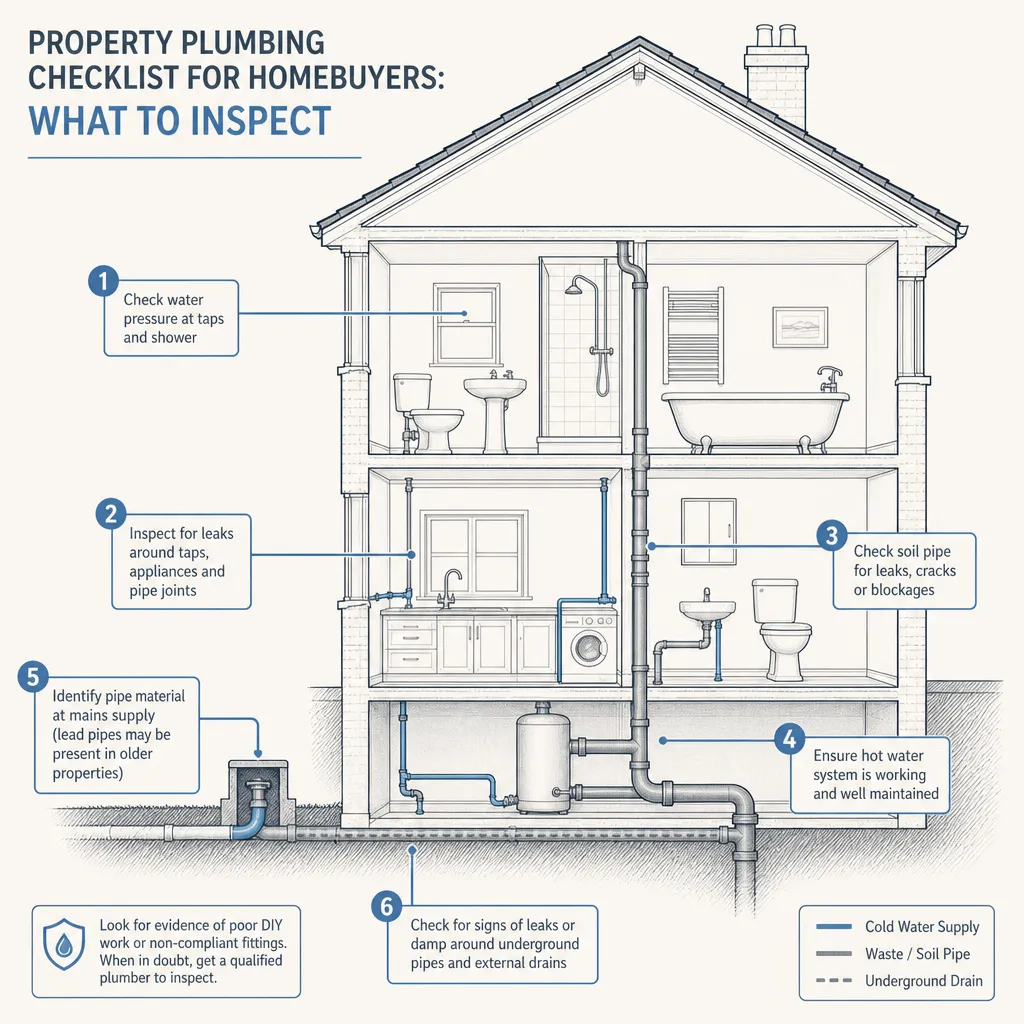
Property Plumbing Checklist for Homebuyers: What to Inspect
Plumbing faults are among the most expensive defects to remediate once you have moved in — and among the most frequently missed by buyers relying on a single viewing. Understanding what to look for, and knowing which questions to ask your surveyor, can reveal issues that affect both value and habitability well before you exchange contracts.
Key points
- Lead pipework remains in some properties built before 1970; the Drinking Water Inspectorate advises replacing lead supply pipes as a priority, and their presence can affect mortgage offers.
- RICS Level 2 and Level 3 surveys cover visible plumbing but do not include a pressurised test of water systems or a CCTV inspection of underground drains.
- Low water pressure at multiple outlets — below 1 bar for mains-fed systems — may indicate a supply-side problem requiring investigation by the water supplier or a plumber.
- The Water Supply (Water Fittings) Regulations 1999 govern installation standards for plumbing work in England and Wales; non-compliant work can affect insurance and mortgage lending.
- Shared drains between properties are common in older terraces; responsibility for maintenance and repair is governed by sewer records held by the regional water company.
What a standard RICS survey covers — and what it doesn't
A RICS Level 2 Home Survey or RICS Level 3 Building Survey will inspect visible plumbing — the surveyor will note the apparent condition of accessible pipework, the heating system, the cold water storage tank if reachable, and any obvious signs of leakage or damp. What it does not include:
- Pressure testing of supply pipes
- Inspection of underground drainage (unless accessed via an existing inspection chamber)
- Boiler service records or output testing
- CCTV survey of drains and lateral connections
For older properties — particularly Victorian terraces and pre-war semis — these omissions can be significant. Commissioning a specialist inspection alongside your RICS survey gives a fuller picture.
Which professional do I need?
Issue or concern | Professional to instruct | What they provide |
|---|---|---|
Visible pipework condition, heating system | RICS surveyor (Level 2 or Level 3) | Written condition report |
Underground drain condition, blockages, root ingress | CCTV drain surveyor | Video footage and written report |
Boiler condition and output | Gas Safe registered engineer | Service record or condition report |
Water pressure and supply pipe condition | Plumber or water supplier | Pressure test and site report |
Lead pipe identification and replacement advice | Plumber or specialist contractor | Assessment and written recommendations |
Whole-system assessment (above and below ground) | Drain survey specialist and plumber | Combined report |
Homebuyer plumbing checklist
Use this checklist during a viewing or pre-exchange inspection. Items marked ⚠ warrant further specialist investigation if concerns arise.
Water supply
Hot water and heating
Drainage and waste
Lead pipework
Red flags — when to commission a specialist inspection
The following signs warrant a specialist drain survey or plumbing assessment before exchange:
- Gurgling or slow-draining outlets in multiple rooms
- Persistent damp or mould in a ground-floor bathroom or near an external wall close to drainage
- Evidence of previous insurance claims for escape of water (check the property information forms)
- An external inspection chamber with standing water or root ingress visible
- A property that has been vacant for more than six months (stagnant water increases legionella risk and pipe corrosion)
- Victorian or Edwardian terraced properties with no record of drain clearance or investigation
What to ask your surveyor about plumbing
Before instructing a RICS surveyor, ask:
- Will you inspect the cold water storage tank and advise on its condition?
- Will you comment on visible pipework material, including potential lead identification?
- Will you check the boiler age and visible condition?
- Do you recommend a CCTV drain survey for this property given its age and construction type?
- Will you note whether the drainage connects to the public sewer or a private system?
A good surveyor will flag concerns they cannot fully assess and recommend specialist follow-up. If they do not, ask explicitly.
When to get professional help
Plumbing defects invisible during a standard viewing — cracked underground drains, corroded pipework, tree root ingress — are among the most expensive post-purchase surprises in UK residential property. Commission a specialist drain survey if:
- The property is a Victorian or Edwardian terrace with shared or original clay drainage
- You can see standing water in an inspection chamber during a viewing
- Your RICS survey recommends further drainage investigation
- The property has been extended and drainage routes are unclear
A boiler service or condition report from a Gas Safe registered engineer is advisable before exchange on any property where the boiler is over 10 years old or carries no service records.
How Housey can help
Housey connects you with qualified surveyors for RICS Home Surveys, specific defect surveys, and CCTV drain surveys, so you can commission the right combination of inspections before exchange and proceed to completion with confidence.
Frequently asked questions
Will my RICS survey flag plumbing problems?
A RICS Level 2 or Level 3 survey will note visible plumbing defects and poor condition, but does not include a pressurised pipe test or a CCTV drain inspection. Your surveyor will usually flag concerns and recommend further investigation. If warning signs exist but your surveyor does not recommend follow-up, you can commission a specialist survey independently.
How do I know if a property has lead pipes?
Lead supply pipes are dull grey, soft enough to scratch with a key, and will not attract a magnet. They are most common in properties built before 1970. Your RICS surveyor may note visible lead pipework; a plumber can confirm during a pre-purchase visit. The Drinking Water Inspectorate advises replacing lead pipes to eliminate any risk to water quality.
What does a CCTV drain survey cost?
A CCTV drain survey for a standard UK residential property typically costs £100–£300 depending on the number of drain runs and the surveyor's location. It produces a video record and a written report noting defects, roots, fractures, or misaligned joints. This is usually far less than the cost of emergency drain repairs discovered after purchase.
Are shared drains my responsibility?
Private drains within your property boundary are generally your responsibility. Shared drains serving more than one property, and public sewers, are usually maintained by your regional water and sewerage company. The legal position depends on adoption agreements and property age; your solicitor should review the drainage information in the property information forms before exchange.
Sources and further reading
- Lead pipes and your water supply — Drinking Water Inspectorate
- Water Supply (Water Fittings) Regulations 1999 — legislation.gov.uk
- Home surveys: choosing the right type — RICS
- Drains and sewers: who is responsible — GOV.UK
- Legionella in domestic water systems — Health and Safety Executive
Useful next reads
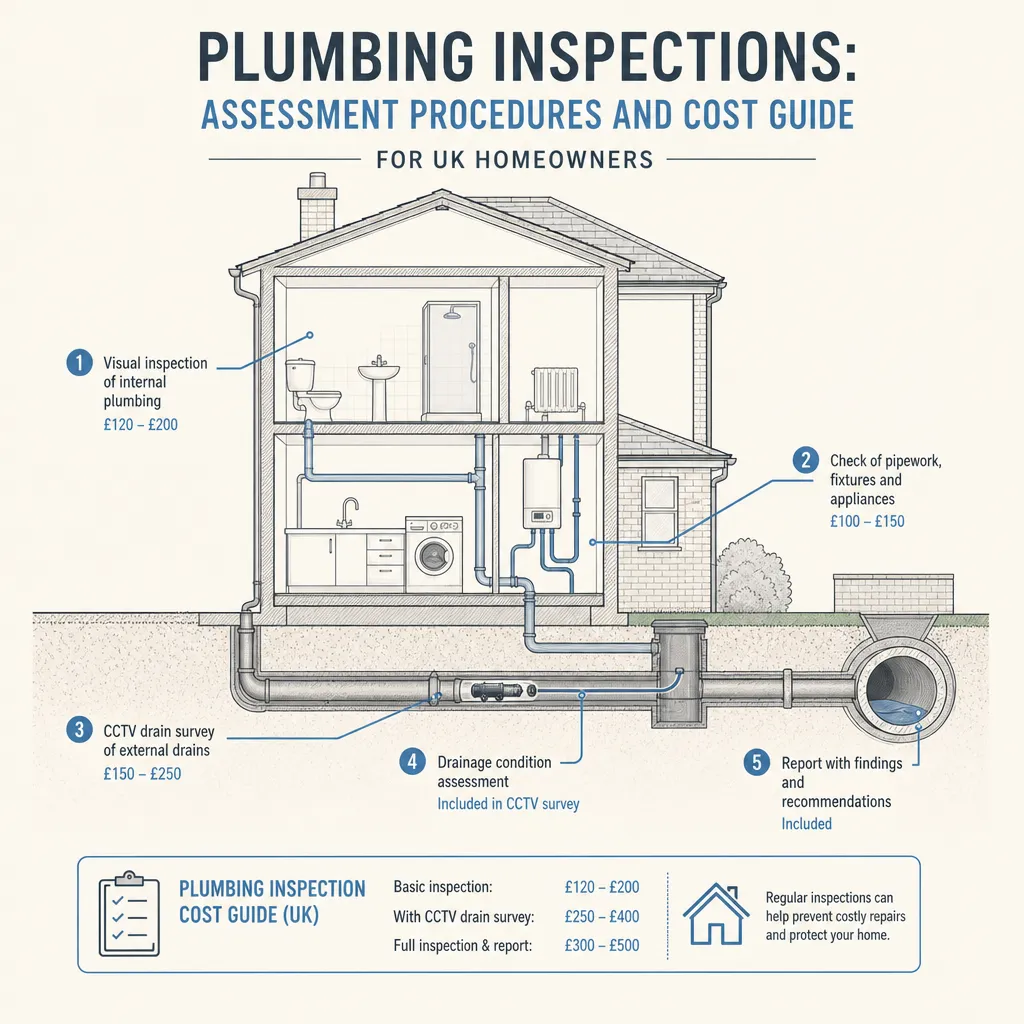 Surveys & Inspections
Plumbing Inspections: Assessment Procedures and Cost Guide
A professional plumbing inspection in the UK typically covers water pressure, pipe condition, boiler and hot water systems, and visible drainage.
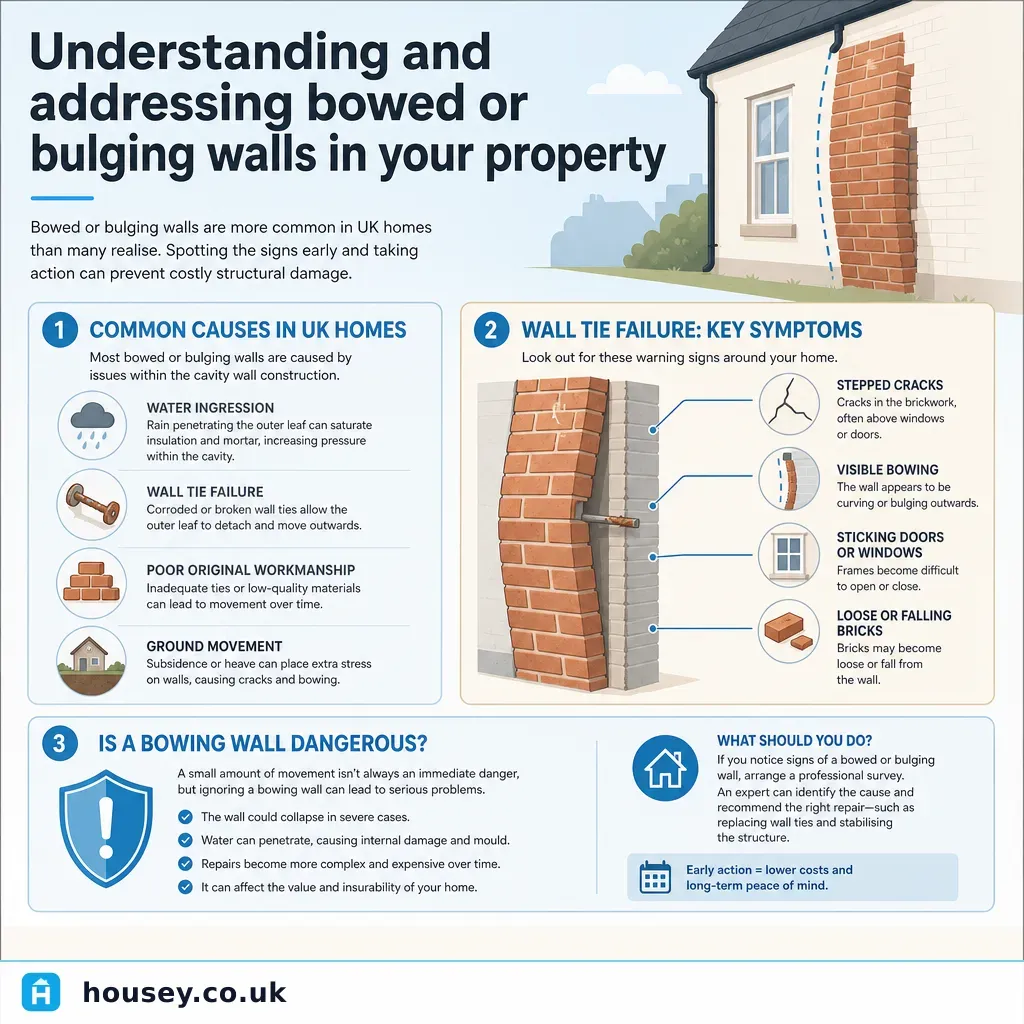 Surveys & Inspections
Understanding and addressing bowed or bulging walls in your property
A bowed or bulging wall may indicate wall tie failure, foundation movement, or overloading.
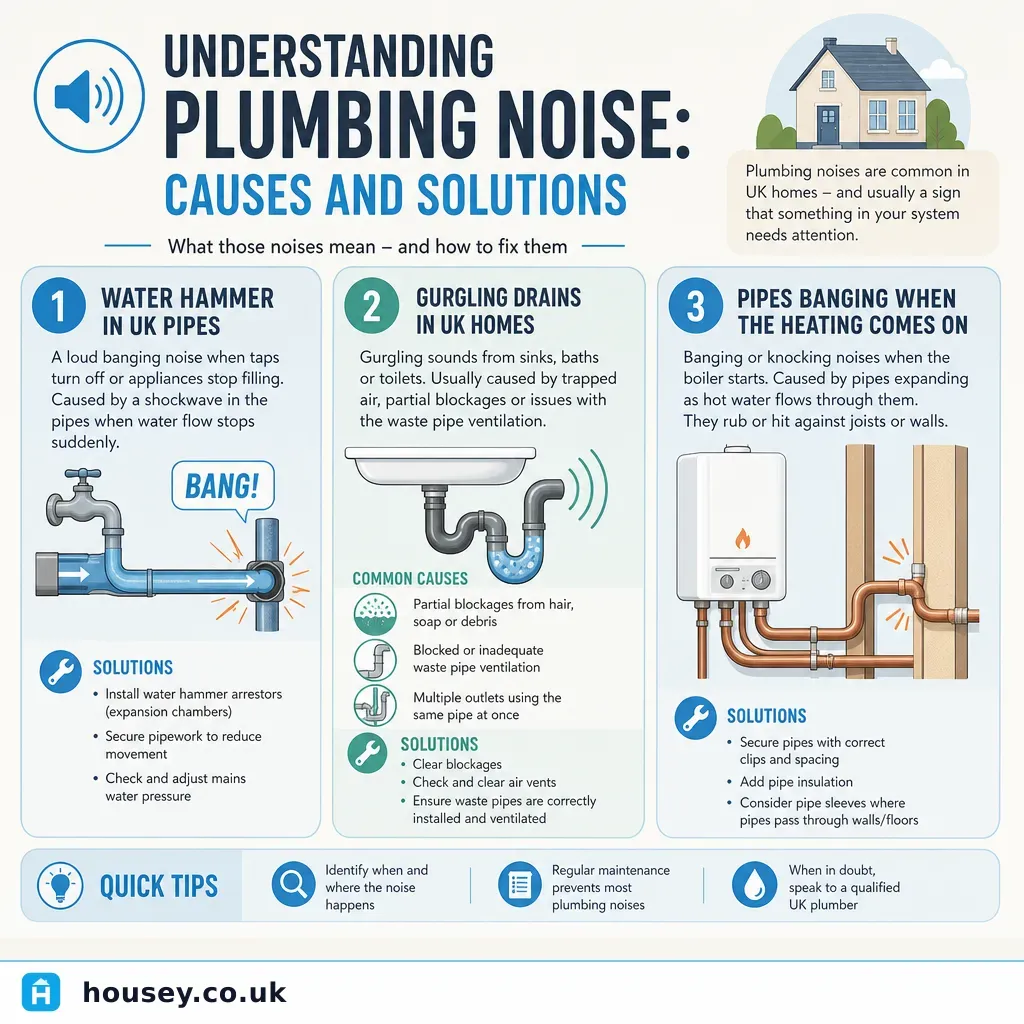 Surveys & Inspections
Understanding Plumbing Noise: Causes and Solutions
Most plumbing noises have a specific cause: banging usually means water hammer from high pressure or unsupported pipes; gurgling from drains points to a blockage or dry trap; ticking during heating is typically thermal expansion.
 Surveys & Inspections
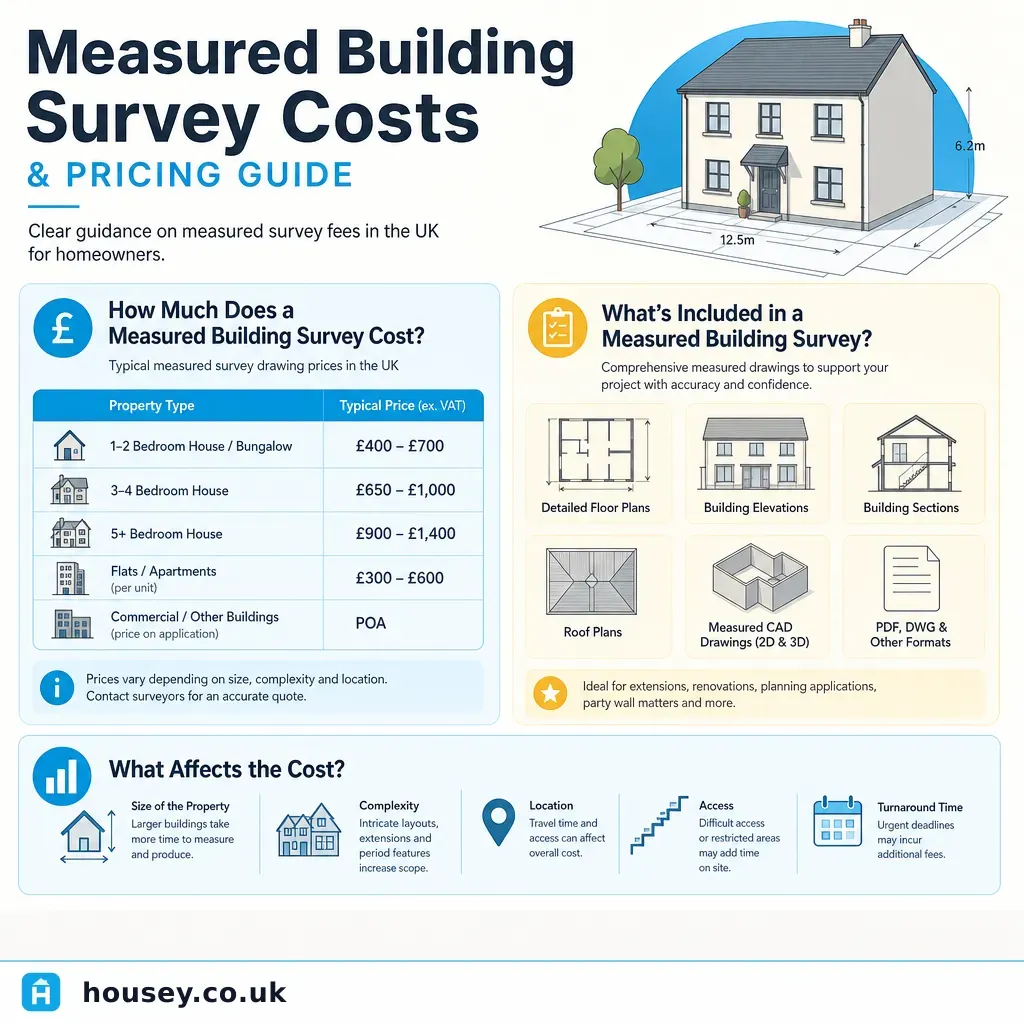
Measured Building Survey Costs and Pricing Guide
A measured building survey in the UK typically costs between £500 and £5,000 for residential properties, depending on floor area, number of levels, drawing scope, and survey method.
 Surveys & Inspections
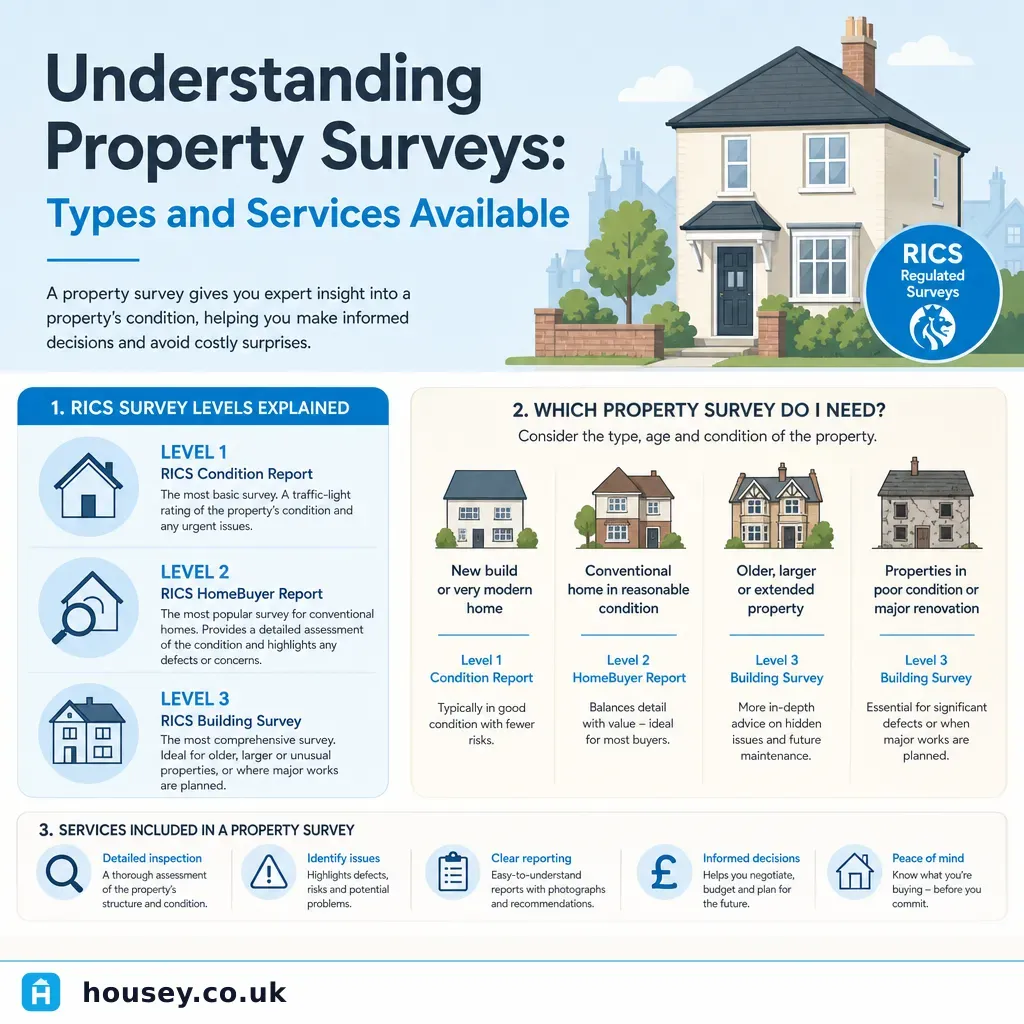
Understanding Property Surveys: Types and Services Available
UK property surveys follow three RICS-defined levels: Level 1 (Condition Report), Level 2 (Home Survey), and Level 3 (Building Survey).