Plumbing Stack Replacement: Scope of Work and Budget Planning
By Housey · Last reviewed 26th of May 2026
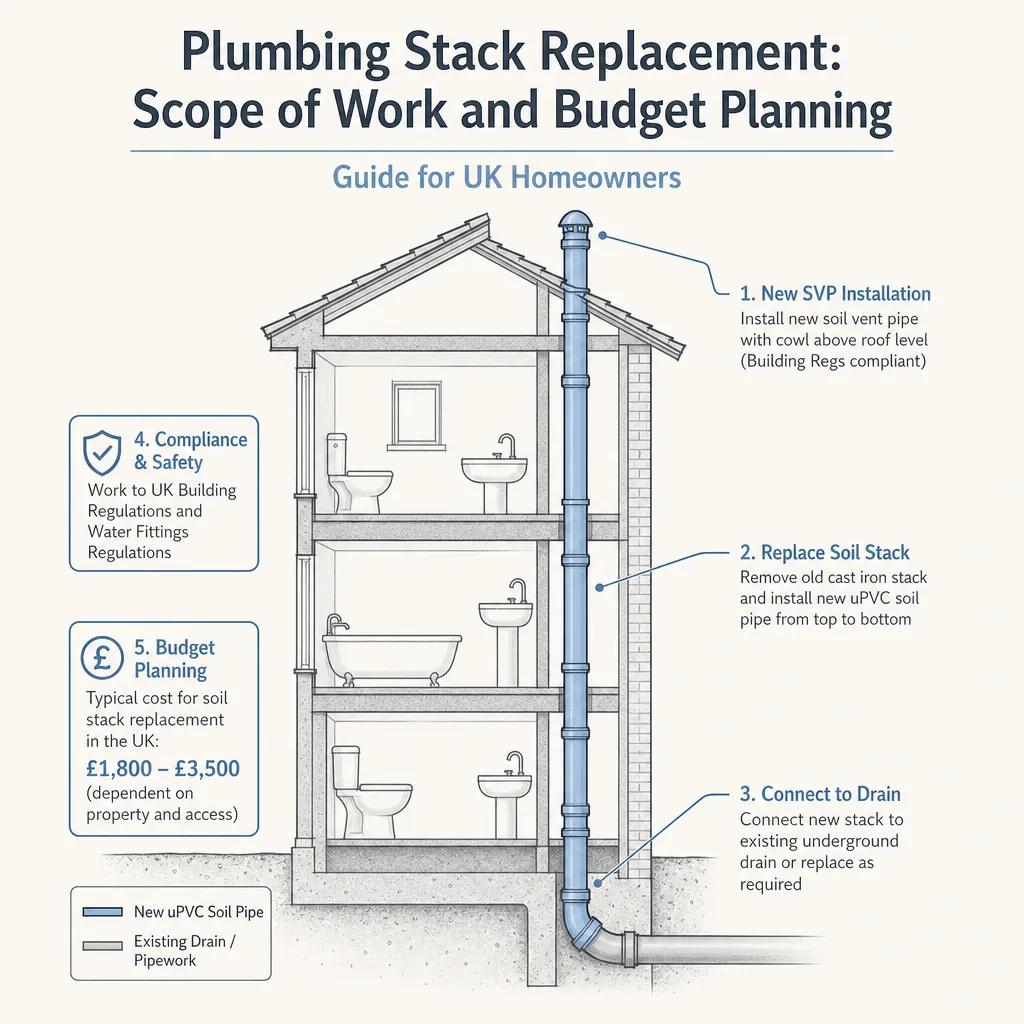
Plumbing Stack Replacement: Scope of Work and Budget Planning
For many UK homeowners, the plumbing stack — the vertical pipe that carries soil and wastewater from upper floors to the underground drain — only becomes a priority when something goes wrong. Properties built before 1970 commonly have cast iron stacks approaching or beyond their serviceable life, and in Victorian terraces, Edwardian semis, and 1960s purpose-built flats, cracked joints, persistent odours, or wet patches near the pipework run can signal that replacement is overdue. Understanding the scope of the work, the regulations it triggers, and realistic budget parameters helps you plan effectively and choose the right contractor.
Key points
- Building Regulations Approved Document H (Drainage and Waste Disposal) governs above-ground drainage; replacement work must comply with its provisions and may require a building control notification from your local authority.
- Cast iron soil stacks in pre-1970 properties are typically 100mm internal diameter; modern UPVC replacement stacks are nominally 110mm and use push-fit or rubber ring jointing throughout.
- A like-for-like stack replacement in a standard two-storey UK home typically takes 2–5 working days, including reinstating access panels, duct linings, and any making-good works.
- Asbestos cement was occasionally used for drainage components and duct linings in properties built between approximately 1940 and 1980; if suspected, arrange a survey with a UKAS-accredited contractor before any work begins — do not disturb the material.
- Indicative total costs range from £1,500 to £6,000 for a residential stack replacement in England and Wales, with London and South-East rates typically 15–25% above the national average (last reviewed 2026-05-26).
What is a plumbing stack and when does it need replacing?
A plumbing stack is the main vertical pipe that collects waste from toilets, baths, showers, and sinks on upper floors and routes it to the below-ground drainage system. The soil and vent pipe (SVP) is the primary stack in UK residential construction: it rises from ground level to eaves height or above, where it terminates in an open vent to prevent siphoning of trap seals and maintain atmospheric pressure in the drainage system.
In older properties, a separate waste stack may serve basins and baths independently of the main soil stack — a configuration common in pre-1960s homes before single-stack drainage became standard practice.
Red flags: signs a stack may need replacing
- Persistent foul smells inside the building despite cleared traps and cleaned gullies
- Visible cracks, splits, or open joints on accessible cast iron sections
- Recurring wet patches or staining on walls adjacent to the stack run
- Repeated blockages at the same section of pipework despite rodding
- Audible gurgling from multiple fittings simultaneously, indicating pressure imbalance
- Evidence of failed mortar-and-oakum joints or weeping lead joints typical of Victorian-era installations
Not every symptom requires full replacement. A CCTV drain survey and professional inspection should determine the actual extent of deterioration before a scope of work is agreed.
What does the work involve?
Survey and planning
Before specifying replacement, the stack's full route, connections, and condition should be confirmed. In mid-terrace properties, check whether the stack is shared — a party-wall or party-stack arrangement introduces additional obligations under the Party Wall etc. Act 1996. A CCTV drain survey of the underground section is advisable if blockages or root ingress are suspected alongside the above-ground failure.
Access and isolation
Internal stacks are typically accessed via bathroom duct panels, cloakroom boxing, or plasterboard-lined chases. These must be carefully removed and will need reinstatement as part of the project cost. External stacks above two storeys require scaffolding or a mobile access platform, which should be costed separately.
Removal and replacement
Cast iron soil stacks are heavy. Old lead-and-oakum joints are cut or broken, and sections are removed in manageable lengths. All drainage connections to WCs, baths, and basins must be capped before removal begins. In occupied properties, temporary drainage provisions are essential.
Replacement is usually in UPVC (110mm nominal bore for soil, 40–50mm for wastes) or, for period conversions or conservation areas, cast iron-effect UPVC or genuine cast iron from a specialist supplier. All connections are remade to current standards, and a new air admittance valve (AAV) or open vent terminal is installed at the head of the stack in accordance with Approved Document H.
Building regulations
Above-ground drainage replacement is notifiable under Building Regulations (England and Wales) under Part H. For like-for-like replacement in the same position, many local building control bodies process this as a building notice rather than a full plans application, but arrangements vary by authority. A completion certificate should be issued on satisfactory completion. In Scotland, different procedures apply under the Building (Scotland) Act 2003; check with your local verifier.
Materials: cast iron vs UPVC
Feature | Cast iron | UPVC |
|---|---|---|
Estimated lifespan | 50–100+ years with maintenance | 30–50 years (estimated) |
Acoustic performance | Better sound attenuation | Noisier; acoustic-grade pipe is available |
Appearance | Traditional; suits period properties | Utilitarian; suited to concealed or modern work |
Weight | Heavy; may need additional wall fixings | Lightweight; easier to handle and install |
Material cost | Higher | Lower |
Availability | Specialist plumbers' merchants | Widely available from builders' merchants |
Conservation areas and listed buildings | Often required or preferred | Check with local planning authority first |
For listed buildings or properties in conservation areas, cast iron or high-quality cast iron-effect UPVC may be required or preferred by the local planning authority. Always check before specifying materials to avoid a later enforcement issue.
How much does plumbing stack replacement cost?
Indicative UK costs, last reviewed 2026-05-26. Actual quotes will vary by region, access conditions, and specification.
Scenario | Indicative cost range |
|---|---|
Two-storey terrace, internal stack, good access | £1,500–£3,000 |
Three-storey terrace or semi, internal stack | £2,500–£4,500 |
External stack requiring scaffolding | Add £500–£1,500 for access platform |
CCTV drain survey (pre-works) | £150–£350 |
Reinstatement of duct panels and redecoration | Variable; obtain a separate quote |
Factors that affect the final cost:
- Number of storeys and total stack height
- Whether access is via internal ducts or external scaffolding
- Extent of associated making-good (duct panels, tiling, decoration)
- Material specification (cast iron commands a significant premium over UPVC)
- Whether underground connections also require attention
- Regional labour rates (London and South-East typically higher)
Choosing the right contractor
Look for a plumber or drainage contractor registered with a recognised trade body such as the Chartered Institute of Plumbing and Heating Engineering (CIPHE) or the Association of Plumbing and Heating Contractors (APHC). Both maintain searchable contractor registers on their websites. Confirm the contractor holds adequate public liability insurance and will manage the building control notification on your behalf.
What to ask before accepting a quote
- What exactly is included — will duct reinstatement and making-good be within the quoted price?
- Will building control notification be obtained, and will a completion certificate be provided?
- What temporary drainage provisions will be in place during the works?
- What is the project timeline, and how will occupied rooms be managed each day?
- Are there conditions — asbestos, a shared stack, underground connections — that could affect the scope or price once work begins?
- Is VAT included in the figure quoted?
- What happens if additional deterioration is found once the wall is opened?
When to get professional help
Stack replacement is not a DIY task. Always use a qualified plumber or drainage contractor. Seek professional input promptly if:
- You can smell persistent foul odours that cannot be traced to a specific fitting or drain
- You see evidence of sewage or drainage water leaking within the building fabric
- You suspect asbestos in the existing pipework or duct lining — do not disturb suspected materials; arrange a survey with a UKAS-accredited asbestos contractor before any other work proceeds
- The stack serves multiple flats in a converted building, where shared drainage rights and building control obligations may be more involved
- The stack appears to run through or adjacent to a structural element such as a beam or loadbearing wall
How Housey can help
Housey connects UK homeowners with vetted drainage contractors who can inspect your existing stack, prepare a clear scope of works, and manage building control notification from start to finish. Submit a quote request to compare up to four local specialists.
Frequently asked questions
Does replacing a plumbing stack require planning permission?
Usually not. Stack replacement is classed as maintenance and repair rather than development. However, if the property is listed or in a conservation area and you are altering the external appearance, listed building consent or planning permission may be required. Check with your local planning authority before committing to a material or routing change.
How long will the property be without usable drainage?
In most residential replacements, contractors work in sections to keep key facilities — toilet and kitchen sink — operational throughout. Expect 2–5 working days for a standard two- or three-storey terrace. Your contractor should confirm temporary drainage provisions before work starts.
Can I replace just part of the plumbing stack?
Yes. If only one section has failed, a partial replacement using push-fit couplings may be appropriate and more cost-effective than full replacement. A physical inspection — and possibly a CCTV survey of the underground section — should confirm whether partial or full replacement is the better long-term approach.
What if the plumbing stack is shared with a neighbouring property?
In terraced or semi-detached properties, stacks occasionally run on or through a party wall. Discuss the works with your neighbour, confirm whether the Party Wall etc. Act 1996 applies, and establish building control obligations before work starts. A party wall surveyor may need to be involved if the stack penetrates or bears on the party wall structure.
Sources and further reading
- Approved Document H: Drainage and Waste Disposal — GOV.UK / DLUHC
- Building Regulations: when you need approval — GOV.UK
- Chartered Institute of Plumbing and Heating Engineering — CIPHE
- Association of Plumbing and Heating Contractors — APHC
- Asbestos: information for building owners and managers — Health and Safety Executive
Useful next reads
 Improvement & Build
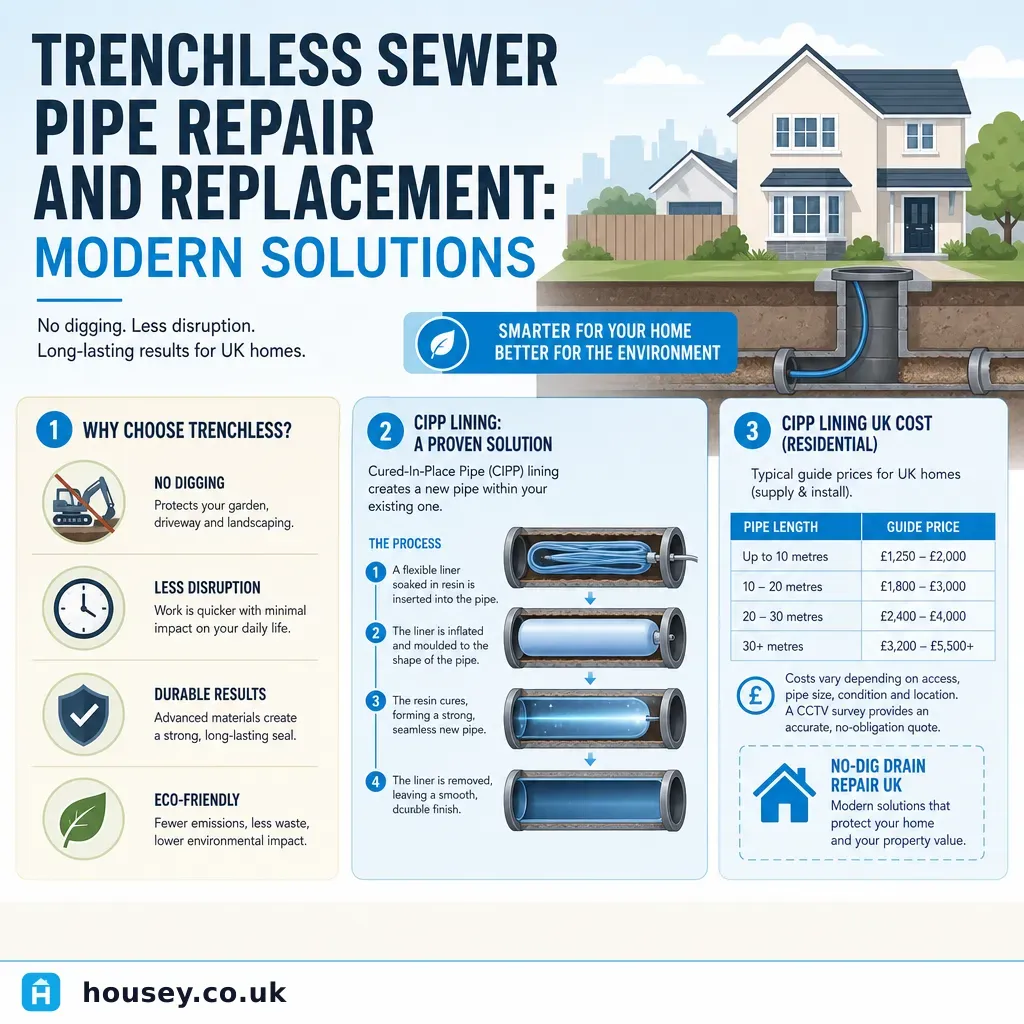
Trenchless Sewer Pipe Repair and Replacement: Modern Solutions
Trenchless sewer pipe repair uses methods such as CIPP (cured-in-place pipe) lining and pipe bursting to rehabilitate or replace underground drain pipes with minimal excavation.
 Improvement & Build
French Door Installation: Costs and Considerations
External French door installation typically costs £1,500–£4,000 in the UK, including supply and fitting, depending on material, glazing specification, and whether structural alterations are needed.
 Improvement & Build
Smart Home Automation Systems and Central Control Solutions
Smart home automation connects lighting, heating, security, audio, and window coverings through a single controller.
 Improvement & Build
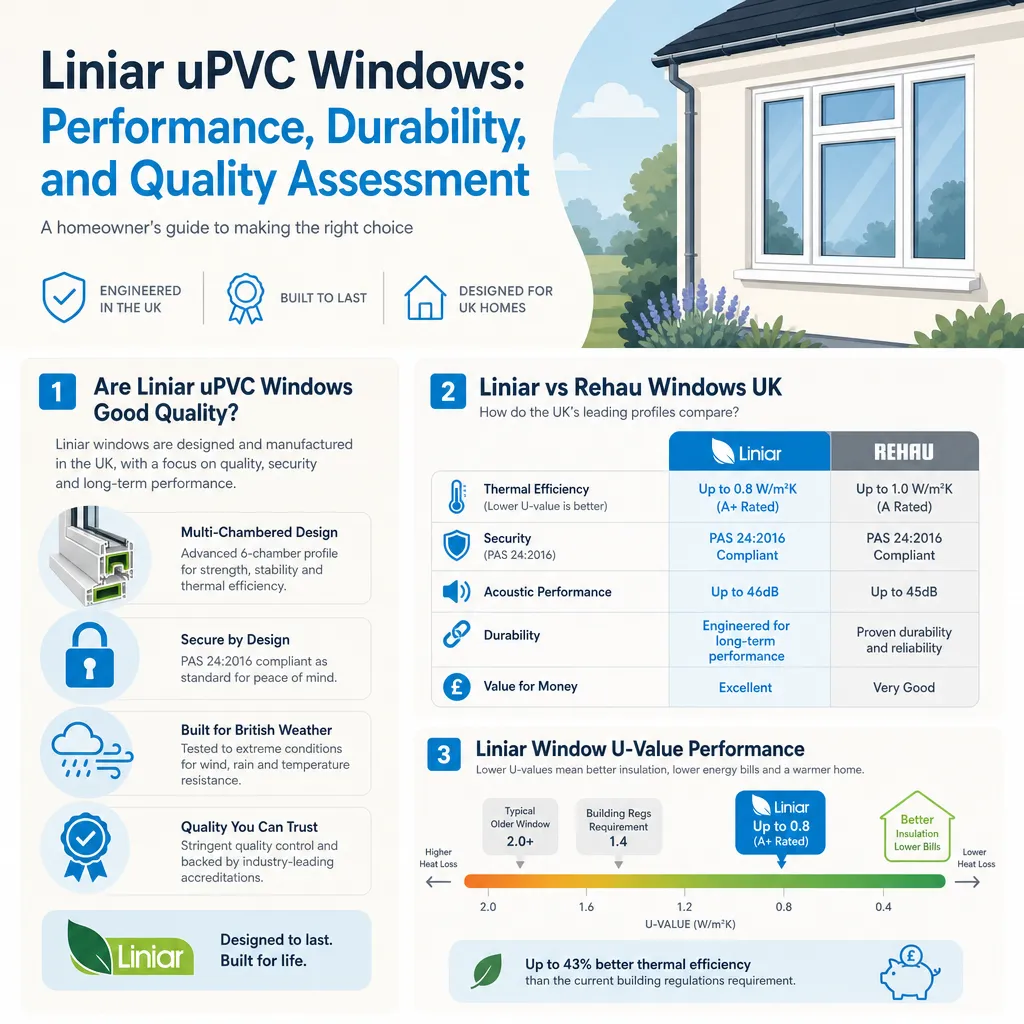
Liniar uPVC Windows: Performance, Durability, and Quality Assessment
Liniar uPVC window profiles are manufactured in the UK using multi-chambered, foamed frames.
 Improvement & Build
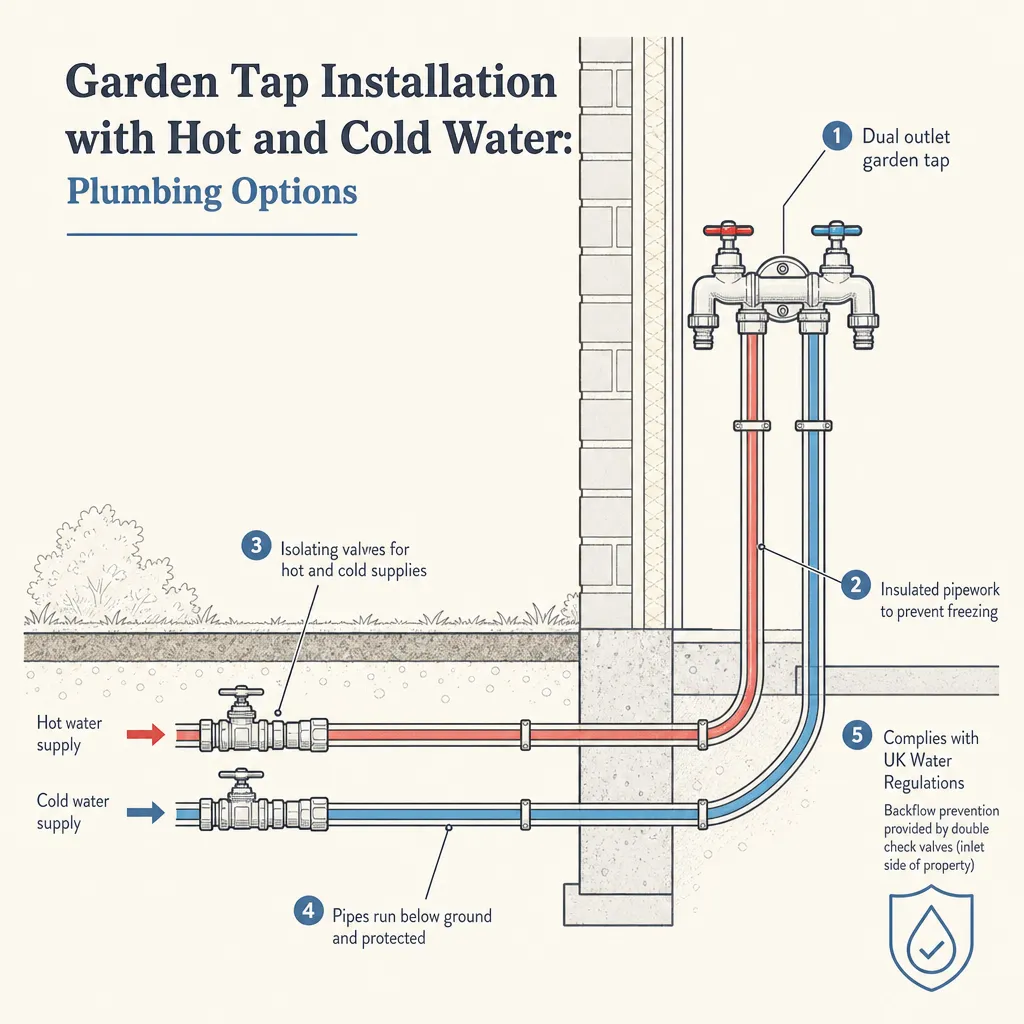
Garden Tap Installation with Hot and Cold Water: Plumbing Options
Adding a cold garden tap is a common DIY project, but routing hot water outdoors requires a plumber to connect to your domestic hot water system and comply with the Water Supply (Water Fittings) Regulations 1999.