Plywood Flooring: Material Options and Installation Considerations
By Housey · Last reviewed 26th of May 2026
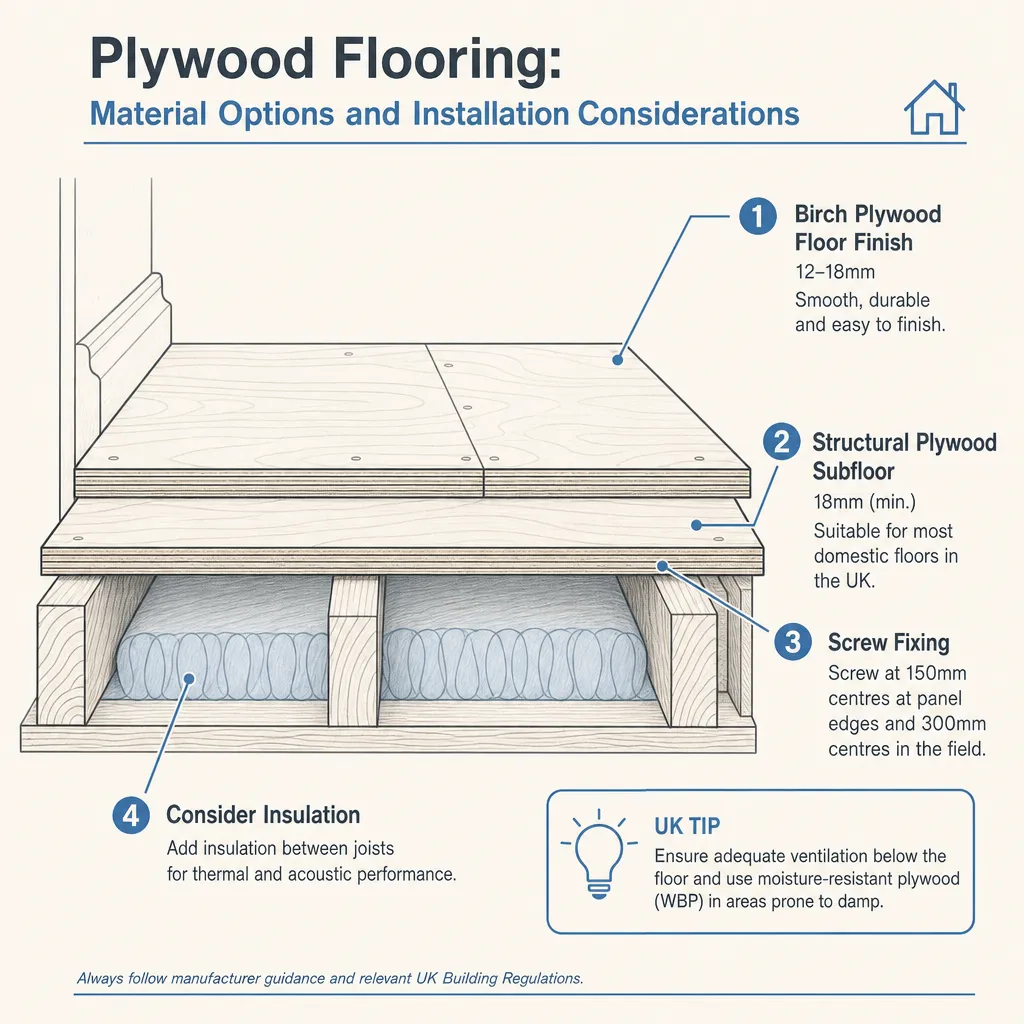
Plywood Flooring: Material Options and Installation Considerations
Plywood flooring arises at two distinct points in a UK home improvement project: when a subfloor needs replacing or upgrading before a finish layer is laid, and when plywood itself is chosen as the visible floor surface. Both applications are increasingly common — in loft conversions, self-builds, and Scandi-influenced residential refurbishments — but each requires a different grade, thickness, fixing method, and preparation regime. Getting the specification right at the outset avoids costly corrections once the floor is installed and the room is in use.
Key points
- BS EN 636 grades plywood by moisture resistance: Class 1 (dry interior), Class 2 (humid), and Class 3 (exterior or persistently wet) — structural subfloors typically require a CE-marked Class 2 or Class 3 panel.
- For a timber-joisted floor in England and Wales, Building Regulations Approved Document A requires panels to be adequately supported and fixed; 18mm or 22mm tongued-and-grooved (T&G) structural plywood is the standard residential specification.
- Plywood used in habitable rooms must meet formaldehyde emission limits under BS EN 13986; specify E1 class or lower to comply with indoor air quality requirements.
- Birch-faced plywood (typically BB/CP face grade or better, often Baltic or Finnish origin) is the most common choice for sanded and oiled decorative floor finishes in UK residential projects.
- VAT on flooring materials is 20% for most residential applications; the reduced 5% rate may apply when flooring is supplied and installed as part of a qualifying renovation of a property that has been empty for at least two years — check current HMRC guidance before budgeting.
What types of plywood are used in UK flooring?
Plywood for flooring divides into two broad categories: structural panels used beneath a finish floor, and decorative panels used as the visible surface. The right choice depends on where in the floor build-up the panel sits, the structural loads it must carry, and the aesthetic requirement.
Structural subfloor plywood
Structural subfloor plywood is selected for its load-bearing, span, and moisture-resistance properties. The standard UK residential specification for a timber joist floor is 18mm or 22mm tongued-and-grooved sheets, typically 2440 × 1220mm, fixed to joists at 200–300mm centres using screws — not nails alone, which can work loose and cause squeaking. Stagger the sheet joints so they do not align in a continuous line across the floor width.
Common structural grades used in UK residential work:
- CE-marked structural panels to BS EN 636 Class 2: appropriate for most indoor residential applications where temporary construction moisture is likely
- CE-marked to BS EN 636 Class 3: for areas with persistent moisture risk, such as a ground floor over an unventilated void or a wet-room application
- OSB 3: a common and lower-cost alternative, but technically not plywood; more prone to edge swelling when exposed to moisture and less suited to direct-finish applications
Decorative finished-surface plywood
Where plywood is the intended floor finish, face veneer quality and surface consistency are the primary selection criteria. Baltic and Finnish birch plywood are the most popular choices in UK residential projects because of their consistent pale grain, tight face veneer, minimal voids, and ability to take oil or hardwax-oil finishes cleanly without blotching.
Typical decorative face grades:
- BB/CP or B/BB: tight, smooth face with minimal knots or repairs; appropriate for high-quality finished floors
- CP/C: minor blemishes and filled knots permitted; suits industrial or utility aesthetics
- Hardwood-veneered plywood: oak, walnut, or ash face veneer on a birch or poplar core; available from specialist flooring and joinery suppliers at a significant premium
Subfloor vs finished floor: which approach suits your project?
Application | Recommended type | Typical thickness | Key selection criterion | Indicative lifespan |
|---|---|---|---|---|
Subfloor under ceramic or porcelain tile | BS EN 636 Cl.2 T&G | 18–22mm | Bond strength, flatness, moisture resistance | 30–50 years |
Subfloor under LVT or carpet | BS EN 636 Cl.1 T&G | 18mm | Surface smoothness, screw-holding | 25–40 years |
Finished floor, sanded and oiled | Birch BB/CP | 18–24mm | Face grade, void-free core, E1 formaldehyde | 15–30 years (refinishable) |
Finished floor, hardwood veneer | Oak or walnut veneered plywood | 15–22mm | Veneer grade A or B, species stability | 20–40 years |
Floating overlay on existing floorboards | Birch or poplar ply | 9–12mm | Flatness, formaldehyde class | Depends on substrate condition |
Decision guide
- Choose structural subfloor plywood if you are laying tiles, LVT, carpet, or engineered boards on top. Prioritise BS EN 636 class, thickness, and correct fixing method; face appearance is not critical.
- Choose decorative birch plywood if you want plywood as the finished visible surface. Prioritise face grade, formaldehyde class (E1 or better), and your intended finish product.
- Ask a builder or flooring specialist if the existing floor structure is unknown, or you are working over a concrete slab — different fixings and a damp-proof membrane (DPM) will likely be required.
- Check with building control if replacing or substantially altering a floor that affects thermal performance between heated and unheated spaces (Approved Document L) or sound insulation between storeys or separate dwellings (Approved Document E).
Installation considerations
Acclimatisation
Store plywood sheets flat in the installation room for at least 24–48 hours before fixing. This allows the boards to adjust to the ambient temperature and humidity, reducing the risk of post-installation expansion, panel cupping, and joint movement.
Fixing methods
- Screwing: the preferred method for structural subfloors; use countersunk screws at 200–300mm centres along joist lines, with additional fixings at T&G edges
- Gluing and screwing: used for finished-floor plywood applied to concrete screeds or existing timber substrates, using a suitable flexible floor adhesive
- Floating: 9–12mm overlay sheets can be floated over existing floorboards with staggered and butted joints, without fixing, if a fully floating finish floor will follow on top
Finishing a decorative plywood floor
A sanded birch plywood finished floor is typically prepared in the following sequence:
- Sand: start with a 60-grit belt or drum sander, finish with 100–120-grit; sand diagonally across the boards first, then with the grain on the final pass to remove cross-grain scratches
- Fill: work a flexible floor filler or clear resin into any visible gaps, knot holes, or surface voids before the final sanding pass
- Finish: hardwax oil (such as Osmo Polyx-Oil or Rubio Monocoat) is the most widely used product for birch plywood floors — it penetrates the timber, is repairable in sections without full re-sanding, and produces a natural, low-sheen appearance; water-based lacquer creates a harder surface film but requires full sanding to repair
Building regulations
Replacing a floor as a standalone residential project is not normally notifiable to building control in England and Wales. Notification is required if the floor work forms part of a wider notifiable project (such as a loft conversion, extension, or change of use), or if the alterations affect thermal or sound insulation performance between storeys or between separate dwelling units under Approved Documents L or E.
Cost guide
Indicative UK material costs, last reviewed 2026-05-26. Installation costs vary by region, substrate condition, and specification.
Product | Typical material cost per m² |
|---|---|
Structural T&G plywood 18mm CE-marked | £12–£20 |
Birch BB/CP finished-floor plywood 18mm | £20–£35 |
Hardwood-veneered plywood 18mm (oak or walnut) | £35–£80+ |
Hardwax oil finish (Osmo or Rubio) | £3–£6 per m² |
Professional installation — finished floor, supply and fix | £30–£60 per m² total |
What to ask a flooring contractor before accepting a quote
- Is material supply included, or is this a labour-only price?
- What subfloor preparation is included — levelling, screw-down of existing boards, repair of damaged joists?
- Will the finished floor be sanded on site, and how many grit passes are included?
- What finishing product will be applied, and what is the recommended maintenance schedule?
- Is VAT included in the quoted figure?
- What is the expected timeline, and when can the floor be walked on lightly after the finish coat?
When to get professional help
Plywood floor installation is within the range of competent DIY for flat, accessible floors in standard residential conditions. Engage a professional if:
- The existing floor structure is unknown or suspect — joist spans, load capacity, rot, or evidence of insect infestation
- There is damp, condensation, or no damp-proof membrane beneath a ground-floor suspended timber deck
- The floor forms part of a building-regulations-notifiable project such as a loft conversion, extension, or change of use
- You require a certified acoustic performance standard between floors in a flat conversion or licensed HMO
How Housey can help
Housey connects you with experienced extension builders and design-and-build firms who can specify and install the right floor system as part of your wider project — from structural subfloor to finished surface — avoiding costly rework further down the line.
Frequently asked questions
Can plywood be used as a floor finish in a rental property?
Yes. There is no regulatory bar on using sanded and sealed plywood as a floor finish in a rental property. Ensure the surface is well-finished to prevent splintering, and consider a durable hardwax oil or lacquer to minimise maintenance requirements. It does not affect EPC ratings or HMO licensing requirements in isolation.
How long does a sanded plywood floor last?
A well-installed birch plywood floor finished with hardwax oil can last 20–30 years before requiring significant remedial work. The finish can be lightly sanded and refreshed in sections as routine maintenance, without needing to replace the boards themselves.
Is plywood flooring suitable over underfloor heating?
Plywood can be used over underfloor heating, but must be rated for the application. Birch or hardwood-veneered plywood at 15mm or less is generally recommended to allow adequate heat transfer. The floor surface temperature should not exceed 27°C. Always check the plywood manufacturer's guidance alongside your underfloor heating installer's specifications before proceeding.
Does a plywood floor add value to a UK property?
A high-quality birch plywood floor can be a genuine design asset in contemporary or industrial-influenced interiors, and is valued by certain buyer demographics — particularly in urban rental markets. It is unlikely to command the same sale premium as solid hardwood or engineered oak in mainstream residential sales, but in design-conscious contexts it can be a positive feature.
Sources and further reading
- Approved Document A: Structure — GOV.UK / DLUHC
- Approved Document E: Resistance to the Passage of Sound — GOV.UK / DLUHC
- BS EN 636: Plywood — Specifications — BSI British Standards
- TRADA: Wood Information Sheets — Timber Research and Development Association
- VAT on construction and building services — HMRC / GOV.UK
Useful next reads
 Improvement & Build
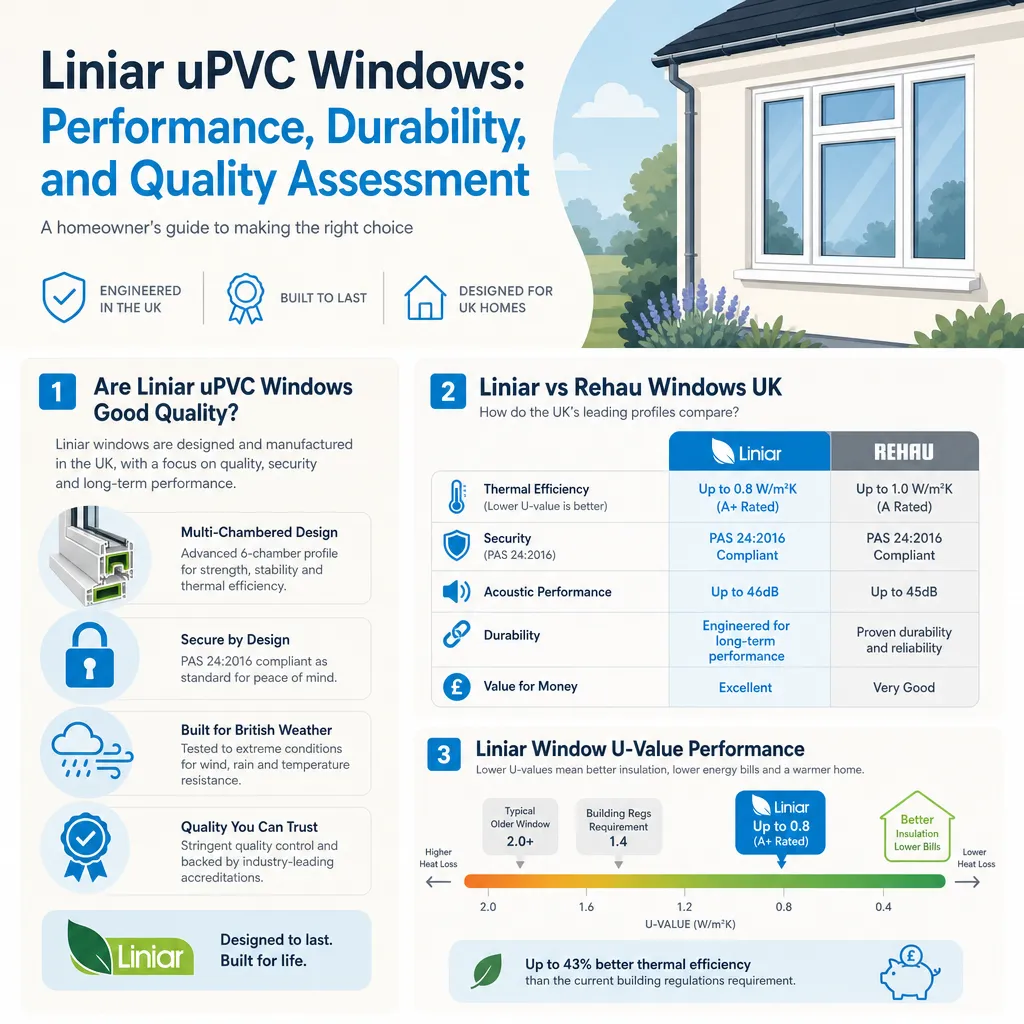
Liniar uPVC Windows: Performance, Durability, and Quality Assessment
Liniar uPVC window profiles are manufactured in the UK using multi-chambered, foamed frames.
 Improvement & Build
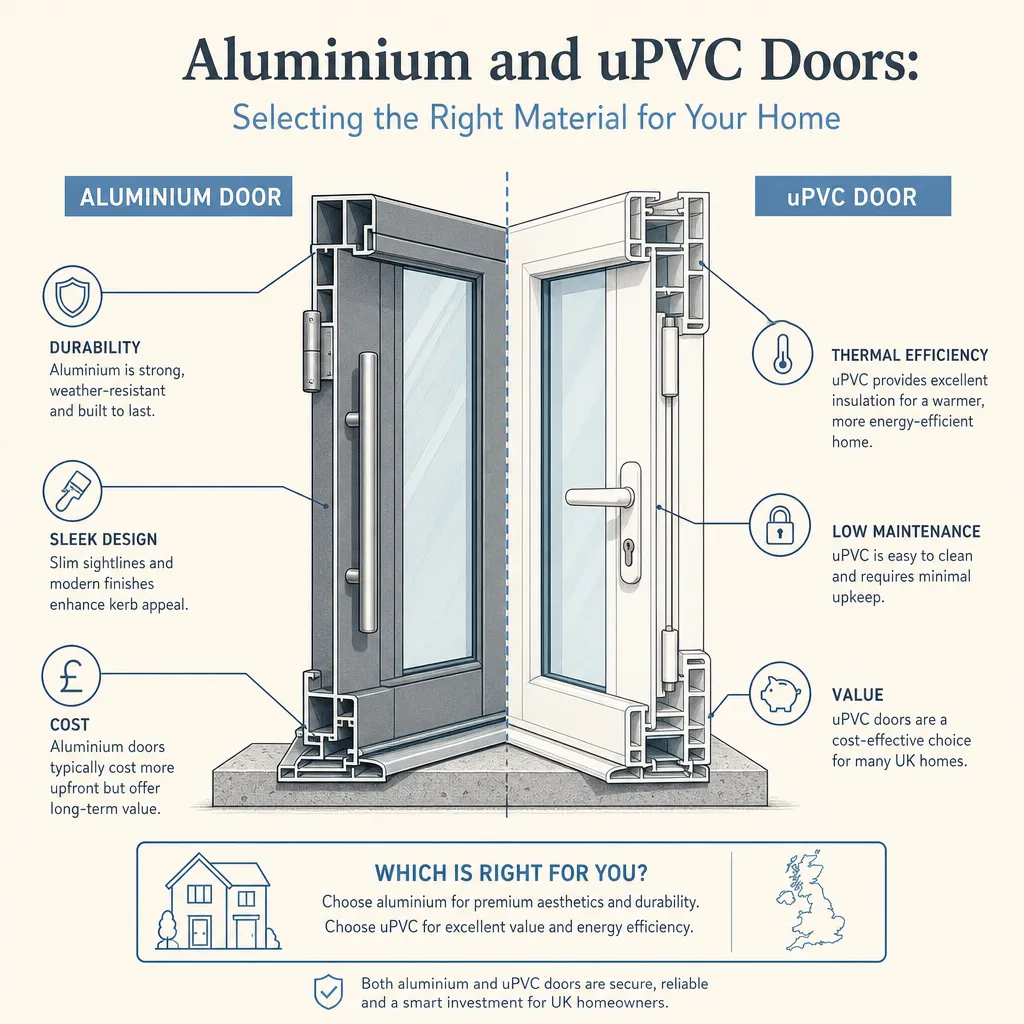
Aluminium and uPVC Doors: Selecting the Right Material for Your Home
uPVC doors are lower-cost and low-maintenance, making them a practical choice for most UK homes.
 Improvement & Build
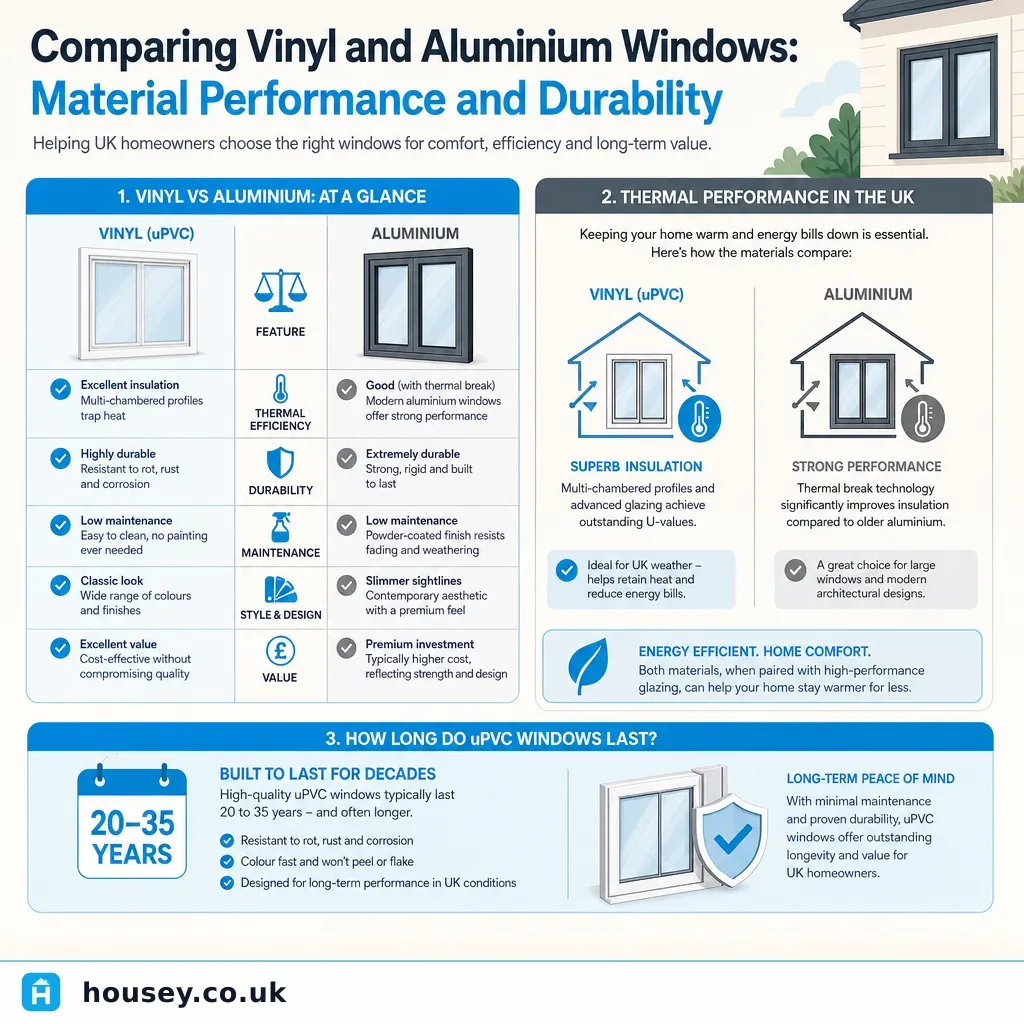
Comparing Vinyl and Aluminium Windows: Material Performance and Durability
uPVC (vinyl) and aluminium windows both meet UK Building Regulations Part L when properly specified.
 Improvement & Build
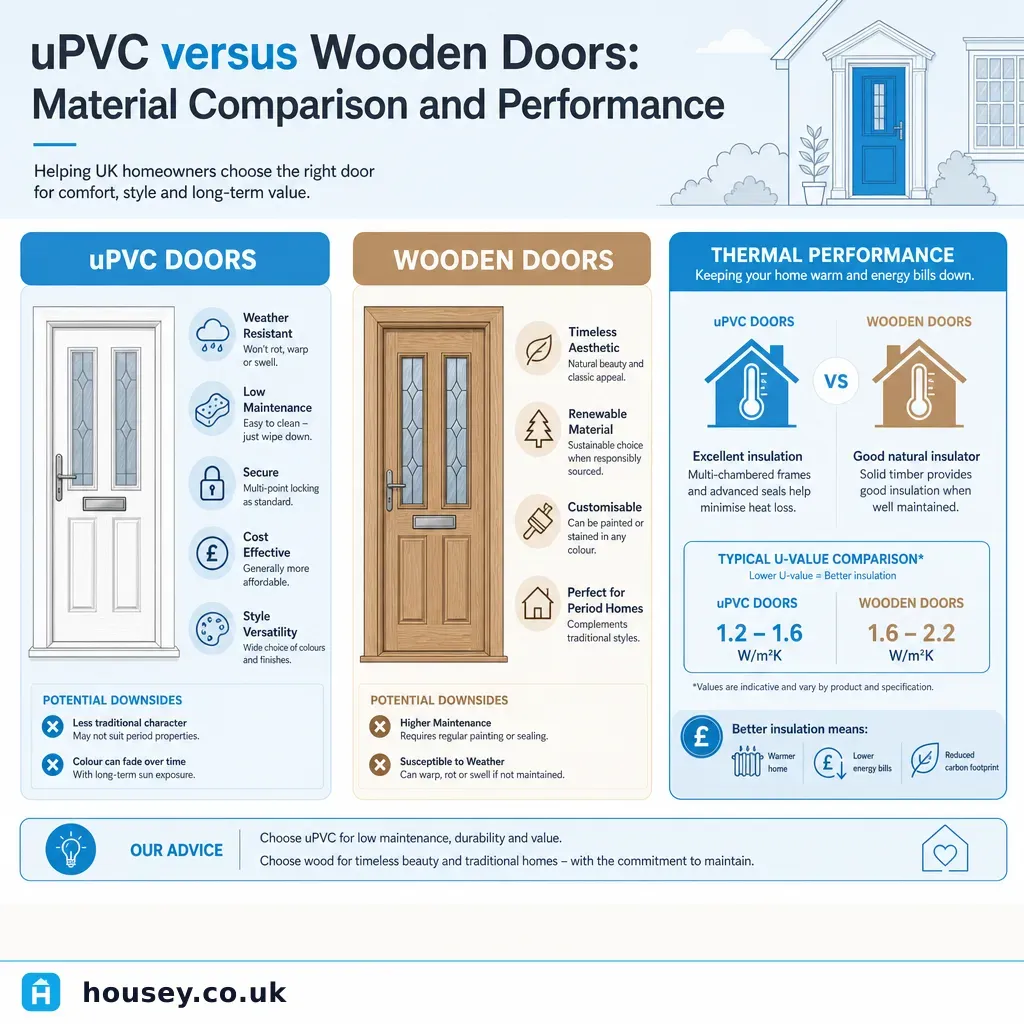
uPVC versus Wooden Doors: Material Comparison and Performance
uPVC doors are generally lower maintenance, better draught-sealed from the factory, and cheaper to install than timber doors.
 Improvement & Build
Understanding Wood Trim and Moulding Options for Interior Design
Interior wood trim in UK properties includes skirting boards, architrave, coving, dado rails, and picture rails.