Understanding Wood Trim and Moulding Options for Interior Design
By Housey · Last reviewed 25th of May 2026
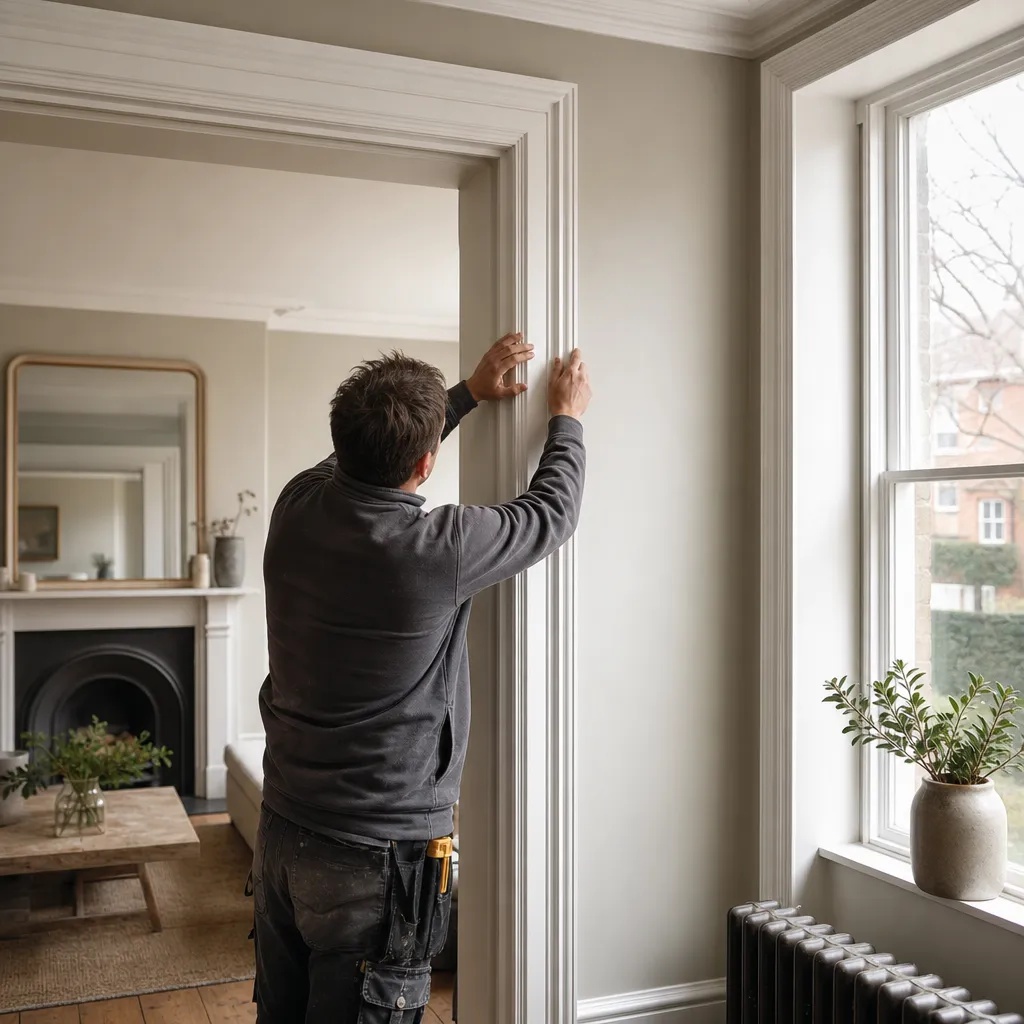
Understanding Wood Trim and Moulding Options for Interior Design
Wood trim and moulding is one of the finishing decisions that quietly defines whether a UK interior feels considered or incomplete. The choice of skirting board profile, architrave style, dado rail height, and coving design can reinforce a property's period character, bring coherence to a contemporary fit-out, or create an awkward mismatch with the building's age and architecture. These decisions arise most often during renovations, extensions, and conversions — when existing trim has been removed or new rooms are being finished from scratch — and the range of profiles, materials, and fixing methods available can be genuinely confusing without a clear framework.
Key points
- The main interior wood trim categories in UK residential work are: skirting board (base of wall), architrave (door and window surround), coving or cornice (ceiling-wall junction), dado rail (horizontal wall rail at approximately 900 mm from floor level), picture rail (horizontal rail 300–600 mm below ceiling), and panel moulding (decorative applied frames on wall surfaces).
- Pre-primed MDF mouldings are the most widely used material in UK new-build and renovation today — they are dimensionally stable, take paint well, and cost significantly less than equivalent solid timber profiles.
- Skirting board height should be proportionate to ceiling height: approximately 100 mm suits a 2.4 m new-build ceiling, while 150–220 mm is more appropriate for a Victorian or Edwardian room with a ceiling height of 2.7 m or above.
- Hardwood timber mouldings (oak, tulipwood, American walnut) typically cost 3–5 times more than equivalent softwood sections and are specified where a natural stained or oiled finish is required.
- In listed buildings, replacing original timber mouldings with MDF equivalents may constitute an unauthorised alteration requiring Listed Building Consent — check with your local planning authority before removing or replacing original trim in a listed property.
The main types of interior wood trim
Skirting boards
The board running along the base of the wall where it meets the floor. In UK residential properties, the most widely used profiles are:
- Torus — a large, rounded top bead with a simple flat body; the dominant profile in Victorian and Edwardian terraces and semis.
- Ogee — a flowing S-curve profile; associated with Georgian and Regency interiors, and still widely reproduced for period restoration work.
- Bullnose — a simple semicircular top edge; clean and contemporary, suitable for post-2000 interiors.
- Square edge / pencil round — a near-flat face with a very slight arris break; popular in Scandinavian-influenced and minimalist interiors.
- Chamfered and rounded — a shallow angled face combined with a rounded top edge; typical of 1930s to 1950s suburban homes.
Architrave
The moulding that surrounds a door or window opening, covering the gap between the lining or frame and the plaster. Common profiles mirror the skirting ranges — torus, ogee, bullnose, chamfered — and in most interiors the architrave and skirting should share the same profile family for consistency.
Standard architrave leg widths range from 69 mm to 95 mm. A bolder "Cheshire" or "Colonial" architrave of 120 mm or more suits a wide or tall door opening and is appropriate in rooms with high ceilings.
Coving and cornice
The junction between wall and ceiling. "Coving" in UK usage typically describes a simple concave quarter-circle profile — most commonly supplied in 100–127 mm face width in gypsum plaster, expanded polystyrene (EPS), or polyurethane. "Cornice" refers to a more elaborate multi-profile moulding with classical enrichment, associated with Georgian, Victorian, and Edwardian rooms.
Timber cornice profiles exist but are uncommon in modern UK residential work. Plaster run in situ or cast-and-fixed is the material of choice for authentic period restoration.
Dado rail and picture rail
- Dado rail: a horizontal moulding at approximately 900 mm from the floor (originally to protect the plaster from chair backs). Typically 69–75 mm wide with an ovolo, ogee, or thumbnail profile. In period interiors the dado rail marks the boundary between the lower dado zone (often papered or painted differently) and the field above.
- Picture rail: installed horizontally 300–600 mm below the ceiling cornice, providing picture hooks without wall fixings. Generally 50–70 mm wide with a rounded or hooked top profile. Common in Victorian, Edwardian, and inter-war properties.
Panel moulding
Applied rectangular frames fixed to wall surfaces to create the appearance of raised or recessed fielded panelling without the cost of full timber wainscoting. Used in hallways, dining rooms, and living rooms of Georgian-influenced and high-specification contemporary interiors. Usually assembled from dado moulding and flat back moulding sections mitred at the corners.
Comparing moulding materials
Material | Suitable finish | Advantages | Disadvantages | Best for |
|---|---|---|---|---|
Pre-primed MDF | Painted only | Dimensionally stable; takes paint well; cost-effective | Vulnerable to moisture at edges; heavier than softwood | New-build, renovation, budget-conscious period-match |
Softwood (redwood / whitewood) | Painted | Lightweight; easy to cut and pin; widely available | Can move or split if not well-dried; grain may show through paint | Period restoration in painted finish; standard renovation |
Hardwood (oak, tulipwood) | Stained, lacquered, or oiled natural finish | Beautiful grain; durable; appropriate for premium interiors | 3–5× more expensive than softwood; requires sealing before painting | Premium joinery; visible natural wood finish; bespoke work |
Polyurethane / EPS coving | Painted | Very lightweight; no soaking or mixing; some pre-decorated | Less authentic profile; can look flat; poor impact resistance | Quick installations; contemporary interiors; rental properties |
Plaster (run in situ or cast) | Painted | Authentic period appearance; excellent detail reproduction | Expensive; skilled trade required; heavy; specialist fixings | Listed buildings; high-quality period restoration |
Indicative material comparisons, last reviewed 2026-05-25. Supply costs vary by supplier, profile, and order quantity.
Choosing the right profile for your property
- Choose torus or ogee skirting and architrave if the property is a Victorian or Edwardian terrace or semi (pre-1919). Match the surviving original profile where any remains in place. Pair with a cast or detailed polyurethane cornice rather than plain quarter-round coving.
- Choose chamfered-and-rounded or simple ovolo if the property is a 1930s semi-detached or a 1950s bungalow. Coving rather than elaborate cornice. Panel moulding in hallways is period-appropriate.
- Choose square edge or pencil round if the property dates from the 1960s to 1980s and retains its original interior character. Elaborate Victorian profiles will look anachronistic in these rooms.
- Choose bullnose, square edge, or shadow-gap detail for new-build, contemporary extension, or loft conversion spaces where a clean modern finish is the brief.
- Carry the existing profile into the new space when an extension or conversion adjoins a period property — profile-matching services are widely available for common Victorian and Georgian sections in both MDF and softwood.
- Consult your local planning authority before removing, replacing, or installing new timber trim in a listed building — reinstatement of original profiles is generally more straightforward to consent than replacement with modern materials.
Getting proportions right
Poor proportions are one of the most common mistakes in UK interior trim work. A few practical rules of thumb:
- Skirting height should be approximately 1/10th to 1/12th of the ceiling height. In a 2.4 m new-build room, a 95–100 mm skirting is in proportion. In a Victorian room with a 2.8 m ceiling, 170–220 mm reads correctly.
- Architrave width should be roughly two-thirds the face width of the skirting in the same room.
- Where both a dado rail and skirting are used, the dado zone (the wall area between them) looks most balanced when it occupies approximately one-third of the total wall height.
- Panel moulding arrangements should be set out so that the margins between the panel frame and the dado rail, picture rail, or skirting are consistent — unequal margins on adjacent panels are immediately visible once the room is decorated.
What to ask before appointing a joiner or builder
Before accepting a quote for trim supply and installation, ask:
- What profile are you quoting — can you show me a sample or photograph?
- Is the material MDF, softwood, or hardwood, and what grade?
- Is the price for supply and fix, or fix-only against material I supply?
- How will internal and external corners be finished — mitred or scribed?
- Is priming and painting included, or will the trim be delivered bare?
- How will the trim be fixed — cut nails, lost-head brads, or adhesive and pin?
- What filler or decorator's caulk will be used at joints and at the wall face?
- Can you match an existing profile if a sample is provided?
When to get professional help
Most interior trim installation is within the competence of a skilled joiner or experienced builder. A few situations benefit from specialist input:
- Matching a complex or rare period profile: a joiner specialising in period property work may need to machine a custom profile from a template. This is standard practice and most timber mouldings suppliers can produce a matching cutter run if the profile is supplied as a drawing or sample.
- Listed building work: any changes to original timber trim in a Grade I or Grade II listed building should be discussed with the listed building officer at your local planning authority before work begins. Removing original mouldings without consent is a criminal offence under the Planning (Listed Buildings and Conservation Areas) Act 1990.
- Large-scale panelling or wainscoting: setting out a panelled room with consistent proportions across multiple walls and around doors and windows requires careful planning and benefits from architectural or interior design input.
How Housey can help
Housey connects UK homeowners with experienced extension builders and design-and-build firms who can specify and install interior trim as part of a wider renovation or construction project. Whether you're matching original Victorian torus mouldings in a terraced house or specifying contemporary shadow-gap skirting for a new extension, describe your project and receive quotes from professionals in your area.
Frequently asked questions
Should skirting boards and architrave match in the same room?
Generally yes — matching profiles creates a coherent interior, and in period properties the original trim was always coordinated. The main exception is when skirting is being replaced but existing door frames are being retained; in that case, select the closest available matching profile. Mixing a minimal square-edge skirting with an ornate ogee architrave in the same room usually looks unintentional rather than designed.
Is MDF skirting suitable for bathrooms and kitchens?
Standard MDF is not suitable in persistently wet or very humid areas — the core absorbs moisture and the edges are particularly vulnerable. Moisture-resistant (MR) MDF is available and performs better in these environments, but solid timber or PVC-u trim alternatives are often more appropriate for rooms with regular exposure to steam or splashing. Always prime and paint all cut edges and back faces before installation in any room.
What is the difference between coving and a cornice?
In UK usage, coving typically refers to a simple concave quarter-circle profile running at the ceiling-wall junction, most commonly in plaster, polyurethane, or expanded polystyrene. Cornice refers to a more elaborate, multi-profile moulding with classical detail — usually associated with Georgian, Victorian, and Edwardian interiors. Both serve the same function; the choice is primarily one of period appropriateness and budget.
How do I match an original Victorian skirting profile?
Take a rubbing or clear photograph of the existing profile and provide it to a timber merchant or specialist mouldings supplier — most can machine-match common Victorian profiles such as torus, ogee, and ovolo from standard tooling, or produce a custom cutter run for less common profiles. UK suppliers including Cheshire Mouldings, Richard Burbidge, and similar companies maintain extensive period-profile ranges in both MDF and softwood.
Sources and further reading
- Historic England: repairs and maintenance of listed buildings — Historic England
- Planning Portal: listed buildings guidance — Planning Portal
- TRADA: timber specification and joinery guidance — TRADA (Timber Research and Development Association)
- BSI: BS 1186 timber for and workmanship in joinery — BSI
Useful next reads
 Improvement & Build
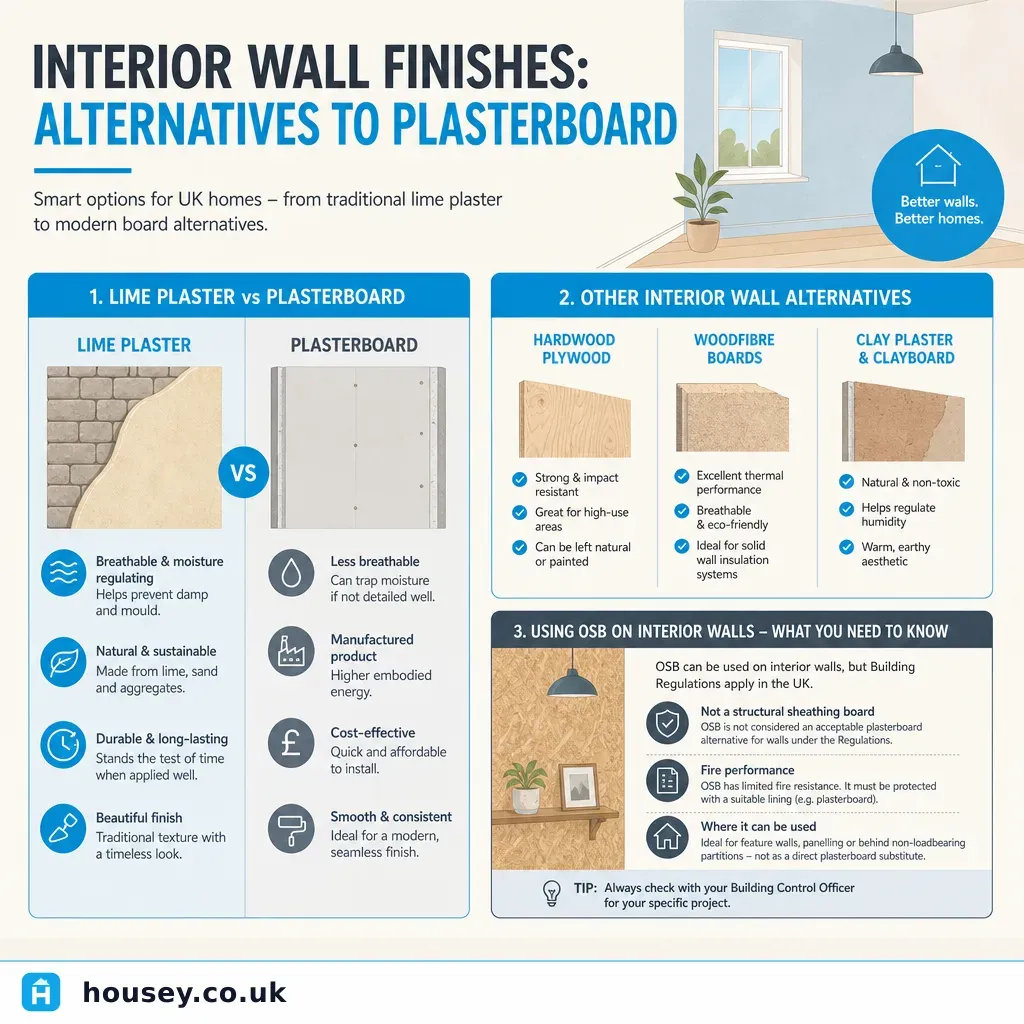
Interior Wall Finishes: Alternatives to Plasterboard
Interior wall finish alternatives to plasterboard include lime plaster, OSB, brick slips, timber cladding, and magnesium oxide board.
 Improvement & Build
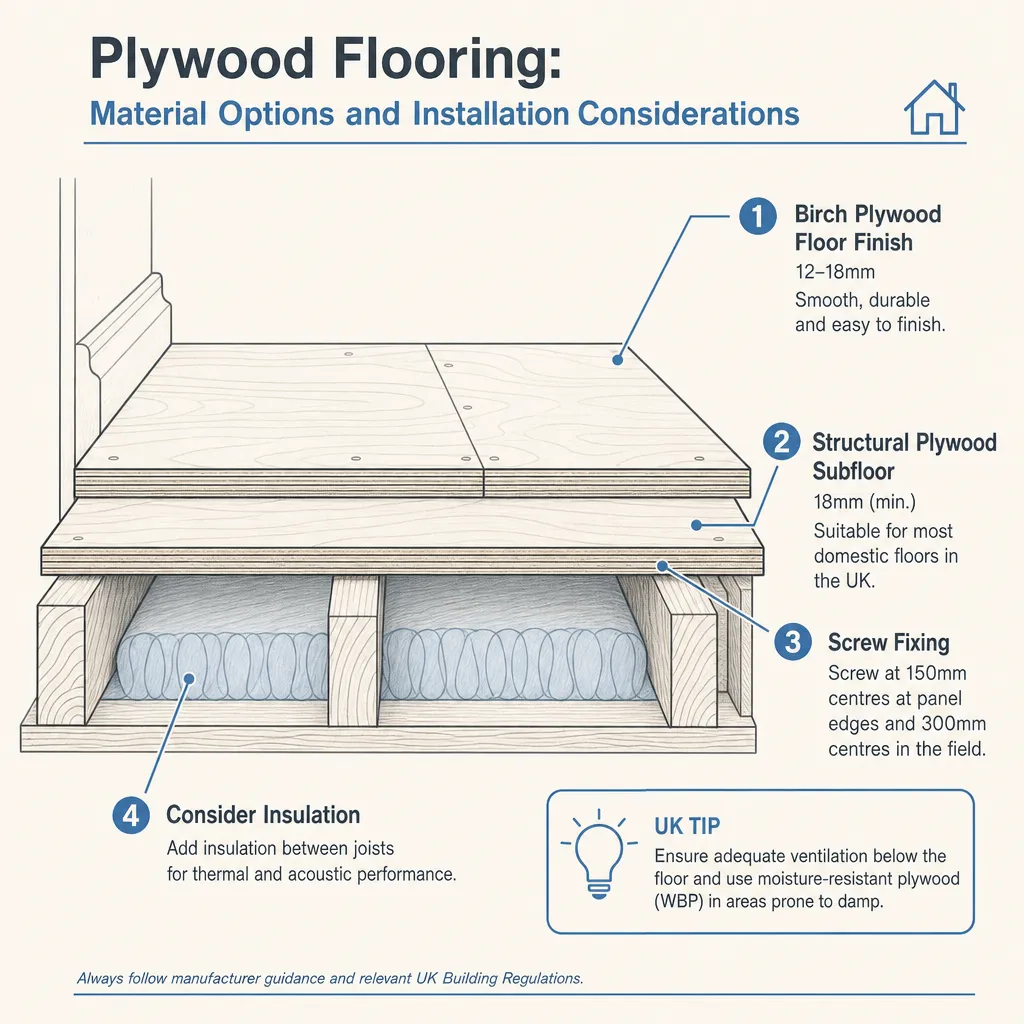
Plywood Flooring: Material Options and Installation Considerations
Plywood flooring in UK homes is used either as a structural subfloor or as a finished floor surface.
 Improvement & Build
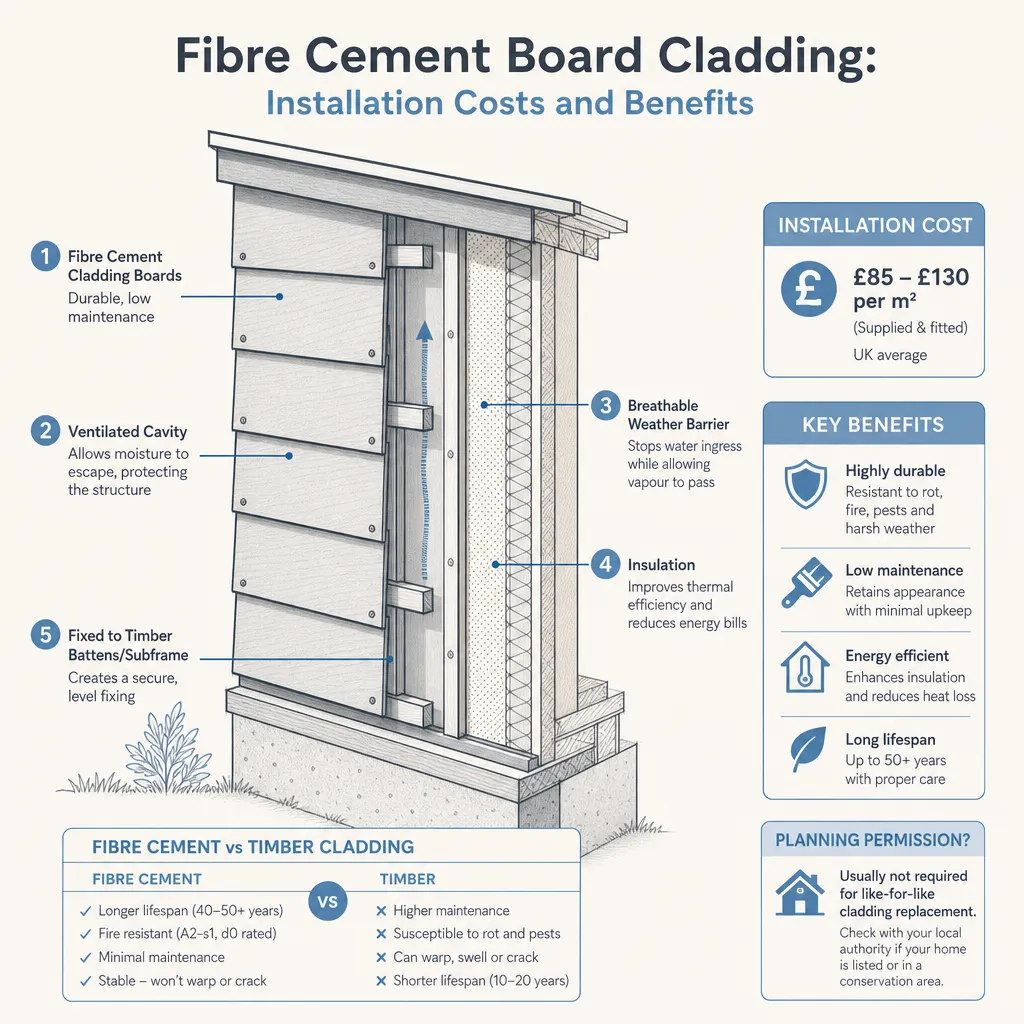
Fibre Cement Board Cladding: Installation Costs and Benefits
Fibre cement board cladding typically costs £80–£180 per m² installed in the UK, including boards, battens, breather membrane, and labour.
 Improvement & Build
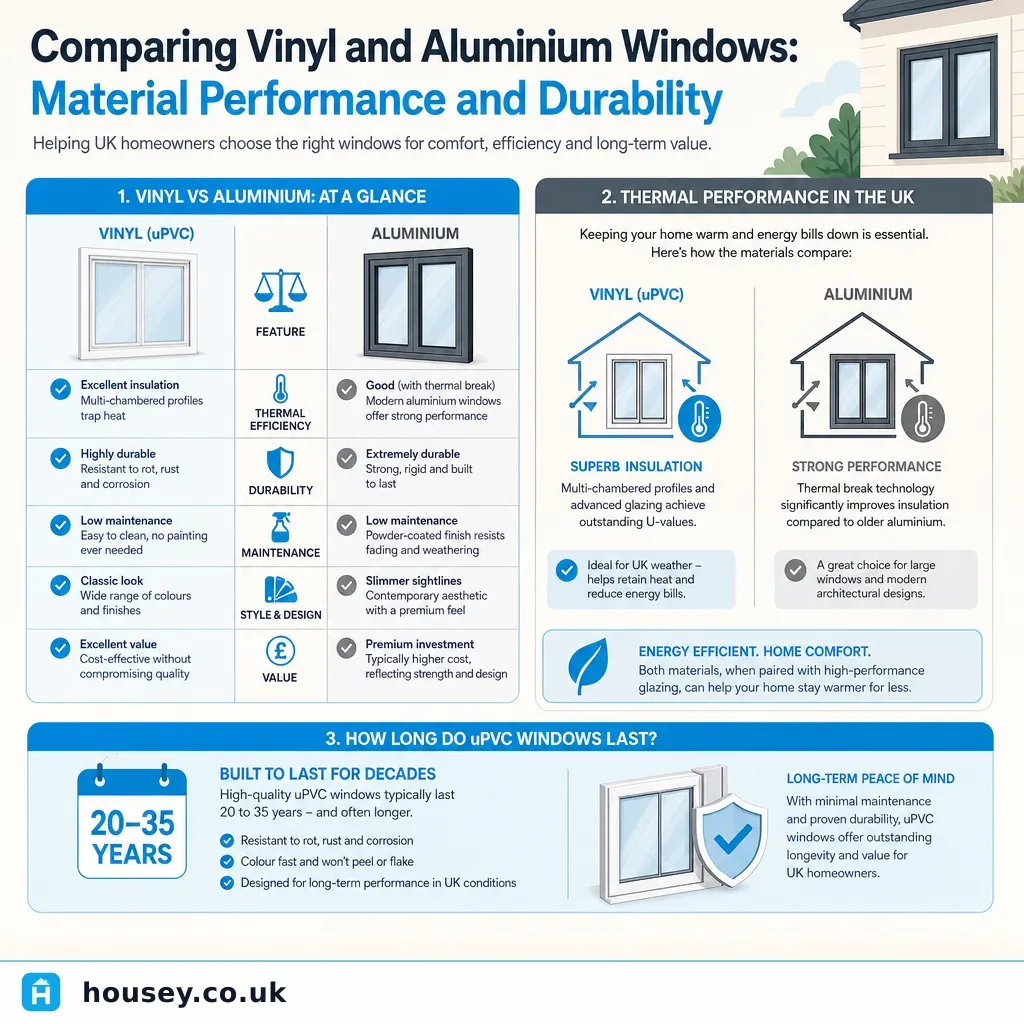
Comparing Vinyl and Aluminium Windows: Material Performance and Durability
uPVC (vinyl) and aluminium windows both meet UK Building Regulations Part L when properly specified.
 Improvement & Build
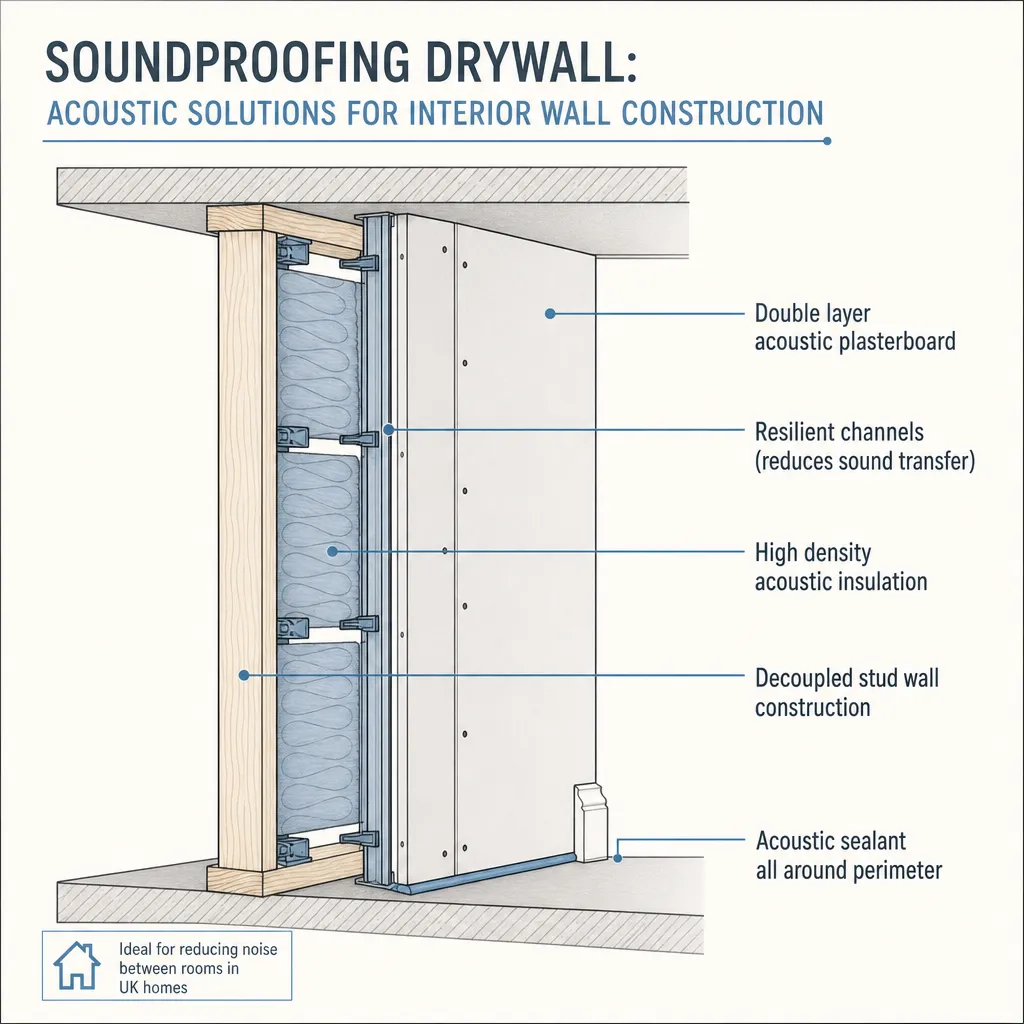
Soundproofing drywall: acoustic solutions for interior wall construction
Soundproofing drywall in UK homes typically combines acoustic plasterboard, resilient bar fixings, and mineral wool cavity fill to reduce airborne and structure-borne noise.