Pond Removal and Garden Restoration Costs
By Housey · Last reviewed 8th of May 2026
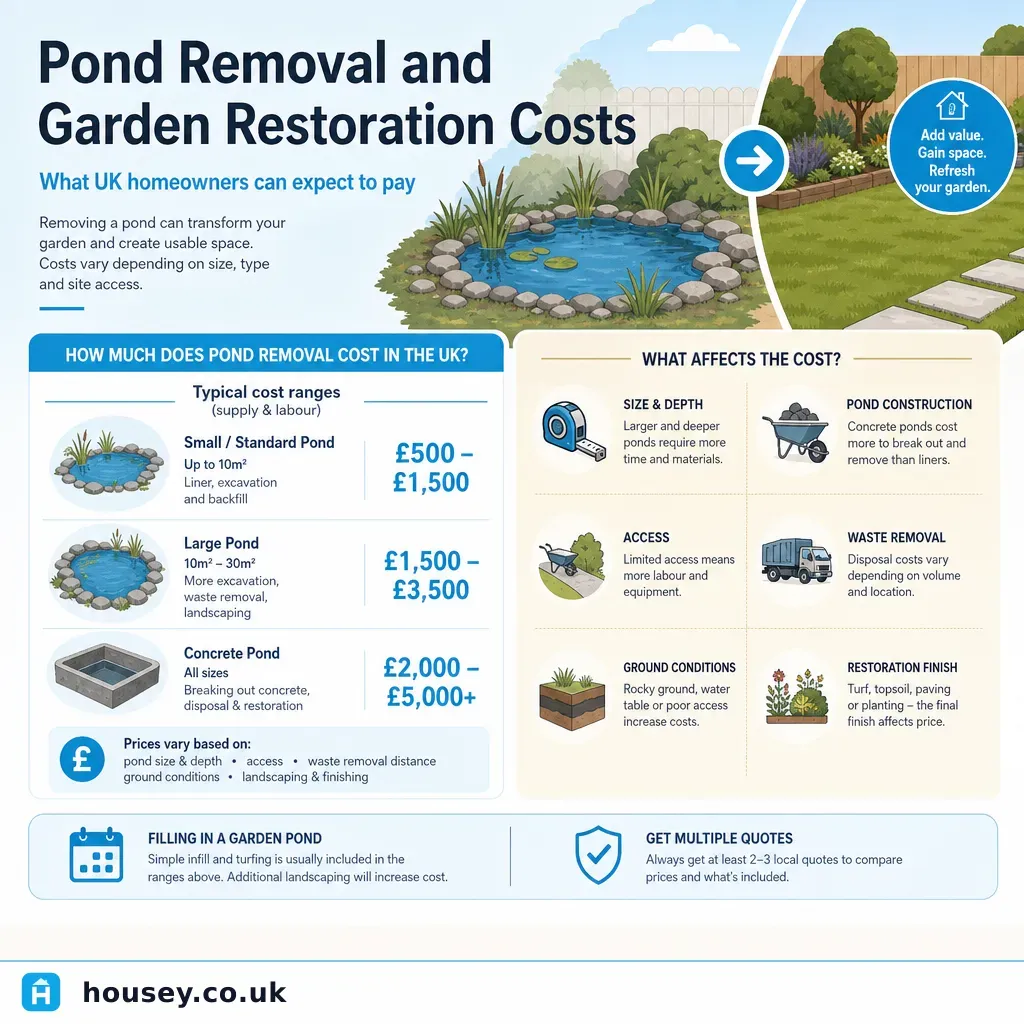
Pond Removal and Garden Restoration Costs
Removing a garden pond is one of those jobs that sounds straightforward until the first spade hits compacted concrete surround. Whether the pond came with the house, has fallen into disrepair, or is simply no longer wanted, the cost and complexity depend heavily on how it was built, what lives in it, and what the garden should look like afterwards. Getting the scope right before instructing anyone can prevent significant extra charges mid-project.
Key points
- Removing a small pre-formed liner pond with basic turf restoration typically costs £300–£700; a large concrete or brick-built pond with full garden restoration can reach £3,000–£5,500+. Indicative UK costs, last reviewed 2026-05-08.
- Contractors must hold a valid Environment Agency waste carrier licence to legally transport and dispose of liner, rubble, and excavated material.
- Great crested newts are a European Protected Species under the Conservation of Habitats and Species Regulations 2017 — if present or suspected, a Natural England mitigation licence is required before any ground disturbance.
- Improperly compacted backfill will settle over time, leaving a sunken depression and drainage problems; good practice includes hardcore compaction beneath a topsoil cap of at least 150mm.
- Skip hire in England typically adds £200–£400 for a 4-yard skip and is often the largest single variable on concrete pond projects.
What affects the cost?
The most significant cost driver is construction type. A pre-formed plastic or flexible butyl liner pond can usually be drained, the liner rolled up, and the void backfilled without heavy plant. A concrete or brick-rendered pond requires breaking up — by hand or with a breaker attachment on a mini-digger — generating substantial rubble and considerably more labour.
Other key variables:
- Pond size and depth. Volume of spoil drives skip requirements and labour hours.
- Garden access. If a skip lorry or compact digger (minimum roughly 900mm gate width) cannot reach the garden, all material must be wheelbarrowed through, which can double the labour element.
- Water volume. Large ponds need pump-out before work starts; a submersible pump hire typically costs £30–£80 per day.
- Contamination. Old treated timber surrounds or historic hardcore may require disposal at a licensed facility, adding to skip costs.
- Restoration scope. Turf over levelled infill is the cheapest finish; a patio, raised beds, or replanting scheme is a separate, additional phase.
Indicative UK cost ranges
Indicative UK costs, last reviewed 2026-05-08. Costs vary by region, access, and specification — obtain at least three quotes.
Pond type and scope | Approximate cost range |
|---|---|
Small pre-formed liner (≤3m²), remove and turf | £300–£700 |
Medium flexible liner pond, drain, infill, topsoil, turf | £700–£1,400 |
Large liner pond (≥12m²), full infill and re-seed | £1,200–£2,200 |
Concrete or brick-built pond, break up, skip, infill, turf | £1,800–£4,000 |
Additional 4-yard skip hire (England) | £200–£400 |
Topsoil supply and lay (per tonne, delivered) | £50–£110 |
Re-turfing (per m²) | £8–£16 |
Full garden restoration (paving, planting, raised beds) | £2,500–£8,000+ |
Wildlife and environmental obligations
Before booking any contractor, consider the ecology of the pond. Great crested newts (Triturus cristatus) are a European Protected Species under the Conservation of Habitats and Species Regulations 2017. If present or reasonably suspected, you must obtain a mitigation licence from Natural England (England), Natural Resources Wales, or NatureScot (Scotland) before disturbing the habitat. An ecologist must survey first, typically in spring or early autumn.
Frogs, common toads, and smooth newts are protected from intentional killing under the Wildlife and Countryside Act 1981 even though they do not require a licence to relocate. Time works outside peak breeding season (March–June) where possible.
If pond water drains to a watercourse or soakaway, check with the Environment Agency or your local lead local flood authority before discharging large volumes.
Pond removal decision tree
- Small pre-formed or flexible liner pond, clear access, no wildlife concerns → A landscaper can usually manage this without a groundworker.
- Concrete or brick-built pond, or more than one skip load of rubble → Instruct a groundworker with plant hire and a skip contract.
- Suspected or confirmed great crested newts → Commission an ecological survey before booking anyone. Work cannot proceed lawfully without a Natural England mitigation licence.
- Pond connected to a watercourse or public sewer → Notify the Environment Agency or local drainage authority before pumping out or infilling.
- Restoration is the main goal → Engage a landscaper alongside or after groundworks, ideally as a coordinated programme with a shared site programme.
What to ask before accepting a quote
- What exactly is included — pump-out, liner disposal, rubble removal, skip hire, topsoil, turf, or re-seed?
- Can you provide your waste carrier licence number?
- Have you visited the site and accounted for all access constraints?
- What infill material will you use, and how will you compact it to prevent settlement?
- Is VAT included?
- What is your process if protected species are found during works?
- How many days will the project take, and what is your current lead time?
Red flags when choosing a contractor
- Quoting remotely without a site visit — pond removal is too variable for accurate remote pricing.
- Unable to provide a waste carrier licence number; disposal of liner and excavated material is regulated.
- Proposing uncompacted soil backfill only, which will almost certainly settle.
- Unfamiliarity with great crested newt legislation or dismissing the need for an ecological check.
- Omitting skip hire from a concrete pond quote without explanation.
When to get professional help
If the pond is larger than around 6m², built from concrete or brick, or the garden has restricted access, a groundworker with plant hire is the right choice rather than a general landscaper. If you are at all uncertain about wildlife — particularly for a long-established pond surrounded by rough grassland or log piles — contact an ecologist before booking any removal work.
How Housey can help
Housey connects you with vetted contractors for pond removal and garden restoration. For restoration-led projects, request quotes from local landscapers. For larger concrete or brick ponds requiring plant hire and rubble disposal, find groundworkers near you.
Frequently asked questions
Do I need planning permission to remove a garden pond?
Planning permission is not normally required to remove a garden pond under permitted development rights. If the property is in a conservation area or is listed, those rights may be curtailed. Always check with your local planning authority if uncertain. Wildlife legislation obligations apply regardless of any planning position.
Can I fill in a pond myself?
Small pre-formed liner ponds in accessible gardens with no wildlife concerns can be drained and backfilled as a DIY project, provided you arrange legal disposal of the liner. Larger ponds, concrete structures, or restricted-access sites are better handled by a professional groundworker or landscaper. Poorly compacted infill leads to settlement and drainage problems that are costly to fix.
How long does pond removal take?
A small liner pond and basic turf restoration usually takes one to two days. A large concrete pond with full garden restoration may take three to six days depending on size, access, and scope. Allow additional weeks if an ecological survey is required before work can lawfully start.
What should happen to fish before pond removal?
Fish should be rehomed before removal, not after. Contact local koi or pond societies, aquatic retailers, or online communities well in advance. Releasing fish into natural watercourses is illegal under UK fisheries legislation and can cause serious ecological harm. Do not rely on finding a new home at short notice once work is booked.
Sources and further reading
- Wildlife and Countryside Act 1981 — legislation.gov.uk
- Conservation of Habitats and Species Regulations 2017 — legislation.gov.uk
- Great crested newts: surveys and mitigation for development projects — GOV.UK / Natural England
- Register of waste carriers, brokers and dealers — Environment Agency
- Make sure your drainage works don't cause pollution — GOV.UK
Useful next reads
 Improvement & Build
Lawn Removal and Garden Reconfiguration: Options and Costs
Lawn removal in the UK typically costs £400–£900 for a standard suburban garden, depending on method and skip hire.
 Improvement & Build
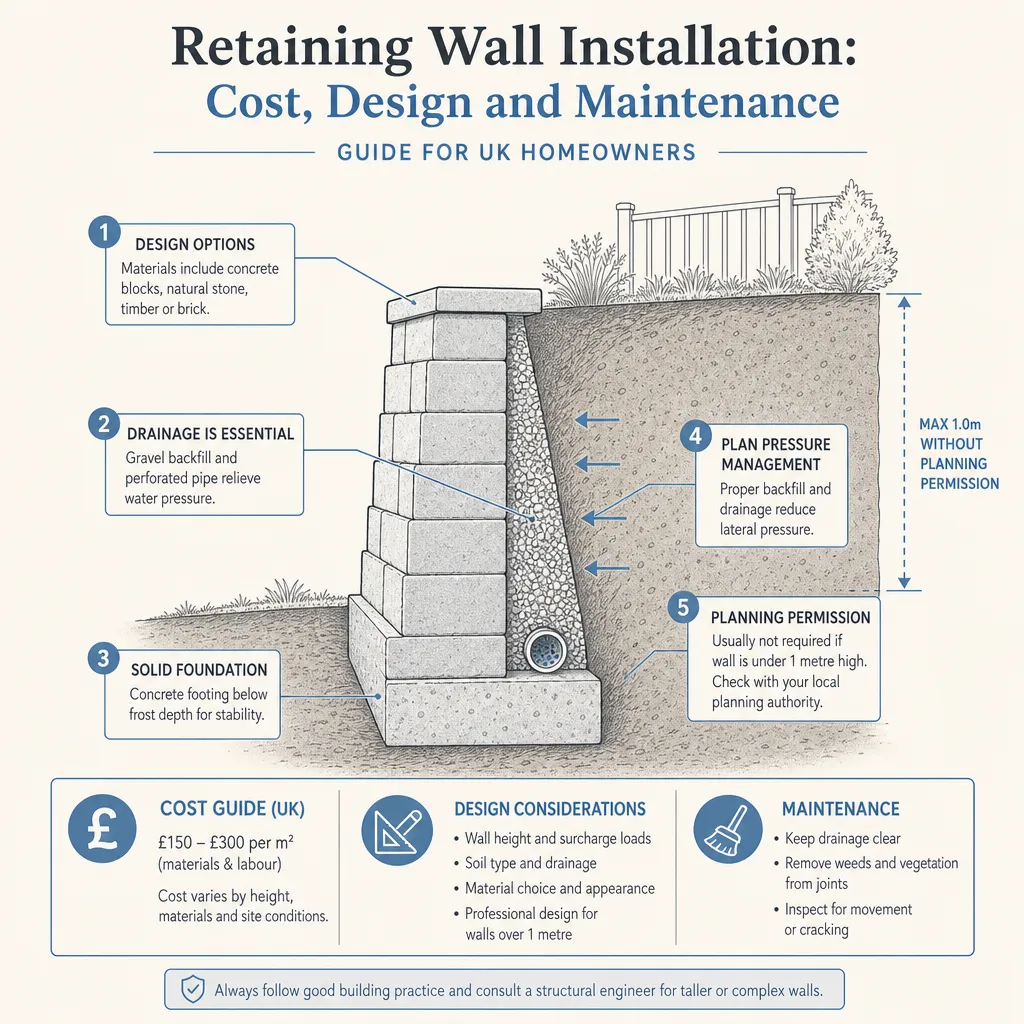
Retaining Wall Installation: Cost, Design and Maintenance
A retaining wall holds back soil on a sloped or banked site.
 Improvement & Build
Who Provides House Demolition Services
House demolition in the UK is carried out by specialist demolition contractors, often members of the National Federation of Demolition Contractors (NFDC).
 Improvement & Build
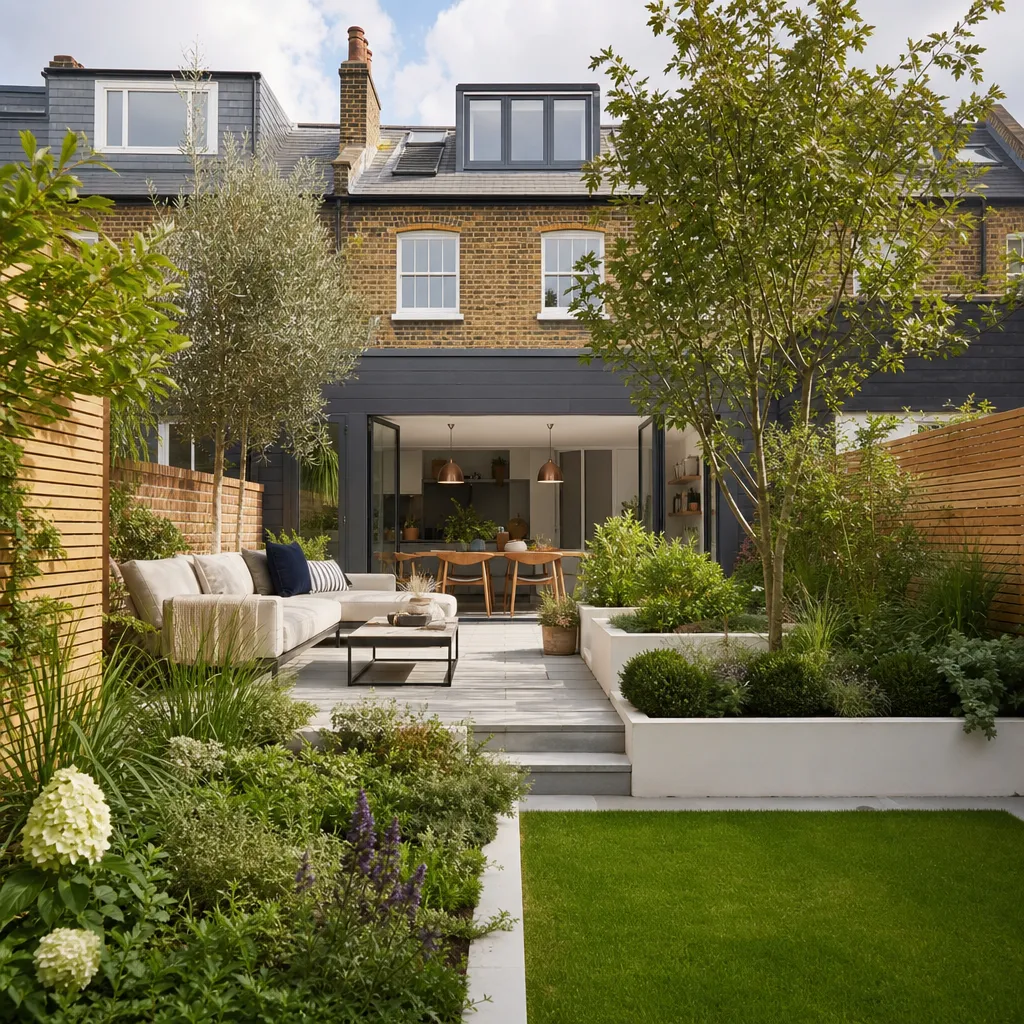
Seasonal Garden Transformations and Outdoor Design Ideas
A successful garden transformation in the UK works with the seasons rather than against them — establishing structure and hard landscaping in autumn or winter, planting in spring, and enjoying the results through summer.
 Improvement & Build
Designing Garden Irrigation Around Trees and Landscaping Elements
Design irrigation around trees by respecting the root protection area defined under BS 5837:2012, using drip or leaky pipe delivery rather than spray heads, and putting the tree zone on its own circuit.