Popcorn Ceiling Removal: Finding a Specialist Contractor
By Housey · Last reviewed 31st of May 2026
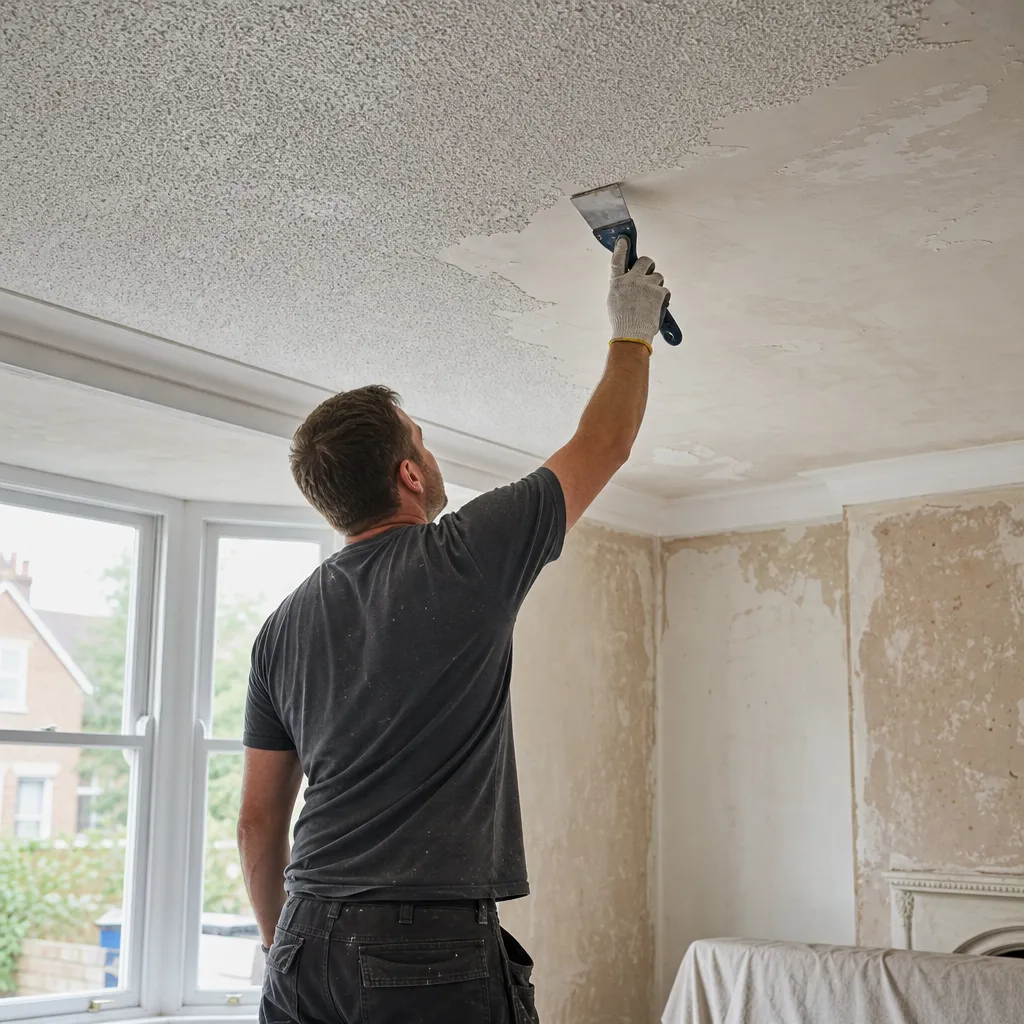
Popcorn Ceiling Removal: Finding a Specialist Contractor
Textured ceilings were applied in vast numbers of UK homes during the 1960s, 1970s, and 1980s, often under the Artex brand name, using spray or brush techniques that created stippled, swirled, or popcorn-effect finishes. The critical issue for any homeowner planning to remove or disturb one of these ceilings is that many textured coating products applied in the UK before 2000 contained chrysotile (white asbestos), making professional testing and specialist involvement essential before any work begins.
Key points
- Artex and similar textured ceiling coatings applied before 2000 may contain chrysotile (white asbestos) at concentrations requiring specialist management under the Control of Asbestos Regulations 2012.
- Only an HSE-licensed asbestos contractor can legally remove asbestos-containing textured coatings that are in poor condition or where significant disturbance is planned.
- A UKAS-accredited asbestos survey, with laboratory analysis of samples, must be completed before any ceiling removal work starts to confirm whether asbestos is present.
- The UK ban on new chrysotile-containing products came into effect in 1999 under the Asbestos (Prohibitions) (Amendment) Regulations 1999 — any ceiling applied before 2000 should be treated as potentially hazardous until tested.
- Asbestos waste from ceiling removal must be double-bagged in polythene, clearly labelled, and taken to a licensed hazardous waste facility; disposal with general building waste is illegal under the Hazardous Waste Regulations 2005.
Is your ceiling likely to contain asbestos?
Textured coatings applied before approximately 1985 have the highest likelihood of containing asbestos, as chrysotile was routinely added as a strengthening and binding agent. Because some products continued to include asbestos right up to the 1999 prohibition, any ceiling applied before 2000 should be treated as potentially hazardous until professional testing confirms otherwise.
Ceilings applied after 2000 are very unlikely to contain asbestos. If you are unsure when the ceiling was applied — for example in a property that has changed hands several times — treat it as suspect and arrange testing before any work begins.
Decision tree: what should you do first?
- Property built or last refurbished after 2000 — asbestos is very unlikely; a specialist ceiling contractor may proceed with appropriate dust management, but testing first remains advisable if there is any uncertainty.
- Property built or refurbished before 2000 — treat the ceiling as potentially containing asbestos. Arrange a UKAS-accredited asbestos survey before any work begins.
- Ceiling is visibly crumbling, flaking, or damaged — do not disturb it. Contact an asbestos professional immediately; friable material carries a higher risk of fibre release.
- Survey confirms asbestos is present — instruct only an HSE-licensed asbestos removal contractor. Check the HSE licensed contractor list at hse.gov.uk/asbestos before instructing anyone.
- Survey confirms no asbestos — a general plastering or ceiling contractor may proceed, but should still use dust suppression, HEPA filtration, and appropriate PPE throughout.
Finding a licensed asbestos removal contractor
For any ceiling confirmed or reasonably suspected to contain asbestos, the contractor must hold a current licence issued by the HSE under the Control of Asbestos Regulations 2012. Licensable work includes removing textured coatings where asbestos is present and the material is in poor condition or significant disturbance is planned.
Use these resources to find qualified contractors and surveyors:
- HSE licensed contractor list — available at hse.gov.uk/asbestos, updated regularly and searchable by region.
- UKAS-accredited surveying bodies — search the UKAS directory at ukas.com for accredited asbestos surveying and testing organisations.
- Asbestos Removal Contractors Association (ARCA) — a trade body for licensed asbestos removal companies; member directory at arca.org.uk.
Do not engage a general builder or decorator for the removal of confirmed or suspected asbestos-containing textured coatings, regardless of how confident they appear about the safety of the job.
Red flags when hiring a ceiling removal contractor
Be cautious — and seek a different contractor — if a firm:
- Offers to remove a textured ceiling without recommending or arranging an asbestos test first.
- Cannot provide their current HSE asbestos licence number or UKAS accreditation details on request.
- Quotes for removal without mentioning waste disposal arrangements — asbestos waste requires specialist handling and licensed disposal.
- Suggests dampening and scraping as a suitable method for old Artex without prior testing.
- Cannot provide a laboratory certificate for any samples taken from the property.
- Proposes to encapsulate or seal over the ceiling without first confirming the material is stable and that this approach is appropriate for its condition.
Important limitations
This article provides general information only. Asbestos law, licensing requirements, and the appropriate course of action depend on the specific material, its condition, the extent of planned works, and the property type. Rules can vary significantly. A qualified, UKAS-accredited asbestos surveyor must assess your situation before any removal work is planned or started. Nothing in this article constitutes legal or safety advice. Consult the Health and Safety Executive (HSE) for authoritative guidance on asbestos management and your obligations as a homeowner.
When this becomes urgent
Seek professional advice immediately and do not disturb the ceiling if:
- The ceiling coating is visibly crumbling, flaking, or peeling from the surface.
- A builder, surveyor, or other professional has flagged the material as a potential asbestos-containing material (ACM).
- Drilling, cutting, or sanding has already taken place on a pre-2000 textured ceiling and you are concerned about possible fibre release.
- A child or vulnerable person has spent significant time in a room with a heavily deteriorated textured ceiling.
If you believe exposure may have occurred, contact your GP and the HSE for guidance on appropriate next steps.
What to ask a qualified professional
- Are you UKAS-accredited, or do you use a UKAS-accredited laboratory for sample analysis and results certification?
- What type of survey do I need — a management survey or a refurbishment and demolition survey?
- Do you hold a current HSE asbestos removal licence for licensable work?
- How will the survey results be reported, and what is the typical turnaround time?
- If asbestos is confirmed, can you manage the removal, or do you work with a separate licensed removal contractor?
- How will asbestos waste be packaged, transported, and disposed of, and will you provide written documentation?
- What independent air-clearance testing will be carried out after removal, and who issues the clearance certificate?
When to get professional help
Any work on a textured ceiling in a property built before 2000 should involve professional advice before you proceed. If the ceiling is in good condition and you are not planning work that will disturb it, management in place may be the safest option — a qualified asbestos surveyor should confirm this with a formal assessment. If you are planning renovation works that will affect the ceiling, the Control of Asbestos Regulations 2012 require a refurbishment and demolition survey to be completed before work starts.
For listed buildings, also seek advice from a conservation specialist, as internal alterations including ceiling removal may require listed building consent from your local planning authority.
How Housey can help
Housey helps homeowners connect with specialist contractors experienced in interior remediation, including textured ceiling projects that require asbestos assessment, licensed removal, and independent clearance certification. Submit your project details to be matched with qualified professionals who can advise on the safest and most legally compliant approach for your property.
Frequently asked questions
Can I remove Artex or a textured ceiling myself?
If there is any possibility the ceiling contains asbestos — that is, if it was applied before 2000 — you must not remove it yourself. Have it tested by a UKAS-accredited surveyor first. If asbestos is confirmed, removal must be carried out by an HSE-licensed contractor. Attempting DIY removal of asbestos-containing material is illegal under UK law and poses serious health risks.
How much does asbestos testing for a ceiling cost?
Indicative costs for an asbestos management survey on a single room, including laboratory analysis, can range from approximately £150 to £400 plus VAT. A full refurbishment or demolition survey covering a whole property costs more and varies by size and location. Indicative UK costs, last reviewed 2026-05-31. Obtain quotes from multiple UKAS-accredited surveyors.
What happens after asbestos is found in a ceiling?
The surveyor produces a report confirming the material type and condition. If removal is planned, a licensed contractor carries out the work under strict containment conditions, disposes of waste at a licensed hazardous waste facility, and arranges independent air-clearance testing before the room is re-occupied. A written clearance certificate should be issued confirming the area is safe.
Do I need planning permission to remove a textured ceiling?
Removing a textured ceiling is an internal alteration and does not normally require planning permission for standard residential properties in England. For listed buildings, any internal alteration — including ceiling removal — may require listed building consent. Check with your local planning authority if your property is listed before starting any work.
Sources and further reading
- Control of Asbestos Regulations 2012 — legislation.gov.uk
- HSE asbestos guidance for homeowners — Health and Safety Executive
- UKAS accreditation directory — UKAS
- Asbestos Removal Contractors Association — ARCA
Useful next reads
 Improvement & Build
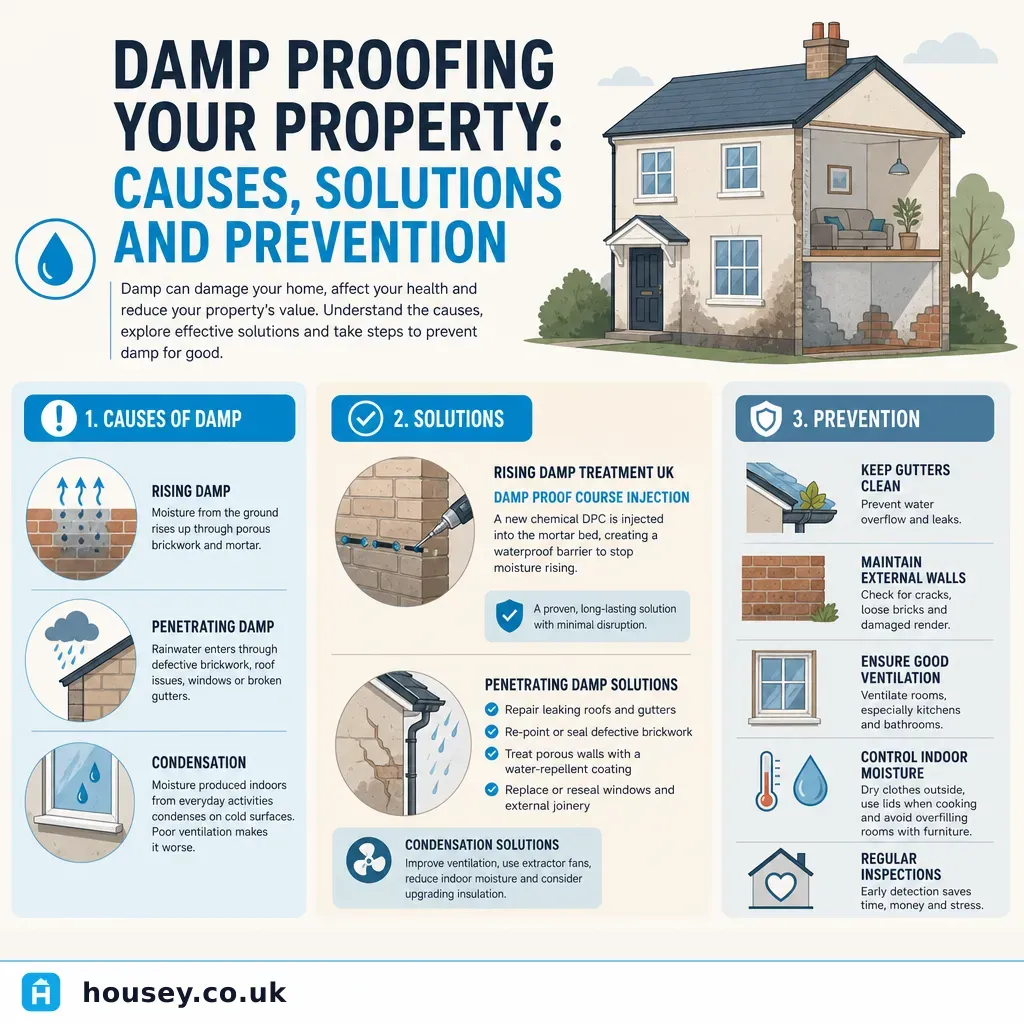
Damp Proofing Your Property: Causes, Solutions and Prevention
Damp in UK properties falls into three main types: rising damp caused by a failed damp proof course, penetrating damp from defects such as failed flashings or cracked render, and condensation from poor ventilation.
 Improvement & Build
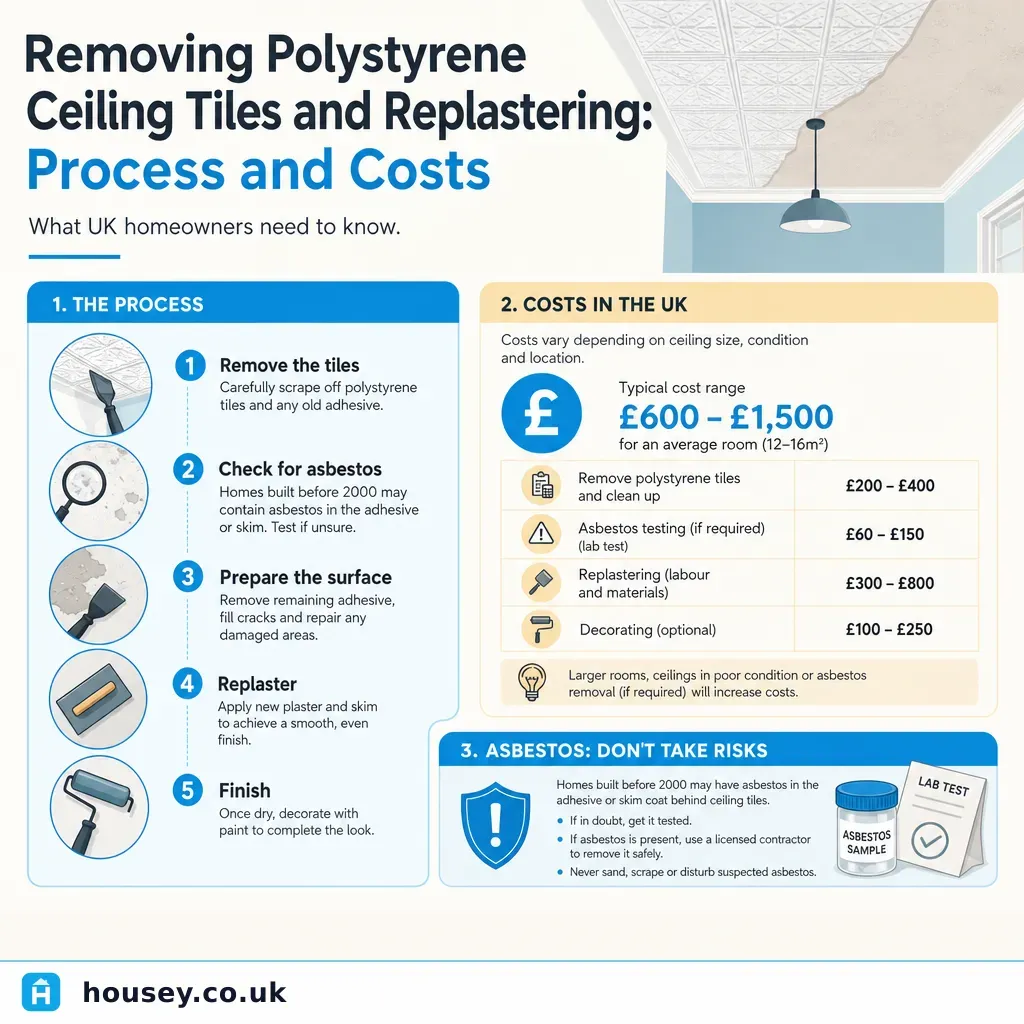
Removing Polystyrene Ceiling Tiles and Replastering: Process and Costs
Polystyrene ceiling tiles are usually glued directly to plaster or artex and must be removed before replastering.
 Improvement & Build
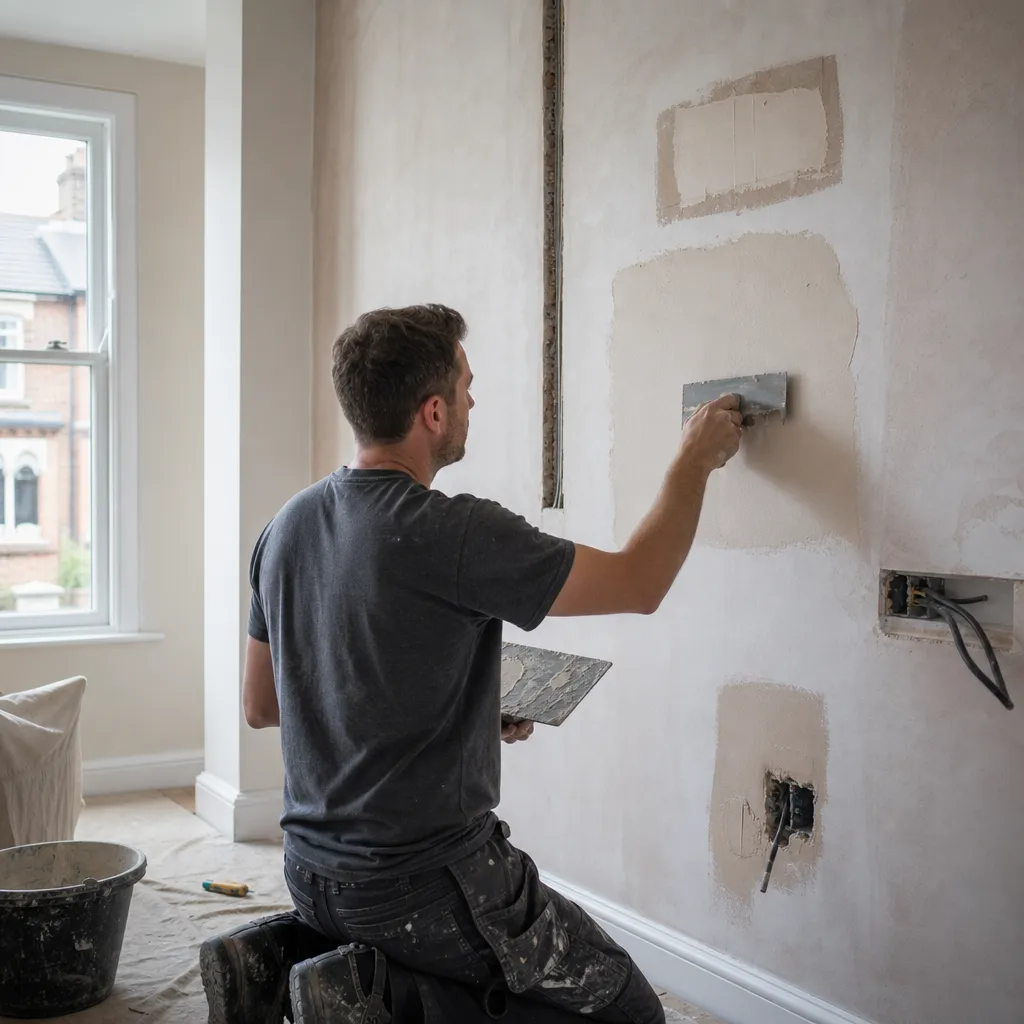
Wall Patching After Plumbing and Electrical Work
Wall patching after plumbing or electrical work typically involves filling the chase or opening with bonding coat plaster or repair mortar, then applying a skim coat.
 Improvement & Build
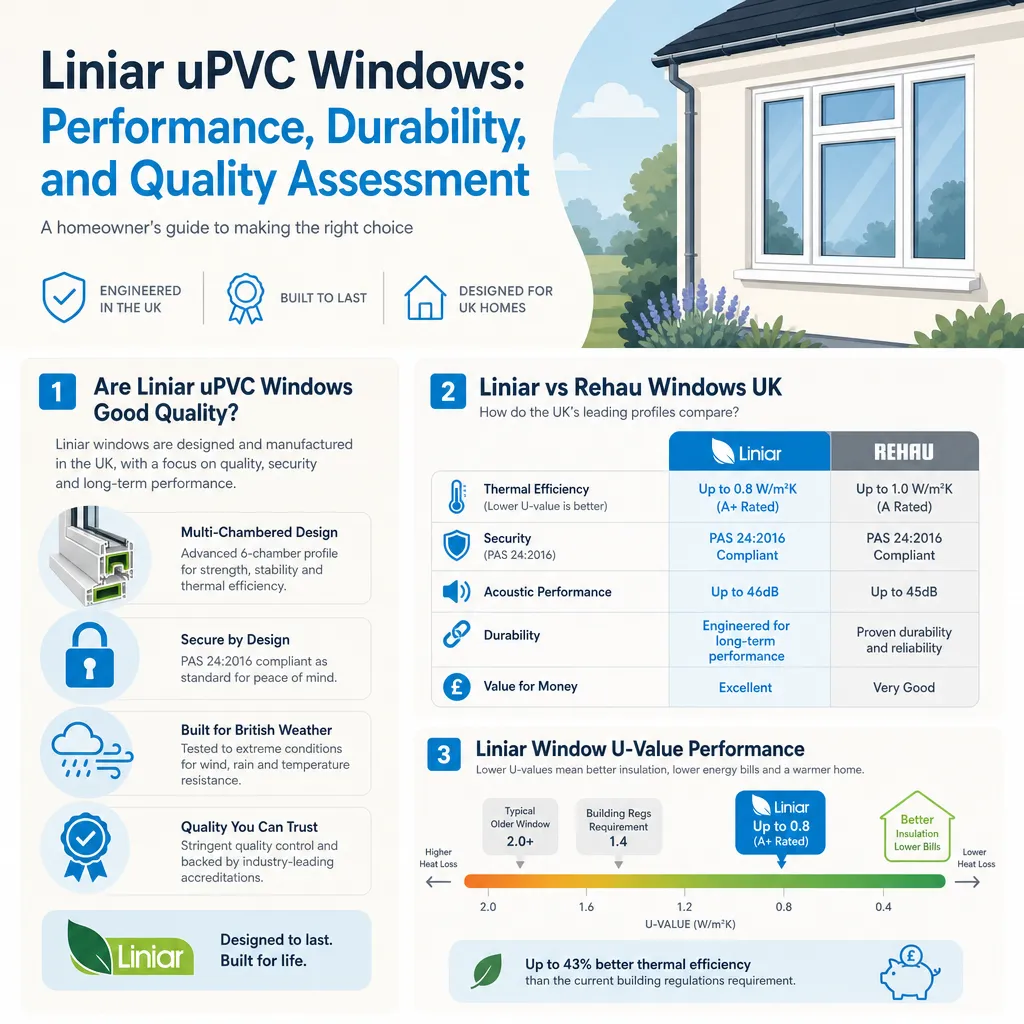
Liniar uPVC Windows: Performance, Durability, and Quality Assessment
Liniar uPVC window profiles are manufactured in the UK using multi-chambered, foamed frames.
 Improvement & Build
Garden Tap Installation with Hot and Cold Water: Plumbing Options
Adding a cold garden tap is a common DIY project, but routing hot water outdoors requires a plumber to connect to your domestic hot water system and comply with the Water Supply (Water Fittings) Regulations 1999.