Porcelain Countertop Installation: Costs and Considerations
By Housey · Last reviewed 26th of May 2026
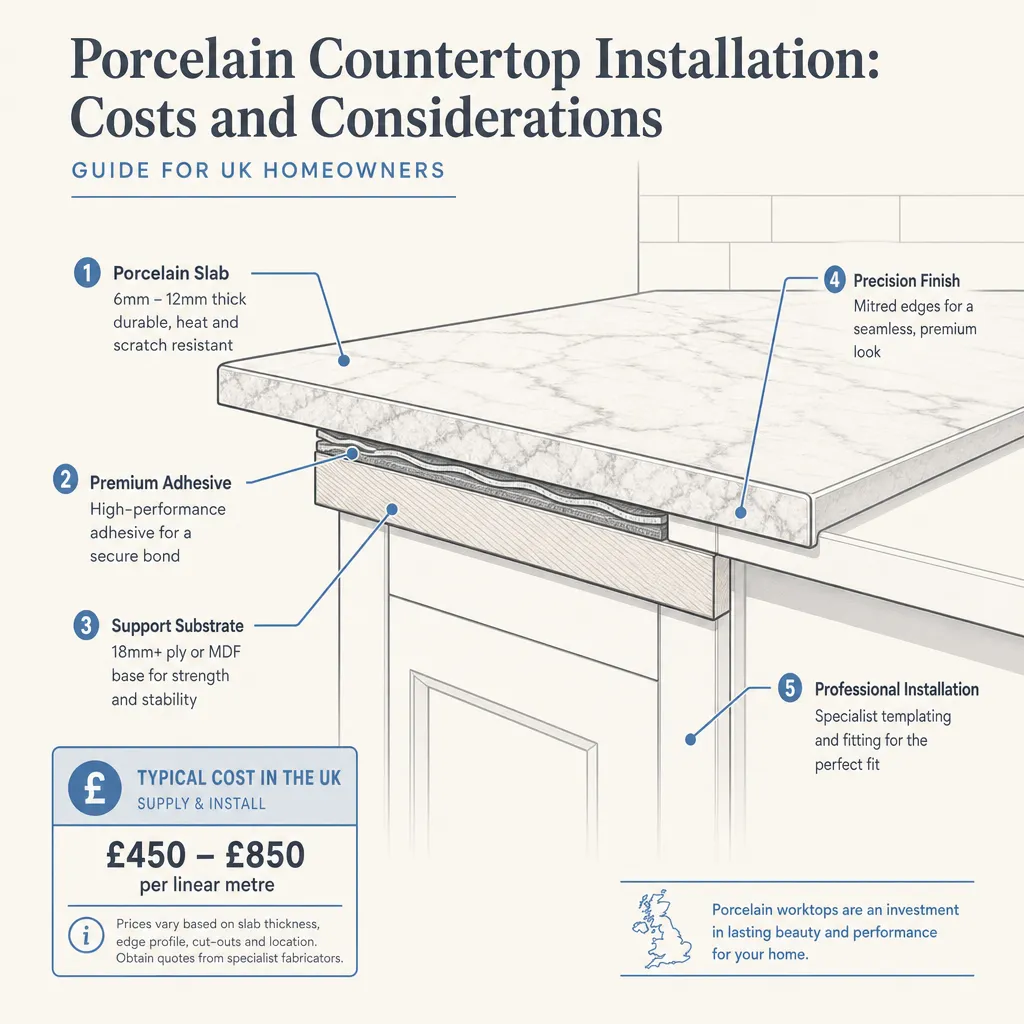
Porcelain Countertop Installation: Costs and Considerations
Porcelain is one of the fastest-growing kitchen worktop materials in the UK, valued for its exceptional durability, minimal maintenance, and the wide range of finishes it can replicate — from Calacatta marble to brushed concrete — without the associated upkeep. Whether you are planning a full kitchen renovation or a worktop replacement only, understanding what drives the cost, how the installation process works, and where things can go wrong helps you commission the project with confidence and compare quotes on a genuinely like-for-like basis.
Key points
- Porcelain worktop slabs are typically 6–12 mm thick and manufactured in large formats up to 3,200 × 1,600 mm; specialist handling equipment and cutting tools are required throughout fabrication and installation.
- Indicative UK installed costs range from £300–£600 per linear metre for standard laminated slabs, rising to £500–£1,200+ per linear metre for large-format ultra-compact surfaces and complex fabrications — indicative UK costs, last reviewed 2026-05-26.
- Porcelain has a water absorption rate below 0.05% (EN ISO 10545-3), making it resistant to staining, bacteria, and limescale — no sealing is required, unlike granite or marble.
- All cutting and profiling must be carried out in a fabricator's workshop using wet diamond-blade equipment; attempting on-site cutting with an angle grinder risks shattering the slab irreversibly.
- Large porcelain slabs weigh approximately 25–35 kg/m² at 12 mm thickness; cabinet carcasses must be confirmed as capable of carrying this load before templating begins.
What is porcelain as a worktop material?
Porcelain worktop slabs — sometimes marketed under trade names such as Dekton, Lapitec, or Neolith, or described as ultra-compact or sintered stone — are manufactured by fusing natural minerals under extreme heat and pressure. The result is a non-porous, dense product quite different from standard floor or wall tiles in its thickness, slab size, and structural behaviour.
Unlike ceramic tiles, kitchen-grade porcelain slabs are engineered for continuous horizontal surface applications. The non-porous composition prevents liquids and bacteria from penetrating the surface, and heat resistance is generally superior to laminate, solid wood, and composite quartz. The absence of any coating or sealant means there is no surface treatment to re-apply over the lifetime of the kitchen.
Porcelain vs. alternative worktop materials
Material | Scratch resistance | Heat resistance | Stain resistance | Maintenance | Typical installed cost per linear metre |
|---|---|---|---|---|---|
Porcelain slab | High | Excellent (to ~300 °C) | Excellent — non-porous | None required | £300–£1,200+ |
Quartz composite | High | Moderate (may discolour above 150 °C) | Excellent | Low | £250–£900 |
Granite | Moderate–high | Good | Moderate — requires sealing | Annual seal | £200–£700 |
Marble | Low | Good | Poor — highly porous | Frequent sealing | £300–£1,000+ |
Solid surface (Corian) | Moderate | Poor | Good | Low | £200–£600 |
Laminate | Low | Poor | Moderate | Low | £50–£200 |
Indicative UK installed costs, last reviewed 2026-05-26. Prices vary by region, slab dimensions, edge profile, and installation complexity.
Porcelain is generally the preferred choice when heat resistance and a maintenance-free surface are priorities. Its main trade-offs are brittleness during fabrication (which increases cutting costs), a longer lead time than laminate, and — in some product ranges — a more uniform visual quality compared with natural stone veining.
What drives the cost of porcelain worktop installation in the UK?
Several factors explain why installed prices vary widely:
- Slab grade and format: mass-market 12 mm laminated porcelain (two 6 mm sheets bonded together) costs less to produce than a genuine 20 mm or 30 mm monolithic slab.
- Kitchen layout: L-shaped and U-shaped kitchens with multiple joins, upstands, and window sills require significantly more fabrication time than a single straight run.
- Edge profile: standard straight-edge or eased-edge finishing is usually included; pencil round, bevelled, or mitred waterfall edges typically add £30–£80 per linear metre.
- Cut-outs: each sink or hob opening usually adds £80–£200 per cut-out, depending on complexity and slab thickness.
- Region: London and the South East typically attract a 15–30% premium over the national average for the same specification.
- Supply route: purchasing directly from a stone fabricator is often 20–40% cheaper than through a kitchen retailer's supply chain, though you take on more project management responsibility.
A realistic budget for a standard straight-run kitchen of 4–5 linear metres in a mid-range porcelain, fully installed, is approximately £2,000–£5,000. Indicative UK costs, last reviewed 2026-05-26.
The installation process: what to expect
- Templating: the fabricator visits after cabinets are fully installed and levelled. Measurements are taken manually or by digital laser templating.
- Fabrication: all cutting, profiling, and polishing is done off-site. Lead times are typically 5–15 working days from the template visit.
- Delivery and handling: large slabs require two to four people and specialist suction-cup handling equipment; confirm vehicle access and door widths before booking the fitting date.
- Fitting and silicone jointing: slabs are placed on cabinet carcasses (with full-support panels or solid boards for spans exceeding 600 mm) and corner joins are sealed with colour-matched silicone.
- Upstands and splashbacks: usually fitted in the same visit; wall tiling behind the worktop should be completed to the correct height before the fitting date.
- Final inspection: check all joins for consistency and confirm cut-outs align correctly with sink and hob openings before the fitter leaves.
Homeowner preparation checklist
Before the fabricator's template visit:
Before installation day:
What to ask before accepting a quote
A clear, itemised quote protects both parties if scope or price disputes arise:
- What specific slab brand, thickness, and format is quoted?
- Is the price per linear metre or total, and does it include templating, fabrication, delivery, and fitting?
- How many cut-outs are included, and what is the charge per additional opening?
- What edge profile is included, and what are the costs for upgrading to a waterfall or mitred edge?
- Are corner joins included, and how will they be sealed and finished?
- What is the lead time from templating to installation?
- Is VAT included?
- What is the policy if a slab is damaged during fabrication or installation — who bears the cost of replacement material?
- Will you provide a written specification and installation warranty?
When to get professional help
Porcelain worktop installation is not a domestic DIY project. The slabs are large, heavy, and brittle; an incorrect cut or an accidental drop will shatter the slab with no prospect of repair. Beyond material handling, a poorly supported long run can develop stress cracks over months as cabinet carcasses settle.
Seek professional advice specifically if:
- A fabricator proposes on-site cutting with an angle grinder rather than a wet diamond-blade machine — this is not standard practice for porcelain slabs and creates a high risk of slab failure.
- The unsupported span between cabinet sections exceeds 600 mm without additional support panels or a continuous solid substrate being specified.
- Your layout involves curved sections, very long straight runs, or integration with appliances requiring bespoke templating.
- A quote seems unusually low — figures below £250 per linear metre including fitting often indicate laminate misrepresented as porcelain, or a thin-body tile unsuitable for a worktop application.
How Housey can help
Housey helps UK homeowners find and compare vetted kitchen and worktop professionals. You can submit a quote request through Housey to receive comparable estimates from local fabricators and kitchen fitters, making it straightforward to assess scope, lead times, and total pricing before committing to a supplier.
Frequently asked questions
How long do porcelain worktops last?
Porcelain worktops are among the most durable kitchen surfaces available. The material itself does not degrade, stain, or require sealing; with normal domestic use, a properly installed porcelain worktop should last the lifetime of the kitchen. The most common causes of early failure are impact chipping at edges and corners, or cracking over unsupported spans.
Can porcelain worktops chip or crack?
Yes. Despite excellent hardness, porcelain is brittle and will chip if struck sharply at an edge or corner with a heavy object. Thin mitred waterfall edges are the most vulnerable areas. Avoid dropping heavy pans onto edge profiles and use a chopping board, though the surface itself resists knife marks exceptionally well compared with most alternatives.
Do porcelain worktops need sealing?
No. Porcelain is non-porous with a water absorption rate below 0.05% (EN ISO 10545-3). Sealing is unnecessary and, unlike granite or marble, no ongoing maintenance treatment is required to preserve stain resistance. This is one of porcelain's principal practical advantages for UK kitchens.
How are porcelain worktops joined at corners?
Joins are made with colour-matched silicone sealant applied by the fabricator during fitting. Quality of jointing is one of the most visible indicators of installation standard. A poorly executed join will be visually apparent and may trap moisture over time. Ask your fabricator to show photographs of completed corner joins before accepting a quote.
Can I have an undermount sink with a porcelain worktop?
Yes, and it is a popular combination in UK kitchens. The fabricator cuts the sink aperture using precision diamond-blade equipment and finishes the exposed edge. The sink is mounted from below with adhesive and fixing clips. Confirm the sink weight and preferred mounting method with your fabricator during the template visit.
Sources and further reading
Useful next reads
 Improvement & Build
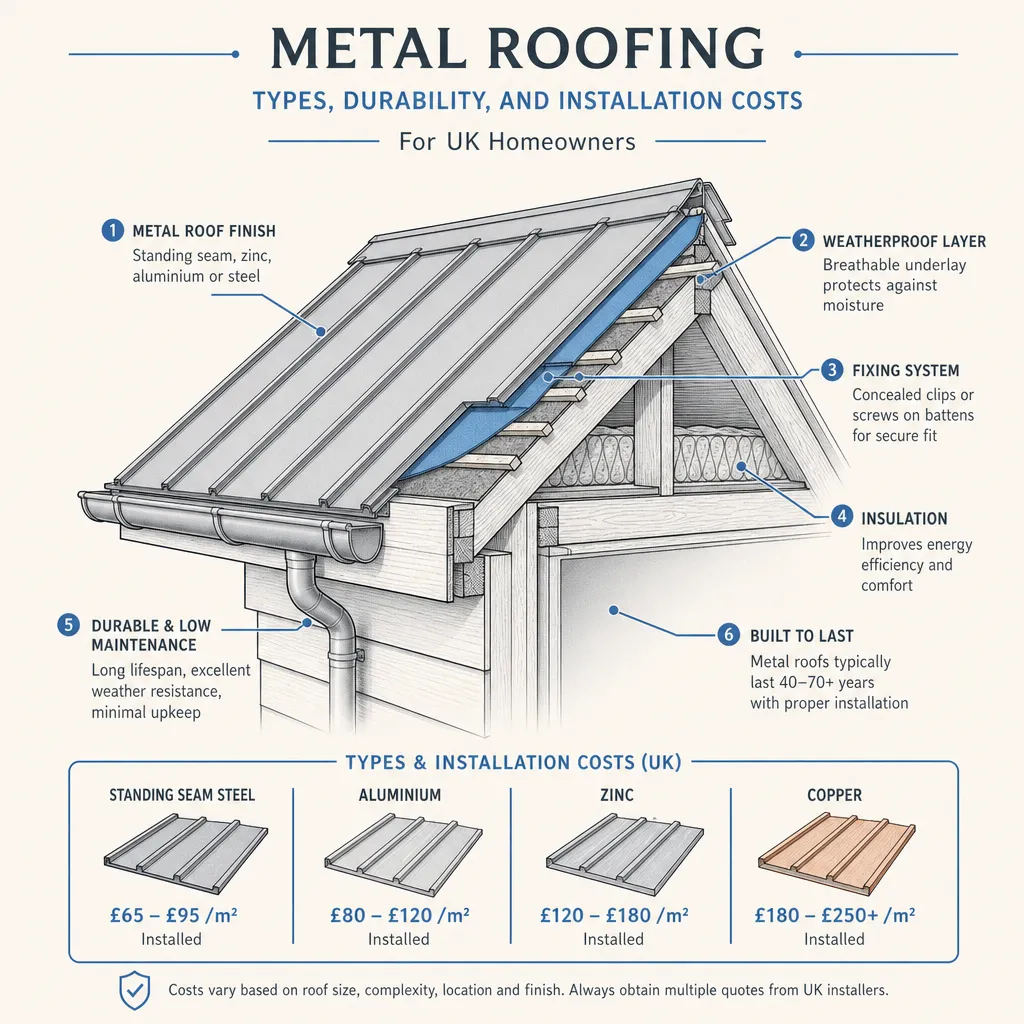
Metal Roofing: Types, Durability, and Installation Costs
Metal roofing in the UK includes standing seam, corrugated sheet, and metal tile systems in steel, aluminium, zinc, or copper.
 Improvement & Build
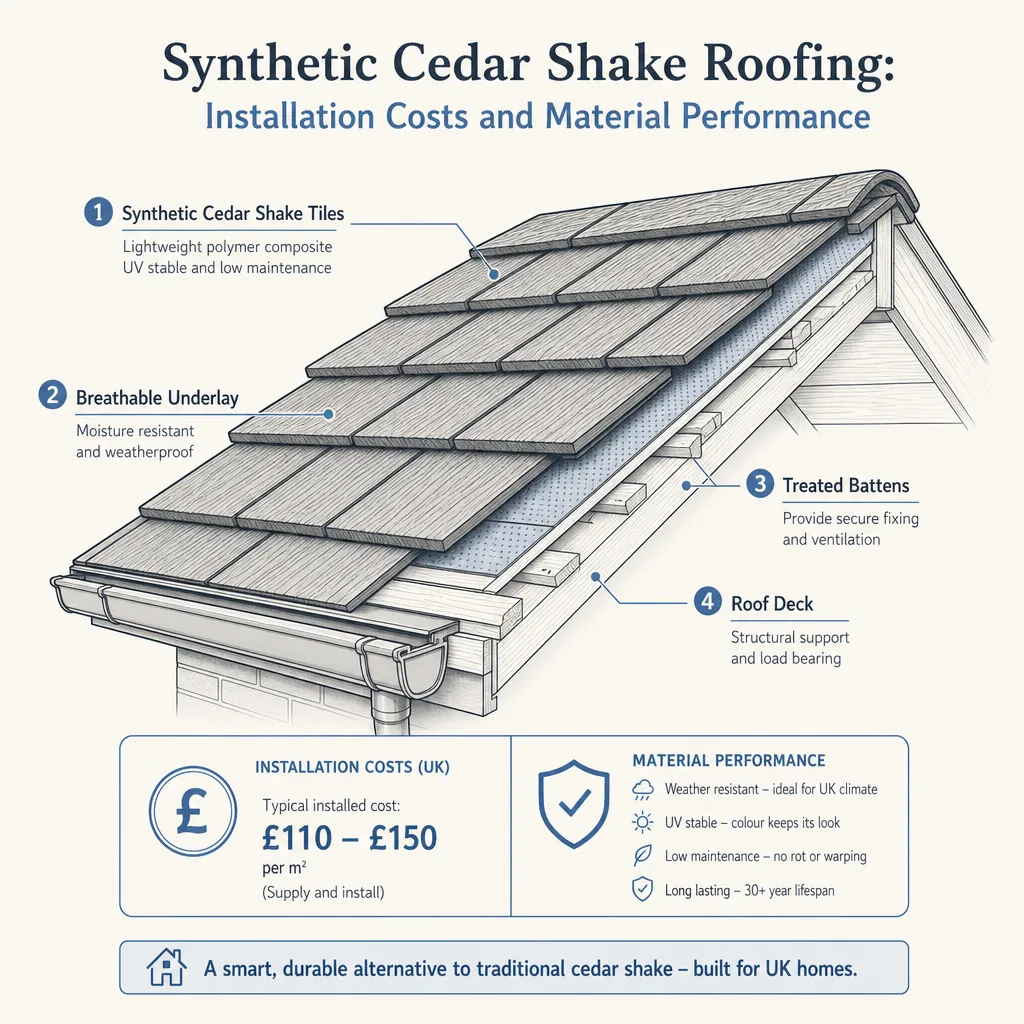
Synthetic Cedar Shake Roofing: Installation Costs and Material Performance
Synthetic cedar shake roofing uses polymer composite, rubber, or fibre-cement tiles to replicate the look of natural cedar wood shingles.
 Improvement & Build
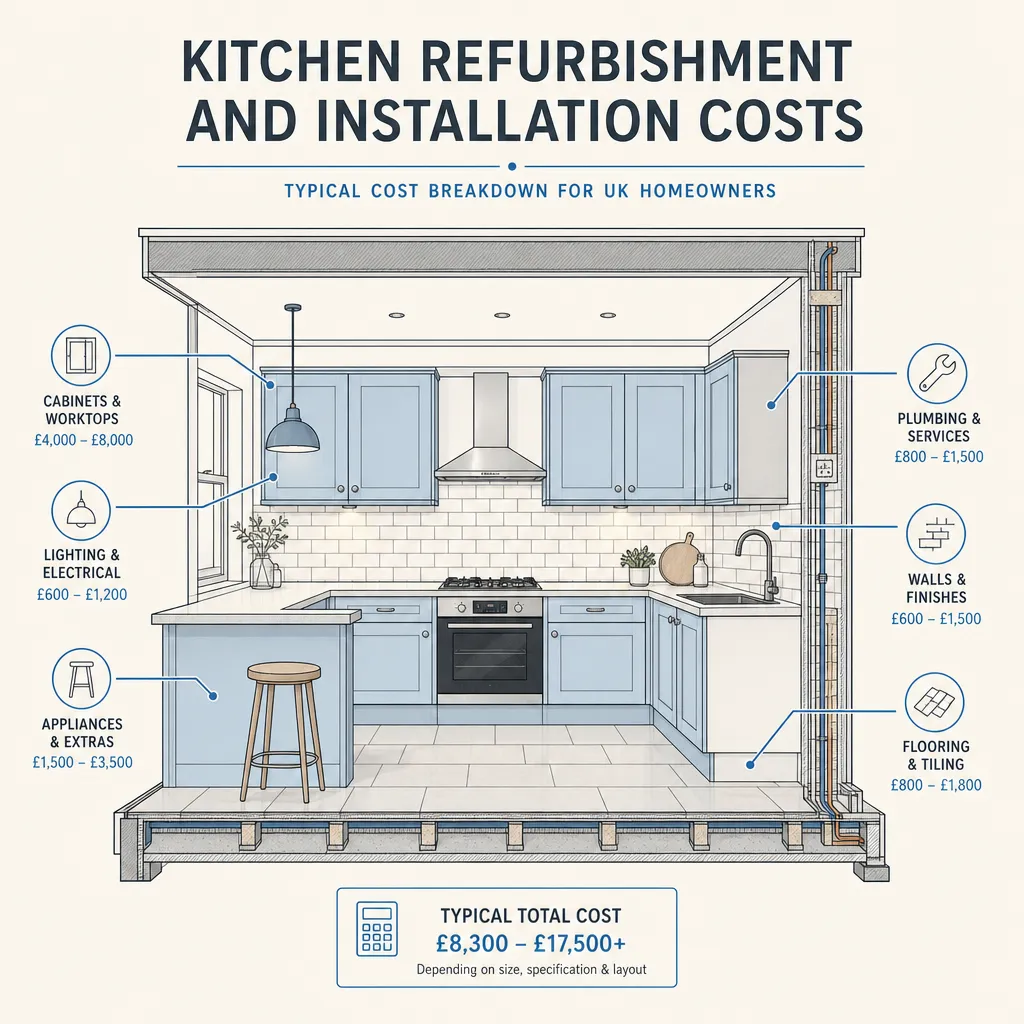
Kitchen Refurbishment and Installation Costs
A kitchen refurbishment in the UK typically costs between £3,000 and £40,000 or more, depending on whether you are replacing units only or carrying out a full design-and-build project.
 Improvement & Build
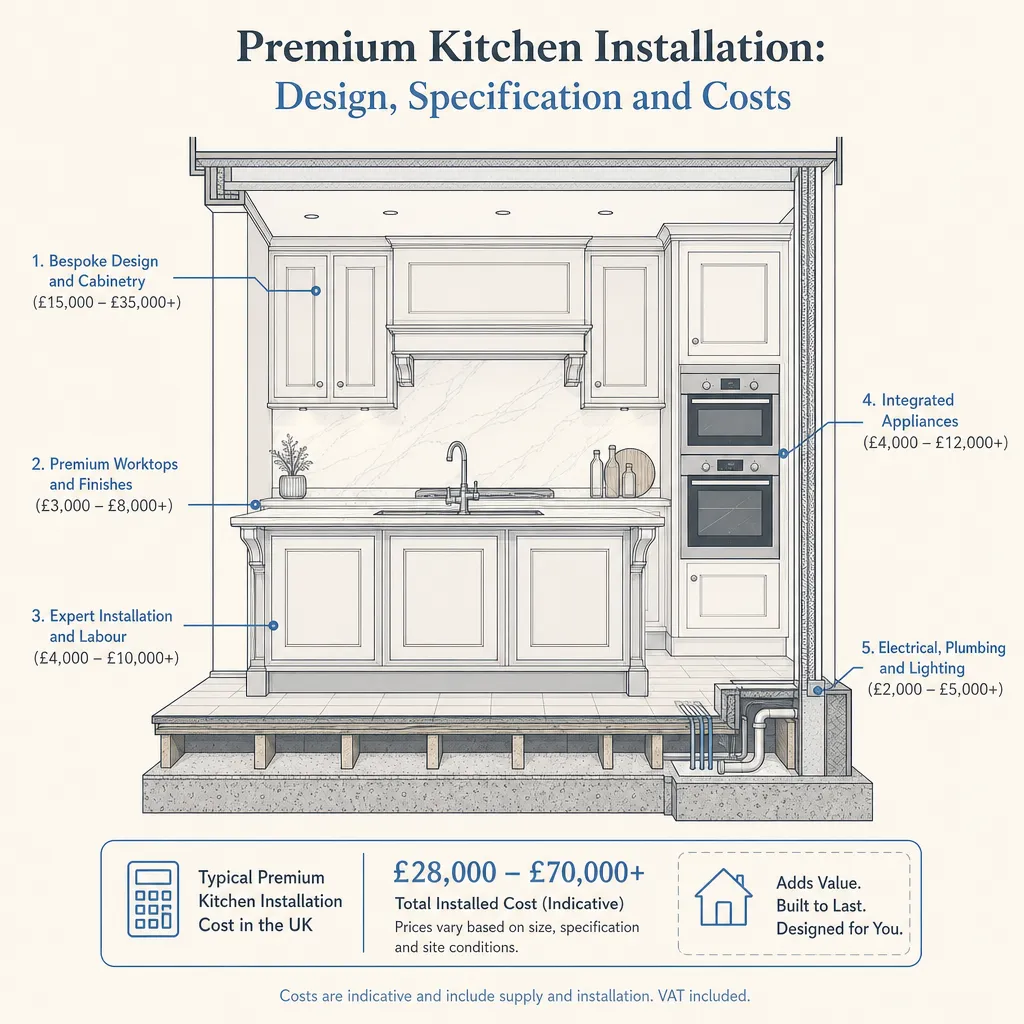
Premium Kitchen Installation: Design, Specification and Costs
A premium kitchen in the UK typically costs £20,000–£80,000 or more installed, depending on cabinetry specification, worktop material, appliance brands, and whether structural changes are needed.
 Improvement & Build
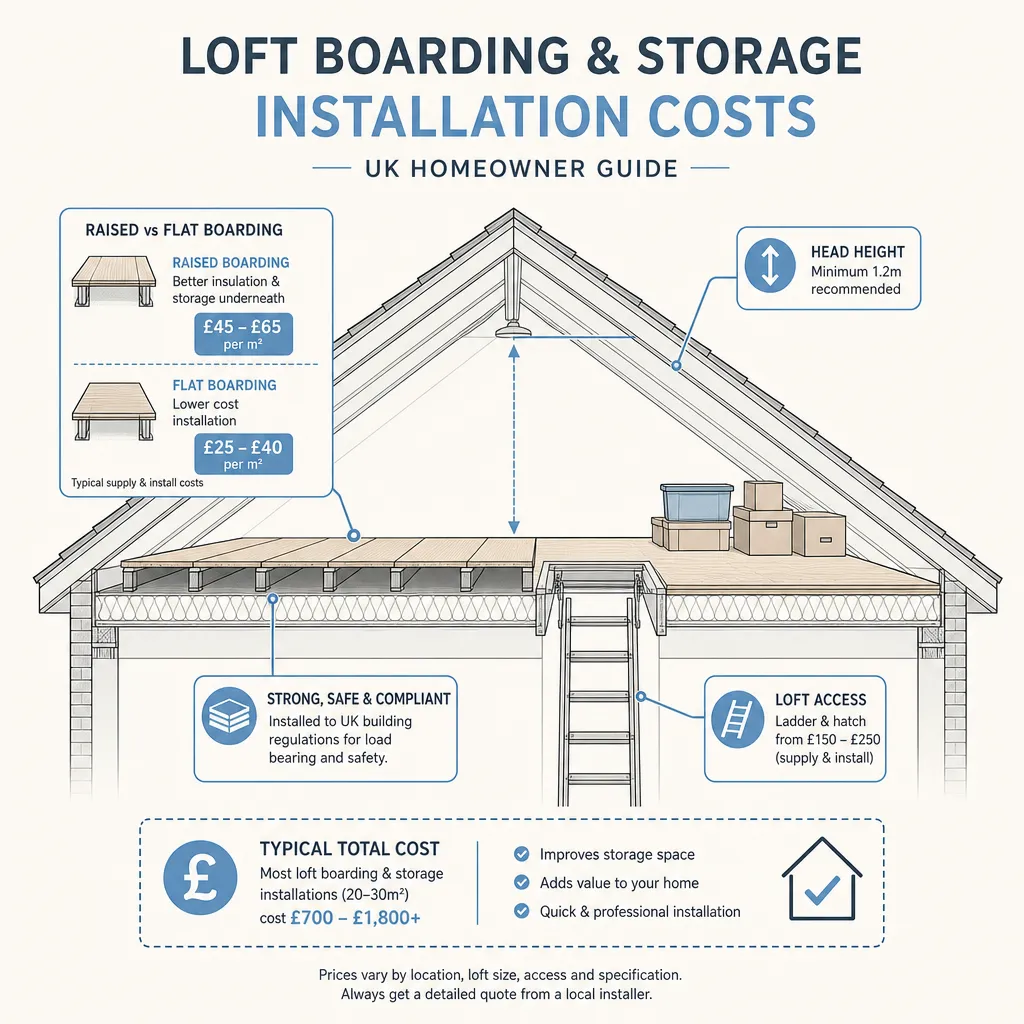
Loft Boarding and Storage Installation Costs
Basic loft boarding for an average semi-detached home costs £500–£1,500; a raised system that preserves insulation runs £800–£2,500.