Post-Construction Cleanup and Waste Management After Build Projects
By Housey · Last reviewed 26th of May 2026
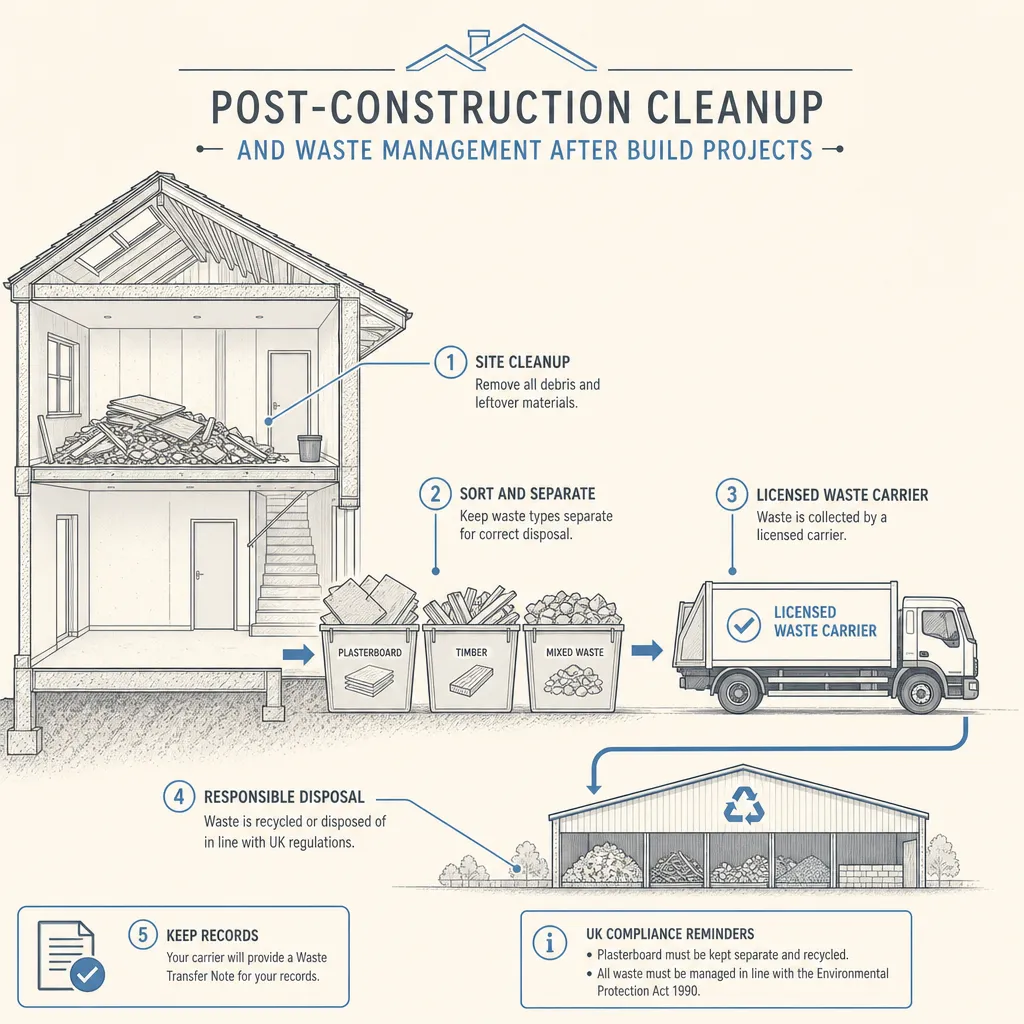
Post-Construction Cleanup and Waste Management After Build Projects
Once a builder leaves site, the homeowner is often left with a mix of debris, off-cuts, packaging, and dust that can feel overwhelming. Knowing what can go in a general skip, what must be segregated, and what legally cannot be disposed of without a licensed contractor helps avoid fines, unexpected delays, and fly-tipping risks. Post-construction waste management is not purely a practical question — it also carries legal duties under UK environmental law that fall on the property owner if the contractor leaves without completing proper clearance.
Key points
- The Environmental Protection Act 1990 (Duty of Care) requires that all controlled waste — including construction and demolition debris — is transferred only to a licensed waste carrier registered with the Environment Agency; fines for passing waste to an unlicensed person can reach £5,000 in a magistrates' court or an unlimited fine on indictment.
- Plasterboard (gypsum board) must be kept separate from general construction waste at landfill sites; mixing it with biodegradable material can produce hydrogen sulphide gas, and many skip companies will not accept mixed loads containing plasterboard.
- A Site Waste Management Plan (SWMP) is no longer legally required in England for projects below £300,000, but your building contract should specify who is responsible for waste removal and site clearance at practical completion.
- Skips placed on a public highway require a permit from the local highway authority; the skip must carry reflective markers and an amber warning light if left overnight.
- Hazardous waste — including asbestos-containing materials, solvent-based paints, and WEEE (waste electrical and electronic equipment) — cannot be placed in a standard skip and must be disposed of through a licensed hazardous waste route.
What waste types does a typical UK build project produce?
Understanding the categories before the project ends helps you plan disposal without delays or additional costs.
Waste type | Typical source | Standard skip? | Specific route needed? |
|---|---|---|---|
Timber off-cuts and boarding | Joinery, studwork, shuttering | Yes | None |
Plasterboard / drywall | Partitions, ceilings | Plasterboard-only skip | Yes — segregated disposal required |
Brickwork and masonry | Demolition, alterations | Yes (heavy-load or RoRo) | None |
Concrete rubble | Foundations, floor slabs | Yes (inerts skip preferred) | Separate from general waste |
Insulation (mineral wool) | Cavity walls, loft, underfloor | Yes | None |
PIR and phenolic insulation board | Floor and roof insulation | Check with skip company | May be refused by some operators |
Packaging (cardboard, plastic film) | All deliveries | Yes | Separate for recycling where possible |
Asbestos-containing materials | Pre-2000 building fabric | No | Licensed contractor required |
Lead paint debris | Pre-1978 painted surfaces | No | Hazardous waste route |
Solvent-based paints and adhesives | Finishes and bonding | No | Hazardous waste route |
Electrical fittings and cabling | Rewires, new circuits | No (WEEE) | Recycling centre or licensed collector |
Your legal duties on waste disposal
As a homeowner, you do not lose your legal responsibilities simply because a contractor is carrying out the work. Under the Duty of Care provisions of the Environmental Protection Act 1990:
- Waste must be transferred only to an authorised person — a registered waste carrier or an exempt organisation recognised by the Environment Agency.
- You are entitled to request — and should retain — a waste transfer note for every load of waste removed from your property. Keep these records for two years.
- If a contractor removes waste and fly-tips it illegally, you may face enforcement action if you cannot demonstrate you took reasonable steps to check their carrier registration.
Check that any waste carrier holds a current registration using the Environment Agency's public register of waste carriers before signing any agreement.
Comparing disposal options for construction waste
What to ask before accepting a quote for waste removal
- Are you registered as a waste carrier with the Environment Agency? What is your registration number?
- Will you provide a waste transfer note for each load removed?
- Does your quote cover all waste types on my list, or are there exclusions?
- Is plasterboard included, or does it require a separate dedicated skip?
- What is the weight limit on the skip, and what additional charges apply if it is exceeded?
- Is VAT included in the quoted price?
- If the skip goes on the public highway, is the highway permit included?
Disposal method comparison
Method | Best for | Key limitations | Indicative cost (2026) |
|---|---|---|---|
Mini skip (1–2 yd³) | Small projects, restricted access | Low capacity | £90–£170 per hire |
Midi or builder's skip (4–6 yd³) | Most domestic build projects | Highway permit needed on public road | £180–£330 per hire |
RoRo (roll-on/roll-off) | Major renovation or demolition | Requires suitable hardstanding | £350–£650+ per hire |
Man-and-van clearance | Mixed or bulky loads needing sorting | Variable pricing; check carrier registration | £150–£400 per clearance |
Council HWRC | Small quantities of non-hazardous waste | Many councils restrict construction rubble volumes | Usually free (restrictions apply) |
Licensed hazardous waste contractor | Asbestos, chemicals, lead paint debris | Mandatory for these materials | Varies — obtain quotes |
Indicative UK costs, last reviewed 2026-05-26. Prices vary by region, material type, and weight. Obtain at least two written quotes.
Cleaning the site: a practical sequence
Working through clearance in order reduces effort and the risk of cross-contaminating waste streams.
- Identify and segregate hazardous materials first. If asbestos, lead paint, or chemical residues are present or suspected, do not begin general clearance in that area until specialist removal is complete.
- Remove large structural debris — brickwork, concrete rubble, and timber framing — before fine sweeping. Heavy items are easier to load when the area is otherwise clear.
- Separate plasterboard into its own pile or dedicated skip from the outset; do not allow it to mix with general rubble.
- Remove packaging and recyclables — cardboard, plastic shrink-wrap, and metal banding can go to a recycling centre rather than landfill.
- Carry out a damp dust-down. Newly plastered or sanded surfaces generate fine silica-containing dust. Use damp mopping methods or a vacuum fitted with an H-class filter; do not dry sweep, which simply redistributes dust into the air.
- Final clean of surfaces and fittings — window sills, skirtings, kitchen units, and sanitaryware cleaned with appropriate products before the property is occupied.
- Check and clear drains. Blocked gullies and surface water drains are a common legacy of building work. Flush through and clear any debris or cement slurry before handover.
Post-construction site clearance checklist
Hazardous materials: what you must not handle yourself
Two categories require particular care and must not be disturbed without specialist involvement:
Asbestos-containing materials (ACMs): Any material in a pre-2000 building that may contain asbestos should be surveyed by a competent person before it is disturbed. Removal of asbestos insulation, asbestos insulating board (AIB), and sprayed coatings must be carried out by a licensed asbestos contractor under the HSE's licensing requirements. The Control of Asbestos Regulations 2012 makes unlicensed removal a criminal offence in these cases.
Lead-containing paint debris: Paint in pre-1978 UK properties often contains lead. Dust from sanding or stripping lead paint is a significant health hazard. Contained working methods, appropriate PPE, and hazardous waste disposal are required; do not place lead paint debris in a general skip.
If you discover unexpected materials during clearance — textured coatings that may be Artex, pipe lagging, or loose-fill cavity insulation — stop work in that area and arrange a professional assessment before continuing.
When to get professional help
Seek professional involvement in any of the following situations:
- Asbestos or suspected asbestos is present — assessment and removal by a licensed contractor is legally required for notifiable materials.
- Large volumes of mixed hazardous or difficult waste require a documented waste management approach.
- Your contractor has left without completing waste removal — if the contract places this obligation on them, seek legal advice before removing waste yourself to avoid inadvertently taking on liability.
- Chemical contamination or a spill is discovered — the Environment Agency may need to be notified and a specialist environmental contractor engaged.
How Housey can help
A project manager can oversee site clearance as part of their end-of-project responsibilities, coordinating licensed waste carriers, managing hazardous material removal, and ensuring the site is handed over cleanly and in compliance with waste legislation. Housey can connect you with experienced project managers who understand the full lifecycle of a UK build project, including the often-overlooked clearance and handover phase.
Frequently asked questions
Who is responsible for site clearance — me or my builder?
This depends on your contract. Most JCT-based domestic building contracts specify that the contractor is responsible for removing construction waste before practical completion. If the contract is silent or the builder has already left, legal responsibility for compliant waste disposal falls on the person in control of the site — typically the homeowner.
Can I put construction waste in my household bin?
No. Local authority household waste collections are not designed for construction and demolition debris, and most councils explicitly exclude it. Small quantities of non-hazardous waste can often be taken to a household waste recycling centre (HWRC), but many councils limit the amount of rubble or plasterboard accepted per visit.
Do I need a permit to hire a skip for building work?
You need a highway authority permit only if the skip is placed on a public road, pavement, or verge. A skip on your own driveway or private land does not require a permit, though you should notify your insurer if the skip is positioned in a way that could create a hazard or obstruction.
How should I dispose of unused building materials?
Unused materials in good condition can be offered to local reuse networks such as Community RePaint for leftover paint, or Freegle for timber, bricks, and tiles. Materials that cannot be reused should go through a licensed waste carrier with a waste transfer note. Never pass them to an unregistered person, even free of charge.
Sources and further reading
- Waste Duty of Care Code of Practice — GOV.UK
- Environment Agency: search the waste carriers register — Environment Agency
- Control of Asbestos Regulations 2012 — HSE
- Disposing of hazardous waste — GOV.UK
Useful next reads
 Planning & Pre-Build
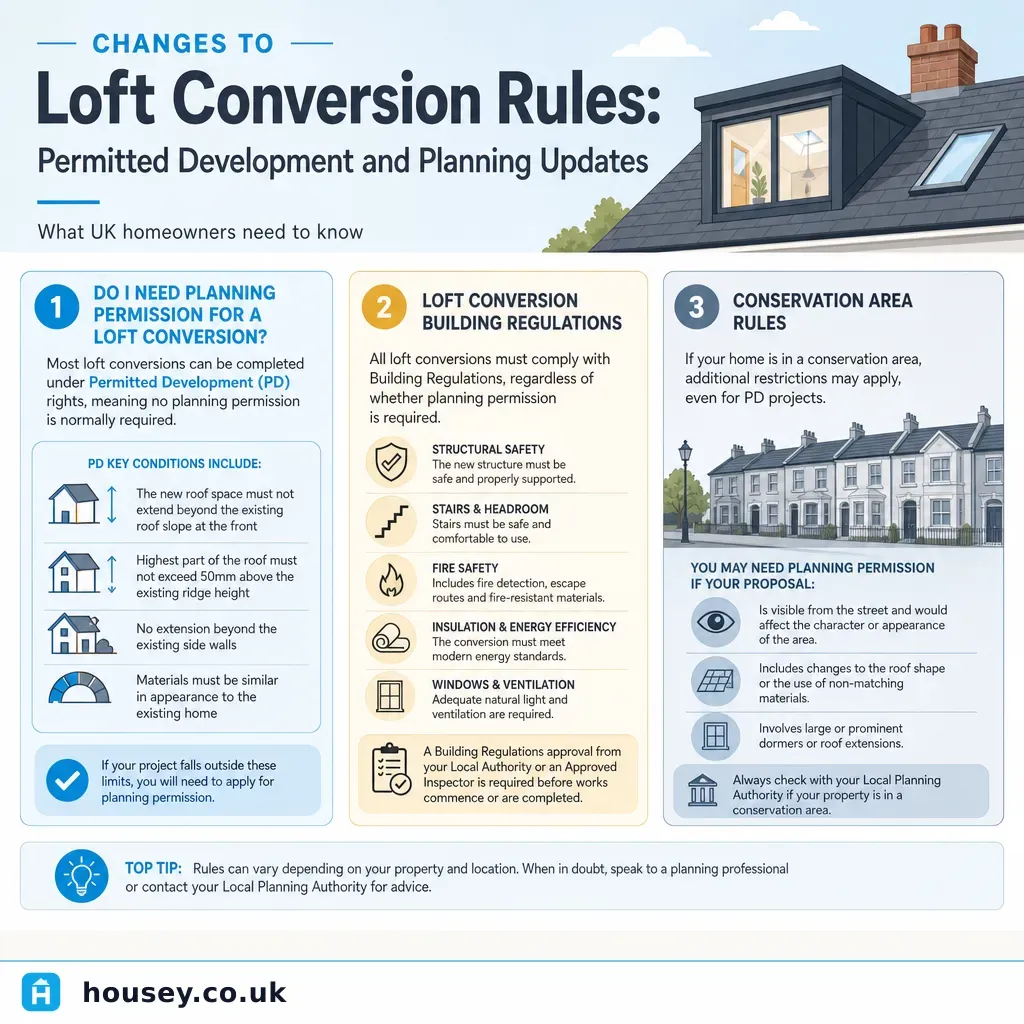
Changes to Loft Conversion Rules: Permitted Development and Planning Updates
In England, most loft conversions on standard houses qualify as Permitted Development under Class B of the GPDO 2015, allowing up to 40 cubic metres (terraced) or 50 cubic metres (detached or semi-detached) without a planning application — if conditions are met.
 Planning & Pre-Build
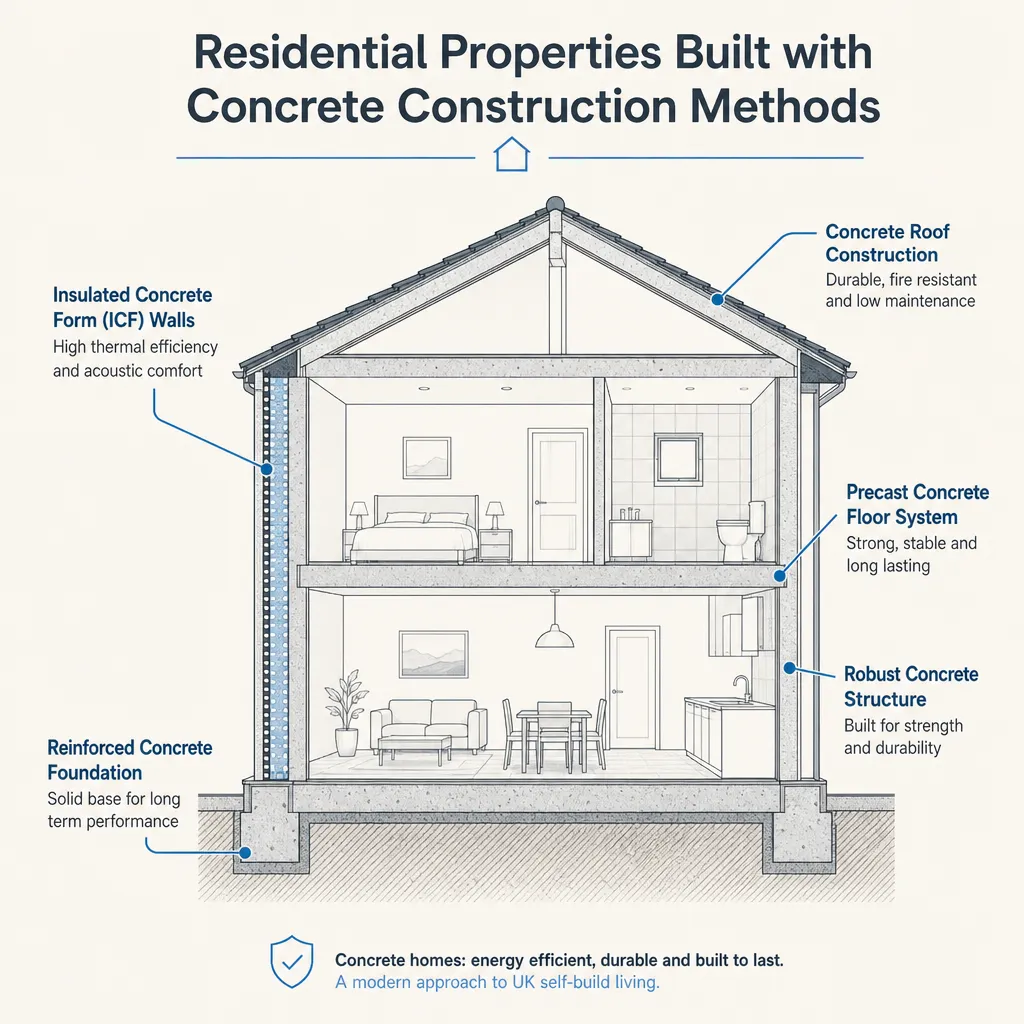
Residential Properties Built with Concrete Construction Methods
UK homes are built using several concrete methods: in-situ cast concrete, precast panel systems, insulating concrete formwork (ICF), and older non-traditional types such as Wimpey No-Fines and Laing Easiform.
 Planning & Pre-Build
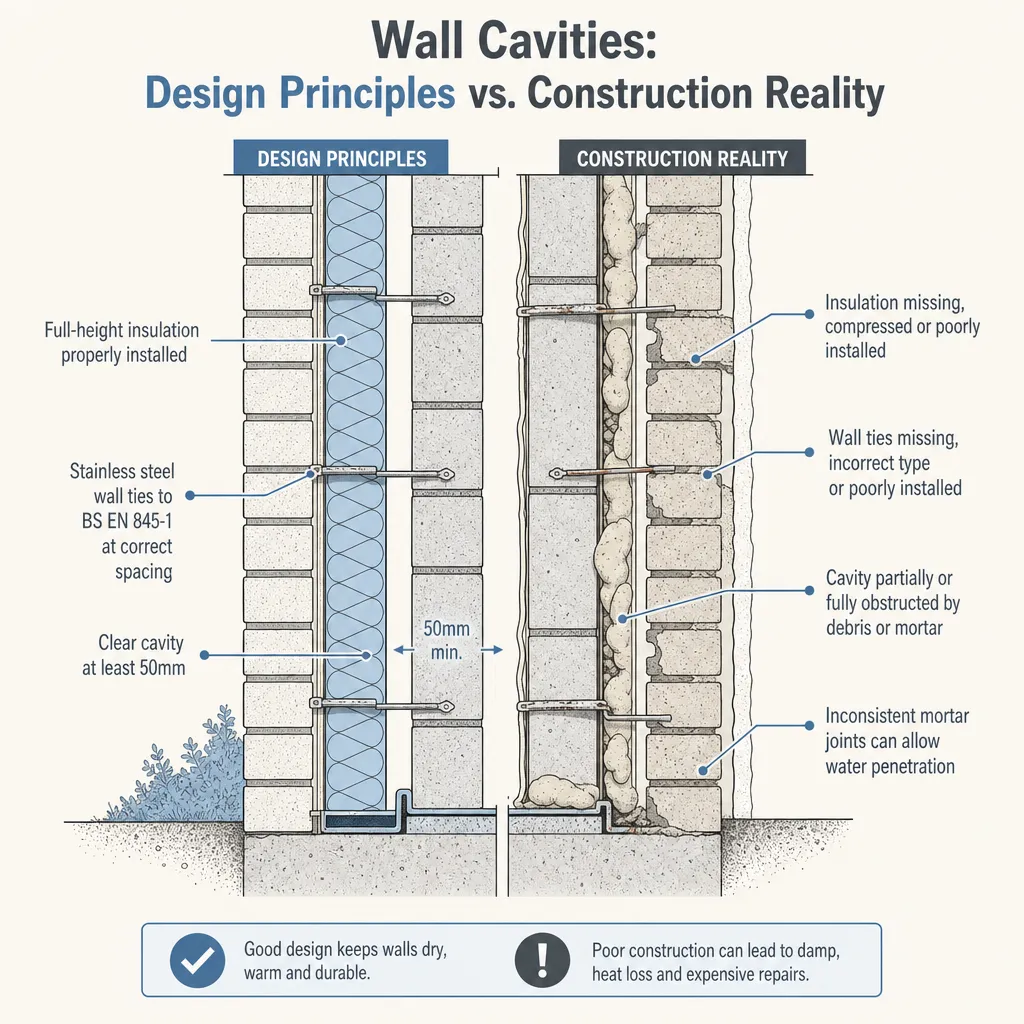
Wall Cavities: Design Principles vs. Construction Reality
A UK cavity wall is designed to resist weather, control heat loss, and structurally link two masonry leaves.
 Planning & Pre-Build
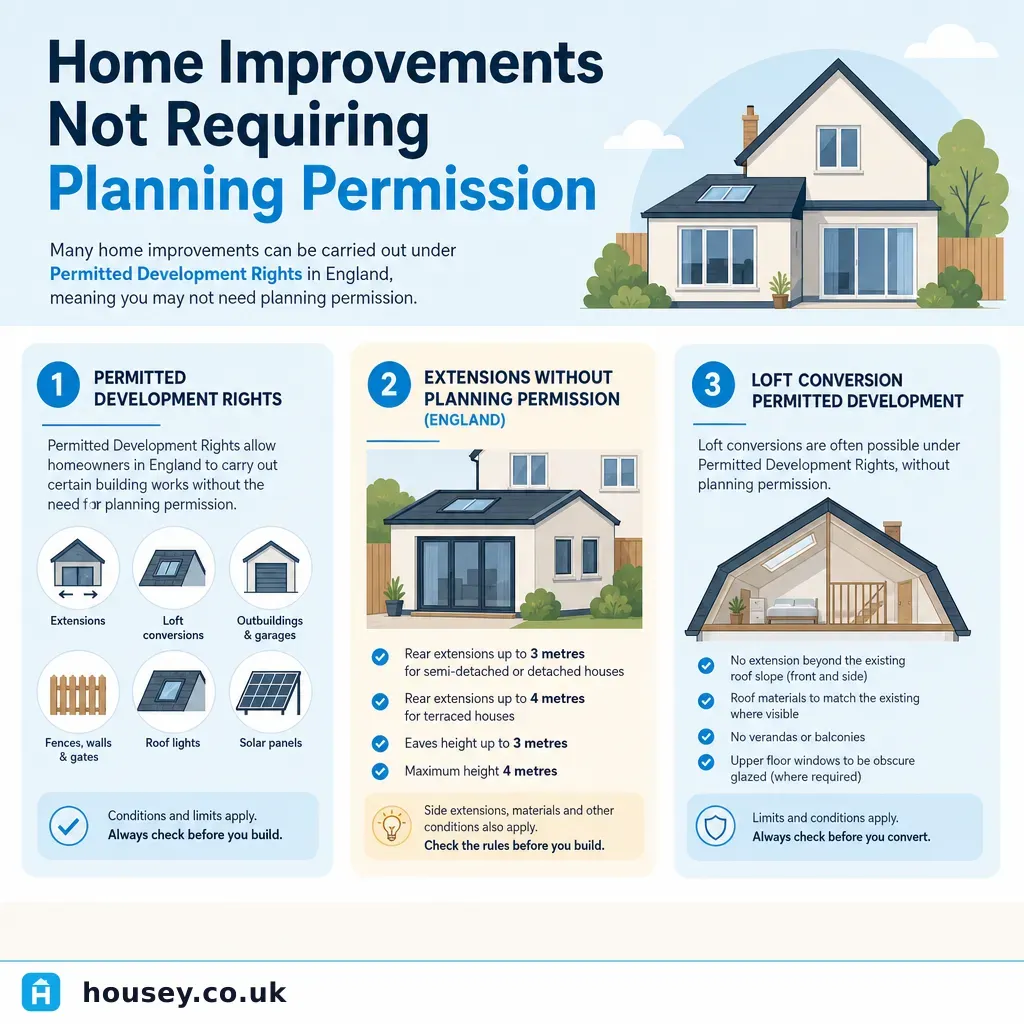
Home Improvements Not Requiring Planning Permission
Many common home improvements in England fall under Permitted Development Rights and do not require a planning application.
 Planning & Pre-Build
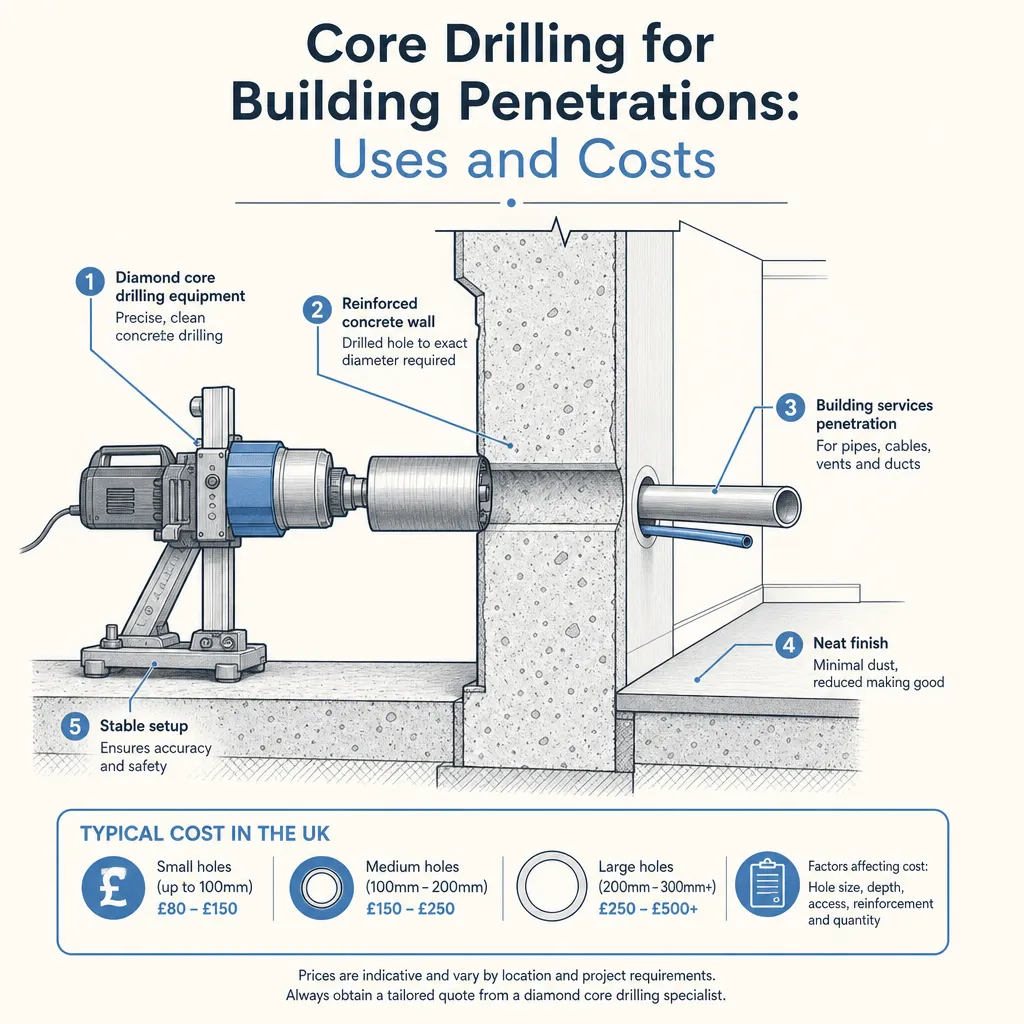
Core Drilling for Building Penetrations: Uses and Costs
Core drilling uses diamond-tipped equipment to cut clean holes through concrete, masonry, or block for pipes, ducts, cables, and building services.