Pre-Drywall Inspection Costs: Budget for Your Build
By Housey · Last reviewed 1st of June 2026
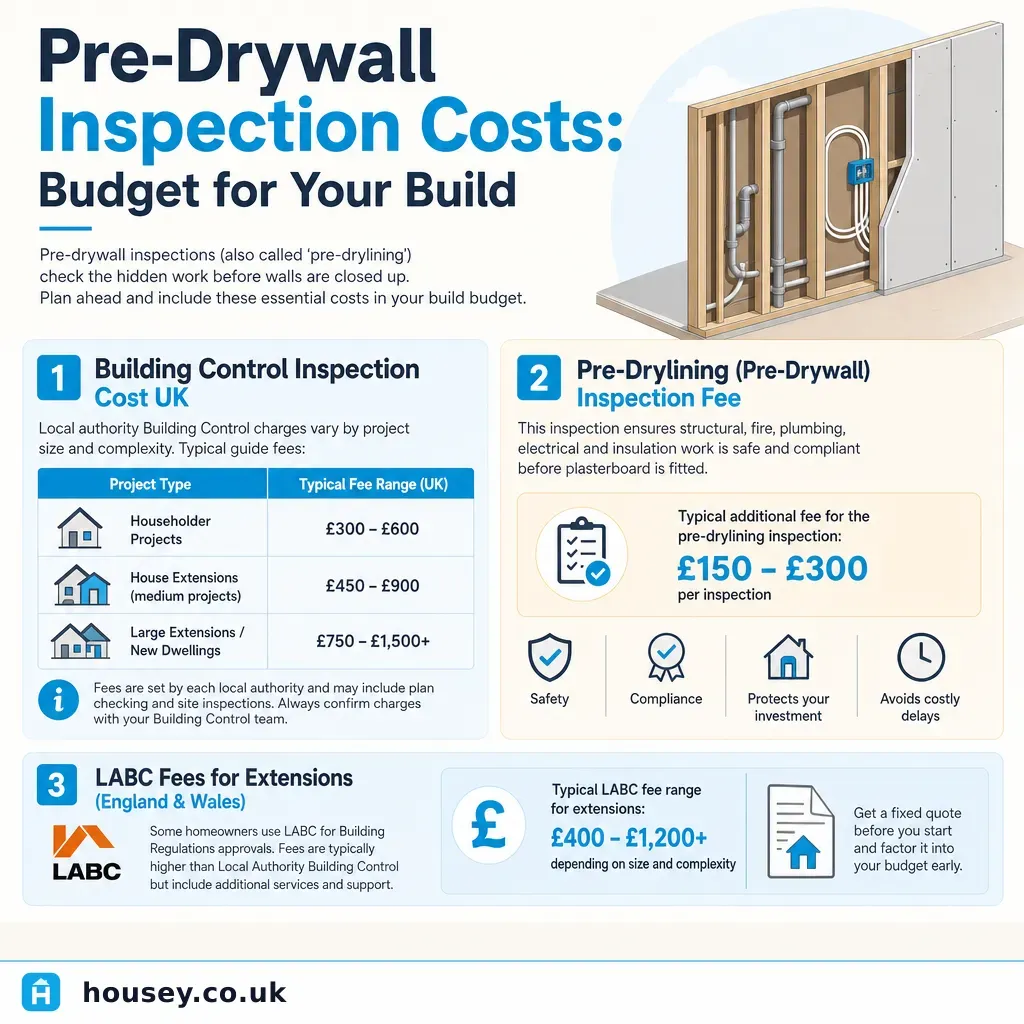
Pre-Drywall Inspection Costs: Budget for Your Build
When you notify building control before boarding up first-fix work, you are fulfilling a legal duty that is already built into most building control application fees. Understanding what those fees cover, what is charged separately, and what drives costs helps you avoid surprises when budgeting a UK extension, loft conversion, or new build — and helps you compare quotes between local authority and private inspectors on a like-for-like basis.
Key points
- Building control fees in England and Wales are split into a plan-check charge and an inspection charge; the pre-drylining stage inspection is included within the inspection charge — it is not billed as a separate item.
- Since the Building Safety Act 2022, Approved Inspectors have been replaced by Registered Building Inspectors (RBIs) employed by registered building control approvers (RBCAs).
- Local Authority Building Control (LABC) fees for a single-storey extension typically range from £500 to £1,500 in total (indicative, last reviewed 2026-06-01); fees vary significantly by council.
- LABC fees are outside the scope of VAT; private Registered Building Inspector fees attract 20% VAT — a significant difference when comparing quotes.
- Structural warranty stage inspections (NHBC, Premier Guarantee, LABC Warranty) are costs entirely separate from building control and are arranged directly with the warranty provider.
What building control fees cover
A standard building control application covers all required stage inspections for that project, including:
- Commencement notification
- Foundation excavations
- DPC and DPM
- Structural frame — the pre-drylining or first-fix stage
- Drainage
- Roof structure
- Final completion inspection and certificate
The pre-drylining inspection is one stage within your overall building control fee, not an additional charge in most standard cases. However, some situations do attract extra costs:
Scenario | Typical additional cost | Notes |
|---|---|---|
Re-inspection after a failed first visit | £100–£300 per re-visit (indicative) | Charged by some BCBs where work is not ready or non-compliant |
Regularisation (work already done without notice) | 150%–200% of standard fee | Retrospective building control sign-off |
Additional structural calculation review | £150–£400 (indicative) | Depends on complexity and BCB |
Part P competent-person scheme registration | £150–£500/year for the contractor | Self-certification cost; not a direct homeowner charge |
Indicative UK costs, last reviewed 2026-06-01. Fees vary by local authority and project type.
Local authority versus private building control: a cost comparison
| Local Authority Building Control (LABC) | Private Registered Building Inspector (RBI) |
|---|---|---|
Fee structure | Fixed published schedule | Negotiated; competitive tender |
VAT | Exempt from VAT | 20% VAT applies |
Typical single-storey extension fee | £500–£1,500 | £400–£1,400 + VAT |
Typical new-build detached house fee | £1,000–£5,000 | £900–£4,500 + VAT |
Geographic availability | All areas of England and Wales | Variable; more concentrated in urban areas |
Completion certificate | Yes | Yes |
Recourse if dispute arises | Council complaints process | Registered Building Control Approver regulator |
Indicative UK costs, last reviewed 2026-06-01. Always request written quotes and confirm VAT treatment before instructing.
The VAT difference is material in practice. On a £1,000 building control fee, 20% VAT adds £200. LABC fees are outside the scope of VAT by statute; private RBI fees are not. Always confirm VAT treatment in writing when comparing quotes between providers.
Cost drivers: why fees vary
Building control fees are not uniform across England and Wales. Key factors include:
- Project type and scale: A single-storey kitchen extension attracts a lower fee than a two-storey side extension or a new detached dwelling.
- Gross floor area (GFA): Many fee schedules are banded by floor area — check the specific table for your council.
- Local authority area: London boroughs typically charge toward the upper end of published ranges; some rural councils charge less.
- Plan complexity: Complex structural designs, unusual materials, or detailed energy compliance calculations increase plan-check time and may increase the fee.
- Number of dwellings: Fees increase for multiple-unit new-build schemes — not a flat multiple.
- Timber frame or modular construction: May require additional specialist plan review and can trigger structural warranty inspection costs on top of building control.
Structural warranty inspection costs
If you are building a new home or undertaking a significant conversion, a structural warranty is normally required by mortgage lenders. Providers include NHBC (Buildmark), Premier Guarantee, LABC Warranty, and Build-Zone. These providers conduct their own stage inspections — including a pre-drylining stage — separately from building control.
Indicative structural warranty costs (last reviewed 2026-06-01):
- NHBC Buildmark: typically 0.5%–1.5% of build cost, covering a 10-year structural warranty with stage inspections included in the premium.
- Third-party warranty providers: quoted on build value, property type, and unit count; often competitive with NHBC for standard self-build projects.
Always obtain at least two structural warranty quotes; premium levels and inspection requirements vary between providers and some lenders have an approved-provider list.
What to ask before accepting a quote
Before appointing a building control body or Registered Building Inspector, ask for written answers to:
- What is the total fee, including plan check and all stage inspections?
- Is VAT included or excluded in your quotation?
- How many stage inspection visits are included in this fee?
- Is there an additional charge for re-inspections if work is not ready or requires remediation?
- What is your expected turnaround time for plan-check approval?
- Will you provide written sign-off records after each stage inspection?
- What is the process if I need to vary the approved plans during the build?
- How should I notify you for each stage, and what notice period is required?
Important limitations
Building control fee information changes regularly. Councils revise their published fee schedules, typically annually, and private RBI fees are market-based. The cost ranges in this article are indicative only (last reviewed 2026-06-01) and should not be used as a substitute for obtaining written quotes for your specific project. Always confirm VAT treatment and any re-inspection charges in writing before instructing a BCB.
What to ask a qualified professional
- Can you provide a written, itemised fee schedule before I formally appoint you?
- Is your fee structured on floor area, project value, or a fixed schedule?
- Are repeat-inspection or re-visit fees charged, and at what rate?
- Do your fees include structural warranty stage inspections, or are those arranged separately?
- When will the completion certificate be issued once all inspections are passed?
- What documentation will I receive after each stage inspection to demonstrate compliance?
When to get professional help
Seek advice from a building control professional if:
- You are unsure whether a full plans application or a building notice is appropriate for your project — the choice affects how fees are structured and when formal approval is received
- Your project is above three storeys or involves a higher-risk building under the Building Safety Act 2022, which carries different fee structures and regulatory requirements
- Work has already been carried out without building control notification — a retrospective regularisation application is needed and typically costs 150%–200% of the standard fee
- You want to compare costs between a local authority BCB and a private RBI before committing
How Housey can help
Housey connects you with qualified building control consultants who can provide itemised, written fee quotes, guide you through the correct application route, and co-ordinate all stage inspections throughout your project.
Frequently asked questions
Are building control fees refundable if my project does not go ahead?
Local authority building control fees are generally non-refundable once a plans application has been submitted and the drawings checked. Some councils retain the full plan-check element and refund a proportion of the inspection charge if no site visits have taken place. Always check with your specific local authority before submitting.
Do I pay building control fees or does my builder?
Building control fees are paid by the person carrying out the work — in practice often the homeowner who submits the application, though some contractors include the fee in their tender price. Always clarify in writing who is responsible for submitting and paying the building control application before work starts.
Is building control more expensive in London?
London borough fees tend to fall toward the upper end of published ranges, reflecting higher operating costs. Indicative total fees for a single-storey extension in London are typically £900–£1,500 (last reviewed 2026-06-01). Always check your specific local authority's published fee schedule rather than relying on national averages.
Can I use a private Registered Building Inspector instead of my council?
Yes. Since the Building Safety Act 2022, private inspection is provided by Registered Building Inspectors employed by registered building control approvers. You can request quotes from both LABC and private RBIs and compare. Note that LABC fees are VAT-exempt, while private RBI fees attract 20% VAT — a material difference on larger projects.
Sources and further reading
- Building Regulations 2010 — legislation.gov.uk
- Building Safety Act 2022 — legislation.gov.uk
- Local Authority Building Control (LABC) — labc.co.uk
- Planning Portal: Building Regulations — planningportal.co.uk
- NHBC: Buildmark Warranty — nhbc.co.uk
Useful next reads
 Planning & Pre-Build
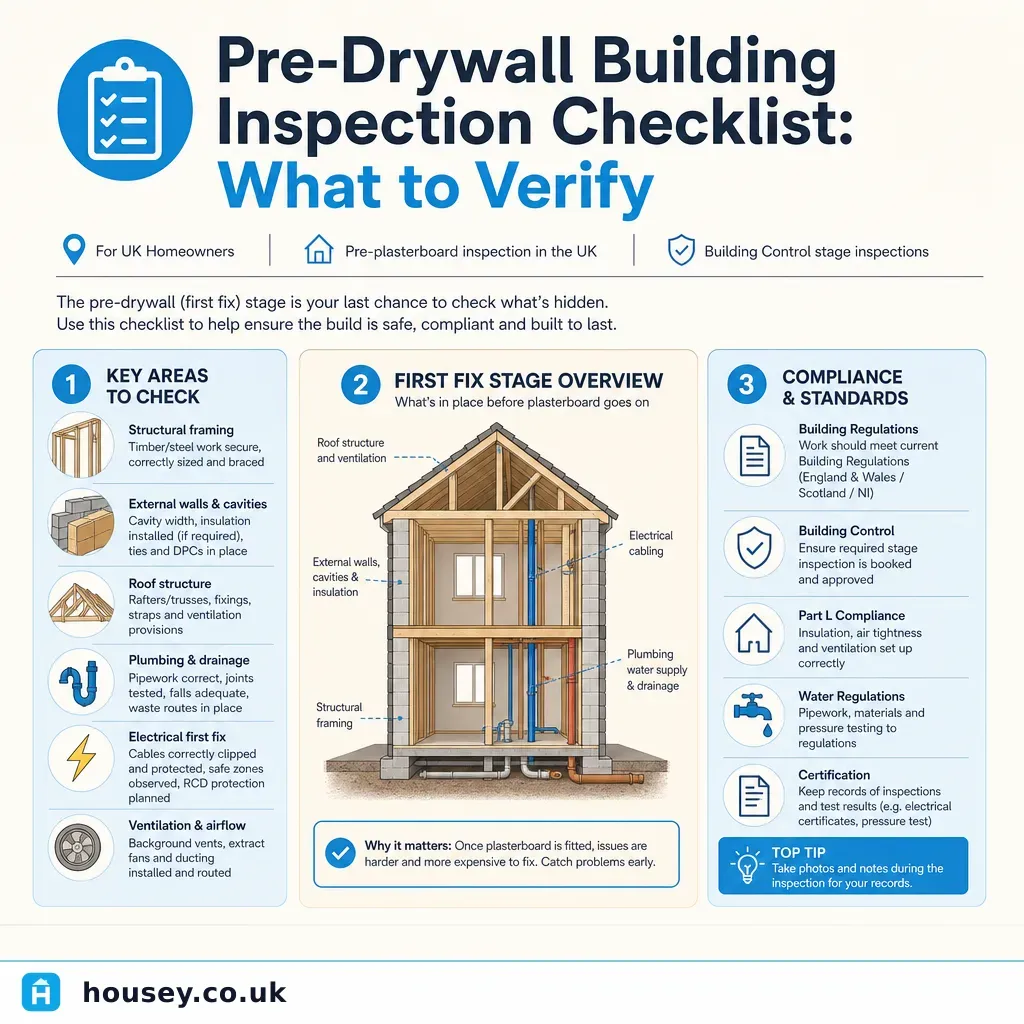
Pre-Drywall Building Inspection Checklist: What to Verify
Before plasterboarding or drylining a UK extension or new build, a building control inspector checks structural elements, first-fix wiring, pipework, gas, insulation, and fire stopping.
 Planning & Pre-Build
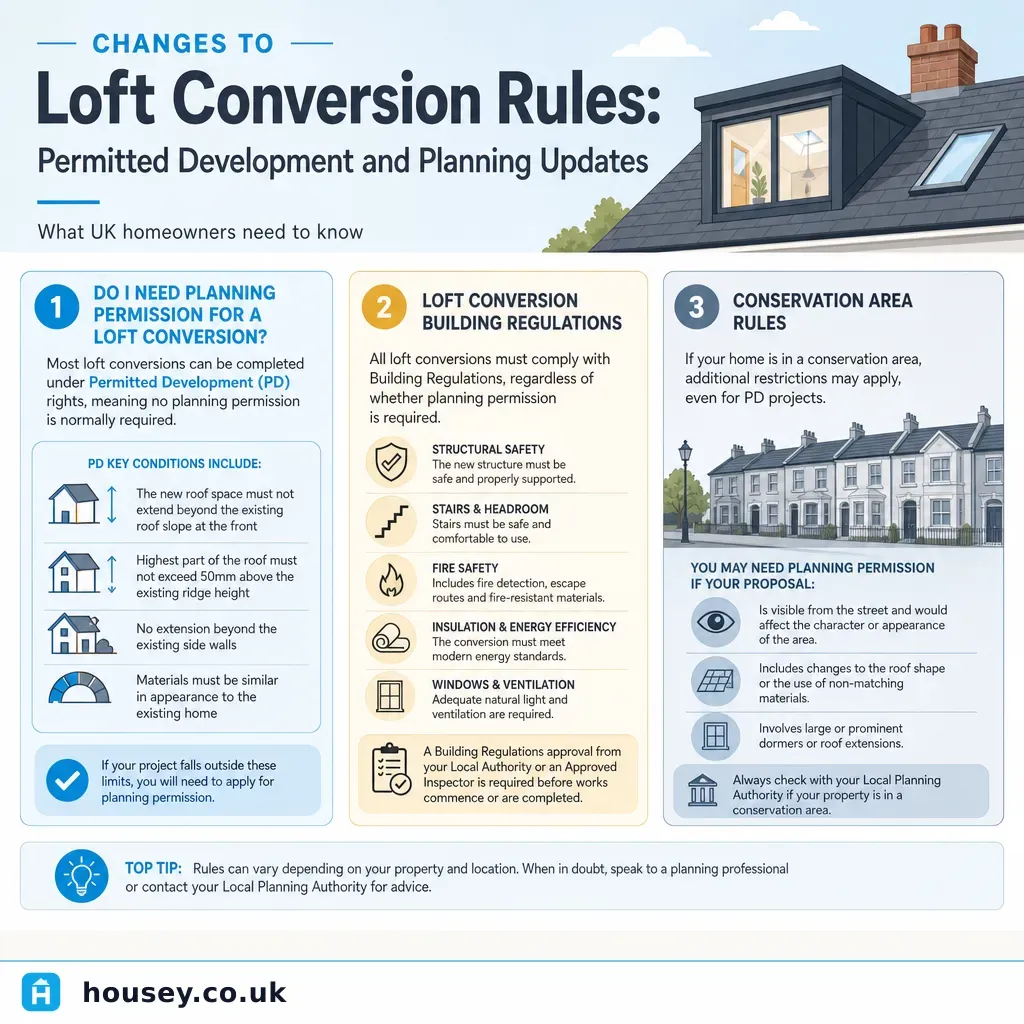
Changes to Loft Conversion Rules: Permitted Development and Planning Updates
In England, most loft conversions on standard houses qualify as Permitted Development under Class B of the GPDO 2015, allowing up to 40 cubic metres (terraced) or 50 cubic metres (detached or semi-detached) without a planning application — if conditions are met.
 Planning & Pre-Build
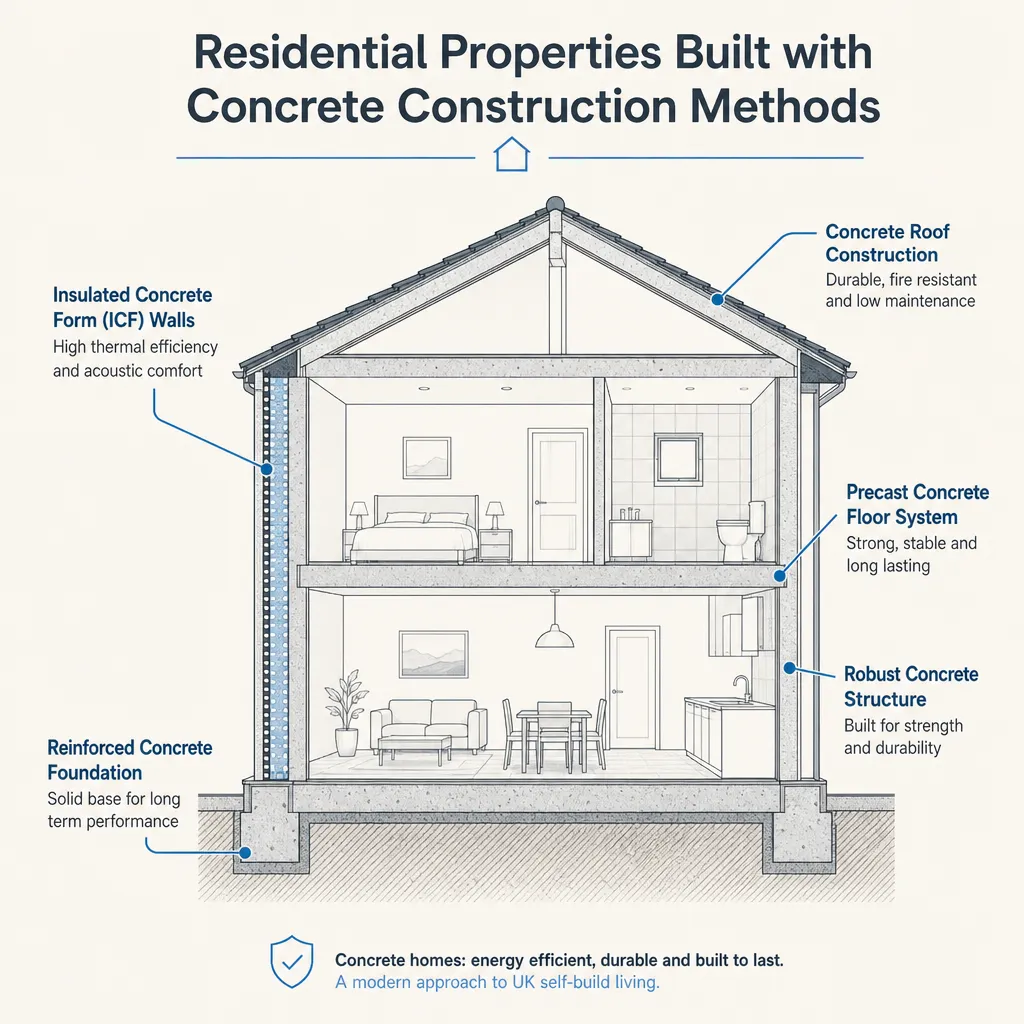
Residential Properties Built with Concrete Construction Methods
UK homes are built using several concrete methods: in-situ cast concrete, precast panel systems, insulating concrete formwork (ICF), and older non-traditional types such as Wimpey No-Fines and Laing Easiform.
 Planning & Pre-Build
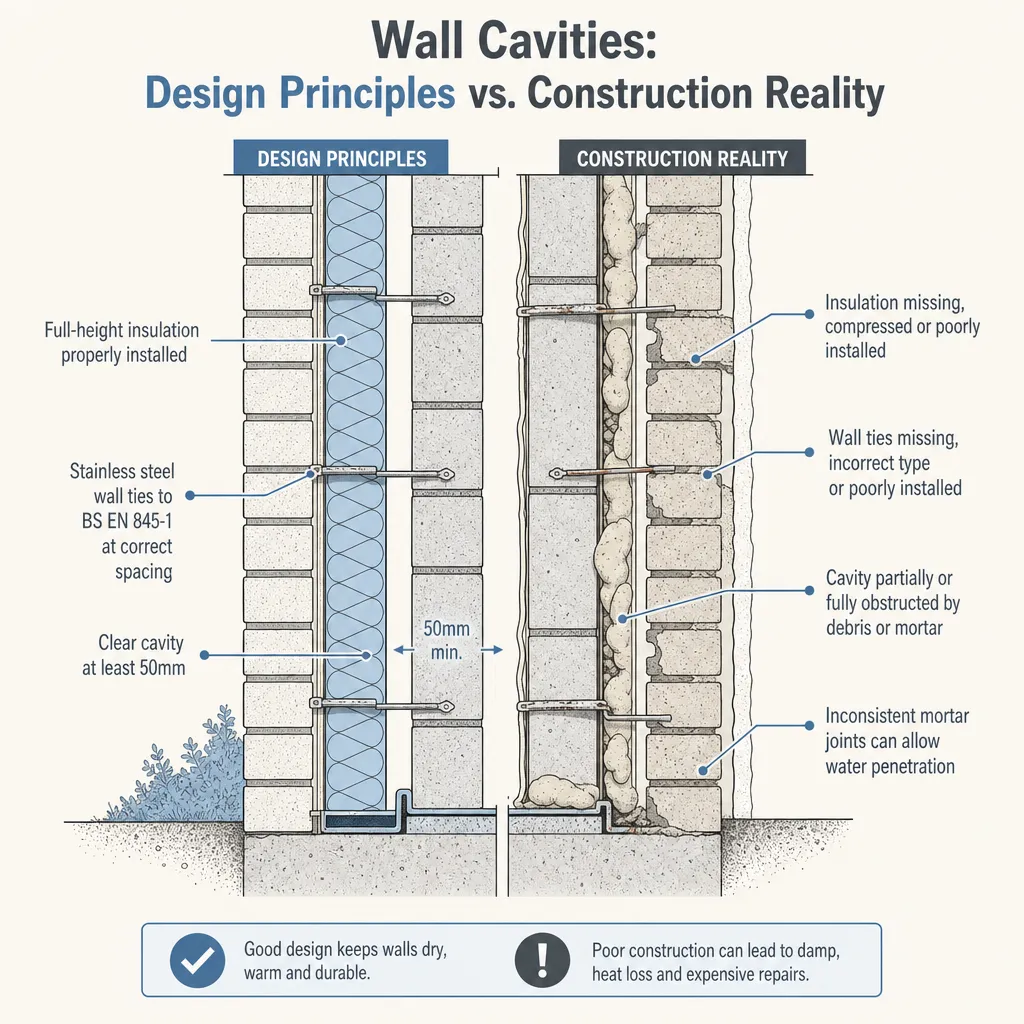
Wall Cavities: Design Principles vs. Construction Reality
A UK cavity wall is designed to resist weather, control heat loss, and structurally link two masonry leaves.
 Planning & Pre-Build
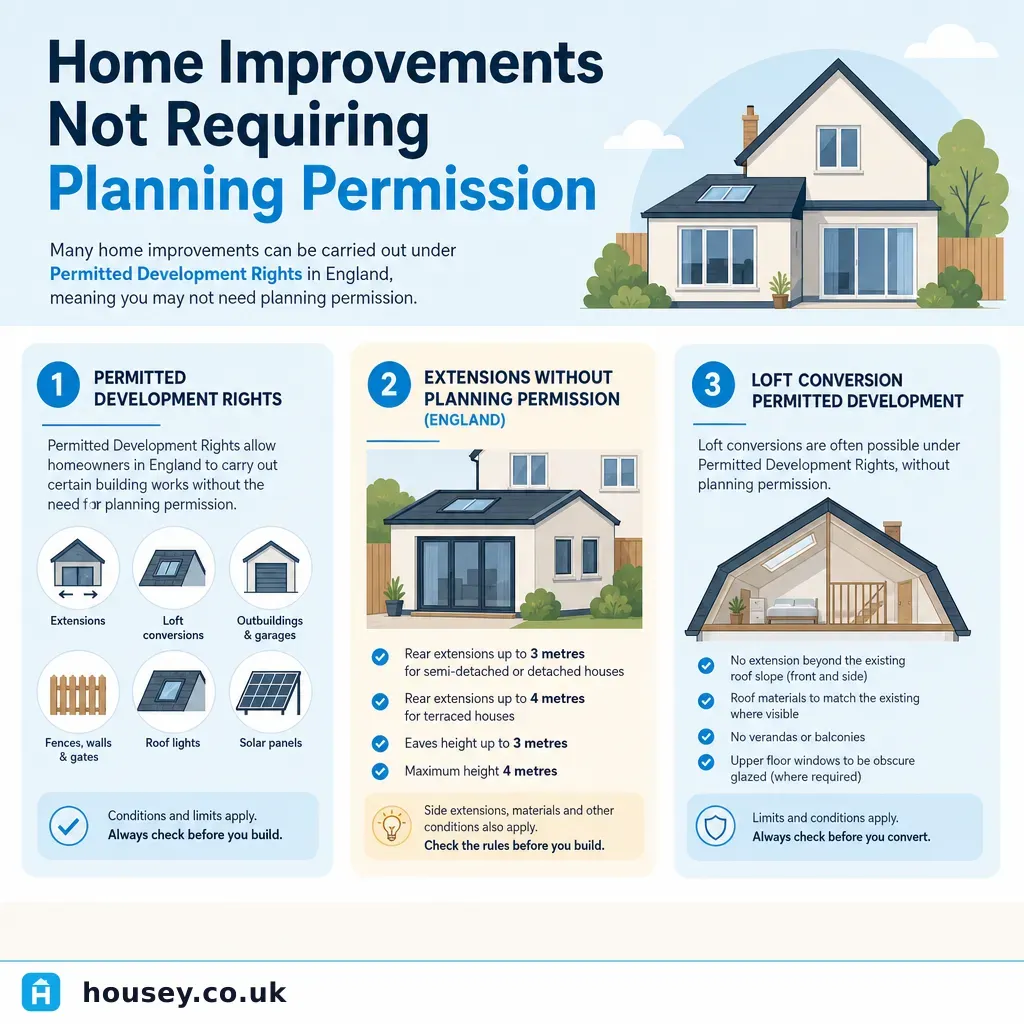
Home Improvements Not Requiring Planning Permission
Many common home improvements in England fall under Permitted Development Rights and do not require a planning application.