Premium Home Extensions and Luxury Property Enhancements
By Housey · Last reviewed 31st of May 2026
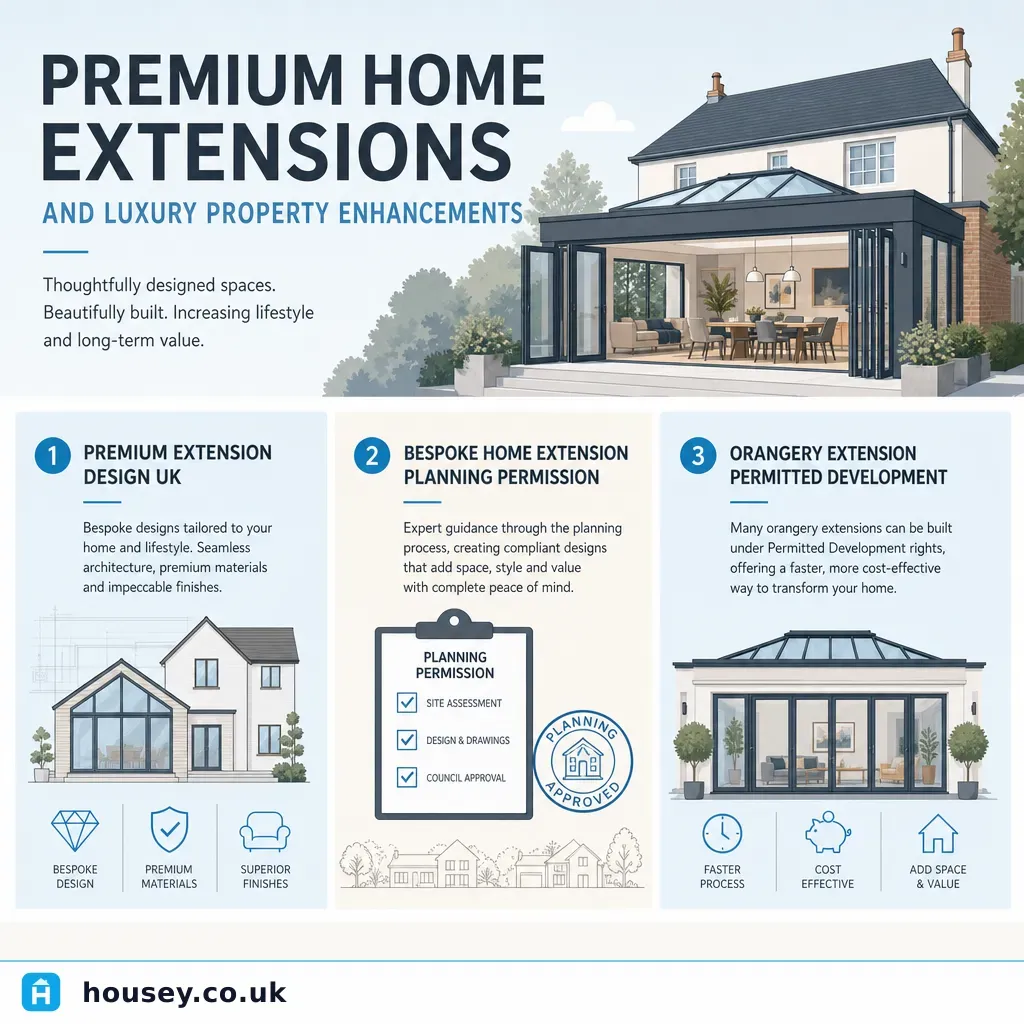
Premium Home Extensions and Luxury Property Enhancements
A high-specification extension is one of the most significant investments a UK homeowner can make in their property. Whether the project is a glazed contemporary rear addition, a substantial orangery, or a wrap-around structure with bespoke joinery and underfloor heating, the gap between an aspirational brief and a successful outcome often comes down to design quality, contractor selection, and early planning. Getting these decisions right from the outset avoids costly remediation — and project delays — later in the process.
Key points
- Single-storey rear extensions up to 4 m deep (detached houses) or 3 m deep (all other house types) may fall within permitted development rights in England; extensions up to 8 m (detached) or 6 m (other) may be permitted under the Prior Approval Neighbour Consultation Scheme.
- Extensions within 3 m of a neighbouring property's structure, or 6 m for certain foundation configurations, trigger notice obligations under the Party Wall etc. Act 1996.
- Building Regulations approval is required for virtually all structural extensions, regardless of planning status — Part A (structure), Part B (fire safety), Part L 2021 (energy efficiency), and Part F (ventilation) are all typically relevant.
- VAT is charged at the standard rate of 20% on most residential extension construction work; there is no reduced rate for householder extensions.
- An architect's fee for a high-specification extension typically ranges from 8–15% of the construction cost, depending on the scope of service and project complexity.
What defines a premium extension?
A premium or luxury home extension goes beyond a straightforward functional addition. Common characteristics include:
- High-specification glazing: structural glass, frameless systems, slimline aluminium frames, and automated rooflights
- Premium materials: natural stone flooring, bespoke joinery, handmade tiles, and bespoke lighting designed by a lighting consultant
- Technical systems integration: underfloor heating (wet or electric), mechanical ventilation with heat recovery (MVHR), and smart-home control systems specified from the design stage
- Architectural ambition: split-level living, double-height volumes, roof terraces, or cantilevered structural elements
- Landscape integration: a considered relationship between the interior and garden, often developed alongside the building design
Such projects require contractors with demonstrable experience in high-specification residential work, rigorous quality management, and close coordination between specialist trades.
Planning and permitted development: what applies to your extension
Planning permission is required for extensions that exceed permitted development (PD) thresholds or where PD rights have been removed. In England, the key thresholds for single-storey rear extensions under the Town and Country Planning (General Permitted Development) (England) Order 2015 are:
- Up to 4 m deep for detached houses, or 3 m deep for all other house types — permitted development (subject to conditions on materials and height)
- Up to 8 m deep (detached) or 6 m deep (other) — available via the Prior Approval Neighbour Consultation Scheme, subject to a 42-day neighbour notification and LPA assessment
Premium projects frequently exceed these thresholds or incorporate elements — side extensions, raised sections, large rooflights — that require a full planning application. Conservation area designation, Article 4 Directions, and listed building status remove PD rights entirely and may require conservation area consent or listed building consent in addition to planning permission.
Always verify your property's PD rights via a pre-application enquiry with your local planning authority before design work is finalised. Rules vary by council and by the history of any prior extensions to the property.
Comparing extension types for premium homes
Extension type | Planning position | Best suited to | Key considerations |
|---|---|---|---|
Single-storey rear — standard depth | Usually permitted development | Most house types; open-plan family space | PD height and materials conditions apply |
Single-storey rear — extended (6/8 m) | Prior Approval required | Larger detached or semi-detached with depth | 42-day neighbour consultation; LPA assessment |
Double-storey rear | Full planning permission | Maximising floor area; suburban plots | Overlooking and daylight impact on neighbours |
Wraparound (rear and side combined) | Full planning permission | Detached and semi-detached houses | Side element may engage PD limits for the whole scheme |
Glazed or structural glass extension | Usually PD or full planning | Contemporary homes; south- or east-facing aspects | Planners may impose conditions on glazing specification |
Orangery | Usually PD if within depth limits | Period or Arts and Crafts homes | Planning conditions may restrict material palette |
Basement or lower-ground extension | Usually full planning; sometimes PD | Urban plots with limited footprint | Structural engineer essential; Party Wall Act almost always applies |
A worked UK property scenario
Situation: The owners of a 1930s semi-detached home in Surrey want to create a 7 m deep single-storey rear extension with a frameless glazed roof and bi-fold doors, incorporating an open-plan kitchen, dining, and living space with underfloor heating and an integrated audio-visual system.
How the project unfolded:
- A pre-application enquiry confirmed PD rights were intact but that a 7 m depth requires Prior Approval via the Neighbour Consultation Scheme.
- An architect was appointed; a measured survey of the existing house was completed before design work began.
- The NCS notification was submitted; one neighbour raised concerns about daylight. The LPA assessed the impact and issued a Prior Approval decision — approved with a condition on roof light specification — after 37 days.
- A Building Regulations Full Plans application was submitted. A structural engineer designed the steel frame and strip foundation; a Part L compliance report was prepared by the M&E consultant.
- A Party Wall Award was agreed with the adjoining owner (the proposed foundation depth triggered the 6 m rule).
- Three contractors submitted competitive tenders; a design-and-build package was used for the glazing element.
- On-site duration: approximately 20 weeks. A project manager co-ordinated the specialist trades and managed the programme.
Indicative project cost for this property type and specification: £180,000–£250,000 including VAT. Indicative UK costs, last reviewed 2026-05-31. Actual costs vary significantly with location, specification, contractor, and ground conditions — obtain at least three comparable quotes.
What to ask before accepting a quote
- Is the quote a fixed price or a schedule of rates? Under what circumstances can it change?
- What is included: architectural design, planning fees, Building Regulations, structural engineering, glazing package, underfloor heating commissioning?
- What qualifications and accreditations does the principal contractor hold, and are key subcontractors named?
- What warranties will be provided for the structure, glazing system, and M&E installations?
- Who manages the project day-to-day, and how frequently will you receive formal progress updates?
- Is VAT included, and at what rate?
- What is the programme, and what are the key milestone dates for key stages?
- How are variations — changes to scope agreed during the build — priced and formally approved?
- What insurances does the contractor hold: public liability, employers' liability, and contract works (all-risks) cover?
When to get professional help
A premium extension almost always requires a team of professionals. Engage the following before work begins:
- RIBA architect: from the outset — concept design, planning application, technical specification, and contract administration during construction
- Structural engineer: required for any extension affecting the existing structure, new foundations, or a steel frame
- Party wall surveyor: as soon as proximity to neighbours is confirmed — obligations under the Party Wall etc. Act 1996 are strict and delays in serving notice can hold up the project programme
- Project manager: strongly advisable for high-value projects with multiple specialist trades and a complex programme
- M&E consultant: for wet underfloor heating, MVHR, and integrated smart-home specification on larger projects
Do not commence work on site without Building Regulations approval in place. Unauthorised work can prevent you from selling the property in future and may require a costly retrospective regularisation application.
How Housey can help
Housey connects homeowners planning premium extensions with experienced extension builders, specialist design-and-build firms, and project managers who understand the demands of high-specification residential work. Whether you need a single specialist trade or a fully managed project team, Housey helps you find and compare qualified professionals.
Frequently asked questions
Do I always need planning permission for a premium home extension?
Not always. Many single-storey rear extensions fall within permitted development rights in England. However, properties in conservation areas, listed buildings, flats, and those subject to Article 4 Directions do not benefit from permitted development. Larger extensions may require Prior Approval under the Neighbour Consultation Scheme. Always verify your property's status with your local planning authority before finalising the design.
How long does a premium extension take to complete?
A high-specification single-storey rear extension typically takes 16–28 weeks on site, depending on size, specification, and ground conditions. Allow additional time before works start: up to 8 weeks for a householder planning application, 42 days for Prior Approval, Building Regulations approval, and any Party Wall Award negotiations. Complex multi-storey or basement extensions take considerably longer.
Do I need a party wall agreement for a home extension?
You need to serve notice under the Party Wall etc. Act 1996 if excavation for your extension is within 3 m of a neighbouring property's foundation (or 6 m for certain foundation depths), or if the extension is built on or against a shared wall. Your architect or a party wall surveyor can advise on whether the Act is triggered and help you serve the correct notices.
Will a luxury extension add value to my property?
Extensions generally add value, but the relationship between cost and added value varies by location, property type, and the local market ceiling. In high-value areas, a well-designed premium extension can return close to or above its cost in added value; in lower-value markets, there may be a point of diminishing returns. A RICS-registered valuer can provide a realistic opinion on likely value impact before you commit.
Sources and further reading
- Permitted development rights for householders: technical guidance — GOV.UK
- Party Wall etc. Act 1996: explanatory booklet — GOV.UK
- Building regulations approval: overview — GOV.UK
- RIBA: find an architect — Royal Institute of British Architects
- RICS professional standards and guidance — RICS
Useful next reads
 Improvement & Build
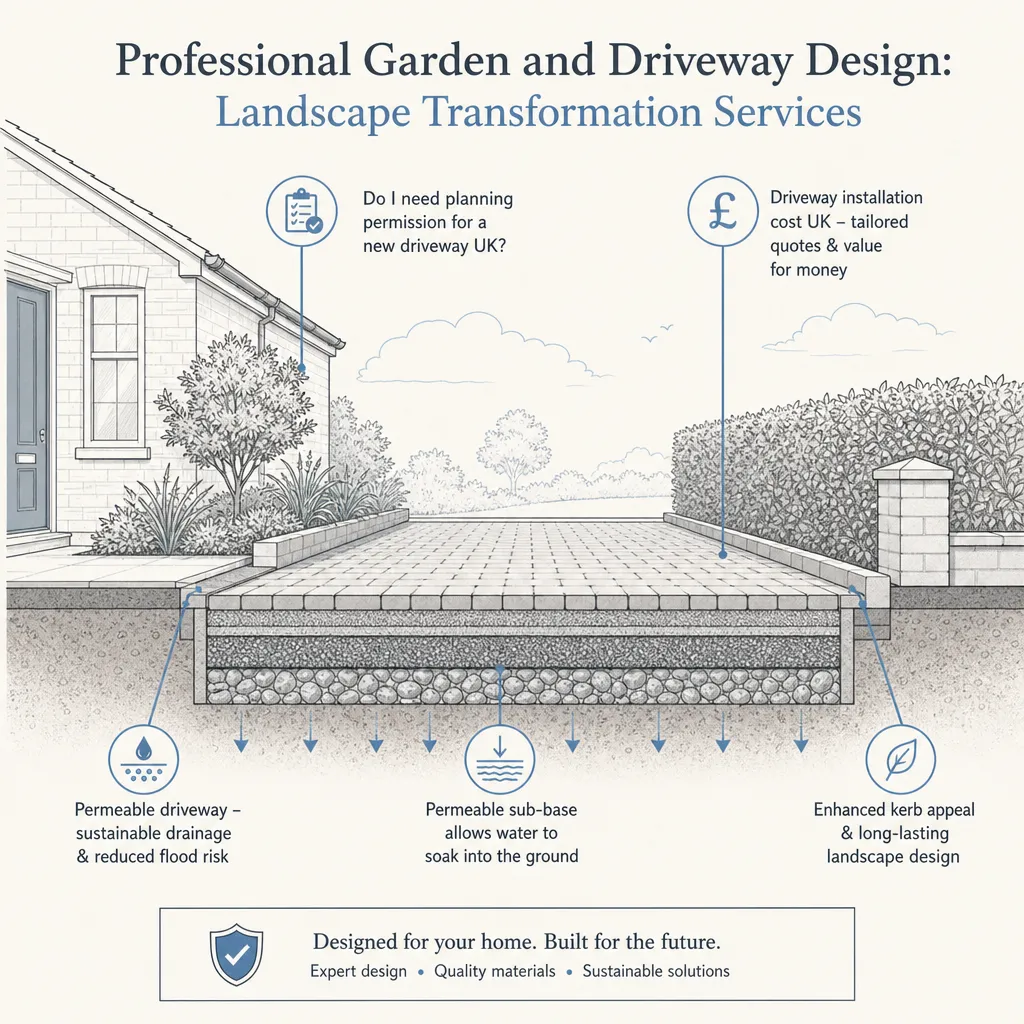
Professional Garden and Driveway Design: Landscape Transformation Services
Garden and driveway design combines hard landscaping — paving, block paving, gravel, resin — with planting and layout to improve kerb appeal and functionality.
 Improvement & Build
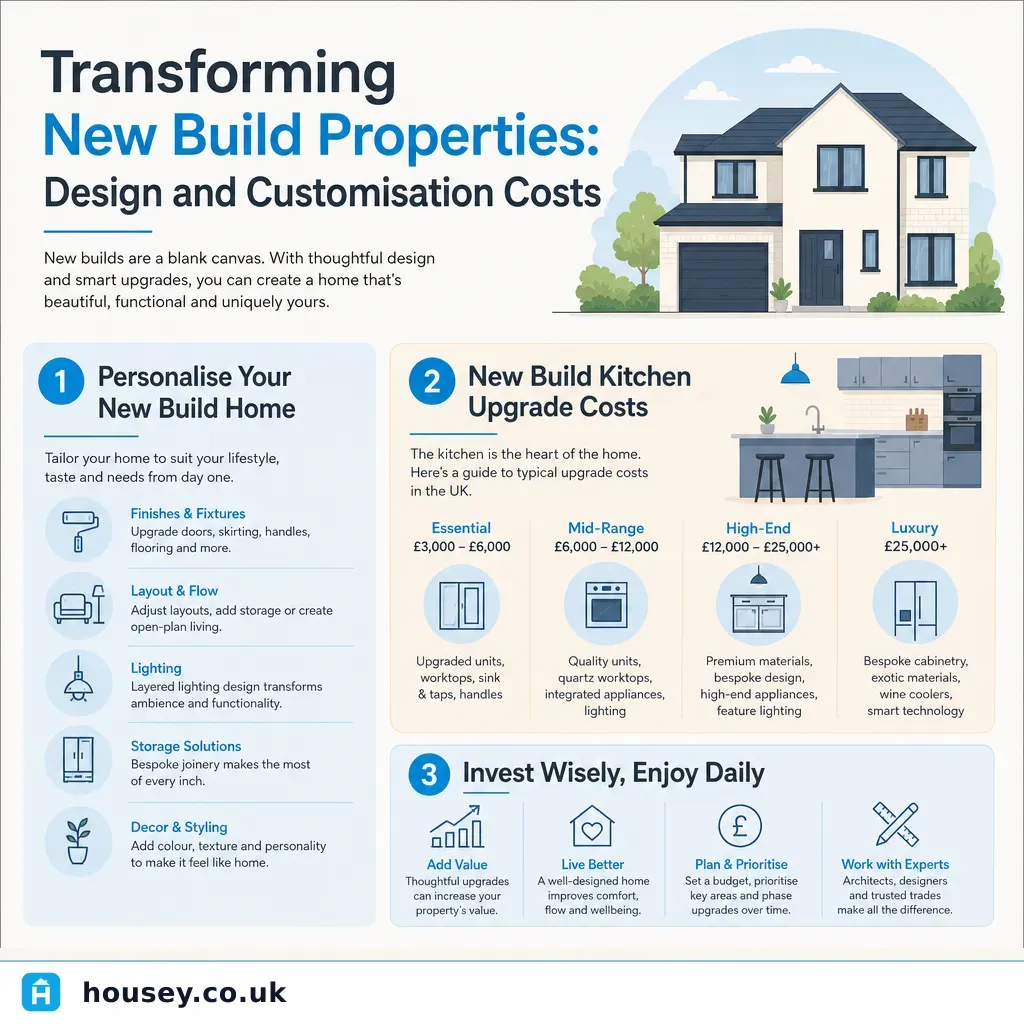
Transforming New Build Properties: Design and Customisation Costs
Transforming a new build typically costs between £5,000 and £50,000 or more depending on scope — from cosmetic upgrades like flooring and paint to full kitchen replacements or rear extensions.
 Improvement & Build
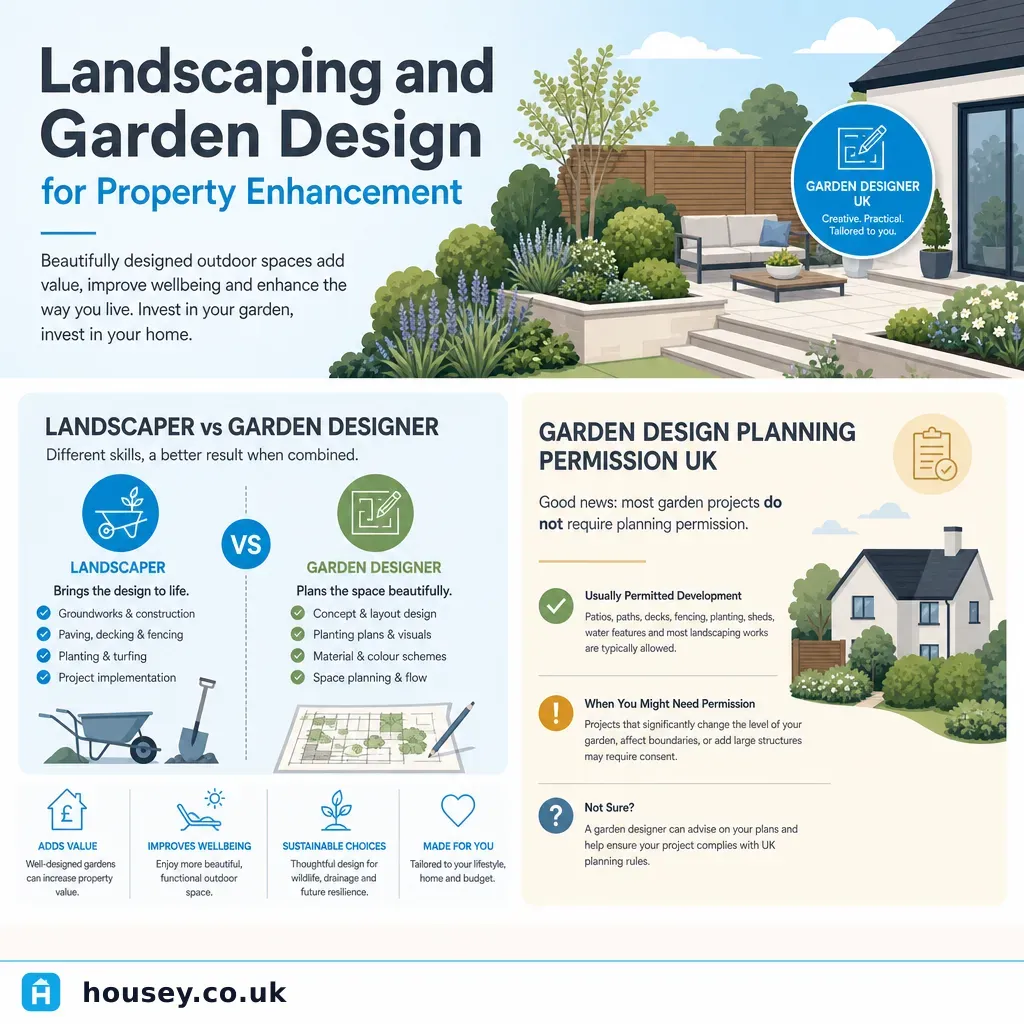
Landscaping and Garden Design for Property Enhancement
Landscaping and garden design involve planning and building outdoor spaces — from patios and raised beds to planting schemes and drainage.
 Improvement & Build
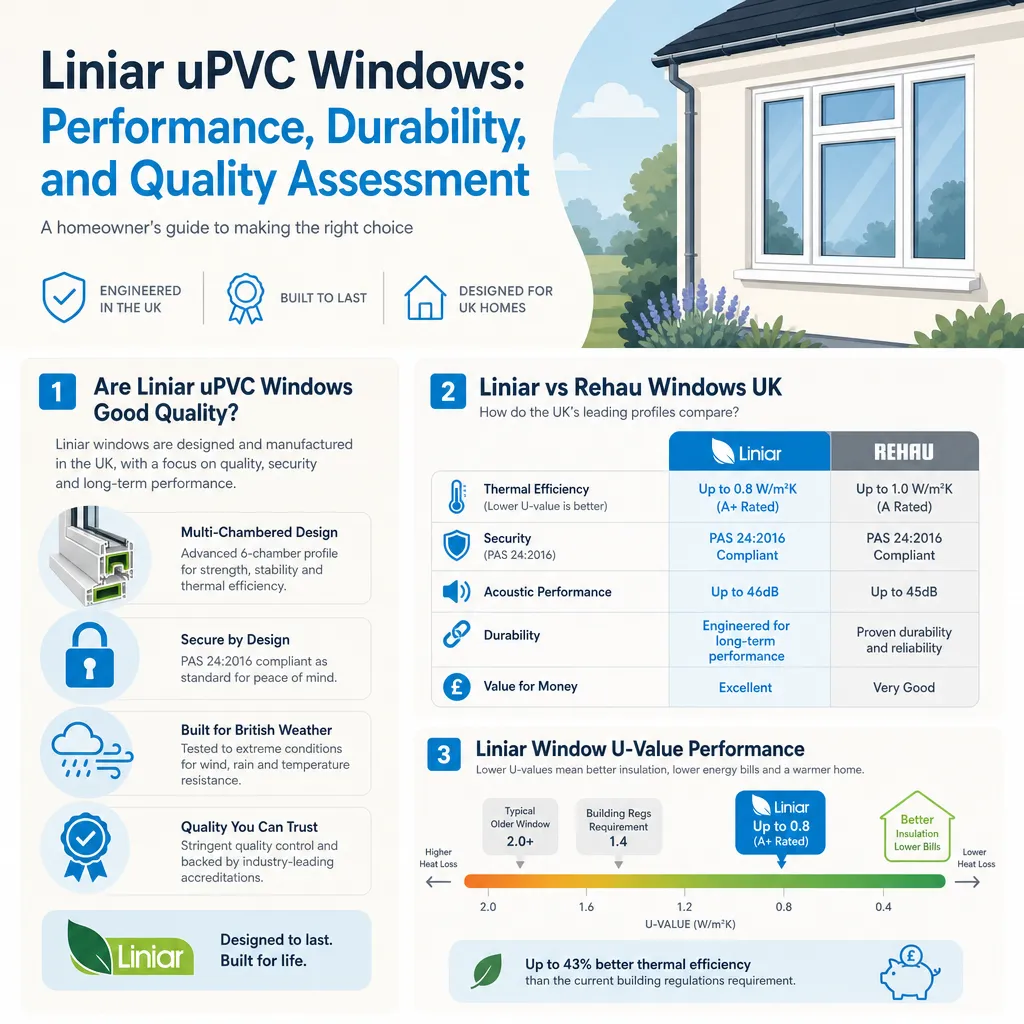
Liniar uPVC Windows: Performance, Durability, and Quality Assessment
Liniar uPVC window profiles are manufactured in the UK using multi-chambered, foamed frames.
 Improvement & Build
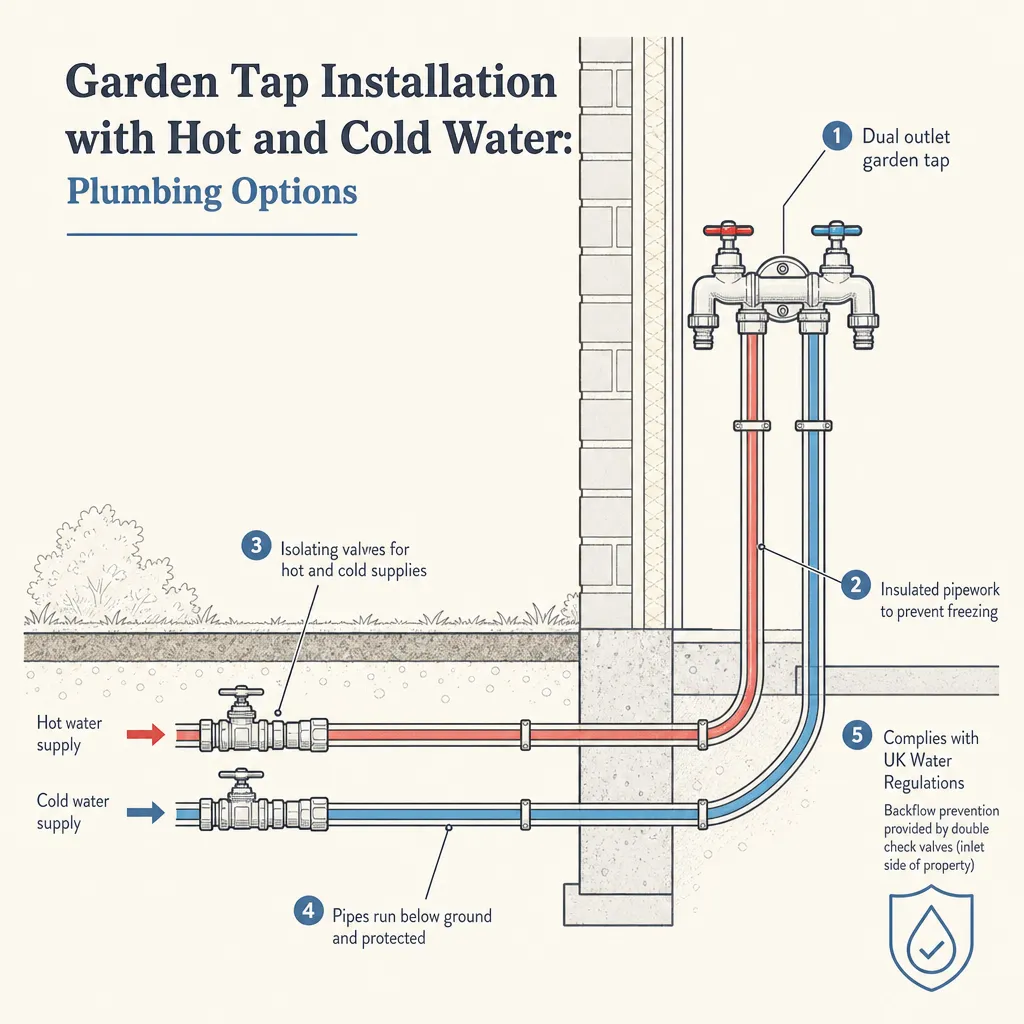
Garden Tap Installation with Hot and Cold Water: Plumbing Options
Adding a cold garden tap is a common DIY project, but routing hot water outdoors requires a plumber to connect to your domestic hot water system and comply with the Water Supply (Water Fittings) Regulations 1999.