Premium uPVC Window Frames: Quality Grades and Performance Specifications
By Housey · Last reviewed 3rd of May 2026
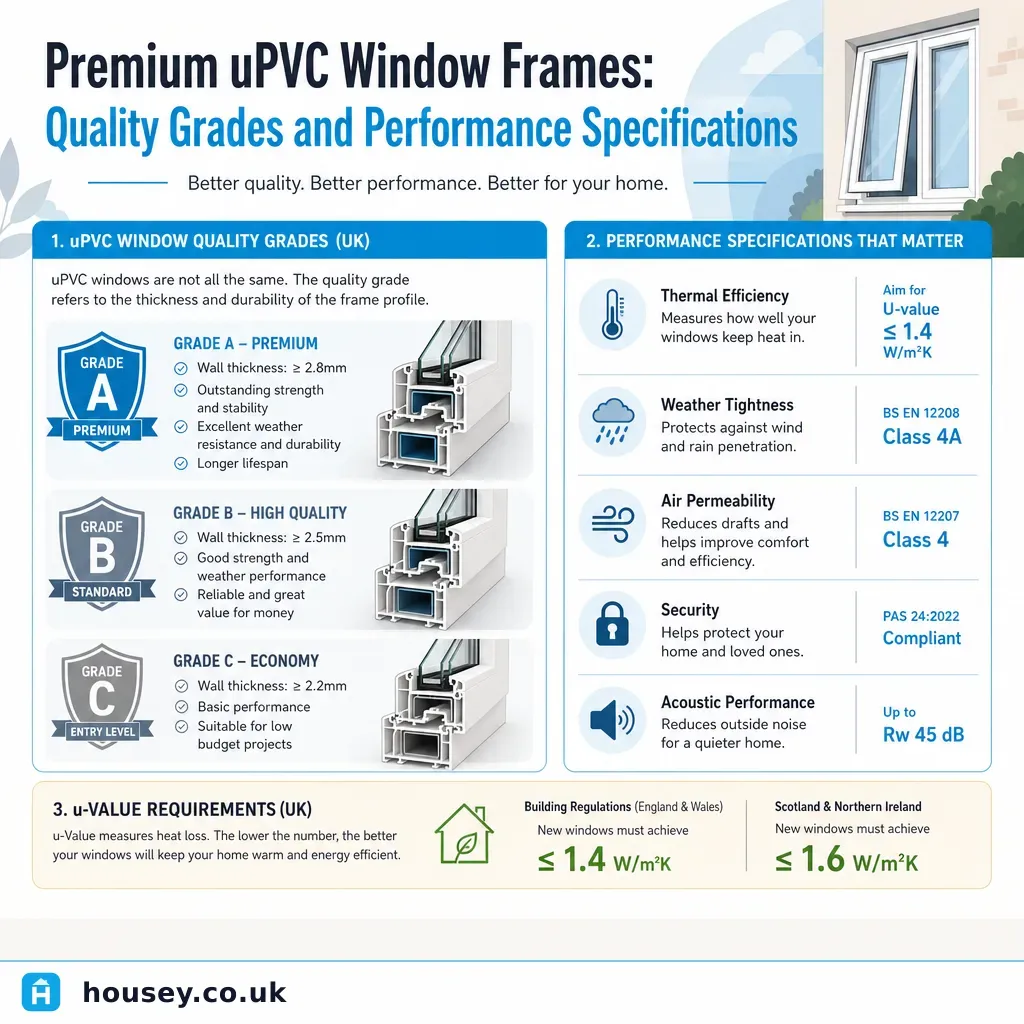
Premium uPVC Window Frames: Quality Grades and Performance Specifications
Replacing windows is a significant investment for most UK homeowners, and the quality gap between entry-level and premium uPVC frames can be substantial — in thermal performance, weather resistance, acoustic attenuation, hardware longevity, and profile resistance to discolouration. This decision typically arises when existing windows reach the end of their service life, during a broader renovation, or when a homeowner receives multiple installer quotes and needs to understand why prices differ so significantly.
Key points
- uPVC profile quality is governed in part by BS EN 12608, which classifies profiles by weathering stability and impact resistance — Class 1 is the highest and most weathering-resistant grade.
- Building Regulations Approved Document L1B requires replacement windows in existing English dwellings to achieve a whole-window U-value of 1.4 W/m²K or better, or a BFRC Window Energy Rating of Band C or better.
- The Window Energy Rating (WER) scheme, run by the British Fenestration Rating Council (BFRC), rates complete window units from A++ to G — premium products typically achieve A+ or A++.
- Premium uPVC profiles use five or six internal chambers versus three in entry-level products, improving both thermal resistance and structural rigidity.
- A FENSA or CERTASS certificate must be issued when replacement windows are fitted under Building Regulations in England and Wales — keep this with your property documents as solicitors will ask for it on sale.
Understanding uPVC profile quality
Not all uPVC is equivalent. The extruded profile varies in wall thickness, chamber count, steel reinforcement, and the quality of the raw compound — including UV stabilisers and impact modifiers blended into the material.
BS EN 12608 classifies profiles by weathering resistance (Class 1, 2, or 3, with Class 1 the most resistant) and impact resistance. Most premium profiles carry Class 1 certification, demonstrating colour stability and resistance to UV-induced embrittlement under accelerated weathering tests.
Chamber count directly affects thermal performance. A three-chamber profile may achieve a whole-window U-value around 1.6 W/m²K. A five- or six-chamber profile can achieve 1.2 W/m²K or better, particularly when combined with triple glazing and warm-edge spacer bars.
Steel reinforcement inside chambers is standard across most products, but premium frames use wider or purpose-profiled sections that improve rigidity and reduce deflection — particularly important for large window openings.
Lead-free compound is standard from reputable UK manufacturers; confirm this when evaluating products.
Window Energy Ratings and Part L compliance
The BFRC Window Energy Rating (WER) system accounts for three factors:
- U-value — rate of heat loss through the complete window unit
- g-value — solar heat gain through the glazing
- Air permeability — air leakage around the frame and sash
A WER of A or B means the window contributes positively to heat retention under UK conditions. Premium units rated A+ or A++ are typically specified for low-energy homes or Passivhaus retrofits.
For replacement windows in England, Approved Document L1B requires a minimum whole-window U-value of 1.4 W/m²K or WER Band C or better. Premium products typically achieve 0.8–1.2 W/m²K with triple glazing — significantly exceeding the minimum.
Performance tier | Whole-window U-value (typical) | WER band | Glazing type | Profile chambers |
|---|---|---|---|---|
Entry-level | 1.4–1.6 W/m²K | B–C | Double, argon-filled | 3 chambers |
Mid-range | 1.1–1.4 W/m²K | A–B | Double or triple, argon | 4–5 chambers |
Premium | 0.8–1.1 W/m²K | A+–A++ | Triple, argon or krypton | 5–6 chambers |
Ultra/Passivhaus | ≤0.8 W/m²K | A++ | Triple, warm-edge spacer | 6+ chambers, thermally broken sash |
Indicative figures only. Whole-window U-values depend on glazing specification, frame dimensions, and installation quality. Always request a BFRC WER label from your installer.
Key quality differentials in premium uPVC windows
Glazing specification: Premium units use triple glazing with argon- or krypton-filled cavities and low-emissivity (low-E) coatings. Warm-edge spacer bars — foam or structural polymer rather than aluminium — reduce cold-edge condensation and improve edge-of-glass performance.
Hardware: Multi-point locking mechanisms, hinges, and handles on premium windows are typically higher-grade steel or stainless steel with durable surface treatments. Ask whether hardware is rated to BS EN 1303 or equivalent.
Weatherstripping: Quality EPDM rubber or pile seals reduce air infiltration and acoustic transmission. A stated air permeability class allows you to compare products meaningfully.
Acoustic performance: For homes near roads, railways, or flight paths, specify a window with a stated Rw acoustic rating in dB. A standard double-glazed window typically achieves 28–32 dB Rw. Premium acoustic configurations with asymmetric glass thicknesses and acoustic interlayers can reach 38–42 dB Rw.
Profile colour stability: Leading manufacturers including Rehau, Gealan, Deceuninck, and Veka use lead-free compounds with UV stabilisers rated to BS EN 12608 Class 1. For coloured or woodgrain foiled profiles, ask whether the foil coating carries its own weathering warranty.
What to ask a uPVC window installer before accepting a quote
- What profile system and manufacturer are you using, and does it carry BS EN 12608 Class 1 certification?
- What is the whole-window U-value and WER band for the specification quoted?
- Is the glazing double or triple, and is the spacer bar warm-edge or aluminium?
- What fill gas is used — argon or krypton — and how is it verified?
- What hardware brand are the locks and hinges, and to what standard are they rated?
- Will you register the installation with FENSA or CERTASS and provide a certificate?
- Is the installation covered by a manufacturer's profile warranty and a separate glazing guarantee, and for how long?
- Is the quote inclusive of VAT, removal and disposal of old frames, and making good around the reveals?
FENSA, CERTASS, and Building Regulations
In England and Wales, replacement window installation falls under Part L of the Building Regulations. Installers registered with FENSA or CERTASS can self-certify compliance, notifying the local authority on your behalf and issuing a completion certificate. This is a legal document — solicitors and mortgage lenders will ask for it when you sell the property.
If your installer is not FENSA or CERTASS registered, you will need a separate Building Control application and inspection. Always verify registration status before placing an order.
When to get professional help
Replacement uPVC window installation is not a standard DIY project. Frames require accurate survey measurement, factory manufacture to those dimensions, and professional installation to achieve the specified thermal and air-tightness performance. Incorrect installation — poor sill sealing, misaligned frames, or inadequate fixings — will undermine even the best profile specification.
For properties in conservation areas or on listed buildings, uPVC replacement windows may require planning permission regardless of permitted development rights. Check with your local planning authority before ordering.
How Housey can help
Housey helps UK homeowners compare quotes from vetted local window and door installers who can specify the right uPVC system for your property, supply BFRC-rated products, and issue FENSA or CERTASS certification. Request quotes from multiple installers to compare profiles, glazing specifications, warranties, and total pricing.
Frequently asked questions
What is the minimum U-value for replacement windows in England?
Under Approved Document L1B of the Building Regulations, replacement windows in existing dwellings in England must achieve a whole-window U-value of 1.4 W/m²K or better, or a BFRC Window Energy Rating of Band C or better. Scotland and Wales have separate Building Standards — check the relevant regulations for your home's location.
How long do premium uPVC windows last?
Quality uPVC frames are generally expected to last 20–30 years or more, depending on UV exposure, maintenance, and profile quality. Cheaper profiles with lower UV stabiliser content may discolour or become brittle within 10–15 years. Most premium manufacturers offer a profile warranty of 10 years or more — confirm this before accepting a quote.
Can I get a grant for replacing windows in the UK?
Some energy efficiency schemes — including the Great British Insulation Scheme and local authority Flexible Eligibility routes under ECO4 — may fund window replacement as part of a broader retrofit package for eligible households. Check the GOV.UK Great British Insulation Scheme page and your local authority for current eligibility, as funding availability changes regularly.
Is triple glazing worth the extra cost in the UK?
For most UK homes, triple glazing offers diminishing returns compared to a well-specified double-glazed unit unless the property is in an exposed location, uses a heat pump, or is being retrofitted to a very high energy standard. Triple glazing typically costs 20–40% more than an equivalent double-glazed unit. An energy assessor can advise on payback for your specific property and heating system.
Do uPVC replacement windows need planning permission?
In most cases, replacing like-for-like windows with uPVC in England and Wales falls under permitted development and does not require planning permission. In conservation areas, Article 4 Direction areas, or on listed buildings, planning consent may be required regardless of material. Check with your local planning authority before ordering.
Sources and further reading
- Approved Document L1B: Conservation of Fuel and Power in Existing Dwellings — GOV.UK
- Window Energy Rating scheme and product search — British Fenestration Rating Council
- FENSA registered installer scheme — FENSA
- Windows and glazing guidance — Energy Saving Trust
- Great British Insulation Scheme eligibility — GOV.UK
Useful next reads
 Improvement & Build
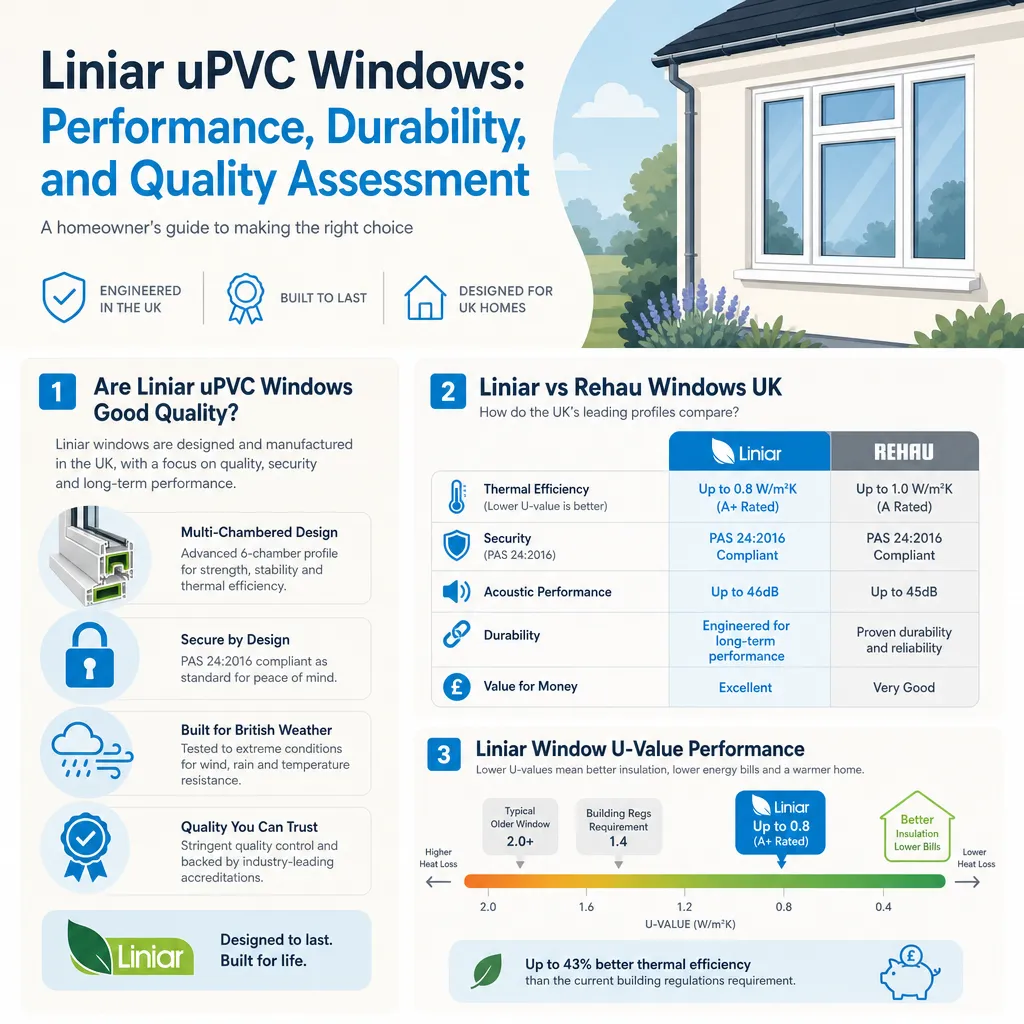
Liniar uPVC Windows: Performance, Durability, and Quality Assessment
Liniar uPVC window profiles are manufactured in the UK using multi-chambered, foamed frames.
 Improvement & Build
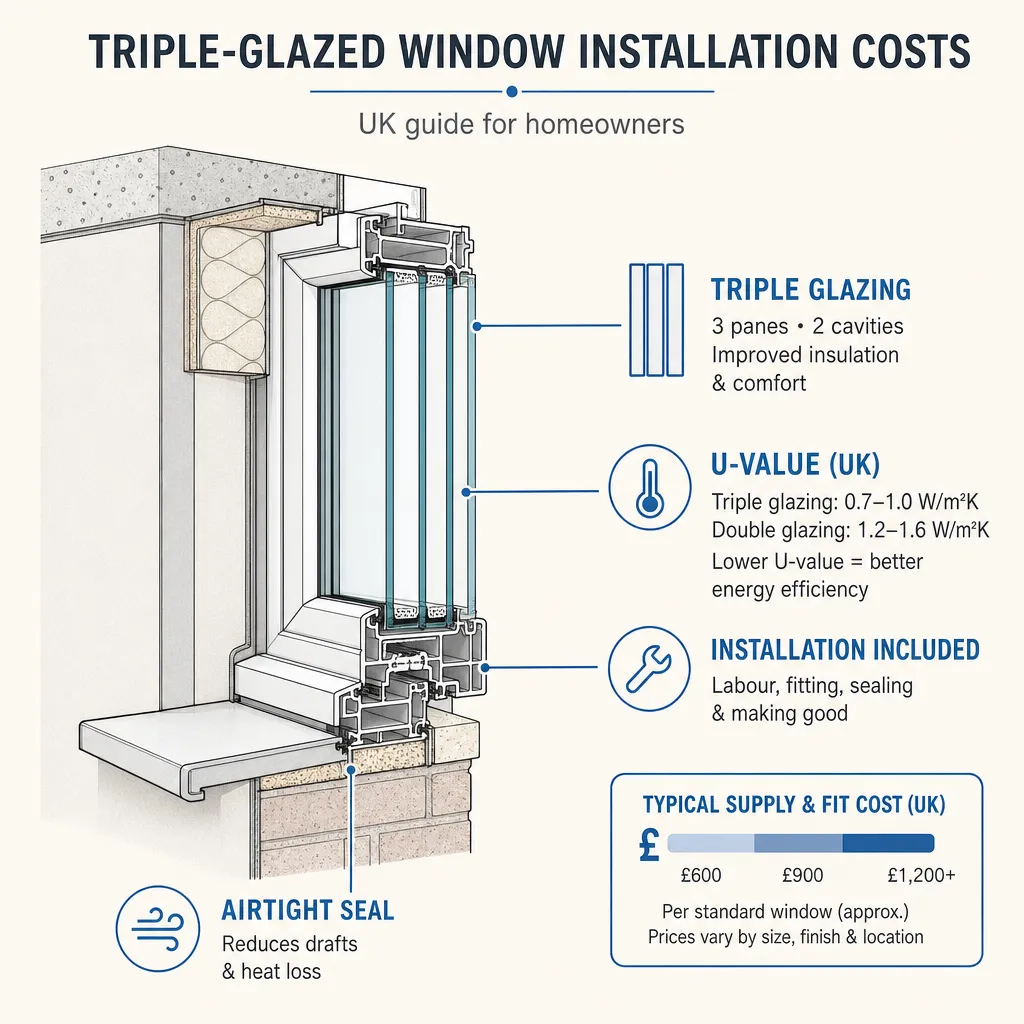
Triple-Glazed Window Installation Costs
Triple-glazed window installation in the UK typically costs £800–£1,800 per window, depending on size, frame material, and glazing specification.
 Improvement & Build
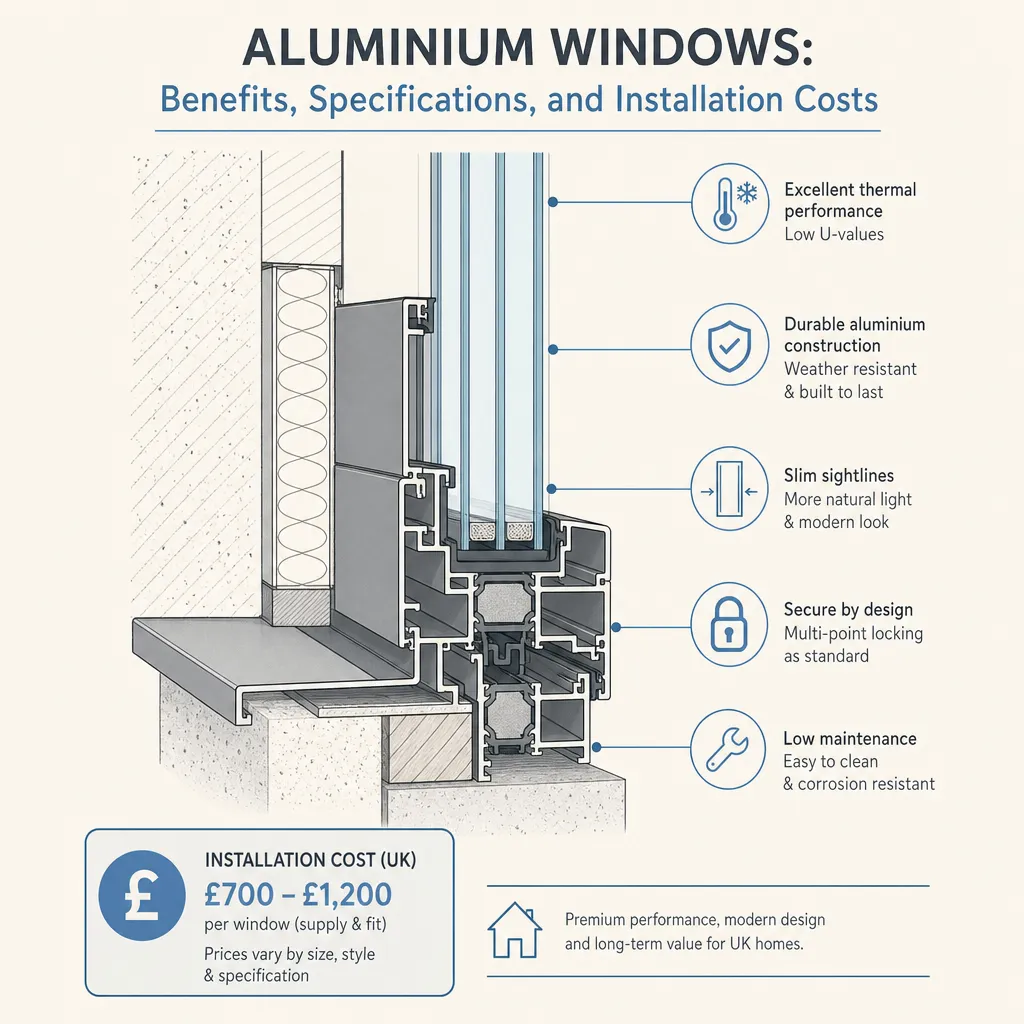
Aluminium Windows: Benefits, Specifications, and Installation Costs
Aluminium windows typically cost £600–£1,800 per window installed in the UK, depending on size and specification.
 Improvement & Build
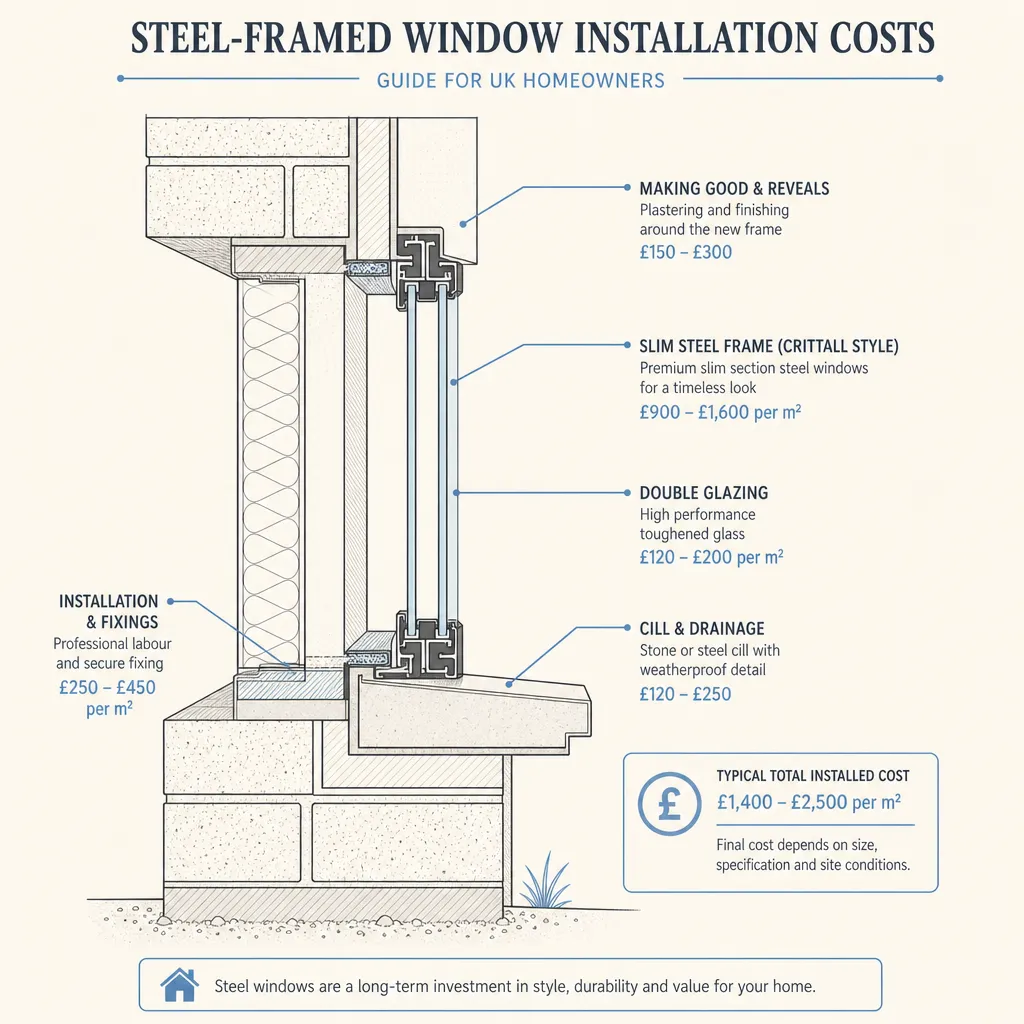
Steel-Framed Window Installation Costs
Steel-framed windows cost between £800 and £3,500 or more per window installed in the UK, depending on size, profile type, glazing specification, and whether old frames need removing.
 Improvement & Build
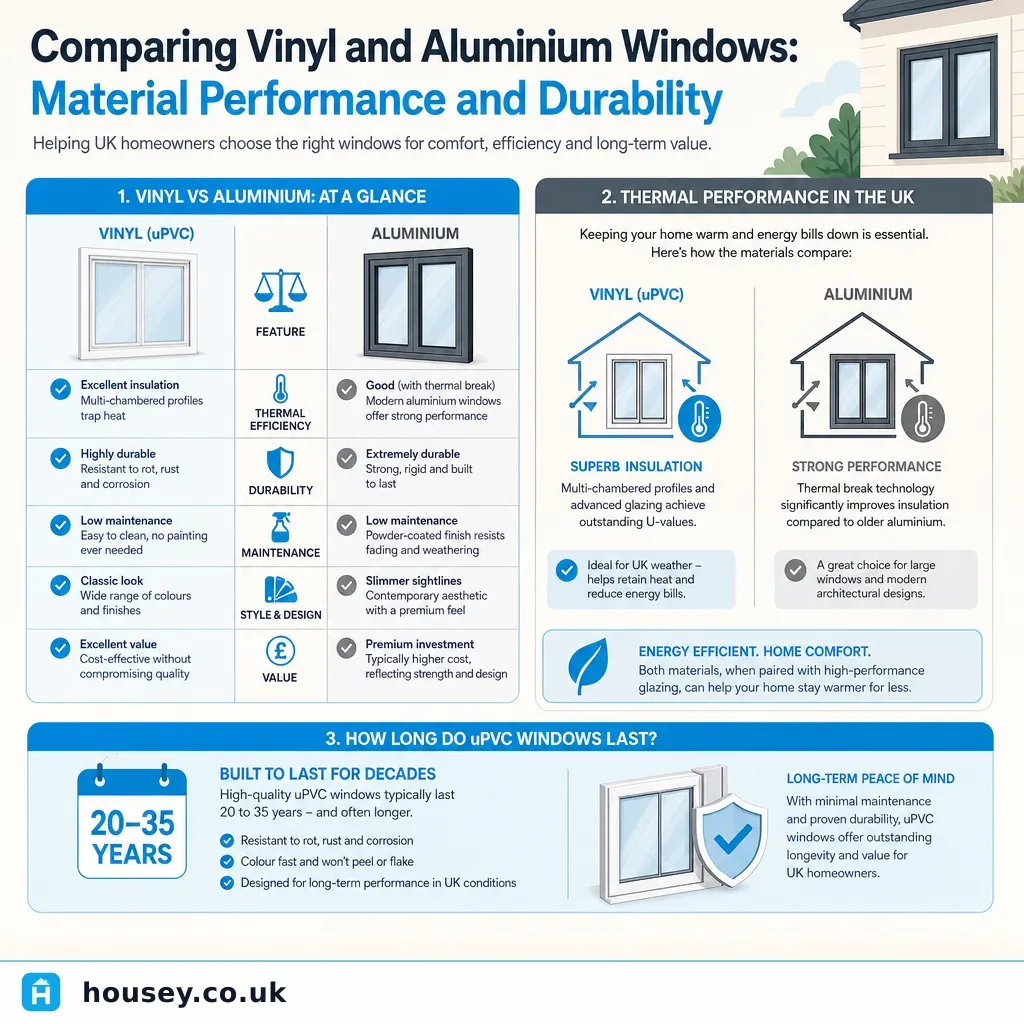
Comparing Vinyl and Aluminium Windows: Material Performance and Durability
uPVC (vinyl) and aluminium windows both meet UK Building Regulations Part L when properly specified.