Preparing Your Garden with Mulch: Ground Preparation Guide
By Housey · Last reviewed 1st of June 2026
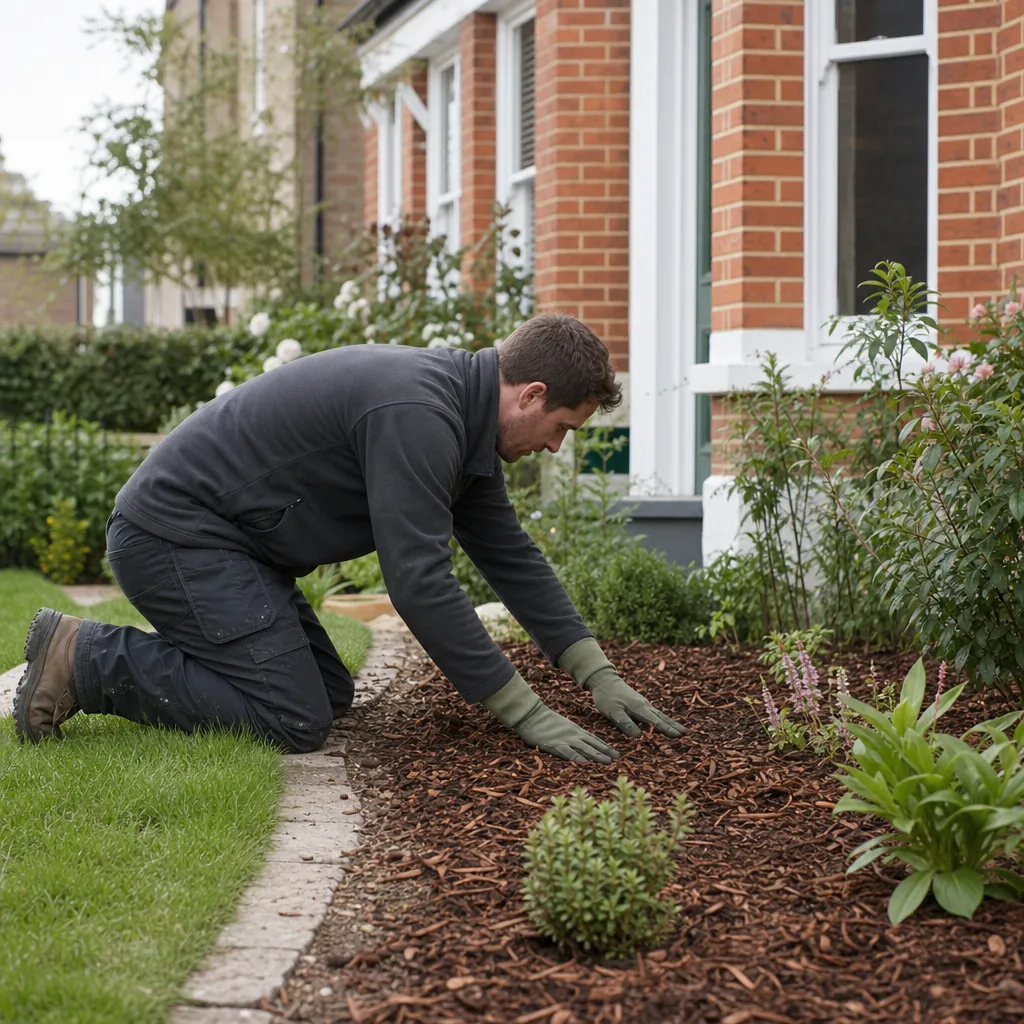
Preparing Your Garden with Mulch: Ground Preparation Guide
Mulching is one of the highest-value garden maintenance tasks a UK homeowner can carry out, yet it is frequently done at the wrong time of year, with the wrong material, or over inadequately prepared ground. Whether you are establishing new planting beds, refreshing a mature border, or preparing soil ahead of new planting, getting the approach right makes the difference between effective weed suppression and a season of frustration — and between thriving plants and ones that struggle despite the effort.
Key points
- Apply mulch to a depth of 5–8 cm for effective weed suppression; thinner layers allow weed light penetration, while excessively thick layers can impede rainfall reaching plant roots.
- Mulch must never be placed in direct contact with plant stems or tree trunks — leave a 5–10 cm gap to prevent crown rot and discourage pests.
- The RHS recommends mulching in spring or autumn, when soil is moist after rain but before annual weed seeds germinate in significant numbers.
- Organic mulches — bark, composted wood chip, garden compost, leaf mould — improve soil structure and feed soil biology as they decompose; inorganic mulches such as gravel and slate do not.
- Fresh, undecomposed wood chip can temporarily lock up soil nitrogen through microbial activity during breakdown — avoid using it directly on annual or vegetable beds.
Types of mulch and what they suit
Choosing the right mulch depends on the bed type, your soil conditions, aesthetic preference, and what you want the mulch to achieve.
Mulch type | Best for | Not ideal for | Indicative cost (2026) |
|---|---|---|---|
Composted bark chippings | Shrub beds, tree surrounds, paths | Annual beds, vegetable plots | £4–£8 per 60 L bag; cheaper in bulk |
Composted wood chip | Established borders, woodland planting | Newly planted annuals (nitrogen drawdown risk) | Often free from tree surgeons or councils |
Garden compost | Vegetable beds, annual borders | Where a neat aesthetic finish is needed | Free if home-composted |
Leaf mould | Woodland plants, acid-loving species | Alkaline-preferring plants | Free from autumn leaves |
Straw | Strawberries, over-wintering brassicas | Permanent borders (breaks down within one season) | £5–£10 per bale |
Gravel or slate | Mediterranean and drought-tolerant planting | Heavy clay soils where drainage is already poor | £3–£6 per 20 kg bag |
Landscape membrane plus gravel | Low-maintenance schemes, hard landscaping | Naturalistic or mixed planting (establishment harder) | £0.50–£1.50/m² plus gravel |
Indicative UK costs, last reviewed 2026-06-01. Prices vary by region and supplier.
When to mulch in the UK
Timing matters in the UK's temperate climate. The two optimal windows are:
Spring mulching (March–May): Apply after the soil has warmed slightly from winter but before annual weed seeds germinate in earnest. Spring mulching conserves moisture as temperatures rise and provides a nutrient boost if organic material is used. Avoid mulching waterlogged ground — the layer will trap excess moisture and encourage slug activity around plant bases.
Autumn mulching (October–November): Apply after clearing summer planting and before the first frosts. Autumn mulching protects roots from freeze-thaw damage, suppresses winter annual weeds, and allows organic materials to begin breaking down over winter so they improve soil structure by spring.
Avoid mulching in mid-summer if the soil beneath is already dry — the mulch will act as a barrier preventing rainfall from reaching roots. Water the bed thoroughly first, or wait for sustained rain before applying.
How to prepare ground before mulching
Ground preparation is what determines whether your mulching investment pays off. A poorly prepared bed will see weeds pushing through from below within weeks, regardless of mulch depth.
Pre-mulch preparation checklist
Applying mulch correctly
Once the ground is prepared:
- Spread mulch evenly to 5–8 cm depth across the bed.
- Keep mulch 5–10 cm away from all plant stems and tree trunks.
- For tree circles, form a doughnut shape — mulch around the trunk area but not piled against the bark.
- On sloping beds, use a coarser mulch that locks together (composted bark) rather than fine material that washes downhill in heavy rain.
- Firm lightly with the back of a rake but do not compact the layer.
- For membrane-and-gravel schemes, lay the membrane first, cut planting holes, establish plants, then apply gravel over the top to at least 5 cm depth.
How much mulch do you need?
Measure the bed area in square metres and multiply by the desired depth in metres. A 10 m² bed mulched to 7 cm deep requires 0.7 cubic metres (700 litres) of mulch. Most bagged products state volume in litres — divide by 1,000 to convert to cubic metres. Bulk delivery in 1 m³ bags or tipper loads is substantially cheaper per cubic metre for gardens with several large beds and is worth arranging if your total volume exceeds 500 litres.
When to get professional help
Mulching a garden border is well within the capability of most homeowners, but consider calling a professional if:
- Your garden has a severe perennial weed problem — Japanese knotweed, horsetail, or deep-rooted bindweed — that needs specialist treatment before mulching is effective.
- You are planning a large-scale landscape scheme with grading, drainage, or significant new planting alongside mulch application.
- You want a designed scheme with professionally specified planting and appropriate mulch as part of a new garden layout.
- Tree work has generated a large volume of fresh wood chip that needs to be managed carefully around roots and established planting.
How Housey can help
For larger projects, Housey can connect you with experienced landscapers who can manage ground preparation, weed clearance, and mulch application at scale, as well as garden designers who can specify the right mulch type and depth for your planting scheme and long-term maintenance goals.
Frequently asked questions
Can I use fresh wood chip as mulch in my garden?
Fresh, undecomposed wood chip can cause temporary nitrogen drawdown — soil microbes breaking it down consume nitrogen that plants need. It is safest on paths and around established trees, where roots access nitrogen from deeper layers. Allow fresh chip to compost for 6–12 months before using it on planting beds where plant health is a priority.
How often should I top up mulch in a UK garden?
Organic mulches decompose over time and usually need topping up every one to three years depending on the material. Fine materials such as garden compost break down within a single season; coarser bark chips last two to three years. Check depth each spring and top up to 5 cm if the existing layer has thinned significantly.
Will mulch harm my plants?
Mulch does not harm plants if applied correctly. The main risks are mulching onto waterlogged ground, piling mulch against plant stems or tree trunks (which can cause crown rot), or using uncomposted high-carbon material on hungry beds. Keep mulch at least 5–10 cm away from all stems and check soil moisture before and after applying.
Is landscape membrane worth using under mulch?
Membrane is effective for long-term weed suppression in low-maintenance or hard-landscaping schemes but can impede water infiltration and prevent organic mulches from improving soil structure. The RHS generally recommends omitting membrane in mixed planting borders and relying instead on a thick organic mulch layer, which is more sympathetic to soil biology and plant establishment.
Sources and further reading
- Mulching guidance — Royal Horticultural Society
- Soil improvement and organic matter — Royal Horticultural Society
- Composting at home — Royal Horticultural Society
Useful next reads
 Improvement & Build
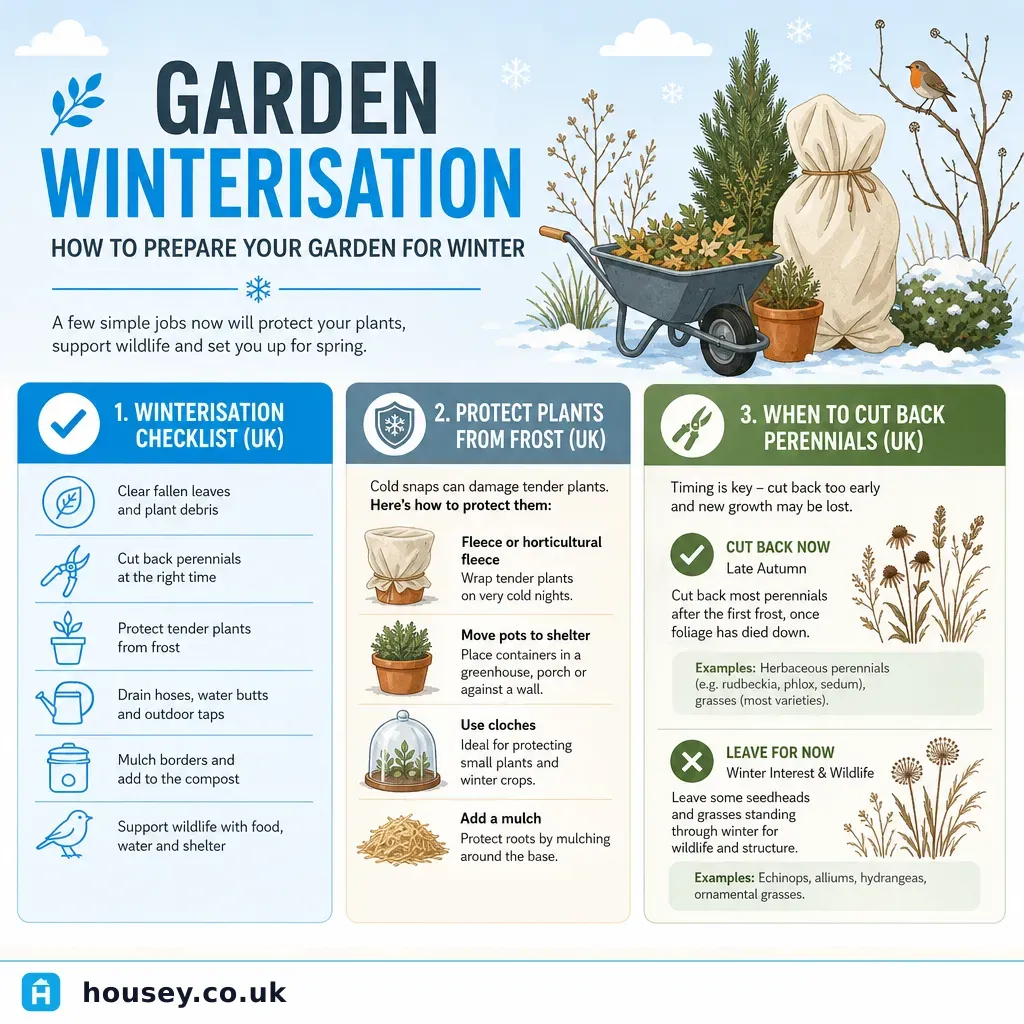
Garden Winterisation: How to Prepare Your Garden for Winter
To prepare a UK garden for winter, lift tender bulbs and perennials before the first frost, mulch borders to 7–10 cm depth, move vulnerable containers under cover, drain outdoor taps, and cut back hardy perennials.
 Improvement & Build
Professional Weed Control: Service Options and Cost Factors
Professional weed control in the UK typically involves herbicide treatment, manual removal, or a combination of both.
 Improvement & Build
Creating a New Garden Design for Your Property
Creating a new garden design involves assessing your space, setting a realistic budget, deciding on hard and soft landscaping, and choosing a planting scheme suited to your soil and aspect.
 Improvement & Build
Garden Pest Management: Homeowner's Essential Guide
Common UK garden pests include slugs, aphids, vine weevil, and lily beetle.
 Improvement & Build
Land Clearance: Site Preparation Costs
Land clearance and site preparation costs in the UK vary widely depending on site size, vegetation density, access, and whether structures need demolishing.