Winter Tree Protection: Safeguarding Trees from Frost and Freeze Damage
By Housey · Last reviewed 7th of May 2026
Winter Tree Protection: Safeguarding Trees from Frost and Freeze Damage
UK winters bring a mix of ground frosts, waterlogging, and biting winds that can stress or kill trees — especially those planted within the past two to three years whose root systems are still establishing. Knowing which trees are most at risk, when to act, and what protection methods work best helps you avoid losing valuable specimens and unnecessary replacement costs across the growing season that follows.
Key points
- Newly planted trees are most vulnerable in their first two to three winters, before root systems have fully established in the surrounding soil.
- Mulching with a 5–7 cm layer of composted bark around the root zone insulates against ground freeze; keep mulch at least 10 cm clear of the trunk to prevent collar rot.
- The RHS plant hardiness scale runs H1–H7; trees rated H4 (tolerating around -10°C) or below may need winter protection in colder parts of the UK, including Scotland, northern England, and elevated sites.
- Frost hollows — low-lying areas where cold air pools — can be 3–5°C colder than the surrounding garden, meaning site positioning matters as much as species choice.
- Waterlogging during winter is often as damaging as frost in the UK; improving soil drainage before or at planting significantly reduces winter tree losses.
How frost and freeze damage affects trees
Frost damages plant tissue by causing ice crystals to form inside cells, rupturing cell walls. For trees, the most common visible signs are:
- Frost crack: vertical splits in bark caused by rapid temperature fluctuations, more common in thin-barked species such as cherry, beech, and acer.
- Crown dieback: branch tips fail to break into leaf in spring following a hard freeze.
- Frost heave: freeze-thaw cycles in wet soil physically push shallow roots out of the ground.
- Bark splitting: particularly on young trees staked too rigidly, where thermal stress concentrates in the stem rather than being distributed by natural flex.
Late frosts in April and May are often more damaging than midwinter freezes because they catch newly emerging growth that has already broken dormancy.
Which trees need protection in the UK?
Hardy native species — oak, ash, hawthorn, rowan, and silver birch — are well adapted to UK winters and need no routine protection. The trees most commonly damaged are tender exotics, recently imported cultivars, and any species planted within the past two growing seasons.
Tree species / group | RHS hardiness | UK risk level | Recommended action |
|---|---|---|---|
Bay laurel (Laurus nobilis) | H4 (to -10°C) | Moderate–high in Scotland/North | Fleece wrap; move containers indoors |
Olive (Olea europaea) | H4 (to -10°C) | Moderate in South, high in North | Heavy fleece; insulate container base |
Eucalyptus (young trees) | H4–H5 | Moderate; established trees hardier | Stake firmly; fleece in first winter |
Tree fern (Dicksonia antarctica) | H3 (to -5°C) | High across most of UK | Tie fronds over crown; pack with straw |
Fig (Ficus carica) | H4 (to -10°C) | Moderate in South | Fan-train against a wall; fleece in hard frosts |
Japanese maple (Acer palmatum) | H5–H6 | Low–moderate; late frost risk to new foliage | Fleece during April/May cold snaps |
Citrus (lemon, orange) | H2 (to 0°C) | High; not suited to outdoor UK winters | Bring under glass from October |
Newly planted native trees | H6–H7 | Root establishment risk | Mulch; stake; check for frost heave |
RHS hardiness guide: H2 = tender to 0°C; H3 = to -5°C; H4 = to -10°C; H5 = to -15°C; H6 = to -20°C.
Effective winter protection methods
Mulching the root zone
Mulching is the single most effective year-round action for tree health and the most important winter protection measure. Apply a 5–7 cm layer of composted bark, wood chip, or leafmould over the root zone — extending toward the drip line where possible — before the first hard frosts arrive.
- Keep a clear 10 cm gap around the trunk to prevent collar rot and stem diseases.
- Avoid fresh wood chip straight from a shredder, which can temporarily reduce soil nitrogen as it decomposes.
- Top up mulch in early autumn so it is in place before ground frosts begin.
Staking young trees correctly
Young trees should be staked low — with the tie at around 30–45 cm from ground level — to allow the stem to flex and develop structural strength. Rigid high staking prevents natural movement and concentrates thermal stress in one point. Each autumn, check that:
- The stake has not rotted at the base.
- The tie is not cutting into bark as the tree grows.
- The tree is not rocking so severely that roots are loosening — if it is, a second diagonal stake may help until the root system consolidates.
Remove stakes once the tree can stand unaided, typically after one to two growing seasons.
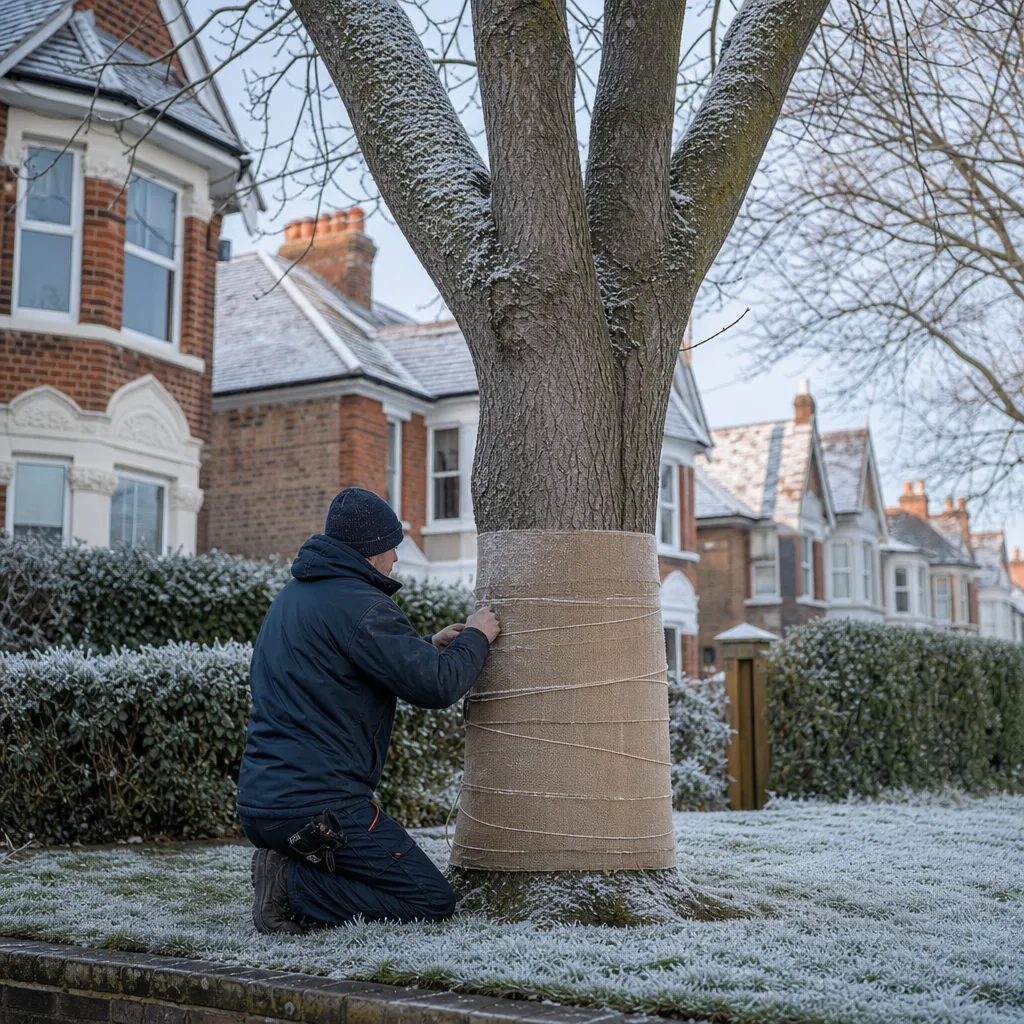
Fleece wrapping for tender species
Horticultural fleece provides a few degrees of frost protection and, more importantly, reduces desiccation from cold winds. For tender container specimens and recently planted exotics:
- Use fleece rated to at least -5°C; double-wrap for exposed sites or prolonged cold below -8°C.
- Wrap loosely to allow some air movement and prevent condensation inside the wrap.
- Remove fleece during mild spells to prevent overheating and fungal issues.
- Wrap container sides in bubble wrap or hessian to protect roots from air-frost — pot-grown roots have no insulation from surrounding soil.
Avoid placing plastic sheeting directly against foliage — it conducts cold and traps moisture.
Pre-winter tree care checklist
Work through the following before the first hard frosts (typically October–November across the UK, earlier in Scotland and at elevation):
Red flags: when frost damage needs professional assessment
Most frost damage to young trees is cosmetic and recovers with the growing season. Contact a qualified arborist if you notice:
- Major bark splitting or weeping wounds on established trees, which can allow fungal pathogens and internal decay.
- Significant crown dieback in a mature tree — more than 20–25% of the canopy affected — which may indicate deeper vascular or root problems exacerbated by cold.
- Frost crack that is widening rather than callusing over during spring and summer.
- Heavy snow loading on large branches that already show signs of decay or a weak branch junction.
- Root lifting in an established tree combined with visible lean, which may be structural rather than frost-related.
For trees covered by a Tree Preservation Order (TPO) or situated in a conservation area, any remedial pruning — including dead wood removal — may require prior consent from your local planning authority.
When to get professional help
A qualified arborist (look for members of the Arboricultural Association or the ISA UK Chapter) should be consulted if:
- A mature tree has sustained significant frost or snow damage and you are unsure whether branches pose a safety risk.
- You wish to prune to reduce snow-loading risk on a large or valuable tree — incorrect pruning can be worse than none at all.
- A tree covered by a TPO has been damaged; your local authority should be notified regardless of the circumstances.
- You are planting new specimen trees in a frost-hollow site and want advice on species selection and ground preparation before purchase.
How Housey can help
If a tree on your property has sustained winter damage or you want seasonal care to reduce frost and snow risk, Housey can connect you with qualified tree surgeons in your area. For broader winter garden preparation and new planting advice, you can also request quotes from experienced local landscapers.
Frequently asked questions
When should I wrap trees for winter in the UK?
Wrap tender trees and shrubs when night temperatures are regularly dropping below 5°C — typically from mid-October in Scotland and northern England, and from November in the South and West. Remove wrapping during mild spells to prevent humidity and fungal problems building up beneath the fleece.
How do I know if my tree has frost damage?
Frost damage usually becomes apparent in spring when buds fail to break, or emerging foliage immediately wilts and turns brown at the tips. Bark splitting can appear immediately after a severe freeze. Wait until May before pruning anything back, as apparently dead stems sometimes recover once temperatures rise.
Does mulching trees really make a difference in winter?
Yes — soil temperature under a good mulch layer can remain 2–4°C warmer than bare soil during ground frosts, significantly reducing root freeze risk and frost heave. Mulching also reduces water stress during dry winters and improves soil structure over time, making trees more resilient overall.
Should I prune trees before or after winter?
It depends on species. Deciduous trees are generally best pruned in late autumn or winter while dormant. Tender species and flowering trees such as cherry and plum are better pruned in summer to reduce disease risk. If in doubt, ask a qualified arborist — incorrect timing or technique can cause lasting harm.
Are trees protected by law in the UK?
Some trees are subject to a Tree Preservation Order (TPO) and trees in conservation areas have automatic protections. Before pruning, removing, or carrying out significant work on any tree, check with your local planning authority. Failure to seek consent where required can result in a fine.
Sources and further reading
- Frost protection for plants — Royal Horticultural Society
- Mulching trees and shrubs — Royal Horticultural Society
- Tree Preservation Orders and trees in conservation areas — GOV.UK
- Find a qualified arborist — Arboricultural Association
Useful next reads
 Improvement & Build
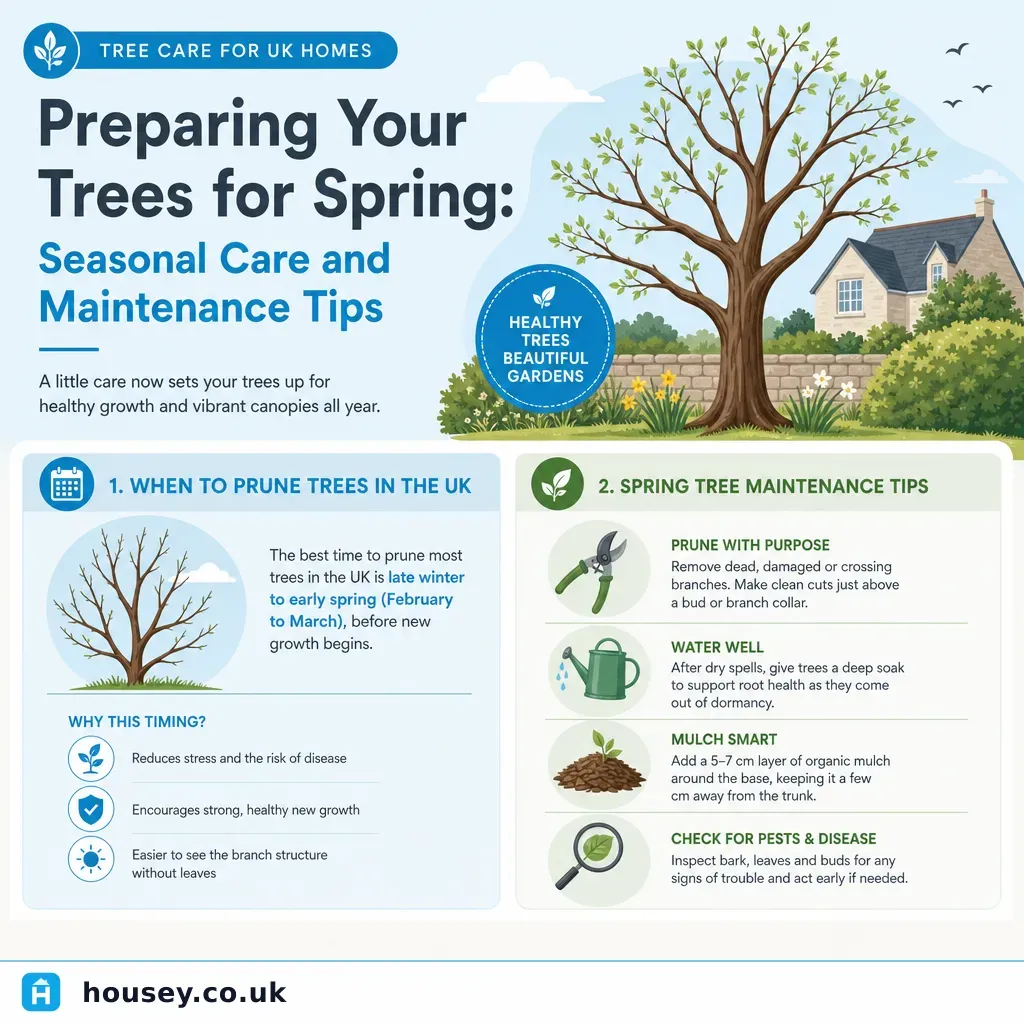
Preparing Your Trees for Spring: Seasonal Care and Maintenance Tips
Spring is the best time to assess trees after winter dormancy.
 Improvement & Build
When to Call In Professional Garden Maintenance for Seasonal Cleanup
Professional garden maintenance is worth considering when seasonal work exceeds DIY capacity — typically autumn leaf removal, lawn scarification, hedge trimming at height, or post-winter clearance on large plots.
 Improvement & Build
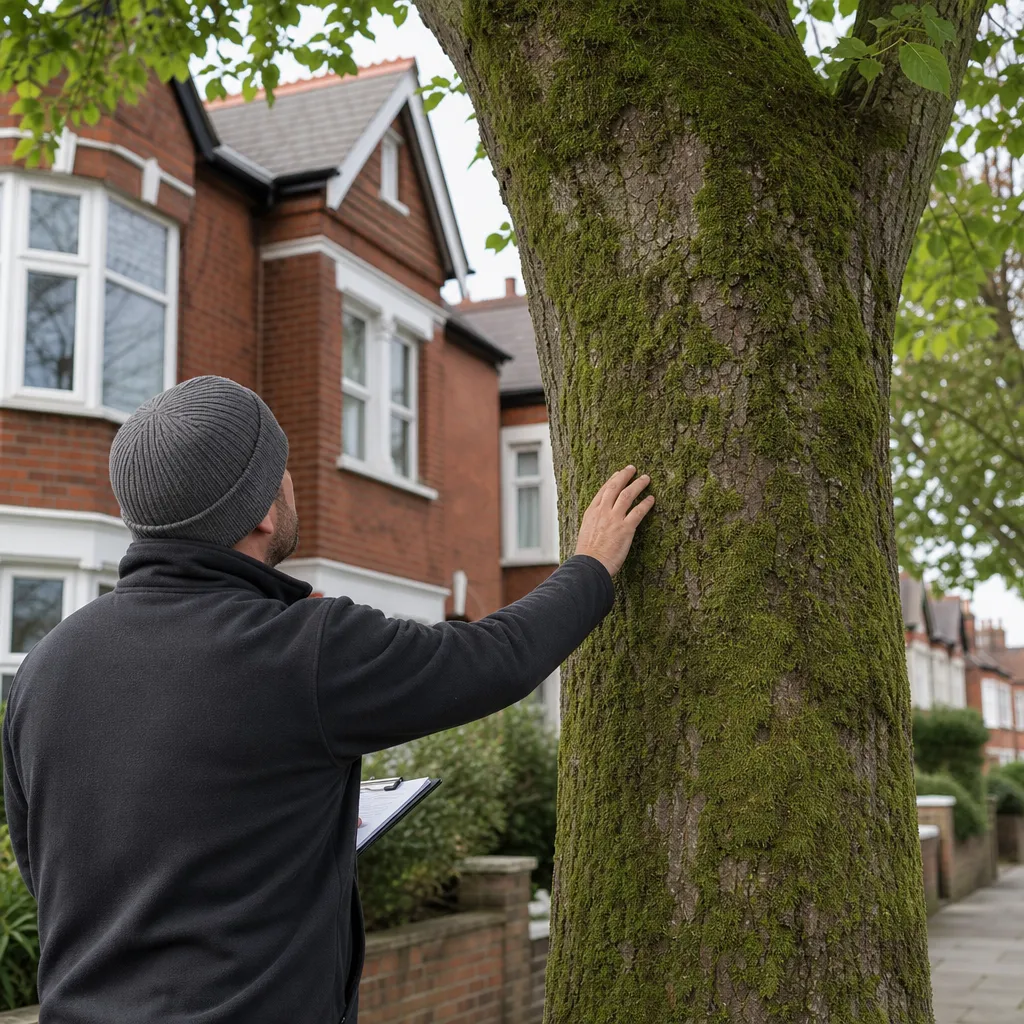
Moss on Trees: Causes, Identification, and Management
Moss growing on trees is usually harmless — it does not parasitise or feed on the tree.
 Improvement & Build
Winterizing Plumbing in Holiday Homes and Vacation Properties
Holiday homes left unheated face serious burst-pipe risk in UK winters.
 Improvement & Build
Protecting Your Property from Winter Frost and Freeze Damage
Protecting your home from winter frost damage mainly involves insulating exposed pipes, lagging outdoor taps, maintaining a minimum indoor temperature in unoccupied properties, and clearing drains before cold spells.