Pricing overview for brickwork and masonry materials
By Housey · Last reviewed 6th of May 2026
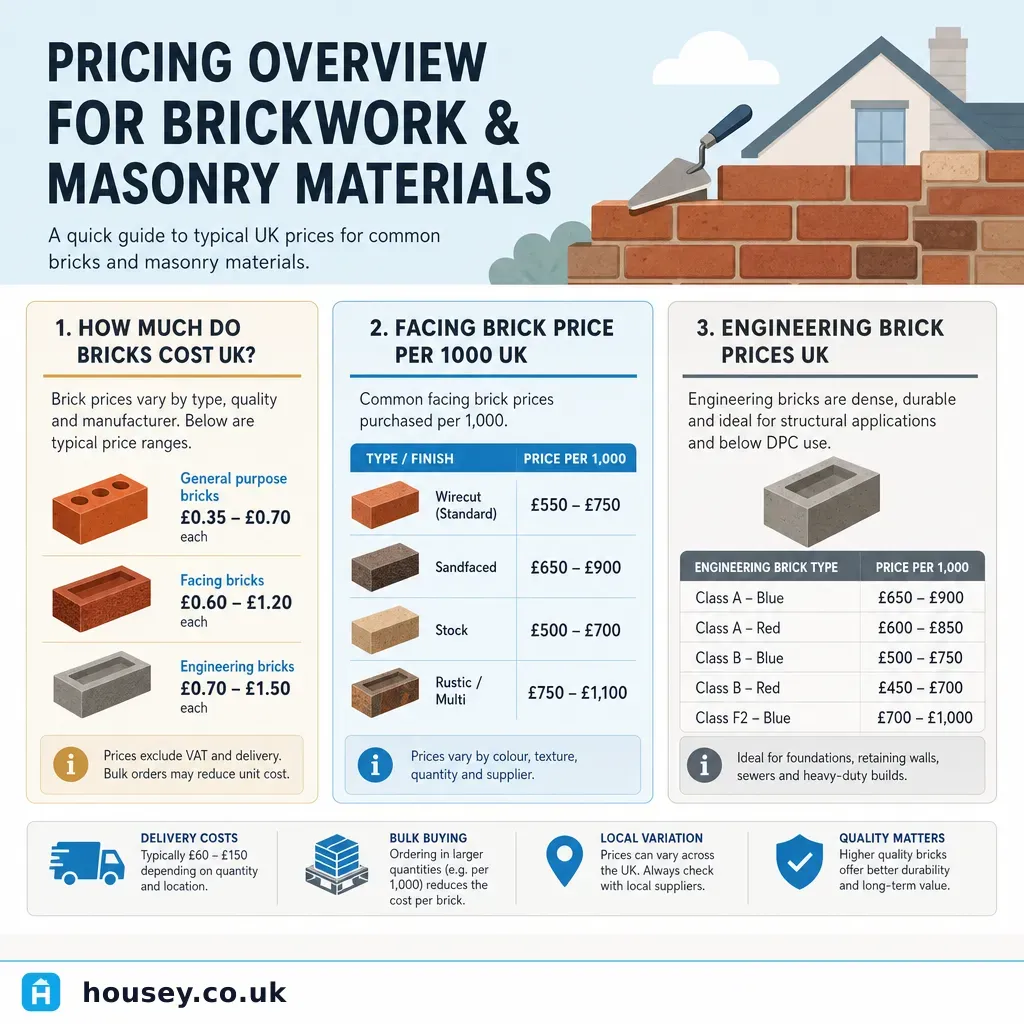
Pricing overview for brickwork and masonry materials
Brickwork and masonry material costs can make up a significant portion of an extension, new build, or structural repair budget, yet prices shift with supply, regional demand, and batch availability. Whether you are planning a home extension, repairing a boundary wall, or scrutinising a builder's schedule of materials, a working knowledge of current material costs will help you ask better questions, spot unrealistic figures, and set a more accurate budget from the outset.
Key points
- Standard UK facing bricks typically cost £400–£800 per 1,000 units (plus VAT and delivery); engineering bricks run £500–£700 per 1,000. Indicative UK costs, last reviewed 2026-05-06.
- Reclaimed bricks carry a premium of 20–50% over new equivalents because of hand-sorting and limited supply, but are often the only viable route for matching Victorian or Edwardian brickwork.
- A standard UK brick (215 mm × 102.5 mm × 65 mm) covers roughly 60 bricks per square metre of single-skin walling; always add 5–10% for wastage and cutting.
- Dense aggregate concrete blocks (100 mm) typically cost £1.50–£2.50 each; thermal (Thermalite/Celcon) blocks range from £2.00–£4.50 each depending on thickness and specification.
- VAT at 20% applies to most new construction materials; certain residential renovation and conversion work may attract the reduced 5% rate — check HMRC's VAT guidance for construction before finalising your budget.
Types of brick and their UK price ranges
Bricks fall into three broad categories, each with distinct structural and aesthetic uses and corresponding price points.
Brick type | Typical UK cost per 1,000 | Best for | Not ideal for |
|---|---|---|---|
Common/fletton bricks | £300–£500 | Internal blockwork, areas to be rendered | Exposed facework, matching existing |
Facing bricks (standard) | £400–£800 | External walls, visible surfaces | High-exposure or engineering applications |
Facing bricks (premium/handmade) | £900–£2,000+ | Period homes, conservation areas, high-spec work | Budget or fast-track projects |
Engineering bricks (Class B) | £500–£700 | Below DPC, retaining walls, manholes | Decorative facework |
Engineering bricks (Class A) | £650–£900 | Severe exposure, chemical resistance | General walling |
Reclaimed bricks | £600–£900+ | Matching existing stock, extensions to older homes | Projects needing fast, consistent supply |
Indicative UK costs, last reviewed 2026-05-06. Prices exclude VAT and delivery and vary by region and supplier.
Matching existing brickwork for an extension is often the most challenging and costly scenario. The Brick Development Association's online brick library can help identify manufacturers and ranges, though discontinued lines may mean sourcing reclaimed stock is the only viable route.
Concrete blocks and other masonry materials
Most UK house walls use cavity construction combining a facing-brick outer leaf with an inner leaf of concrete or lightweight thermal blocks.
Dense aggregate concrete blocks (7–10 N/mm²) are widely used for load-bearing inner leaves, party walls, and below-ground work. Expect to pay £1.50–£2.50 per block for standard 100 mm units.
Thermalite and lightweight aerated blocks (Celcon, Durox, H+H) offer significantly better thermal and acoustic performance and are the standard choice for inner leaves in new work to comply with Building Regulations Approved Document L (conservation of fuel and power). Prices range from £2.00–£4.50 per block depending on thickness (75–215 mm options are available).
Natural stone varies considerably: dressed sandstone or limestone starts around £100–£250 per m² supply-only, with specialist stone significantly higher. Always obtain physical samples alongside quotes when matching to existing stonework.
Lime mortar (for traditional or listed-building work) costs roughly £8–£15 per 25 kg bag, compared with £5–£10 for standard sand-and-cement mortar mix. Using the wrong mortar in a historic property can cause serious long-term damage to the masonry; consult your local conservation officer or a heritage specialist before specifying.
Mortar quantities and coverage
A useful guide for standard UK brickwork with 10 mm joints:
- Approximately 1 bag of cement and 3–4 parts sharp sand per 100–120 bricks laid.
- A 25 kg bag of ready-mix mortar covers approximately 40–50 bricks.
- For pointing only (repointing existing joints), 25 kg covers roughly 6–9 m² of standard brickwork at 10 mm depth.
These are estimates — the mix ratio, joint size, and brick porosity all affect actual consumption. Ask your supplier for coverage data for the specific product they supply.
What drives the price of bricks and masonry?
Several factors explain why quotes for the same project can differ by 20–40%:
- Region: Brick prices in London and the South East typically run 10–20% above the Midlands or North owing to transport costs and higher local demand.
- Batch matching: Sourcing bricks to match an existing wall may mean reclaim yards, specialist merchants, or a bespoke production run — all at a premium over standard stock.
- Order volume: Builders' merchants offer better pricing on full-pallet orders (approximately 500 bricks per pallet). Split-pallet orders often attract a surcharge.
- Delivery and offloading: Hiab or MOFFETT deliveries cost more than standard crane-off pallets; restricted-access sites add further charges.
- Lead times: Popular facing bricks can have manufacturer lead times of 6–12 weeks. Building during high-demand periods may mean paying above list price or accepting alternatives.
- Market conditions: UK brick manufacturers have periodically experienced supply constraints; periods of high construction activity can affect both price and availability.
What to ask before accepting a materials quote
Use this checklist when comparing brick and masonry supplier quotes:
- Are prices quoted per 1,000 bricks, per pallet, or per individual unit? Clarify the unit before comparing figures.
- Is VAT included or excluded?
- What is the delivery cost, and what is the minimum order for free delivery?
- What is the lead time, and is the stock guaranteed in a single batch (important for consistent colour across the project)?
- Can unused full pallets be returned, and what are the restocking charges?
- Is the brick manufactured to BS EN 771-1?
- For reclaimed bricks: how were they cleaned, and do they carry an F2 (frost-resistant) designation?
- Who is the manufacturer, and is this brick still in current production?
Red flags when sourcing masonry materials
Watch for these warning signs when reviewing supplier quotes or a builder's schedule of materials:
- No clear batch reference or manufacturer name on facing brick quotes — essential if you need to reorder mid-project to maintain colour consistency.
- Unusually low prices on facing bricks (below approximately £350/1,000 + VAT for standard lines) without clear explanation — may indicate substandard or non-BS EN 771-1-compliant stock.
- No wastage allowance in a builder's materials estimate — well-managed projects include 5–10%.
- Reclaimed bricks quoted at the same price as new equivalents — legitimate reclaimed stock carries a premium for sorting and cleaning; suspiciously cheap reclaimed bricks may be frost-damaged or poorly graded.
- No mortar specification in a repair or repointing quote — using the wrong mortar in a historic wall is a costly and damaging mistake that can invalidate listed building consent conditions.
When to get professional help
For straightforward supply-only purchases, most homeowners can deal directly with builders' merchants. Professional input is worth commissioning when:
- You need to match bricks on a listed building or in a conservation area — a conservation officer or heritage-specialist architect can identify acceptable products and avoid enforcement risk.
- You are unsure whether existing foundations and structure can carry additional masonry loads — a structural engineer should confirm this before materials are ordered.
- The project involves below-DPC or retaining-wall engineering brickwork where the specification has structural consequences.
- You are managing a larger project and need an itemised bill of quantities to compare builder quotes on a like-for-like basis.
How Housey can help
If you are planning an extension or other brickwork project and want to budget accurately before going out to tender, Housey can connect you with professionals who understand local material costs and can produce detailed estimates. Use build cost estimating to obtain an itemised budget, or find vetted extension builders who can advise on material specification and sourcing from the outset.
Frequently asked questions
How many bricks do I need per square metre?
Standard UK brickwork uses approximately 60 bricks per square metre for a single-skin (half-brick) wall at 10 mm joints. A double-skin (full-brick) wall uses around 120 bricks per m². Always add 5–10% for wastage, cuts, and breakages — allow more for complex patterns such as herringbone or diagonal bond work.
Do I pay VAT on bricks and masonry materials?
Most new construction materials attract VAT at 20%. Some residential renovation and conversion work qualifies for the reduced 5% rate, and certain new-build dwellings may be zero-rated. The correct VAT treatment depends on the nature of the project, not just the material. Confirm with your builder or accountant and refer to HMRC's Notice 708.
Why are reclaimed bricks more expensive than new ones?
Reclaimed bricks require labour-intensive cleaning, sorting, and quality checking. Frost-damaged or spalled units must be discarded, and good-quality stock in common colours is in limited supply — especially for Victorian and Edwardian brickwork. These supply constraints, combined with sorting and handling costs, push reclaimed prices above equivalent new stock.
What is the difference between Class A and Class B engineering bricks?
Class A engineering bricks have lower water absorption (≤4.5%) and higher compressive strength (≥125 N/mm²) than Class B (≤7% absorption, ≥75 N/mm²). Class B is adequate for most below-ground and retaining-wall applications in UK residential work; Class A is specified where severe chemical exposure or very low water absorption is a structural requirement.
Sources and further reading
- VAT: buildings and construction (Notice 708) — HMRC / GOV.UK
- Brick Development Association — Technical guidance on clay brickwork and manufacturer directory
- Building Regulations Approved Document L: Conservation of fuel and power — GOV.UK / MHCLG
- BS EN 771-1: Specification for masonry units — clay masonry units — BSI / British Standards Institution
Useful next reads
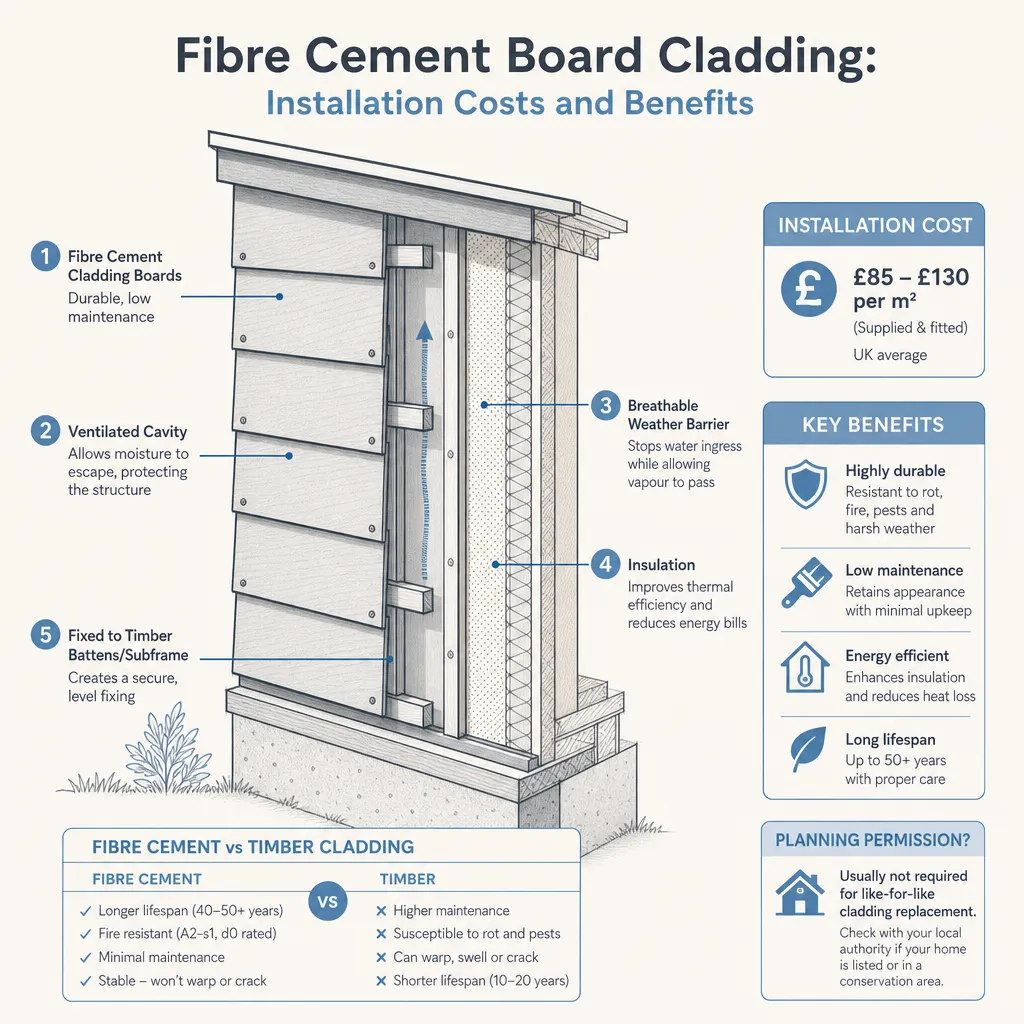 Improvement & Build
Fibre Cement Board Cladding: Installation Costs and Benefits
Fibre cement board cladding typically costs £80–£180 per m² installed in the UK, including boards, battens, breather membrane, and labour.
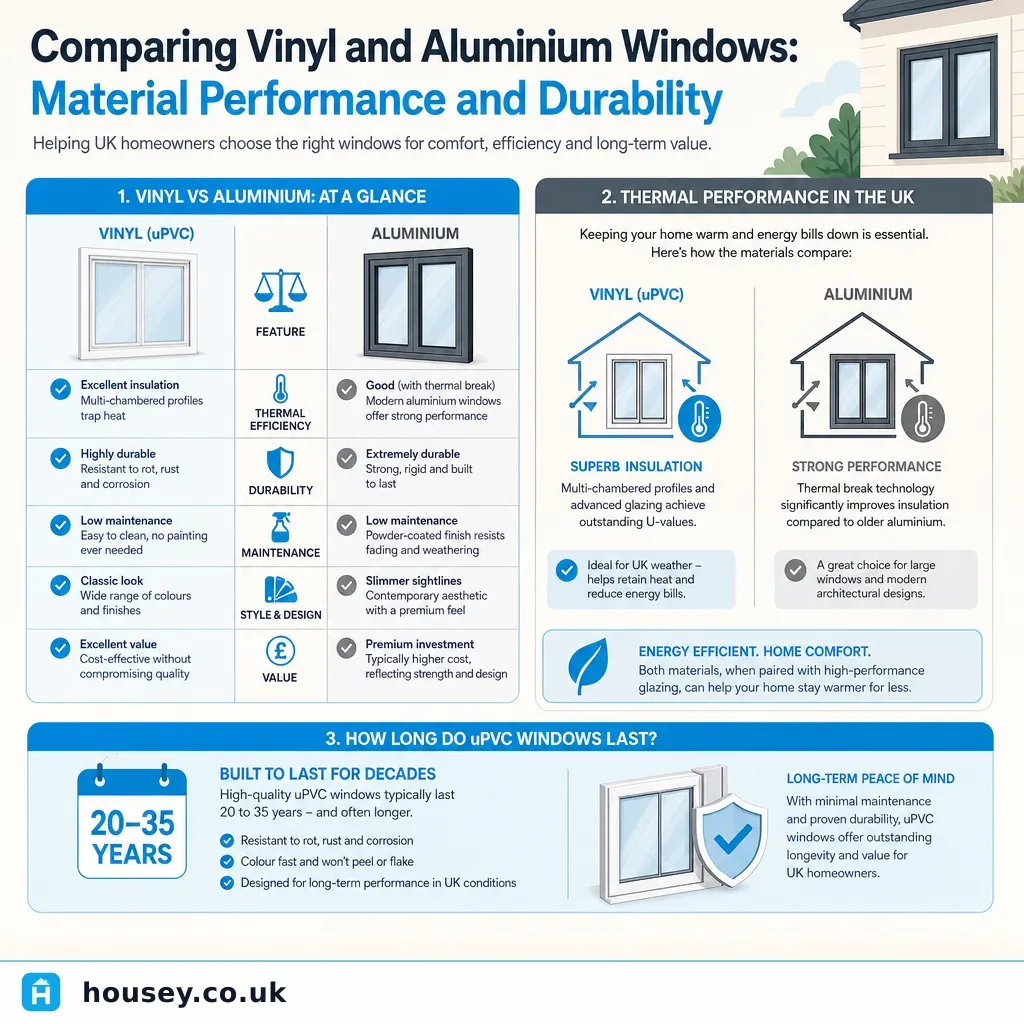 Improvement & Build
Comparing Vinyl and Aluminium Windows: Material Performance and Durability
uPVC (vinyl) and aluminium windows both meet UK Building Regulations Part L when properly specified.
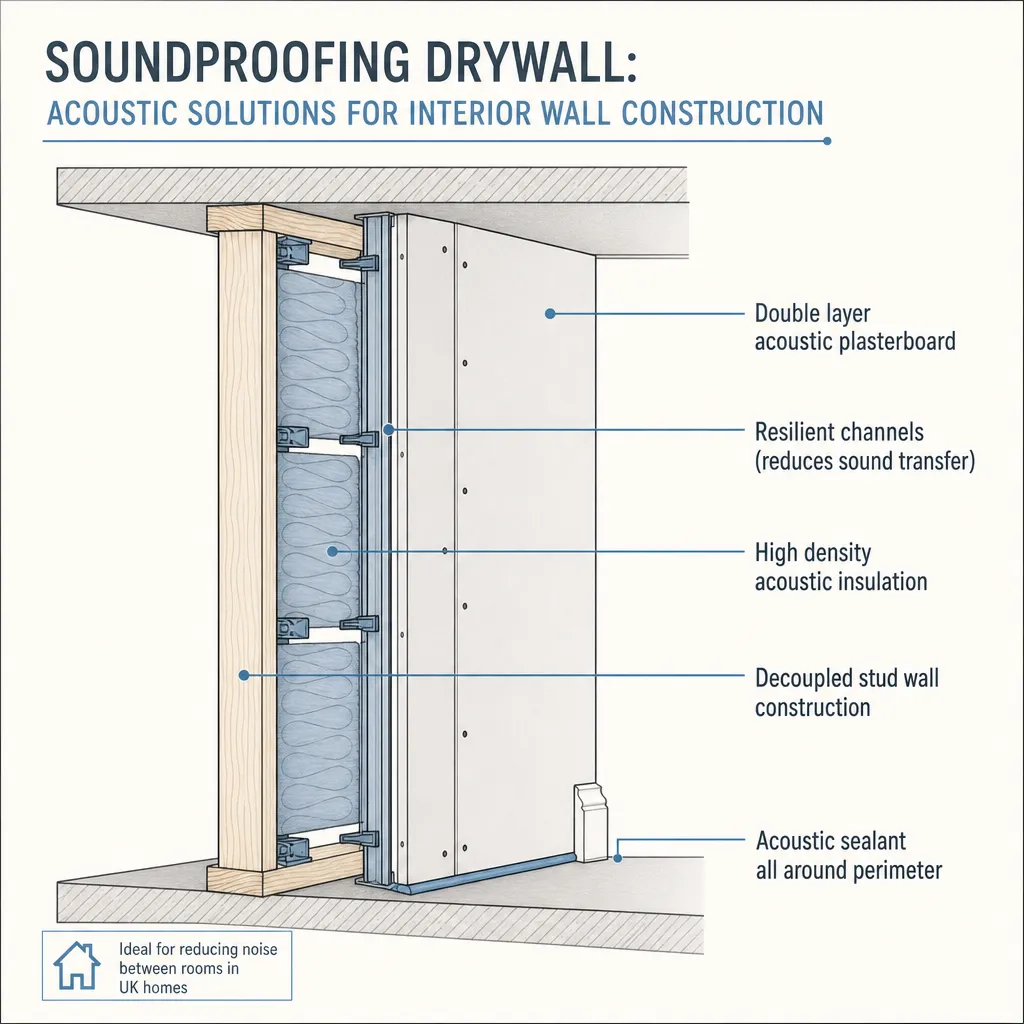 Improvement & Build
Soundproofing drywall: acoustic solutions for interior wall construction
Soundproofing drywall in UK homes typically combines acoustic plasterboard, resilient bar fixings, and mineral wool cavity fill to reduce airborne and structure-borne noise.
 Improvement & Build
Window Installation: Accurate Measurement and Specification for Replacement
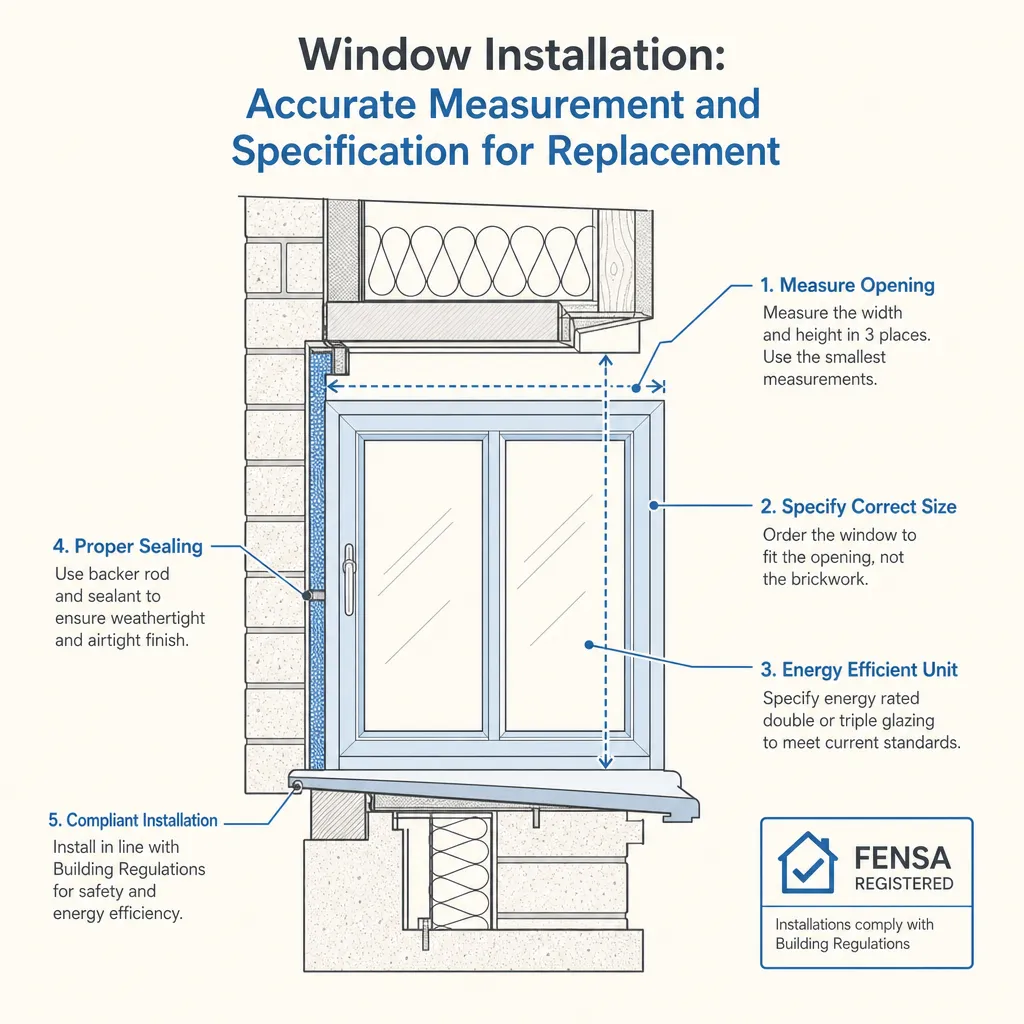
Accurate window measurement for replacement means recording the width and height of the existing frame opening in at least three places, noting the smallest dimension, and providing a full specification to your installer — including frame material, glazing type, opening style, and trickle ventilators.
 Improvement & Build
Interior Wall Finishes: Alternatives to Plasterboard
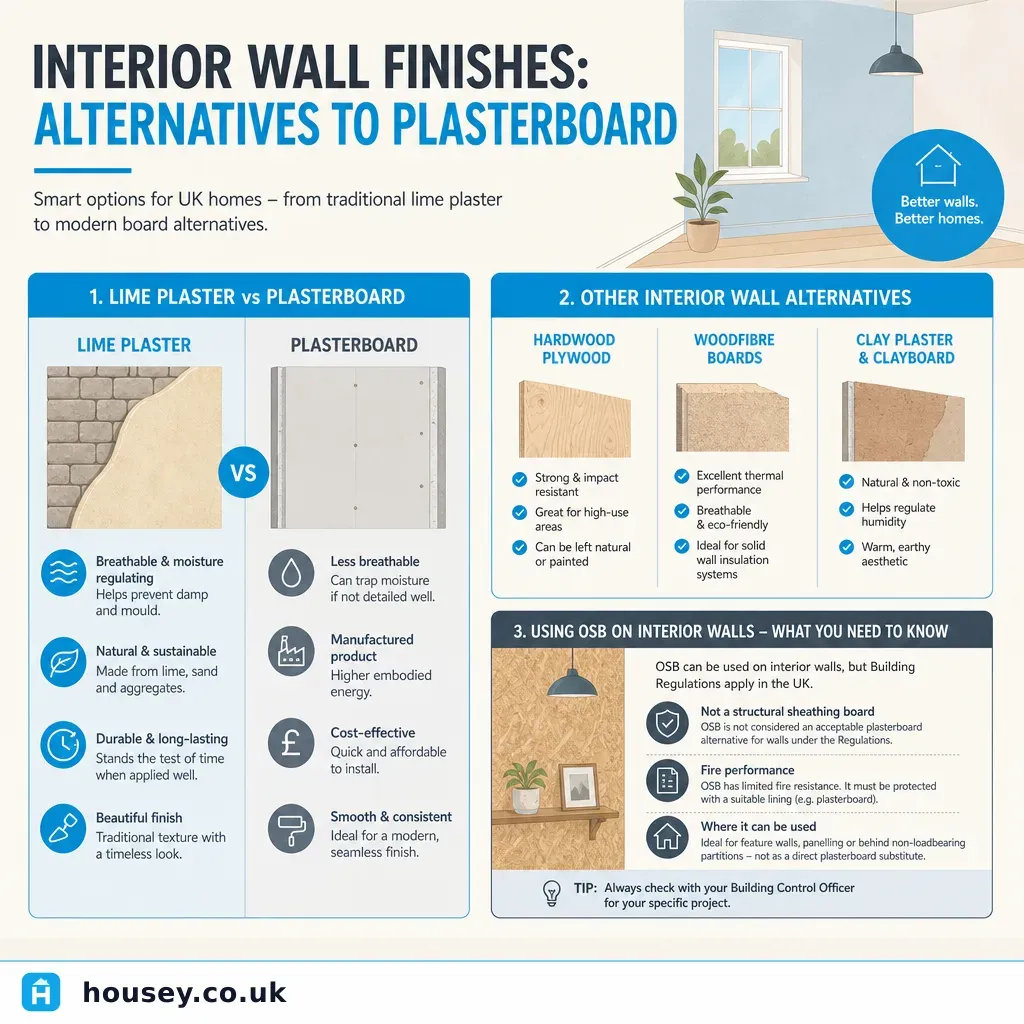
Interior wall finish alternatives to plasterboard include lime plaster, OSB, brick slips, timber cladding, and magnesium oxide board.