Toilet Unblocking and Drainage Clearance Costs
By Housey · Last reviewed 6th of May 2026
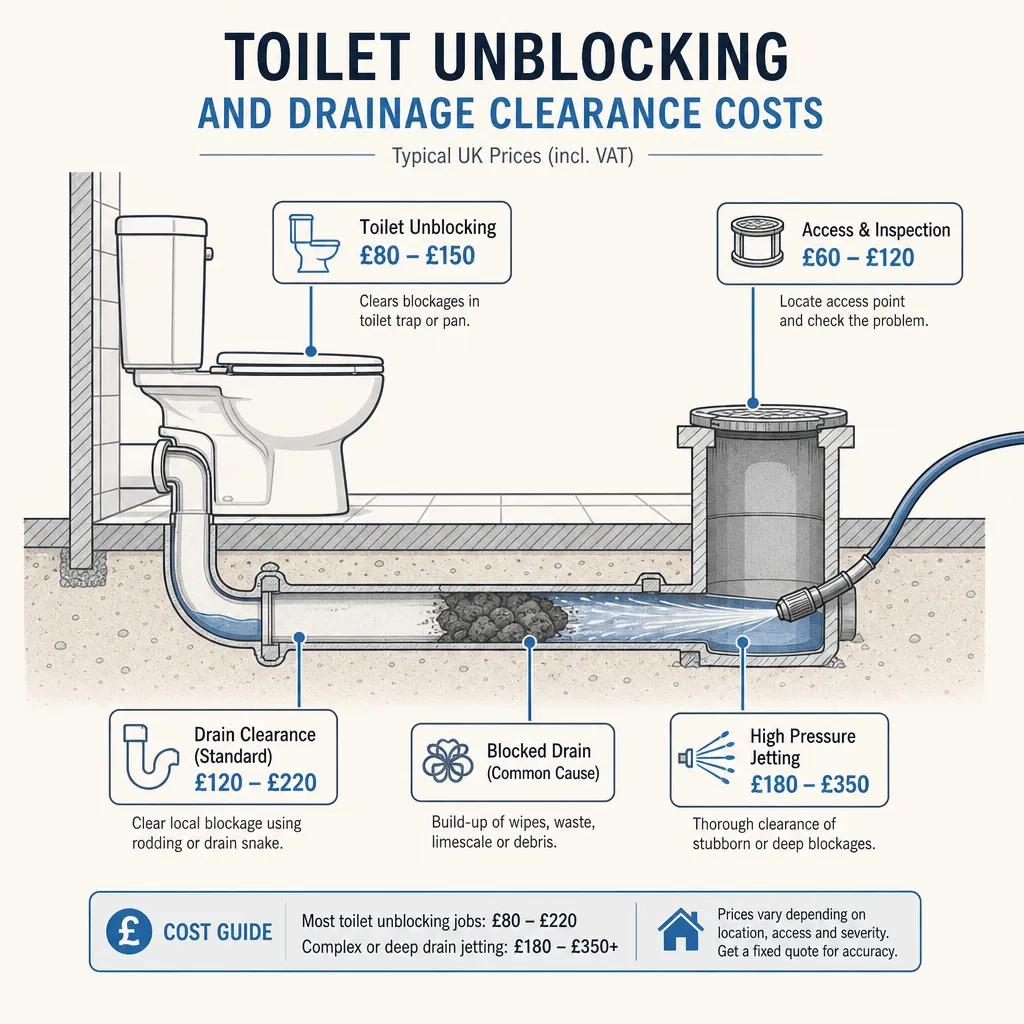
Toilet Unblocking and Drainage Clearance Costs
A blocked toilet or backed-up drain can escalate from a minor inconvenience to a potential health hazard within hours, particularly in homes with older clay or cast-iron pipework already narrowed by grease, scale, or root ingress. Knowing what a drainage contractor is likely to charge — and understanding what may be your water company's responsibility rather than yours — helps you act quickly without unnecessary expense.
Key points
- Shared sewers adopted under the Water Industry (Schemes for Adoption of Private Sewers) Regulations 2011 are the water company's responsibility to maintain and clear, not the homeowner's — check before paying a private contractor.
- Simple toilet blockages cleared by rodding or plunging typically cost £80–£200; high-pressure water jetting on longer pipe runs costs £150–£400+ (indicative UK costs, last reviewed 2026-05-06).
- Recurring blockages in the same fixture often indicate a partial obstruction or structural issue deeper in the drain — a CCTV drain survey is then advisable rather than another clearance-only call-out.
- Drainage contractors working on private drains do not require a statutory licence, but choosing a WaterSafe-approved plumber or contractor with NAPIT or NICEIC registration provides assurance of competence and adequate insurance.
- Non-dispersible wet wipes — even those labelled "flushable" — are a leading cause of domestic drain blockages and should not be flushed.
Who is responsible for the blocked drain?
Before calling a private contractor, establish which section of drain is blocked and who legally owns it.
Your responsibility: Private drains that serve only your property, from your fixtures to the point where they connect to a shared or adopted sewer.
Water company responsibility (England and Wales): Shared sewers and lateral drains serving more than one property. These were transferred to water company ownership under the Water Industry (Schemes for Adoption of Private Sewers) Regulations 2011. Contact your water company's emergency line — clearance on adopted infrastructure is usually free of charge.
Scotland: Scottish Water is responsible for adopted public sewers. Contact them directly if the blockage may be on shared infrastructure.
Check your water company's online sewer map using your postcode, or call the company with your property address. Paying a private contractor for work on adopted infrastructure that the water company would have cleared at no cost is a common and avoidable mistake.
Typical costs for toilet and drain unblocking
Method | When used | Typical cost range | Notes |
|---|---|---|---|
Plunging or manual rodding | Simple soft blockage, accessible toilet or inspection chamber | £80–£200 | Most cost-effective for straightforward blockages near the access point |
High-pressure water jetting (single run) | Grease build-up, partial obstruction, longer pipe runs | £150–£350 | More thorough than rodding; standard for professional drainage contractors |
High-pressure jetting (extended or multi-branch) | Stubborn blockage, branched drainage system | £250–£500+ | Cost increases with system length and number of branches |
CCTV drain survey | Recurring blockage, suspected structural damage | £150–£400 | Produces a report and footage; usually a separate appointment |
Mechanical root cutting | Tree root intrusion into pipe joints | £300–£700+ | Specialist cutting head required; roots may regrow without pipe repair or lining |
Indicative UK costs, last reviewed 2026-05-06. Emergency call-outs (evenings, weekends, bank holidays) typically attract a surcharge of 25–100% above standard rates. Always request a written quote or fixed-price estimate before work begins.
Red flags that suggest a more serious problem
A straightforward blockage clears once and stays clear. Be alert to signs that the problem may be structural rather than a simple build-up:
- Recurring blockages in the same toilet or drain within weeks of clearance.
- Multiple fixtures backing up simultaneously — toilet and bath both slow-draining points to a shared stack or drain blockage further downstream.
- Gurgling sounds from other fixtures when the toilet is flushed — negative pressure caused by a partial obstruction in the drain or stack.
- Persistent sewer smell from drains or outside gullies between blockage events.
- Drainage that has worsened gradually over months — often indicates progressive pipe collapse, root intrusion, or heavy grease accumulation.
- Water seeping at ground level near an outside inspection chamber — possible drain fracture or a displaced pipe joint.
Any combination of these signs warrants a CCTV drain survey rather than another clearance-only call-out.
What to check before calling a contractor
How clearance methods compare
Manual rodding uses flexible rods pushed through the pipe to break up or dislodge obstructions. Effective for soft blockages close to the access point but limited in range and not effective against root intrusion or heavy scale.
High-pressure water jetting directs a pressurised water stream through the pipe to cut through grease, break up obstructions, and flush debris downstream. More thorough than rodding for partial blockages and grease accumulation, and reaches further into the system. It is the standard method for professional drainage contractors on any but the simplest call-outs.
Mechanical root cutting uses a spinning cutting head on a drain rod, designed specifically for root intrusion that has penetrated pipe joints. Roots will regrow unless the pipe is subsequently repaired or lined.
Drain lining (cured-in-place pipe, CIPP) is a longer-term solution for cracked joints, minor fractures, or persistent root infiltration. A resin liner is installed and cured without excavation. This is a separate, larger job typically costing £500–£2,000+ depending on pipe diameter and length, and is arranged following a CCTV survey.
When to get professional help
Most blocked toilets benefit from professional attention if:
- Plunging at home has not cleared the blockage after two or three attempts.
- Multiple fixtures are draining slowly or backing up simultaneously.
- There are signs of sewer smell at ground level, sewage backing up into other fittings, or water pooling near outside inspection chambers.
- The property has not had a drain survey in the last five years and blockages are becoming more frequent.
- The property is pre-1950s, where clay pipe joints are more susceptible to root ingress, settlement, and displacement.
Avoid repeated use of caustic chemical drain cleaners — they are rarely effective against solid physical obstructions and can damage older pipework, particularly lead or clay.
How Housey can help
Housey can connect you with vetted drainage contractors who can clear blockages, carry out CCTV drain surveys, and advise on permanent repairs. Request quotes from local drainage specialists to compare prices and methods before committing.
Frequently asked questions
Will home insurance cover the cost of drain unblocking?
Some home insurance policies include drain cover, but terms vary significantly between providers. Cover commonly applies to sudden blockages or pipe collapse within private drains, but typically excludes gradual deterioration, misuse such as flushing wipes, and blockages in shared or adopted sewers which are water company responsibility. Check your policy schedule and contact your insurer before authorising private contractor work.
How do I know if my drain is a shared sewer?
Your water company publishes sewer maps online — most have a postcode or address lookup tool. In England and Wales, sewers serving more than one property were transferred to water company ownership in October 2011 under the Water Industry (Schemes for Adoption of Private Sewers) Regulations 2011. You can also call the company's customer service team directly with your property address.
Can I unblock a toilet myself?
For simple soft blockages, a standard toilet plunger is often effective. A toilet auger can reach slightly deeper. If these do not clear the blockage after two or three attempts, the obstruction is likely further down the drain or more solid — call a professional rather than risk pushing the blockage further into the system or damaging the toilet trap.
How long does professional drain unblocking take?
Most straightforward call-outs take 30–90 minutes from arrival. More extensive jetting, or where the contractor needs to locate and lift an inspection chamber, may take 2–3 hours. A CCTV drain survey is usually a separate appointment and adds 1–2 hours. Ask for a time estimate when booking so you can plan access to the property.
What causes recurring toilet blockages?
Common causes include accumulation of non-dispersible wipes or sanitary products, partial pipe collapse restricting flow, tree root intrusion through joints in older clay pipes, a sag or misalignment causing debris to collect, and fat or grease progressively narrowing the pipe bore. A CCTV survey is the only reliable way to identify the root cause and determine whether structural repair is needed.
Sources and further reading
- Water Industry (Schemes for Adoption of Private Sewers) Regulations 2011 — legislation.gov.uk
- Drainage and sewers: household responsibilities — Ofwat
- Find a WaterSafe-approved plumber — WaterSafe
- Problems with drains and sewers — Citizens Advice
Useful next reads
 Improvement & Build
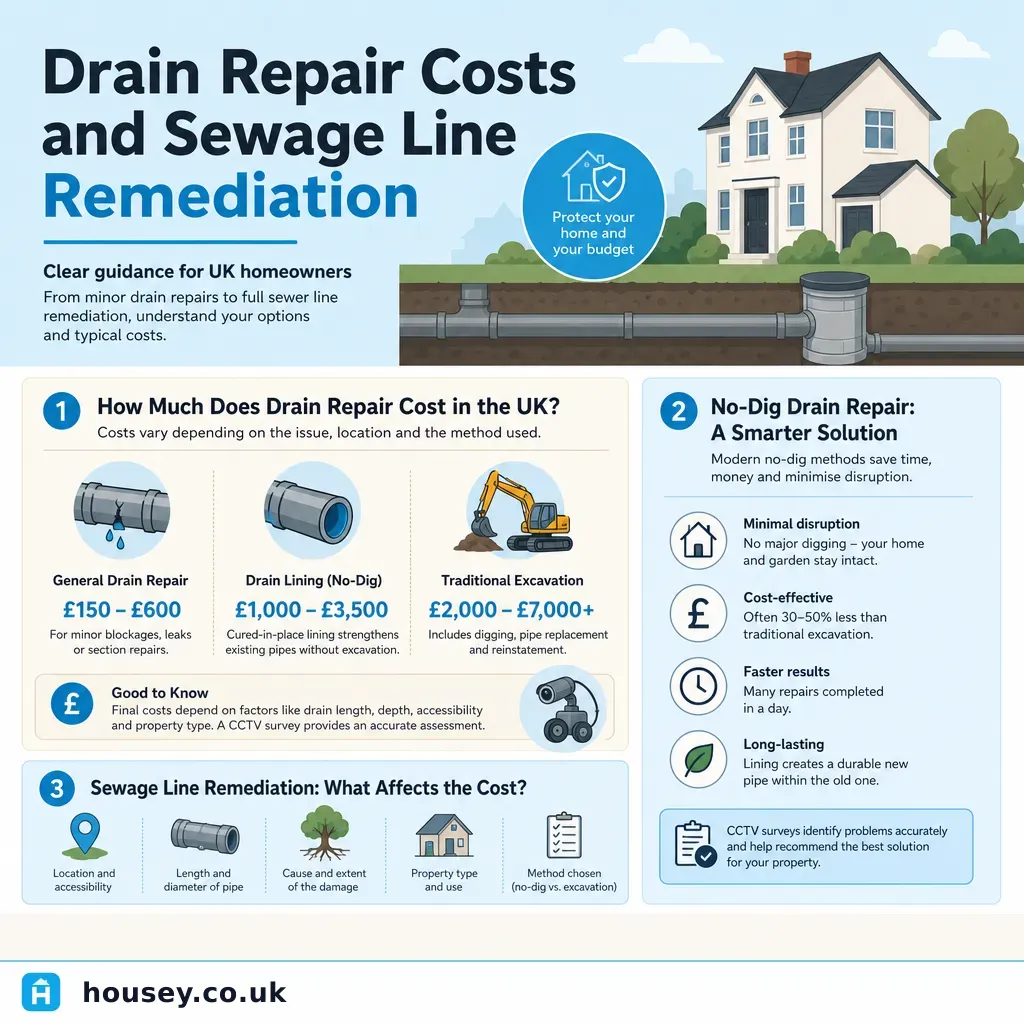
Drain Repair Costs and Sewage Line Remediation
Drain repair in the UK typically costs £300–£3,000+ depending on the method, access, and severity.
 Improvement & Build
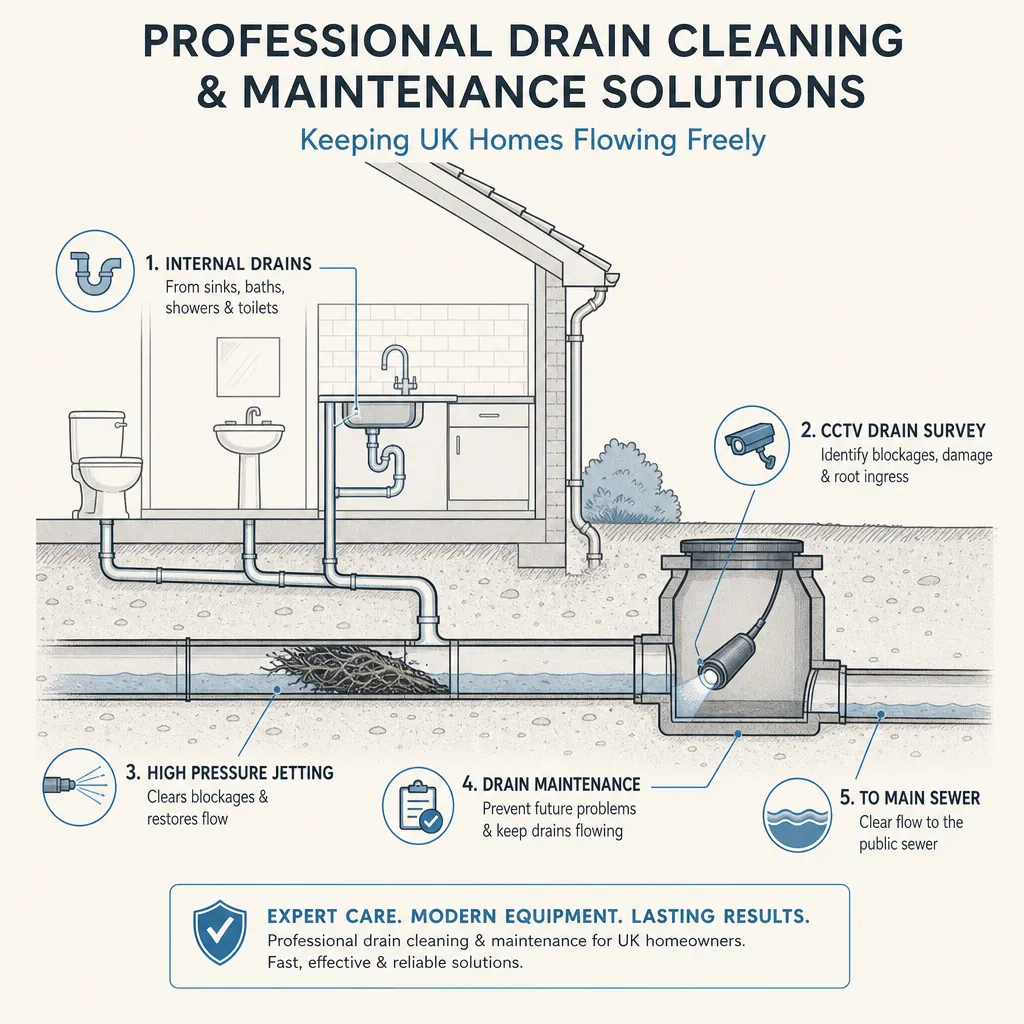
Professional Drain Cleaning and Maintenance Solutions
Professional drain cleaning uses methods including high-pressure water jetting, electromechanical rodding, CCTV surveys, and no-dig lining repairs.
 Improvement & Build
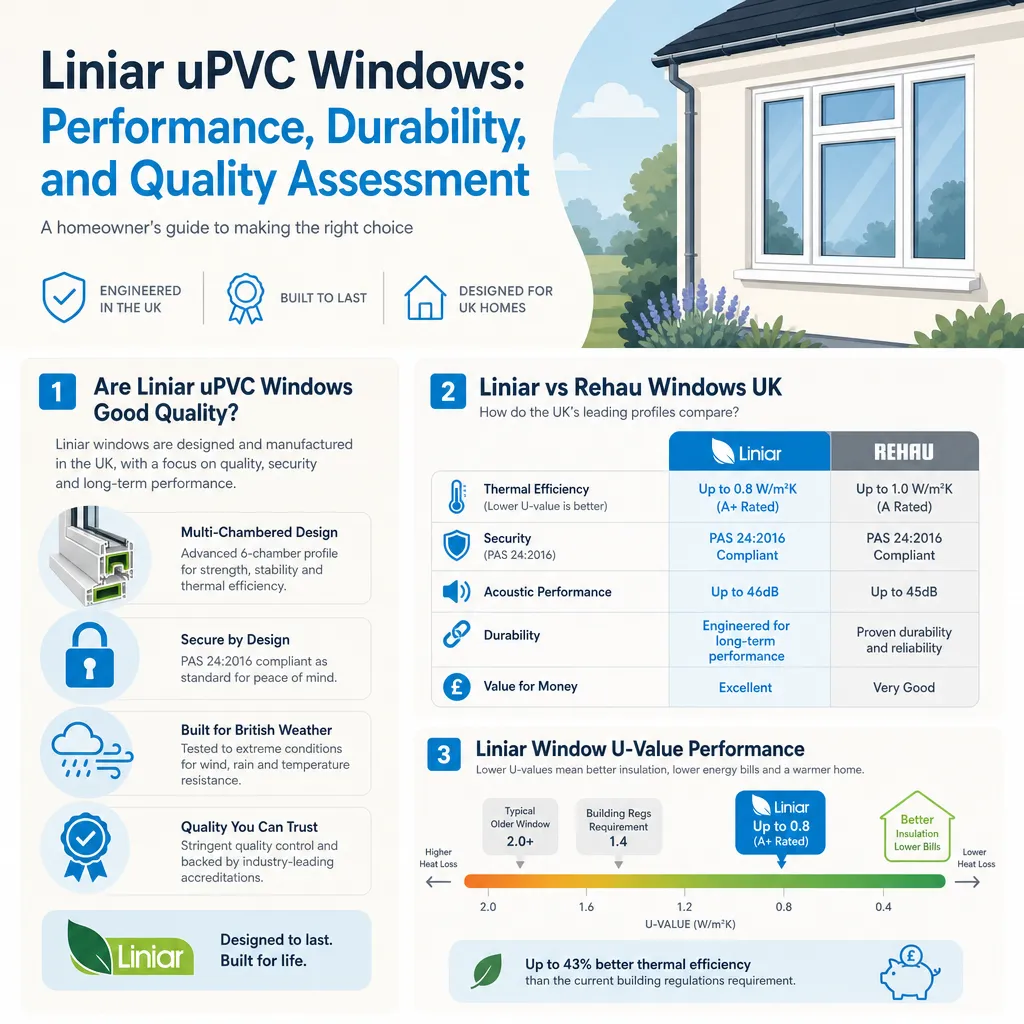
Liniar uPVC Windows: Performance, Durability, and Quality Assessment
Liniar uPVC window profiles are manufactured in the UK using multi-chambered, foamed frames.
 Improvement & Build
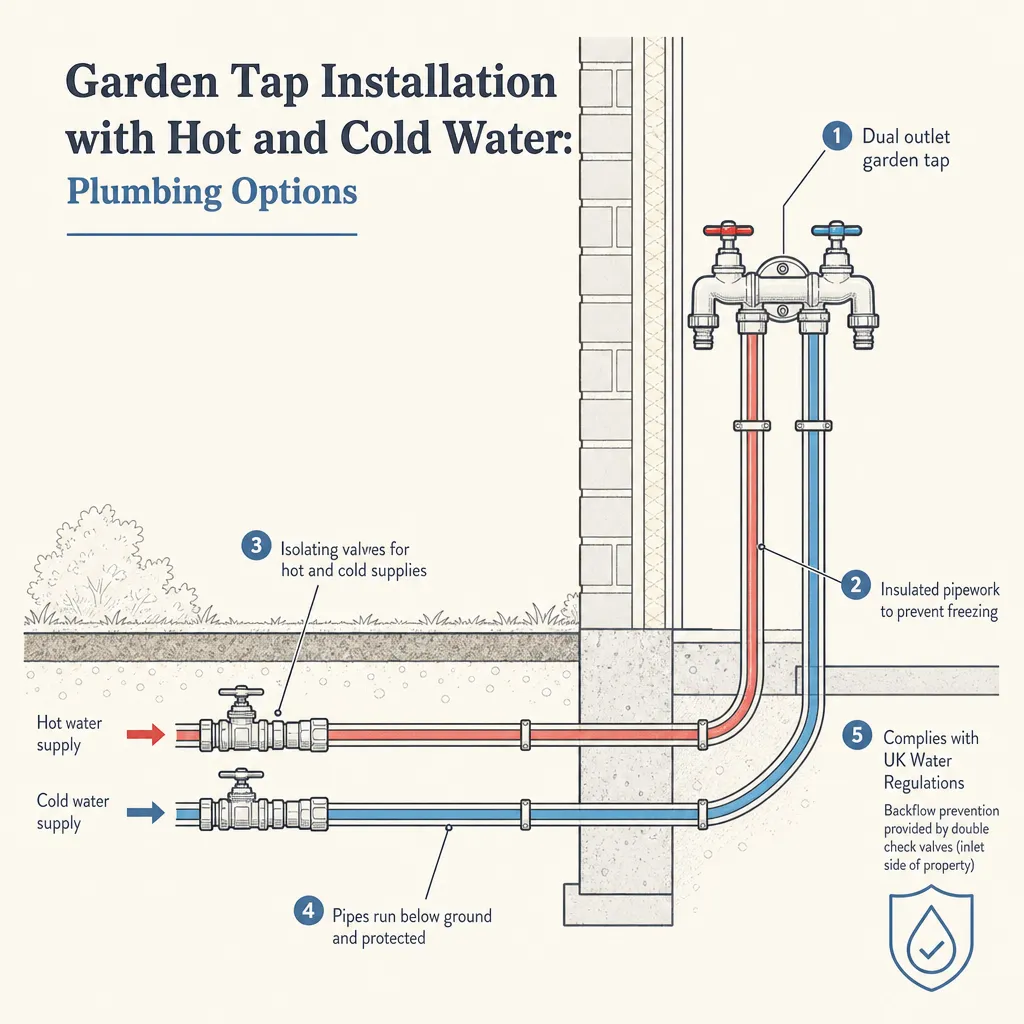
Garden Tap Installation with Hot and Cold Water: Plumbing Options
Adding a cold garden tap is a common DIY project, but routing hot water outdoors requires a plumber to connect to your domestic hot water system and comply with the Water Supply (Water Fittings) Regulations 1999.
 Improvement & Build
Sealing and Maintaining Historic Leaded Glass Windows: Preservation and Performance
Leaded glass windows are maintained using traditional linseed oil cement — not silicone or modern sealants, which prevent natural movement in the lead came.