Professional Gardeners and Landscapers: Services and When to Call Them
By Housey · Last reviewed 19th of May 2026
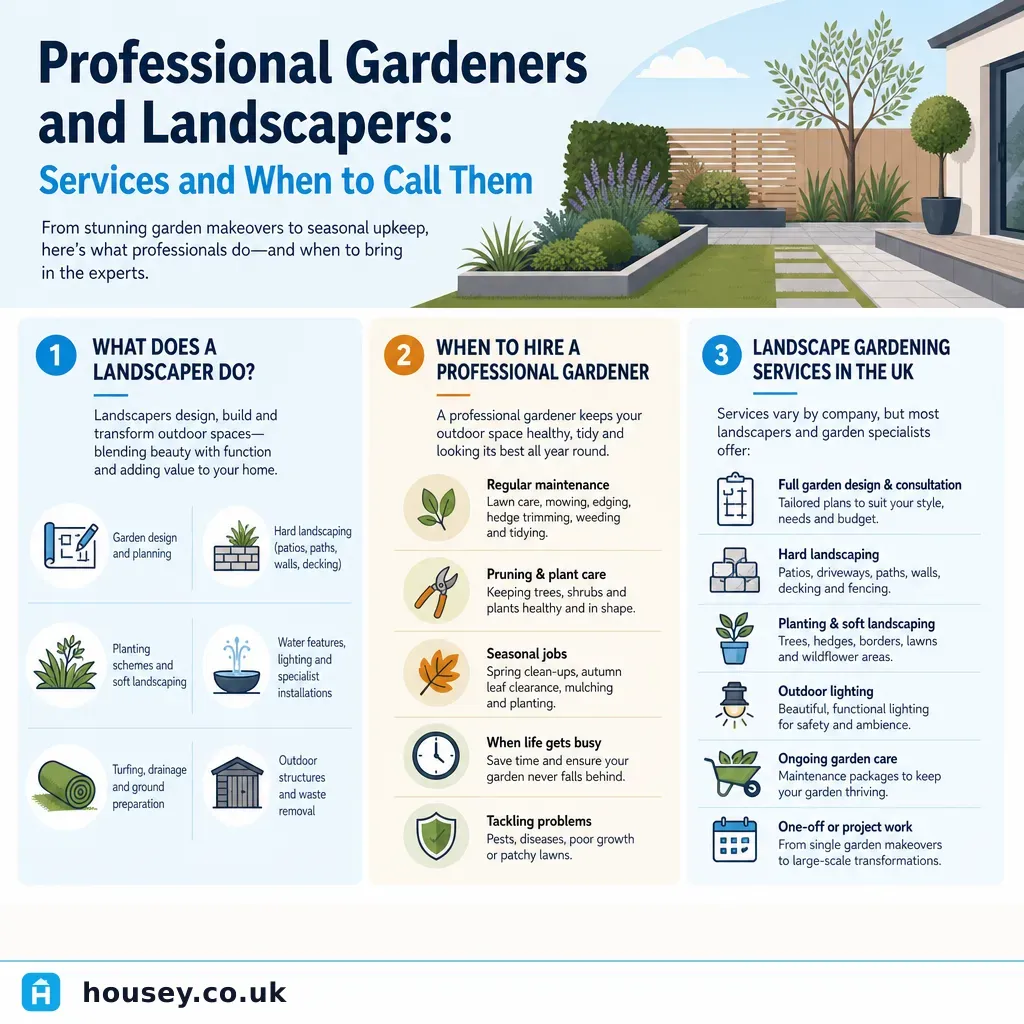
Professional Gardeners and Landscapers: Services and When to Call Them
Many homeowners find the line between a professional gardener and a landscaper blurry — both work outdoors, both improve the appearance of a property, and many advertise using both terms. Understanding the practical difference helps you brief the right person, get accurate quotes, and avoid paying for expertise you don't need or missing expertise you do.
Key points
- A professional gardener's core work is horticultural: plant health, pruning schedules, lawn care, seasonal colour, and feeding programmes — not construction or structural change.
- A landscaper is a construction professional whose work includes patios, paths, retaining walls, drainage, decking, fencing, and outdoor structures.
- Both trades lack statutory licensing in the UK, but credible professionals carry public liability insurance and may hold BALI, RHS, or Lantra qualifications.
- Garden maintenance contracts typically run annually or seasonally; most landscaping is project-based with a fixed scope and price.
- Tree surgery is a separate specialism: instruct an Arboricultural Association-approved contractor for crown reduction, felling, or work near TPO-protected trees.
What a professional gardener does
A professional gardener's primary focus is the health and appearance of plants and lawns. Typical services include:
- Lawn mowing, scarifying, aerating, and feeding
- Hedge trimming and topiary
- Shrub and rose pruning
- Seasonal bedding planting and bulb planting
- Weeding — borders, paths, and drives
- Leaf clearance and general tidying
- Basic soil improvement and mulching
A gardener may carry out light tree work such as raising the crown of a small specimen, but significant tree surgery is beyond most gardeners' training and equipment. Some hold RHS qualifications (Level 2 or Level 3 Certificate in Horticulture), which demonstrate formal plant knowledge. Always check references for gardens of a similar type and size to yours before instructing.
What a landscaper does
A landscaper's work is primarily constructional. Projects typically include:
- Patio and path installation (natural stone, porcelain, concrete, brick)
- Decking construction (softwood or composite)
- Retaining walls, raised beds, and boundary walls
- Garden drainage systems and soakaways
- Pergolas, gazebos, and garden structures (depending on scale)
- Driveway construction or resurfacing
- Water features and pond construction
Reputable landscapers are often BALI (British Association of Landscape Industries) registered, which requires insurance, industry experience, and adherence to a code of practice. For drainage work connecting to a public sewer, a contractor should be familiar with building regulations and may need to notify building control.
Which professional do I need?
Situation | Right professional | Why |
|---|---|---|
Lawn overgrown; hedges need cutting | Gardener | Horticultural maintenance, not construction |
New patio and raised beds wanted | Landscaper | Construction and groundwork |
Full garden redesign needed | Garden designer first, then landscaper | Designer produces drawings landscapers can price from |
Large tree needs pruning or removing | Arborist (Arboricultural Association-approved) | Specialist safety equipment and training |
Tree in conservation area or with TPO | Arborist plus local planning authority notification | Legal obligation before any work starts |
Ongoing plant care after landscaping done | Gardener | Different skill set to construction |
When to call a landscaper rather than a gardener
Call a landscaper — rather than a general gardener or handyperson — when:
- You are laying or replacing a patio, path, or area of decking.
- You need drainage work: a soakaway, channel drain, or surface water management system.
- You are building a retaining wall, terrace, or substantial raised bed with engineering requirements.
- You want to install or replace fencing on a boundary.
- The project involves significant groundwork: excavation, levelling, or importing or removing large quantities of soil.
Red flags when hiring
Watch out for these warning signs before instructing any garden professional:
- No public liability insurance: a basic requirement for any contractor working on your property. Ask for the certificate, not just a verbal assurance.
- Cash-only quotes with no written contract: reputable landscapers provide a written scope, payment schedule, and start and end dates.
- No fixed price for a defined scope: groundwork can throw up surprises, but the base scope should be priced in writing before work begins.
- Pressure to start immediately: legitimate professionals have project pipelines; anyone pushing you to commit the same day warrants caution.
- No verifiable previous work: ask for addresses of completed projects (with the client's permission) or verified photo evidence accompanied by references.
What to ask before hiring a gardener or landscaper
- What qualifications or trade memberships do you hold? (BALI, RHS, Lantra, Arboricultural Association)
- Can you provide proof of public liability insurance?
- What is included in the quoted price — and what is excluded?
- How do you handle unexpected issues such as buried drainage, poor soil, or tree roots?
- Will you personally carry out the work, or subcontract any element?
- What is the payment schedule? Avoid paying 100% upfront.
- What aftercare or guarantee do you offer for construction work?
- Can you provide references from similar projects in the local area?
When to get professional help
For ongoing maintenance, most competent gardeners can be engaged directly. Escalate to a specialist when:
- Tree surgery is required above 2m — the Work at Height Regulations 2005 apply and specialist equipment is essential.
- You suspect a tree has a TPO or sits within a conservation area — check with your local planning authority before instructing any work, as acting without consent can result in enforcement action.
- Drainage works may affect a neighbouring property, public highway, or public sewer.
- Any structure you are planning — a wall, outbuilding, or pergola — may fall outside permitted development limits under the Town and Country Planning (General Permitted Development) (England) Order 2015.
How Housey can help
Housey's network of vetted landscapers covers projects from single patio installations to full garden transformations across the UK. Get competitive quotes, read verified reviews, and compare professionals in one place — without the cold calls.
Frequently asked questions
Do professional gardeners and landscapers need to be licensed in the UK?
There is no statutory licensing requirement for gardeners or landscapers in the UK. However, professional membership bodies — BALI for landscapers, RHS qualifications for gardeners, and Lantra for horticulture — provide a degree of verified quality assurance. Always check insurance and references regardless of credentials claimed.
How much does a professional landscaper charge per day in the UK?
Indicative UK costs, last reviewed 2026-05-19. Day rates for a landscaper typically range from £200–£450 per person per day, depending on location, experience, and project type. Materials are usually priced separately. Obtain at least three written quotes for any project before committing.
How often should I have my garden professionally maintained?
This depends on garden size, plant types, and personal preference. Most homeowners with a regular gardener book fortnightly visits during the growing season (April to October) and monthly in winter. Some prefer seasonal visits only — a pre-summer tidy and a pre-winter cut-back. Discuss your priorities and agree a programme before the gardener starts.
Can a landscaper also maintain the garden after the project is complete?
Some landscaping companies offer a maintenance follow-up service, but many are purely project-based and hand the garden over once construction is finished. If ongoing maintenance matters to you, clarify this before instructing — you may need to engage a separate gardener for regular upkeep once the build is complete.
Sources and further reading
- British Association of Landscape Industries (BALI) — BALI
- Royal Horticultural Society (RHS) — RHS
- Arboricultural Association: Approved Contractors — Arboricultural Association
- GOV.UK: Tree Preservation Orders and protected trees — GOV.UK
- HSE: Work at Height Regulations 2005 — HSE
Useful next reads
 Improvement & Build
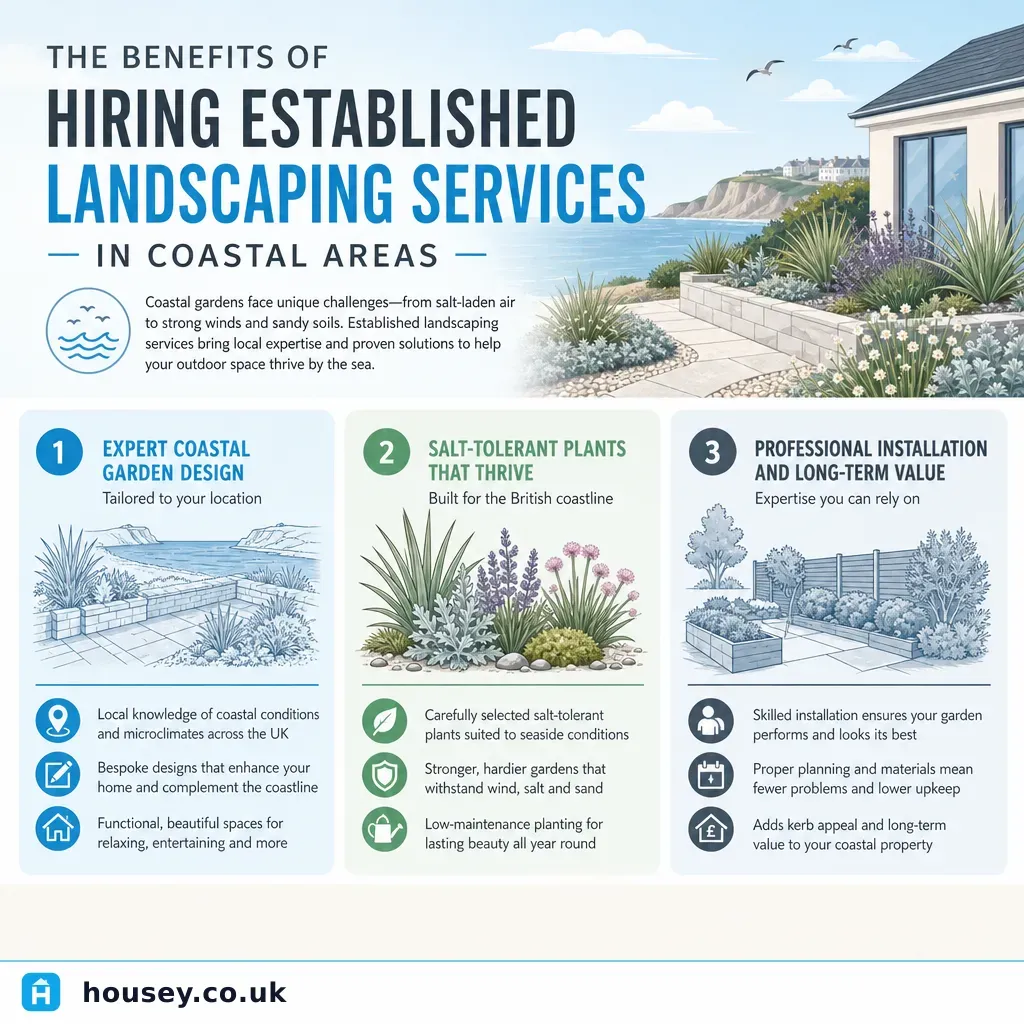
Benefits of Hiring Established Landscaping Services in Coastal Areas
Established landscaping contractors in coastal areas understand salt spray exposure, prevailing wind patterns, and local planning restrictions that inland firms often overlook.
 Improvement & Build
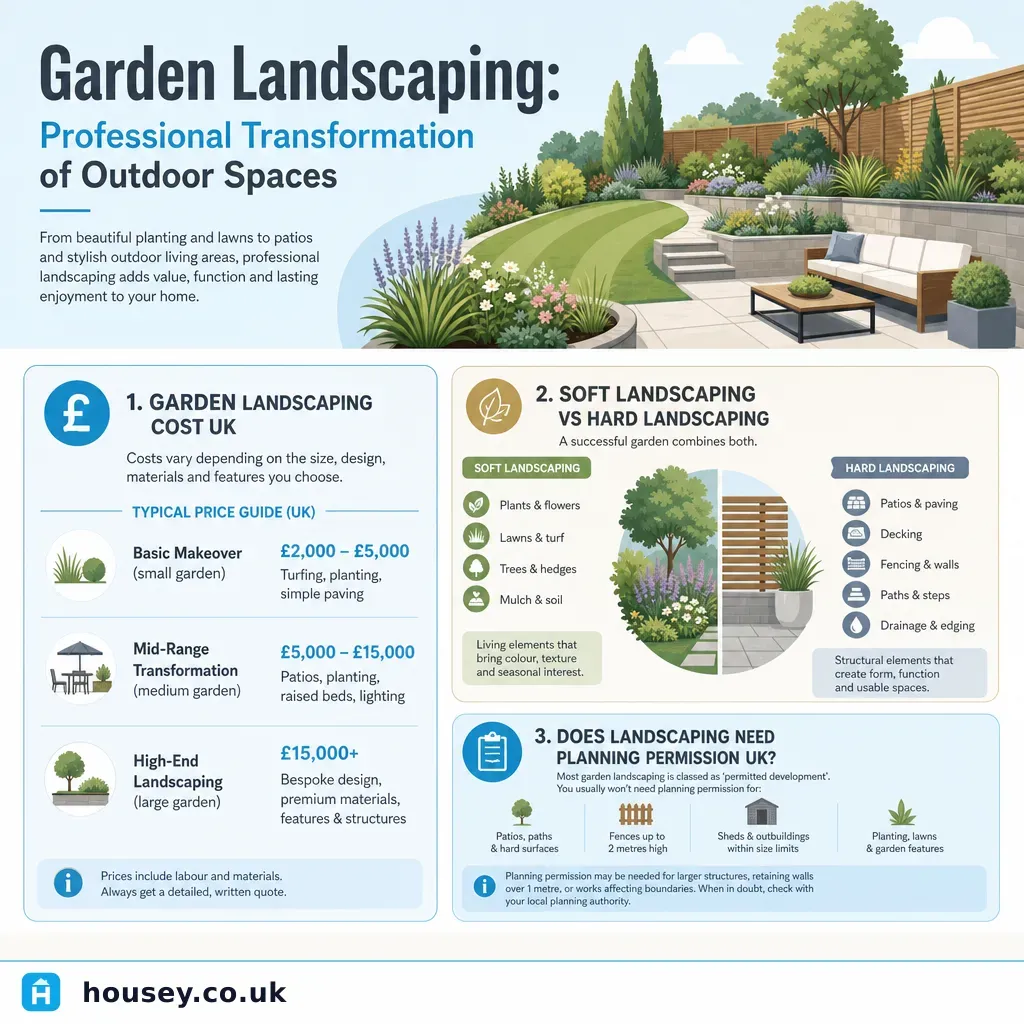
Garden Landscaping: Professional Transformation of Outdoor Spaces
Garden landscaping covers all physical works to reshape and improve an outdoor space, from earthworks and hard landscaping such as patios, paths, and walls, to planting, drainage, and lawn installation.
 Improvement & Build
Cleaning and Maintaining Your Deck: Costs and Techniques
Timber decking should be cleaned and re-oiled at least once a year, ideally in spring.
 Improvement & Build
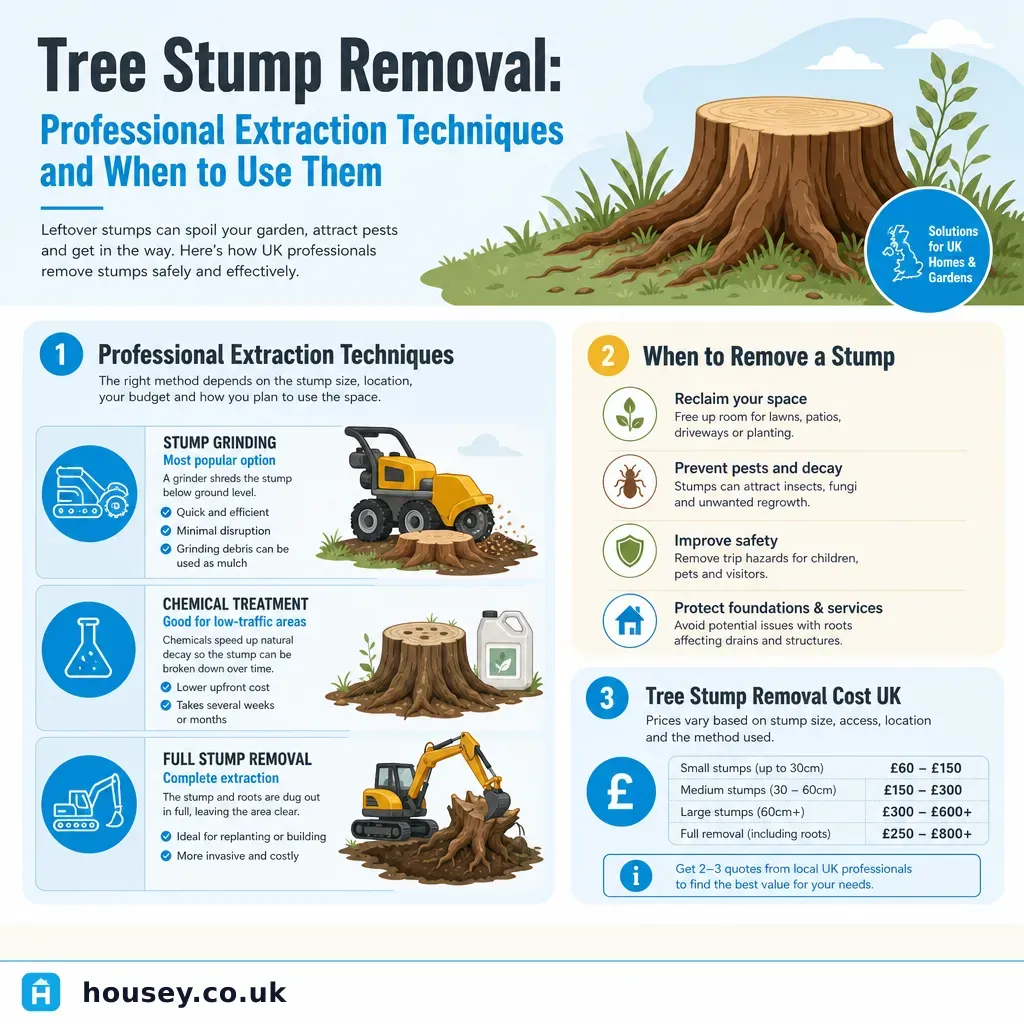
Tree Stump Removal: Professional Extraction Techniques and When to Use Them
Tree stumps in UK gardens can be removed by grinding, mechanical extraction, or chemical treatment.
 Improvement & Build
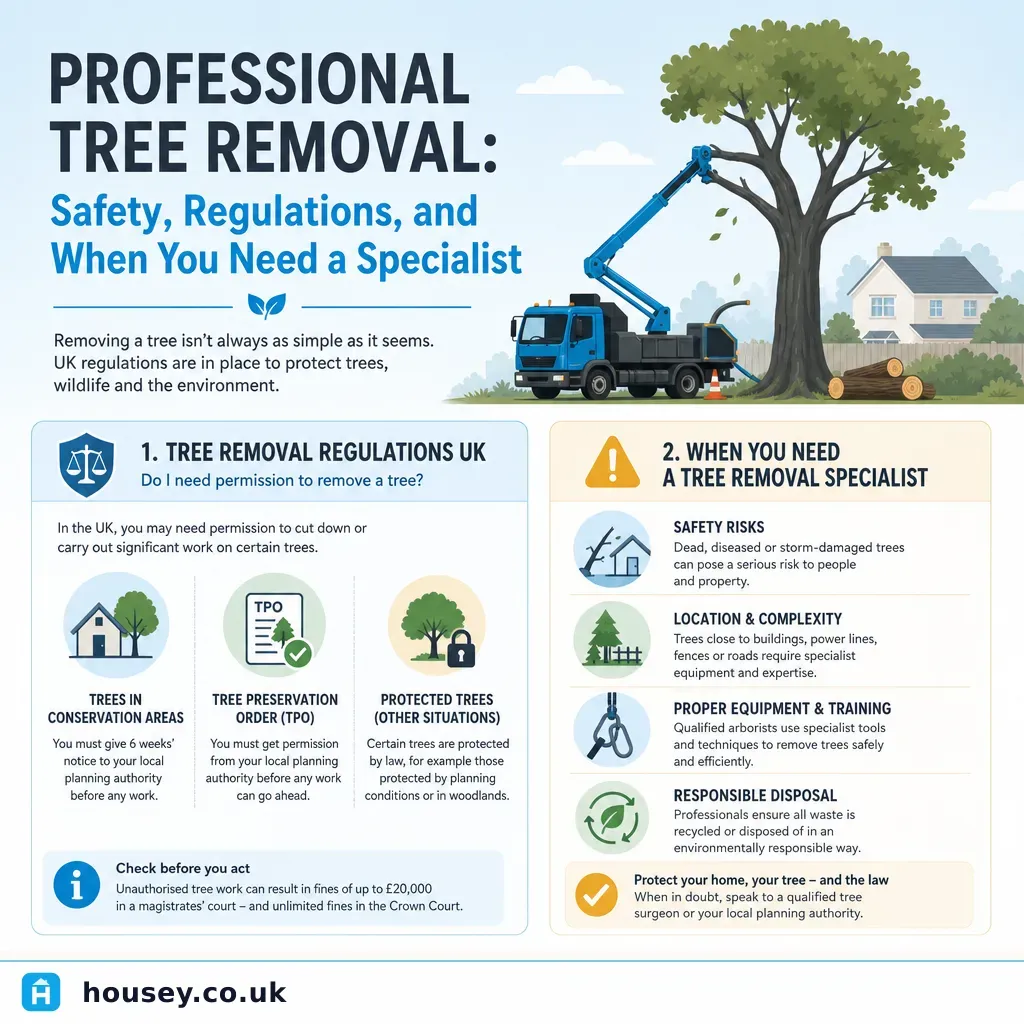
Professional Tree Removal: Safety, Regulations, and When You Need a Specialist
Professional tree removal in the UK often requires checking for Tree Preservation Orders or conservation area protections before any work begins.