Property Repair Costs and Budget Planning
By Housey · Last reviewed 7th of May 2026
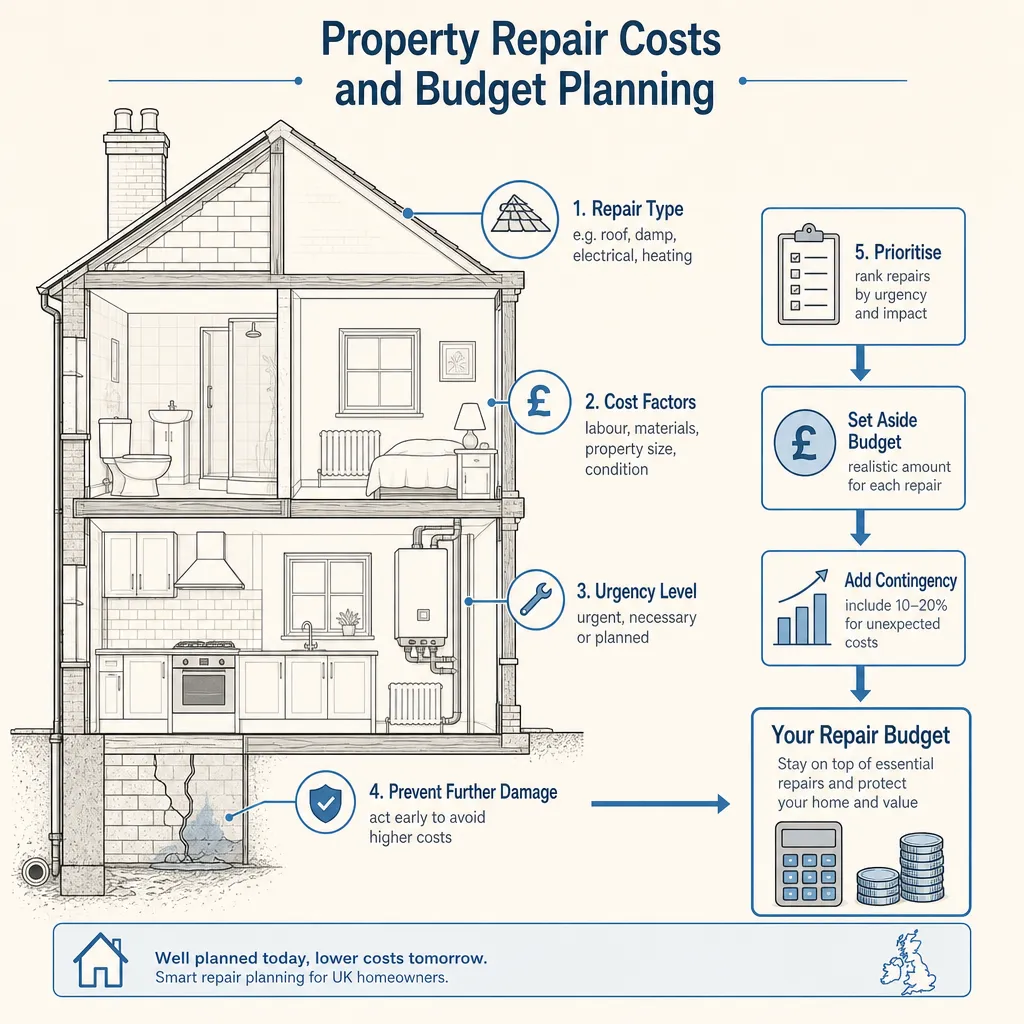
Property Repair Costs and Budget Planning
Unexpected repairs catch many UK homeowners off guard — a blocked drain, a failing flat roof, or rising damp identified in a purchase survey can cost anything from a few hundred to several thousand pounds depending on how long the problem has gone unaddressed. Knowing how to categorise, cost, and budget for common property repairs reduces the risk of financial shock and helps prevent minor defects from becoming major ones.
Key points
- Budget 1–3% of your property's value annually for maintenance and repairs — for a £300,000 home, that is £3,000–£9,000 per year, though older properties typically sit at the higher end (Indicative UK costs, last reviewed 2026-05-07).
- Pre-1919 solid-wall properties require more frequent and more costly repairs than post-1945 cavity-wall homes due to age and construction characteristics.
- Most common repair problems — damp, roof leaks, drain failures — worsen significantly if left untreated; early intervention is almost always cheaper than delayed repair.
- Obtain at least three written quotes before instructing any contractor for works over £500; ensure quotes itemise VAT, materials, access equipment, and waste disposal separately.
- Some repair types — structural works, certain electrical works, and drainage replacements — require Building Regulations notification or approval; confirm requirements before instructing.
Common UK property repair costs
The table below gives indicative cost ranges for frequently encountered UK property repairs. Actual costs vary by location, access, extent of defect, and property age.
Repair type | Indicative cost range | Key variables |
|---|---|---|
Roof tile replacement (partial) | £200–£800 | Number of tiles, scaffold, access |
Flat roof replacement (small extension) | £1,200–£3,500 | Area, material (felt, GRP, EPDM) |
Chimney repointing | £500–£2,000 | Height, access, deterioration extent |
Damp-proof course injection | £600–£3,000 | Linear metres, rooms affected |
Timber treatment (dry/wet rot) | £500–£5,000+ | Decay extent, structural involvement |
CCTV drain survey and jetting | £150–£500 | Length surveyed, blockage severity |
Drain repair or relining | £800–£5,000+ | Access, pipe material, extent |
External repointing (terraced house) | £1,500–£5,000 | Size, access, mortar specification |
Indicative UK costs, last reviewed 2026-05-07. Obtain multiple written quotes before instructing any contractor.
How to plan your repair budget
Step 1 — Audit condition. Commission a RICS Level 2 or Level 3 survey if you have not had an independent inspection recently. For existing owners, a chartered building surveyor can carry out a condition report identifying priority defects and providing rough cost guidance.
Step 2 — Categorise by urgency.
- Urgent (within 3 months): active roof leaks, blocked or collapsed drains, progressing structural movement, gas or electrical safety failures.
- Important (within 12 months): rising or penetrating damp, failed flat roof coverings, cracked pointing allowing water ingress.
- Planned (3–5 years): external decoration, chimney maintenance, gutter replacement, window seal renewal.
Step 3 — Get written quotes. Request at least three quotes for any repair over £500, specifying what is included, what could alter the price once opened up, the timeline, and any guarantee offered.
Step 4 — Allow contingency. On any project involving opening up walls, roofs, or drain runs, budget an additional 15–20% for hidden defects — particularly common in pre-1960s properties.
Worked UK property scenario
A buyer in Leeds purchases a 1930s semi-detached house for £295,000. The RICS Level 3 survey identifies three significant items:
- Slipped and missing roof tiles causing intermittent loft water ingress — estimated repair by a local qualified roofer: £500–£800.
- Rising damp to two ground-floor walls, consistent with a failed original damp-proof course — estimated cost from a damp proofing specialist for DPC injection and replastering: £1,800–£2,400.
- Persistent slow drain to the ground-floor bathroom — a drainage contractor quotes £200 for a CCTV survey, with repair costs subject to findings.
Minimum repair budget: approximately £2,500. Adding 15% contingency: approximately £2,875. The buyer negotiates £2,500 off the purchase price and instructs all three repairs within six months of completion.
Red flags: when a repair may be more serious than it appears
- Damp patches that return after repainting — may indicate active water ingress rather than condensation; a specialist should assess before any replastering.
- Stepped cracks through brickwork, or cracks that are widening — potential structural movement; instruct a structural engineer or chartered surveyor before any cosmetic repair.
- Persistent blockages in the same drain location — may indicate a collapsed or root-infiltrated pipe; a CCTV drain survey is needed before further jetting.
- Roof repairs that need repeating at short intervals — the covering may have reached end of life; a roofing contractor should assess the full roof rather than individual tiles.
- White salt deposits (efflorescence) on internal walls — trace the moisture source before applying any treatment.
Homeowner repair planning checklist
When to get professional help
Some repair categories require specialists rather than general tradespeople:
- Roof leaks or structural roof defects: use a qualified roofer who can assess the whole covering, not just patch individual tiles.
- Damp: a damp proofing specialist can distinguish condensation (often resolved through ventilation or heating changes) from genuine rising or penetrating damp requiring treatment.
- Drain problems: a drainage contractor with CCTV equipment can identify root causes that jetting alone will not resolve.
- Structural cracks or movement: instruct a structural engineer or RICS Level 3 surveyor before any repair work.
- Electrical faults: only a Part P-registered electrician should carry out notifiable electrical work.
- Gas appliances or pipework: always use a Gas Safe registered engineer — never attempt DIY gas work.
How Housey can help
Housey connects homeowners with vetted UK trade specialists for common repair categories. Whether you need a qualified roofer to assess a failing roof covering, a damp proofing specialist for a moisture problem, or a drainage contractor to diagnose persistent drain issues, you can request multiple quotes and compare them in one place.
Frequently asked questions
How much should I budget annually for home repairs?
A widely used rule of thumb is 1–3% of the property's value per year. A newly built home may need little in early years; a pre-1919 solid-wall property in average condition can regularly exceed 2%. Properties with original roofs, solid walls, and ageing drainage are typically the most maintenance-intensive. Set aside budget separately from general savings so it is accessible when repairs arise.
Can I claim tax relief on property repair costs?
Owner-occupiers cannot deduct repair costs from income tax. Buy-to-let landlords can usually deduct allowable repairs — replacing like-for-like — from rental income for tax purposes; improvements cannot be deducted. Check HMRC's current Property Income guidance or consult an accountant for your specific situation, as rules are subject to change.
Should I get a survey before instructing repairs?
For significant or uncertain defects — particularly damp, drainage, roof condition, and structural cracks — an independent survey or specialist inspection before instructing repairs is almost always worthwhile. It helps establish the cause, scope, and appropriate remedy, rather than relying solely on a contractor's proposed solution which may not address the root problem.
What happens if a contractor's repair fails within the guarantee period?
Ask the contractor to return and remedy the defect. If they refuse, options include the Small Claims Court (claims up to £10,000 in England and Wales), a complaint to their trade body if registered, or a claim on their public liability insurance where the failure has caused consequential damage. Confirm guarantee terms in writing before work begins.
Sources and further reading
- RICS Home Survey Standard — Royal Institution of Chartered Surveyors
- GOV.UK: Repairs if you own your home — GOV.UK
- Citizens Advice: Problems with building work — Citizens Advice
- Property Care Association — damp and timber decay guidance
- HSE Construction safety guidance — Health and Safety Executive
Useful next reads
 Improvement & Build
Leaded Window Repair and Restoration Costs
Leaded window repair in the UK typically costs £150–£600 for minor re-soldering or resealing, rising to £800–£2,500+ for full panel removal and restoration.
 Improvement & Build
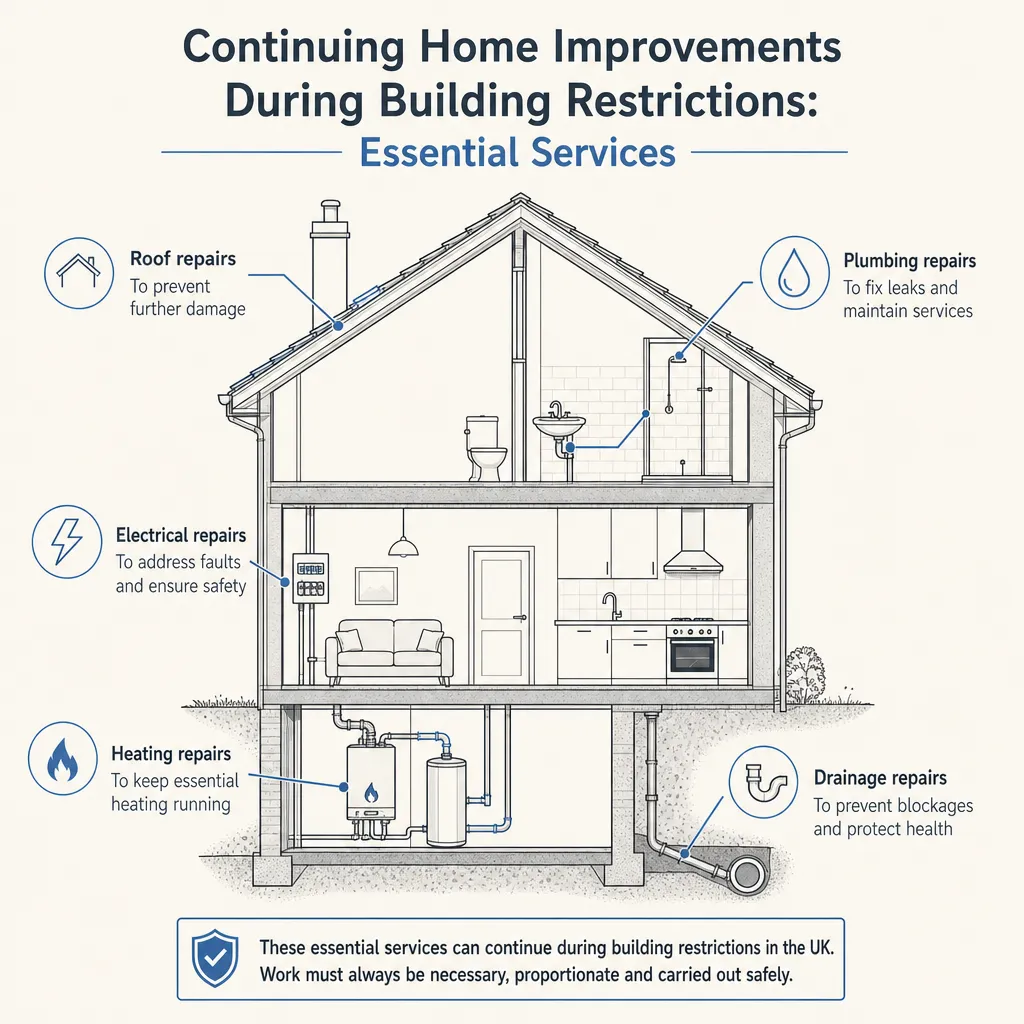
Continuing Home Improvements During Building Restrictions: Essential Services
During the COVID-19 lockdowns, UK government guidance for England permitted construction to continue where social distancing was possible — emergency repairs were always essential.
 Improvement & Build
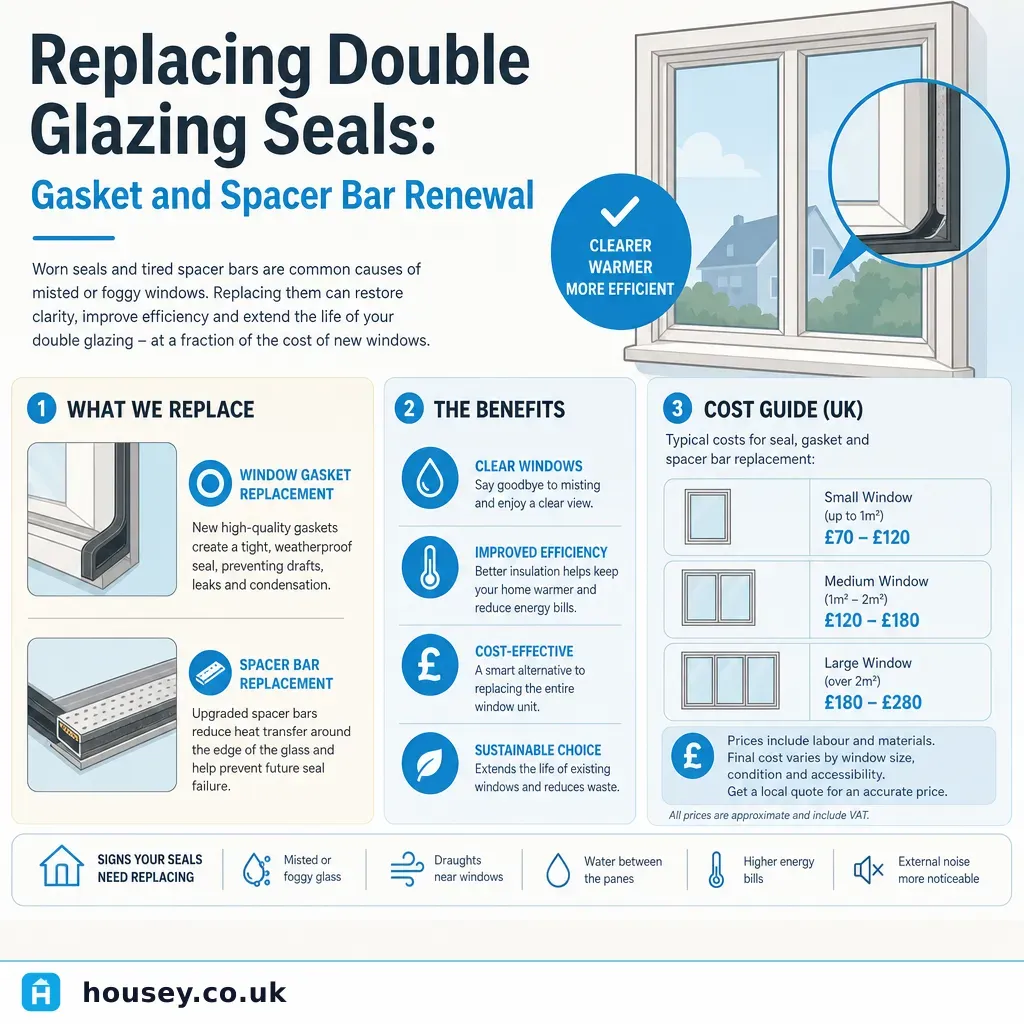
Replacing Double Glazing Seals: Gasket and Spacer Bar Renewal
Double glazing seals fail in two distinct ways: worn perimeter gaskets (which may be replaceable in situ) or failed internal spacer bar seals (which require the entire sealed unit to be replaced).
 Improvement & Build
Garage Door Spring Repair: When Springs Fail and What It Costs
A broken garage door spring usually makes the door heavy, lopsided, or completely inoperable.
 Improvement & Build
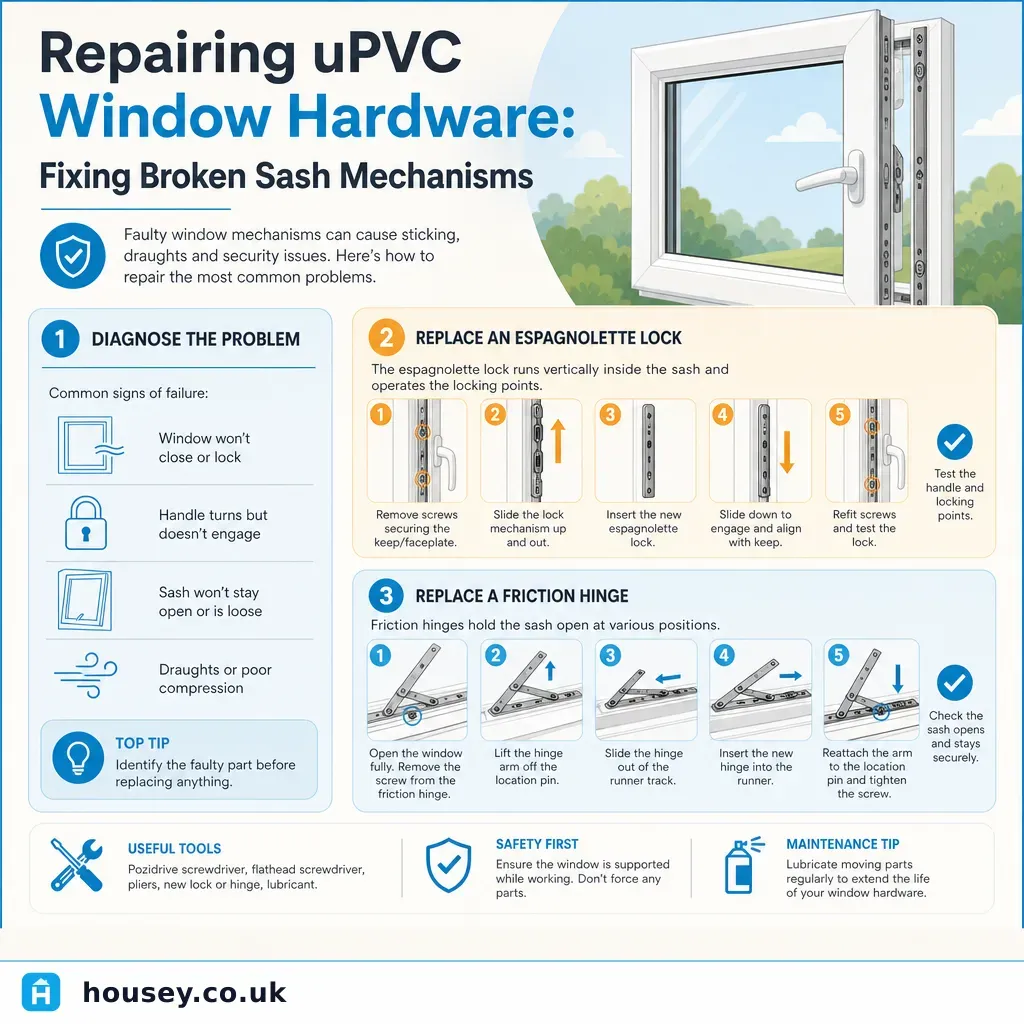
Repairing uPVC Window Hardware: Fixing Broken Sash Mechanisms
Most uPVC window sash mechanisms — handles, espagnolette locks, and friction hinges — can be replaced as individual components without replacing the full window frame.