Understanding Property Service Costs: Price Guides for UK Home Improvements
By Housey · Last reviewed 19th of May 2026
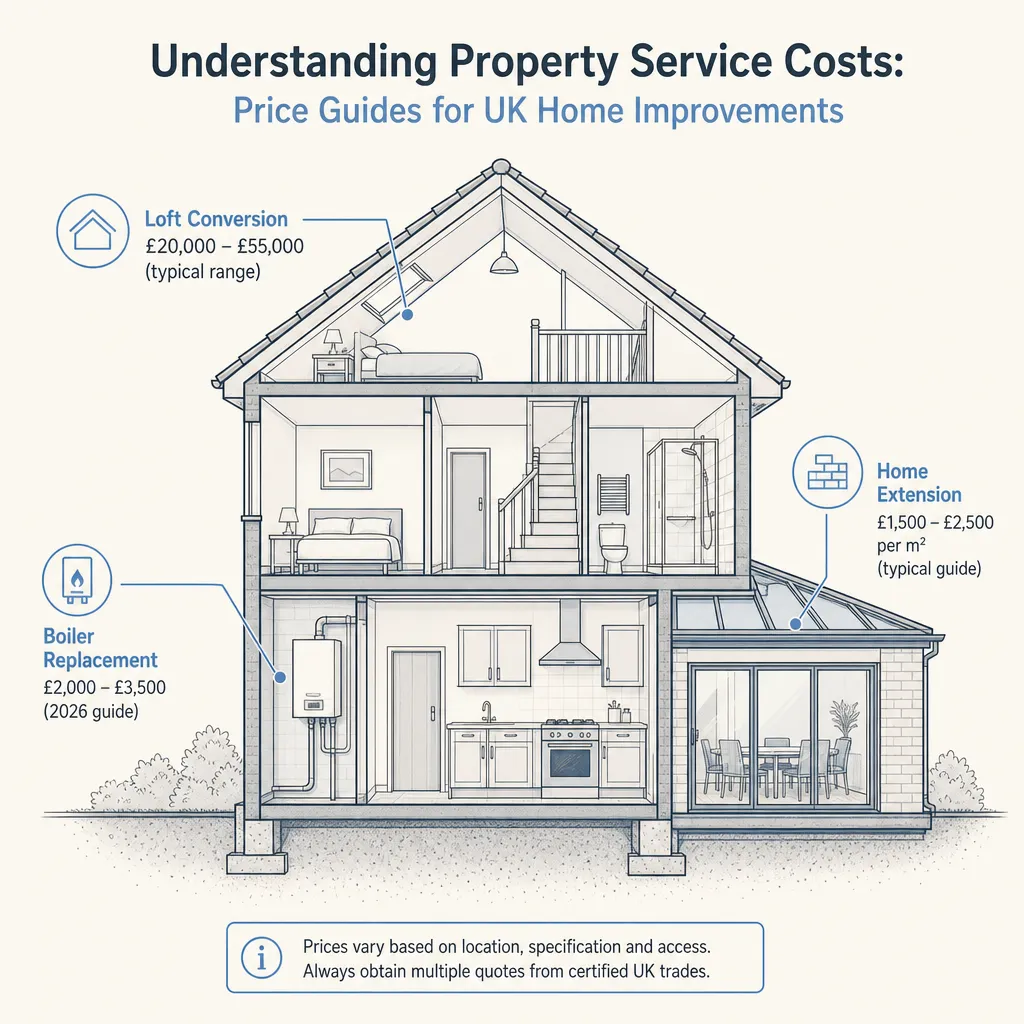
Understanding Property Service Costs: Price Guides for UK Home Improvements
Deciding whether to proceed with a home improvement project, commission a survey, or instruct a specialist often starts with a basic question: what should this cost? Without a reliable benchmark, homeowners risk both overpaying for straightforward work and being caught out by quotes that seem reasonable but exclude essential elements. Transparent cost guidance helps you enter conversations with contractors and professionals on an equal footing.
Key points
- Indicative UK costs for home improvement projects vary significantly by region, property type, and specification — London and the South East typically run 20–30% above the national average, according to BCIS data published by RICS.
- VAT at 20% applies to most domestic building work; certain energy efficiency improvements such as insulation and heat pumps attract a 0% VAT rate until at least March 2027 under current HMRC rules.
- The Building Cost Information Service (BCIS), operated by RICS, publishes quarterly cost indices that track construction inflation — a useful independent check on whether market quotes reflect current conditions.
- Most regulated work (gas, electrical, structural) requires a notifiable element — the professional fee covers both the work itself and the certificate or building control submission.
- Getting three comparable, itemised quotes from contractors with appropriate accreditation remains the most reliable way to establish fair market pricing for any job.
How UK home improvement costs are structured
Understanding how a quote is built helps you evaluate whether it is fair.
Labour forms the largest component of most domestic improvement jobs. Day rates for skilled tradespeople in the UK typically range from £150 to £400+ depending on specialism, region, and demand — though rates fluctuate, and Housey recommends obtaining current quotes rather than relying solely on published guides.
Materials are typically priced at trade rates with a contractor margin applied, often 10–20%. For larger projects, it is reasonable to ask for a materials breakdown separately.
Professional and regulatory fees cover surveys, structural calculations, planning applications, building control submissions, and specialist certifications such as MCS for heat pumps or Gas Safe for boiler installation. These are often underbudgeted.
VAT must be itemised. Most domestic building work attracts VAT at the standard rate of 20%. Exceptions include certain energy efficiency measures — check HMRC's VAT Notice 708/6 for the current list of qualifying energy-saving materials.
Preliminaries and contingency. Professional builders include preliminaries (site setup, skips, scaffolding) in larger quotes. A 10–15% contingency is standard practice for any project involving opening up walls, floors, or roofs where hidden conditions may be discovered.
Indicative cost ranges for common UK home improvement work
Indicative UK costs, last reviewed 2026-05-19. Costs vary by region, specification, property condition, and access. Always obtain at least three quotes. Sources: BCIS, FMB, published industry data.
Project type | Indicative range (excl. VAT) | Key cost drivers | Regulated? |
|---|---|---|---|
Boiler replacement (combi, standard install) | £1,800 – £3,500 | Boiler brand, existing pipework, flue route | Gas Safe required |
Full rewire (3-bed house) | £3,500 – £6,000 | Property size, access, consumer unit spec | NICEIC/NAPIT Part P |
Loft conversion (dormer, 3-bed semi) | £30,000 – £60,000 | Structural spec, glazing, stairs, finish | Building Regs required |
Single-storey rear extension | £20,000 – £50,000 | Size, specification, groundworks, finish | Building Regs; may need planning permission |
Kitchen replacement (supply and fit) | £8,000 – £20,000+ | Brand and specification, structural alterations | Electrical and gas sign-off needed |
Bathroom replacement (supply and fit) | £4,000 – £10,000 | Specification, tiling, structural changes | Part P for electrics |
External wall insulation (solid wall, 3-bed) | £8,000 – £15,000 | Property size, render system, access | 0% VAT; may qualify for ECO4 |
Air source heat pump (average home) | £8,000 – £15,000 | Property size, existing system, groundworks | MCS required; BUS grant available |
RICS Level 2 Home Survey | £400 – £800 | Property size, location | RICS-regulated |
RICS Level 3 Building Survey | £650 – £1,500+ | Property age, size, condition, location | RICS-regulated |
What to ask before accepting a quote
Use this checklist for any home improvement quote to ensure comparability:
- Is VAT included, and at what rate? Some quotes are presented ex-VAT, which can create a significant apparent price difference.
- What is the payment schedule? Avoid large upfront payments; staged payments tied to milestones are standard practice for bigger jobs.
- What is included and explicitly excluded? Ask specifically about groundworks, waste disposal, making good, decoration, and party wall matters.
- Who will carry out the work? Will the contractor use subcontractors? Who holds the relevant accreditation?
- What certifications and documents will I receive on completion? Building Regulations completion certificate, FENSA or Gas Safe certificate, MCS certificate as applicable.
- What assumptions underlie the price? Hidden conditions — rot, concealed damp, undisclosed structural issues — are the most common cause of cost variation after work begins.
- Is there a written contract? For jobs over £1,000, a written contract is strongly recommended. FMB members are required to offer one.
- Are you covered by public liability insurance? Ask for the certificate; minimum £2 million cover is standard for domestic work.
- What happens if the project runs over time or budget? Understand the variation order process before you sign.
How to compare quotes fairly
Comparing quotes is only useful if they are based on the same specification. Work through this process before seeking quotes:
- Write a brief scope of works — even a single page describing what you want done, to what standard, and any constraints (access, listed building requirements, materials preference).
- Share the same brief with all contractors simultaneously.
- When quotes arrive, compare like with like: materials specification, labour assumptions, inclusions and exclusions, and payment terms.
- A quote significantly lower than the others may exclude items the others include, or rely on inferior materials — ask the contractor to explain the difference in writing.
- Check contractor credentials: Gas Safe, NICEIC, NAPIT, FMB membership, TrustMark registration, RICS membership as relevant to the work type.
Regional cost variation in the UK
Labour and materials costs vary meaningfully across the UK. The BCIS tracks regional building cost indices quarterly. As a broad directional guide:
- London and South East: typically 20–30% above national average for labour
- South West and East of England: broadly at or slightly above the national average
- Midlands, North West, Yorkshire: near or slightly below the national average
- Scotland, Wales, Northern Ireland: variable; rural areas often attract higher costs for specialist trades due to travel time and reduced competition
These are directional indicators only. Always use local quotes as your primary benchmark.
When to get professional help
A professional cost consultant — such as a quantity surveyor or RICS-accredited project manager — is worth instructing when:
- The project budget exceeds £50,000
- The scope is complex, involves multiple trades, or requires sequential phasing
- You are procuring a loft conversion, extension, or structural alteration without using a main contractor
- You want independent verification that quotes are at current market rates
The RICS Find a Surveyor tool lists members offering cost consultancy services across the UK.
How Housey can help
Housey helps UK homeowners get comparable quotes from vetted local professionals and compare their options side by side. Rather than approaching contractors cold, Housey's platform matches your project requirements to professionals with the right qualifications and coverage area — making the quote-gathering process faster and more structured.
Frequently asked questions
Why do builders' quotes vary so much for the same job?
Quotes can vary due to differences in what is included (whether waste disposal, scaffolding, and making good are itemised or bundled), materials specification, assumed labour time, regional rates, and contractor overhead. Always ask each contractor to break down their quote so you can compare on a like-for-like basis.
Do I need to pay VAT on home improvement work?
Most domestic building work is subject to VAT at 20%. However, certain energy-saving materials and measures — including insulation, heat pumps, and solar panels — are zero-rated for VAT purposes until at least March 2027 under HMRC's current rules. New-build and conversion work may attract reduced rates. Check HMRC VAT Notice 708 and 708/6 for the current position.
Can I claim a grant toward home improvement costs?
Several UK grant schemes are available depending on work type and your circumstances: ECO4 (energy efficiency improvements, income or benefit-linked), the Boiler Upgrade Scheme (air source and ground source heat pumps), the Great British Insulation Scheme, and local authority flexible eligibility schemes. Check GOV.UK and your energy supplier for current eligibility.
How do I find an accredited contractor?
For regulated trades: Gas Safe Register (gas), NICEIC or NAPIT (electrics), FENSA or CERTASS (glazing), MCS (heat pumps and renewables), OFTEC (oil heating). For general builders, look for Federation of Master Builders membership or TrustMark registration, both of which require vetting and insurance checks.
Sources and further reading
- BCIS Building Cost Information Service — RICS
- VAT Notice 708/6: energy-saving materials — HMRC / GOV.UK
- ECO4 scheme: eligibility and application — GOV.UK
- Boiler Upgrade Scheme — GOV.UK
- Federation of Master Builders: find a builder — FMB
- TrustMark: find a vetted tradesperson — TrustMark
Useful next reads
 Improvement & Build
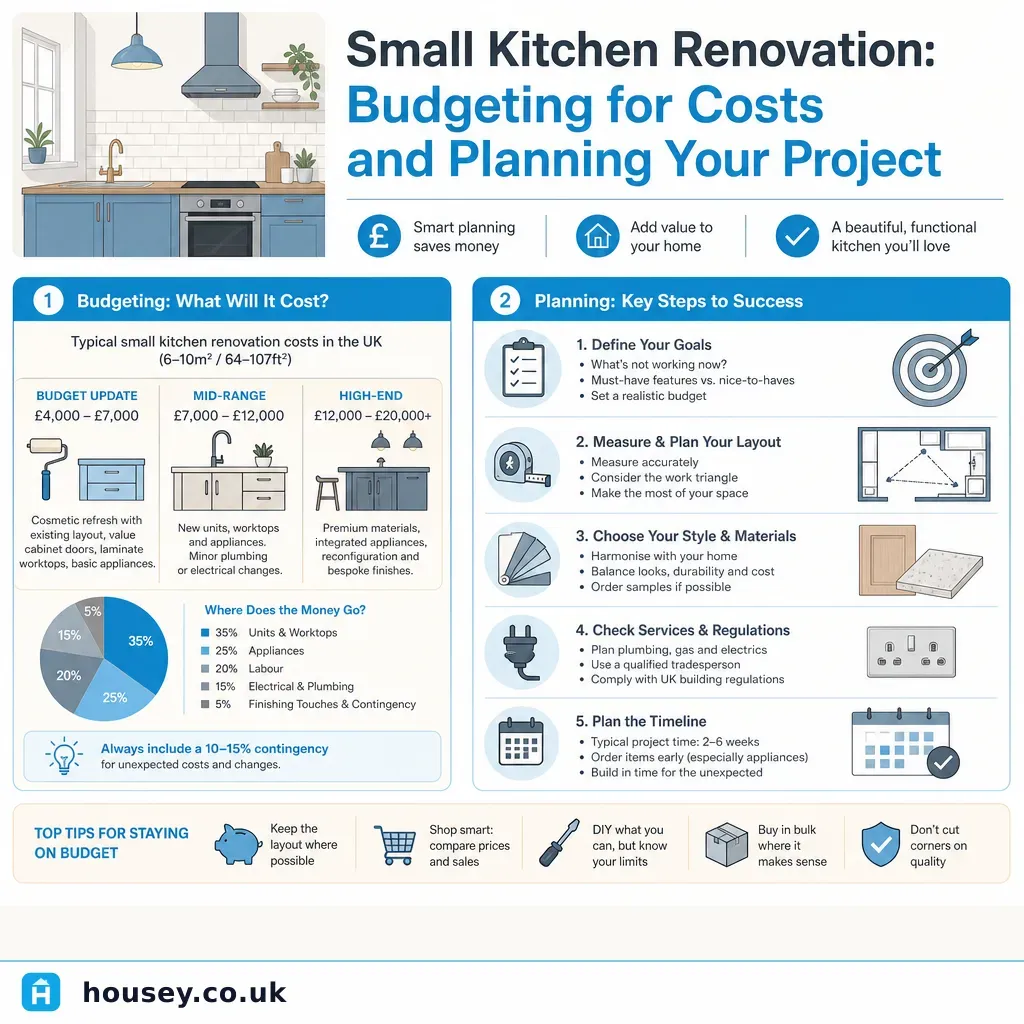
Small kitchen renovation: budgeting for costs and planning your project
A small kitchen renovation in the UK typically costs £5,000–£15,000 for a full refresh including new units, worktops, tiling, and appliances, though costs vary widely by specification, region, and whether structural changes or rewiring are involved.
 Improvement & Build
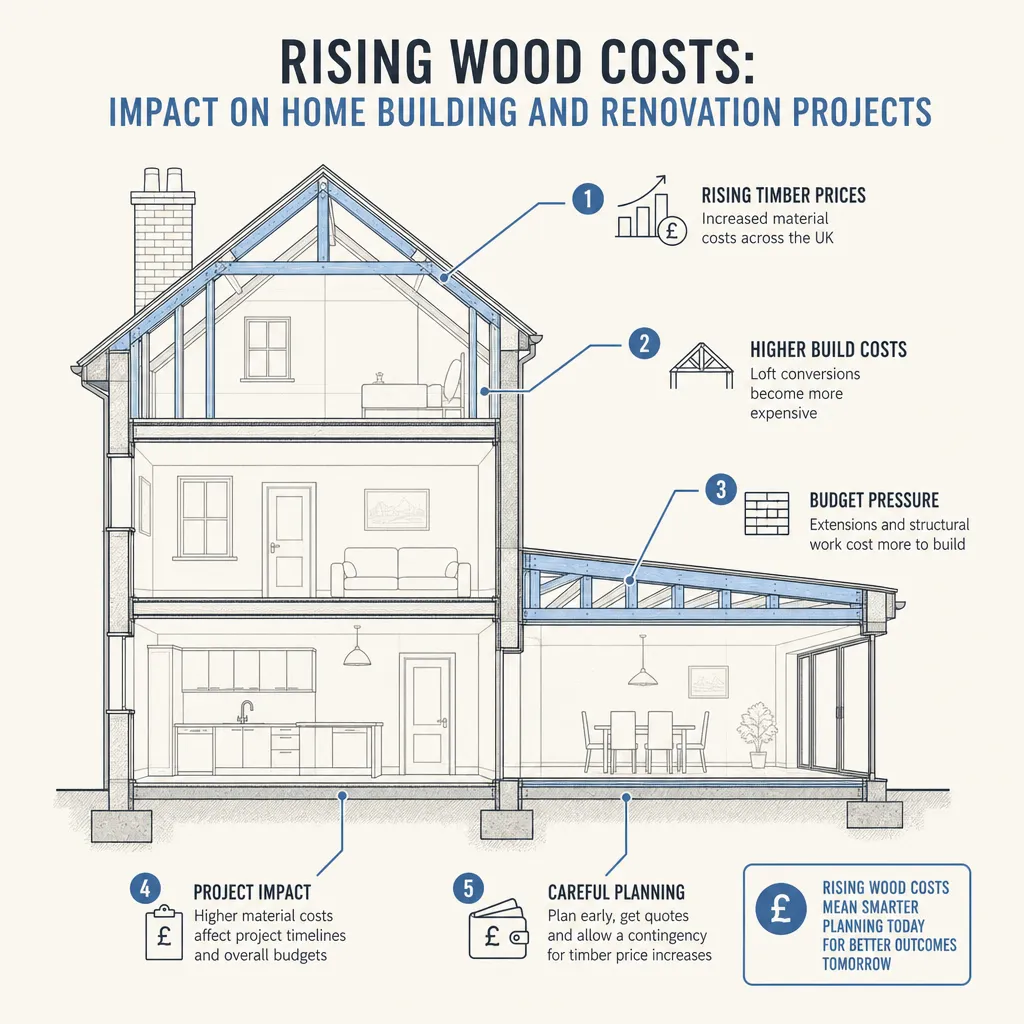
Rising Wood Costs: Impact on Home Building and Renovation Projects
Rising timber prices affect UK home renovation budgets most on timber-frame extensions, loft conversions, and self-builds, where structural wood can account for 15–25% of material costs.
 Improvement & Build
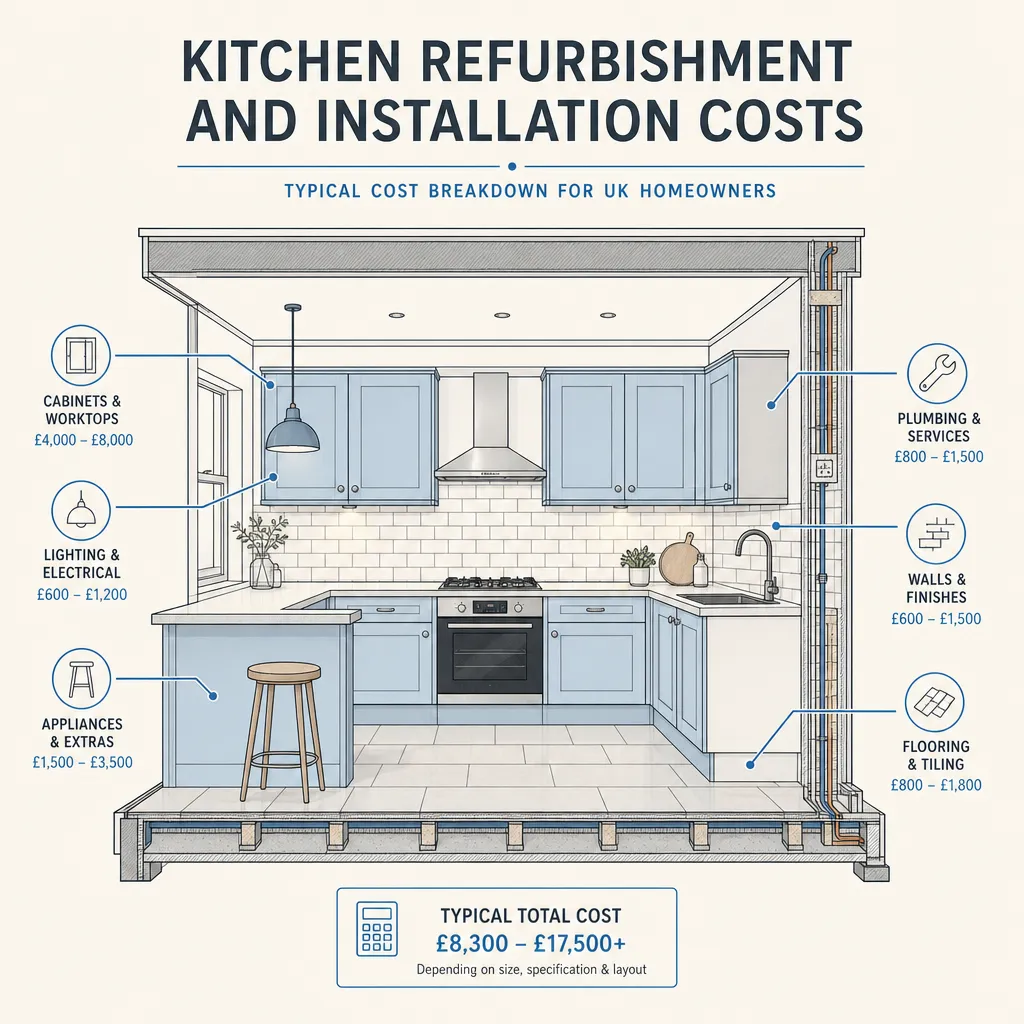
Kitchen Refurbishment and Installation Costs
A kitchen refurbishment in the UK typically costs between £3,000 and £40,000 or more, depending on whether you are replacing units only or carrying out a full design-and-build project.
 Improvement & Build
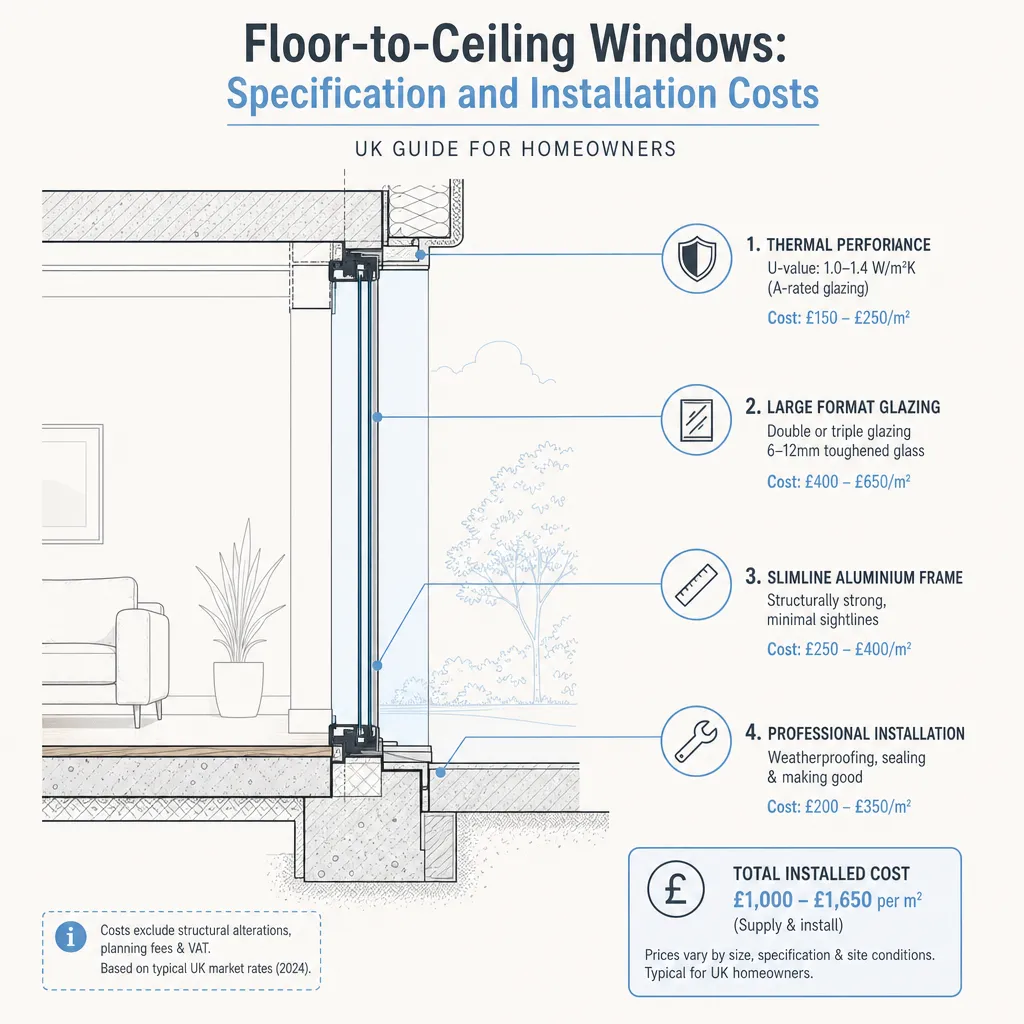
Floor-to-Ceiling Windows: Specification and Installation Costs
Floor-to-ceiling windows in the UK typically cost £1,800–£6,500 per unit installed, depending on glazing type, frame material, and whether structural alterations are needed.
 Improvement & Build
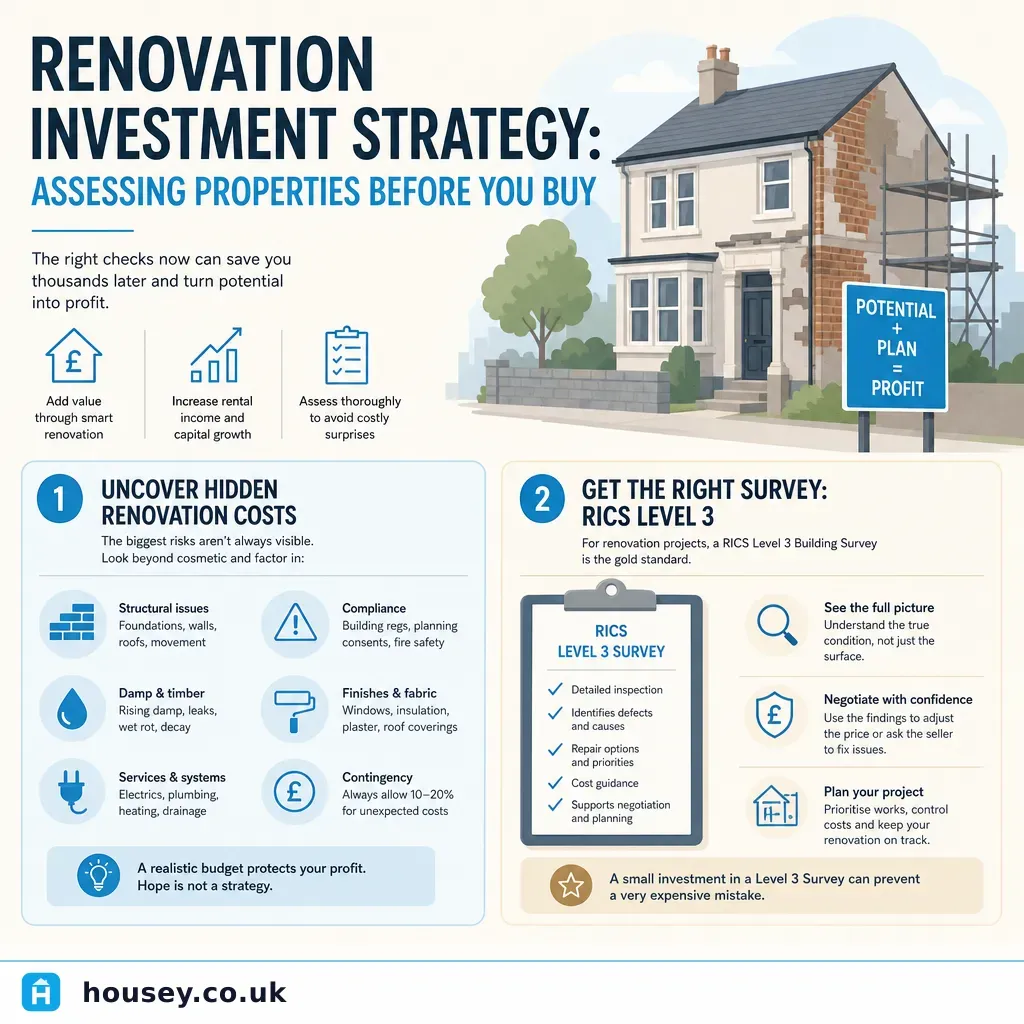
Renovation Investment Strategy: Assessing Properties Before You Buy
Renovation investment properties require more due diligence than a standard home purchase.