Property Valuation Survey: Understanding Market Worth and Cost Assessment
By Housey · Last reviewed 25th of May 2026
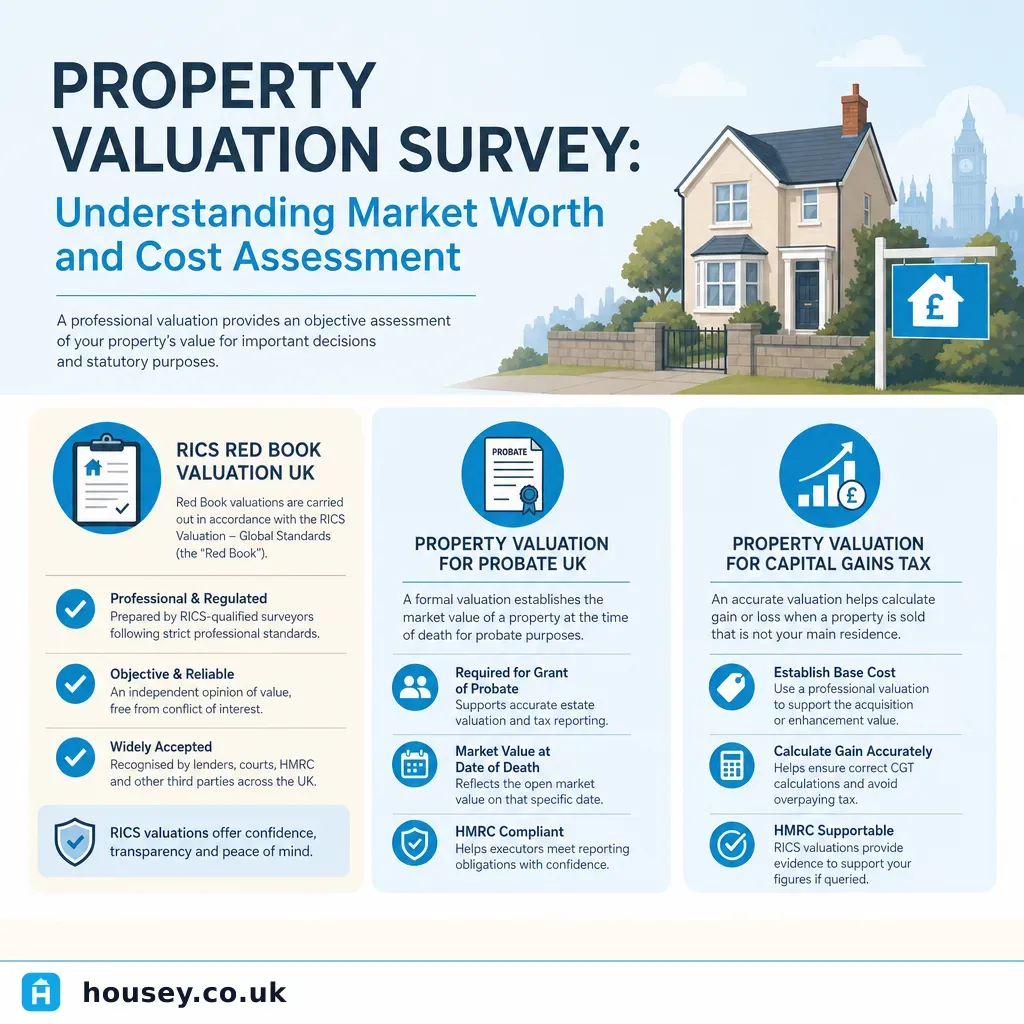
Property Valuation Survey: Understanding Market Worth and Cost Assessment
A property valuation is one of the most consequential documents in any property transaction, yet it remains widely misunderstood. Buyers often assume the lender's mortgage valuation protects them; sellers sometimes rely on informal estimates; and landlords may not realise which valuation standard applies to their legal and financial obligations. The type of valuation you instruct — and the qualifications of the person carrying it out — determines what it can and cannot be used for.
Key points
- A mortgage valuation is produced for the lender's risk purposes, not the buyer's protection — it confirms the property represents adequate security for the loan but does not identify defects in the detail that a buyer's survey would.
- Formal valuations for legal, taxation, or financial purposes must comply with the RICS Valuation — Global Standards (the "Red Book"), produced by a RICS-registered valuer.
- The three principal valuation methods in UK residential practice are the comparable (market) method, the investment (income capitalisation) method, and the depreciated replacement cost (DRC) method — most standard residential valuations use the comparable method.
- Automated Valuation Models (AVMs) used by lenders and online portals are algorithmic estimates, not RICS Red Book valuations — they are not accepted by HMRC, the Probate Registry, or courts for formal purposes.
- Indicative fees for a formal RICS Red Book residential valuation range from approximately £150–£300 for a standard flat to £300–£1,500 or more for larger or complex properties (indicative UK costs, last reviewed 2026-05-25; fees vary significantly by location, property type, and firm).
What is a property valuation survey?
A property valuation survey is a formal assessment of a property's market value at a specific point in time, carried out by a qualified valuer. In the UK, residential valuations for legal or financial purposes must comply with the RICS Red Book Global Standards and be carried out by a RICS-registered valuer.
A valuation is not the same as a property condition survey. A RICS Level 2 Home Survey or Level 3 Building Survey primarily assesses condition, with an indicative opinion of market value included as an element of the report. That opinion is not a standalone Red Book valuation and is not suitable for legal, tax, or financial proceedings.
Types of property valuation: a comparison
Valuation type | Primary purpose | Instructed by | Complies with RICS Red Book? | Suitable for |
|---|---|---|---|---|
Mortgage valuation | Lender's security assessment | Lender (cost passed to borrower) | No (or abbreviated form) | Lender's lending decision only — not buyer protection |
RICS Red Book (formal independent) | Legal, tax, dispute, matrimonial, probate | Homeowner, solicitor, HMRC, court | Yes | Probate, capital gains tax, divorce, Help to Buy, lease extension, shared ownership |
RICS Level 2 or 3 survey opinion of value | Indicative value within a condition report | Buyer | No (indicative only) | General purchase guidance — not for legal or tax purposes |
Automated Valuation Model (AVM) | Quick lender check, portfolio monitoring | Lenders, online portals | No | Internal lender use; not for legal, tax, or regulatory purposes |
Rental (market rent) valuation | Market rent assessment | Landlord, letting agent | Recommended for formal purposes | Rental pricing, landlord licence applications |
Which type of valuation do you need?
- Choose a mortgage valuation if your lender requires one as part of a purchase or remortgage application — it is typically arranged by the lender and the cost is passed to the borrower.
- Choose a RICS Red Book valuation if the valuation is needed for HMRC (probate or capital gains tax), a matrimonial settlement, a Help to Buy or shared ownership transaction, a lease extension premium calculation, or any legal proceeding.
- Choose a RICS Level 2 or Level 3 Home Survey with an opinion of value if you are a buyer wanting condition information alongside an indicative value — but note this is not a standalone formal valuation for legal or tax purposes.
- Instruct a specialist valuer if the property is unusual: agricultural, listed, mixed-use, short leasehold, or of non-standard construction — standard comparable methods may not apply and a specialist will need to use an appropriate alternative approach.
How are UK residential properties valued?
The comparable (market) method
The primary approach for most residential property. The valuer identifies recent sales of comparable properties — similar in size, type, condition, and location — then makes reasoned adjustments for differences to arrive at a value for the subject property. The reliability of this method depends on the availability of recent, genuinely comparable transaction evidence in HM Land Registry records and wider market data.
The investment (income capitalisation) method
Applied to buy-to-let and income-producing properties. The valuer estimates the net rental income and capitalises it at a market yield to produce a capital value. Yield rates vary by property type, location, and current market conditions.
The depreciated replacement cost (DRC) method
Used for specialist or unusual properties where comparable market evidence is scarce — for example, bespoke rural properties, community facilities, or properties of unusual construction. This method is rarely used for standard residential stock.
What affects valuation fees?
(Indicative UK costs, last reviewed 2026-05-25. Always request itemised quotes from at least two RICS-registered firms.)
Key fee drivers include the property's estimated value and size; location (rural properties requiring significant travel time typically cost more); the purpose of the valuation (litigation and matrimonial valuations require more detailed reasoning and may attract higher fees); property complexity (listed building status, short leasehold, unusual construction); and the turnaround time required by the client.
Important limitations
This article provides general information about property valuation types and processes in the UK. Valuation is a professional discipline — the figures produced reflect a valuer's judgement, available market evidence, and the specific purpose and basis of value instructed. Nothing in this article constitutes a valuation, financial advice, or legal advice. For any purpose with legal, tax, or financial consequences, instruct a qualified RICS-registered valuer directly and confirm in advance that the report will meet your specific requirements.
What to ask a qualified professional
Before instructing a valuer, ask:
- Are you registered with RICS, and will this valuation comply with the RICS Red Book Global Standards?
- What is the stated purpose and basis of value (for example, Market Value or Existing Use Value)?
- What assumptions and special assumptions will be applied in the report?
- What comparable evidence will you use, and from what date range?
- Is VAT included in the fee, and are there any additional disbursements?
- Will the report be in a form accepted by HMRC, the Probate Registry, the court, or the solicitor dealing with the transaction?
- What is your professional indemnity insurance coverage?
When to get professional help
Always instruct a RICS-registered valuer — rather than relying on AVMs, online portals, or estate agent opinions of value — when:
- The valuation is required for HMRC, probate, a matrimonial settlement, or any legal proceeding
- You are buying or extending a leasehold interest and need a valuation for a lease extension premium calculation
- The property is unusual, listed, of non-standard construction, has an agricultural tie, or is subject to restrictive covenants that materially affect value
- You are a landlord subject to licensing conditions requiring a formal rental valuation
- You wish to dispute or negotiate following a lender's mortgage valuation — an independent Red Book valuation carries authority that an AVM or informal estimate does not
How Housey can help
Housey connects you with qualified professionals who carry out valuation surveys and RICS Home Surveys across the UK. Whether you need a Red Book valuation for probate or a Level 2 survey with an indicative value as part of a purchase, submit your details and receive quotes from vetted, RICS-registered surveyors.
Frequently asked questions
Is a mortgage valuation the same as a property survey?
No. A mortgage valuation is a brief inspection carried out for the lender's benefit to confirm the property represents adequate security for the loan amount. It is not designed to identify defects or protect the buyer's interests. A property survey — such as a RICS Level 2 Home Survey or Level 3 Building Survey — is a more detailed condition assessment instructed by and specifically for the buyer's benefit, and is a separate, additional cost.
Can I use an online valuation tool for probate or capital gains tax?
No. HMRC requires valuations for probate (inheritance tax) and capital gains tax to be carried out by a qualified professional following RICS Red Book Global Standards methodology. Online automated valuation models (AVMs) are not accepted for these purposes. Always instruct a RICS-registered valuer directly for any valuation with legal, tax, or regulatory consequences, and confirm the report will satisfy your specific requirement.
How long does a formal RICS valuation take?
Most residential RICS Red Book valuations can be completed within 5–10 working days of the inspection date, depending on property complexity and the report's purpose. Litigation, matrimonial, or unusual property valuations may take longer. If you have a deadline — such as a probate registry submission — discuss the required turnaround with the valuer before instructing and confirm it in writing.
Do I need a separate valuation if I'm getting a RICS Level 2 survey?
Not necessarily, if your only purpose is to inform a purchase decision. A RICS Level 2 Home Survey includes an indicative opinion of market value. However, if you need a formal valuation for HMRC, probate, a matrimonial settlement, a lease extension premium, or any other legal purpose, you will need a separate RICS Red Book valuation — the indicative value within a survey report does not carry the same legal standing as a formal valuation.
Sources and further reading
- RICS Valuation — Global Standards (Red Book) — RICS
- Valuing a deceased person's estate for Inheritance Tax — HM Revenue & Customs
- UK House Price Index — HM Land Registry
- Find a RICS-registered firm — RICS
- Buying or selling a home — Citizens Advice
Useful next reads
 Surveys & Inspections
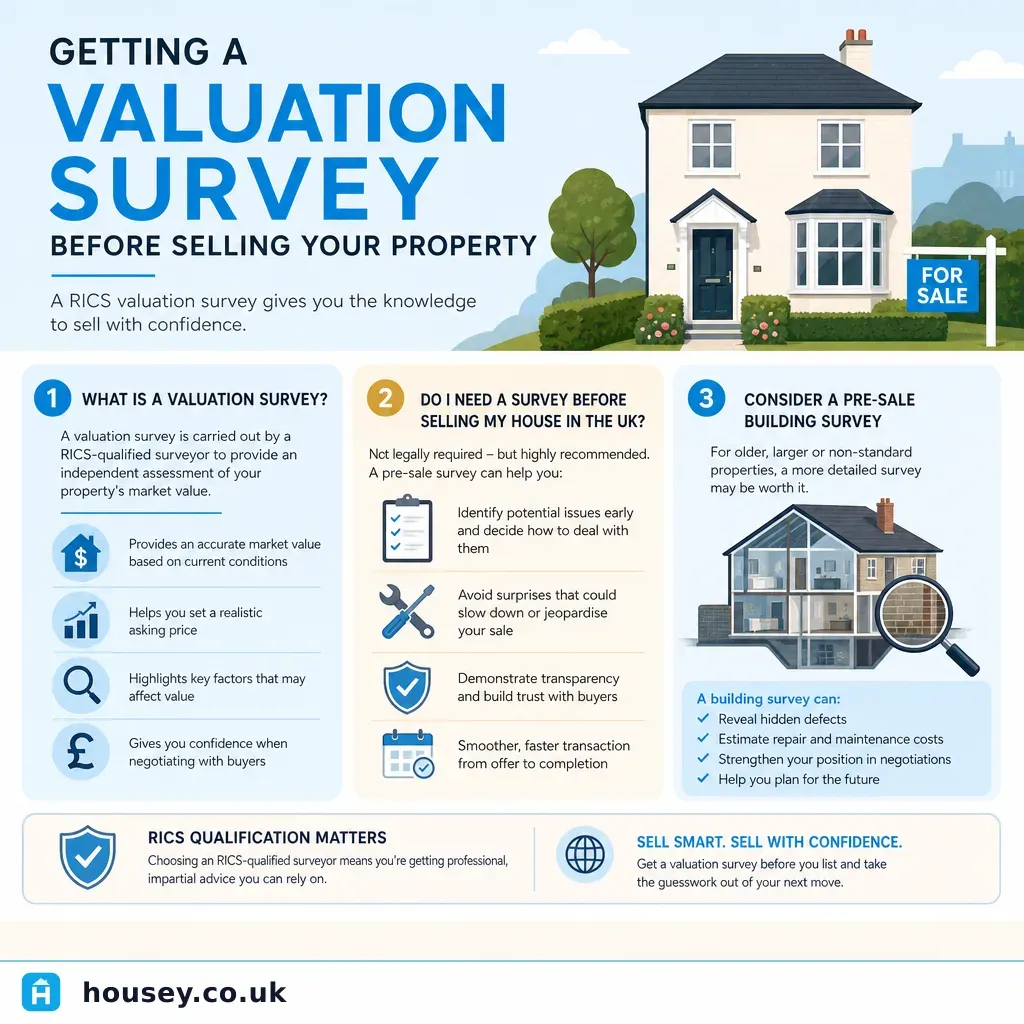
Getting a Valuation Survey Before Selling Your Property
Before selling, a free estate agent appraisal gives a market price guide, but only a RICS Red Book valuation carries formal professional standards and legal weight.
 Surveys & Inspections
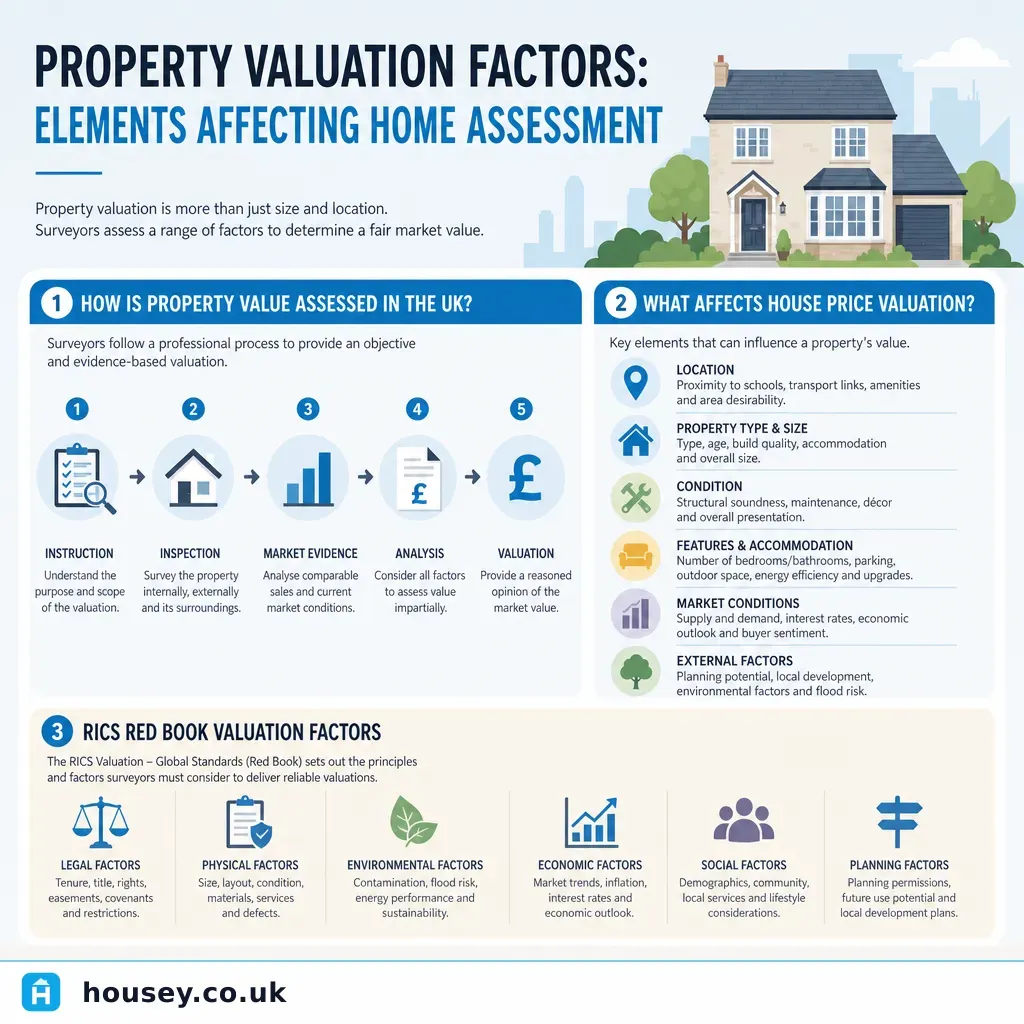
Property Valuation Factors: Elements Affecting Home Assessment
UK property valuations are primarily driven by location and comparable sales evidence, followed by floor area, condition, EPC rating, and legal factors such as lease length.
 Surveys & Inspections
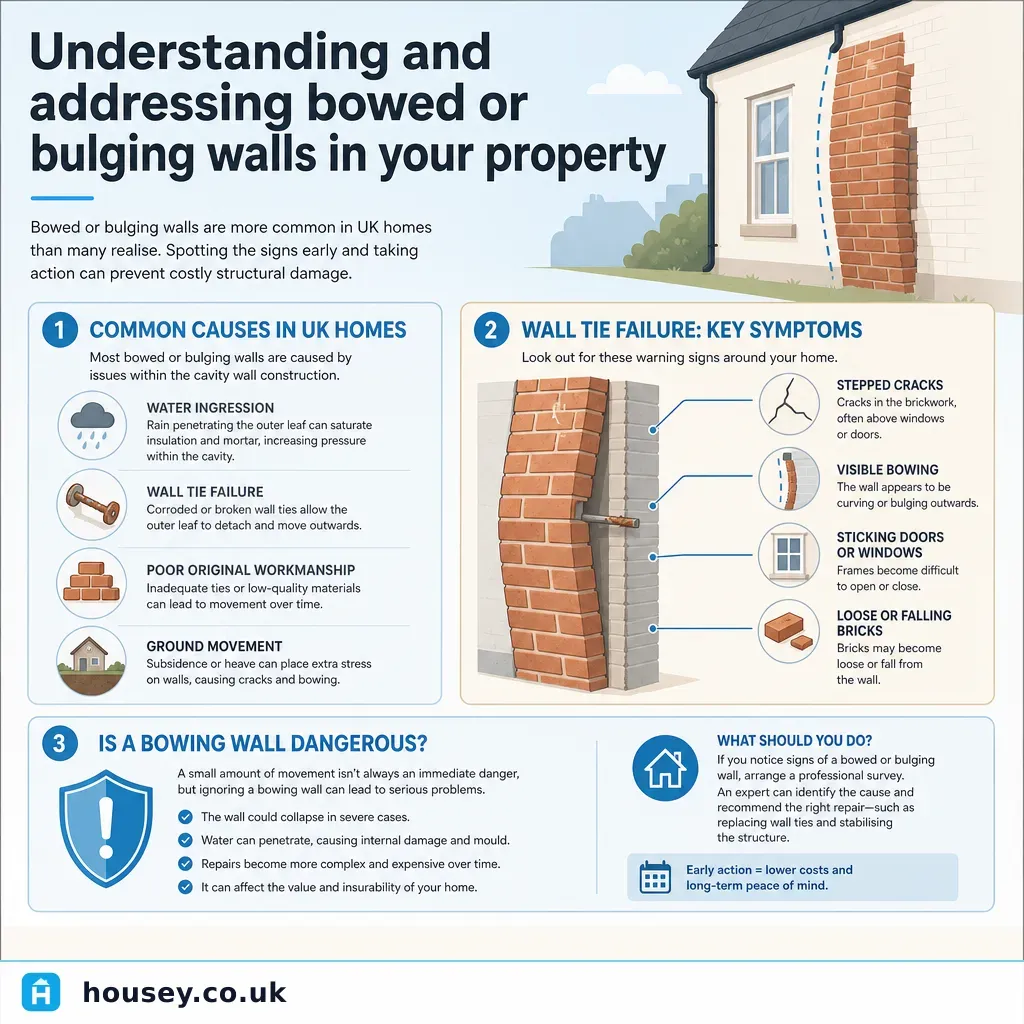
Understanding and addressing bowed or bulging walls in your property
A bowed or bulging wall may indicate wall tie failure, foundation movement, or overloading.
 Surveys & Inspections
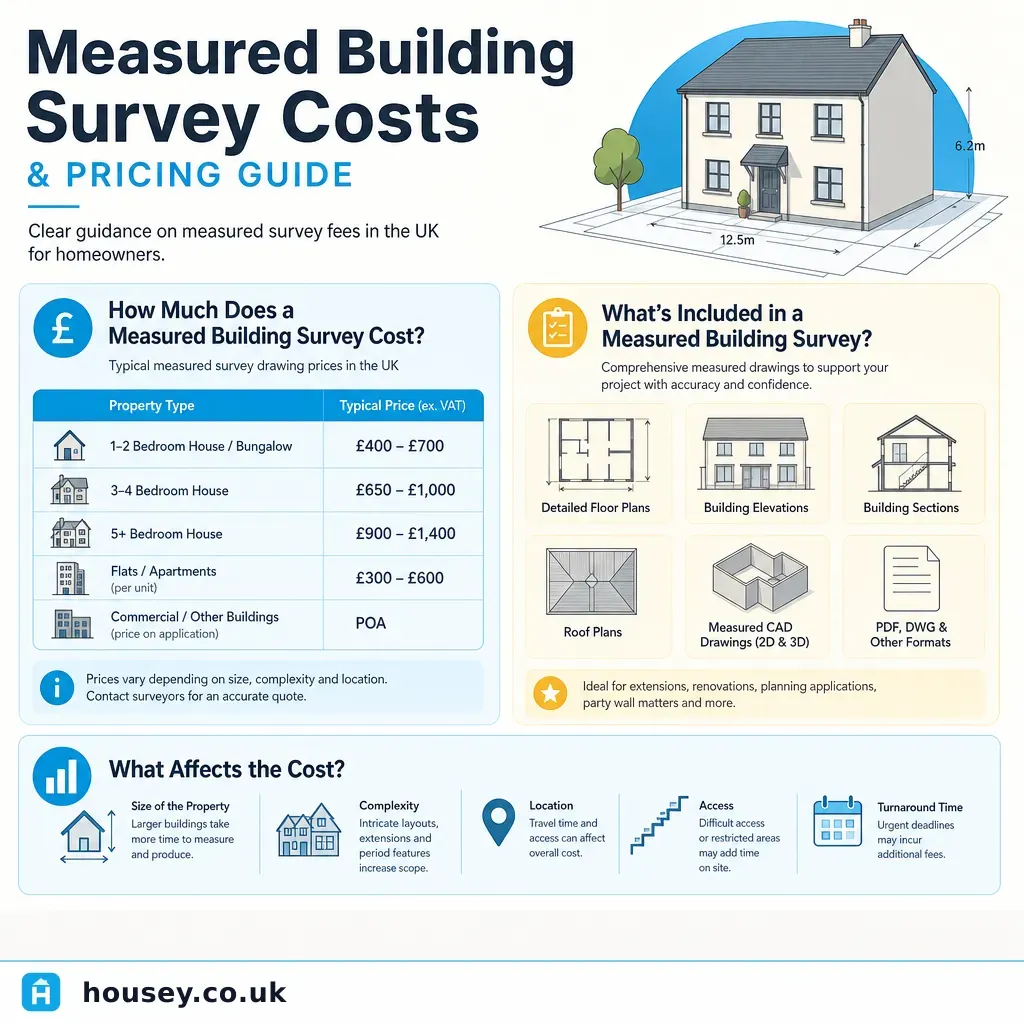
Measured Building Survey Costs and Pricing Guide
A measured building survey in the UK typically costs between £500 and £5,000 for residential properties, depending on floor area, number of levels, drawing scope, and survey method.
 Surveys & Inspections
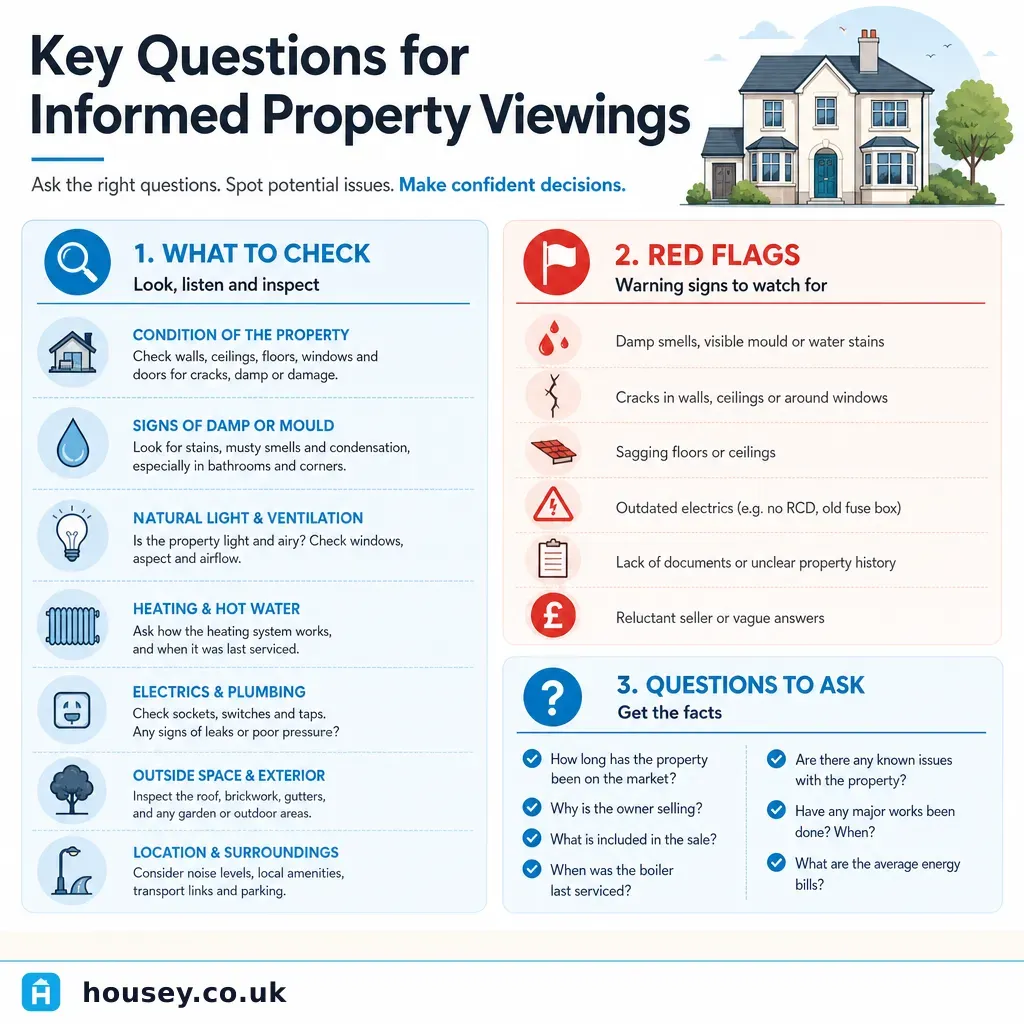
Key Questions for Informed Property Viewings
At a property viewing, ask specifically about structural movement, damp or water ingress, the age and service history of the boiler and electrics, whether any extensions obtained building regulations sign-off, and the seller's chain position.