Protecting Outdoor Plumbing from Winter Frost Damage
By Housey · Last reviewed 19th of May 2026
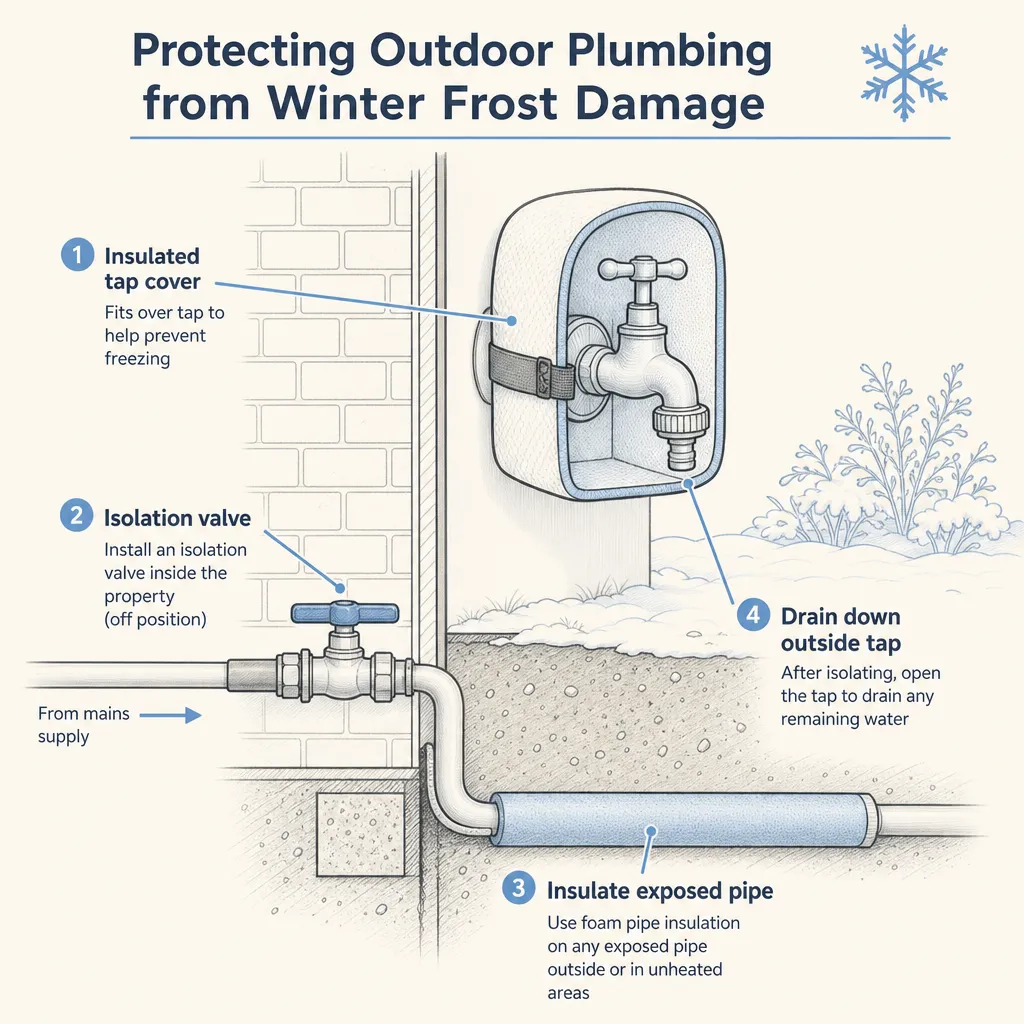
Protecting Outdoor Plumbing from Winter Frost Damage
Outdoor taps, garden irrigation lines, and exposed pipe runs are often the first casualties of a hard UK winter. Unlike pipework inside a heated building, outdoor plumbing sits fully exposed to sub-zero temperatures for hours at a time — and most of it can be protected cheaply and quickly before the cold arrives. Getting it right at the start of autumn avoids the expense and disruption of emergency call-outs in February and the unwelcome discovery of a burst pipe on the first warm weekend of spring.
Key points
- Standard outdoor taps are connected via a 15mm branch pipe off the rising main; a dedicated isolation valve inside the building lets you drain and isolate the supply before any hard frost.
- Frost damage to a single outdoor tap and its connecting pipework typically costs £150–400 to repair (indicative UK costs, last reviewed 2026-05-19); damage that reaches an internal pipe run can be substantially higher.
- WRAS-approved outdoor tap kits include a double-check valve to prevent garden hose contamination from entering the mains supply — a requirement under the Water Supply (Water Fittings) Regulations 1999.
- Garden drip irrigation and sprinkler systems should be drained or blown out with compressed air before the first sustained frost, typically October–November in northern England and Scotland, and November–December in southern England.
- Foam pipe insulation covers for outdoor taps cost approximately £3–15 per fitting and are a useful first line of defence for mild UK winters (indicative, last reviewed 2026-05-19).
Why outdoor pipework is more vulnerable than internal pipes
Inside a heated home, pipework benefits from residual warmth from the boiler, hot-water cylinder, and occupants. The thermal mass of walls and floors buffers temperature swings. Outdoor pipes have none of that protection: they are exposed to wind chill, driving rain, and sustained freezing air. Even a pipe inside an uninsulated external wall can freeze if temperatures stay below −3°C for long enough.
In the UK, the greatest freeze risk is in northern England, Scotland, and elevated areas of Wales and the Pennines, where prolonged cold spells are more frequent. Southern England is not immune, however — freeze events in recent winters produced widespread burst-pipe claims across counties such as Kent, Sussex, and East Anglia, where outdoor pipework had not been prepared for sustained sub-zero nights.
Outdoor tap protection: isolation, drain-down, and covers
An outdoor tap is typically the easiest piece of outdoor plumbing to protect because its supply pipe is short and usually accessible from inside the property. Three measures, used together, provide reliable protection.
1. Fit a dedicated isolation valve indoors
If your outdoor tap does not already have its own isolation valve on the supply pipe inside the building, fitting one is a small job for a plumber (approximately £80–150 including parts; indicative UK costs, last reviewed 2026-05-19). This lets you turn off the supply to the outdoor tap alone and drain the pipe without affecting the rest of the building's water supply.
2. Drain the supply pipe
After isolating the tap indoors, open the outdoor tap fully and leave it open until it stops dripping. This empties the short pipe run between the isolator and the tap. Leave the tap in the open position through winter so that any small amount of remaining water can escape rather than build pressure if it freezes.
3. Fit an insulated tap cover
Foam or polystyrene tap covers fit over the fitting and retain some heat from the surrounding structure. They are not a substitute for draining the supply, but they extend protection against brief cold snaps and are good insurance in milder areas of the UK.
Comparison table: outdoor frost protection options
Method | Best for | Not suitable for | Approximate cost | Protection level |
|---|---|---|---|---|
Isolation valve + drain-down | All outdoor taps; most reliable method | Taps with no accessible indoor supply pipe | £80–150 one-off (valve fitting) | High — water removed from risk zone entirely |
Insulated tap cover | Mild-winter areas; brief overnight frosts | Sustained sub-zero periods on its own | £3–15 per fitting | Low to moderate — insulates but retains water |
Self-regulating trace heating tape | Long exposed pipe runs; remote locations | Where mains power supply is unavailable | £15–40 per metre installed | High — actively heats pipe above freezing |
Full system drain-down | Unoccupied properties; prolonged absences | Properties in regular use | Plumber call-out if required | Very high — no water remains in the system |
Indicative UK costs, last reviewed 2026-05-19. Quotes vary by region and specification.
Garden irrigation and hosepipe systems
Garden drip-irrigation lines, sprinkler heads, and soaker hoses all retain water unless actively drained. Many irrigation components are made from PVC or low-density polyethylene — materials that can split or delaminate when frozen, particularly at push-fit connectors and dripper heads.
To winterise a garden irrigation system:
- Turn off the irrigation timer and the mains supply at the point of connection.
- Open any manual drain valves fitted at the lowest points of the system.
- Remove and store surface-mounted soaker hoses and drip lines in a frost-free shed or garage.
- For in-ground sprinkler systems with fixed laterals, use a compressor to blow out each zone via the blow-out port — 40–50 psi for PVC pipe; 30 psi for polyethylene. Only a qualified irrigation contractor should carry out a blow-out on large or complex systems, as over-pressurisation can damage sprinkler heads.
- Insulate the back-flow preventer, valve manifold, and any above-ground pipework near the tap connection.
- Remove and store the controller; take out batteries from battery-operated units to prevent cold-weather failure.
Outdoor plumbing winterisation checklist
Work through this before the first forecast frost each autumn:
When to get professional help
Most outdoor tap drain-downs and cover fittings are within a competent DIYer's ability. Call a qualified plumber or drainage contractor when:
- There is no accessible isolation valve on the outdoor tap supply — fitting one correctly, with the required check valve under Water Regulations, is a plumber's job.
- Existing outdoor pipework is unlagged and runs through or close to an external wall — a plumber can trace the full run and advise on lagging or rerouting.
- You are managing an in-ground irrigation blow-out without prior experience — over-pressurising lines can rupture fittings or damage sprinkler heads.
- You find dripping water, soft plaster, or damp patches near external pipe runs in spring — these may indicate a freeze-related split that needs prompt repair before the following winter.
How Housey can help
For professional assistance with outdoor pipe lagging, isolation valve installation, or repair work after winter damage, Housey's drainage contractors can connect you with qualified local tradespeople. Getting multiple quotes ensures you compare scope and accreditations, not just price.
Frequently asked questions
Should I leave my outdoor tap dripping in cold weather to prevent it freezing?
No. A slowly dripping outdoor tap does not reliably prevent freezing and wastes water. The correct approach is to isolate the supply indoors, drain the pipe, and leave the tap fully open so any remaining water can expand and escape without splitting the pipework.
Do outdoor tap covers really work?
They provide modest protection during brief cold snaps, particularly in milder parts of the UK. Use them alongside — not instead of — draining and isolating the supply. A cover alone will not prevent burst pipes during prolonged sub-zero conditions lasting more than a day or two.
Does my outdoor tap need a check valve?
Yes, in most cases. Under the Water Supply (Water Fittings) Regulations 1999, any outdoor tap connected to a hose or irrigation system is classified as a fluid category 2 risk and requires a check valve. WRAS-approved outdoor tap kits include the appropriate valve as standard.
Can frost damage to outdoor pipes void my home insurance?
It can, if your policy requires you to maintain a minimum temperature or notify your insurer of a prolonged absence, and you have not done so. Check your policy schedule carefully and follow any conditions relating to unoccupancy or frost precautions before each winter season.
Sources and further reading
- The Water Supply (Water Fittings) Regulations 1999 — legislation.gov.uk
- WRAS: Water Regulations Guidance — Water Regulations Advisory Scheme
- Energy Saving Trust: Insulating Your Home — Energy Saving Trust
- GOV.UK: Prepare for Emergencies — GOV.UK
Useful next reads
 Improvement & Build
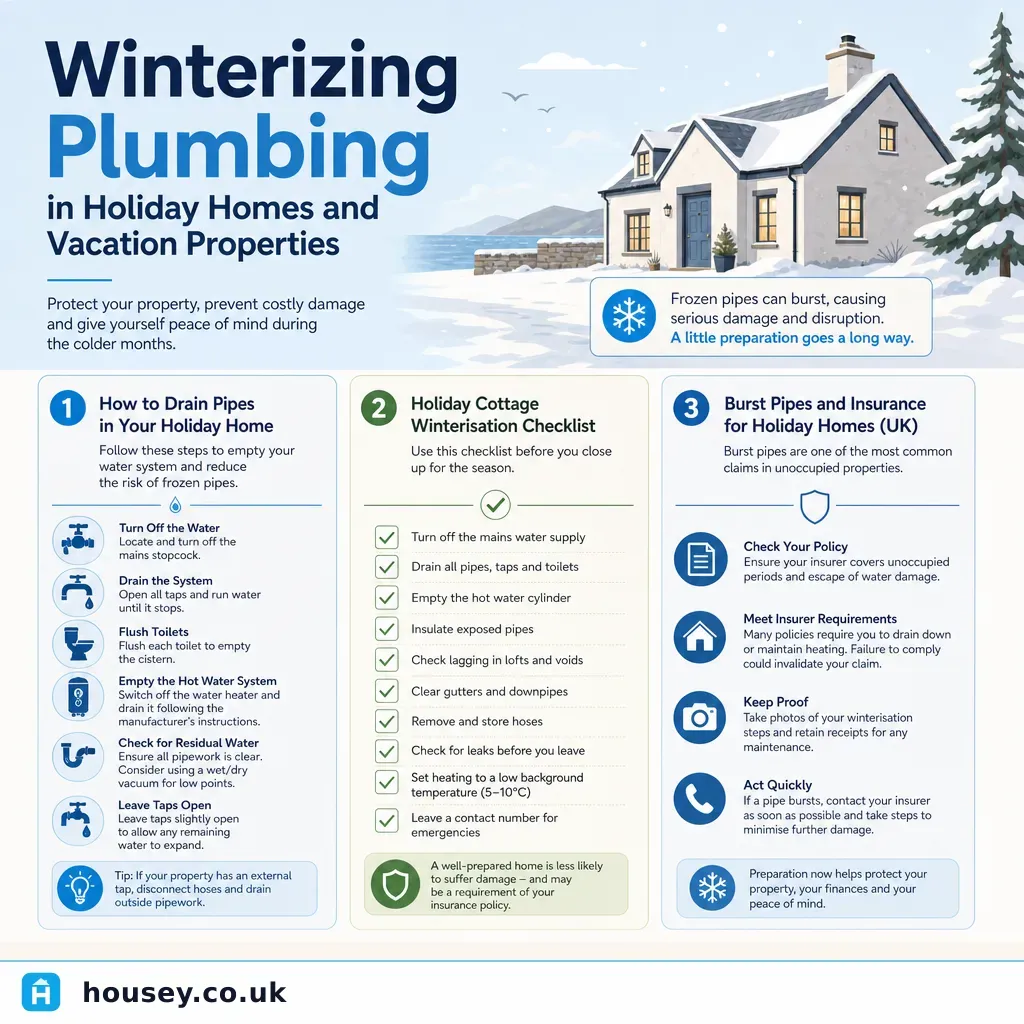
Winterizing Plumbing in Holiday Homes and Vacation Properties
Holiday homes left unheated face serious burst-pipe risk in UK winters.
 Improvement & Build
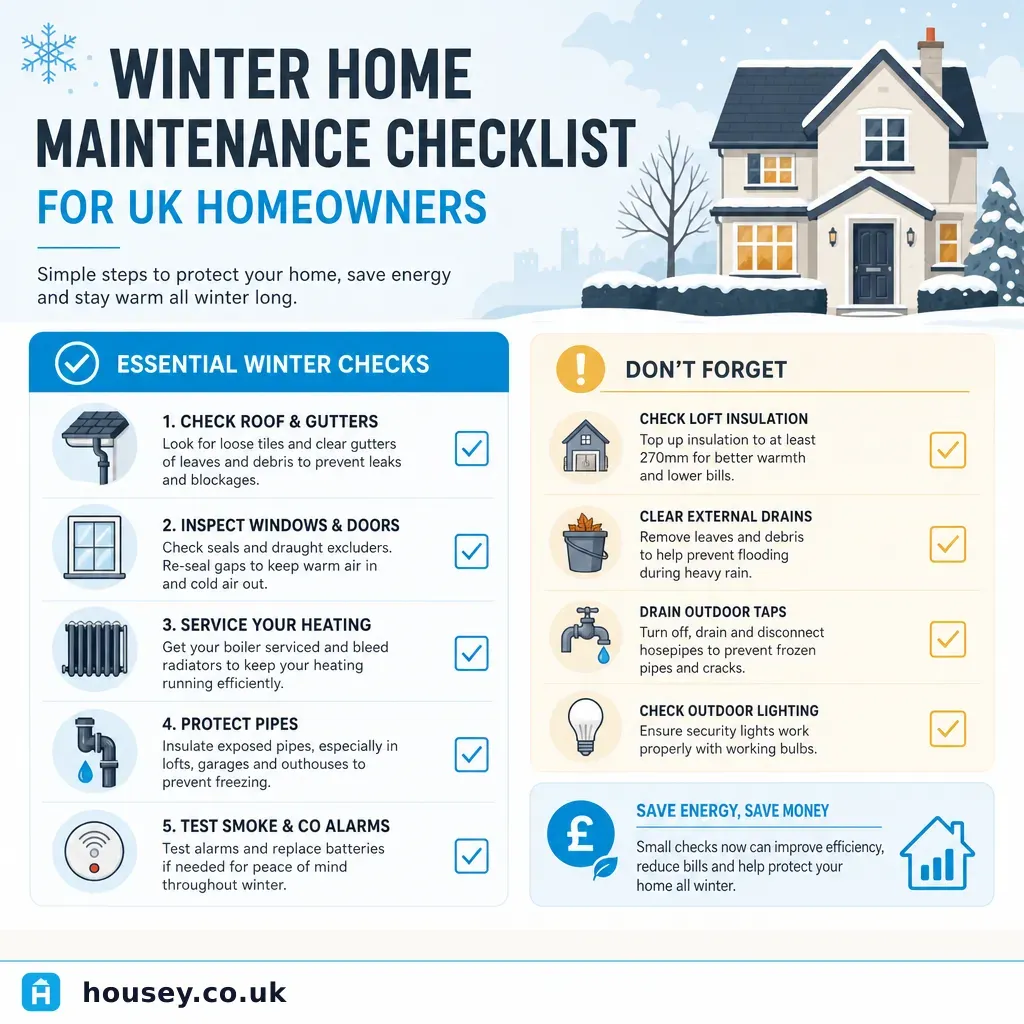
Winter home maintenance checklist for UK homeowners
UK homeowners should carry out winter maintenance in October and November, before the first frost.
 Improvement & Build
Spring Garden Transformations: Design Ideas to Enhance Your UK Property
Spring is the best time to transform a UK garden, with mild temperatures and longer days ideal for planting and landscaping.
 Improvement & Build
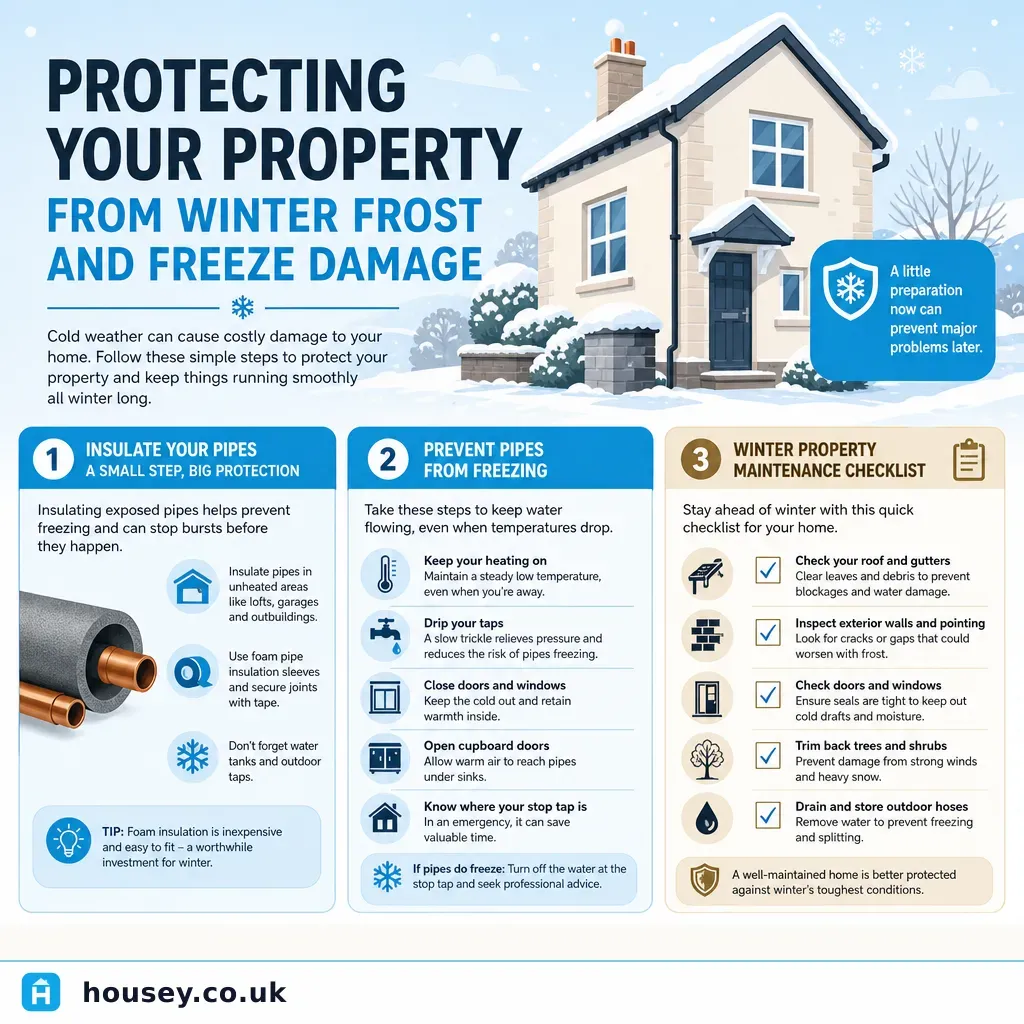
Protecting Your Property from Winter Frost and Freeze Damage
Protecting your home from winter frost damage mainly involves insulating exposed pipes, lagging outdoor taps, maintaining a minimum indoor temperature in unoccupied properties, and clearing drains before cold spells.
 Improvement & Build
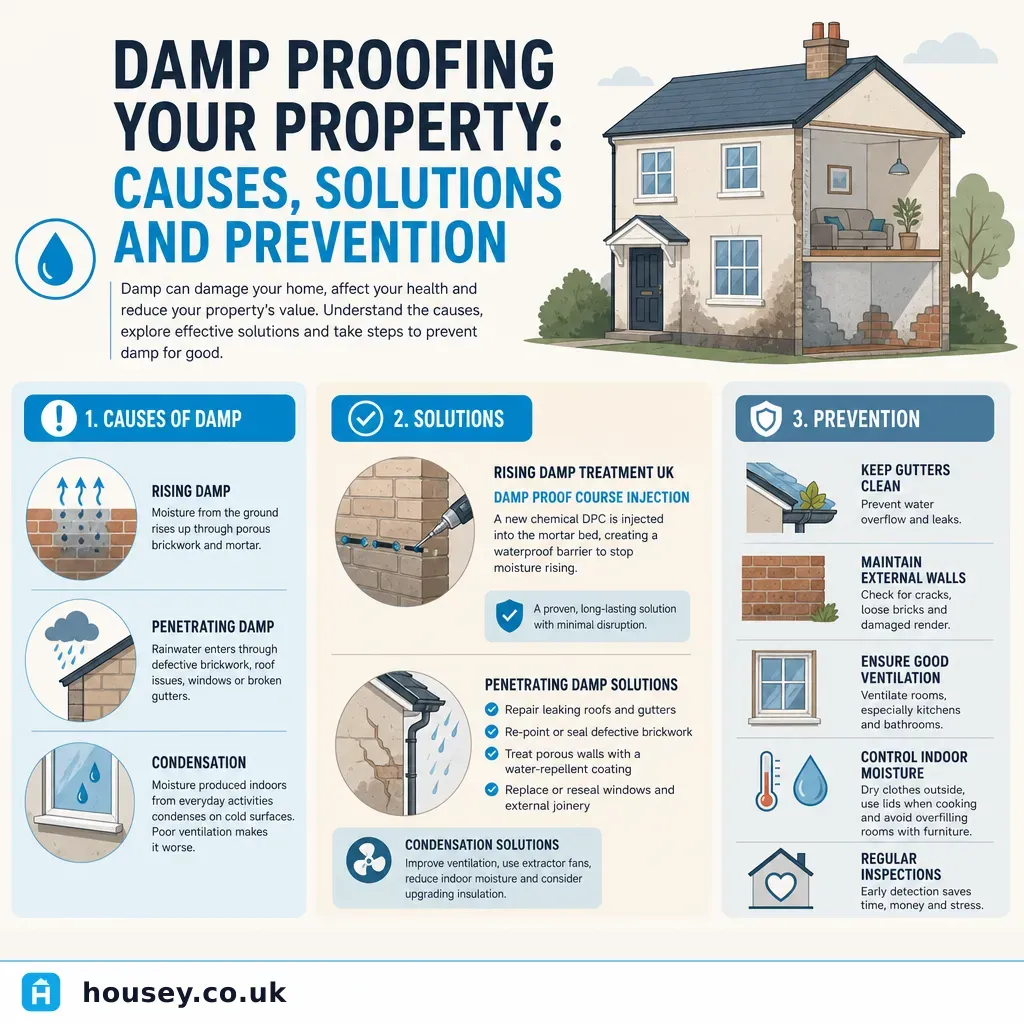
Damp Proofing Your Property: Causes, Solutions and Prevention
Damp in UK properties falls into three main types: rising damp caused by a failed damp proof course, penetrating damp from defects such as failed flashings or cracked render, and condensation from poor ventilation.