Purchasing Building Materials for Home Renovation: Supplier and Quality Guidance
By Housey · Last reviewed 1st of June 2026
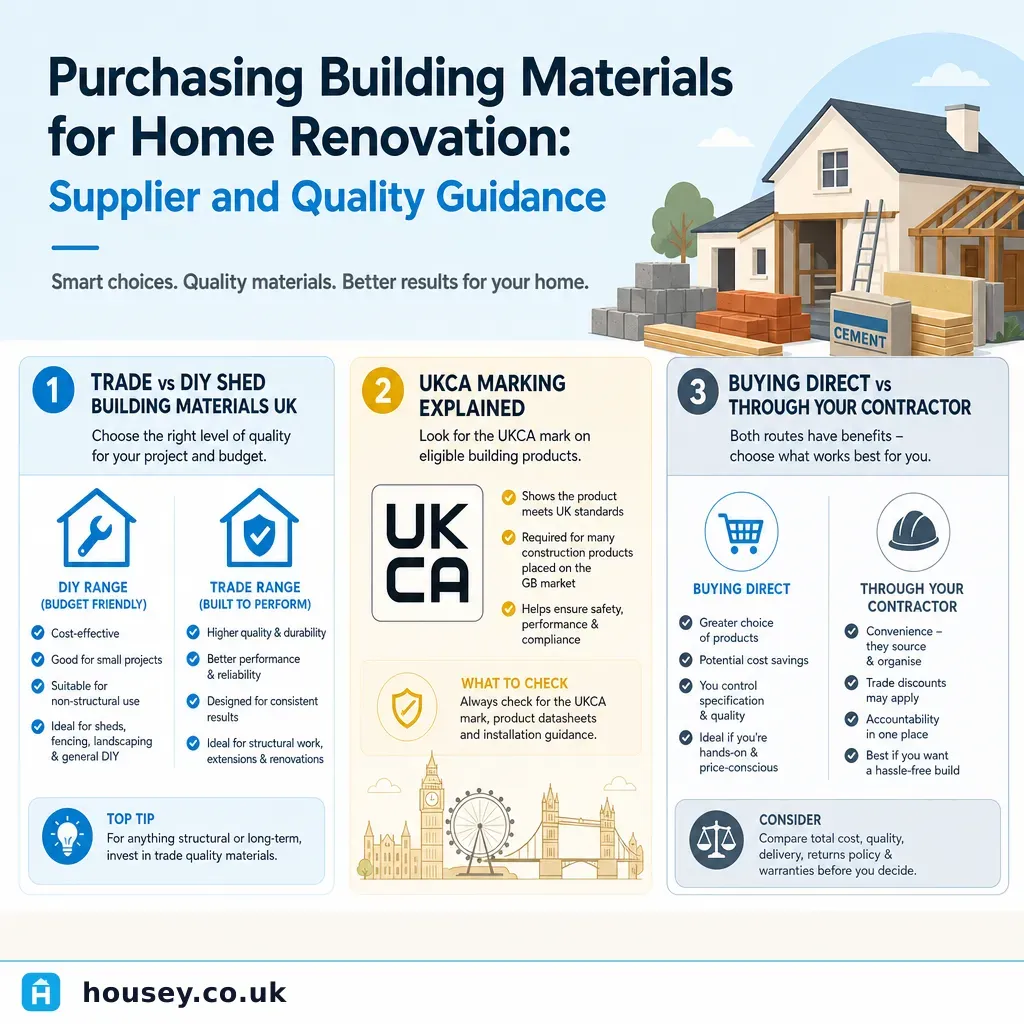
Purchasing Building Materials for Home Renovation: Supplier and Quality Guidance
Sourcing materials is a decision point that most UK homeowners reach once plans are confirmed and a contractor is lined up — or, for those managing their own works, even earlier. The UK building materials market is large and fragmented, ranging from national trade merchants with hundreds of branch locations to niche salvage yards specialising in Victorian brickwork. Understanding which supply channel suits your project, what certifications to look for, and how VAT relief might apply can make a meaningful difference to both budget and build quality.
Key points
- Trade merchants such as Jewson, Travis Perkins, and Buildbase typically offer lower unit prices than DIY sheds, but usually require a trade account — many will open one for self-builders or frequent buyers on request.
- VAT is charged at 20% on most building materials, but qualifying works — including new residential construction, conversions of non-residential buildings, and properties vacant for two or more years — may attract a reduced 5% or zero rate under HMRC's VAT Notice 708.
- Structural and safety-critical products (lintels, roof trusses, fire doors, glass) should carry UKCA marking, confirming compliance with UK product safety and performance standards as set by the relevant Approved Documents.
- Standard industry practice is to allow 10–15% additional material for cut waste on tiles, bricks, and sheet materials; failing to account for this leads to costly mid-project top-up orders that may not match the original batch or colour.
- Pre-2000 reclaimed materials — including textured coatings, cement composite boards, and pipe lagging — may contain asbestos-containing materials (ACMs); do not disturb or handle suspected ACMs without guidance from a competent asbestos professional.
Where to buy building materials in the UK
The UK building materials market broadly divides into five main supply channels.
Trade builders' merchants — Jewson, Travis Perkins, Buildbase, and Bradfords Stock Building Supplies supply the majority of professional construction activity. They hold wide stock, offer trade credit accounts, and have local branch networks. Unit prices are typically better than DIY retail; negotiation on larger orders is common practice, particularly for customers with established accounts.
DIY sheds and home improvement retailers — B&Q, Wickes, and Screwfix are convenient for smaller projects and mixed purchases. Prices per unit are usually higher than trade merchants, but no account is required, returns policies tend to be more generous, and extended opening hours suit weekend working.
Specialist suppliers — Timber merchants, roofing distributors, plumbing and heating wholesalers, and heritage material specialists often stock deeper ranges and more technical product lines than generalist merchants. For structural timber, heritage slates, or cast-iron drainage goods, a specialist is often the only practical route to the right product.
Online and aggregator platforms — Independent merchants with e-commerce channels allow price comparison and doorstep delivery. Lead times, minimum order quantities, and returns policies vary considerably; check all three before committing, particularly for bulky or time-critical materials.
Salvage yards and reclaimed material dealers — SALVO, the UK's main reclaimed materials directory, lists dealers in bricks, stone, timber, roofing materials, and architectural ironmongery. Reclaimed materials can be cheaper and more characterful than new equivalents, and are sometimes required by local planning authorities in conservation areas to match the existing streetscene.
Trade merchants vs DIY sheds vs online: a comparison
Supplier type | Best for | Less suited for | Typical pricing | Account required? |
|---|---|---|---|---|
Trade merchant (e.g. Jewson, Travis Perkins) | Bulk quantities, structural materials, contractor-led projects | Small one-off purchases | Lower with account | Usually yes |
DIY shed (e.g. B&Q, Wickes) | Small jobs, mixed purchases, convenience | Large volumes, specialist specification | Higher per unit | No |
Specialist supplier (e.g. timber merchant, roofing distributor) | Roofing, heritage timber, HVAC, bespoke items | General renovation supplies | Variable | Often yes |
Online retailer | Price comparison, delivery to site | Urgent or very bulky items needing crane-off | Variable | No |
Salvage yard (e.g. SALVO-listed dealers) | Character materials, period brickwork, reclaimed slate | Consistent large-volume supply | Often lower, variable | No |
Checking material quality and certifications
For structural, safety-critical, and weatherproofing applications, product certification matters and is not optional.
UKCA (UK Conformity Assessed) marking — The UK's post-Brexit product marking scheme for goods placed on the Great Britain market. Structural products, fire doors, glass, and other regulated construction items should carry a UKCA mark with a declaration of performance. CE marking made under EU procedures remains valid during current transitional arrangements — check the Department for Business and Trade's guidance for the latest transition deadline applicable to your product category.
BBA (British Board of Agrément) — An independent UK body that approves construction products not covered by a harmonised standard. BBA certificates are widely recognised by building control bodies and insurers, and are particularly relevant for innovative or novel construction products.
BSI Kitemark — Independent testing against a British Standard, commonly seen on windows, fire-rated doors, and plastic pipes. The Kitemark logo should be accompanied by the relevant BS standard reference number.
For insulation products, ensure declared thermal conductivity (lambda) values are independently assessed, not just manufacturer-stated. For structural timber, an appropriate strength grading mark (C16, C24) should be present. Where sustainability is required — sometimes specified by planning conditions on sensitive sites — FSC (Forest Stewardship Council) or PEFC certification confirms responsible sourcing.
Managing costs: VAT, bulk buying, and waste allowance
Material costs in a renovation typically represent 40–60% of total project spend, so understanding the main cost levers is worthwhile before ordering begins.
VAT relief — Standard building materials attract VAT at 20%. However, HMRC's VAT Notice 708 sets out conditions under which the reduced 5% rate or zero rate applies, including new residential construction, conversions of non-residential properties to dwellings, and residential properties empty for two or more years. Confirming eligibility before starting can generate meaningful savings; recovering overpaid VAT after the fact is significantly more difficult.
Bulk purchasing — Ordering all materials in a single phase, rather than piecemeal, reduces delivery costs and often triggers volume pricing. If site storage is limited, ask your merchant about staged delivery with materials reserved at an agreed price.
Waste allowance — Add 10–15% to calculated quantities for standard cut waste on tiles, bricks, and sheet materials, rising to 15–20% for irregular or heritage formats. Underestimating leads to costly mid-project top-up orders that may not match the original batch, particularly for bricks, tiles, and natural stone.
Quote comparison template
When seeking material quotes from suppliers, ask each to confirm:
- Unit prices (per m², per m³, per item, or per tonne) and any minimum order quantities
- Delivery charges, site access requirements, and whether crane-off or hiab delivery is available for heavy or bulk loads
- VAT rate applied and whether any reduced-rate relief has been assumed on your behalf
- Lead times and stock reservation policies — will the price and availability be held once you confirm?
- Returns policy for unused materials in original, undamaged packaging
- Batch or lot references for materials requiring colour or specification consistency (tiles, bricks, paints)
- Whether digital invoices are available in a format suitable for VAT reclaim purposes
What to ask before opening a trade account
- Is there a minimum annual spend or an inactivity fee attached to the account?
- What credit limit and payment terms are on offer for a new account?
- Are prices fixed at time of order, or at time of delivery — and who bears the risk if prices change?
- Does the account include access to a dedicated account manager for larger projects?
- Can materials be returned if the project scope changes before delivery takes place?
- Are digital invoices issued automatically for all transactions on the account?
Reclaimed materials: savings, risks, and what not to assume
Reclaimed bricks, roof slates, floorboards, and architectural features can reduce material costs and add character to a renovation — particularly valuable in conservation areas where local planning authorities may require materials to match the existing streetscene in type, colour, and texture.
What not to assume:
- That reclaimed is always cheaper — rare or matched bricks (London stock bricks, handmade clay tiles) can cost more per unit than new equivalents from specialist manufacturers, particularly where a specific type and colour is needed for heritage or planning compliance.
- That pre-2000 materials are safe to handle without checking — asbestos-containing materials (ACMs) were used in a wide range of building products until the final UK ban in 1999. If you are unsure whether any salvaged item — particularly textured coatings, cement composite boards, or pipe lagging — might contain asbestos, do not disturb it. Arrange an assessment by a competent asbestos professional before any handling or disposal.
- That reclaimed structural timber is sound — old timbers may conceal rot, insect damage, or previous fixings that compromise structural integrity. Have any timbers intended for load-bearing use independently assessed before installation.
When to get professional help
Material selection becomes a matter for professional input when:
- Structural or fire-safety-critical products need specifying — consult a structural engineer, architect, or your building control body for guidance on appropriate products and standards
- You are unsure whether VAT relief applies to your project — consult an accountant with construction VAT experience, or contact HMRC's VAT helpline before work begins
- Planning conditions specify materials by type, appearance, or source — confirm the exact requirements with your local planning authority or architect before ordering
- You suspect any reclaimed material might contain asbestos — arrange a professional asbestos survey and do not disturb the material
- A dispute arises over materials supplied — retain all invoices, delivery notes, and product declarations, and include a written schedule of materials in your building contract from the outset
How Housey can help
Housey connects UK homeowners with vetted local builders, surveyors, and renovation specialists who can help plan and manage home improvement projects. Whether you need guidance on what tradespeople should supply as part of their contract, or help finding a contractor experienced in managing material procurement and quality control, Housey's guides and service-matching tools are designed to simplify those decisions and reduce the risk of costly errors.
Frequently asked questions
Can I buy from a trade merchant without a trade account?
Most merchants will sell to members of the public without a trade account, though typically at a higher non-trade price. Some branches may ask for evidence of a self-build or renovation project. Asking about opening an account even for a one-off project is worthwhile, as it can unlock better pricing and properly formatted invoices for VAT reclaim purposes.
Do I save money by supplying my own materials rather than letting a contractor supply them?
Sometimes, but not always. Contractors often receive trade discounts that individual buyers cannot access, and when a contractor supplies materials they carry liability for fitness for purpose. If you supply materials yourself, that liability transfers to you. Weigh any cost savings against the risk transfer, and agree clearly in writing who is responsible for each material before work begins.
What does UKCA marking mean on a building product?
UKCA (UK Conformity Assessed) is the UK product marking scheme for regulated construction goods sold in Great Britain, replacing CE marking after Brexit. For regulated products — including structural steel, fire doors, and load-bearing glass — a UKCA mark and declaration of performance confirm the product meets relevant UK standards. Using unmarked products in regulated applications may lead to building control rejection or insurance complications.
What should I do with leftover building materials after a renovation?
Unused materials in original undamaged packaging can often be returned under the supplier's returns policy — confirm this before purchasing. Surplus materials that cannot be returned may be sold locally or donated to community reuse schemes. Waste materials must be removed by a licensed waste carrier; fly-tipping is a criminal offence under the Environmental Protection Act 1990 and can result in substantial fines.
Sources and further reading
- VAT Notice 708: buildings and construction — HMRC
- UKCA marking guidance — GOV.UK / Department for Business and Trade
- British Board of Agrément (BBA) — BBA
- SALVO reclaimed materials directory — SALVO
- Environmental Protection Act 1990 — legislation.gov.uk
- FSC UK: responsible timber sourcing — Forest Stewardship Council UK
Useful next reads
 Improvement & Build
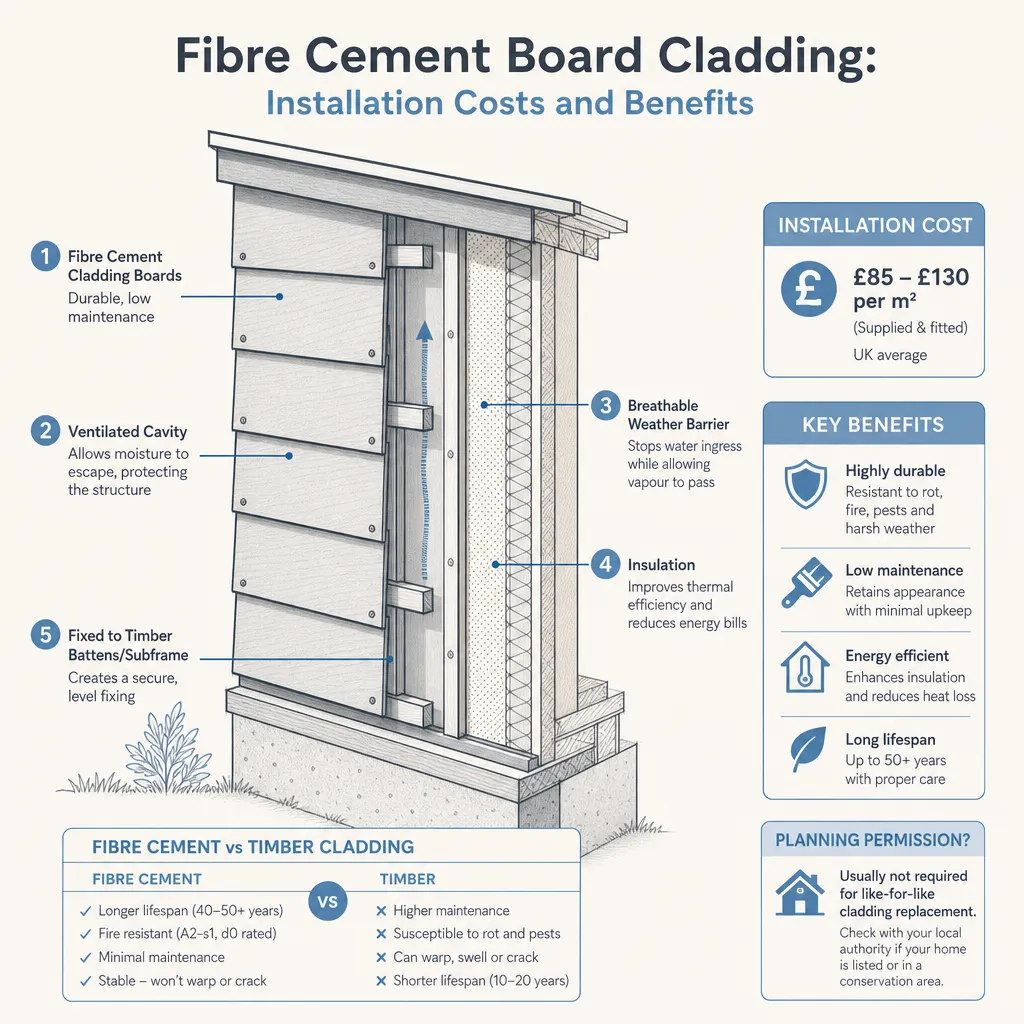
Fibre Cement Board Cladding: Installation Costs and Benefits
Fibre cement board cladding typically costs £80–£180 per m² installed in the UK, including boards, battens, breather membrane, and labour.
 Improvement & Build
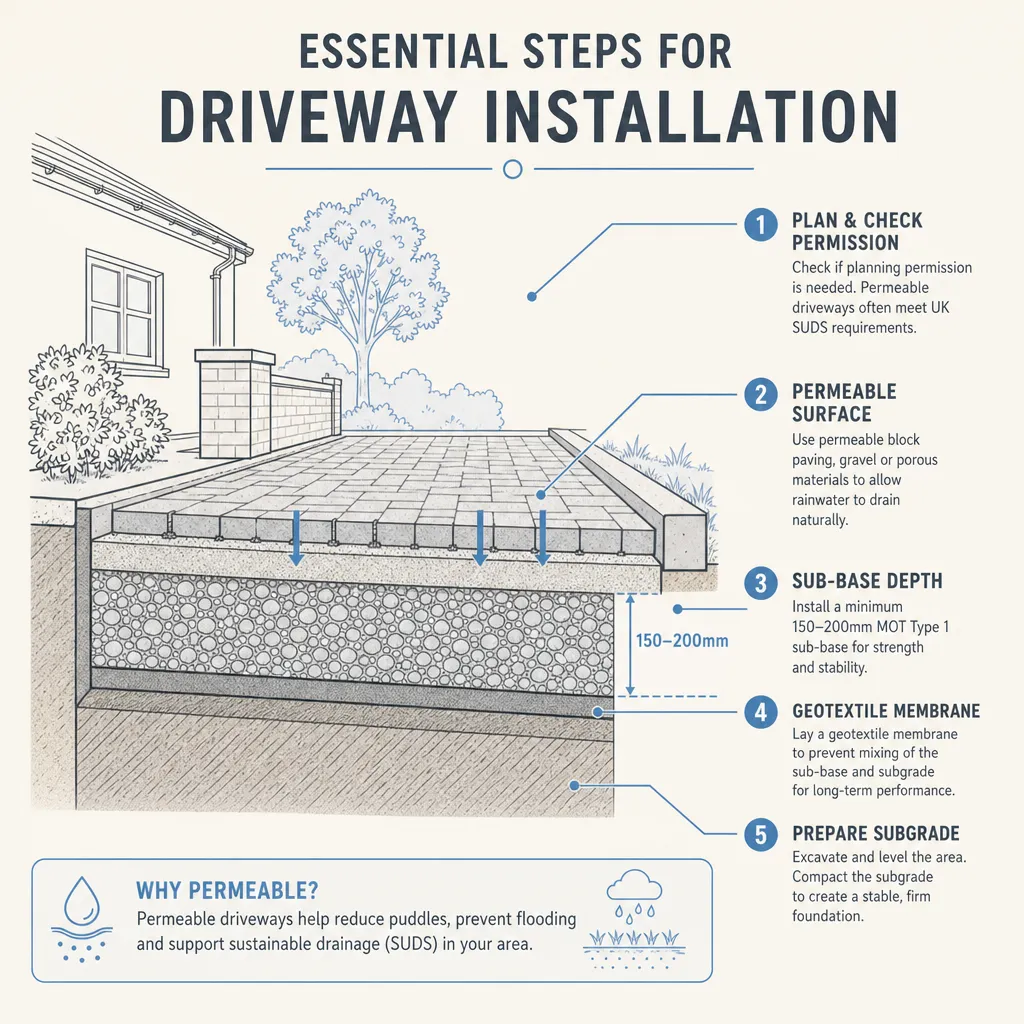
Essential Steps for Driveway Installation
Installing a driveway in England requires planning permission only when using an impermeable surface (standard tarmac, concrete, or block paving) on a front garden area over 5 m².
 Improvement & Build
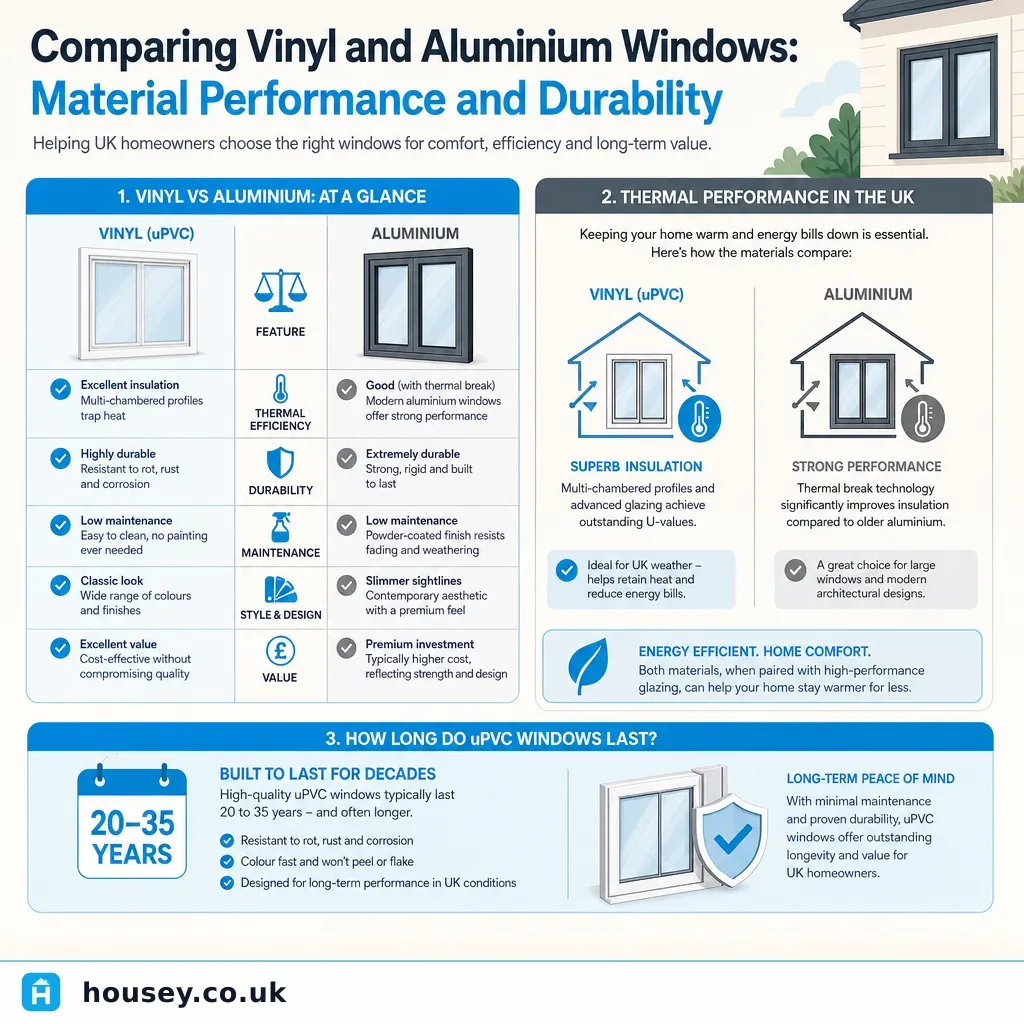
Comparing Vinyl and Aluminium Windows: Material Performance and Durability
uPVC (vinyl) and aluminium windows both meet UK Building Regulations Part L when properly specified.
 Improvement & Build
Window Types for Homes: A Comprehensive Overview
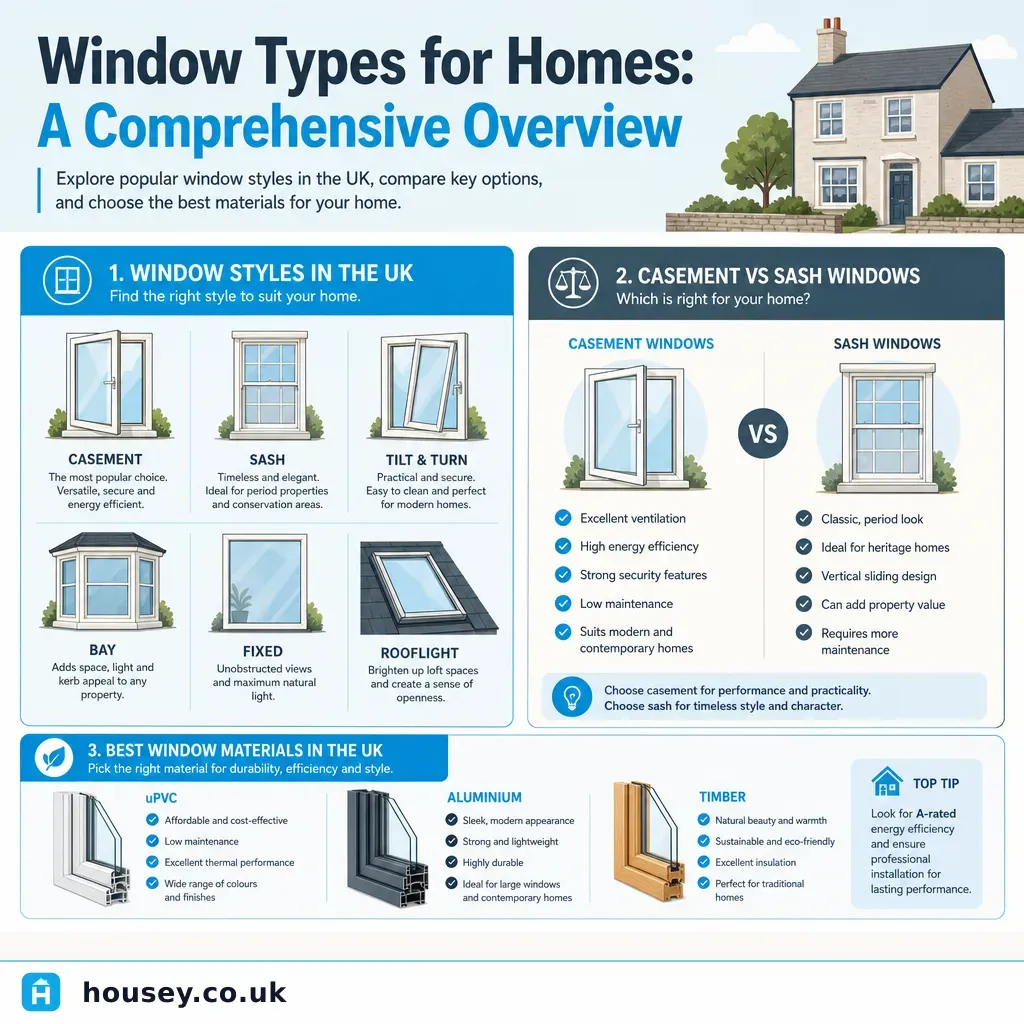
UK homes use several main window styles: casement (outward-swinging), sash (vertically sliding), tilt-and-turn, fixed light, and bay or bow.
 Improvement & Build
Soundproofing drywall: acoustic solutions for interior wall construction
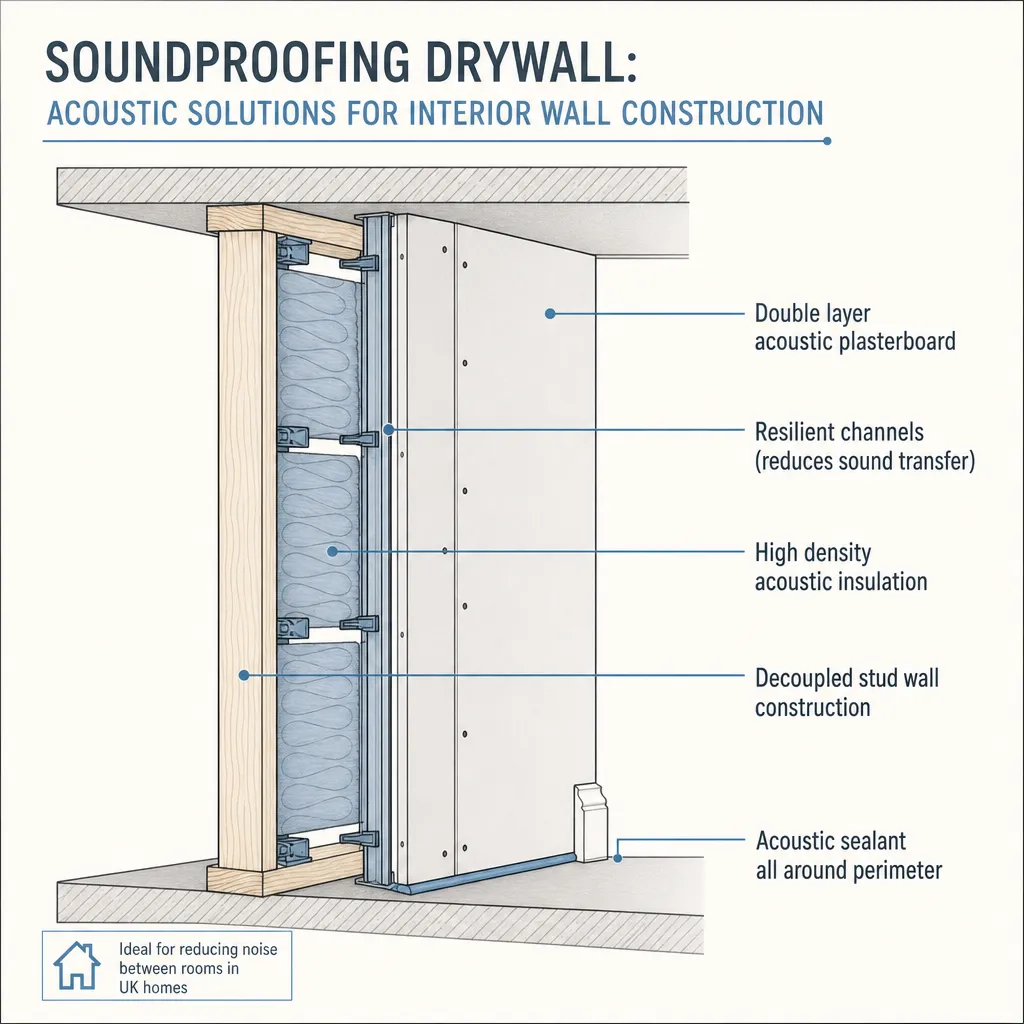
Soundproofing drywall in UK homes typically combines acoustic plasterboard, resilient bar fixings, and mineral wool cavity fill to reduce airborne and structure-borne noise.