Quality Assurance for Cast-in-Place Basement Walls: Best Practice Checklist
By Housey · Last reviewed 24th of May 2026
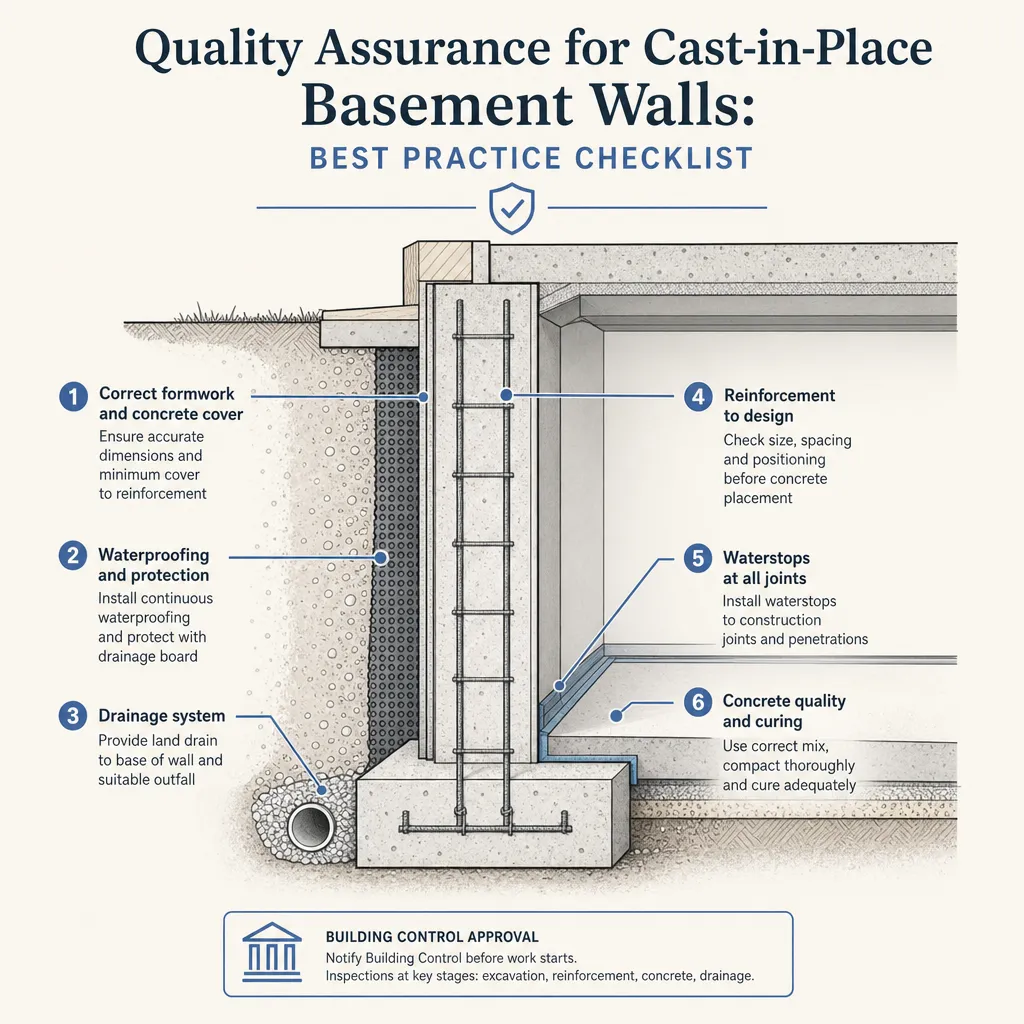
Quality Assurance for Cast-in-Place Basement Walls: Best Practice Checklist
Cast-in-place (in-situ) reinforced concrete basement walls are increasingly common in residential extensions and new builds across the UK, particularly in urban areas where maximising below-ground space is a priority. The construction sequence — excavation, formwork, reinforcement, concrete pour, curing, and backfilling — involves multiple stages where quality control failures can have long-term structural and waterproofing consequences. Understanding what good practice looks like at each stage helps homeowners, project managers, and self-builders hold their contractors to the right standard and know when to raise a concern.
Key points
- BS EN 206:2013+A2:2021 governs concrete specification in the UK; basement walls typically require a minimum exposure class of XC4/XD1 and a strength class of at least C28/35 — though C30/37 is more commonly specified for watertight concrete applications.
- Reinforcement cover (the thickness of concrete over the steel) for basement walls should be a minimum of 40 mm in most UK residential applications, increased to 50 mm where concrete is cast against blinding or soil, as specified per BS 8500 and the structural engineer's drawings.
- NHBC Standards Chapter 5.4 sets detailed requirements for below-ground structures including concrete quality, formwork, reinforcement, drainage, and waterproofing, applicable to NHBC-registered new builds.
- Honeycombing — voids in the concrete caused by inadequate compaction — is one of the most common cast-in-place defects; it compromises both structural integrity and water-tightness and must be assessed and repaired before backfilling.
- Building Regulations Approved Document A (Structure) requires structural elements to be designed and built to demonstrate adequacy; cast-in-place basement walls require a structural engineer's design and Building Control sign-off at key stages.
Why cast-in-place quality control matters
A basement wall failure is difficult and expensive to remediate. Unlike above-ground masonry, a below-ground concrete wall is largely inaccessible once backfilled. Defects — poorly compacted concrete, inadequate cover to reinforcement, misplaced bars, premature formwork striking — may not become apparent until moisture ingress, cracking, or structural movement develops, sometimes years after construction. The cost of correct quality control during construction is a fraction of the cost of excavating, breaking out, and reconstructing a defective wall.
Stage-by-stage quality assurance checklist
Stage 1: Design and pre-pour
Before any concrete is placed, confirm the following are in order:
Stage 2: Formwork and reinforcement
Stage 3: Concrete pour and compaction
Stage 4: Curing and formwork striking
Stage 5: Inspection and sign-off
Common defects and their consequences
Defect | Likely cause | Structural risk | Waterproofing risk | Recommended action |
|---|---|---|---|---|
Honeycombing | Inadequate compaction, over-stiff mix, obstructed vibration | Moderate to high depending on extent | High — direct path for water | Structural engineer assessment; epoxy injection or break-out and reinstatement |
Cold joint | Pour interrupted; laitance not removed from previous surface | Moderate | High — weak plane for water tracking | Cut out, prepare surface, apply waterproof repair mortar and waterstop |
Misplaced reinforcement | Spacers omitted, poor site supervision | High — reduced structural capacity | Moderate | Structural engineer assessment; may require remediation |
Excessive cracking (> 0.3 mm width) | Inadequate curing, early striking, thermal shrinkage | Moderate | High | Engineer assessment; crack injection with polyurethane or epoxy resin |
Formwork blow-out or displacement | Inadequate bracing or excessive pour rate | High — geometry deviation | Moderate | Stop pour; do not continue until engineer reviews and approves |
Surface scaling or dusting | Contaminated mix, rain during pour, premature drying | Low | Moderate — increased surface permeability | Diamond grinding and surface sealer; engineer assessment if widespread |
Important limitations
This checklist covers general best practice aligned with current UK standards and is intended to help homeowners, project managers, and self-builders identify common failure points and ask informed questions. It does not substitute for a structural engineer's design, a Building Control inspection programme, or specialist waterproofing design by a qualified professional.
Requirements vary depending on soil conditions, groundwater level, structural loads, basement geometry, and waterproofing specification. Always work from engineer-prepared drawings and specifications — not generic guidance alone. BS EN 206, BS 8500, and the current edition of NHBC Standards should be consulted for the definitive requirements applicable to your project.
What to ask a qualified professional
When appointing a structural engineer, groundworker, or building control consultant for cast-in-place basement wall construction, ask:
- What concrete specification are you recommending, and what exposure class does this achieve under BS 8500?
- How will adequate compaction be ensured — what vibration equipment and pour lift heights are planned?
- What is the proposed formwork striking time, and how does this relate to minimum curing requirements?
- How will construction joints be waterproofed — what waterstop type and detail are you specifying?
- What is your procedure if honeycombing or other defects are found after formwork is struck?
- At what stages will Building Control be notified, and will an inspection be requested before backfilling?
- What is your curing method and for how long will it be maintained?
- Has the formwork been designed by a temporary works engineer for the concrete pressures involved at your proposed pour rate?
When to get professional help
Cast-in-place basement wall construction requires a structural engineer from the outset — structural design cannot be delegated to a general contractor without engineering input. Engage building control consultants early to agree an inspection programme before work starts. For the construction itself, use a specialist groundworker with demonstrable experience in below-ground reinforced concrete construction.
If defects are identified after construction — visible cracking, damp patches, or any signs of movement — commission an independent structural assessment before attempting repairs. Do not backfill until a qualified engineer has reviewed and approved the wall condition in writing.
How Housey can help
Housey can connect you with experienced building control consultants who can guide you through the inspection and sign-off process for below-ground reinforced concrete construction. For the construction work itself, vetted groundworkers listed on Housey have experience with residential basement wall projects and can provide itemised quotes based on your engineer's drawings.
Frequently asked questions
What concrete grade should be used for a residential basement wall?
For a waterproof basement wall, a minimum of C28/35 is typical, but C30/37 or stronger is more commonly specified — particularly where waterproof admixtures form part of the waterproofing strategy. The structural engineer's specification governs; it should reference BS EN 206 and BS 8500 and specify the exposure class appropriate to the ground conditions.
How do I know if honeycombing in a basement wall is a structural problem?
Not all honeycombing is structurally critical — scattered surface blowholes are cosmetic. Extensive honeycombing through the full wall thickness, near construction joints, or within the reinforcement cover zone requires structural engineer assessment before any repair is attempted. Repairs carried out without engineering review risk masking a structural problem rather than resolving it.
Does a cast-in-place basement wall need Building Control approval?
Yes. Construction of a new basement or significant alteration of an existing below-ground structure requires a Building Regulations application and Building Control inspections at key stages. Proceeding without approval creates legal complications for future sales, remortgages, and insurance claims. Notify Building Control before starting — they will agree an inspection programme with you.
What is a waterstop and why is it important in basement walls?
A waterstop is a material — either a PVC strip or a hydrophilic swelling bar — installed at construction joints to prevent water tracking through the joint. Construction joints are inherently weaker waterproofing points; waterstops provide a physical seal within the joint. Gaps or displacement of the waterstop are a common cause of water ingress at construction joints in cast-in-place basement walls.
Sources and further reading
- Approved Document A: Structure — GOV.UK / MHCLG
- BS EN 206 and BS 8500: concrete specification — BSI (British Standards Institution)
- NHBC Standards Chapter 5.4: below-ground structures — NHBC
- The Concrete Society: concrete repair and inspection guidance — The Concrete Society
- Building regulations approval guidance — GOV.UK
Useful next reads
 Planning & Pre-Build
Designing Homes That Are Accessible and Inclusive
Accessible home design in the UK is guided by Building Regulations Approved Document M, which sets three standards for new dwellings: Category 1 (Visitable), Category 2 (Accessible and Adaptable), and Category 3 (Wheelchair User Dwelling).
 Planning & Pre-Build
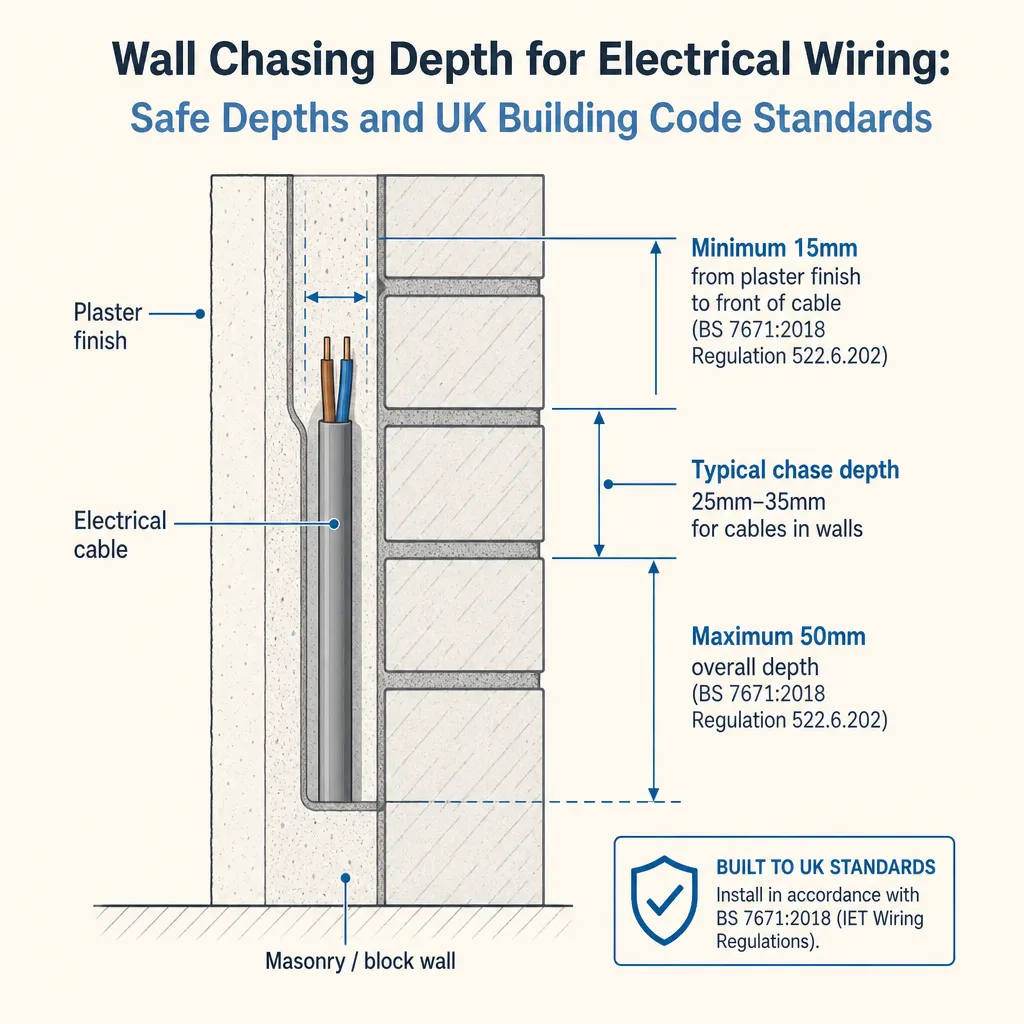
Wall Chasing Depth for Electrical Wiring: Safe Depths and UK Building Code Standards
Cables chased into walls must be within BS 7671 safe zones — within 150 mm of a ceiling, floor, or corner junction — or enclosed in rigid conduit for mechanical protection.
 Planning & Pre-Build
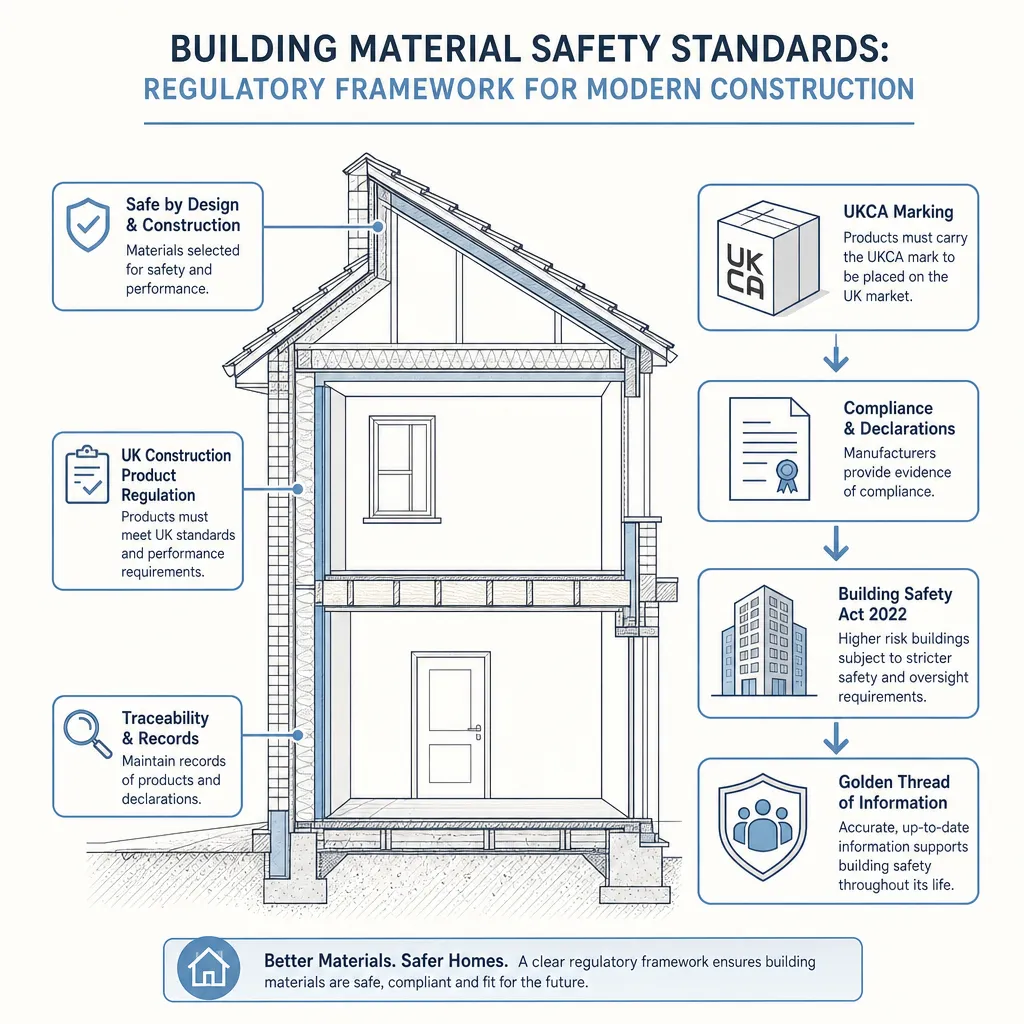
Building Material Safety Standards: Regulatory Framework for Modern Construction
UK building material safety standards are set through the Building Regulations 2010 and associated Approved Documents covering structure, fire, damp, energy, and ventilation.
 Planning & Pre-Build
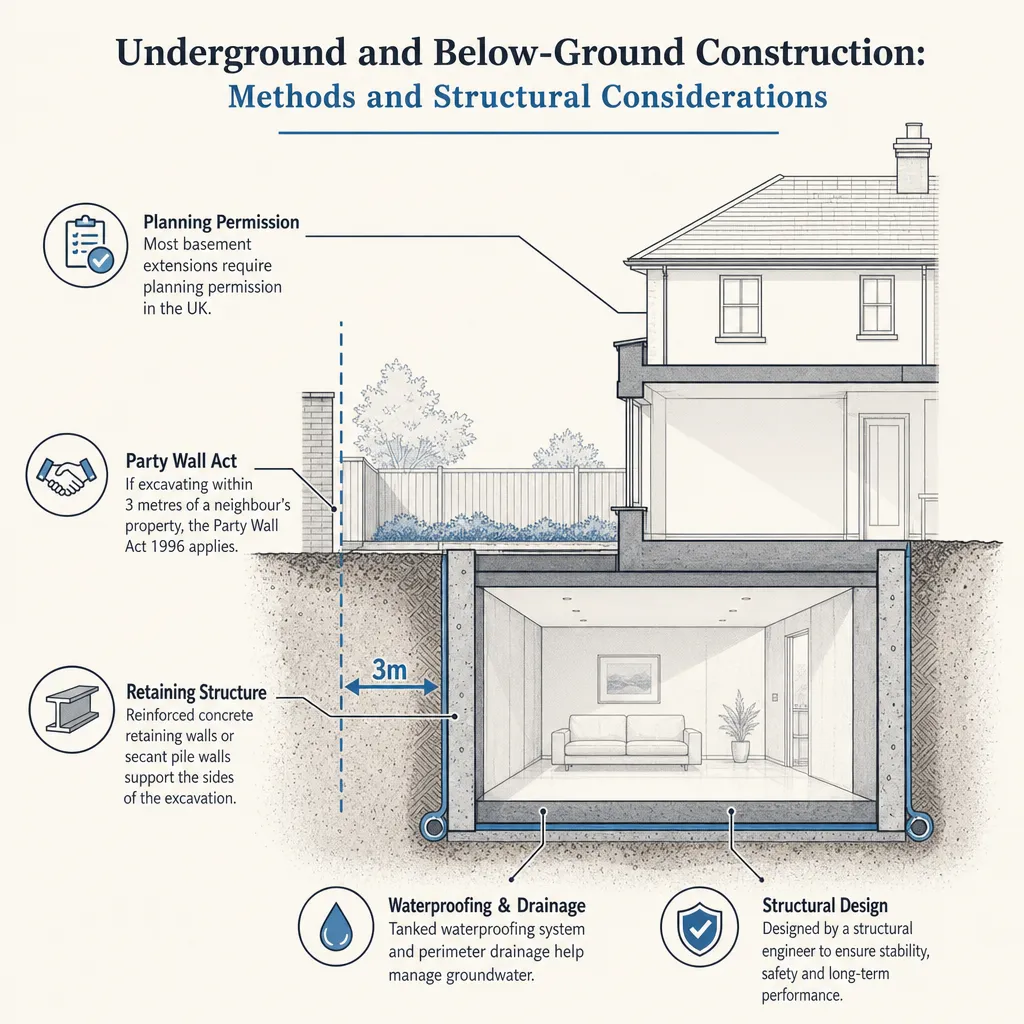
Underground and Below-Ground Construction: Methods and Structural Considerations
Below-ground and underground construction in the UK — including basement extensions and earth-sheltered structures — always requires building regulations approval and usually full planning permission.
 Planning & Pre-Build
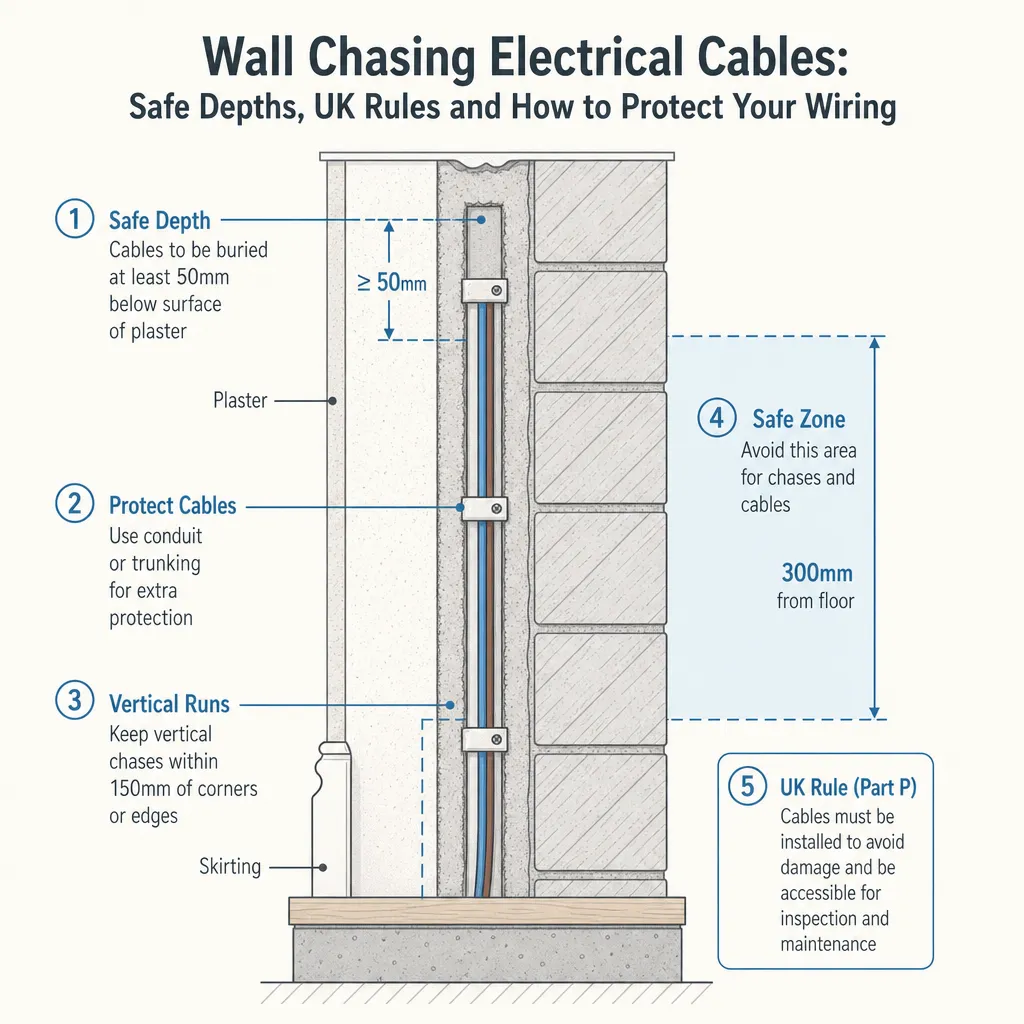
Wall Chasing Electrical Cables: Safe Depths, UK Rules and How to Protect Your Wiring
Wall chasing depth for electrical cables in UK homes must allow around 25mm of plaster or render cover over the cable.