Wall Chasing Electrical Cables: Safe Depths, UK Rules and How to Protect Your Wiring
By Housey · Last reviewed 4th of May 2026
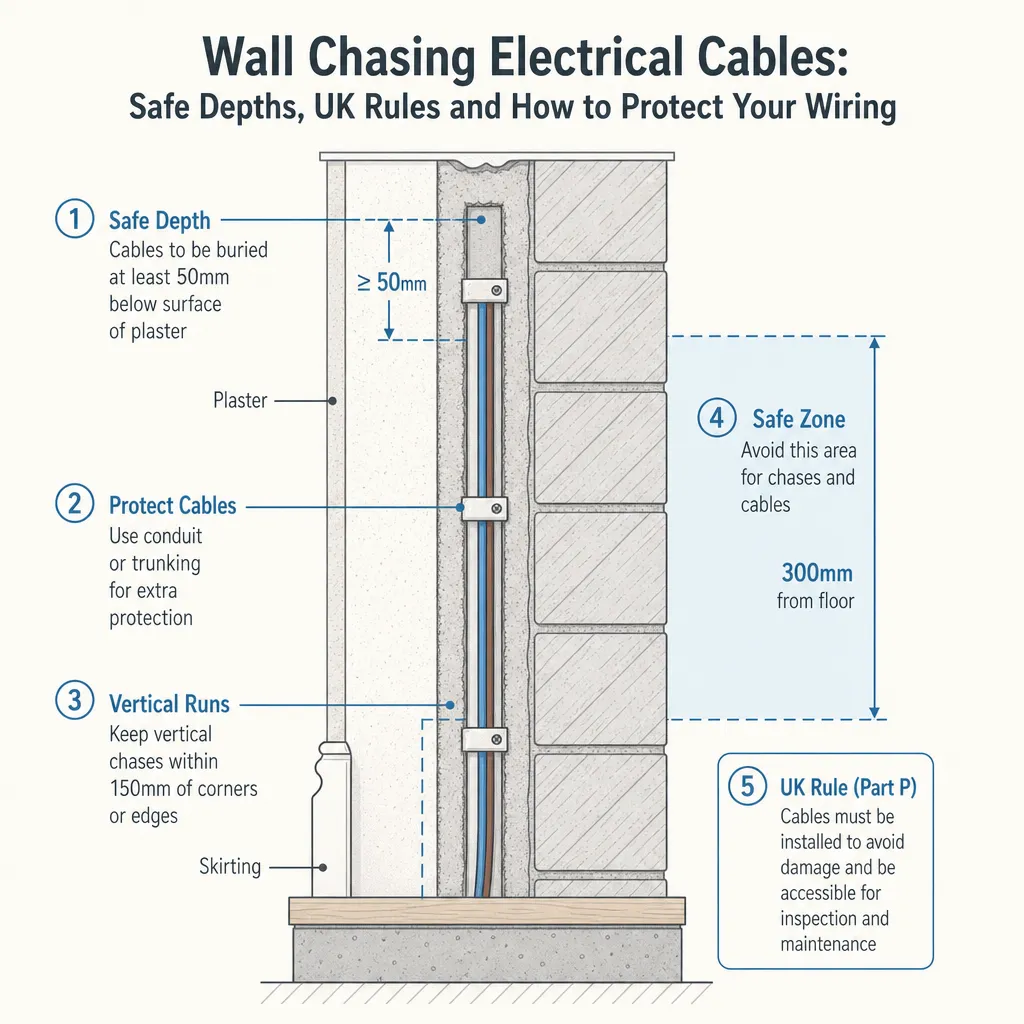
Wall Chasing Electrical Cables: Safe Depths, UK Rules and How to Protect Your Wiring
During a rewire, extension, or significant renovation, wall chasing is one of the most practical ways to conceal electrical cables in UK homes. But the depth of the chase and how the cable is protected are regulated matters, not contractor preferences. Homeowners commissioning electrical work need to understand what BS 7671 and Building Regulations Part P require — so they can ask the right questions before work begins and keep the right records afterwards.
Key points
- Cables concealed in walls must follow safe zone routes — within 150mm of the ceiling, a corner, or directly above or below an electrical accessory — as defined by Regulation 522.6.6 of BS 7671:2018+A2:2022, or have supplementary mechanical protection outside those zones.
- BS 7671 Amendment 2 (effective from 2022) made 30mA RCD protection mandatory for all cables concealed in walls and floors in domestic dwellings — not only those outside safe zones, as was previously the case.
- Building Regulations Approved Document P (England) requires notifiable electrical work — including any new circuit — to be self-certified by a registered competent person (NICEIC, NAPIT, Elecsa) or approved by local authority building control.
- There is no single nationally mandated millimetre depth for a wall chase in BS 7671, but the practical benchmark used across the UK industry is approximately 25mm of plaster or render cover over the cable to provide adequate mechanical protection without conduit.
- Scottish building standards (Technical Handbook, Domestic) and Northern Ireland building regulations follow similar principles to Part P but have different procedural requirements; properties in Wales follow the England approach.
Which regulations govern wall chasing in UK homes?
Wall chasing for electrical cable is principally governed by two documents.
BS 7671:2018+A2:2022 (IET Wiring Regulations, 18th Edition) is the national standard for all electrical installations in the UK. It is not itself a statutory instrument, but compliance with it is the accepted means of satisfying Building Regulations Part P. Amendment 2, which became effective in 2022, changed the rules on RCD protection for concealed cables in ways that affect almost all domestic rewiring and circuit-addition projects.
Approved Document P — Electrical Safety: Dwellings defines which electrical work in homes is notifiable and who can legally carry it out. Notifiable work must either be carried out by an electrician registered with a Part P competent person scheme — who self-certifies on completion — or inspected and approved by local authority building control. Adding a socket on a new spur, installing a new circuit, or any electrical work in a kitchen, bathroom, or outdoors are all notifiable under Part P.
Safe zones: where cables must run
BS 7671 Regulation 522.6.6 defines the routes in which cables in walls are considered adequately protected without additional mechanical protection:
- Ceiling zone: within 150mm of the top of the wall.
- Corner zone: within 150mm of an internal or external angle where two walls meet.
- Accessory zone: horizontally or vertically to and from an electrical accessory (socket, switch, or fused spur).
- Structural element: incorporated into the fabric of the building.
Outside these zones, Regulation 522.6.7 requires supplementary protection — typically an earthed metal conduit, or a cable with an equivalent earthed metallic covering.
Which protection method should you choose?
Use this decision tree to identify the right approach for your project:
- Is the cable route within a safe zone (150mm of ceiling, corner, or accessory)?
- Yes — cable in chase with approximately 25mm plaster cover may be acceptable, but 30mA RCD protection is still required under Amendment 2.
- No — earthed metal conduit or a cable with an earthed metallic sheath is required, in addition to RCD protection.
- Is the wall solid masonry (brick, block, or stone)?
- Yes — chasing is practical; set depth to accommodate the cable plus approximately 25mm plaster cover.
- No (plasterboard stud wall) — do not chase the board face alone; route cable through drilled stud holes with mechanical protection at any metal framing.
- Is the work notifiable under Part P?
- Yes (new circuit, consumer unit, kitchen/bathroom/outdoor work) — must be done by a registered competent person or approved by building control.
- No (like-for-like repair or maintenance) — still must comply with BS 7671; confirm scope with your electrician.
Worked example: adding a circuit in a 1930s semi-detached
A homeowner in a 1930s semi-detached in the East Midlands wants to add a ring main to the first floor. The walls are 105mm brick with a traditional lime-and-sand render and a finishing skim.
The electrician assesses cable routes:
- The cable rising from the consumer unit runs vertically up the stairwell wall — directly below a future socket on the landing, placing it within the accessory safe zone.
- A horizontal run across a bedroom wall (not near the ceiling and not near an accessory) falls outside the safe zone. The electrician installs PVC conduit within the chase and confirms the circuit is protected by a 30mA RCD at the consumer unit, satisfying Amendment 2.
- All work is notified through the electrician's NICEIC membership. A completion certificate is issued without a separate building control application.
- Final chase depth is approximately 28–30mm below the original wall face, allowing a 25mm render coat to finish flush.
This is a representative scenario; actual depths, materials, and routing will vary by property. Costs for first-floor circuit additions vary widely — always request itemised quotes from registered electricians.
Homeowner checklist before wall chasing begins
Use this checklist when commissioning electrical work that involves wall chasing:
Important limitations
This article provides general information about BS 7671 and Building Regulations Part P as they apply to wall chasing and cable installation in domestic dwellings in England and Wales. It is not a substitute for advice from a registered electrician.
Older properties, listed buildings, and properties in conservation areas may have additional constraints. Scottish and Northern Ireland regulations differ procedurally from England and Wales. Rules and practical interpretations vary by property and installation; always obtain professional assessment for your specific situation.
What to ask a qualified professional
Before instructing an electrician, ask:
- Are you registered under a Part P competent person scheme, and which one?
- Will you issue a completion certificate and Building Regulations compliance certificate on completion?
- How will you route the cables — will they follow safe zones under BS 7671 Regulation 522.6.6?
- What conduit or mechanical protection will you use, and where?
- How will 30mA RCD protection be provided for all concealed cables in line with Amendment 2?
- Can you provide a record or sketch of cable routes before the plaster goes back on?
- What is included in the quote, and what factors might cause the cost or timeline to change?
When to get professional help
Do not attempt to connect new circuits, alter a consumer unit, or carry out notifiable electrical work as a DIY project. Cutting a chase is a physical task, but the electrical work it enables is specialist and regulated.
Seek professional help if:
- You have had building works — a loft conversion, extension, or damp remediation — that may have disturbed concealed wiring.
- An electrician or surveyor has flagged concerns about the existing installation.
- You are buying a property and have no record of electrical completion certificates.
- An EICR identifies C1 (danger present) or C2 (potentially dangerous) observations relating to concealed cabling.
How Housey can help
Housey connects homeowners with registered electricians who can advise on compliant cable routes and the right protection method for your project. If your project involves Building Regulations compliance, a building control consultant can help with the notification process and what to expect at inspection. To verify the condition of your fixed electrical installation before or after works, arrange an Electrical Installation Condition Report (EICR) through Housey.
Frequently asked questions
What is a Part P completion certificate and why does it matter?
A Part P completion certificate is issued by a registered competent person scheme (such as NICEIC or NAPIT) when notifiable electrical work is completed to a satisfactory standard. It confirms compliance with Building Regulations and forms part of the conveyancing documentation when you sell your property. Without it, buyers or their solicitors may require retrospective building control sign-off, which can delay a sale.
Can a wall be chased and replastered as a DIY project?
Cutting the physical chase and repairing the plaster are not themselves notifiable activities and can generally be done DIY. However, the electrical connection work — installing the cable, connecting it to a ring main or consumer unit, adding sockets — is subject to Part P and in most cases must be carried out by a registered competent person. Discuss the division of tasks clearly with your electrician before starting.
How do I know whether existing cables in my walls meet current standards?
Commission an Electrical Installation Condition Report (EICR). This formal inspection identifies observations under BS 7671 — including concerns about concealed cabling, RCD protection, and earthing — and grades them by urgency: C1 (danger present), C2 (potentially dangerous), or C3 (improvement recommended). An EICR is the standard pre-purchase and periodic inspection tool for domestic properties in England.
Does Amendment 2 mean I have to rewire my whole house?
No. Amendment 2 to BS 7671 applies to new installations and to alterations or additions made from the point it was adopted (2022). An existing installation that has not been altered does not need immediate upgrading, though an EICR may record observations where it falls short of current standards. Any new work carried out from 2022 onwards must comply with Amendment 2, including RCD requirements for all concealed cables.
Sources and further reading
- IET Wiring Regulations (BS 7671): 18th Edition — Institution of Engineering and Technology
- Approved Document P: Electrical Safety – Dwellings — GOV.UK
- Electrical Safety First: Homeowner guidance — Electrical Safety First
- NICEIC: Find a registered contractor — NICEIC
- NAPIT: Competent person scheme register — NAPIT
Useful next reads
 Planning & Pre-Build
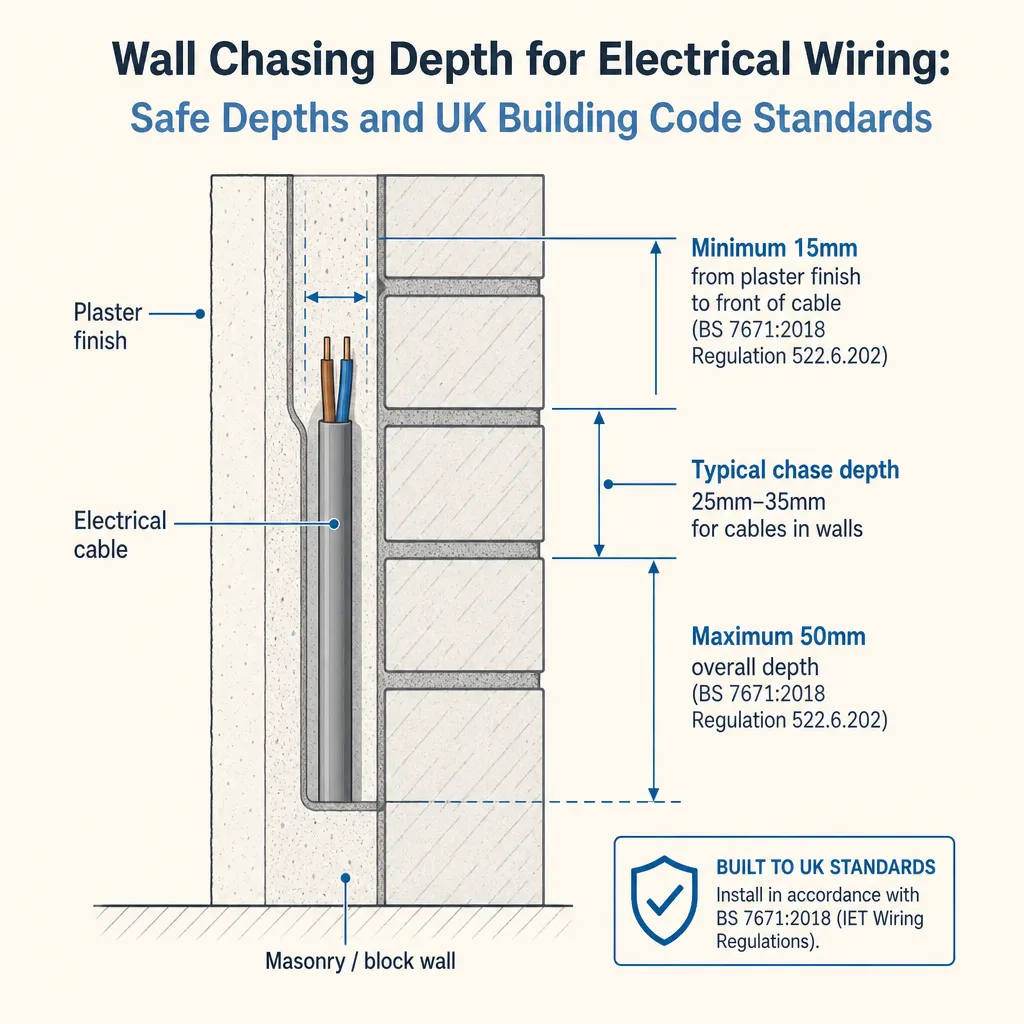
Wall Chasing Depth for Electrical Wiring: Safe Depths and UK Building Code Standards
Cables chased into walls must be within BS 7671 safe zones — within 150 mm of a ceiling, floor, or corner junction — or enclosed in rigid conduit for mechanical protection.
 Planning & Pre-Build
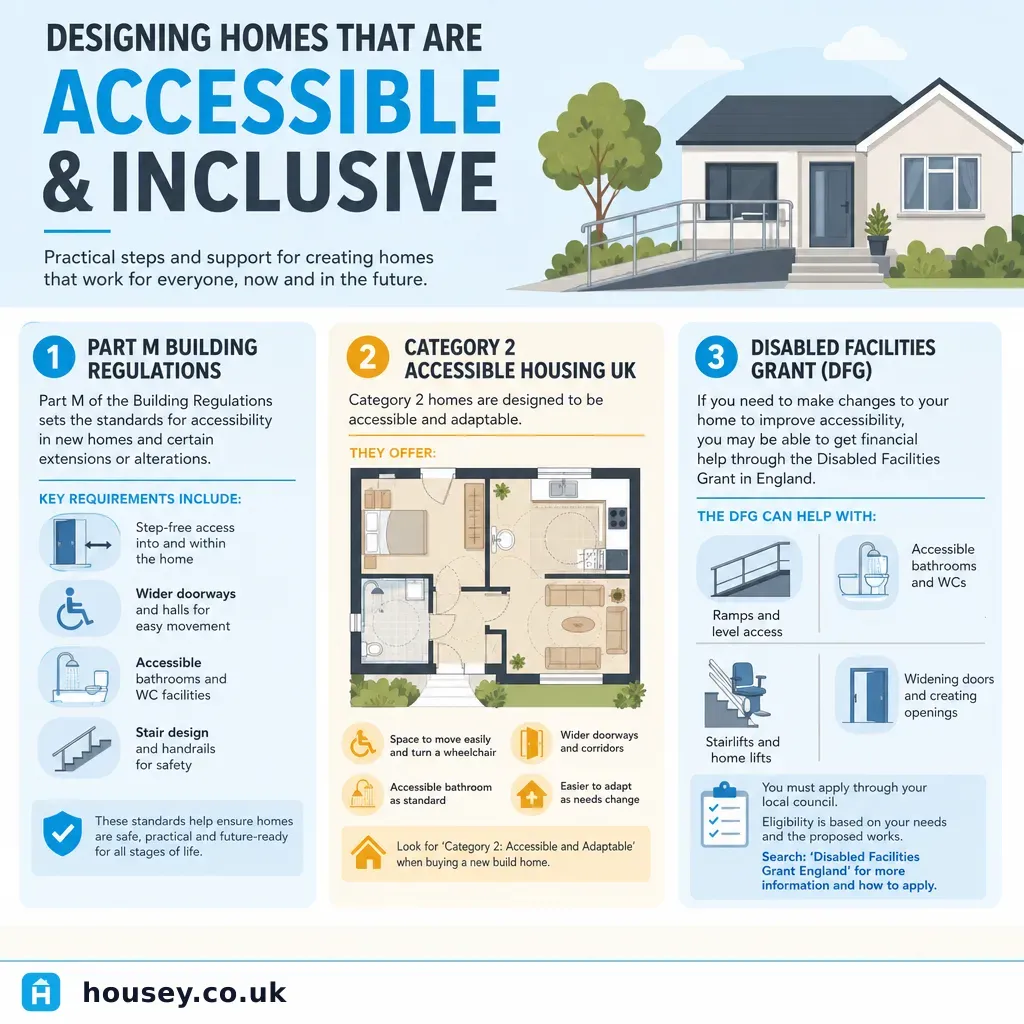
Designing Homes That Are Accessible and Inclusive
Accessible home design in the UK is guided by Building Regulations Approved Document M, which sets three standards for new dwellings: Category 1 (Visitable), Category 2 (Accessible and Adaptable), and Category 3 (Wheelchair User Dwelling).
 Planning & Pre-Build
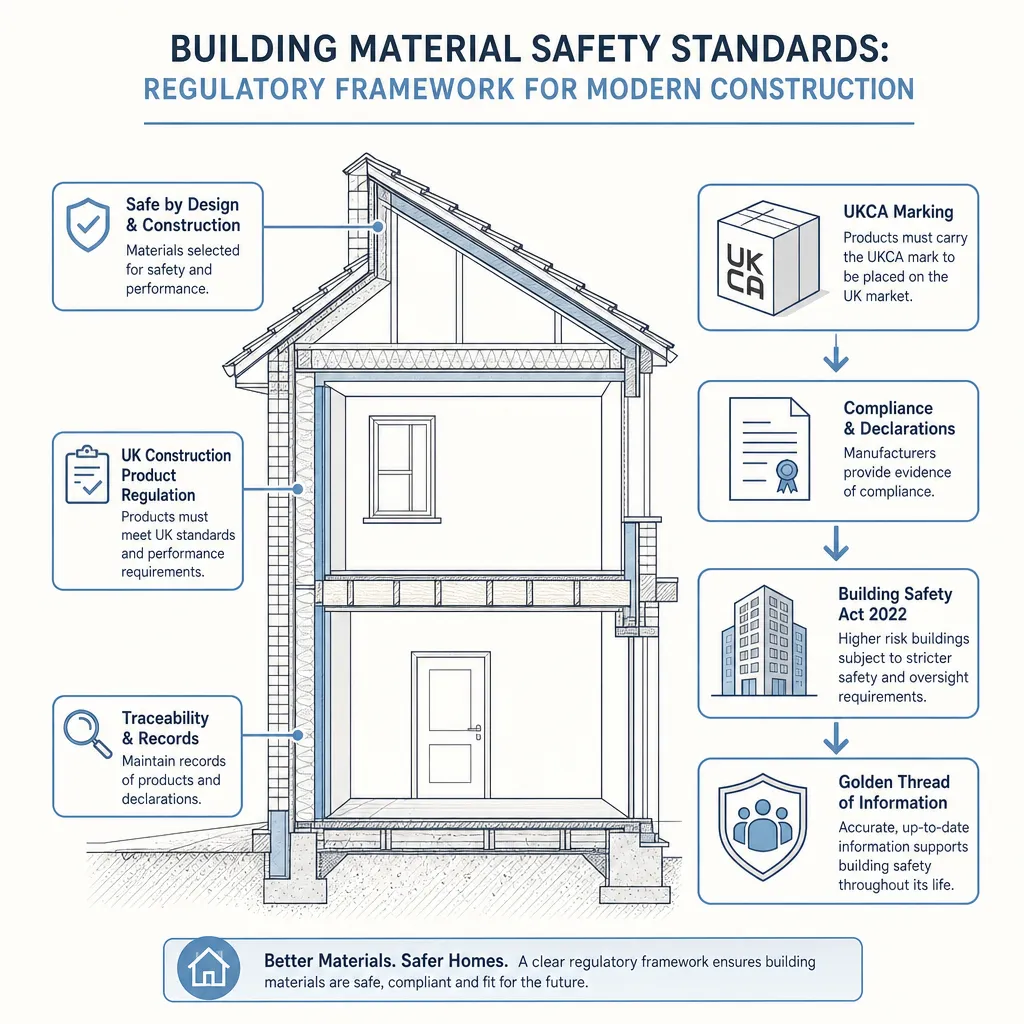
Building Material Safety Standards: Regulatory Framework for Modern Construction
UK building material safety standards are set through the Building Regulations 2010 and associated Approved Documents covering structure, fire, damp, energy, and ventilation.
 Planning & Pre-Build
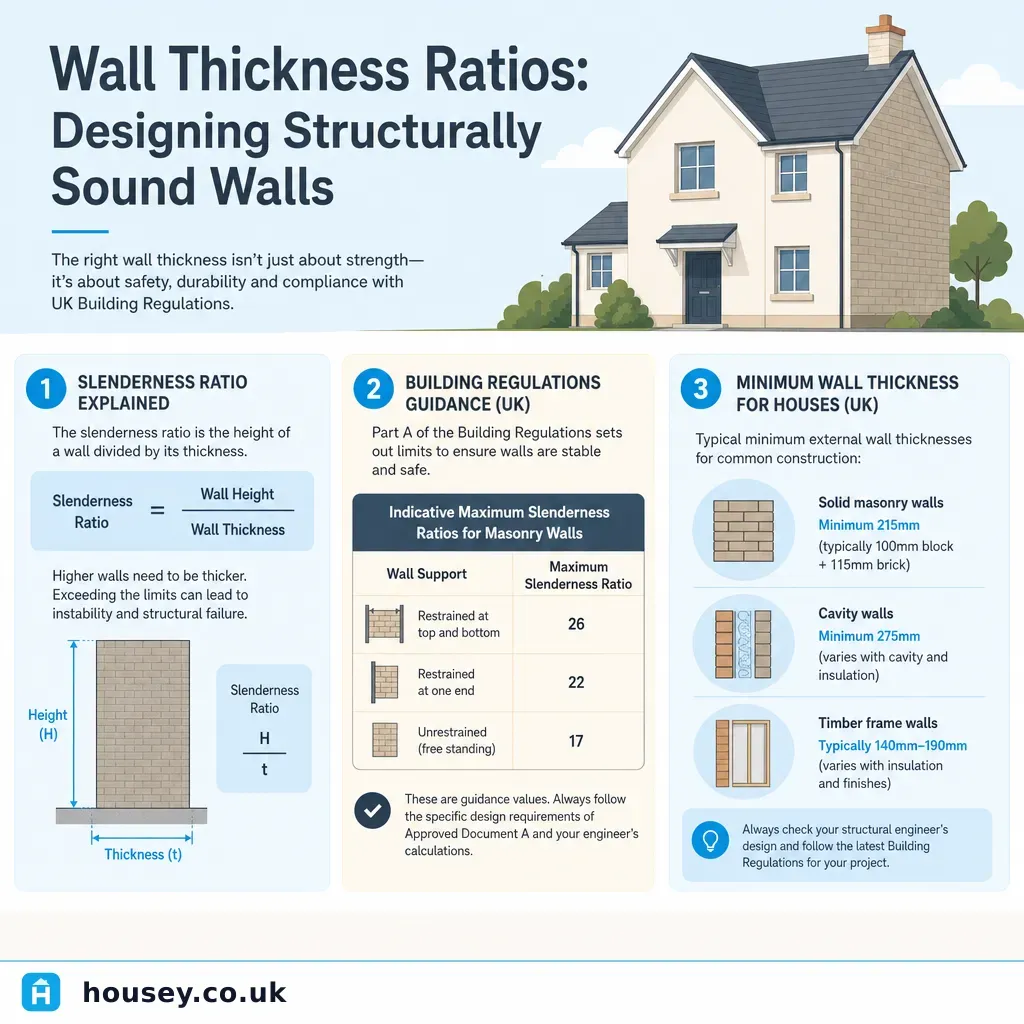
Wall Thickness Ratios: Designing Structurally Sound Walls
Wall thickness ratios — particularly the slenderness ratio (effective height divided by effective thickness) — determine whether a wall can safely carry load without buckling.
 Planning & Pre-Build
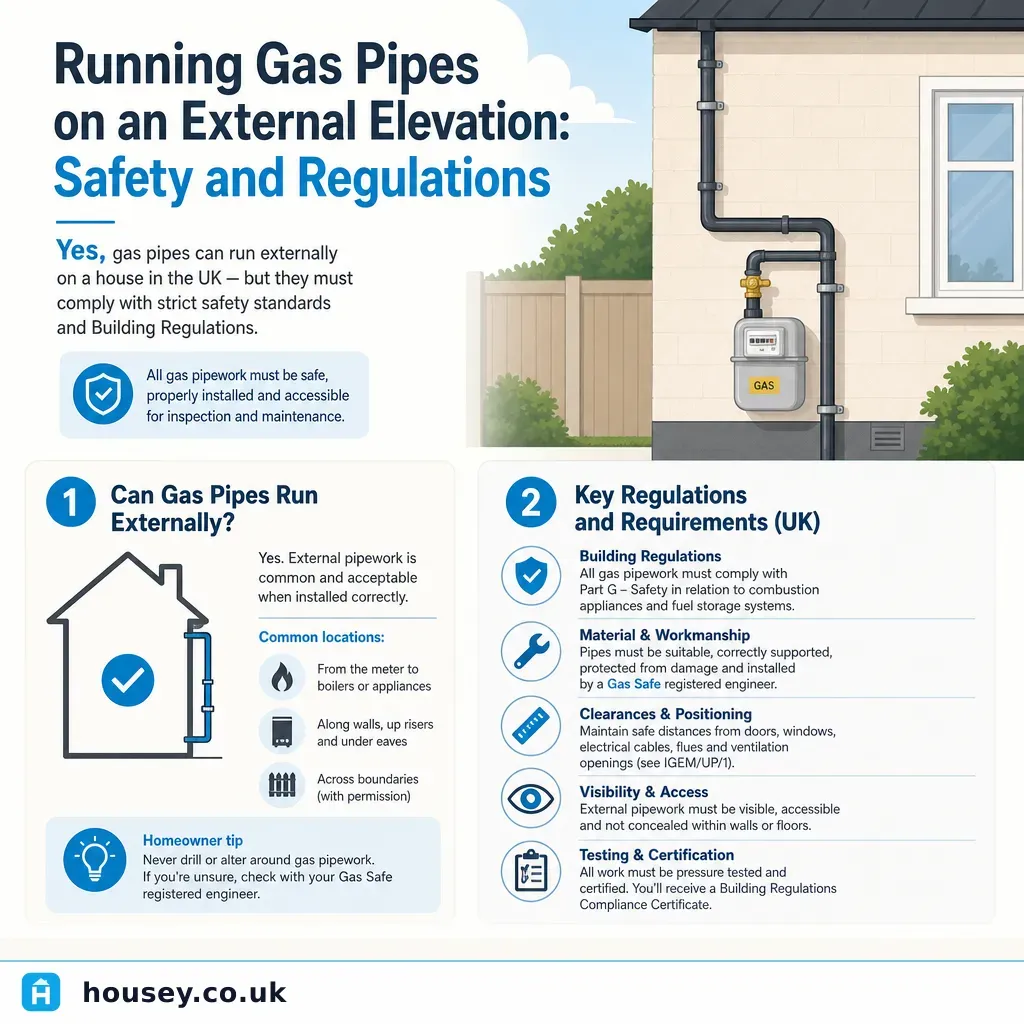
Running Gas Pipes on an External Elevation: Safety and Regulations
External gas pipework is permitted on UK property elevations and is often the preferred route when internal runs are impractical.