Underground and Below-Ground Construction: Methods and Structural Considerations
By Housey · Last reviewed 24th of May 2026
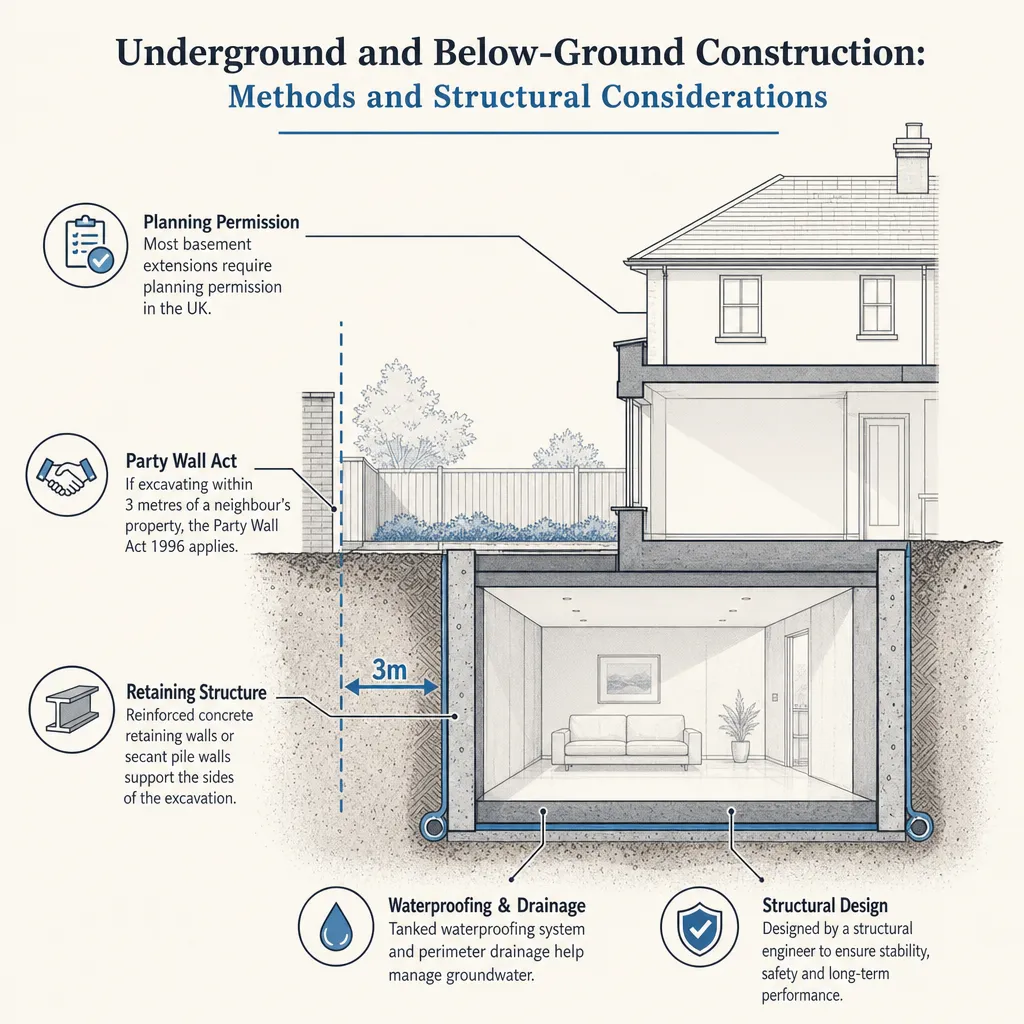
Underground and Below-Ground Construction: Methods and Structural Considerations
Below-ground construction — whether a new residential basement, an underground extension, or an earth-sheltered structure — is one of the most technically demanding forms of building in the UK. Ground conditions, groundwater, waterproofing systems, and structural loads interact in ways that differ fundamentally from above-ground work, requiring specialist expertise from the earliest design stage. Decisions made at the outset about construction method, waterproofing strategy, and site investigation scope can define project cost, programme, and long-term performance.
Key points
- All new below-ground construction creating usable floor area requires building regulations approval and usually full planning permission — there is no permitted development right for new residential basements.
- A geotechnical ground investigation — at minimum a Phase 1 desk study, and a Phase 2 intrusive survey on most sites — should be commissioned before design begins, as ground conditions and water table depth determine which construction method is viable.
- The Party Wall etc. Act 1996 is almost always triggered by excavation within 3 m of a neighbouring building, or within 6 m where excavation depth could undermine neighbouring foundations; party wall notices must be served before any excavation begins.
- Structural waterproofing in below-ground structures is governed by BS 8102:2022, which defines three protection types — Type A (barrier), Type B (structurally integral), and Type C (drained cavity) — each suited to different ground conditions and occupancy grades.
- A Chartered Structural Engineer (CEng MIStructE or MICE) must be involved in the design of retaining walls, temporary works including shoring and propping, and any underpinning of existing foundations.
Underground construction methods compared
Different below-ground construction approaches suit different ground conditions, urban settings, and project scales. Selecting the wrong method can result in excessive cost, programme delays, or structural failure.
Method | Best for | Not ideal for | Key professional | Main risk |
|---|---|---|---|---|
Traditional open-cut excavation | New standalone structures, rural or suburban sites with good access and stable ground | Sites with high water table, poor access, or immediately adjacent to existing buildings | Structural engineer + groundworker | Slope instability, impact on adjacent structures |
Contiguous or secant piled walls | Urban basements, high groundwater, sites in close proximity to neighbouring buildings | Small-scale domestic projects where cost is a significant constraint | Specialist piling contractor + structural engineer | Pile misalignment, groundwater ingress between piles |
Underpinning (mass concrete or mini-pile) | Lowering an existing basement floor, extending under existing foundations | Sites with obstructions, very soft ground, or uncertain founding conditions | Structural engineer + specialist groundworker | Differential settlement, damage to existing foundations |
Sprayed concrete lining (SCL/shotcrete) | Deep excavations, tunnels, large-volume underground spaces | Standard domestic basements (complex and costly) | Specialist underground contractor + structural engineer | Ground movement monitoring demands, rebound waste management |
Precast concrete box or modular structure | Utility rooms, small domestic storage, straightforward modular below-ground spaces | Large open-plan spaces or sites with restricted delivery access | Structural engineer + groundworker | Waterproofing at joints, crane and delivery access requirements |
Planning and building regulations
Below-ground construction almost always requires formal regulatory approval at two levels:
Planning permission: Any new basement that creates usable floor area is treated as an extension and requires full planning permission if it exceeds permitted development limits. Many local planning authorities — particularly in London — publish specific basement development policies requiring additional supporting documents, such as a basement impact assessment, drainage strategy, and structural method statement. Check your LPA's requirements before committing to a design.
Building regulations: All below-ground construction requires building regulations approval under the Building Act 1984 and Building Regulations 2010. The primary Approved Documents are Part A (structure), Part C (site preparation and resistance to contaminants and moisture), Part F (ventilation), and Part L (conservation of fuel and power). A building control body — either the local authority or a registered building control approver — must be notified and will inspect work at key stages.
CDM 2015: If the project involves more than one contractor, or meets notification thresholds (more than 30 working days with more than 20 simultaneous workers, or more than 500 person-days), the Construction (Design and Management) Regulations 2015 apply in full, requiring appointed principal designer and principal contractor roles.
Geotechnical and ground conditions
Ground investigation is not optional on most below-ground projects. The scope required depends on site complexity but typically includes:
Phase 1 desk study: Reviews historical maps, geological surveys, British Geological Survey records, and site history to identify made ground, former mining activity, contamination risk, and likely groundwater conditions. This is essential before any intrusive investigation is commissioned.
Phase 2 intrusive investigation: Trial pits or boreholes sample soil and measure groundwater levels at depth. Results characterise bearing capacity, soil classification, permeability, and contamination status. These findings directly inform retaining wall design, waterproofing strategy to BS 8102:2022, temporary works requirements, and drainage consent obligations.
If groundwater is intercepted during excavation, consent from the Environment Agency may be required under the Environmental Permitting (England and Wales) Regulations 2016 for dewatering operations.
Homeowner pre-project checklist
Before instructing any contractor for below-ground construction, work through the following steps:
Important limitations
This article provides general information about below-ground and underground construction in the UK. Requirements vary significantly by local planning authority, ground conditions, property type, tenure, and neighbouring structures. Nothing in this article constitutes structural, legal, or planning advice. Below-ground construction is a specialist field — always instruct a Chartered Structural Engineer, a geotechnical engineer, and usually a planning consultant before committing to a design or appointing contractors.
What to ask a qualified professional
Before instructing a structural engineer or specialist groundworker for a below-ground project, ask:
- Are you Chartered (CEng MIStructE or MICE) and do you carry current professional indemnity insurance?
- Have you carried out comparable below-ground projects in similar ground conditions and at a similar scale?
- Will you specify and oversee the geotechnical investigation, and how will the findings inform your structural design?
- What temporary works — shoring, propping, dewatering — do you anticipate, and will you design or specify these as part of your scope?
- How will the waterproofing strategy be selected and detailed in accordance with BS 8102:2022?
- Will you manage CDM 2015 compliance, including acting as or appointing a principal designer if required?
- How will the impact on neighbouring foundations be assessed, and what monitoring will be in place during excavation?
- What settlement trigger levels will you specify, and who will review monitoring data throughout the works?
When to get professional help
Below-ground construction must not proceed without a Chartered Structural Engineer on the design team from the earliest stage. Seek professional advice immediately if:
- Cracks appear in a neighbouring property during or after excavation.
- Groundwater is encountered unexpectedly during trial pits or early excavation works.
- Ground movement monitoring shows settlement exceeding agreed trigger levels.
- A dispute arises with a neighbour over party wall matters or damage to their property.
- The local planning authority requires specialist supporting reports as planning conditions.
How Housey can help
Housey connects you with experienced structural engineering specialists and qualified groundworkers with residential below-ground project experience across the UK. Compare quotes, verify credentials, and get expert input before your project begins.
Frequently asked questions
Do I need planning permission for a basement extension in the UK?
In most cases, yes. Adding a new basement or significantly extending an existing one creates additional floor area and requires full planning permission if it exceeds permitted development limits. London boroughs and many other councils have specific basement policies requiring additional supporting documents. Always check with your local planning authority before starting design work — pre-application discussions are advisable on complex sites.
What is the Party Wall etc. Act 1996 and does it apply to basement work?
The Party Wall etc. Act 1996 governs work on shared walls and near neighbouring foundations. For excavation within 3 m of a neighbouring building — or within 6 m for deeper excavations — party wall notices must be served on all affected neighbours before work begins. Failure to serve notices can lead to injunctions stopping the works and potential legal liability for any resulting damage.
How long does a basement construction project take?
Timescales vary significantly by method, size, and ground conditions. A standard domestic basement extension in London typically takes 6 to 12 months from planning permission to practical completion, including design, geotechnical investigation, and construction. Complex sites requiring piling, underpinning, or extensive dewatering take longer. Allow additional time for the pre-application and planning stages before the clock starts on construction.
What is BS 8102 and why does it matter for below-ground waterproofing?
BS 8102:2022 is the British Standard for protection of below-ground structures against water ingress. It defines three waterproofing approaches: Type A (barrier protection such as membranes or tanking), Type B (structurally integral concrete), and Type C (drained cavity protection). Matching the correct type to ground conditions and the intended occupancy grade is essential — incorrect specification is a common cause of persistent dampness and costly remediation in below-ground spaces.
Sources and further reading
- Approved Documents — Building Regulations 2010 — GOV.UK
- Party Wall etc. Act 1996 — explanatory guidance — GOV.UK
- Construction (Design and Management) Regulations 2015 — legislation.gov.uk
- Find a structural engineer — Institution of Structural Engineers (IStructE)
- British Geological Survey — ground information — British Geological Survey
Useful next reads
 Planning & Pre-Build
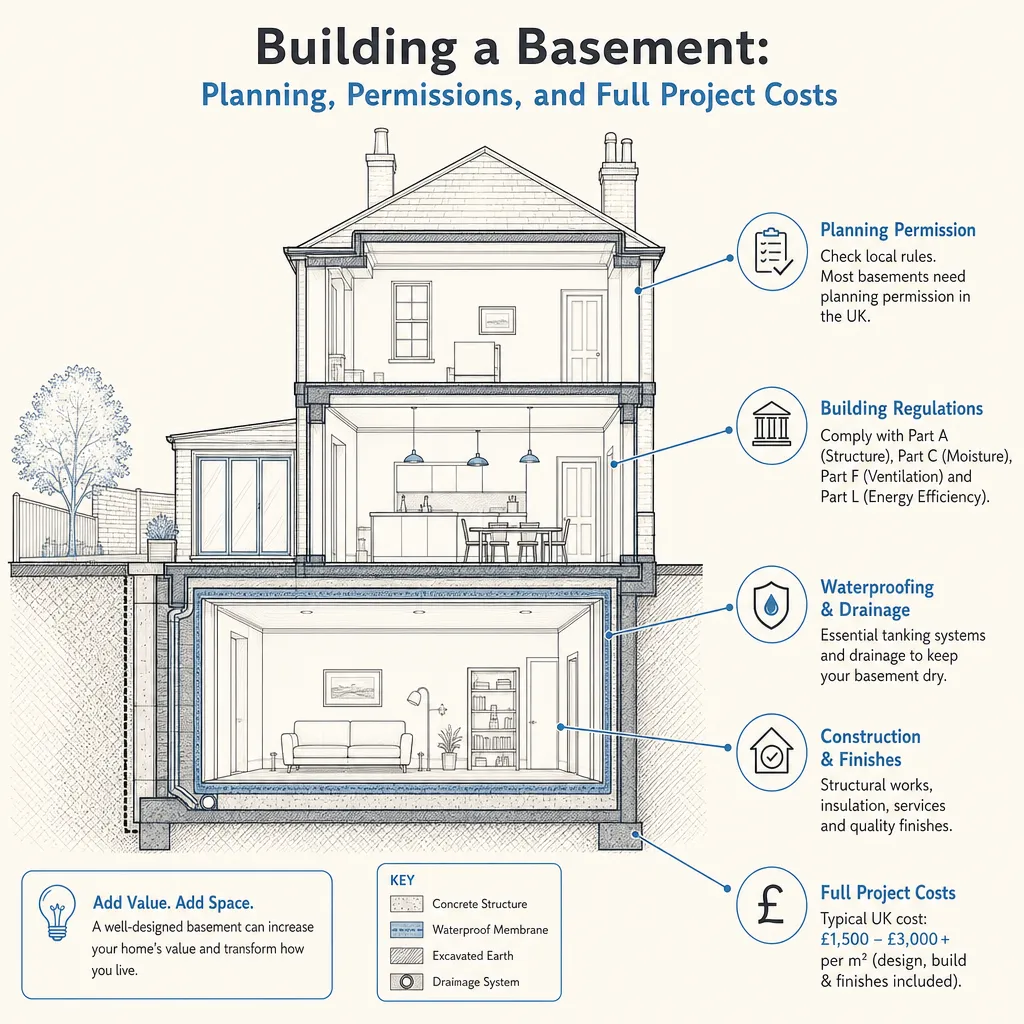
Building a Basement: Planning, Permissions, and Full Project Costs
Building a basement in the UK usually requires full planning permission where new excavation or external changes are involved.
 Planning & Pre-Build
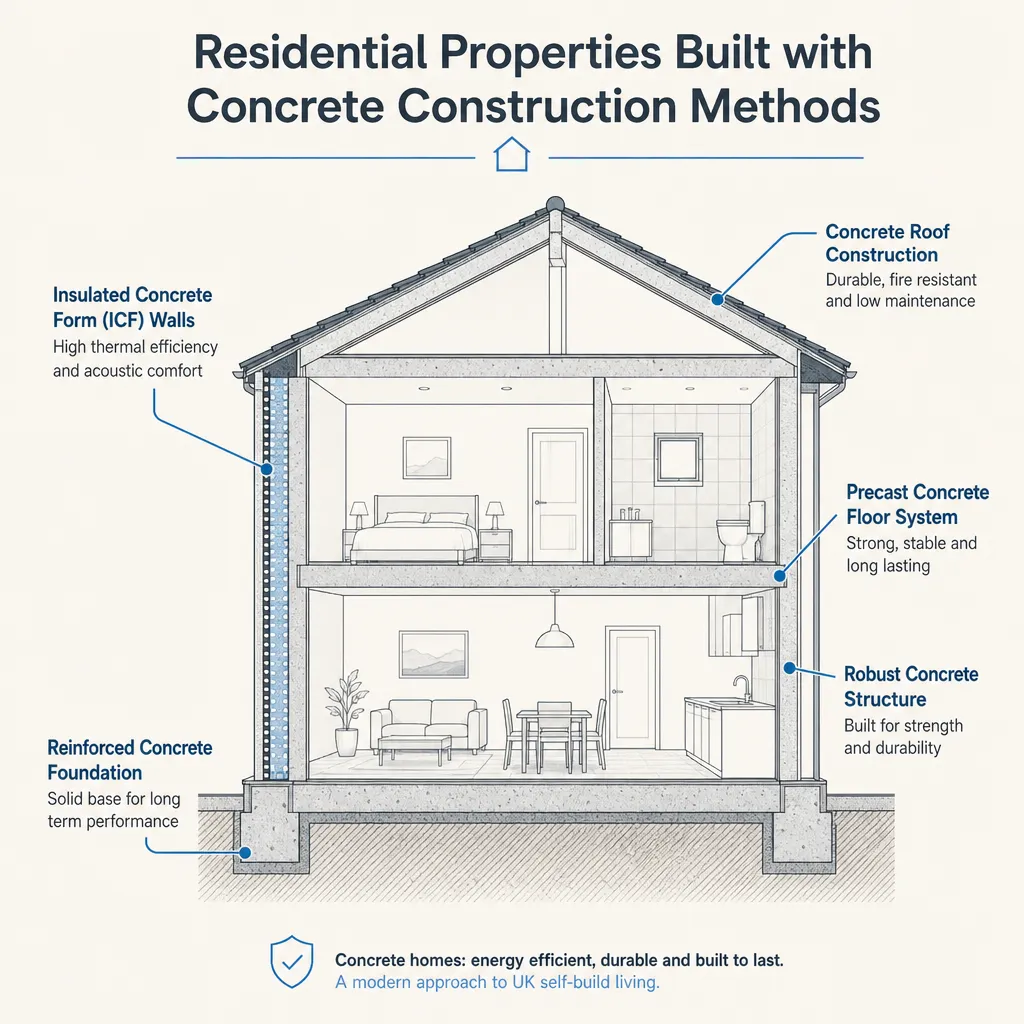
Residential Properties Built with Concrete Construction Methods
UK homes are built using several concrete methods: in-situ cast concrete, precast panel systems, insulating concrete formwork (ICF), and older non-traditional types such as Wimpey No-Fines and Laing Easiform.
 Planning & Pre-Build
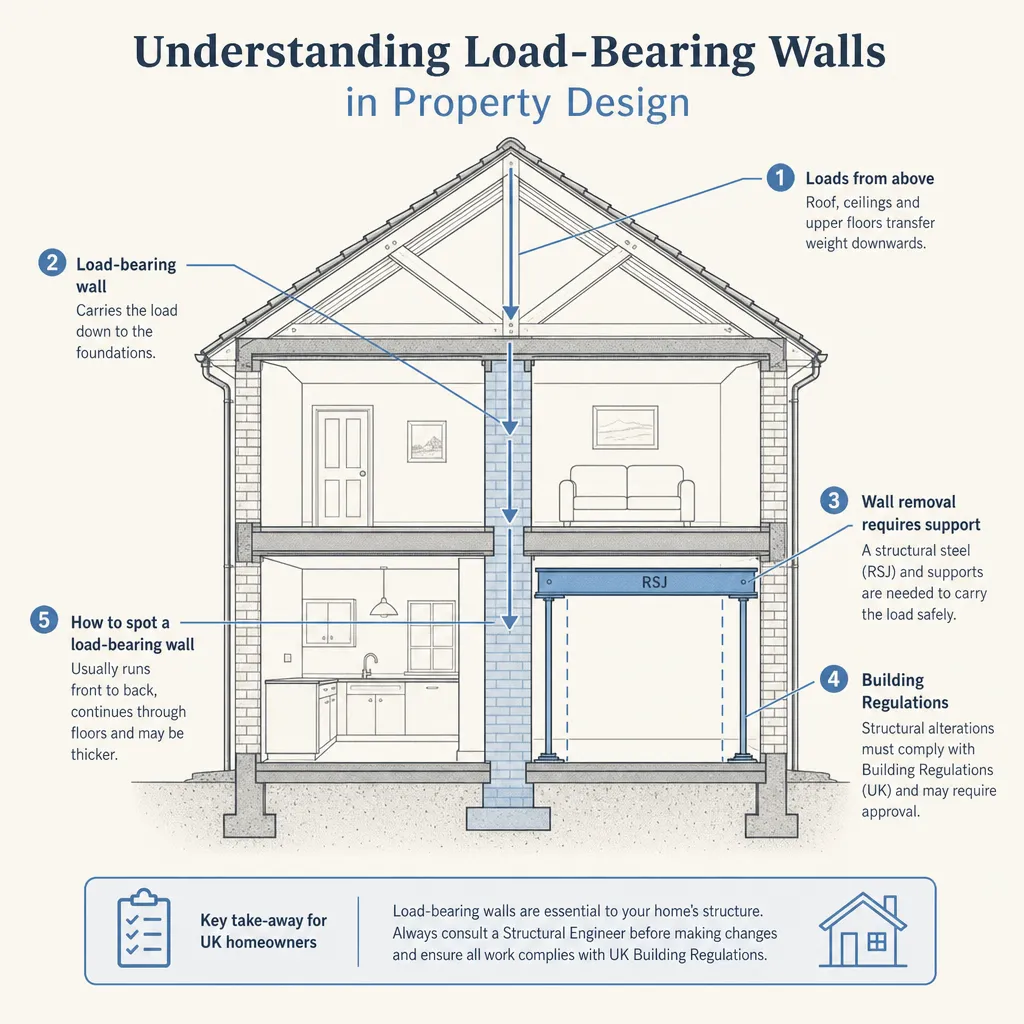
Understanding Load-Bearing Walls in Property Design
A load-bearing wall carries the weight of floors, roofs, or other walls above it down to the foundations.
 Planning & Pre-Build
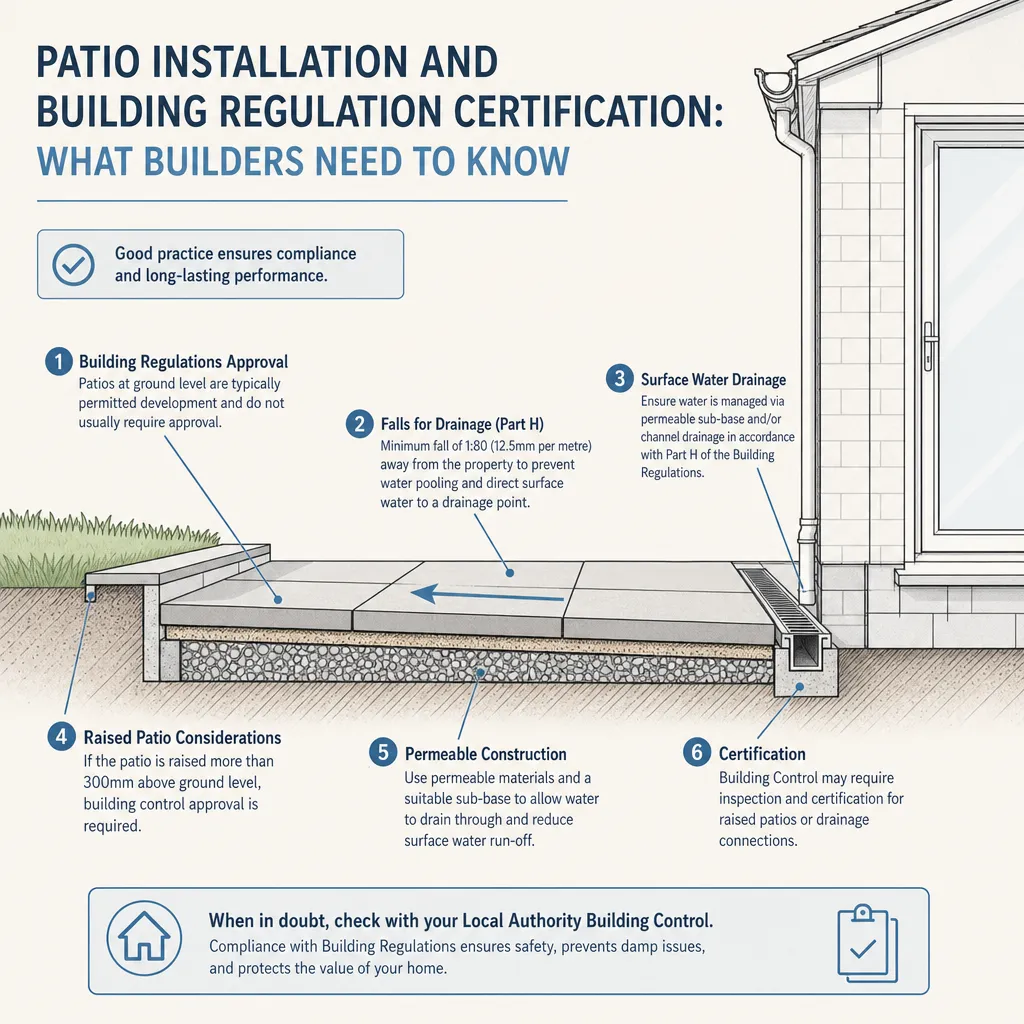
Patio Installation and Building Regulation Certification: What Builders Need to Know
Most ground-level patios in England do not require building regulations approval.
 Planning & Pre-Build
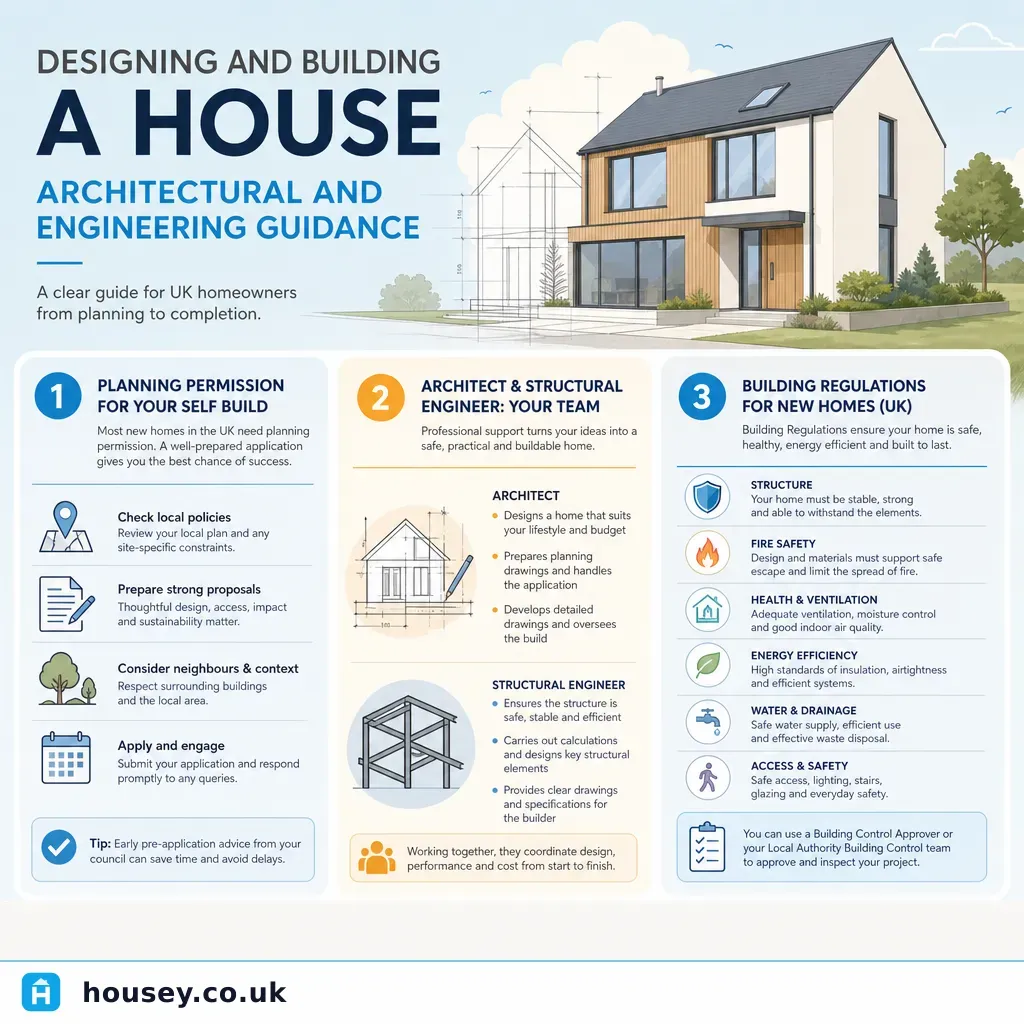
Designing and Building a House: Architectural and Engineering Guidance
Building a new house in the UK requires separate planning permission and Building Regulations approval, a professional team typically including an ARB-registered architect, a structural engineer, and often a civil or geotechnical engineer.