Radiant Barriers for Home Insulation: Effectiveness and Cost Analysis
By Housey · Last reviewed 7th of May 2026
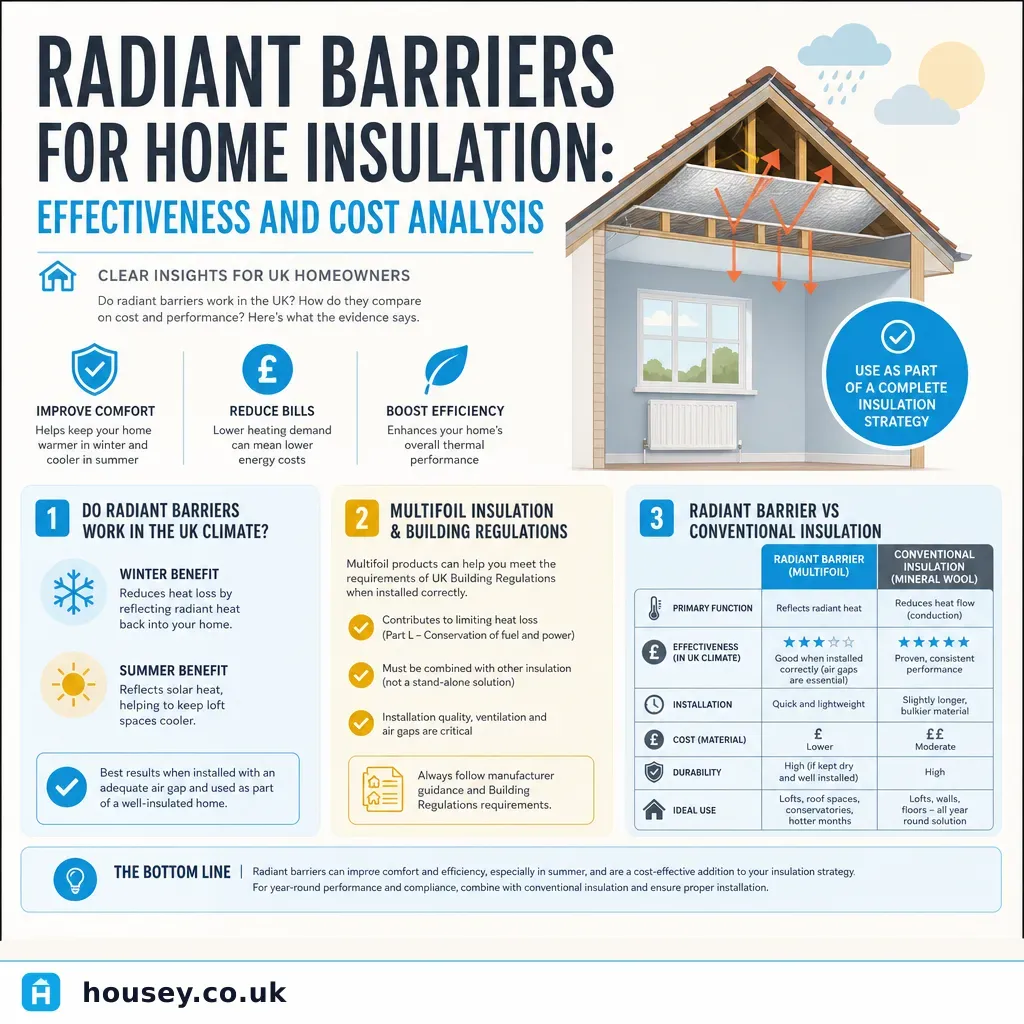
Radiant Barriers for Home Insulation: Effectiveness and Cost Analysis
Radiant barriers and multifoil insulation products have attracted significant marketing attention in the UK over the past two decades, yet their actual performance in British buildings — and their status under Building Regulations — remains widely misunderstood. Whether you are retrofitting a loft, re-roofing a property, or comparing insulation options for a planned extension, understanding what radiant barriers can and cannot do will help you avoid a costly specification error.
Key points
- Radiant barriers reflect infrared radiation rather than resisting conducted or convected heat — they require an adjacent air gap to function and cannot act as standalone insulators in the way conventional materials do.
- In the UK's predominantly overcast, heating-dominated climate, conduction accounts for a greater share of heat loss than radiation, which limits the effectiveness of reflective-only products compared with hotter climates.
- Any multifoil or radiant barrier product used to satisfy Building Regulations Part L (conservation of fuel and power) must hold a valid British Board of Agrément (BBA) Agrément Certificate or equivalent third-party accreditation.
- The Building Research Establishment (BRE) and Local Authority Building Control (LABC) have previously raised concerns about overstated U-value claims for some standalone multifoil products — always request independently tested performance data based on BS EN ISO 6946.
- Radiant barriers perform best as a supplementary layer alongside conventional insulation such as mineral wool or rigid PIR board, not as a complete replacement.
What is a radiant barrier and how does it work?
A radiant barrier is a highly reflective material — most commonly an aluminium foil laminate — designed to reduce heat transfer by reflecting infrared energy. In the UK market, these products are frequently sold as multifoil insulation and may consist of multiple reflective foil layers with wadding or bubble-film spacers between them.
The critical operating principle: a radiant barrier only works when it faces an air gap. Without a clear air cavity on at least one side, there is no radiant heat to reflect, and the product provides negligible thermal benefit beyond its thin material layers. This is frequently overlooked when products are installed directly against timber or plasterboard without maintaining a proper cavity.
Radiant barriers are typically installed in loft spaces, under pitched roofs between or below rafters, and occasionally within wall construction. In principle, a warm roof structure radiates heat downward toward the ceiling below; a radiant barrier on the underside of the roof slope can reflect some of this energy back. The effectiveness of this mechanism depends heavily on the temperature differential and the quality of the adjacent air gap.
Radiant barriers in the UK climate: what the evidence says
In climates where strong solar gain is common year-round — the southern United States, Australia, and southern Europe — radiant barriers are well-supported by performance data. The US Department of Energy notes they can reduce cooling costs by 5–10% in hot climates. However, the UK heating season is long, solar irradiance is substantially lower, and skies are frequently overcast for extended periods.
In a UK home, most heat loss occurs through conduction — through solid walls, roof structures, floors, and windows. Radiant heat transfer through a loft void is a real but comparatively smaller contributor to overall heat loss in this climate. Conventional insulation with high thermal resistance (a low U-value) will generally deliver more cost-effective performance for UK homes than a product relying primarily on reflective properties.
BRE has examined multifoil insulation performance and found that U-values claimed by some manufacturers under idealised laboratory conditions may not reflect real-world UK performance. When tested under BS EN ISO 6946 — the standard used for Building Regulations compliance calculations — results can differ substantially from headline manufacturer claims. This does not mean foil products have no place in UK construction; it means they should be specified with independently verified performance data, not marketing literature alone.
Multifoil insulation and Building Regulations compliance
Building Regulations Part L (England and Wales) sets minimum energy performance standards for new builds and many renovation projects, including loft conversions, extensions, and material changes of use. Insulation used to demonstrate compliance must meet tested U-value requirements under recognised assessment methods.
For a radiant barrier or multifoil product to be accepted for Part L purposes, it should hold:
- A BBA Agrément Certificate (British Board of Agrément) that includes U-value data obtained under recognised test standards and covers the specific application proposed.
- Or an equivalent accreditation such as a European Technical Assessment (ETA), where applicable.
Without this documentation, a building control body is unlikely to accept the product's U-value claims. Homeowners who install unaccredited multifoil products in place of conventional insulation may find that a completion certificate is withheld, which can cause difficulties at resale. You can search for and verify BBA certificate numbers on the BBA website.
If you plan to use a radiant barrier or multifoil product for building regulations work, request the BBA Certificate number before installation, confirm it covers your specific application, and discuss acceptance with your building control body before committing to the specification.
Radiant barriers vs conventional insulation: a comparison
Insulation type | How it reduces heat loss | Requires air gap? | Part L compliance | Main limitation in UK context |
|---|---|---|---|---|
Mineral wool (glass wool, rockwool) | Conductive resistance | No | Well-established | Needs adequate depth; can compress over time |
Rigid PIR/PUR board | Conductive resistance | No | Well-established | Cost; thermal bridging at joints if not lapped |
EPS / XPS board | Conductive resistance | No | Well-established | Lower lambda value than PIR |
Radiant barrier / multifoil (standalone) | Radiant reflection only | Yes — essential | Only with BBA or ETA accreditation | Limited benefit in UK climate; U-value claims disputed |
Foil + conventional hybrid specification | Both mechanisms | Partial | Yes, with accredited specification | Requires careful detailing to maintain air gap |
Which insulation approach should you choose?
- Choose conventional insulation (mineral wool or rigid PIR board) if your primary goal is straightforward Building Regulations Part L compliance with well-understood, independently tested performance data.
- Consider a radiant barrier as a supplementary layer if you are insulating a pitched roof and want to address summer overheating alongside winter heat loss — use it in conjunction with a conventional insulation layer, not instead of one.
- Ask your installer for the BBA Certificate number before accepting any foil or multifoil product as the primary or sole insulation layer, and verify it online before installation begins.
- Commission an insulation assessment if you are unsure what specification is appropriate for your property type, roof construction, age, or budget — a professional can advise on independently tested options.
- Consult a PAS 2035-certified retrofit assessor if you are upgrading the thermal envelope of an older property — they can recommend compliant specifications that also manage moisture and ventilation risk.
Indicative costs
Indicative UK costs, last reviewed 2026-05-07. Actual costs vary by property, specification, contractor, and region. Always obtain at least three quotes.
Multifoil and foil-backed insulation products vary in price depending on brand, thickness, and specification:
- Foil or multifoil product (materials only): approximately £3–£8 per m², based on manufacturer price lists for commonly available products.
- Installed cost for pitched roof hybrid specification (foil layer plus conventional insulation): roughly £600–£2,000+ for a typical two-bedroom semi-detached, depending on rafter depth, access difficulty, total area, and whether existing insulation requires removal.
- Conventional mineral wool loft insulation, for comparison: often £300–£800 installed for a similar property, and may qualify for government funding through ECO4 or the Great British Insulation Scheme (GBIS) if eligible.
Check GOV.UK for current ECO4 and GBIS eligibility criteria, as eligible measures and household thresholds are subject to periodic review.
Red flags to watch for
These warning signs suggest a radiant barrier proposal deserves closer scrutiny:
- U-value claims not backed by a BBA Agrément Certificate or test data from BS EN ISO 6946.
- Marketing material suggesting a thin multifoil product is equivalent to 100 mm or more of conventional insulation without referencing independent test evidence.
- An installer unable or unwilling to provide a BBA certificate number and building control reference for the specification.
- A proposal to use a reflective product as the sole insulation layer where Building Regulations compliance is required, with no mention of a conventional insulation component.
- No detail in the installation method about maintaining the required air gap on at least one face of the reflective layer.
- Pressure to decide quickly, or assertions that the product "always passes building control" without supporting documentation.
When to get professional help
If you are insulating a property where Building Regulations compliance is required — including loft conversions, extensions, or re-roofing projects — discuss your specification with a building control body or approved inspector before purchasing materials. A qualified professional can confirm whether a proposed radiant barrier product meets Part L requirements for your specific project.
A PAS 2035-certified retrofit assessor can also help you choose insulation that performs as claimed and does not introduce unintended moisture or ventilation risks — particularly relevant in older properties with solid walls, limited eaves ventilation, or existing damp issues.
If a contractor proposes a radiant barrier as your sole insulation solution and cannot provide a current BBA certificate, obtain a second professional opinion before proceeding.
How Housey can help
Housey connects UK homeowners with qualified professionals who can assess your property and recommend appropriate, independently verified insulation solutions. Request quotes from accredited insulation assessment specialists who can advise on compliant specifications, or speak to a retrofit assessor who can guide you through PAS 2035-aligned insulation choices and Building Regulations requirements for your home.
Frequently asked questions
Are radiant barriers effective in the UK?
Radiant barriers can play a useful supplementary role in UK loft and roof insulation, but they are generally less effective as standalone products than in hotter climates. The UK's predominantly overcast, heating-dominated climate means most heat loss occurs through conduction, which reflective barriers do not address. For best results, combine a reflective layer with conventional insulation and ensure the product holds a BBA Agrément Certificate.
Do I need Building Regulations approval to install insulation?
Adding insulation to an existing loft without structural changes is often exempt from Building Regulations. However, if insulation is part of a loft conversion, re-roofing, or extension, Building Regulations Part L applies. Check with your local building control body before starting work. GOV.UK provides guidance on when building regulations apply to home improvement projects.
Can multifoil insulation replace mineral wool?
Some BBA-accredited multifoil products are accepted by building control bodies as part of a compliant specification. However, using a thin foil product as a complete replacement for conventional insulation — and claiming equivalent U-values — is contested by BRE and some building control bodies. Always verify product claims against the BBA certificate and confirm suitability with your building control body before substituting materials.
What is the Great British Insulation Scheme?
The Great British Insulation Scheme (GBIS) provides free or subsidised insulation for eligible households in England, with equivalent schemes in Scotland, Wales, and Northern Ireland. Typical funded measures include loft and solid wall insulation. Radiant barrier products are not generally listed as eligible measures. Check GOV.UK for current eligibility criteria and funded measure types.
Sources and further reading
- Building Regulations Approved Document L: Conservation of fuel and power — GOV.UK
- BBA Agrément Certificates — British Board of Agrément
- Roof and loft insulation guidance — Energy Saving Trust
- Great British Insulation Scheme — GOV.UK
- Energy Company Obligation (ECO4) — GOV.UK
Useful next reads
 Energy & Retrofit
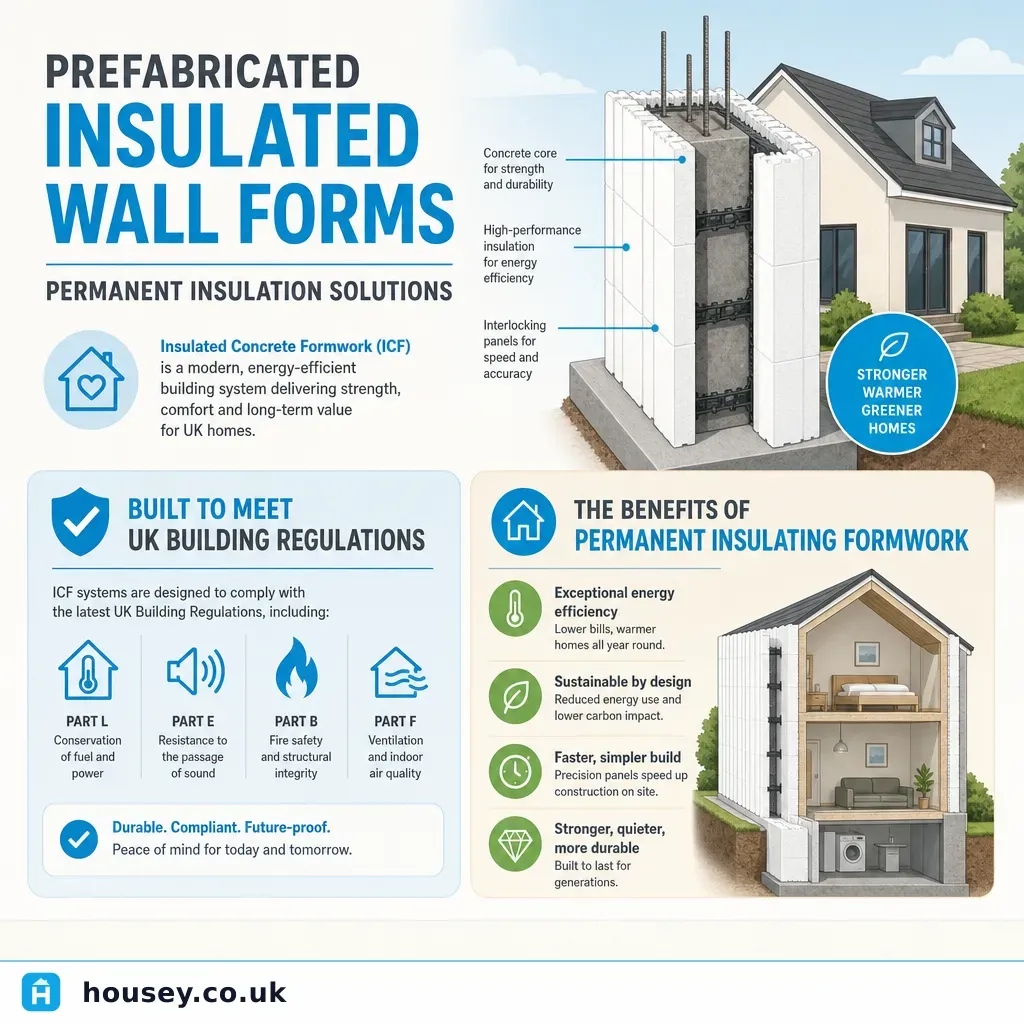
Prefabricated Insulated Wall Forms: Permanent Insulation Solutions
Prefabricated insulated wall forms — including ICF and SIPs systems — deliver high thermal performance by combining permanent insulation with structural concrete or timber in a single wall assembly.
 Energy & Retrofit
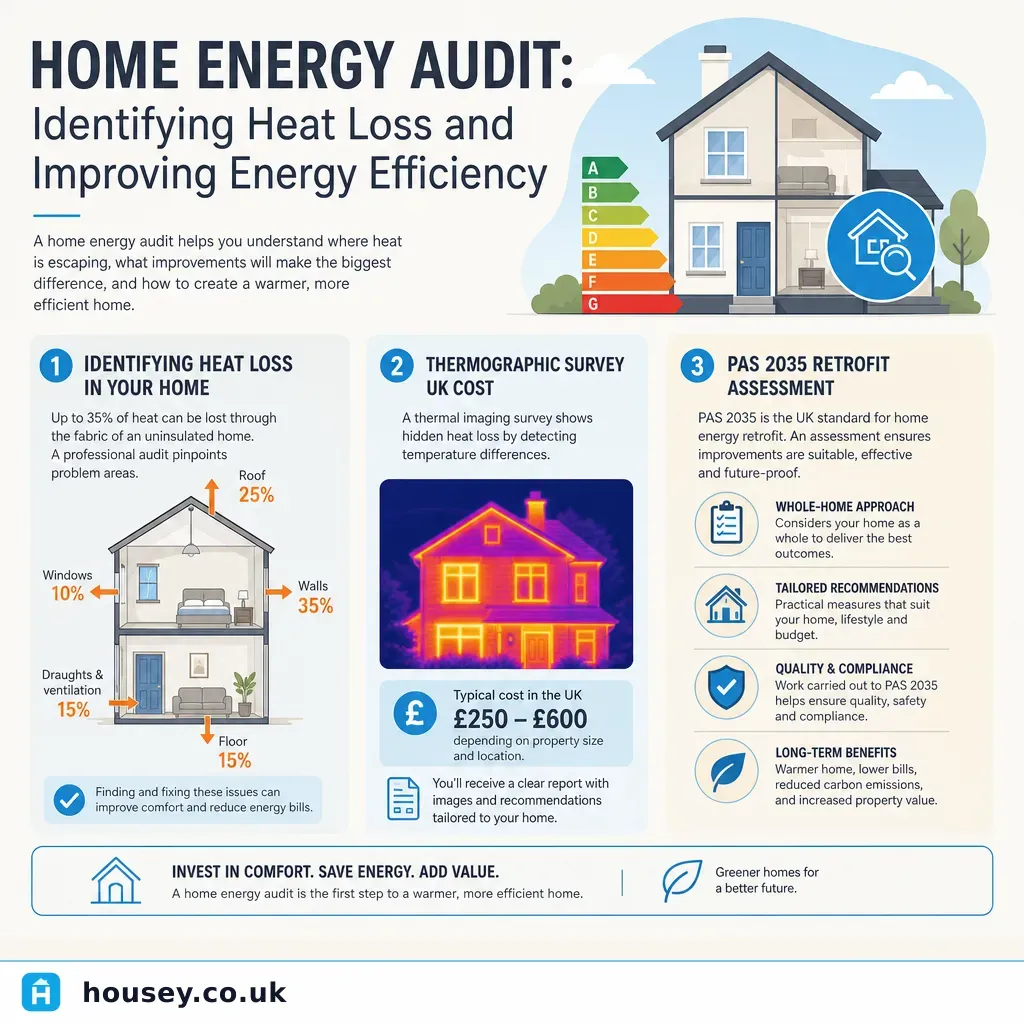
Home Energy Audit: Identifying Heat Loss and Improving Energy Efficiency
A home energy audit is a structured assessment of where your property loses heat and how efficiently it uses energy.
 Energy & Retrofit
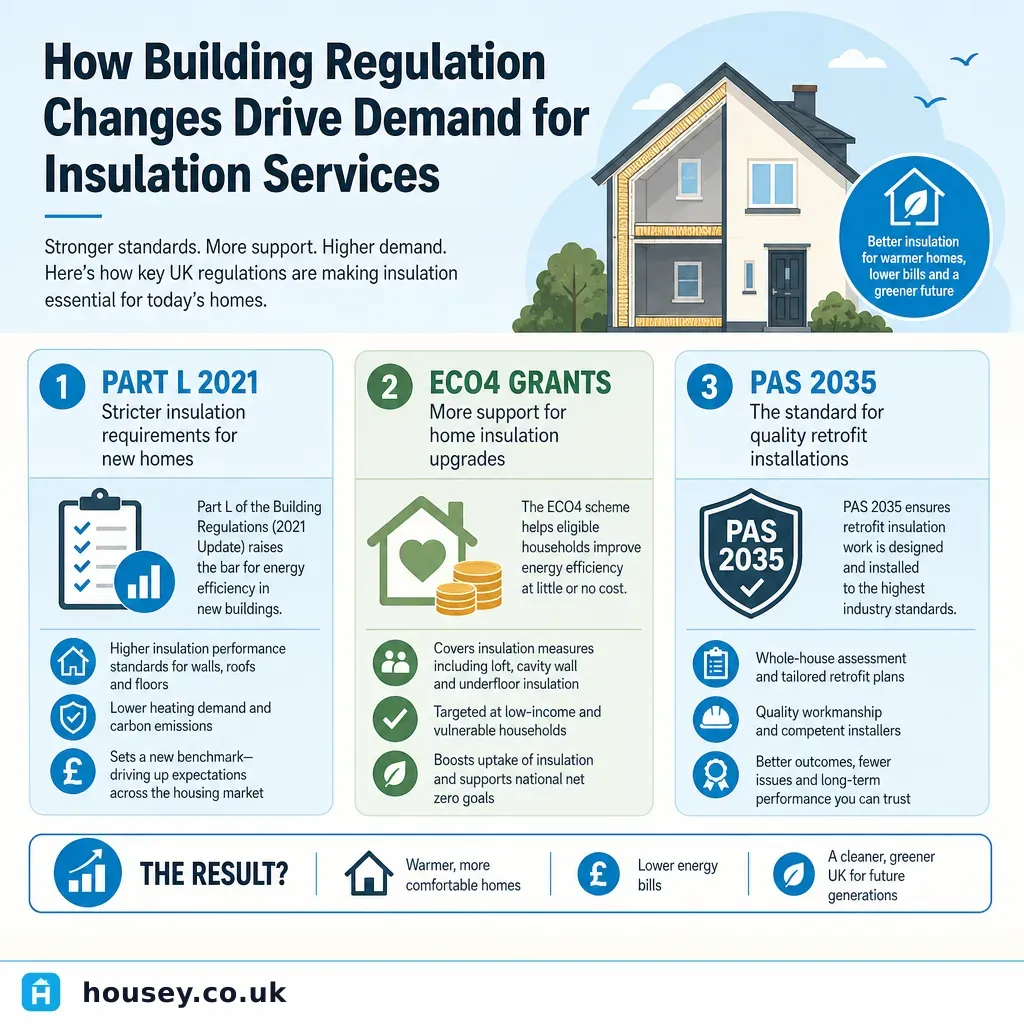
How Building Regulation Changes Drive Demand for Insulation Services
Building regulation changes — including 2021 updates to Approved Document L, ECO4 funding obligations, and proposed MEES tightening — are creating sustained demand for insulation services across the UK.
 Energy & Retrofit
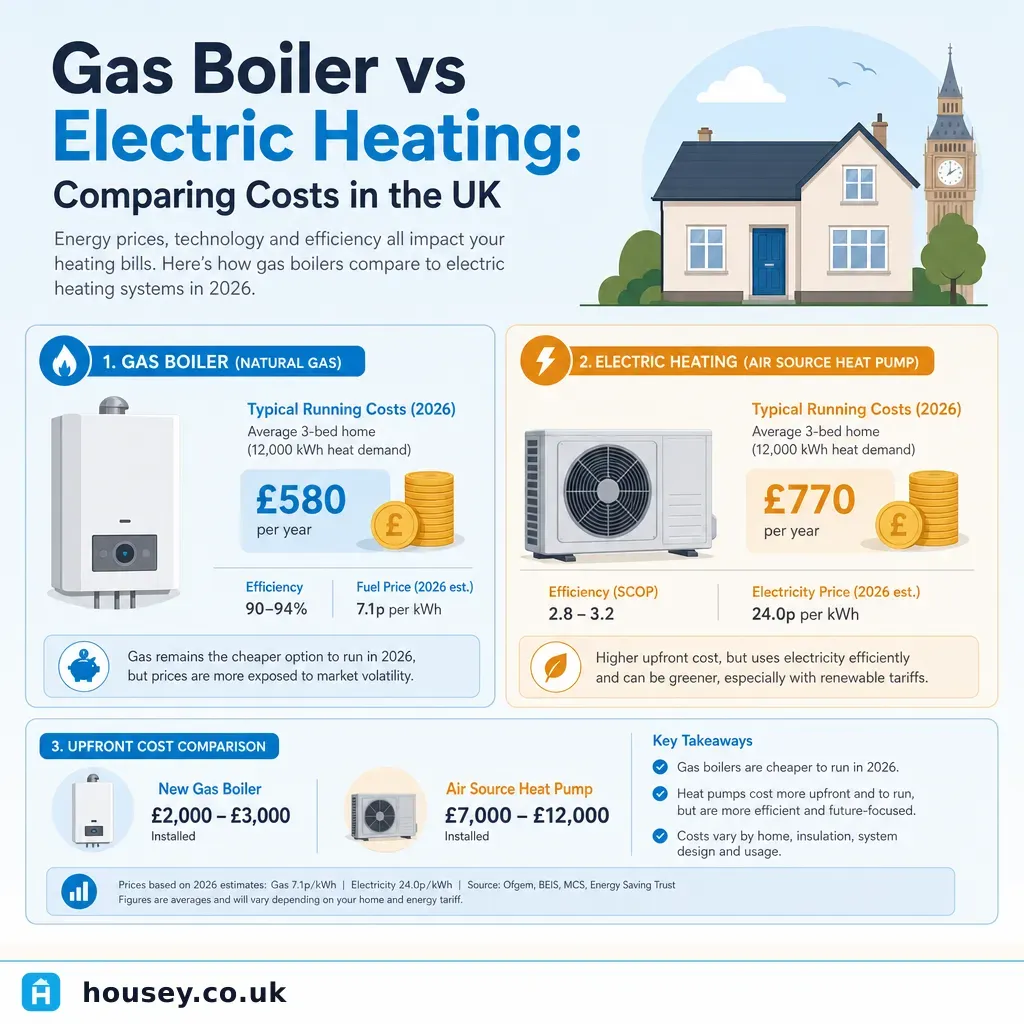
Gas Boiler vs Electric Heating: Comparing Costs in the UK
Gas boilers currently cost around 6.
 Energy & Retrofit
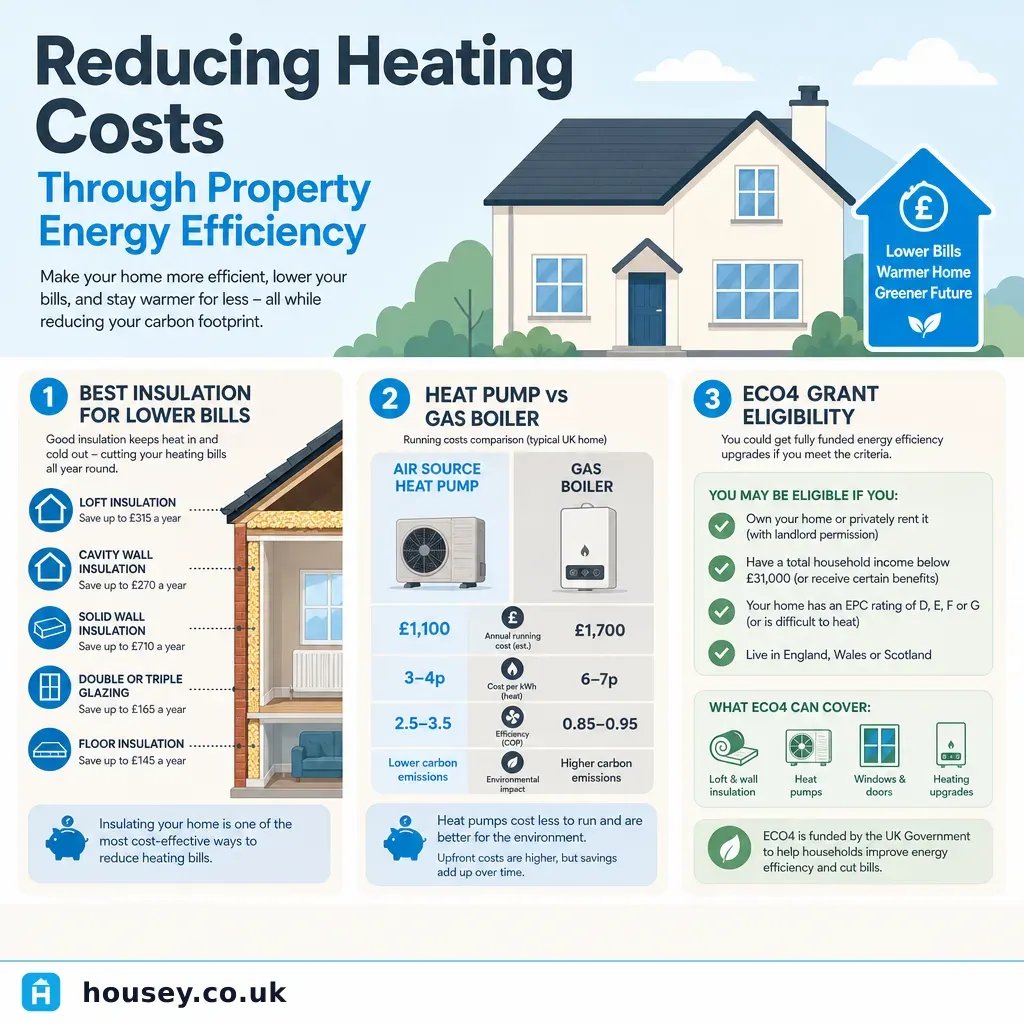
Reducing Heating Costs Through Property Energy Efficiency
Reducing heating costs starts with identifying where heat is lost — typically walls (30–35%), roof (20–25%), and windows.