Rapid House Construction: Mobile Forms and Fast-Build Methods
By Housey · Last reviewed 24th of May 2026
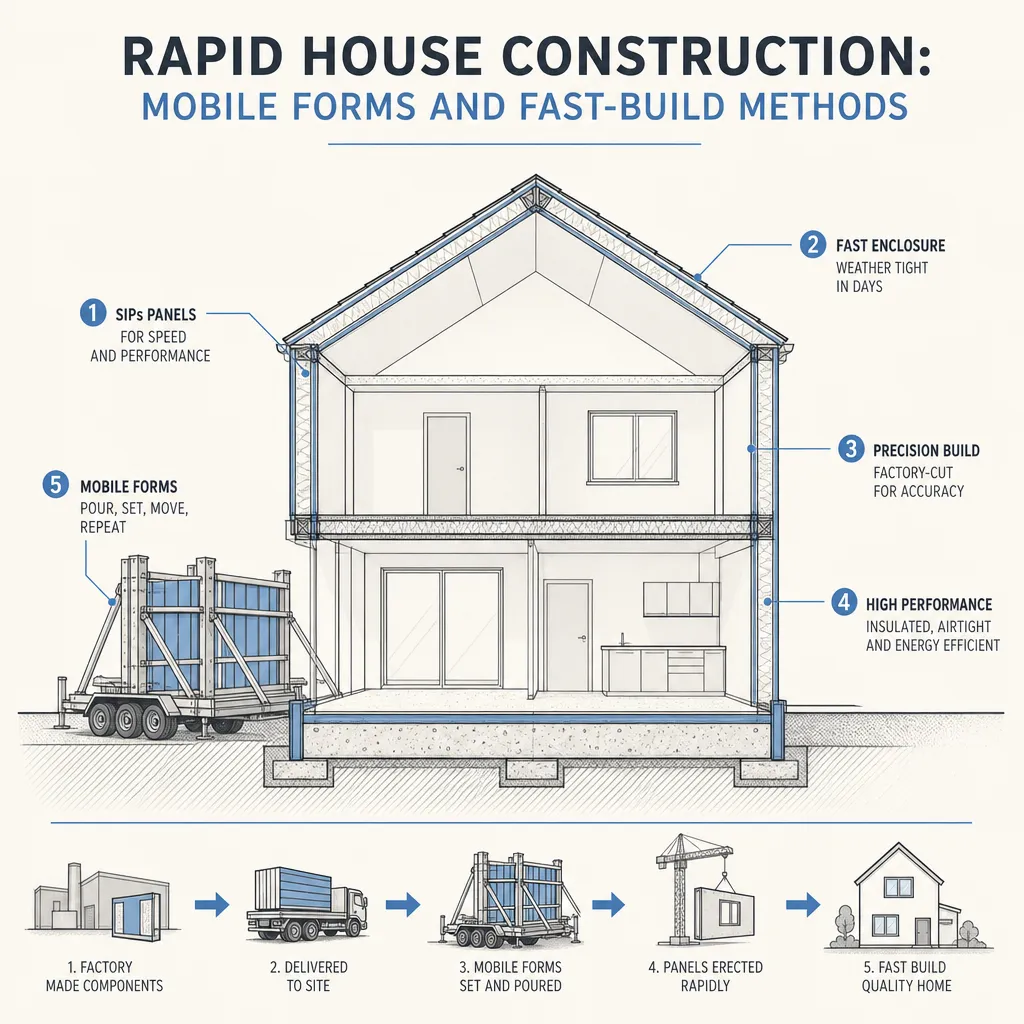
Rapid House Construction: Mobile Forms and Fast-Build Methods
Planning a new home or major construction project in the UK involves choices that go well beyond bricks and mortar: which structural system will achieve a weathertight shell fastest, how it interacts with Building Regulations, and whether your lender and insurer will accept it. Modern Methods of Construction (MMC) have expanded significantly over the past decade, giving self-builders and developers a broader range of routes to a completed structure — each with different timelines, costs, warranty implications, and trade requirements. Understanding these options before committing to a plot or contractor can save months and significant expense.
Key points
- Modern Methods of Construction (MMC) are formally recognised by Homes England and accepted by a growing number of UK mortgage lenders, though individual lender acceptance varies by system and structural warranty provider.
- Structural Insulated Panels (SIPs) can achieve a weathertight shell in as little as three to five days on site once foundations are complete — compared with 16–24 weeks for traditional brick-and-block masonry.
- Timber frame is the dominant MMC in UK self-build, accounting for an estimated 70% or more of new-build homes in Scotland and a growing share in England and Wales.
- All fast-build systems must comply with Building Regulations (Approved Documents A through S in England); offsite-manufactured and novel systems typically require a third-party technical certificate such as a British Board of Agrément (BBA) Certificate or KIWA assessment.
- Mobile (travelling) formwork is a concrete-forming technique suited to repetitive structures — volume housing schemes, terraced developments, and apartment blocks — rather than individual bespoke houses.
What counts as rapid construction?
Rapid or fast-build construction describes any method that compresses the time between groundworks completion and a weathertight, structurally complete shell. Traditional brick-and-block cavity wall construction typically takes 16–24 weeks or more to reach weathertight stage on a standard house. Fast-build methods aim to cut that to between one and eight weeks, depending on the system and site conditions.
In UK housing policy, these approaches are grouped under Modern Methods of Construction (MMC), defined and categorised by Homes England's MMC framework. The framework identifies seven categories, from fully volumetric (factory-built room modules delivered to site by crane) through to site-based process improvements. Categories 1 and 2 — volumetric modular and panellised systems — offer the greatest reduction in on-site construction time.
Key distinctions:
- Offsite manufacture (OSM): structural elements built in a controlled factory environment and assembled on site — timber frames, SIPs panels, volumetric modules.
- In-situ rapid systems: concrete formed on site using mobile or permanent formwork, tunnel form, or insulating concrete formwork (ICF).
- Hybrid: a steel or timber primary frame with offsite-manufactured wall and floor cassettes infilling between the structural members.
Fast-build systems compared
System | Typical shell timescale | Best for | Key limitation | Mortgage lender acceptance |
|---|---|---|---|---|
Timber frame (panel) | 2–4 weeks | Bespoke self-build, wide contractor pool | Moisture management during construction | High — NHBC Buildmark or Premier Guarantee widely accepted |
SIPs (Structural Insulated Panels) | 3–7 days on site | High insulation performance, tight programme | Requires precise groundworks; specialist joiners needed | Generally accepted with appropriate structural warranty |
Insulating Concrete Formwork (ICF) | 3–6 weeks | Thermal mass, complex shapes, sound reduction | Heavier; specialist trades less widely available | Growing acceptance — confirm with your specific lender |
Volumetric modular | 1–3 days crane-in | Multiple identical units, speed of site assembly | High factory cost; limited bespoke architectural options | Variable — requires specialist structural warranty |
Mobile / tunnel formwork | Programme-dependent | 20+ repetitive units, apartment blocks | Not suited to individual houses; high form-set cost | Assessed on engineering merits, case-by-case |
Traditional masonry (benchmark) | 16–24+ weeks | Universal lender acceptance, broad local trades | Slowest to weathertight; weather-dependent | Universal |
Indicative timescales only. Always confirm programme with your structural engineer and principal contractor.
What is mobile formwork and when is it used?
Mobile formwork — sometimes called travelling formwork or tunnel form — is a reusable steel or aluminium system for casting concrete walls and slabs in repeated cycles. Rather than building new timber shuttering for each pour, the same form is moved (tracked, craned, or wheeled) to the next position once the concrete has achieved sufficient strength.
The most relevant variant in housing is tunnel form: a combined wall-and-floor form that creates an entire room cross-section in a single pour. A set of tunnel forms can be reused hundreds of times, making the system economical where the same structural bay repeats across many units. The resulting concrete structure is robust, provides good sound separation between dwellings, and can achieve very low air permeability — useful for meeting the fabric energy standards in Part L.
For individual self-builds or one-off houses, mobile formwork is rarely economic. The capital cost of the form set cannot be spread across sufficient pours to compete with panellised or frame-based systems. Volume house builders constructing 20 or more identical units, housing associations, and apartment block developers are the typical users of mobile concrete forming systems in the UK.
Building Regulations and MMC — what changes?
All construction in England must comply with Building Regulations. Fast-build systems do not operate under a separate regulatory regime, but they interact with the Approved Documents in specific ways:
- Part A (Structure): the structural engineer must demonstrate that the chosen system meets load-bearing requirements. Non-standard or novel systems typically require independent third-party assessment — a BBA Certificate, KIWA certification, or equivalent — before building control will approve them.
- Part L (Conservation of fuel and power): the 2021 edition of Part L for new dwellings tightened fabric standards and introduced an operational energy rate. Offsite manufacture can help achieve the high airtightness levels now required, but a commissioning air permeability test remains mandatory.
- Part B (Fire safety): volumetric and panel systems must demonstrate appropriate fire resistance, particularly for multi-storey buildings within the scope of the Building Safety Act 2022 and its higher-risk building regime.
- Building control: you must notify your local authority building control body or a Registered Building Inspector (under the Building Safety Act 2022) before work starts. Many MMC providers offer structural warranties — NHBC Buildmark, Premier Guarantee, Build-Zone — that satisfy lender requirements, but always confirm the specific warranty is acceptable to your lender before proceeding.
Which method should you choose?
Use this decision tree to narrow your options:
- Choose timber frame if you want the largest pool of UK contractors, a wide range of architectural finishes, and the broadest lender acceptance.
- Choose SIPs if fabric energy performance is a priority, your programme is tight, and your groundworks contractor can hold close dimensional tolerances.
- Choose ICF if you want concrete thermal mass, are comfortable sourcing specialist labour, and your design involves curved walls or complex geometry.
- Choose volumetric modular if you are developing multiple identical units and the speed of site assembly justifies the higher factory cost.
- Consider mobile or tunnel formwork if you are a developer building 20 or more repetitive units and have a structural engineer experienced in in-situ concrete forming.
- Ask a structural engineer or design-and-build firm if your plot has difficult access, unusual ground conditions, contamination, or an unusual brief that does not fit a standard system catalogue.
- Check with your lender and insurer before finalising any MMC system — some products still face limited acceptance, particularly from high-street lenders without a specialist MMC team.
Timescales and cost factors
Programme length and overall cost depend on considerably more than the structural system. Key variables include:
- Groundworks and foundations: often the longest single phase regardless of superstructure system, particularly on made ground, high water table, or sloping plots.
- Design and engineering lead time: offsite panel and modular systems require full design to be frozen before manufacture begins — late design changes can be expensive.
- Factory lead time: SIPs panels and modular units typically require 8–16 weeks from order to site delivery.
- Follow-on trades: a fast structural shell still requires mechanical, electrical, and plumbing installation, plastering, and internal fit-out — these phases are broadly similar regardless of superstructure system.
Indicative UK costs, last reviewed 2026-05-24. Structural shell costs for fast-build systems in England generally range from approximately £800 to £2,000+ per m² of gross internal area, depending on system, specification, complexity, and region. Foundation costs, services connections, and internal fit-out are additional. Always obtain at least three itemised quotes from contractors experienced with your chosen system.
When to get professional help
Rapid construction is not a self-managed process for most homeowners. Involve a structural engineer, architect, or design-and-build specialist from the outset if:
- Your plot has made ground, a high water table, proximity to trees, or is adjacent to existing structures.
- You are proposing a system your local building control body or chosen Registered Building Inspector has not previously approved.
- Your mortgage lender has specific structural warranty requirements that need to be satisfied before offer.
- Your design involves unusual spans, cantilevers, or more than two storeys.
- You plan to sell or remortgage within ten years — structural warranty continuity and transferability will be scrutinised.
How Housey can help
Housey connects homeowners and self-builders with experienced design-and-build firms who can advise on system selection, planning, engineering co-ordination, and full programme management. For larger or more complex projects, a dedicated project manager can co-ordinate structural engineers, building control, and specialist subcontractors from groundworks through to practical completion.
Frequently asked questions
Does a fast-build home need planning permission?
Yes. The choice of structural system does not change your planning obligations. You still need planning consent — unless permitted development applies — and must notify building control before work starts, regardless of whether you are building in masonry, timber frame, or any other system. The Approved Inspector or local authority building control body must be notified before construction begins.
Will my mortgage lender accept a non-traditional construction method?
Most major UK lenders accept timber frame and SIPs homes backed by a recognised structural warranty such as NHBC Buildmark or Premier Guarantee. Acceptance of volumetric modular, ICF, and tunnel-form concrete varies by lender. Always confirm acceptance in writing before exchanging contracts or committing to a system, as changing method later is costly.
How long does a full self-build take from planning to move-in using MMC?
A typical self-build using timber frame or SIPs takes 18–30 months from land purchase to completion. The structural shell usually takes 2–8 weeks on site, but the longer phases are design, planning consent, groundworks, and internal fit-out. Factory lead times for panellised systems are typically 8–16 weeks from order to site delivery.
Is mobile formwork suitable for a one-off self-build house?
Rarely. The economics of mobile or tunnel formwork depend on reusing the same form set across many identical pours. For a single bespoke house, the capital cost of the form set cannot be spread sufficiently to compete with timber frame or SIPs. Volume developers building 20 or more repetitive units are the typical users of mobile concrete forming systems.
Sources and further reading
- Modern Methods of Construction — Homes England / GOV.UK
- NHBC Technical Standards for MMC — NHBC
- Building Regulations Approved Documents — GOV.UK
- Building Safety Act 2022 overview — GOV.UK
Useful next reads
 Improvement & Build
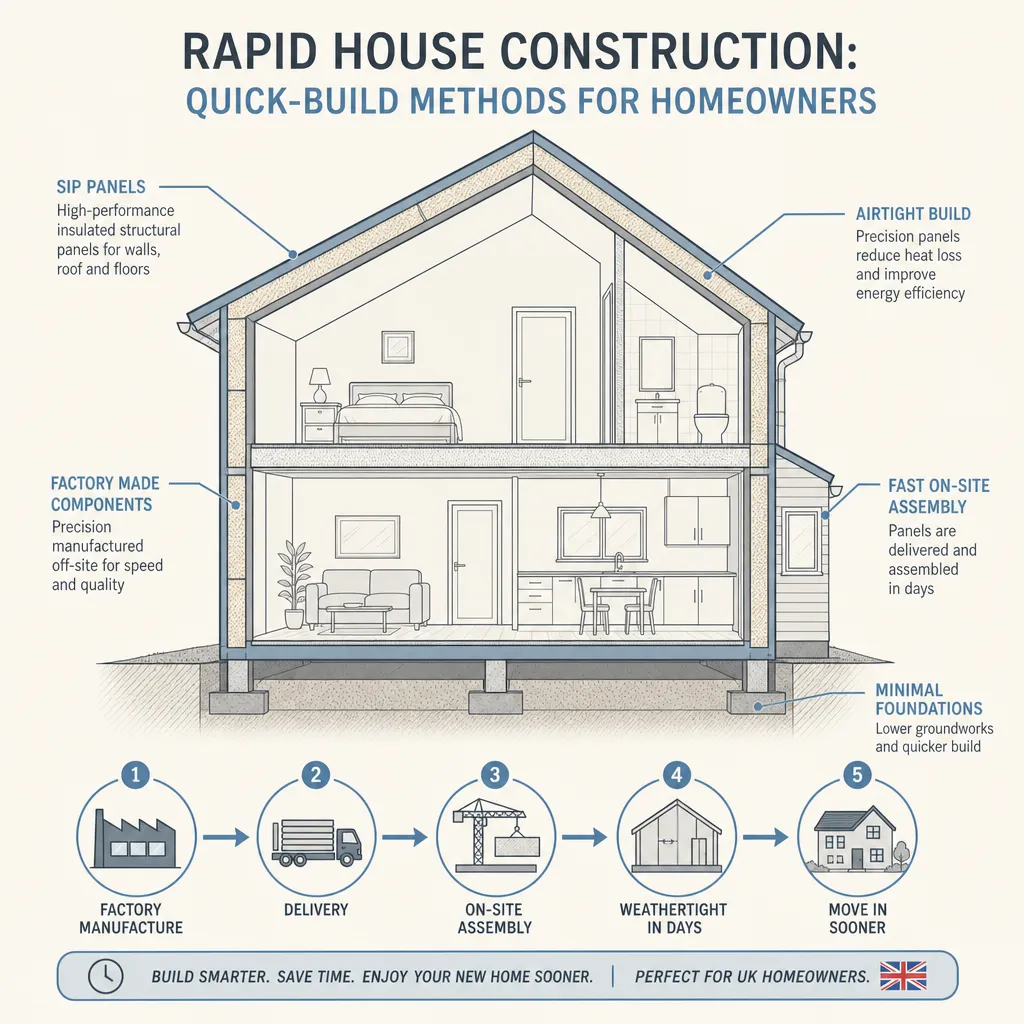
Rapid House Construction: Quick-Build Methods for Homeowners
Rapid house construction in the UK typically uses Modern Methods of Construction such as timber frame, structural insulated panels (SIPs), or volumetric modular systems.
 Improvement & Build
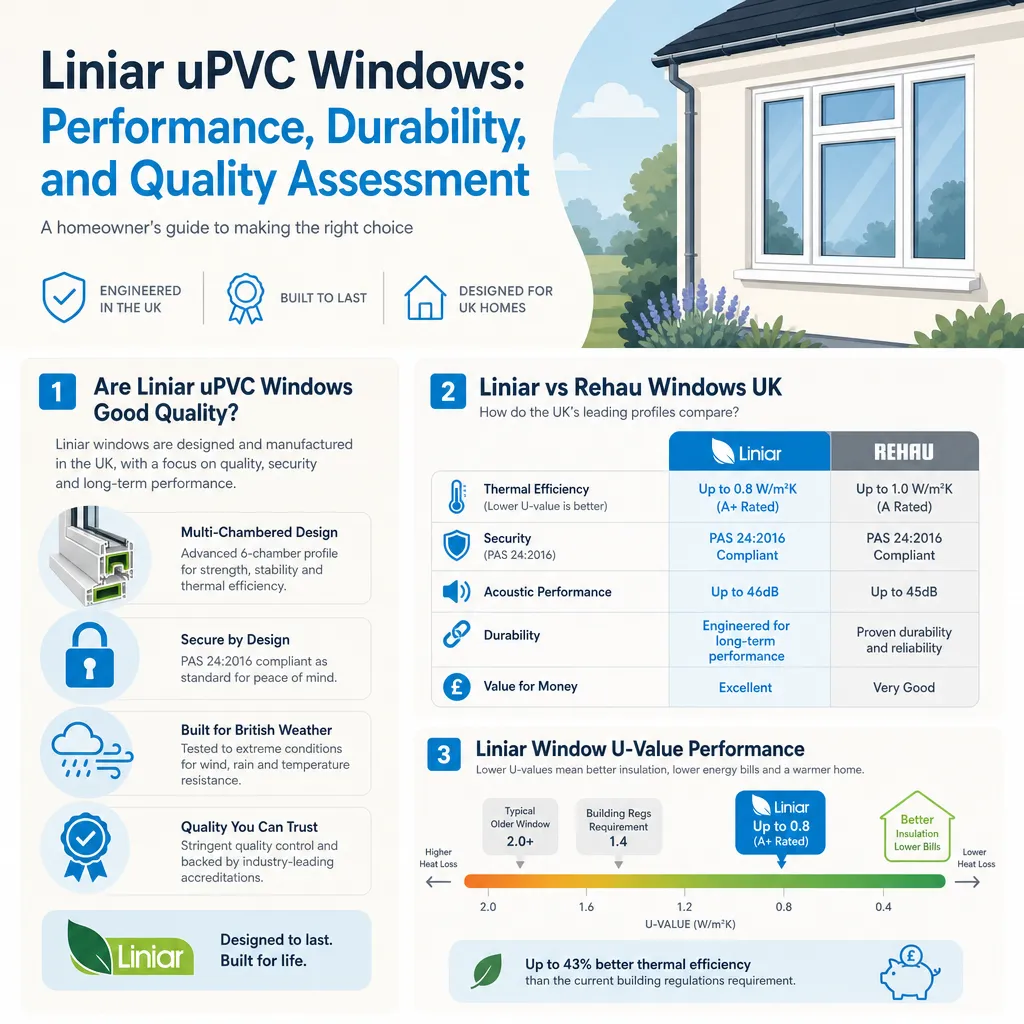
Liniar uPVC Windows: Performance, Durability, and Quality Assessment
Liniar uPVC window profiles are manufactured in the UK using multi-chambered, foamed frames.
 Improvement & Build
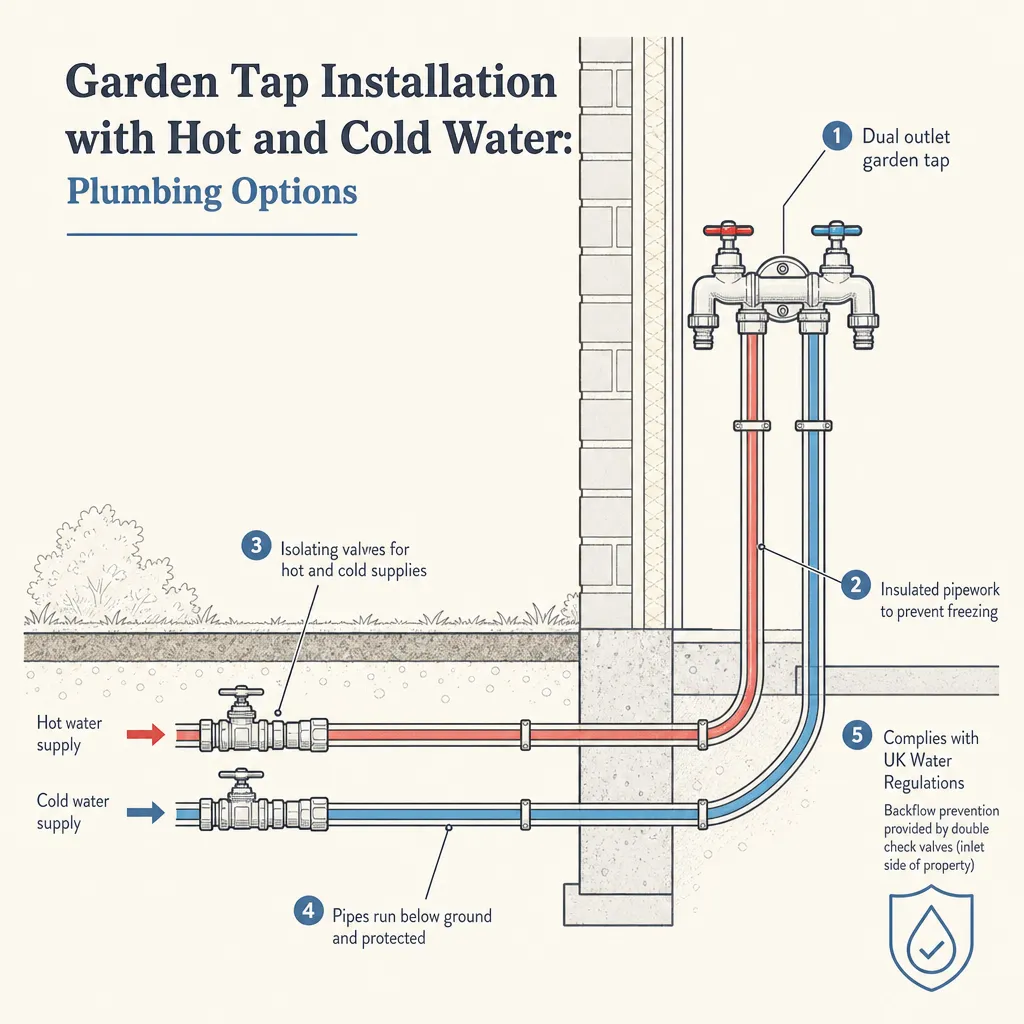
Garden Tap Installation with Hot and Cold Water: Plumbing Options
Adding a cold garden tap is a common DIY project, but routing hot water outdoors requires a plumber to connect to your domestic hot water system and comply with the Water Supply (Water Fittings) Regulations 1999.
 Improvement & Build
Sealing and Maintaining Historic Leaded Glass Windows: Preservation and Performance
Leaded glass windows are maintained using traditional linseed oil cement — not silicone or modern sealants, which prevent natural movement in the lead came.
 Improvement & Build
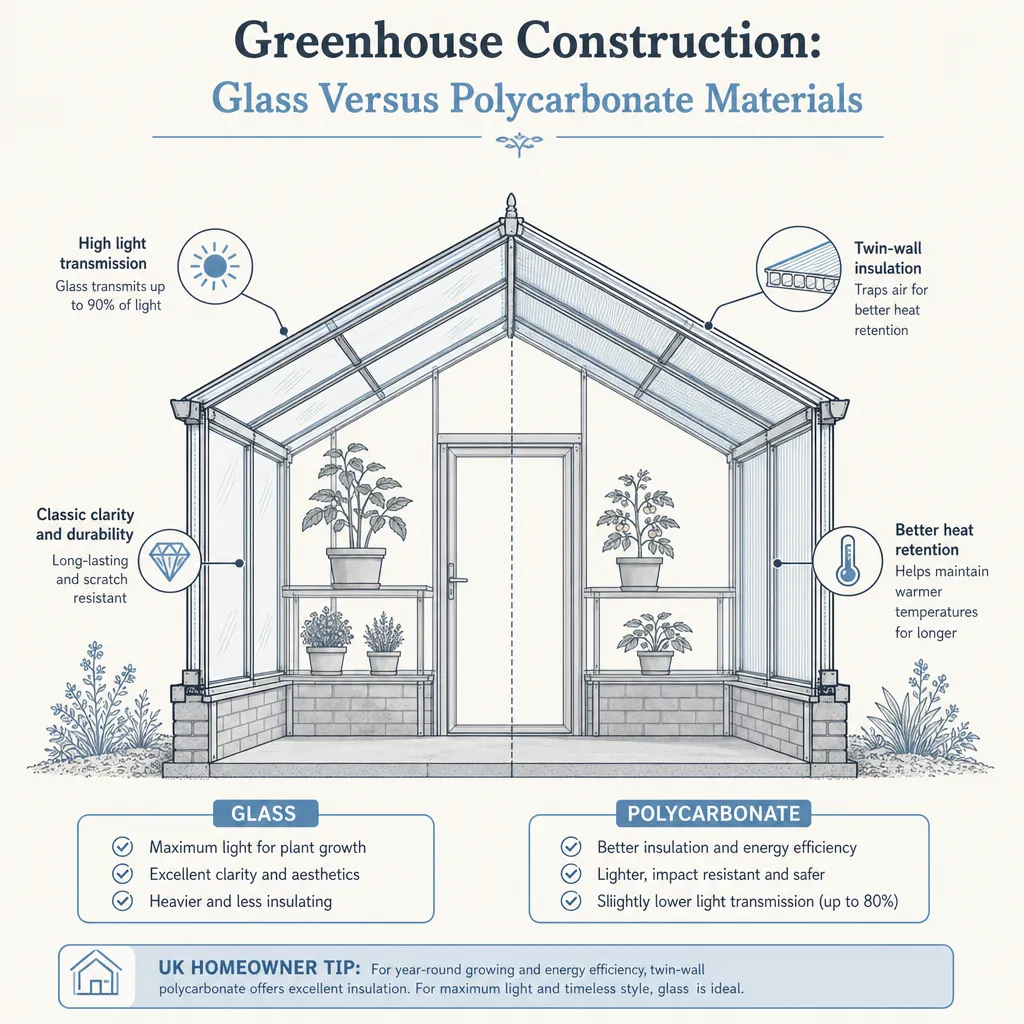
Greenhouse Construction: Glass Versus Polycarbonate Materials
Glass transmits around 90% of available light and lasts indefinitely if unbroken, but insulates poorly and shatters into sharp fragments.