Rapid House Construction: Quick-Build Methods for Homeowners
By Housey · Last reviewed 24th of May 2026
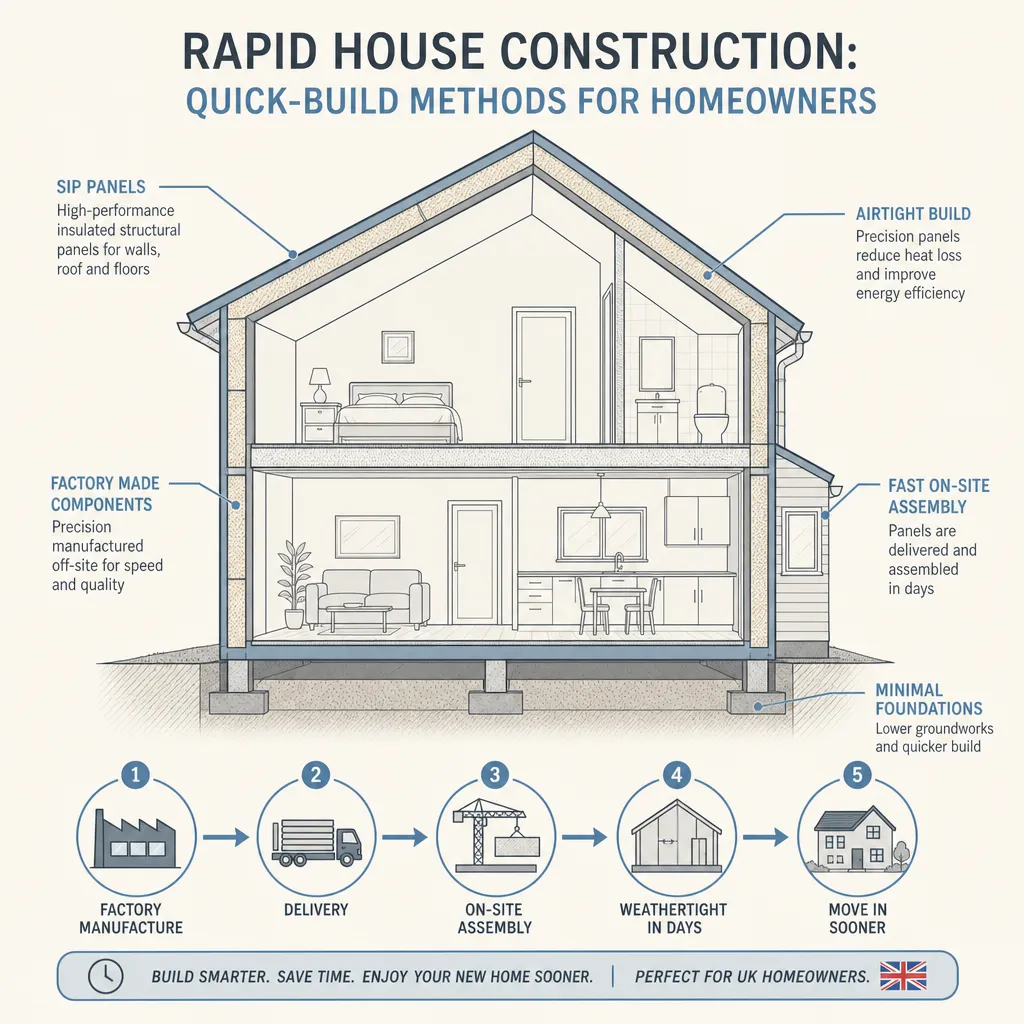
Rapid House Construction: Quick-Build Methods for Homeowners
Choosing a construction method shapes build programme, energy performance, mortgage eligibility, and the trades required on site. For UK homeowners and self-builders facing planning condition deadlines, high site preliminary costs, or a pressing need to complete quickly, Modern Methods of Construction (MMC) offer a genuine alternative to traditional brick-and-block masonry. UK housebuilding has been slow to adopt MMC at scale, but factory-made components are now mainstream for timber frame in Scotland and increasingly common across England and Wales.
Key points
- Modern Methods of Construction can reduce on-site build time by 30–50% compared with traditional masonry, according to NHBC Foundation research.
- Timber frame homes are typically watertight within two to four weeks of frame erection, compared with 12–20 weeks for an equivalent masonry shell.
- Structural Insulated Panels (SIPs) combine structure and factory-fitted insulation in a single element, reducing wet trades and overall build time simultaneously.
- All new dwellings in England and Wales must comply with Building Regulations — including Approved Document L 2021 (energy efficiency) — regardless of which construction method is used.
- Groundworks and foundation preparation are usually the longest lead-time item on any rapid-build project and cannot be accelerated by the choice of above-ground system.
What counts as rapid construction?
"Rapid" in construction terms usually refers to systems that shift much of the manufacturing process off-site, reducing dependence on wet trades, weather windows, and on-site labour. In the UK, these approaches fall under Modern Methods of Construction (MMC), which the Ministry of Housing, Communities and Local Government (MHCLG) classifies into seven categories — from fully volumetric factory-built modules to enhanced traditional methods.
The main rapid-build systems available to UK homeowners are:
- Volumetric modular — three-dimensional factory-built units craned onto prepared foundations. A two-storey home shell can be installed within one to five days once modules arrive on site.
- Closed-panel timber frame — wall, floor, and roof panels with insulation factory-fitted, then assembled on site. Internal services can be routed through panels before delivery.
- Open-panel timber frame — structural panels erected on site, with insulation and services fitted afterwards by follow-on trades. Widely used in Scotland and increasingly in England.
- Structural Insulated Panels (SIPs) — rigid foam insulation bonded between two structural facing boards; very high airtightness and strong U-values achievable within the same panel.
- Insulated Concrete Formwork (ICF) — hollow polystyrene blocks stacked and filled with concrete; slower above ground than timber frame but with excellent thermal mass and no drying time after the pour.
Traditional brick-and-block masonry remains the most common method in England but is weather-sensitive, reliant on wet trades, and requires substantial drying time before internal finishes can begin.
Comparing the main quick-build systems
System | Typical shell speed (after foundations) | Insulation performance | Lender acceptance | Best for |
|---|---|---|---|---|
Open-panel timber frame | 2–4 weeks to watertight | Good; insulation specified separately | Widely accepted | Standard house types, self-builds |
Closed-panel timber frame | 2–3 weeks to watertight | Very good; factory-fitted insulation | Widely accepted | Self-builds wanting faster fit-out |
SIPs | 1–3 weeks to watertight | Excellent — Passivhaus-compatible | Generally accepted; confirm with lender | High-performance and airtight builds |
Volumetric modular | 1–5 days to crane-in | Varies by manufacturer | Improving; check case by case | Tight programmes, repetitive unit types |
ICF | 4–8 weeks (no drying time after pour) | Excellent thermal mass | Generally accepted | Robust construction, acoustic performance |
Traditional masonry | 12–20+ weeks plus drying time | Depends on specification | Universal | Conventional builds where speed is not the priority |
Indicative UK build programmes, last reviewed 2026-05-24. Actual speed depends on design complexity, site conditions, and contractor availability.
Which quick-build method should you choose?
- Choose closed-panel timber frame or SIPs if you want the best combination of build speed, insulation performance, and mortgage-lender acceptance for a self-build house.
- Choose volumetric modular if your project involves repetitive units — a garden annexe, holiday let pod, or a small developer scheme — and the shortest possible on-site programme is the priority.
- Choose ICF if thermal mass, acoustic performance, or resilience against adverse weather during construction matters more than outright build speed.
- Choose open-panel timber frame if you want the flexibility to specify insulation and internal layouts after frame erection, and your contractor has strong local experience with this system.
- Ask a design-and-build firm to compare systems if your site has unusual access, geometry, or planning conditions that may affect which method performs best.
- Check with your mortgage lender before committing to any non-traditional system — volumetric and composite products may require a specialist valuation or structural warranty as a lending condition.
What affects the speed of a quick-build project?
Even with the fastest above-ground system, several factors can extend your overall programme:
Groundworks and foundations are the single largest variable. Strip, raft, or pile-and-beam foundations have very different timescales depending on ground conditions. Engaging groundworkers early and commissioning a ground investigation report before finalising your foundation design can prevent costly delays and redesigns once construction is underway.
Planning permission adds time that no build method can recover. A standard householder application takes eight weeks to decide; a full planning application for a new dwelling typically takes 13 weeks, often longer for complex or contentious sites. Permitted development does not apply to new dwellings.
Building control inspections are required at key stages — foundations, damp-proof course level, structural frame, pre-plasterboard, and completion. Notify your building control body (local authority building control or a registered building control approver) at the correct stages to avoid programme delays.
Supply chain lead times for MMC components commonly run 8–16 weeks from factory order to delivery on site. The on-site speed advantage of MMC can be offset by late ordering — these systems must be sequenced from the very start of the project programme.
What to ask before appointing a quick-build contractor
- What NHBC, BBA, or European Technical Assessment (ETA) certification does this system hold?
- Which UK mortgage lenders have accepted this system on recently completed projects, and can you provide references?
- What is the current factory lead time from order to delivery on site?
- How does your programme sequence foundations, frame delivery, and follow-on trades?
- What building control route do you recommend — local authority or a registered building control approver — and why?
- Is the wall U-value specification compliant with Building Regulations Approved Document L 2021?
- What is the design airtightness target, and how and when will pressure-testing be carried out?
- Is VAT zero-rated on this project, and does your quote clearly reflect this?
When to get professional help
An architect or RIBA-chartered designer can help you assess which MMC system suits your site, design, and budget before any contractor is engaged, and can produce planning drawings and Building Regulations submissions. A structural engineer is advisable for foundation design on sites with trees, slopes, made ground, or evidence of previous structures.
You should seek independent professional advice before committing to a build method if:
- Your site has poor ground conditions, a high water table, or contamination from previous use.
- Your planning permission includes conditions specifying materials, appearance, or construction method.
- Your mortgage lender requires a structural warranty — such as NHBC Buildmark or Premier Guarantee — as a lending condition.
- The project involves altering or extending an existing structure rather than a new-build on a clear site.
How Housey can help
Housey connects you with vetted design-and-build firms and experienced groundworkers who work with rapid-build and MMC systems across the UK. Compare credentials and quotes before committing to your build method and contractor.
Frequently asked questions
How much faster is a timber frame house compared with traditional masonry in the UK?
A timber frame shell is typically watertight two to four weeks after erection begins. An equivalent masonry shell requires 12 to 20 weeks on site, plus drying time before internal finishes can proceed. Overall project duration depends on groundworks and fit-out, but MMC routinely reduces the on-site programme by 30 to 50 per cent compared with traditional masonry, according to NHBC Foundation research.
Do quick-build homes qualify for standard UK mortgages?
Timber frame homes are widely accepted by UK mortgage lenders. Volumetric modular and SIPs systems are gaining acceptance, but confirm with your specific lender before committing. Many lenders require a recognised structural warranty — such as NHBC Buildmark or Premier Guarantee — as a condition of lending on non-traditional construction types. Always verify lender requirements before finalising your build system choice.
Does a rapid-build home still need Building Regulations approval?
Yes. All new dwellings in England and Wales must comply with Building Regulations regardless of construction method. This covers Approved Document A (structure), B (fire safety), L (energy performance), and F (ventilation). Building control inspections are required at key stages throughout the build, and a completion certificate must be obtained at the end of the project.
Is a self-build using MMC eligible for VAT reclaim?
In most cases, yes. HMRC allows self-builders to reclaim VAT on materials for a new dwelling via the DIY Housebuilders Scheme (form VAT431NB). VAT on contractor services for a new dwelling is usually zero-rated at source. Check with HMRC or a qualified accountant, as eligibility depends on the specific project structure and tenure arrangements.
Sources and further reading
- Modern Methods of Construction: MMC Definition Framework — Ministry of Housing, Communities and Local Government
- NHBC Foundation: Modern Methods of Construction research — NHBC
- Building Regulations Approved Documents — GOV.UK
- VAT for builders: New builds — HMRC / GOV.UK
- National Custom and Self Build Association — NaCSBA
Useful next reads
 Improvement & Build
Smart garage door systems: investment and operating efficiency
A smart garage door system adds app control, automation, access logs, and smart home integration to a motorised garage door.
 Improvement & Build
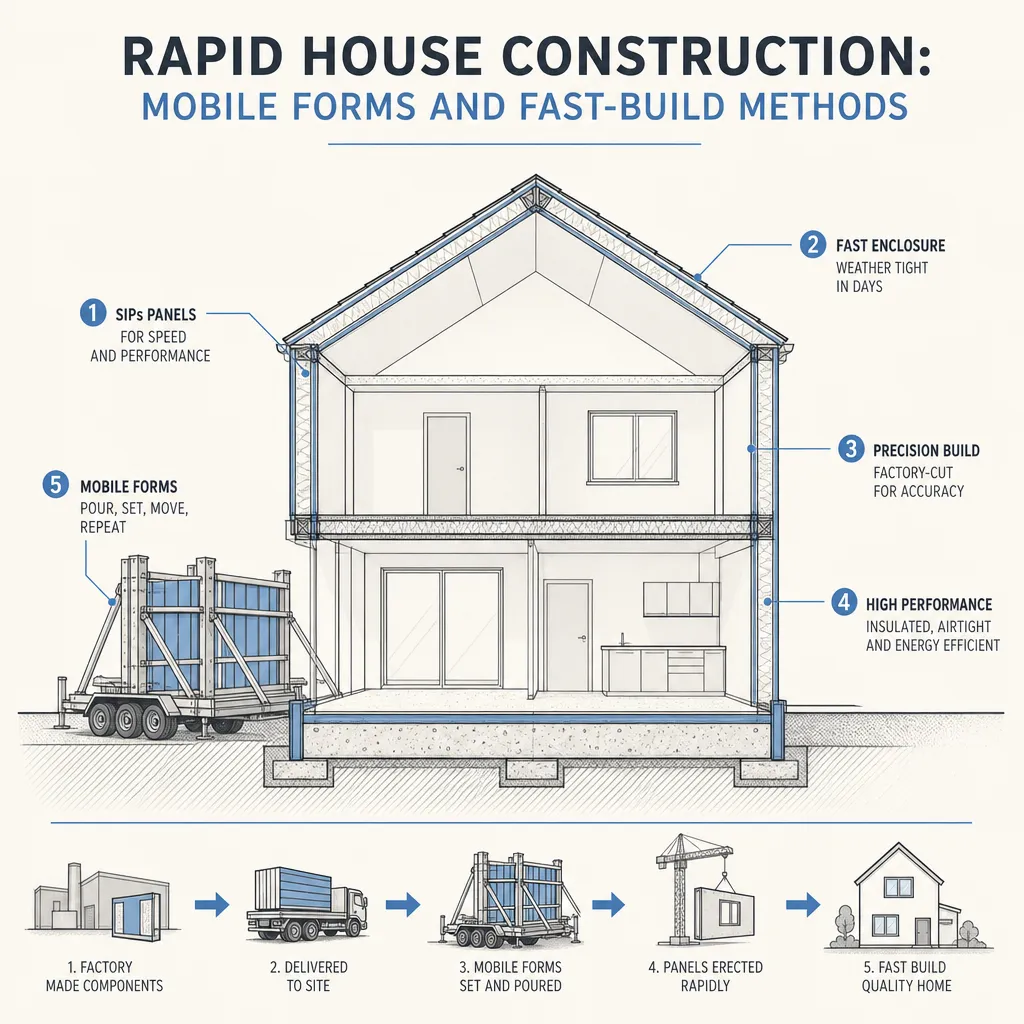
Rapid House Construction: Mobile Forms and Fast-Build Methods
Fast-build systems such as structural insulated panels (SIPs), timber frame, and insulating concrete formwork (ICF) can reduce time to a weathertight shell from months to weeks compared with traditional masonry.
 Improvement & Build
Wood burning stove versus fireplace: which heating option to choose
A wood burning stove is significantly more efficient than an open fireplace — typically 70–80% efficient compared with 15–30% for an open fire — and produces fewer emissions.
 Improvement & Build
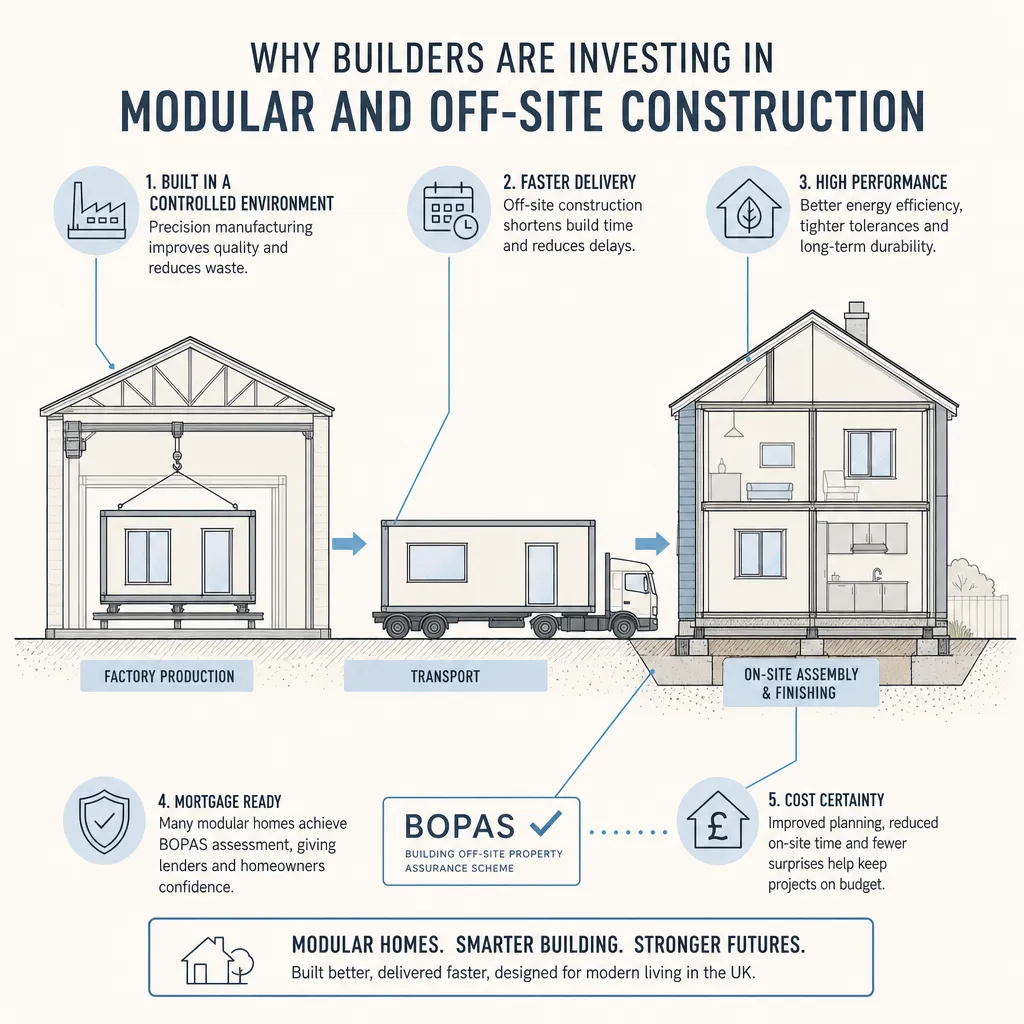
Why Builders Are Investing in Modular and Off-Site Construction
UK builders are investing in modular and off-site construction to cut on-site programme time, reduce weather-related delays, and achieve tighter quality control in factory environments.
 Improvement & Build
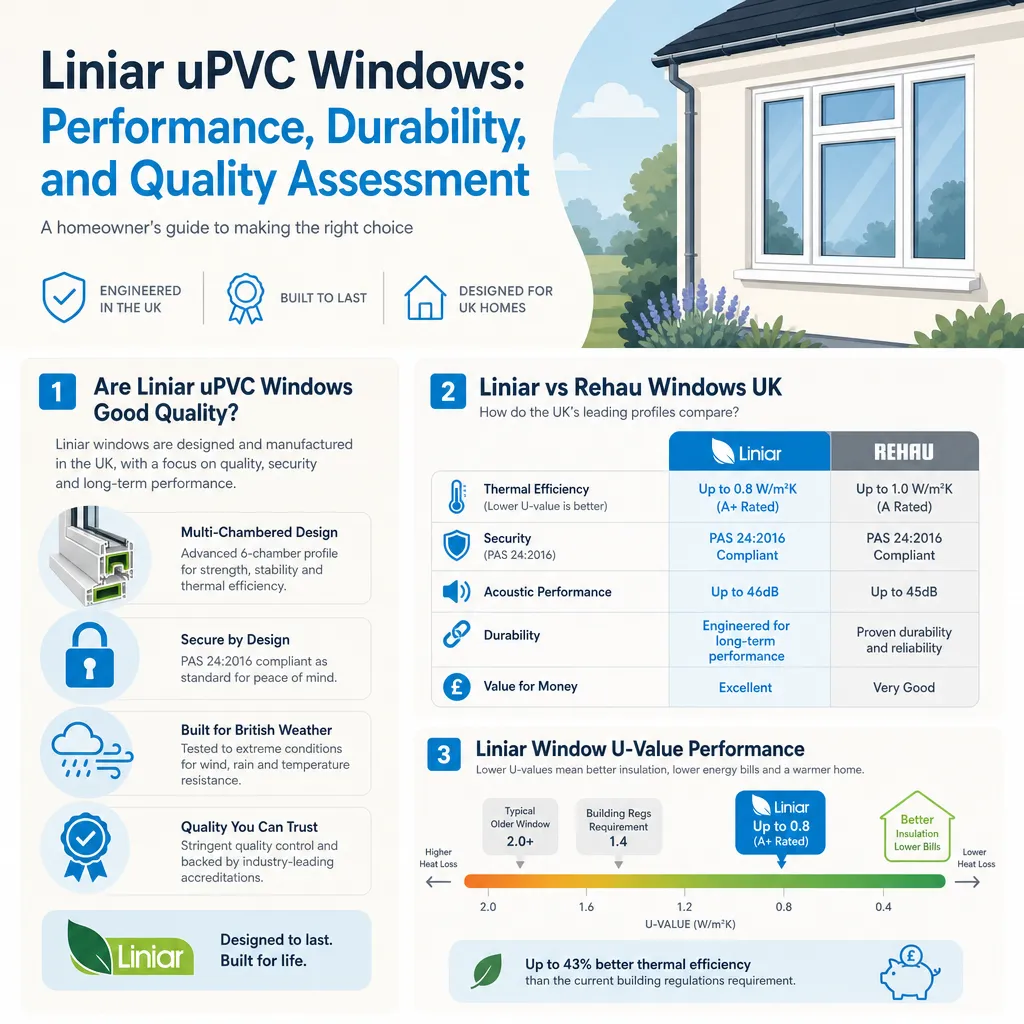
Liniar uPVC Windows: Performance, Durability, and Quality Assessment
Liniar uPVC window profiles are manufactured in the UK using multi-chambered, foamed frames.